
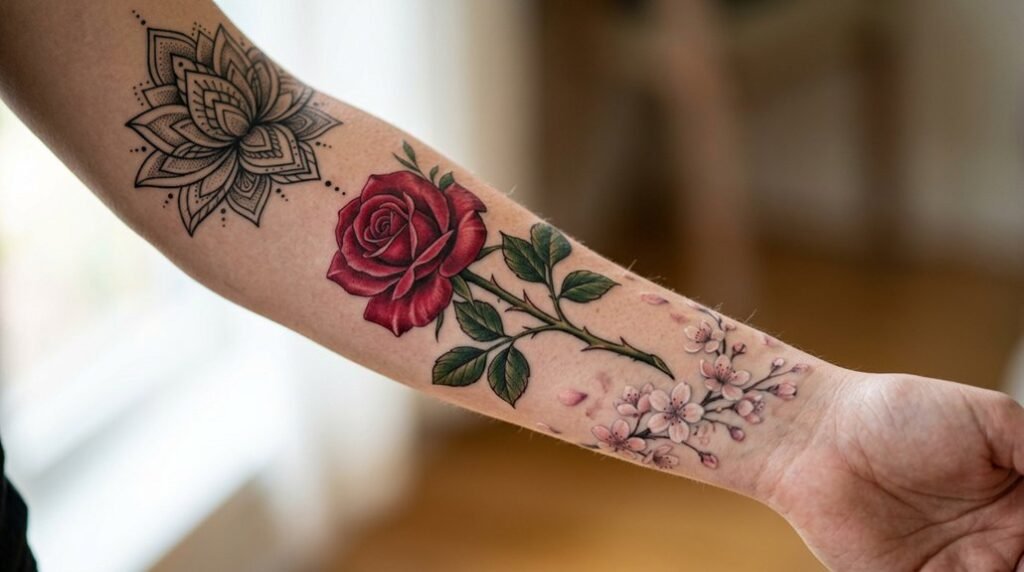
You carry your story on your skin, and a flower tattoo lets you wear it openly. But the bloom you choose speaks louder than you might think—roses confess love or warn of betrayal, lotus roots in mud before breaking surface, cherry blossoms mark fleeting time. Color shifts everything. Placement reshapes intent. Before you commit, you’ll want to know which message you’re actually sending.
Key Takeaways
- Lilies signify purity and renewal, often chosen to commemorate survival through hardship.
- Lotus flowers represent transformation and rising through struggle toward enlightenment.
- Cherry blossoms honor impermanence and the fleeting beauty of present moments.
- Rose meanings shift dramatically by color and detail, from passion to mourning to lost friendship.
- Personal resonance and cultural context ultimately determine a flower tattoo’s significance.
Recommended Products

【19 Large Reusable Stencils & Colorful Unique Designs】Create professional-quality body art with multiple trending patterns across 16 durable sheets. Perfect for arms, ankles, shoulders - endless customization for parties/cosplay.

Rose Temporary Tattoos : You'll receive 8 sheets rose flower temporary tattoos, each measuring 12x17cm (4.7x6.7 inches). No designs repeat, so you can switch them up and share them anytime

RICH TEMPORARY TATTOO KIT - Contains tattoo templates (77 patterns),4 tattoo inks in 3 colors (black Maroon Cherry Red),4 disposable gloves 1 pack of cleaning supplies for a hassle-free temporary tattoo experience.
Flower Tattoo Symbolism: A Quick Reference Guide
Why do you keep second-guessing your design choice? You’re overthinking it. Flower tattoos carry centuries of meaning, and you’ll find clarity once you understand the basics.
Lilies represent purity and renewal. You pick them when you’ve survived something hard. Lotus flowers show you’ve risen through struggle—perfect if you’ve battled demons. Cherry blossoms remind you that beauty fades fast; you wear them to honor impermanence.
Sunflowers? You’re choosing joy and loyalty. Peonies bring prosperity and romance. Lavender means calm and devotion. You don’t need a full sleeve to make your point. A single bloom speaks volumes.
Match the flower to your story, not just your aesthetic. You’re not decorating skin; you’re marking transformation. Trust your instinct. You’ve always known what you needed to say.
Recommended Products

✨ Complete Value Set: Each kit contains 6 large A4 sheets with up to 100 distinctive patterns (depending on the theme). From delicate flowers to fierce animal totems, this bulk collection offers endless creativity for DIY body art lovers, ensuring you always have the perfect design for any mood.

【Spiritual Lotus design】This design blends lotus flowers with OM symbols to express harmony, mindfulness, and inner strength. The fine-line approach keeps the artwork calm and refined, making it ideal for hands and arms. A quiet spiritual style with timeless symbolism.

Saintly Lotus Pattern: These 9pcs stencils with different patterns are all based on the lotus flower as an element, the holy lotus flower not only represents the gentleman style, but also symbolizes the elegance of Buddhism, both in terms of pattern design and cultural content are awesome!
Rose Flower Tattoos: Love, Pain, and Everything Between
You’ve mapped out the broader language of flower tattoos—now you’re ready to confront the one bloom that dominates every shop wall and Pinterest board.
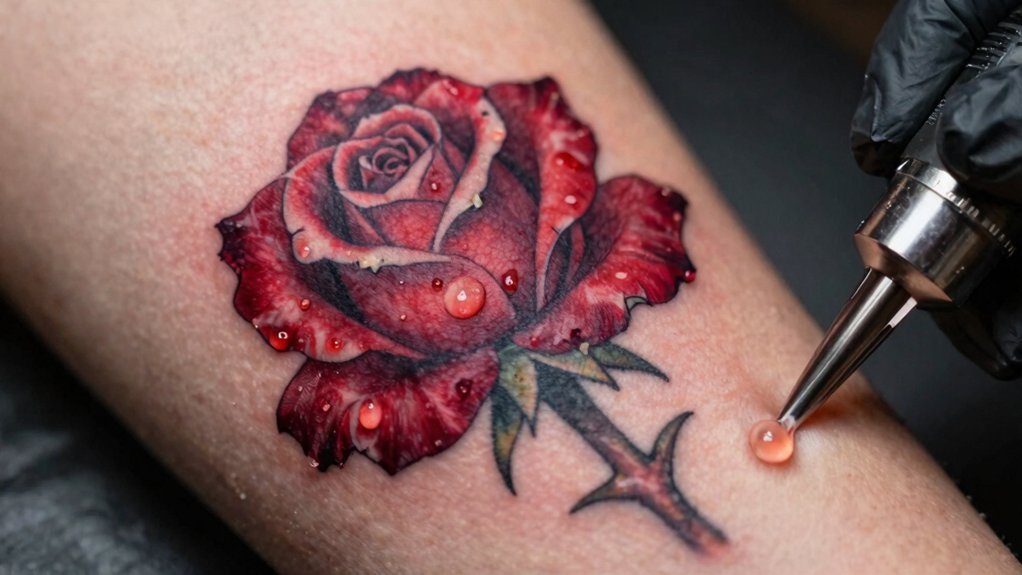
You’re choosing a rose, and you’re inheriting centuries of contradiction. You feel the thorn before you smell the petal. You map meaning through color: red screams passion, yellow marks friendship turned sour, white strips love to innocence. You decide if thorns frame your stem or hide beneath leaves—either way, you’re admitting love costs something.
You’re not trapped in romance, though. You’re mourning when you ink a black rose. You’re fighting when you let blood drip from torn petals. You’re reclaiming beauty that demands defense.
You trace lines that have served sailors, prisoners, and lovers equally. You understand now: the rose survives because you can’t simplify it.
Recommended Products

Design Variety: This cherry blossom stencil set includes 12 reusable PET templates in 2 sizes (8.3x11.7inch/21x29.7cm and 5.5x7.9 inch/14x20cm) and 6 unique designs. You will receive versions of beautifully blooming cherry blossom branches and some designs feature delicate accents, such as scattered petals or butterflies. The package includes a 6.3 inch/16cm stencil brush for painting

Cherry Blossom Flower Pattern:There is 1 A4 size cherry blossom branch, leaf and butterfly pattern stencil, and 2 smaller cherry blossom flower stencils, different sizes can meet your different needs of use for your painting projects.

Decoration Sets: :You will receive 4 painting stencil templates with different cherry blossom patterns, the patterns are vivid and beautiful. Dimensions are 11.7x8.3 inch/29.7x21cm.
Lotus and Cherry Blossom Tattoos: Symbols of Renewal and Impermanence
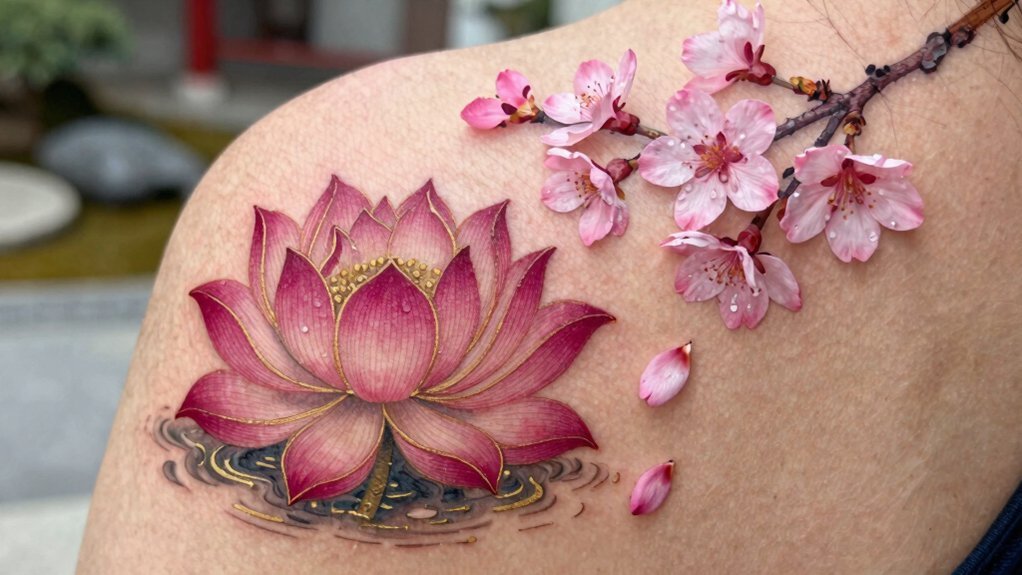
Where do you turn when you want meaning that moves rather than settles? You look toward the lotus and cherry blossom, two blooms that refuse static interpretation.
You choose the lotus when you’ve risen through mud toward light. Your lotus tattoo marks transformation—you don’t stay where you started. Each layered petal shows you’ve pushed through darkness. You’re not who you were.
You pick the cherry blossom when you accept life’s fleeting nature. These brief blooms remind you that beauty demands your full presence now. You can’t save this moment; you can only witness it.
Together, they’d contradict. Separately, they give you what you need: one promises you’re always becoming, the other insists you already are. You decide which truth your skin will carry.
Recommended Products

TRUSTED FAMILY-OWNED BUSINESS: We are a USA trademarked brand dedicated to providing high quality stencils and our promise of satisfaction. If you are not satisfied for any reason, we will refund your order. Thank you for considering our stencils.

Clean, Flawless Transfers: Your artwork will look so clean once transferred to the skin with the Stencil Stuff gel! Gentle on the skin, Stencil Stuff transfer solution helps you achieve clear and sharp tattoo stencil transfers every time!

▶ Henna Tattoo Kit: 16 sheets tattoo stencils. airbrush tattoo stencils suitable for tattoo lovers. Experience the effects of tattooing without the pain of tattooing.
Choosing Your Flower: A Personal Meaning Framework
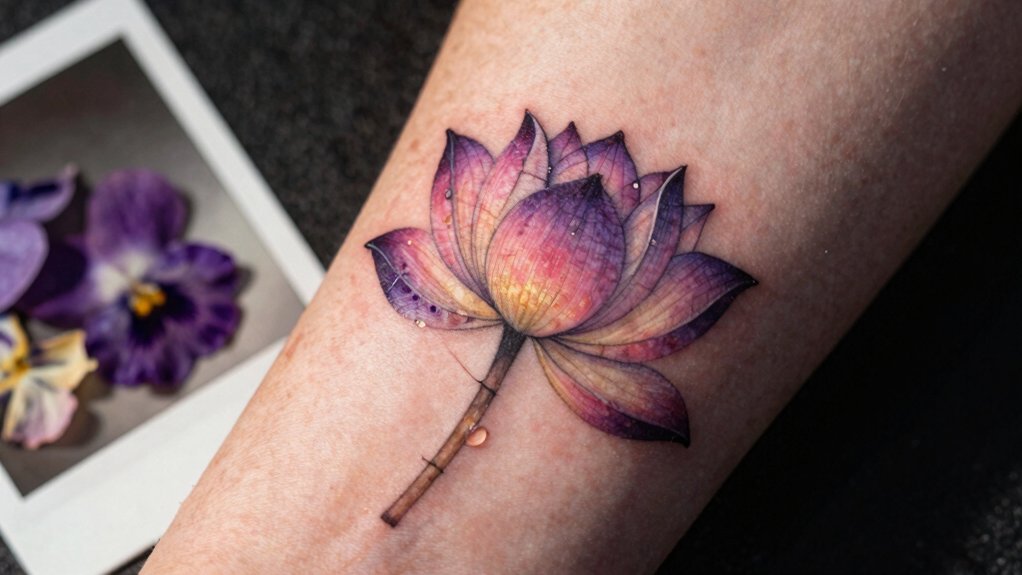
How do you choose among thousands of blooms when each carries its own history? Start by looking inward. You don’t need to honor tradition verbatim—you’re building your own visual language.
Ask what you’re marking. A loss? A triumph? A quiet transformation? Match that emotion to a flower’s core essence, not just its textbook definition. Roses speak of love, sure, but maybe you’re drawn to their thorns, not their petals.
Consider your heritage, your grandmother’s garden, the bloom you couldn’t name but photographed relentlessly. These personal webs matter more than canonical meanings.
You’ll also weigh placement and scale. Delicate stems wrap wrists; bold sunflowers command shoulders.
Trust your gut when research ends. The right flower resonates before you rationalize it. Your skin, your story.
Recommended Products

【 575+ Fun Assorted Tattoo Stencils 】-The ChurlChurl tattoo stencils collection includes 575 high quality stencils with multiple themes. enjoy cute trendy tattoo stencil designs like butterflies, words, flowers, symbols, totem, Egypt style patterns and more.

INCREDIBLE VALUE – 281 Unique Designs: This extensive henna tattoo kit includes 281 diverse patterns suitable for full creativity across hands, arms, and body. Featuring mandalas, florals, paisley, and geometric motifs, these flexible henna stencils allow you to mix and layer styles freely. The collection of henna temporary tattoos ensures you always have the perfect design for festivals, parties, or personal expression
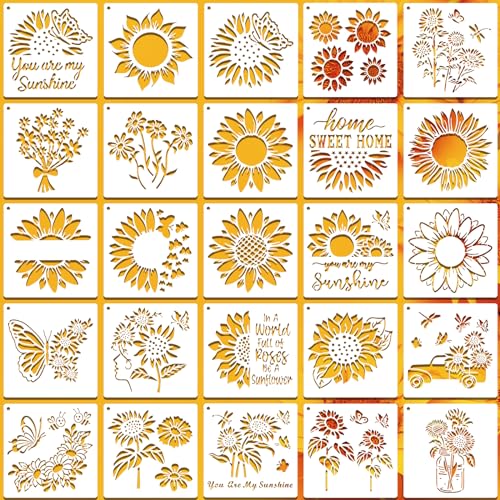
🎨【Unique design】You will receive 25 pcs 6 x 6 inches reusable painting stencils, these sunflower stencils have different designs in different sizes, variety of styles and plenty of quantity to meet your daily needs, enrich your daily life and decorate everything you need
Flower Tattoo Colors: How Hue Changes Your Message
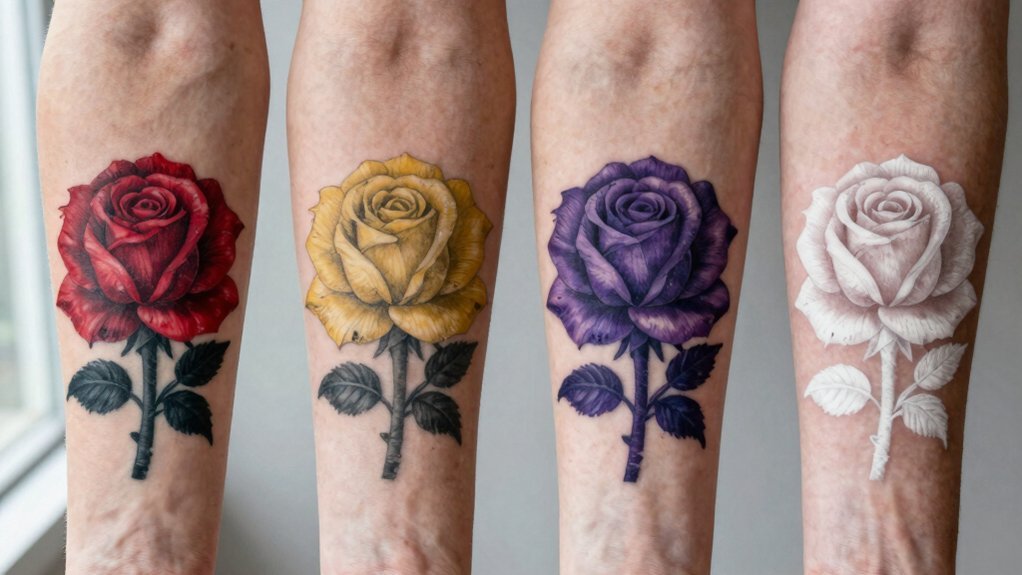
Why settle for the flower alone when color carries its own dialect? You choose red, and you’re shouting passion, danger, or unyielding love. You pick blue, and you’re whispering tranquility, trust, or melancholy depth. White inks purity and new beginnings onto your skin, while black declares mystery, grief, or bold rebellion.
You transform a rose completely when you shift it from yellow—signifying friendship—to deep burgundy, which bleeds with unconscious beauty. You make sunflowers mourn, or make lilies burn, simply through pigment choice.
You must consider cultural context too. White means death in some Eastern traditions; red means luck and joy. You research before you commit.
You’re layering meaning when you select color. You don’t just wear a flower—you’re coding emotion directly into your flesh. Choose deliberately.
Recommended Products

[Tattoos Stencils Kit]: 24 sheets, each sheet including 4 patterns total 96pcs tattoo stencil. Which featuring Playing card patterns, flowers, lizards, scorpions, rabbits, spiders, butterflies, geckos, small birds, insects, hearts, stars, abstract and tribal motifs and more tattoo designs, enough quantity and different pattern for you create your style.

Product List: You’ll Receive: 10 Bottles of Temporary Tattoo Ink (Cyan, Red, Brown, Orange, Green, Deep Red, Violet, Rose Pink, Black, Blue), 8 Pairs Glove Stencils, 86 Cool Stencils – Ideal for Hand Painting or Exclusive Body Art at Party/Events

ALL-IN-ONE KIT - This Temporary tattoo kit includes 12 skin-friendly tattoo inks in 9 colors (3*black, 2*maroon, 1*blue, green,cherry, red, Magenta, purple, orange). 217 pre-cut tattoo stencil patterns across 12 sheets featuring floral, geometric, animal, indian and trendy designs. A set of tattoo auxiliary tools that will give you peace of mind.
Flower Tattoo Placement: Where Your Design Works Best
When you shift a lotus from wrist to ribcage, you’re trading public declaration for private ritual. Your placement choice shapes how others perceive your ink—and how you carry its weight daily.
You expose meaning on your forearm, inviting conversation. You conceal it on your hip, reserving significance for chosen eyes. Scale matters: you compress intricate peonies onto fingers at your peril, or you let roses bloom across shoulders where curves complement petals.
Pain tolerance steers your decision. You brace for ribs, spine, and kneecaps. You relax into outer arms and thighs.
Consider your professional world. You hide easily with long sleeves, or you display boldly where dress codes permit.
Your body guides the flower’s story. You listen, then you mark.
Recommended Products

Lotus Flower Pattern Stencils: Can meet your different needs, well made and fun to creat craft projects for families and friends, offers endless possibilities for transforming your home decor

Good Quality: Our lotus mandala stencils are made of made of environmentally friendly PET translucent material, non-toxic and odorless. They are durable, flexible, reuseable, skin-friendly and can be bent. By using the latest laser engraving technology, every detail is the perfect and flawless, the edges are smooth, no sharp edge, without deckle edge and tear.

Black lotus flowers female temporary Tattoos is 21cm x 15cm
Conclusion
You carry your story in skin and ink, choosing blooms that mirror where you’ve been and where you’re growing. Trust your gut when color, placement, and flower converge—that spark of recognition means you’ve found your symbol. Whether lotus, rose, or cherry blossom, your tattoo becomes alive through meaning you赋予. So research traditions, then break them. Your body’s canvas deserves nothing less than authentic, evolving art.
Recommended Products

THE QUALITY OF STENCIL1: Stencil1 was born from a tradition of handmade customized crafting, painting, and creating. With a lifetime of DIY experience creating stencils and art, we started a business bringing the highest quality stencils to homes across the USA! 🇺🇸MADE IN USA

👑[Instant Glamour, Zero Pain] Want the edgy look without the needle? Our realistic cherry blossom and bird temporary tattoos deliver stunning, salon-quality body art in seconds. Perfect for women and girls wanting to switch up their style effortlessly.

Package Includes: 4 pieces of cherry blossoms theme stencil, the size is approx. 11.8×11.8 inches/ 30 x 30 cm, which are proper presents for DIY lovers, enjoy happy painting time with friends and family members.