
You walk into a tattoo studio knowing exactly what you want—or so you think. The lotus on your Pinterest board looks serene, but will it still speak to you in ten years? Spiritual symbols carry weight far beyond aesthetics, and choosing one demands more than scrolling through images. Before you commit ink to skin, you need to understand what truly makes a tattoo sacred.
Key Takeaways
- Spiritual tattoos derive power from personal intention and lived experience, not merely sacred imagery.
- Eastern symbols like lotus, Om, and unalome express enlightenment, resilience, and liberation paths.
- Abrahamic tattoos—crosses, ichthys, Arabic calligraphy—bind wearers to devotion, lineage, and monotheistic identity.
- Protective symbols from global traditions—runes, Eye of Horus, sak yant—function as spiritual shields against harm.
- Sacred geometry maps universal patterns, with placement aligned to body contours, energy centers, and personal meaning.
Recommended Products

Clean, Flawless Transfers: Your artwork will look so clean once transferred to the skin with the Stencil Stuff gel! Gentle on the skin, Stencil Stuff transfer solution helps you achieve clear and sharp tattoo stencil transfers every time!

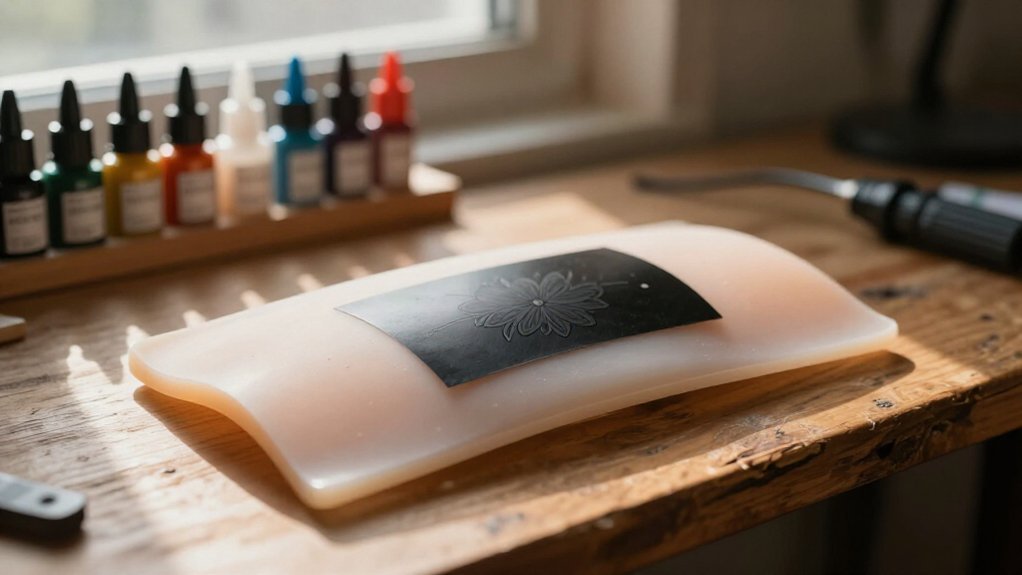
Premium Quality 1.5mm Silicone Material – Crafted from premium 1.5mm thick silicone, this tattoo skin offers a true-to-life feel with excellent durability and a smooth surface for effortless needle movement during practice.

Package Contains: one set of 12 pcs Sacred Geometry Stencils. The size of the Yoga stencils: 10"x10". Different patterns that combine with many Meditation elements including Om Sacred Lotus, Chakra, the flower of Life, Mandala, Hamsa Hand, Metatron's Cube, and Sun Moon,etc. bring you many DIY ideas which will add good vibes and positive energy to the objects you decorate.
What Makes a Tattoo “Spiritual” vs. Simply Decorative?
A tattoo becomes spiritual when you embed personal meaning into its design, not merely when you select imagery that looks sacred. You transform ink into something profound when you connect symbols to lived experience—grief you’ve navigated, thresholds you’ve crossed, values you’ve tested.
You’ll notice the difference when you explain your piece. Decorative tattoos invite compliments; spiritual ones invite confession. You don’t recite meanings found online. You speak from memory, from body knowledge.
The sacred sits in your intention, not the symbol itself. A simple circle becomes your whole cosmology. A wave becomes your reminder that you survived.
You carry questions, not answers. Your tattoo evolves as you do. What you believed at twenty shifts by forty, and that’s expected. The spirit lives in your ongoing relationship with the mark, not in its fixed appearance.
Recommended Products

【Style and Elements】 30 sheets of Yoga style temporary tattoos in different size including lotus, OM, Sanskrit, Tibetan, lycoris, mandala, flower, elephant, moon, peacock feather, meditation, fearless, golden sun and more.

【Spiritual Lotus design】This design blends lotus flowers with OM symbols to express harmony, mindfulness, and inner strength. The fine-line approach keeps the artwork calm and refined, making it ideal for hands and arms. A quiet spiritual style with timeless symbolism.

[Semi-Permanent, Realistic Tattoos] INKARTLINK semi-permanent tattoos are lifelike, durable, waterproof, and sweat-resistant, lasting 7–14 days and gradually fading as the skin’s outer layer sheds. They’re perfect for everyday wear, events, or themed occasions. From the beach to the office, they stay vibrant, allowing you to effortlessly showcase your body art in any setting.
Spiritual Tattoos From Eastern Traditions: Buddhist, Hindu, and Yoga Symbols
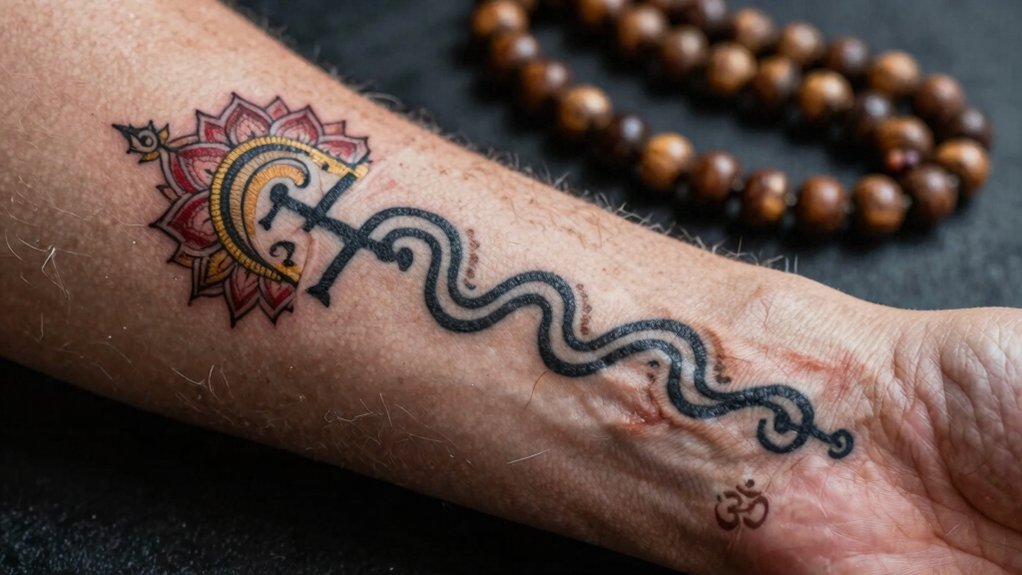
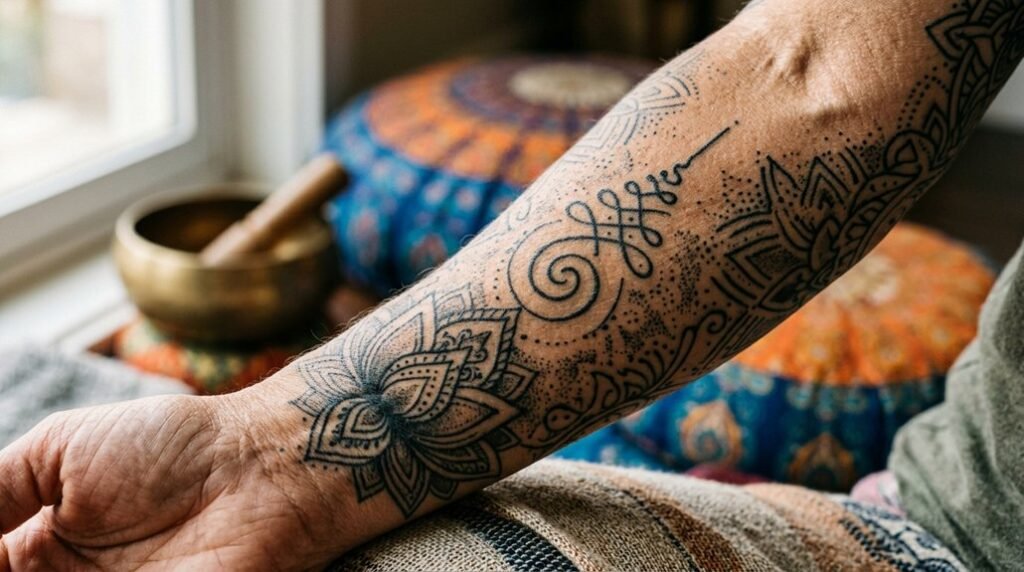
Why do Eastern symbols dominate so many spiritual tattoos? You see them everywhere—lotus flowers, Om symbols, mandalas, and Buddha silhouettes. These images speak a visual language that transcends words, offering you immediate access to concepts like enlightenment, balance, and inner peace.
You might choose a lotus to represent your growth through struggle, or ink “Om” to carry sacred sound energy on your skin. Buddhist unalome designs trace your spiritual journey’s twists toward liberation. Hindu deities like Ganesha or Shiva embody powers you want to channel—removing obstacles or embracing transformation.
Yoga-inspired tattoos connect you to practice and philosophy. You don’t need to identify strictly with these traditions to feel drawn to their aesthetics and meanings. Their ancient visual vocabulary gives you tangible ways to express intangible experiences.
Recommended Products

✝️ Empower Your Faith - Find inspiration and comfort with our Christian imagrey. Each tattoo serves as a personal reminder of God's presence to strengthen your faith journey.

✝️ Empower Your Faith - Find inspiration and comfort with our curated selection of Bible verses and scripture. Featuring verse references and powerful texts, each tattoo serves as a personal reminder of God's presence to strengthen your faith journey.

Unique Design Christian Temporary Tattoo: Yazhiji Christian tattoos serve as a modern testament to timeless faith-based imagery, Styles like blackwork, traditional, and black and grey realism are particularly suited to this tattoo idea, emphasizing the solemnity and importance of the symbols, Common placements include the forearm, chest, and back, areas large enough to accommodate the intricate details of biblical scenes or the solemnity of crosses.
Abrahamic Spiritual Tattoos: Christian, Islamic, and Jewish Symbols
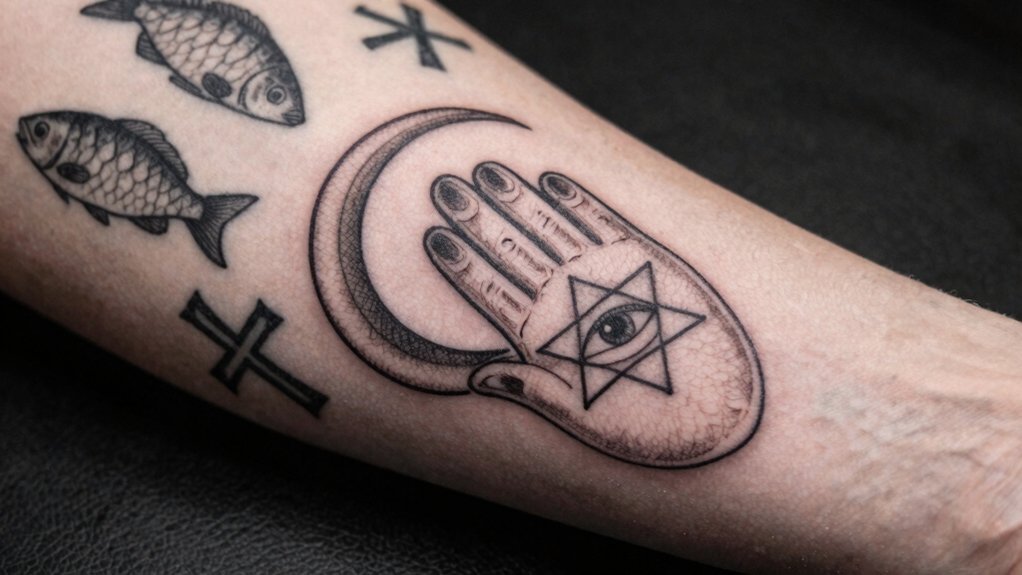
How do you carry faith when words fall short? You etch the cross upon your skin, declaring devotion through intersecting lines that echo eternal sacrifice and resurrection. You might choose the ichthys, that ancient fish swimming discreetly across your wrist, whispering identity to those who recognize its curves.
In Islamic traditions, you wear Arabic calligraphy spelling Allah or Bismillah, transforming your body into a living testament of submission. Geometric patterns frame these words, honoring the aniconic preference while celebrating divine order.
You bear the Star of David, a hexagram linking earth and heaven, or perhaps the Hebrew word “Chai,” asserting life’s sanctity. These marks don’t merely decorate; they bind you to Abraham’s lineage, weaving monotheism into flesh. You carry scripture forward, visible and unwavering.
Recommended Products
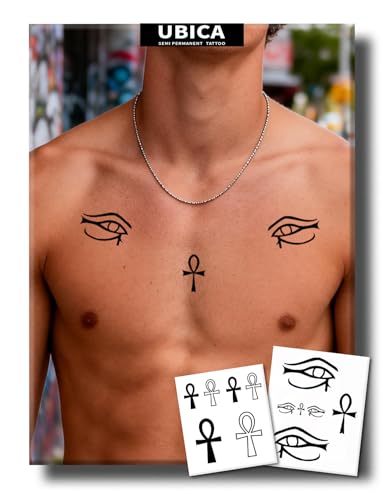
【Sacred Ankh & Eye of Horus Design】This semi-permanent tattoos set blends iconic Egyptian symbols—the Ankh (key of life) and Eye of Horus (protection, health)—with stylized eye motifs for a bold, spiritual, and mysterious look. Ideal for those drawn to symbolism and meaningful body art, it offers a powerful way to express inner strength and personal belief through minimalist, striking designs.

Realistic Finish: Different from you know ordinary temporary tattoo stickers or fake tattoos. It is so real and comparable to the real tattoo. It is a semi-permanent technology, Water-Resistant, friction-resistant, and can last for a long time, staying on your skin for 1-2 weeks.

FUN TATTOOS - Enjoy this fun sheet of temporary tattoos that can be applied on skin or used as a waterslide decal on a variety of surfaces. Temporary tattoos are great for party favors, events, costumes and dress-up, permanent tattoo testing or just for fun.
Protective Spiritual Tattoos From Global Cultures
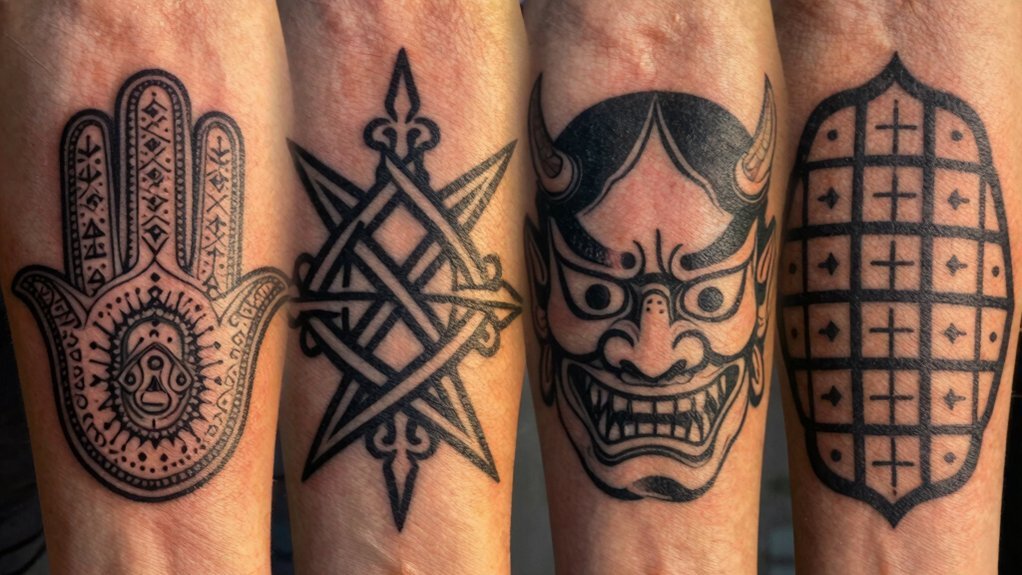
Where danger lurks—seen or unseen—you ink a shield directly onto your skin, borrowing ancestral wisdom from every corner of the world. You trace Nordic runes like Algiz, the elk-rune, across your forearm to ward off harm. You etch the Eye of Horus along your collarbone, letting ancient Egyptian vigilance guard your vitality. Thai sak yant monks tap sacred yantras into your back, each geometric blessing repelling misfortune with chanted power. You wear the Hamsa on your wrist, fingers splayed against the evil eye’s glare. Polynesian tiki figures scowl from your shoulder, their fierce faces deflecting spirits. Japanese oni masks snarl across your ribs, turning demons against themselves. You don’t merely decorate—you armor up, claiming traditions that transform your body into sanctuary.
Recommended Products

Geometry Stencils:Patterns including Hexagon Mandala,The Sri Yantra Torus,Sri Chakra Mandala Circle,The Flower of Life,the seed of lift,etc.The stencils for wall are designed to bring you the feel of Meditation and Mindfullness.

Package Includes:8pcs Sacred Geometry stencils for painting,each stencil measures 8x8inch.

The 7 main chakras. Eighth chakra Bindu - hidden, most dormant, secret 8th energy point in your body
Sacred Geometry Tattoos: Universal Patterns for Personal Meaning
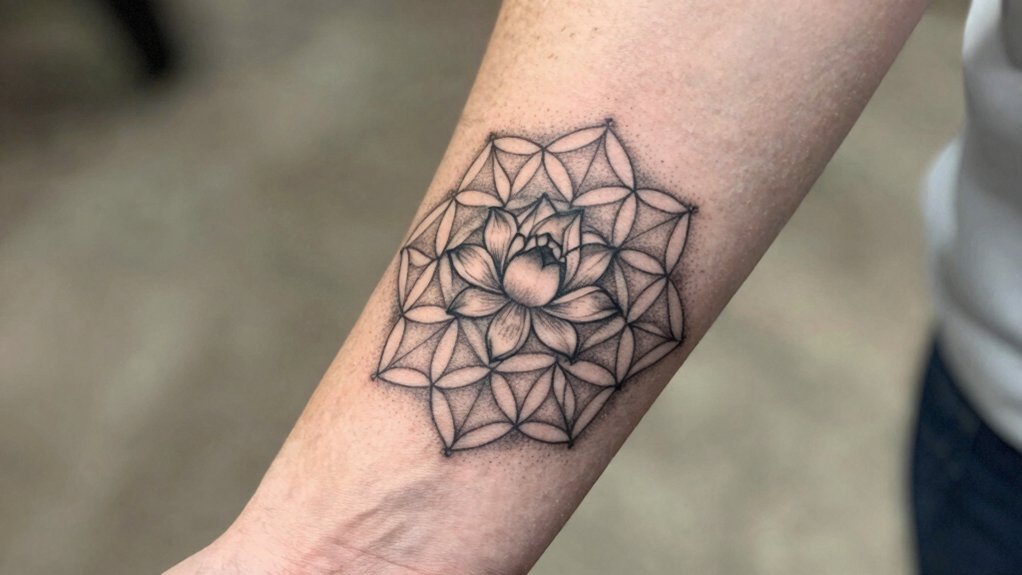
Although you’ve armored yourself with ancestral shields, you now seek the blueprints underlying existence itself. Sacred geometry tattoos offer you exactly that: the Flower of Life, Metatron’s Cube, and the Golden Spiral map the hidden architecture you’ve always sensed beneath reality.
You trace these patterns onto your skin because they resonate. Each line and curve mirrors structures you’ll find in snowflakes, shells, and distant galaxies. You’re not borrowing from one tribe or tradition; you’re claiming something older and more universal.
When you choose the Sri Yantra, you’re aligning with interconnectedness. When you etch a Platonic solid, you embody elemental forces. These symbols carry no fixed dogma, so you infuse them with your own meaning.
You wear proof that mathematics and mysticism intertwine, marking yourself with equations the universe whispers.
Recommended Products
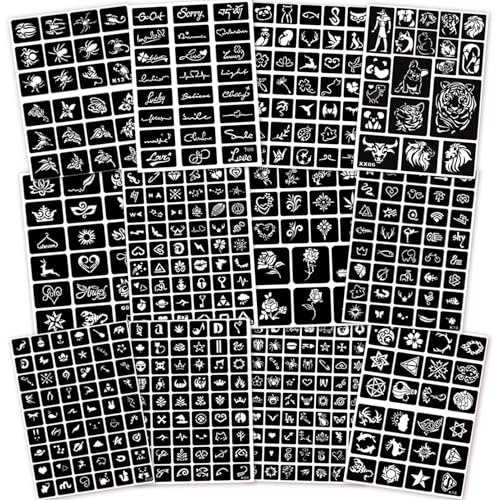
【 423+ Fun Assorted Tattoo Stencils 】-The ChurlChurl tattoo stencils collection includes 423 high quality stencils with multiple themes. enjoy cute trendy tattoo stencil designs like butterflies, words, flowers, symbols, totem, Egypt style patterns and more.

❤[METAL STENCIL] - 1Pc 6.3x6.3 inch metal celtic knot template, designed with 12 styles patterns, about 0.5~3.6 inch, which is very practical.

Product Kits: You will receive 12 A4 sheets featuring 142 unique henna tattoo stencils patterns including butterflies, flowers, words, symbols, totems and egyptian designs. Our versatile temporary tattoos adult with stencils collection offers something for every taste with its wide variety of artistic models.
Choosing a Spiritual Tattoo That Matches Your Real Beliefs
You’ve mapped cosmic patterns onto your skin, but now you face a harder task: ensuring those symbols actually reflect what you believe. You must dig past aesthetic appeal. Ask yourself what you actually practice, not what looks mystical.
Research the origins of symbols that draw you. A lotus carries different weight in Buddhism than in ancient Egypt. You’re borrowing from living traditions, so respect matters. Avoid reducing sacred icons to decoration.
Sit with your choice for months. Your beliefs evolve; your tattoo won’t. Test your commitment by explaining the meaning aloud. If you stumble, you haven’t found your match yet.
Consult practitioners of traditions you’re drawing from. They’ll spot misinterpretations you’ve missed. Your skin deserves symbols you’ve earned through understanding, not impulse.
Recommended Products

Unique Design Mandala Tattoos: Yazhiji Mandala tattoos are a beautiful blend of artistry, spirituality, and self-expression. They offer a way to wear a design that is not only visually stunning but also rich in meaning and symbolism. Whether you’re drawn to the traditional aspects of mandalas or prefer a modern interpretation, our mandala tattoo can be a deeply personal and reflective choice alowing you to embrace the harmony and beauty of these captivating symbols.

Henna Tattoos Flower Temporary Tattoos: The package comes with 10 sheets black henna Temporary Tattoos. Each pattern has a unique design, attractive and creative. The size of each sheet is approximately 4.7 * 2.7 inches

💕【64 Sheets Black Temporary Tattoos For Women Girls】--VANTATY 3D Realistic Temporary Tattoos For Adults Women Kids Adults Girls Body Art Stickers Look Real! 【Click Our Store/Brand Name To See More Fashion Designs】Tribal Lion Wolf Indian Feather Lotus Butterfly Bohemia Boho Lotus Mandala Flower Floral Animals Elephant Tattoos Dreamcatcher Serpent Dream Catcher Owl Moon Turtle Hummingbird Skull Skeleton Snake Bat Bowknot Dolphin Moon Crown.
Spiritual Tattoo Placement: Where Meaning Meets Design
How do you anchor these earned symbols to specific coordinates? You map meaning onto your body’s landscape with intention. You place protective sigils on your chest, guarding your heart’s rhythm. You ink mantras along your forearm, where you’ll read them during difficult moments. You position chakras vertically down your spine, aligning energy centers with your physical core. You choose visibility or concealment based on the symbol’s purpose—public declarations on your hands, private devotions beneath clothing. You consider pain as part of the ritual; enduring it transforms the marking into earned commitment. You respect cultural protocols—some placements carry specific significance you shouldn’t appropriate. You collaborate with artists who understand sacred geometry’s relationship to your unique contours. You recognize that placement shapes how you’ll carry this meaning forward, literally bearing it through your days.
Recommended Products

Innovative Skin-Sync Technology: We don't just sit on the skin; we interact with it. By reacting organically with naturally occurring proteins in your skin's outermost layer (stratum corneum), our plant-based formula magically transforms from a transparent guide into a rich, ultra-realistic navy-black. It looks exactly like a healed, permanent tattoo—without the needles or depth.
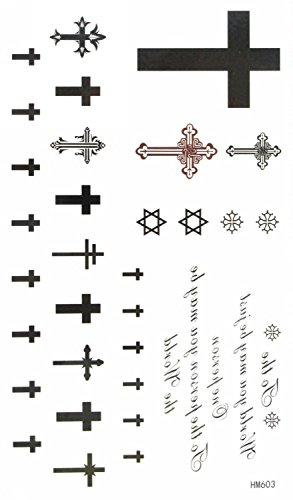

【Develops Fully in 48H】Your cool cross christian tattoos for men will initially appear silver before naturally darkening to a rich finish within 48 hours. For optimal results, avoid contact with bare skin (particularly the face) and cover the area with clothing during sleep to prevent transfer.
Conclusion
You don’t need anyone’s permission to wear your spirit on your skin. Your tattoo becomes sacred when you choose it with eyes open and heart engaged—whether it’s a lotus, a verse, or a pattern only you understand. Let meaning guide placement, let truth guide design. The ink fades; your intention doesn’t. Trust the artist, trust the symbol, but most of all, trust yourself. That’s where real spirituality lives.
Recommended Products

【Realistic Semi-Permanent Look】Boldink temporary tattoos are designed to look more like real tattoos than traditional temporary tattoo stickers. They are waterproof, smudge-resistant, and non-shiny for a natural-looking finish. The tattoo will appear silver at first and gradually darken into a rich, realistic color within 48 hours. For best results, avoid contact with bare skin, especially the face, and cover the tattoo with clothing while sleeping to prevent transfer.

【God’s Eye Symbol Tattoo Design】Inspired by ancient spiritual symbolism, this God’s Eye tattoo set represents protection, awareness, and inner vision. Designed in a clean, fine-line style, the artwork feels both mystical and modern. Ideal for spiritually minded individuals, meditation enthusiasts, or anyone seeking a quiet symbol of guidance and protection they can carry daily.

❥[20 SHEETS] 20 sheets cute eye temporary tattoos, original brand of Briyhose fake tattoos for adults women men kids boys girls. Size is 4.13*2.36 inch (10.5*6cm) 20 Sheets, used for arms, shoulder, back, neck, face, hands, finger, legs and any other part of your body skin. You can share it with your family and friends.