
You’ve got a solid black tattoo you’re tired of, and you’re wondering if anything can hide it. The short answer is yes—but it’s rarely simple. Dense ink limits your options, and not every artist can pull it off. What you choose next could mean the difference between a disguise and a disaster.
Key Takeaways
- Dense black tattoos require strategic designs incorporating existing ink into shadows and dark elements.
- Laser fading often proves necessary, with three to five sessions expanding cover-up possibilities significantly.
- Bold styles like neo-traditional, tribal, and Japanese imagery effectively mask heavy black ink underneath.
- Cover-up specialists must demonstrate healed results hiding comparable darkness and tattoo dimensions.
- Expect larger, darker final pieces requiring multiple extended sessions costing substantially more than original tattoos.
Recommended Products

MADE IN THE USA SINCE 1990 — For over 30 years Dynamic Color has produced professional tattoo ink in the United States, an established American brand artists built their work on long before most imported labels existed.

MADE IN THE USA SINCE 1990 — For over 30 years Dynamic Color has produced professional tattoo ink in the United States, an established American brand artists built their work on long before most imported labels existed.

100% brand new and high quality
Can You Cover Up a Black Tattoo Without Laser Treatment?
How exactly do you hide solid black ink without zapping it first? You work with it, not against it. A skilled artist designs a cover-up that incorporates the existing black into darker elements like shadows, outlines, or bold new imagery. You can’t simply blast skin-tone ink over it—that won’t work on dark pigment. Instead, you choose a design with sufficient depth and saturation to envelop what’s already there. Floral pieces with heavy leaves, tribal patterns, or geometric blackwork succeed where lighter concepts fail. You accept limitations: the new tattoo will run larger and darker than the original. You research artists who specialize in this specific craft, as not every tattooist masters the technique. With realistic expectations and expert execution, you’ll reclaim your canvas.
Recommended Products

🦋Note:Please shake the ink before use.

Professional Grade Formula: Black tattoo ink formulated for smooth consistent flow and clean line work in professional tattoo applications

100% new brand and high quality. Favored among professional tattoo technicians.
Why Some Black Tattoos Need Laser Fading First
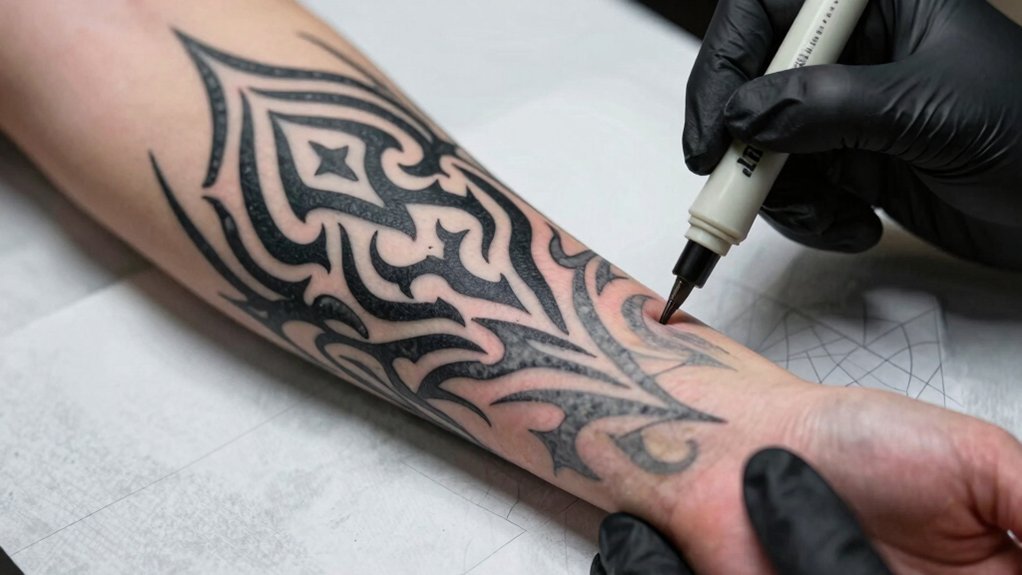
Not every black tattoo plays nice with a direct cover-up. You’ve got dense, pitch-black ink saturating your skin, and that creates real problems for your artist. They can’t just slap new pigment over it and expect magic. The old ink fights back, pushing through whatever they lay down. You’re dealing with size constraints too—massive tribal pieces or solid black sleeves don’t leave enough clean skin for effective masking.
Laser fading breaks that ink apart so your body can flush it out. You’ll open up tonal range, giving your artist actual mid-tones and highlights to work with instead of just fighting darkness. Three to five sessions typically get you where you need to be. You’re investing time upfront, but you’re buying design freedom and a cover-up that won’t look muddy or blown out within a year.
Recommended Products

American Made Quality - Proudly made in the USA with premium craftsmanship delivering high-quality protection and durability. Light full arm sleeves in MediuMLarge size for reliable coverage.

TATTOO COVER UP: Specially designed patch to conceal tattoos discreetly, ideal for tattoo enthusiasts seeking temporary coverage.

◈ Premium Value Set - Get 2 rolls of professional tattoo aftercare bandage (6"x2 Yard each), totaling 4 yards. Easily cut to fit large tattoos, saving frequent repurchases. Ideal for all body areas.
Cover-Up Styles That Actually Hide Dense Black Ink
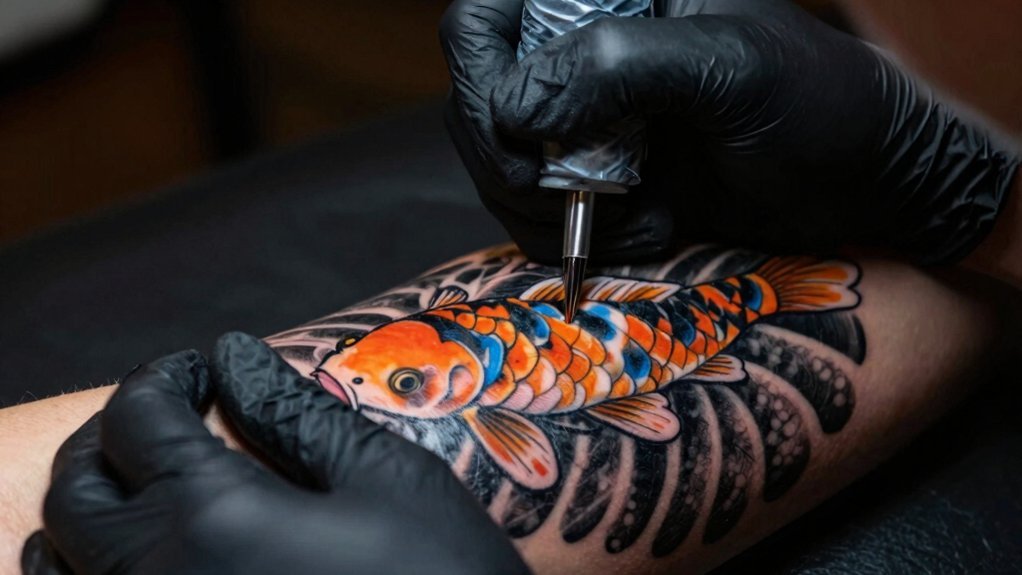
Where dense black ink dominates your skin, only specific design approaches stand a real chance of burying it completely. You’ll want to explore bold neo-traditional designs with heavy black outlines and saturated color fields. These create visual weight that competes with your existing ink.
Tribal patterns and geometric mandalas also work well, as their dense black shading masks old work beneath structured repetition.
Consider Japanese-inspired pieces featuring koi, dragons, or peonies—these use layered black backgrounds and gradation techniques that swallow darker remnants.
Floral designs with deep shadows and overlapping petals offer similar coverage.
You should avoid minimalist styles, fine-line work, or watercolor effects. These lack the opacity needed. Instead, choose designs where black serves as the foundation rather than an accent. Your artist will map negative space strategically, ensuring old ink disappears into new shadows.
Recommended Products

【 Temporary Tattoo Sleeves 】 : Include 8 sheets full sleeve temporary tattoos (size: 19 x 7 inches) .

SOFT AND STRECHABLE: The tattoo arm sleeves made of 92% nylon and 8% spandex soft fabric material, stretchable to fit your arm. Help to protect your arm from the strong direct sunlight.

6 Sheet Tribal Tattoos temporary, Each sheet measures 9cm* 19cm/3.54*7.48 inches (L*W).
How to Vet a Cover-Up Artist’s Black Ink Portfolio
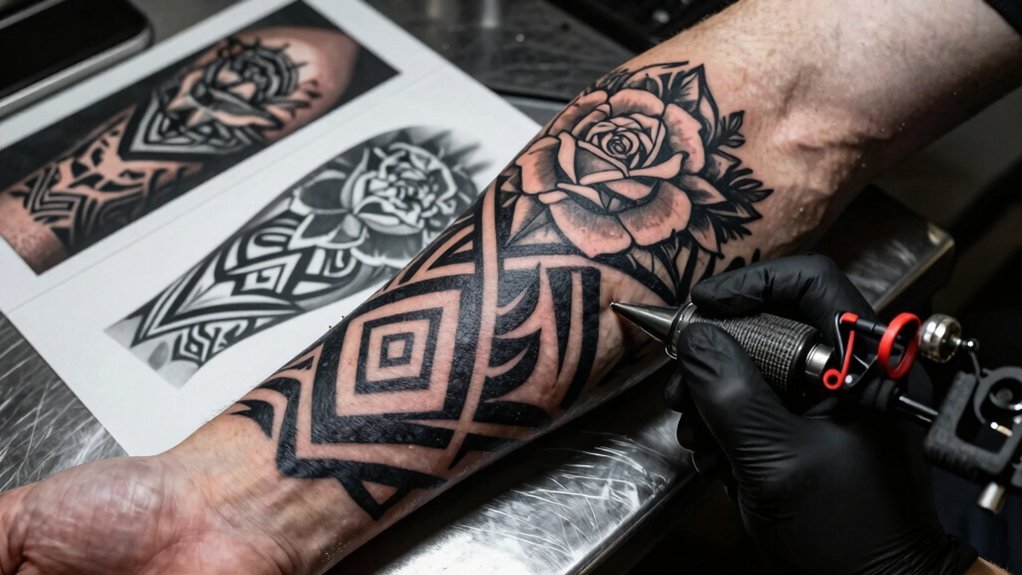
Once you’ve settled on a cover-up style that can handle dense black ink, your next move is finding an artist who can actually execute it.
Start by scrutinizing their portfolio for healed cover-up photos, not just fresh work. Fresh tattoos look bolder; healed pieces reveal whether the new ink truly masked the old black beneath. Ask the artist to point out exactly where the original tattoo sat in each example. If they hesitate or can’t show you, walk away.
Demand to see cover-ups similar to yours in darkness and size. A rose covering faded gray lettering proves nothing about their ability to bury solid tribal bands.
Check reviews for mentions of fading, blowouts, or the old tattoo ghosting back through. You’ll spare yourself a costly, permanent mistake.
Recommended Products

Forearm Sleeves: 1 Pair of black color tattoo cover up sleeves. The tattoo cover up sleeves are simple and lightweight, and can be used and replaced in daily life and work.

VERSATILE USAGE: These tattoo cover sleeves in classic colors are suitable for concealing tattoos at work or on a date, but also protect from harmful UV rays during outdoor activities like running, golfing, fishing, cycling, hiking, and gardening. These sleeves are 20 x 10 cm/ 7.9 x 3.9 inches and are perfect for most men and women.

VIVID COLOR AND DIMENSION - Originally formulated in Japan, Kuro Sumi liner black gives your tattoos life and dimension. The molecular structure of our ink provides long lasting vivid color.
What Happens in a Cover-Up Session (Pain, Time, Sessions)
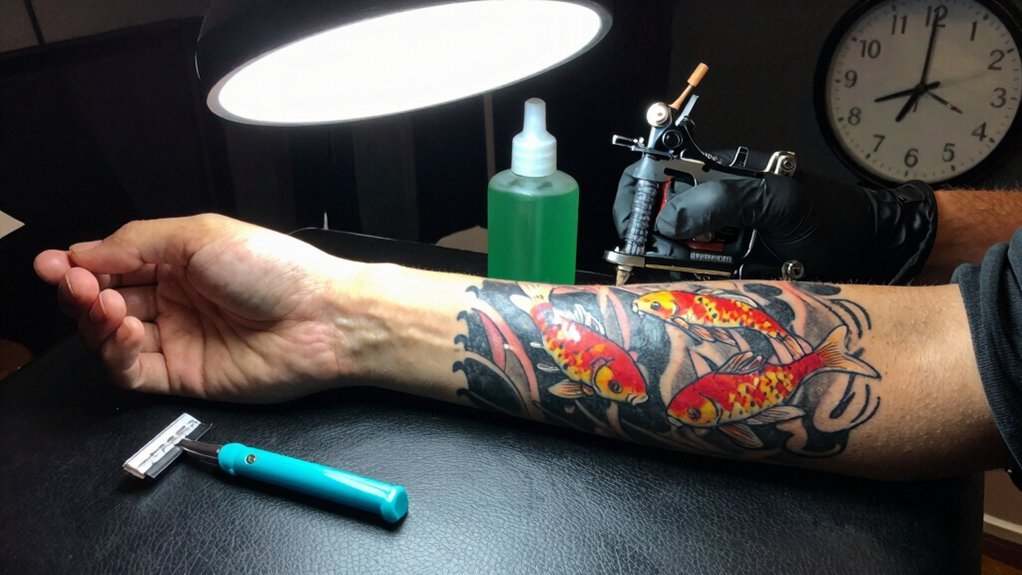
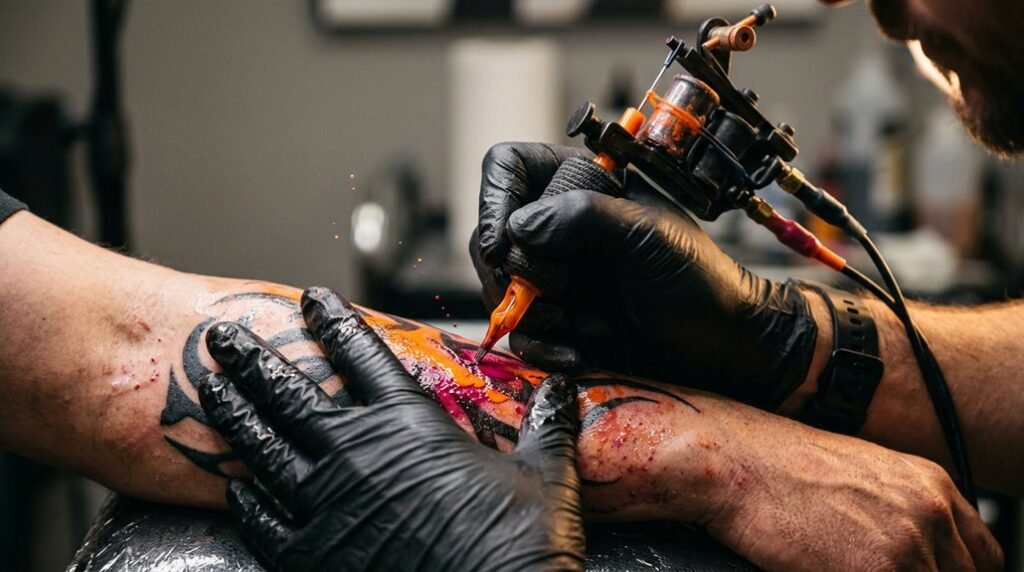
How much discomfort should you expect when needles dig through scarred skin already packed with pigment? You’ll feel more intensity than your original tattoo—sometimes significantly more. Dense black ink requires aggressive saturation, and your artist works slower, stretching sessions across multiple visits.
You sit for two to four hours typically, though complex pieces demand longer. Your skin swells faster, bleeds more, and rejects ink differently over old work. You’ll need three to eight sessions spaced six to eight weeks apart, letting inflammation subside and colors settle.
Between appointments, you’ll manage heavier scabbing and longer healing. Your artist builds layers strategically—darks first, then mid-tones, finally highlights—transforming old mistakes through accumulated sessions. Patience becomes your essential tool; rushing destroys the cover-up you’ve invested pain and time into achieving.
Recommended Products

Triple Blackout Tattoo Ink - Strengthen your shading with Triple Blackout, the boldest black designed for greater dimension in your tattoos. With a glycerin free formulation, this professional tattoo ink inserts smoothly into the skin for excellent distribution and shading.
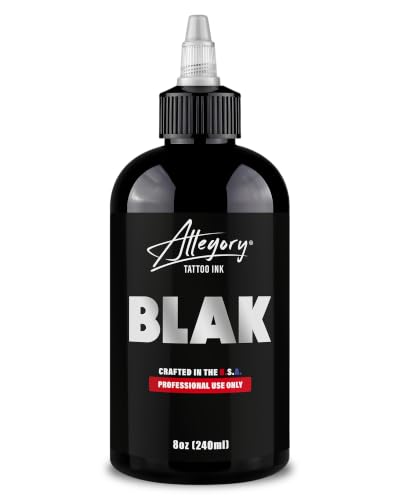
Premium Tattoo Black Ink – Allegory BLAK is a smooth, consistent blend of liquid dispersed pigment. Many of the most popular tattoo artists around the globe uses Allegory BLAK Ink for precise lining and shading. Allegory BLAK is the stepping-stone to the future of tattooing.

MADE IN THE USA SINCE 1990 — For over 30 years Dynamic Color has produced professional tattoo ink in the United States, an established American brand artists built their work on long before most imported labels existed.
How Much Does a Black Tattoo Cover-Up Cost?
Why does covering black ink drain your wallet faster than fresh skin work? You’re battling dense pigment that demands larger designs, bolder colors, and more sessions. Expect to pay $150–$400 per hour, with most cover-ups requiring 3–8 hours minimum. Small pieces might cost $500–$1,000, while full sleeves or backs can exceed $5,000.
Your artist’s skill level directly impacts pricing. Specialists in cover-ups charge premiums because they’re essentially performing visual surgery. You can’t rush this work—each layer must heal before adding the next.
Location matters too. Studios in major cities price higher than rural shops. You also cover supply costs: quality pigments, needles, and aftercare products add up.
Don’t bargain hunt here. You get what you pay for, and cheap cover-ups often need fixing later, doubling your expense.
Recommended Products

100% new brand and high quality. Favored among professional tattoo technicians.

100% new brand and high quality. Favored among professional tattoo technicians.
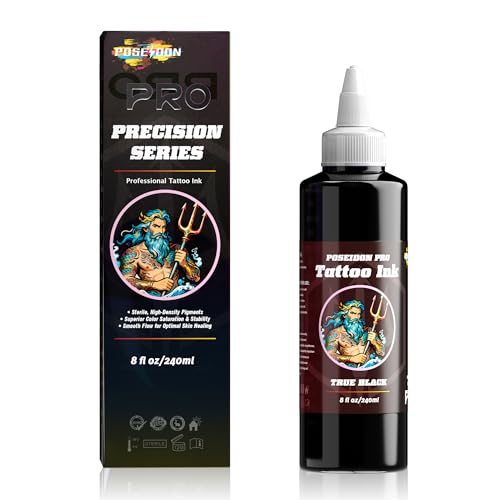
Professional-Grade Flow: Expertly formulated for smooth, consistent performance. Perfect for fine lines, outlining, shading, and solid packing.
Prepping Your Skin for a Cover-Up and Healing Afterward
Your investment in a skilled artist means nothing if your skin isn’t ready for the work. You must hydrate aggressively for one week before your session. You should avoid alcohol, blood thinners, and excessive sun exposure. You’ll exfoliate gently, but never scrub raw. Moisturize daily with fragrance-free lotion.
During healing, you’ll wash the area twice daily with antibacterial soap. You’ll pat dry—never rub—and apply thin layers of recommended ointment. You can’t pick scabs or scratch flakes. You’ll loose clothing over the fresh work. You must avoid swimming, soaking, and direct sunlight for four weeks.
Sleep on clean sheets. You shouldn’t rush the healing. Your skin dictates the timeline, not your calendar. Proper aftercare preserves the cover-up’s integrity and prevents infection. You’ve committed financially; now commit physically.
Recommended Products

Tattoo Shop Logo design. The Classic Independent Tattoo Classic Style Shop Logo.

【Tattoo cover up waterproof】This tattoo cover sticker adopts a waterproof adhesive method, it is not easy to fall off when exposed to water or sweat, and it can keep the fit state for a long time and maintain the ideal effect.
![[CLASSE] Tattoo Cover up patch, Concealer-Sticker, made in Japan, ultra-thin 0.015mm, Invisible, Matte, sweat and water-proof, cover up Tattoo, Scar, Blemish,(B80 Bronze, M 6pcs)](https://m.media-amazon.com/images/I/51oJIRwgrWL._SL500_.jpg)
Just press and stick 0.015mm ultra-thin transfer sticker
Conclusion
You can absolutely cover a black tattoo, but success depends on your artist’s skill and your flexibility with design. Dense ink demands bold, strategic work—sometimes with laser prep. Vet portfolios carefully, budget for multiple sessions, and commit to proper aftercare. Your old tattoo doesn’t have to be permanent; it just needs the right transformation.
Recommended Products

【10 Sheets Tribal Tattoo】10 sheets tribal temporary tattoos which are measured dimension 19*9 cm(7.48*3.54 inch). They are a good choice for party decorations, party favors and supplies, DIY crafts, and rewards!

✔[FULL SLEEVE TRIBAL TATTOO] Briyhose Tribal Full Arm Temporary Sleeve Tattoos Can Cover Your Body Parts Large. It Contains 4 Sheets 18.9 * 6.7 Inch (48 * 17cm) Long Sleeves Totem Tribal Fake Tattoo Stickers For Adults Men Women Tatto Kit. You Can Share It With Your Family And Friends.

★【92% nylon and 8% spandex】stretchable fabric material, easy slip on and off temporary tattoo sleeves for men