
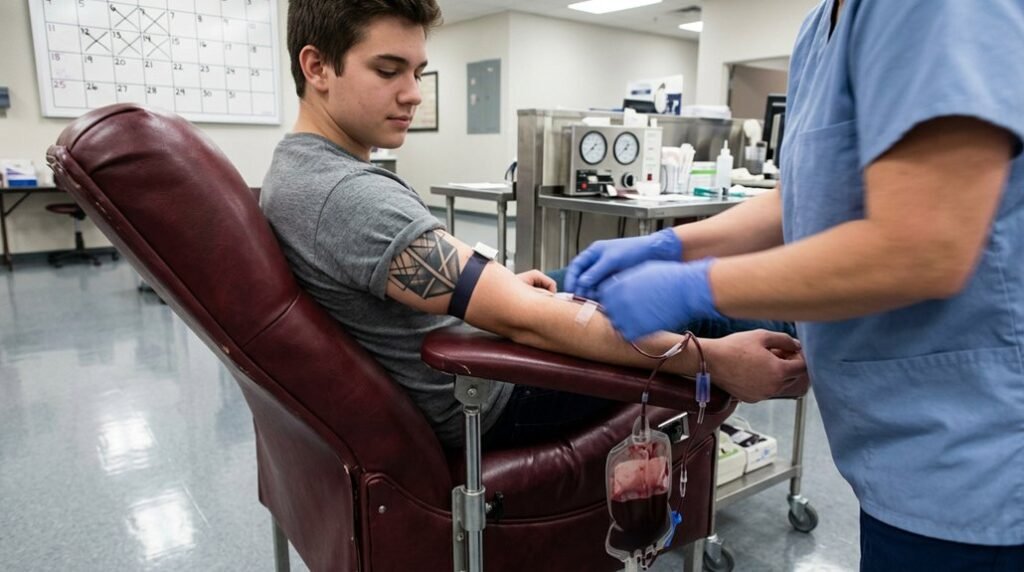
You’ve got a fresh tattoo and want to give back, but blood banks aren’t quite ready for you yet. That waiting period isn’t arbitrary bureaucracy—it exists for reasons you might not expect. Whether you qualify depends on where you got inked, when, and under what conditions. The rules shift dramatically across borders and facilities. You’ll want to know exactly what questions they’ll ask before you walk through those doors.
Key Takeaways
- Most regions require a 3-month deferral after tattoos from unregulated facilities.
- Licensed, state-regulated parlors may allow immediate or shorter deferral periods.
- Always disclose tattoo details, including date, studio, and artist, during screening.
- Infection signs like redness or swelling postpone donation until fully healed.
- Home tattoos or unlicensed artists typically result in automatic disqualification.
Recommended Products
BENEFICIAL CLEANSER: After Inked Ink Seal Spray is a credible and gentle solution for cleaning tattoos and permanent makeup. This formula helps maintain ink clarity, foster hydration, and promotes faster recoup, making it an essential part of the tattooing procedure.

TATTOO AFTERCARE LOTION: Elevate your ink's radiance with After Inked Tattoo aftercare lotion. Crafted with enriching grape seed oil, filled with powerful antioxidants, our tattoo lotion aftercare infuses hydration to the skin's surface. Unleash the true vibrancy of your tattoo's colors and cherish its artistic beauty.

AFTERCARE LOTION: Transform your tattoo aftercare with After Inked Tattoo Lotion, formulated with grape seed oil for hydration and skin nourishment. This rich lotion moisturizes dry tattooed skin, preserving ink vibrancy and color for a long-lasting glow.
How Long Must You Wait to Donate Blood After a Tattoo?
How long you’ll wait depends on where you got inked. You’ll face a 3-month deferral in most regions if unregulated facilities tattooed you. This rule protects you and recipients from bloodborne infections like hepatitis. You’ll wait because non-sterile needles risk contamination.
You’ll find shorter waits when licensed professionals tattoo you. Some blood centers accept your donation immediately after healing completes if you’ve used FDA-approved or state-regulated shops. You’ll need documentation proving the facility met safety standards.
You’ll always disclose your tattoo during screening. Staff will assess your eligibility based on timing, location, and healing status. You’ll postpone donating if infection signs appear—redness, swelling, or discharge. Your honesty ensures safe blood supply. You’ll protect vulnerable patients by following these guidelines precisely.
Recommended Products

TATTOO AFTERCARE ESSENTIAL: Hustle Butter is the original tattoo aftercare balm for new and older tattoos. With over 10 years in the market, we are a pioneer of the tattoo aftercare category.

COMPLETE AFTERCARE KIT FOR NEW & EXISTING TATTOOS: This Tattoo Aftercare Kit brings together 3 essentials, Antimicrobial Soap, Tattoo Balm, and Tattoo Lotion, to help cleanse, protect, and moisturize fresh ink. Useful after tattoo sessions and throughout healing, it supports vibrant color and skin comfort for dedicated ink enthusiasts and artists

100 Pack Professional Tattoo Aftercare Cards Includes 100 high-quality tattoo aftercare cards in a 2 x 3.5 inch business card size. Perfect for tattoo artists, studios, and piercers to give clients clear post-tattoo care instructions.
Where Do Tattoo Deferral Rules Differ by Country?
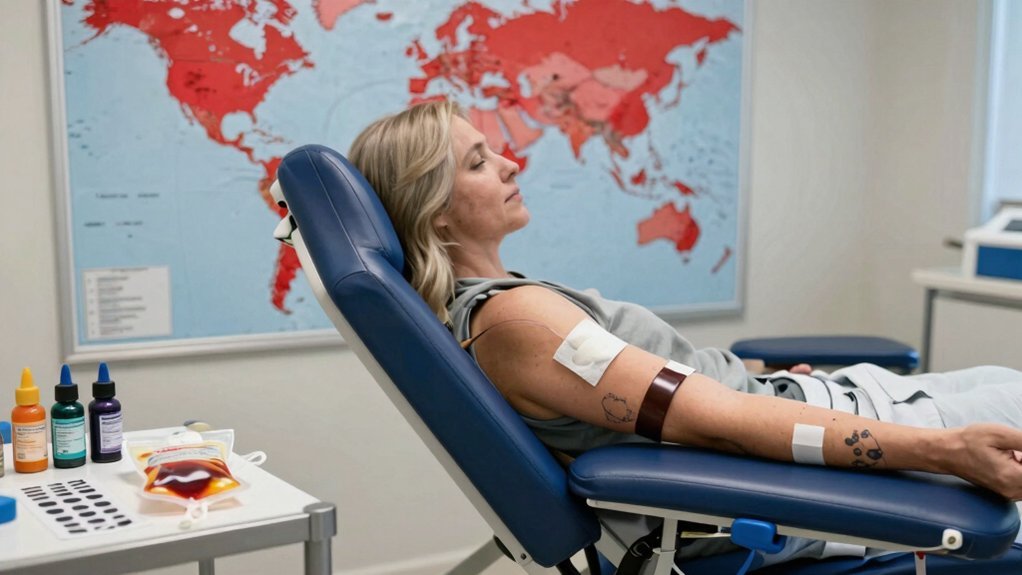
Why do tattoo deferral periods vary so dramatically across borders? You encounter different rules depending on where you live. In the United States, you’ll wait three months after getting inked. Cross into Canada, and you’re looking at a three-month deferral too. But venture to the United Kingdom, and you’ll find no waiting period at all if you visited a licensed parlor. Australia’s rules change by state—you might wait four months or donate immediately. Japan imposes a six-month deferral regardless of circumstances. Italy bans you for four months. These differences stem from varying regulatory approaches, tattoo licensing standards, and historical HIV transmission data. You must check your local blood service’s specific policy before scheduling your donation appointment.
Recommended Products

Packing Include: 45 sheets zombie tattoos for halloween with over 273+ fake scars designs. Measures 4.8*2.7 inches in length and width. Large pattern and horror realistic design,you can be applied to various parts of the body,face,arms,legs,shoulder,wrist,chest or anywhere you like.

Versatile Tattoo Designs: 16 pairs unique Halloween-themed eye tattoo designs featuring spooky elements like spiders, cobwebs, bats, skulls, and ghost

Ultra-Realistic Horror Designs: This set includes 9 sheets packed with high-definition, lifelike wound patterns, featuring deep claw scratches and detailed bloody stitches. The intricate shading ensures a professional, 3D appearance that genuinely mimics true injuries for immersive costumes
Why Does the 3-Month Deferral Exist?
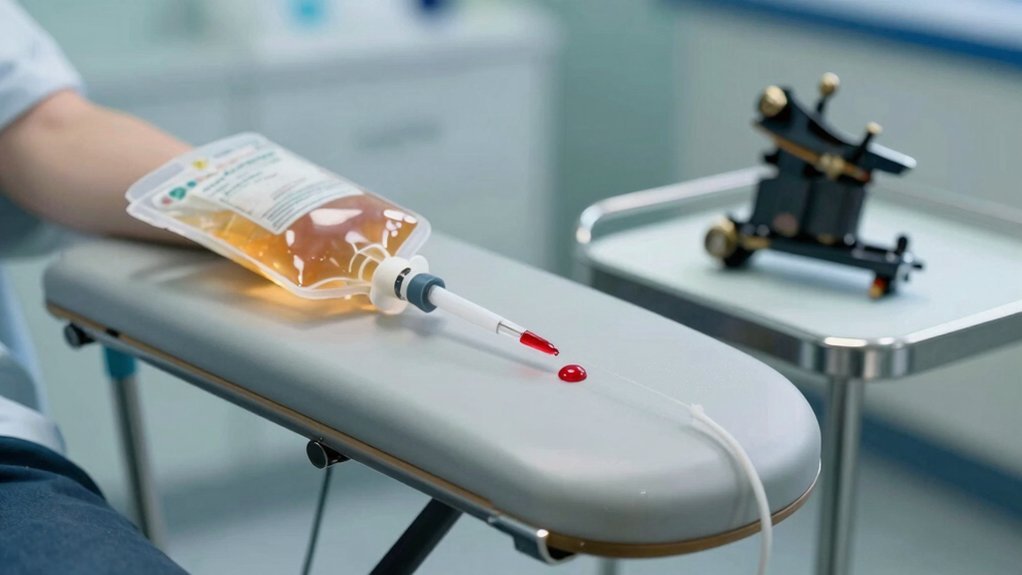
While countries set their own rules, the three-month deferral you’ll encounter in places like the U.S. and Canada isn’t arbitrary—it targets a specific window of risk. Blood screening tests detect infections by identifying antibodies your immune system produces, not the virus itself. You’ll face this gap because your body needs time to generate detectable antibody levels.
If you’ve contracted hepatitis B or C during tattooing, that three-month window allows infections to become discoverable before you donate. You’re protecting future blood recipients from receiving undetectable contaminated blood. The waiting period also ensures any bacterial infections from the tattooing process have resolved completely. Staff will ask where you received your tattoo because regulatory bodies track which environments maintain sterile equipment, but the deferral length itself centers on biological detection limits, not shop quality.
Recommended Products

Protect Your Body Art: Moisturizing with the bonus of itch relief! Tattoo Goo's Tattoo Care Lotion soothes healing skin & keeps healed ink looking sharp for life. With olive oil & glycerin, it delivers deep, breathable hydration that won’t clog pores

Tattoo Cream provides excellent smoothness when tattooing, can help moisturize and then heal the skin.

Vegan balm without petroleum derivatives and natural ingredients that helps close pores, aids in reducing inflammation, stopping bleeding and preventing redness, keeping the coat longer, helps keep colors, contrast more vivid and prevents them from mixing.
Which Tattoo Shops Disqualify You From Donating?
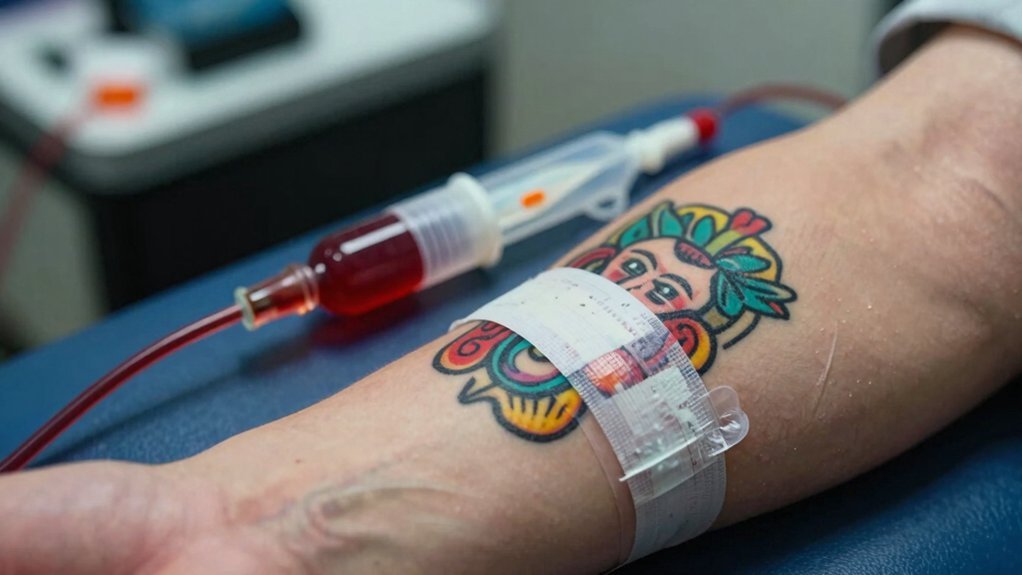
Where you get inked matters just as much as when. You face automatic disqualification if you receive a tattoo at an unlicensed or unregulated shop. These facilities skip sterilization protocols and reuse needles, exposing you to bloodborne pathogens like hepatitis B, C, and HIV.
You must confirm your artist uses single-use needles and autoclaves for equipment. States vary in licensing requirements, so you’ll need to verify your shop meets local health department standards. Home tattoos from friends or amateur artists always disqualify you.
You’re cleared faster—sometimes immediately—if you choose a state-regulated parlor in a jurisdiction that legally mandates sterile procedures. Some blood banks waive the 3-month deferral entirely for tattoos from approved, licensed establishments. Check your donor center’s specific policy before scheduling your appointment.
Recommended Products

Natural Vegan Tattoo Aftercare Lotion. Can be used on new tattoos, piercings and after lasers. Enriched with grapeseed oil for healing Contains no parabens or petroluem....
What Do Blood Banks Check About Your Tattoo?
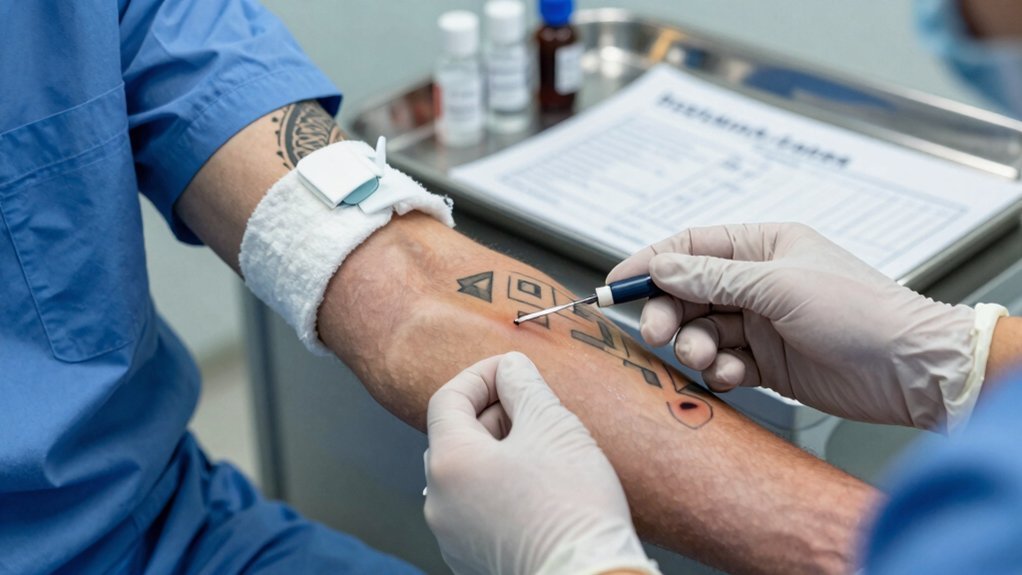
How do blood banks actually verify your tattoo details? They’ll ask you directly during your screening interview. You must disclose when you got your tattoo, where you received it, and which artist or shop performed the work.
Blood banks check whether your tattoo came from a state-regulated facility. They verify if sterile, single-use needles were used and if the ink met safety standards. Some banks cross-reference your shop against approved databases. If you can’t recall specific details, they’ll flag your donation for further review.
Your answers determine your deferral period. In states lacking tattoo regulation, you’ll typically wait three to twelve months. Honest disclosure keeps the blood supply safe, so don’t hide information. Technicians aren’t judging your ink; they’re assessing infection risk. Your transparency allows them to make accurate, responsible decisions about your eligibility.
Recommended Products

ENHANCE & MAINTAIN YOUR INK - This ultra-nourishing balm instantly enhances ink vibrancy as it forms a protective barrier on skin to help moisturize and soothe skin.

Upgraded Design, Easy to Use --- Tattoo aftercare balm comes in a tube,this container allows you to glide on the butter easily,Rolls on smoothly and evenly on your skin,No more mess or residue on your finger,convenient to use

Nourishes Healing Ink for Vibrant Color: Tattoo Goo supports healing tattoos & maintains vibrancy on healed ink with a lightweight formula rich in olive oil, lavender oil, cocoa butter, and beeswax. It absorbs quickly, moisturizes deeply, and helps reduce dryness, itch and tightness so your tattoo looks and feels comfortable through everyday routines
How Should You Prepare After Getting Tattooed?
Blood banks need accurate information about your tattoo, but your own health matters too. You must prioritize proper aftercare to ensure complete healing before you consider donating. Keep your new tattoo clean and moisturized. You wash it gently with mild soap, then pat it dry. Apply a thin layer of recommended ointment. Avoid submerging it in water, exposing it to direct sunlight, or picking at scabs.
You monitor your tattoo for signs of infection. Redness, swelling, pus, or fever means you delay donation plans immediately. Your immune system needs time to recover.
You also stay hydrated and eat nutritious foods. This supports healing and prepares your body for eventual donation. Document your tattoo’s date and the studio’s name. You’ll need these details when you return to donate.
Recommended Products

Packaging: You will receive 6 Sheets blood vessel tattoo stickers in different patterns, enough quantity to meet your decorating needs, which you can share with family and friends

【BOBISUKA Halloween Fake Blood Makeup Kit】This fake blood makeup kit includes fake blood spray(50ml/1.76oz), liquid dripping blood(50ml/1.76oz) and 4Pcs temporary blood tattoo stickers(scars/wound/stitches/bites)- perfect for authentic fresh blood looks。And with chucky scar face tattoo for evil chucky cosplay look. Whether you’re going for bloody zombie, vampire, monster, haunted corpse or evil joker looks, this set helps you achieve ultimate gruesome blood makeup in minutes!

★【15 Sheets Realistic Cool Y2K Black Temporary Tattoos For Women Men Adults】--COKTAK Brand Vintage Y2K Black Cool MUCH QUANTITY Mixed Style Package Includes 15 Sheets Realistic Waterproof Tribal Totem Half Sleeve Forearm Arm Hand Temporary Tattoos For Adults 3D Snake Spider Scorpion Eye Bat Compass Arrow Blood Vessels Lightning Tattoo Stickers.
What About Plasma and Platelet Donations After a Tattoo?
When you’re considering plasma or platelet donations, the rules differ slightly from whole blood guidelines. You still face the same three-month deferral period after getting tattooed at an unregulated facility. However, some blood centers separate these components through apheresis, which requires additional screening.
You’ll notice that plasma and platelet donations demand stricter health evaluations. Your donation center checks your protein levels and overall hydration more rigorously because these processes extract specific components while returning your red blood cells.
If you’ve gotten inked recently, you must disclose this during your screening interview. Staff members determine your eligibility based on state regulations and their facility’s accreditation status. You’re delaying these donations for patient safety, ensuring no bloodborne pathogens enter the supply chain through plasma-derived medications or platelet transfusions.
Recommended Products


10 REALISTIC VEIN DESIGNS ::-- Features ultra-detailed blood vessel and lightning patterns for professional-grade horror effects without makeup skills!
6cm*10.5cm,a set of 10pcs(10 sheets). It can last 2-3 days when stick on your skin.
What Happens If You Donate Too Soon After a Tattoo?
Why risk it? If you donate too soon after getting a tattoo, you’re putting recipients at serious risk. Blood banks don’t impose waiting periods arbitrarily—they’re protecting vulnerable patients from bloodborne pathogens like hepatitis B, hepatitis C, and HIV.
When you get tattooed, you’re essentially creating thousands of tiny open wounds. Needles puncture your skin repeatedly, introducing ink and potentially contaminated equipment into your bloodstream. Even with sterile practices, infection risks spike during healing. Your donated blood could carry undetected pathogens that standard screening misses, especially during early infection windows.
Staff will turn you away if you’ve donated recently and reveal a fresh tattoo. You’ve wasted your time, staff resources, and a blood collection set. Worse, you might feel lightheaded on your way home empty-handed. Wait out the deferral period—it protects everyone.
What Can You Do While Waiting to Regain Eligibility?
So what should you do while you’re sidelined? You can schedule your future donation appointment right now. Many blood centers let you book months ahead, so you’ll secure your spot the moment you’re eligible again.
You can also spread awareness. Tell friends and family about the donation shortage. Recruit first-time donors who’ve never gotten inked. You’ll expand the donor pool while you wait.
Consider volunteering at local drives instead. You’ll check in donors, hand out snacks, or manage paperwork. You’ll stay connected to the mission without giving blood.
Research your blood type’s specific needs. Learn which hospitals request platelets versus whole blood. You’ll arrive prepared when your deferral ends.
Finally, monitor your health. Stay hydrated, eat iron-rich foods, and track your healing. You’ll ensure you’re in peak condition when donation day arrives.
Recommended Products

Foaming Tattoo Soap: Great for in-process and post-tattoo and piercing care. Keeps new tattoos & piercings clean during the healing process.

HUSTLE BUTTER ESSENTIALS TATTOO AFTERCARE KIT: This Essential Kit includes our Hustle Butter Tattoo Balm (1 fl oz), Hustle Bubbles Foaming Soap (3.4 fl oz), and our Hustle Butter Tattoo Aftercare Wrap - Small (6 in x 2.2 yds)
ENHANCE & MAINTAIN YOUR INK - This ultra-nourishing balm instantly enhances ink vibrancy as it forms a protective barrier on skin to help moisturize and soothe skin.
How Does Tattoo Aftercare Affect Blood Donation Eligibility?
How you care for your fresh ink directly impacts when you’ll donate again. If you follow proper aftercare and avoid infection, you’ll wait the standard deferral period—typically three to twelve months depending on your state’s regulations. However, skip aftercare steps or develop complications, and you’ll delay your eligibility further.
Infections create real problems. Blood centers reject donors with active infections, including localized skin infections from poorly healed tattoos. You’re protecting future recipients when you keep that healing site clean and dry.
You also need to consider what products touch your open skin. Some aftercare ointments contain specific ingredients that might raise questions during screening, though most standard petroleum-based products won’t affect donation.
Complete your healing fully before you donate. You’ll ensure your blood meets safety standards and you’ll help someone in need without unnecessary delays.
Conclusion
You can donate blood after getting a tattoo, but you’ll need to wait. Most places require a 3-month deferral to protect blood safety. Always disclose your tattoo details during screening, ensure fully healed skin, and confirm sterile practices at the shop. Check your local center’s specific rules, as timelines vary by region and donation type. Use your waiting period to focus on health—stay hydrated, eat well, and prepare to save lives once eligible.