
You’re standing in the tattoo shop, fresh ink wrapped and throbbing, when the payment screen flashes. Twenty percent sounds standard, but your piece took six hours and three design drafts—does that change things? The unwritten rules of tipping artists aren’t as simple as a restaurant tab, and getting it wrong can cost you more than cash.
Key Takeaways
- The standard tip is 20% of the total bill to recognize time, skill, and supplies.
- Small tattoos typically warrant the full 20%, while large pieces may scale to 10–15%.
- Custom designs often deserve extra tipping due to unpaid sketching and revision work.
- Tip less than 20% if budget is strained, but communicate honestly with your artist.
- Hand cash directly to the artist; if tipping by card, inform reception before charging.
Recommended Products

RT, DT tips for RS, RL needles use, such as 3RS, 5RS, 7RS, 9RS, 3RL, 5RL, 7RL, 9RL FT tips for 5M1, 7M1 tattoo needles use For Disposable Use Only Pre Sterilized with EO Gas,...
How Much Should You Tip a Tattoo Artist? (The 20% Rule Explained)
Why does tipping a tattoo artist feel so confusing when the math itself is simple? You’re probably overthinking it. Most industry veterans agree: tip 20% of your total bill. That’s the standard rule you’ll hear in shops from Portland to Miami.
You’ll calculate this just like you’d tip at a restaurant. Got a $200 session? You’re leaving $40. A $500 piece? That’s $100 from you.
You should know this percentage recognizes your artist’s time, skill, and supplies. They split booth rental, buy needles, maintain equipment, and often design your piece beforehand. Your tip directly rewards that labor beyond the base price.
You’re free to adjust up for exceptional work—many clients do—but 20% remains your reliable starting point. Don’t let uncertainty delay you; your artist expects this gesture, and you’ve got the formula now.
Recommended Products

PERFECT TATTOO KIT - The disposable tattoo tips assorted fits for 3RL 5RL 7RL 9RL 3RS 5RS 7RS 9RS 5M1 7M1 tattoo needles. 100pcs Disposable Tattoo Tips Mixed Sizes: 3RT 5RT 7RT 9RT (each sizes 20pcs), 5MF 7MF (each sizes 10pcs). Each tattoo tips are for single use only.

1.PERFECT TATTOO TIPS STAINLESS STEEL TUBES KIT - The tattoo tips set include 22pcs tattoo stainless steel tip size: 1R, 3R, 5R, 7R, 9R, 11R, 13R, 15R, 18R, 5M1, 7M1, 9M1, 11M1, 13M1, 15M1, 17M1, 3DT, 5DT, 8DT, 11DT, 14DT, 18DT,

Made from high quality 304 stainless steel
Do You Tip the Same Percentage on Small vs. Expensive Tattoos?
So where exactly does that 20% rule start to bend?
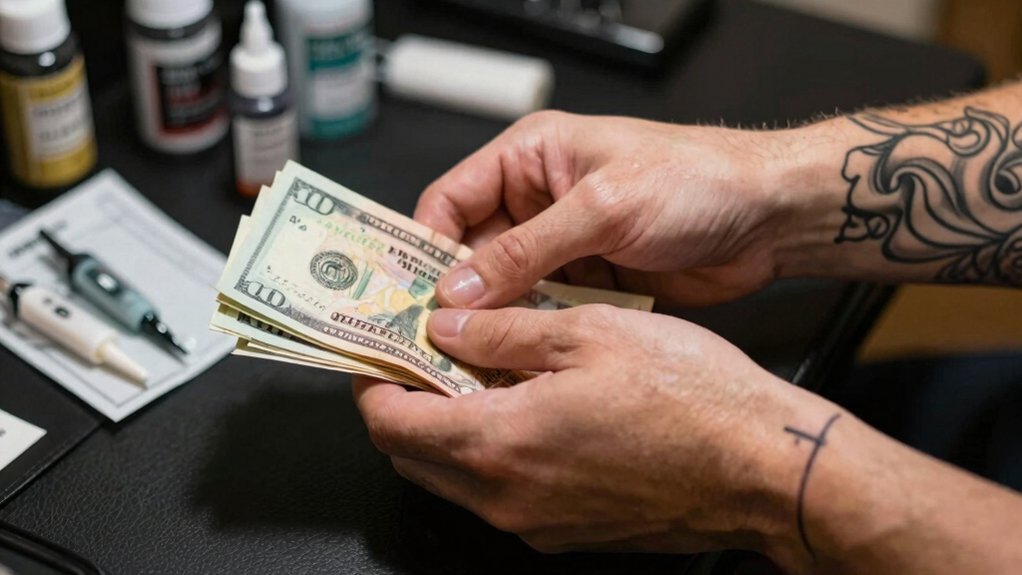
You don’t tip $400 on a $2,000 sleeve the same way you’d tip $40 on a $200 piece. On small tattoos, you stick closer to that 20% mark—you’re paying for the artist’s setup time and baseline effort. On expensive, multi-session work, you can scale back. Many clients tip 10-15% on large pieces, or you might set a flat daily rate—say, $100 per session. You’ve already invested thousands; the artist knows this. But you don’t stiff them. You assess the time, skill, and relationship. You tip meaningfully, not mechanically. You’re respecting their craft without bankrupting yourself. That’s where flexibility meets fairness.
Recommended Products

What You Get - The tattoo aftercare bandage totall 4.4 yard (6" x 4.4 Yard), you will get tattoo aftercare bandage, the size is 6" x 4.4 Yard. You will the tattoo supplies is best combination of with guaranteed quality. According to the size of the tattoo area, the shape can be freely cut, and it is suitable for all kinds of large-area new tattoos

✡Various Purpose - Care for all types of wounds; Waterproof cover; Fixed dressing; Tattoo aftercare. It can help lock in the color, protect your tattooed skin, and reduce scabbing when you wash or moisturize your tattoo, quickly form a protective film then accelerate your recovery

COMPLETE AFTERCARE KIT FOR NEW & EXISTING TATTOOS: This Tattoo Aftercare Kit brings together 3 essentials, Antimicrobial Soap, Tattoo Balm, and Tattoo Lotion, to help cleanse, protect, and moisturize fresh ink. Useful after tattoo sessions and throughout healing, it supports vibrant color and skin comfort for dedicated ink enthusiasts and artists
Should You Tip More for Custom Designs Than Flash Art?
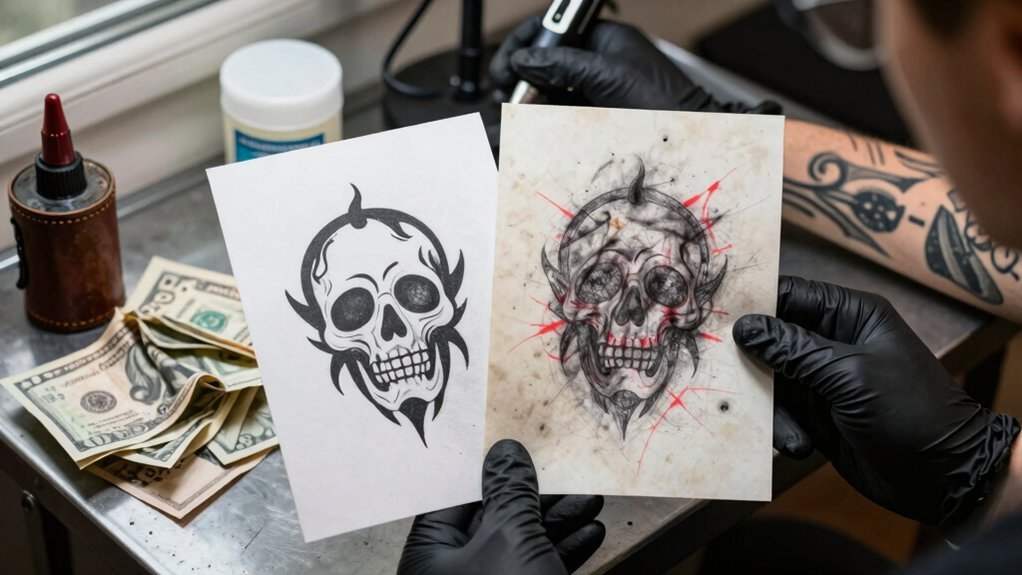
When you’re deciding what to tip, consider what actually went into the design. Custom work demands hours of unpaid sketching, revisions, and back-and-forth communication before you ever sit in the chair. Flash art hangs ready on the wall—no consultation, no emails, no redraws.
You wouldn’t tip the same for a chef who microwaved your meal versus one who built it from scratch. Your artist treats custom designs as passion projects, often pouring personal creativity into something uniquely yours. They’ve earned extra recognition.
That doesn’t mean you stiff flash artists. They still execute cleanly and professionally. But custom pieces carry unseen labor you benefit from. Bump your tip percentage when original art takes shape, especially if your artist waived consultation fees or delivered multiple drafts. Your gratitude shows you respect the craft.
Recommended Products

Package: 50pcs mixed tattoo cartridge needles, includes 10pcs each of 1203RL, 1205RL, 1207RL, 1209RL, 1211RL.

Poseidon cartridge adopt a one-time joint design hygienic standard The material is stainless steel and easy to color,and has better ink flow

【50PCS Mixed Tattoo Cartridge Needles Set】Includes 50 individually packaged tattoo cartridge needles in popular configurations: 1203RL, 1205RL, 1207RL tattoo cartridges, 1209RL, 1205RS, 1207RS, 1207M1, 1215M1, 1209RM, 1215RM (5pcs each). Suitable for both lining and shading needles for tattooing.
When Is It Okay to Tip Your Artist Less Than 20%?
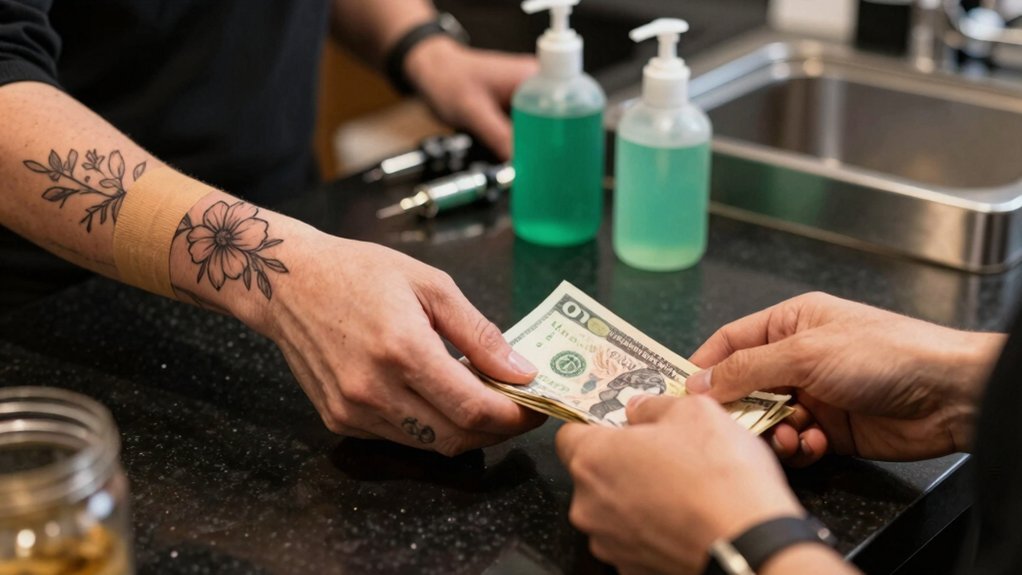
How do you navigate those moments when a full 20% tip strains your budget? You aren’t alone if tipping the standard rate feels impossible. Life throws financial curveballs, and tattoo artists understand this better than you’d expect.
You can tip less when you’ve shelled out thousands for a large piece that already stretches your savings. You can also scale back if you’re returning frequently for multiple sessions, building loyalty through repeat business rather than single large tips. If you’re a student or facing unexpected expenses, artists respect honesty over silence.
Communicate your situation when appropriate. Many artists prefer knowing you value their work even when money’s tight. You might bring them coffee, leave a glowing review, or refer friends instead. A good artist recognizes your tipping history and circumstances, not just one transaction.
Recommended Products

Clean, Flawless Transfers: Your artwork will look so clean once transferred to the skin with the Stencil Stuff gel! Gentle on the skin, Stencil Stuff transfer solution helps you achieve clear and sharp tattoo stencil transfers every time!
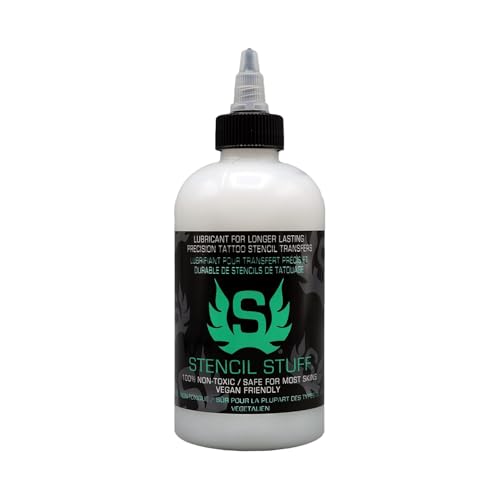
Clean, Flawless Transfers: Your artwork will look so clean once transferred to the skin with the Stencil Stuff gel! Gentle on the skin, Stencil Stuff transfer solution helps you achieve clear and sharp tattoo stencil transfers every time!

Safe and Healthy: Our tattoo transfer gel meets strict safety and non-toxic material standards, non-irritating to the skin and vegan-friendly. Maintains client comfort while achieving clear tattoo stencil transfers.
What’s the Best Way to Give Your Artist Their Tip?
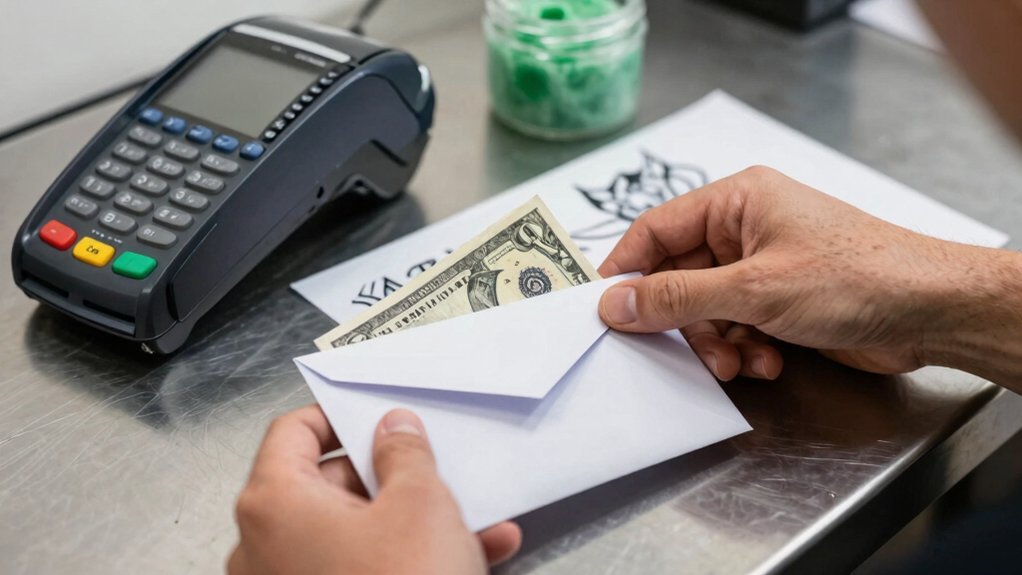
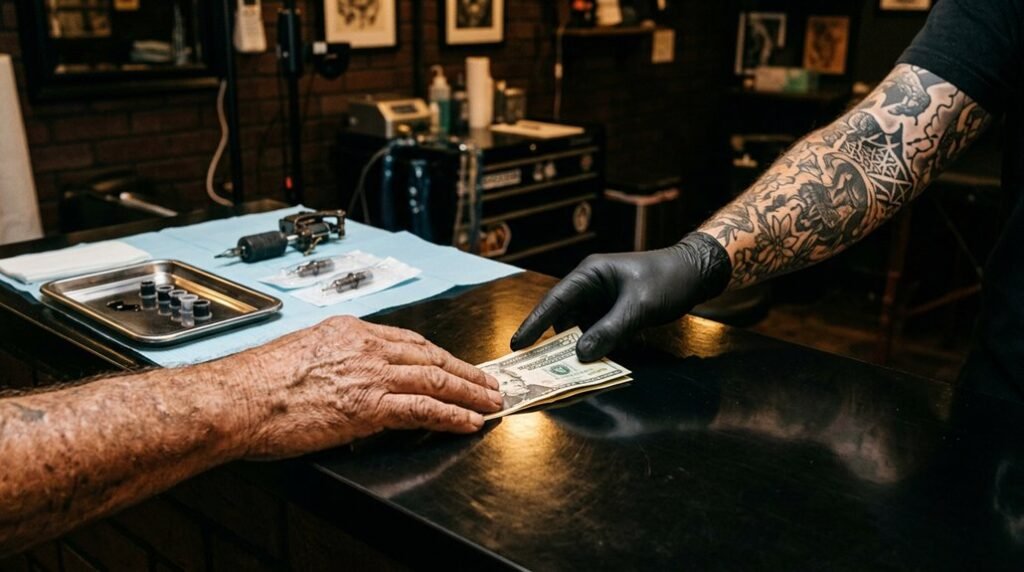
Where exactly should you put that cash when the session ends? You hand it directly to your artist. Don’t leave it on the counter or folded inside a receipt. You catch their eye, say thanks, and pass the bills from your hand to theirs. You’re acknowledging their work personally.
Cash rules here. You assume your artist prefers bills over app-based transfers. Cash hits their pocket immediately, no processing delays or fees. You bring enough to cover both the tattoo and the tip, since shops don’t always have change.
You can also tip through card payment if cash isn’t an option. You simply tell the receptionist you’re adding a gratuity before they run your card. You confirm the amount’s correct, sign, and you’re done.
Conclusion
You should tip your tattoo artist around 20% as a baseline, adjusting for project size and complexity. Small tattoos stay near 20%, while large, multi-session pieces might drop to 10–15% per session. Custom designs deserve extra for the artist’s time and revisions. Always tip in cash when possible, or give advance notice for card tips. Your appreciation keeps the industry thriving and builds lasting relationships with skilled artists.
Recommended Products
1.PERFECT TATTOO TIPS STAINLESS STEEL TUBES KIT:The tattoo tips set include 22pcs tattoo stainless steel tip size: 1R, 3R, 5R, 7R, 9R, 11R, 13R, 15R, 18R, 5M1, 7M1, 9M1,...