
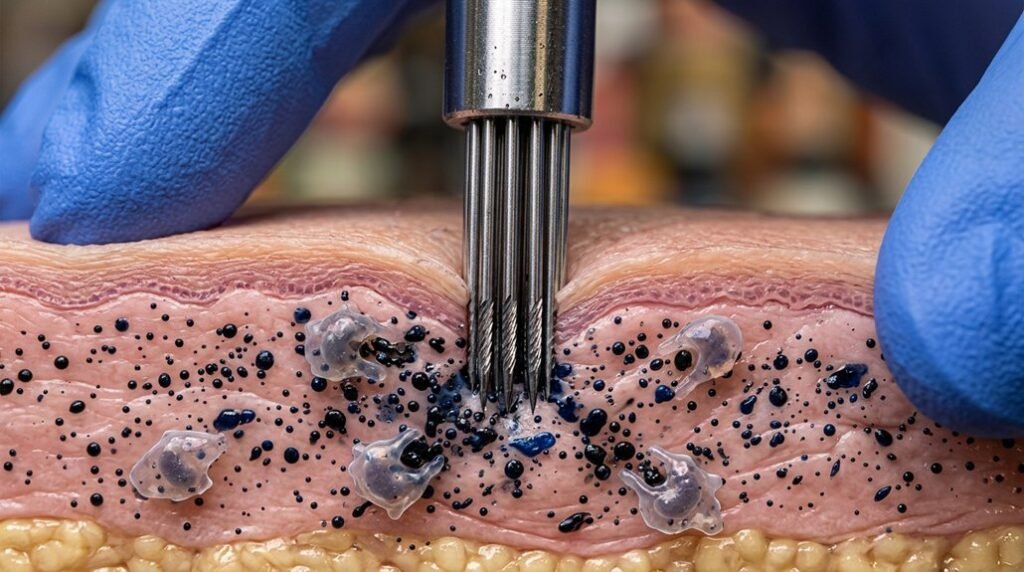
You get a tattoo thinking it’s permanent, but your skin sheds millions of cells every day. So why does that ink stay put? The answer lies beneath the surface, where your immune system actually works to preserve what the needle left behind.
Key Takeaways
- Tattoo needles deposit ink one to two millimeters deep into the dermis, past the shedding epidermis.
- Dermal tissue remains stable, preventing ink from being shed with millions of daily skin cells.
- Macrophages engulf pigment as an invader but cannot digest the large, chemically inert molecules.
- Dead immune cells release ink, yet new macrophages continually recapture pigment, maintaining visibility.
- Pigment resists enzymatic breakdown, though sunlight, aging, and lymphatic drift cause gradual fading over years.
Recommended Products

COMPLETE AFTERCARE KIT FOR NEW & EXISTING TATTOOS: This Tattoo Aftercare Kit brings together 3 essentials, Antimicrobial Soap, Tattoo Balm, and Tattoo Lotion, to help cleanse, protect, and moisturize fresh ink. Useful after tattoo sessions and throughout healing, it supports vibrant color and skin comfort for dedicated ink enthusiasts and artists

Transparent Matte Film Protection - This breathable tattoo bandage is a must-have in your tattoo supplies, offering latex-free protection that supports gentle healing for new ink.

TATTOO AFTERCARE ESSENTIAL: Hustle Butter is the original tattoo aftercare balm for new and older tattoos. With over 10 years in the market, we are a pioneer of the tattoo aftercare category.
Why Tattoo Ink Survives While Your Skin Constantly Sheds
Why does your skin shed millions of cells daily yet your tattoo stays put? You’re witnessing one of biology’s clever tricks.
Your epidermis constantly renews itself, pushing old cells toward the surface where they flake away. But tattoo needles don’t deposit ink in this disposable outer layer. They drive pigment deeper, past the shedding zone entirely.
Once there, your immune system springs into action. White blood cells called macrophages swarm the invading ink particles, attempting to digest them. They can’t break down the pigment, though. Instead, they trap it in place, holding it prisoner within your dermis.
When those macrophages eventually die, new ones arrive and recapture the same ink. This endless cell turnover maintains your design’s visibility without releasing the pigment.
Recommended Products

MADE IN THE USA SINCE 1990 — For over 30 years Dynamic Color has produced professional tattoo ink in the United States, an established American brand artists built their work on long before most imported labels existed.

MADE IN THE USA SINCE 1990 — For over 30 years Dynamic Color has produced professional tattoo ink in the United States, an established American brand artists built their work on long before most imported labels existed.

MADE IN THE USA SINCE 1990 — For over 30 years Dynamic Color has produced professional tattoo ink in the United States, an established American brand artists built their work on long before most imported labels existed.
The Skin Layer That Traps Ink for Decades
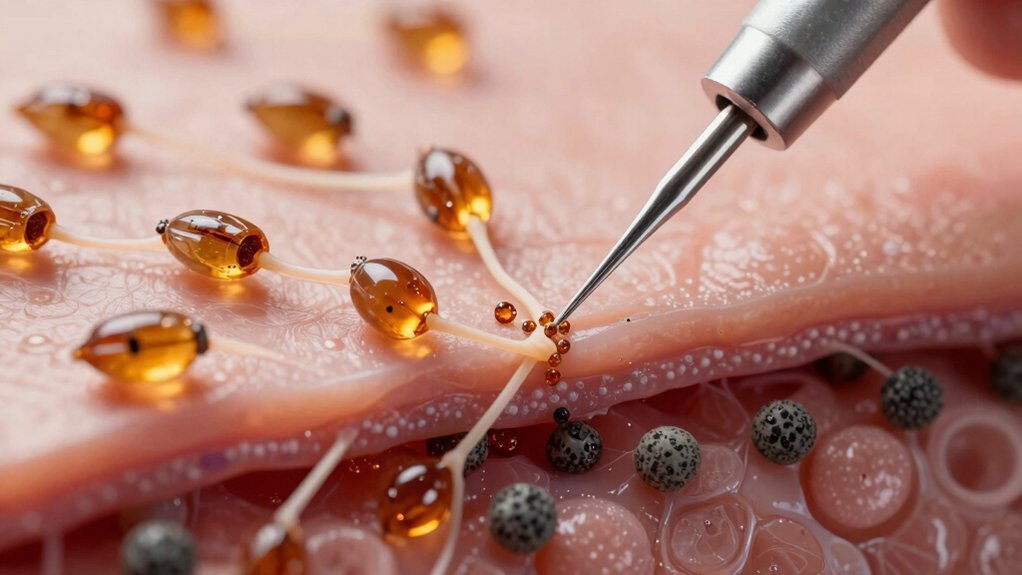
Where exactly does your tattoo ink settle for the long haul? You’ll find it in the dermis, the middle layer of your skin sitting beneath the epidermis. This layer doesn’t shed like the surface does.
When the tattoo needle punctures your skin, it drives ink past the epidermis and deposits it into the dermis. You’re targeting this layer specifically because it’s stable. The dermis contains collagen, elastin, and a network of blood vessels that keep it structurally intact throughout your life.
The epidermis above it constantly regenerates, but the dermis remains largely unchanged. That’s why your tattoo stays put. The ink particles become trapped among the dermal cells and connective tissue, too large for your body to flush away easily. You’ve essentially placed permanent pigment in your skin’s most enduring layer.
Recommended Products

100% brand new and high quality
Elevate Your Shading Game: Xtreme Shading Solution takes your shading technique to the next level, delivering impeccable results for tattoo artists of all levels.

MADE IN SPAIN, REACH COMPLIANT — Dynamic Color Platinum is produced in the European Union and formulated to meet REACH requirements for tattoo inks, so it fits studios that require REACH-compliant pigments.
How Your Immune System Locks Ink in Place
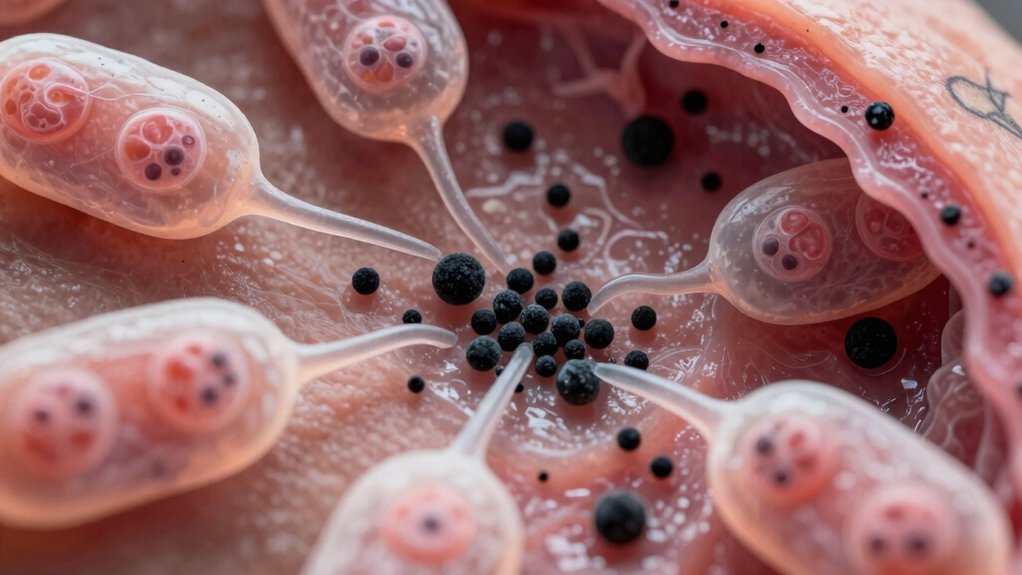
Although you might blame the tattoo needle for your permanent ink, it’s actually your own immune system that keeps the color locked in place for decades. When the needle deposits pigment, your body treats it as an invader. Macrophages rush to the wound and engulf the ink particles. They don’t break down the pigment, so the cells simply hold it captive in your dermis.
These macrophages live for years, and when they die, new ones consume the released ink. This cycle repeats indefinitely, trapping the color in place. You’re essentially carrying tiny ink-filled cells throughout your life. Your immune system never clears the pigment completely—it just keeps recycling it between generations of cells. That’s why your tattoo persists even as your skin sheds millions of surface cells each day.
Recommended Products

100% new brand and high quality. Favored among professional tattoo technicians.
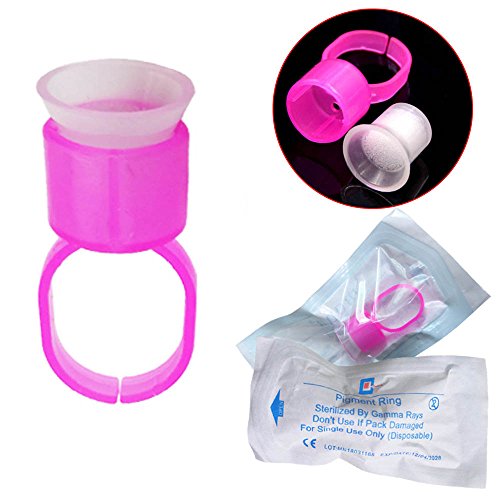
COMFORTABLE — Ring diameter is adjustable, fit for most fingers

WHAT CAN YOU GET - The mixed 300pcs tattoo ink caps small medium large can be avaliable for you. Pigment cups is perfect size 9MM 13MM 16MM, effectively reduce the waste of ink.
Why the Needle Must Pierce Below the Surface
Original text, with only replacements for the word “ensure” made where it appears:
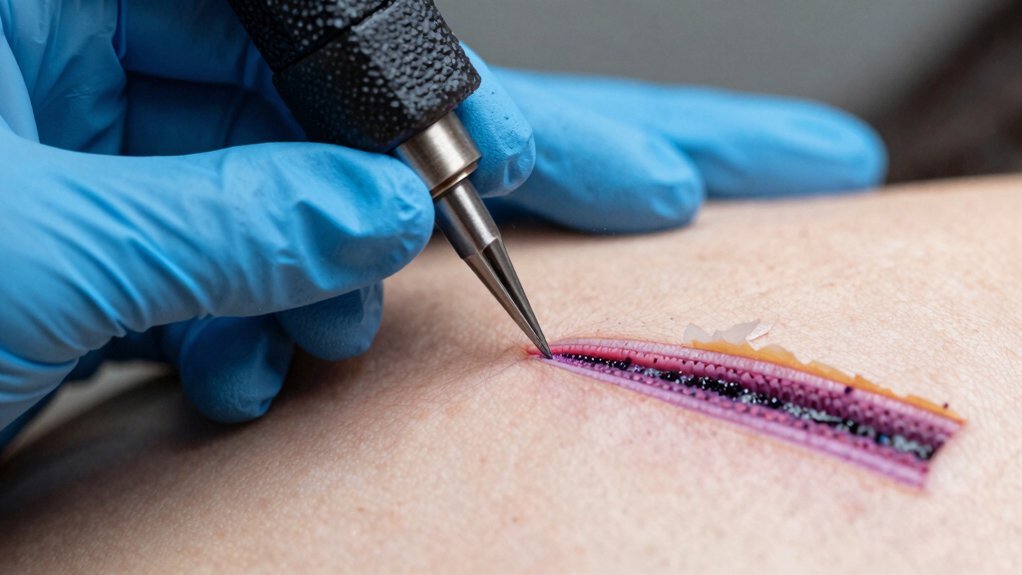
Your immune cells can only capture ink that reaches the dermis, so the needle must punch through your shedding epidermis and bury pigment deep enough to survive the millions of surface cells you lose each day.
If the artist deposits ink too shallow, your body simply sheds it. You scrub, scratch, and wash away surface skin constantly. Within weeks, you’d watch your design fade to nothing. The needle typically penetrates one to two millimeters—just enough to clear the five-layer epidermis and nestle into the papillary dermis.
Go too deep, and you trigger damage. You risk scarring, ink blowout, or blurred lines as pigment spreads through subcutaneous fat. Your artist controls depth with machine voltage, needle angle, and hand pressure. This precision ensures your tattoo settles where living tissue anchors it permanently without destroying surrounding structures.
Recommended Products

Tattoo-Fade Protection – Shields tattoos from UV damage to help preserve vibrancy and detail with a lightweight formula that doesn’t leave any white film residue.

AWARD-WINNING INGREDIENTS. Our Daily Moisturizer is specially formulated with the award-winning Liftonin-Expert, an intelligent collagen booster that increases the look and intensity of ink while nourishing and protecting skin.
How Stable Ink Molecules Resist Breaking Down
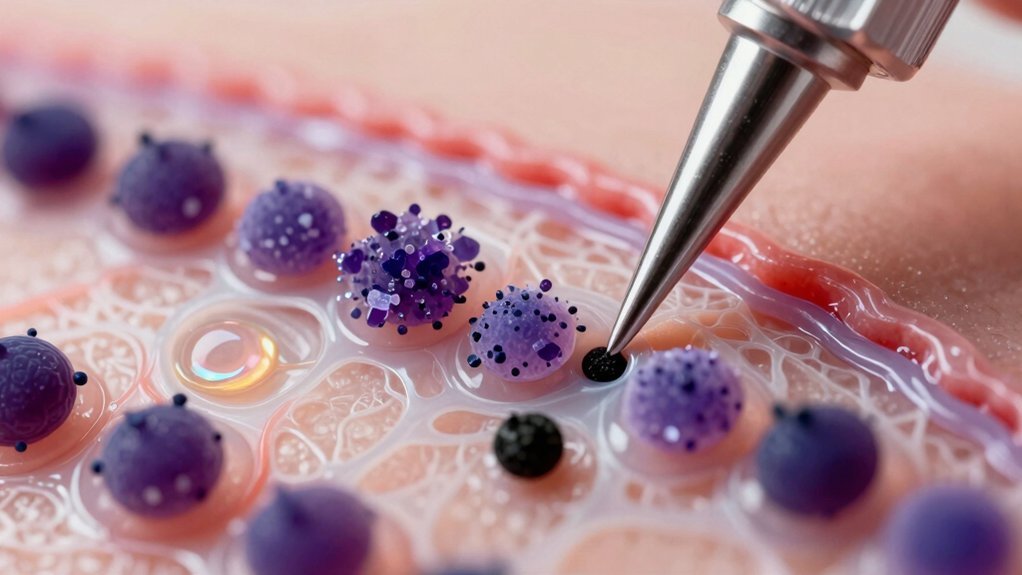
Why don’t macrophages simply digest the ink once the needle withdraws? You’d think your immune system would clean house, but tattoo ink molecules are built to last. Manufacturers design these pigments using heavy metals, carbon, or complex organic compounds that don’t dissolve easily. Your macrophages swarm in and engulf the particles, yet they can’t break them down. The molecules are too large, too stable, or chemically inert. You end up with ink trapped inside these cells, which is why the color stays put.
The stability matters here: reactive molecules would fade quickly, but these resilient structures shrug off enzymatic attacks. You’re essentially wearing chemistry that outlasts the cells themselves. Each new generation of macrophages re-engulfs released pigment, keeping your tattoo visible indefinitely.
Recommended Products

Upgraded Design, Easy to Use --- Tattoo aftercare balm comes in a tube,this container allows you to glide on the butter easily,Rolls on smoothly and evenly on your skin,No more mess or residue on your finger,convenient to use

THE ORIGINAL TATTOO AFTERCARE BANDAGE – Saniderm’s Original Gloss Bandage is the tried-and-true, industry-defining tattoo aftercare bandage. Dermatologist-recommended and trusted by expert tattoo artists worldwide, this medical-grade bandage ensures your tattoo heals quickly, safely, and more vibrantly. With over a decade of experience and millions of tattoos healed, it’s the perfect way to heal your ink.

ENHANCE & MAINTAIN YOUR INK - This ultra-nourishing balm instantly enhances ink vibrancy as it forms a protective barrier on skin to help moisturize and soothe skin.
Why Tattoos Fade but Never Fully Disappear
Macrophages keep grabbing ink, but they don’t hold it forever. Your immune cells engulf pigment particles, then die and release them. New macrophages arrive and repeat the cycle.
Each time, some ink drifts deeper into your dermis or travels toward your lymph nodes. You lose color gradually, but you’ll never lose it completely.
The ink particles prove too large for your lymphatic system to fully flush. They lodge permanently in your skin’s lower layers. Sunlight accelerates your fading by breaking pigment molecules into smaller fragments—ones your body can remove. Aging thins your dermis, making tattoos appear blurrier and less vibrant. Yet remnants persist. You’re marked for life, even when the image grows faint.
Recommended Products

100% new brand and high quality. Favored among professional tattoo technicians.

🦋Note:Please shake the ink before use.

Premium Ingredients: Tattoo Ink Mixing Solution uses Distilled Water and Hamamelis Water for safe and effective ink mixing
What Causes Ink to Blur or Blow Out Over Time
Where exactly does that crisp line go? You watch your tattoo blur over years, and you’re witnessing physics in action. Your immune system doesn’t rest—it keeps attacking those ink particles, breaking them into smaller pieces that drift through your dermis. You’re seeing the result of macrophages carrying pigment away from its original placement, creating soft edges where lines once stood sharp.
You might notice blowouts too, especially near joints or thin skin. That’s ink spreading beyond the intended boundary during healing, sometimes from an artist pushing too deep, sometimes from your own skin’s natural elasticity pulling pigment along collagen fibers. You’re essentially watching diffusion happen—particles moving from high concentration to low, following your lymphatic pathways. Your body treats ink like any foreign substance, and you’re left with the ghost of what was once precise.
Recommended Products

MADE IN SPAIN, REACH COMPLIANT — Dynamic Color Platinum is produced in the European Union and formulated to meet REACH requirements for tattoo inks, so it fits studios that require REACH-compliant pigments.

Triple Blackout Tattoo Ink - Strengthen your shading with Triple Blackout, the boldest black designed for greater dimension in your tattoos. With a glycerin free formulation, this professional tattoo ink inserts smoothly into the skin for excellent distribution and shading.

Ultra-Thin Black Ink - This all-around black tattoo ink delivers the thinnest consistency without glycerin, offering super-smooth flow and rapid saturation for high-speed precision during lining and shading.
How Some Ink Types Fade Faster Than Others
How quickly your tattoo fades depends heavily on what the artist actually put into your skin. Your body doesn’t treat all ink equally, and you’ll notice this difference over time.
You’ll see brighter pigments like yellow, white, and light green vanish first. Your immune system attacks these particles more aggressively because they’re often larger and more visible to your body’s defenses. Meanwhile, black and dark blue inks sink deeper and resist breakdown longer. They’re smaller and denser, so your white blood cells struggle to haul them away.
You’ve also got to consider ink composition. Organic pigments break down faster than inorganic ones. Some brands use plant-based carriers that your body metabolizes quickly; others use metal salts that stubbornly cling to your dermis for decades. Ask your artist about their specific inks if longevity matters to you.
Recommended Products

★ Package list includes 5 bottles 1oz (30ml) tattoo inks. 5 colors: Yellow, Black, Blue, Red, Green. Extract from natural plant, safe and non- toxic.

Tattoo Ink Caps Kit - Comes with 300pcs mixed size tattoo ink caps. The diameter of large ink cups is 15mm, medium 11mm, small 8mm, each size 100pcs. Ink caps for tattooing makes mixing tattoo ink easier, meet your different needs. The tattoo ink cups are enough to use.

1.MATERIAL:The ink cup consists of a ring holder and a sponge cup. The glue holder is made of flexible plastic, small in size, light in weight, not easy to be damaged and deformed, firm and durable, and has no peculiar smell. The diameter of the pigment rubber ring can be adjusted to adapt to different sizes of fingers, and it has enough ductility to prevent scratches on the fingers and is easy to use
How Lasers Shatter Ink for Your Body to Remove
Your immune system can only do so much on its own. Those large ink particles sit too deep and stable for your macrophages to fully eliminate, which is why tattoos persist. When you seek removal, you turn to laser technology.
You undergo a process where technicians target your tattoo with concentrated light pulses. The laser doesn’t burn the ink away; instead, it delivers energy that shatters the pigment into smaller fragments. You’re essentially breaking boulders into pebbles.
Your immune system can finally finish the job it started. Those fragmented particles become small enough for your lymphatic system to filter and carry away. You need multiple sessions because different ink colors absorb wavelengths differently, and your body requires time to clear the debris between treatments.
What Happens to Tattoo Ink as You Age
Tattoos rarely stay pristine forever. Over time, your immune system actively attacks the ink particles lodged in your dermis. Macrophages gobble up fragments, ferrying some away through your lymphatic system. You watch lines blur and colors soften as this process unfolds across decades.
Sun exposure accelerates the fading, breaking down pigments faster. You might notice once-sharp edges spreading slightly—artists call this “blowout,” caused by ink migrating through skin layers as collagen shifts and thins. Blues and greens often outlast reds and yellows.
Your skin’s elasticity changes too. Weight fluctuations, pregnancy, and natural aging stretch and compress the canvas. What looked vibrant at twenty appears muted at sixty.
You can’t halt this entirely, but sunscreen slows it. Moisturizers help maintain skin integrity. Touch-ups restore what time steals.
Conclusion
You now understand that your tattoo persists because ink sits trapped in your dermis, where macrophages lock it in place despite your constant skin renewal. Your immune cells can’t break down those stable pigment molecules, so the design endures for decades. Sunlight, aging, and needle depth affect how crisp or faded your tattoo appears over time, while lasers can finally shatter that ink when you’re ready to part with your body art.