
You’re staring at a blank arm, wondering what it’ll take to fill it with ink. A sleeve tattoo isn’t cheap, and the numbers you’ll hear range wildly. You’ll need to weigh size, detail, and who’s holding the needle. Before you commit, there’s more to unpack than the upfront price.
Key Takeaways
- Full sleeves typically cost $3,000–$7,000+, while half sleeves range $1,500–$2,500.
- Artist experience and design complexity heavily influence final pricing.
- Hourly rates span $150–$500, with some artists preferring flat project fees.
- Most sleeves require multiple sessions spaced 4–6 weeks apart for healing.
- Budget for hidden costs: tips, deposits, touch-ups, and aftercare supplies.
Recommended Products

TATTOO AFTERCARE ESSENTIAL: Hustle Butter is the original tattoo aftercare balm for new and older tattoos. With over 10 years in the market, we are a pioneer of the tattoo aftercare category.

COMPLETE AFTERCARE KIT FOR NEW & EXISTING TATTOOS: This Tattoo Aftercare Kit brings together 3 essentials, Antimicrobial Soap, Tattoo Balm, and Tattoo Lotion, to help cleanse, protect, and moisturize fresh ink. Useful after tattoo sessions and throughout healing, it supports vibrant color and skin comfort for dedicated ink enthusiasts and artists

☑Natural Safe Organic Ingredients: Tattoo Aftercare Butter is composed of Shea Butter, Jojoba, Macadamia Ternifolia Seed Oil and Vitamin E Complex. Our all-natural butter is also petroleum-free and paraben-free. After use, it can make the tattooed skin heal faster and moisturize the skin. Makes your skin smooth and the tattoo color bright.
Full Sleeve Tattoo Cost: Realistic Price Ranges in 2024
How much can you realistically expect to shell out for a full sleeve in 2024? You’ll find most artists charge between $1,500 and $7,000 for a complete full sleeve.
You’ll pay closer to $1,500-$3,000 if you’re working with a newer artist or choosing a simpler design.
You’ll invest $4,000-$7,000 when you select an experienced specialist with a waitlist.
You should budget for 15 to 40 hours of actual tattooing time. You’ll spread these sessions across months due to healing requirements. You’re paying for both time and square footage—your arm offers significant canvas.
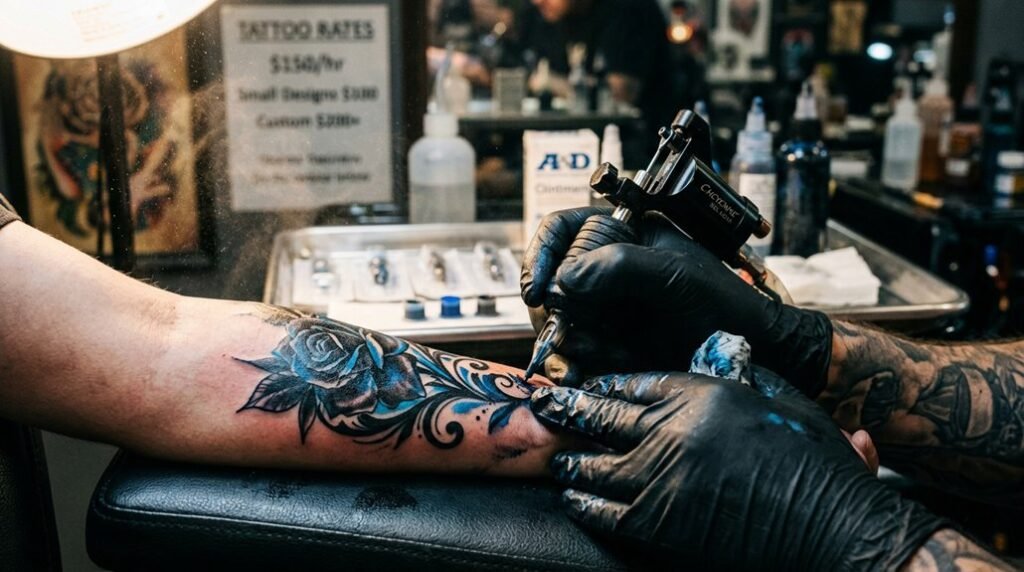
You’ll encounter pricing structures that vary by artist. Some charge flat project rates; others bill hourly at $150-$500.
You’ll typically place deposits securing your appointments, often $500-$1,000, which apply toward your total.
Recommended Products

Phomemo Tattoo Transfer Paper kit - Paper size: 8.27 in x 11.69 in (210 x 297 mm), Quantity: 1 Box, 100 Sheets in the box, Color: Blue. Phomemo Tattoo Transfer Paper is ideal for tattoo enthusiasts, artists and professional tattoo artists, offering reliability and consistency in tattoo stencil creation

Precision Transfers & Long Lasting: Tattoo stencil paper delivers vibrant, high-definition transfers even for intricate designs. Creates crisp, dark lines that transfer cleanly to skin (clearly on different skin tones) which are easy to follow during tattooing. The carbon layer made from high-quality dyes ensures sharp outlines without smudging or fading and maintains crisp lines visibility throughout long tattoo sessions, so you can focus on creating art instead of re-drawing lines

4-layer Design: The 4-layer design ensures a crisp, clean transfer with sharp lines and fine details. Each layer has a specific function — such as holding the stencil ink, releasing it evenly, and protecting the tattoo paper during storage — which minimizes smudging, prevents distortion, and makes application easier on different skin surfaces.
Why Sleeve Tattoo Rates Vary From $150 to $500 Per Hour
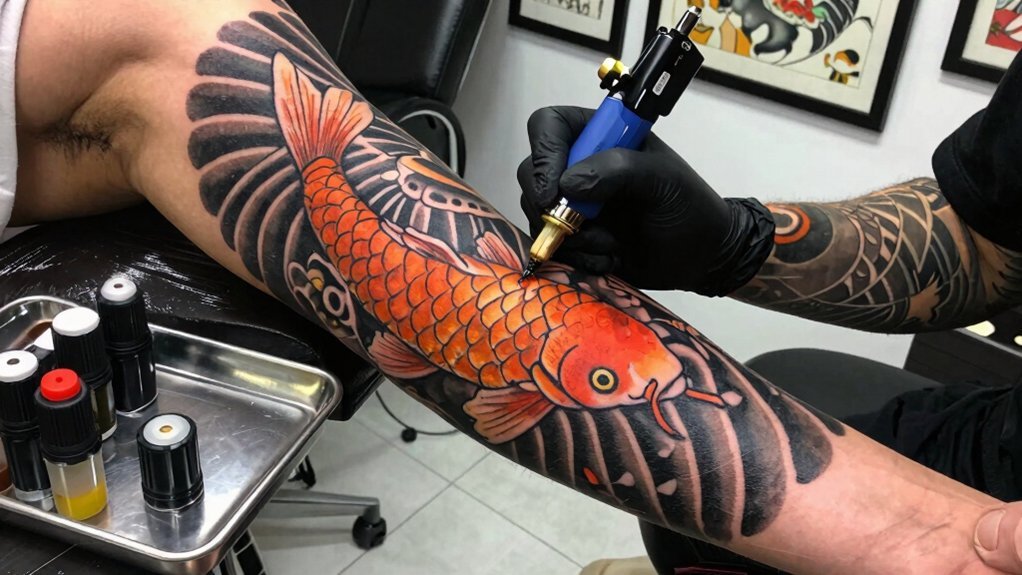
Why do hourly rates swing so dramatically between artists? You’re paying for vastly different levels of expertise. A $150-per-hour artist typically builds their portfolio; they’ve mastered fundamentals but lack extensive sleeve experience. You’ll spend more hours in the chair as they work methodically.
At $300-plus, you’re commissioning established professionals with waiting lists. They’ve perfected complex techniques—realism, Japanese irezumi, or neo-traditional styles. Their hourly efficiency saves you sessions and healing cycles.
Geography hits your wallet too. Studios in New York or Los Angeles charge triple what you’ll find in smaller markets. Shop prestige matters as well; renowned establishments invest in premium equipment, sterile environments, and continued education.
Specialists command premiums too. An artist famous for biomechanical sleeves prices higher than generalists. You’re not merely buying time; you’re purchasing years of refined skill and artistic vision tailored to your arm.
Recommended Products

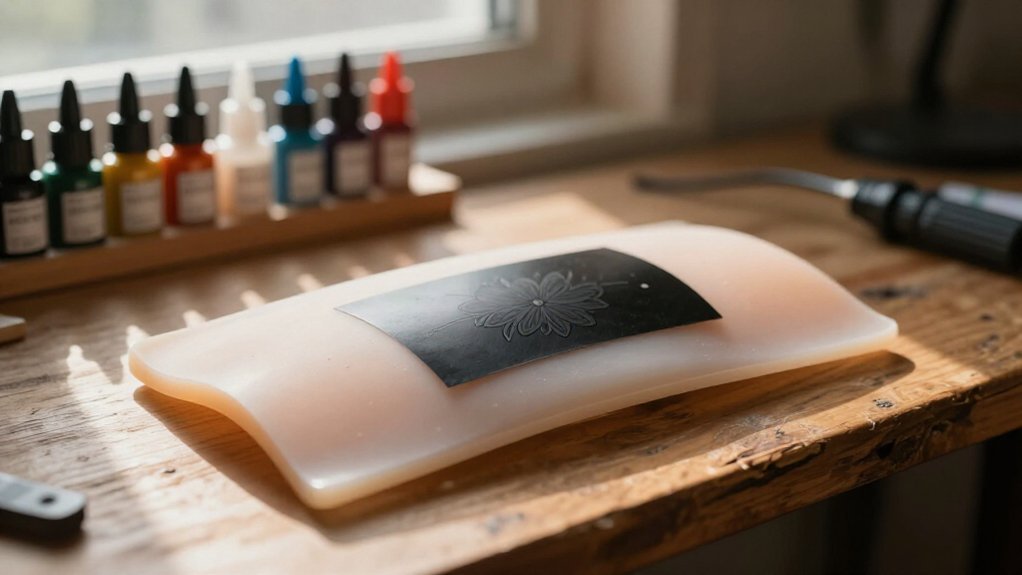
📦 [10Pcs Individually Sealed] 10 sheets of premium tattoo practice skins (8"x6" / 1.0mm thick), each vacuum-sealed for hygiene. Double-sided blank fake skin maximizes usage – wipe & reuse for multiple techniques.

【PREMIUM 3MM THICKNESS】Our practice skins are crafted from 3mm thick, professional-grade silicone to deliver an authentic tattooing experience. This optimal density provides superior needle resistance, elasticity, and durability — just like real skin. Perfect for mastering stretching techniques, shading, and outlining without the pressure of working on live models.

📏1.3mm Professional Grade - 30 sheets of 1mm thick synthetic skin with dermis-like texture, certified by tattoo artists for real needle feedback and ink absorption. Ideal for beginners to avoid mistakes on real clients.
Half Sleeve or Full: How to Choose (and Price Each Option)
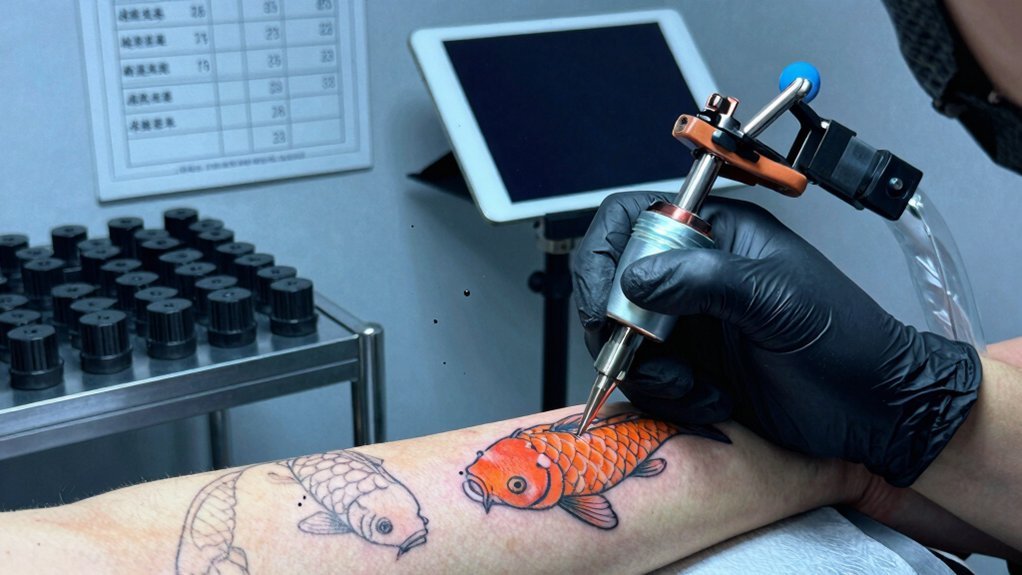
Where exactly should your sleeve stop—at the elbow or the wrist?
You’ll choose based on budget, pain tolerance, and career considerations. A half sleeve covers your upper arm from shoulder to elbow, typically running $1,500–$2,500. It hides easily under short sleeves and costs roughly half a full sleeve’s price. You’ll complete it faster and endure less session time.
A full sleeve extends from shoulder to wrist, commanding $3,000–$7,000+. You’re paying for twice the canvas and substantially more detail work. Artists charge for the full arm’s complexity—inner elbow, wrist bone, and hand integration demand extra precision.
Consider your lifestyle. Can you conceal tattoos at work? Your pain threshold matters too—lower arm sessions hurt more. Start with a half sleeve if you’re uncertain; you’ll expand later without abandoning existing work.
Recommended Products

FSA HSA Eligible Over-the-Counter Medication - This topical lidocaine numb cream with Allantoin, Vitamin E, and Aloe is clinically proven to temporarily relieve pain, burning, itching, discomfort, inflammation, and soreness in local and anorectal areas

Fast Acting Hemorrhoid Cream - Made with 5% Lidocaine, this topical anesthetic provides temporary relief from discomfort, itching, and burning associated with hemorrhoids and other anorectal irritation.

Maximum Strength 5% Lidocaine for Fast Relief - For the temporary relief of local discomfort associated with anorectal disorders. For the temporary relief of pain, soreness and burning.
How Many Sessions Will Your Sleeve Actually Take?
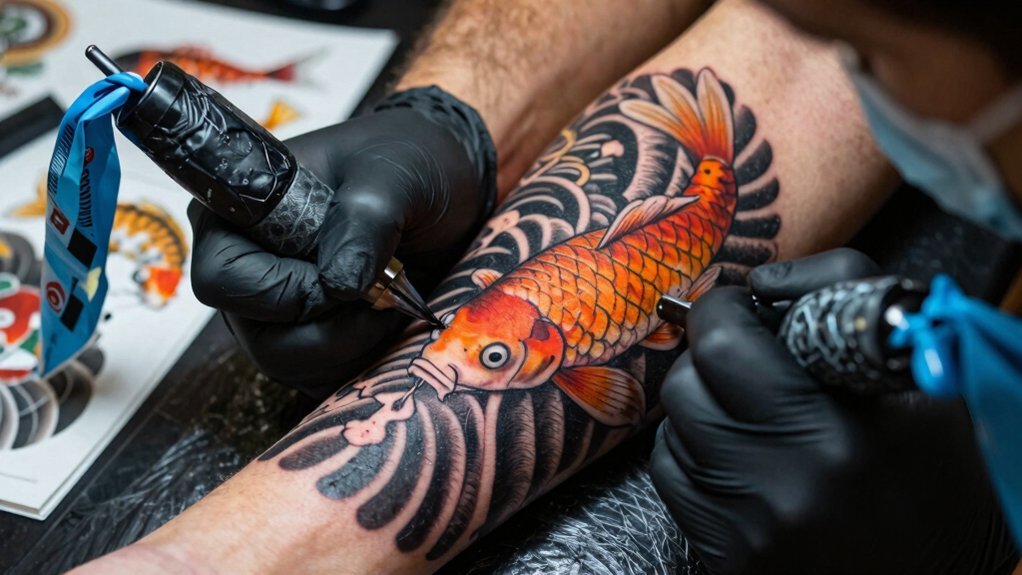
The timeline for completing your sleeve depends on size, complexity, and how quickly your skin heals between sessions. Most artists schedule sessions four to six weeks apart, giving your body time to recover. A half sleeve typically takes three to five sessions, while a full sleeve demands six to ten sessions or more. You’ll sit for two to four hours per appointment—the sweet spot for maintaining detail quality without pushing your pain tolerance.
Dense blackwork moves faster than intricate color realism. Your artist’s speed matters too; some work methodically, others knock out large areas quickly. You can’t rush healing, so plan your calendar accordingly. Larger pieces span months or years. Set realistic expectations—you’re building a permanent artwork, not ordering coffee.
Recommended Products

16-fluid ounce bottle of Lubriderm Fragrance Free Daily Moisture Lotion + Pro-Ceramide, Shea Butter and Glycerin to help restore skin's moisture barrier for healthier-looking skin

Protect Your Body Art: Moisturizing with the bonus of itch relief! Tattoo Goo's Tattoo Care Lotion soothes healing skin & keeps healed ink looking sharp for life. With olive oil & glycerin, it delivers deep, breathable hydration that won’t clog pores

2 ounces of Aveeno Skin Relief Healing Ointment with a Triple Oat, shea butter, and glycerin formula helps repair and protect dry skin. Designed for use on the body, face, hands, and lips, it provides lasting moisture with a non-greasy feel
Hidden Costs: Tips, Touch-Ups, and Session Fees
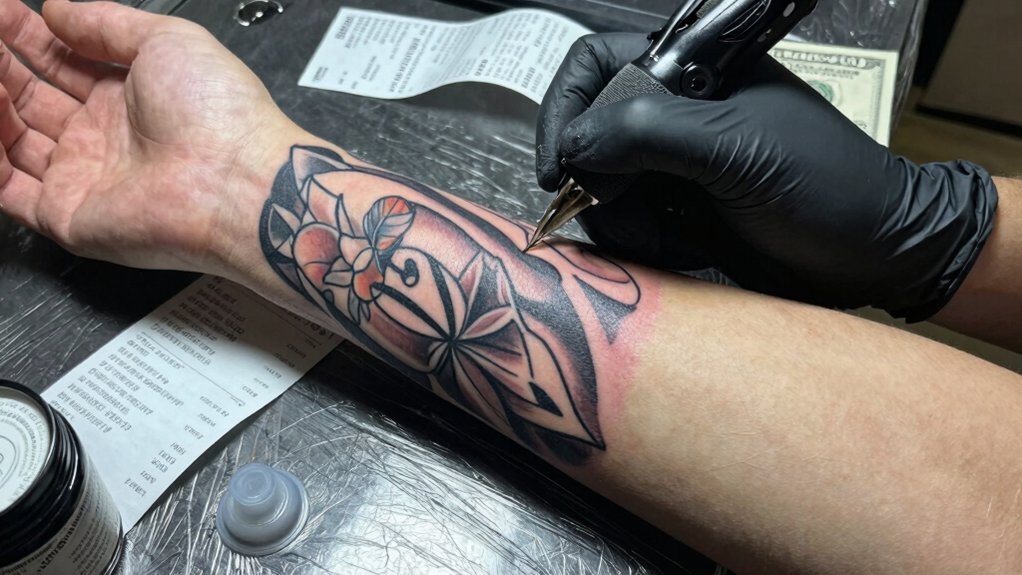
How much should you really set aside for that sleeve? You’ll want to budget beyond the hourly rate your artist quotes.
Session fees add up fast. Even shorter appointments carry minimum charges, so you’ll pay for partial hours you don’t fully use. Factor this in from the start.
You’ll tip your artist, too—typically 15-20% per session. On a multi-thousand-dollar sleeve, that’s hundreds extra. Don’t skip it; this money acknowledges their skill and time.
Touch-ups present another cost. After healing, colors fade and lines blur. Most artists charge for these follow-ups, though some include one free session. Ask upfront so you’re not surprised later.
You also need aftercare supplies. Quality balms and moisturizers protect your investment. These small purchases matter.
You can’t skip them without risking your tattoo’s appearance. Plan for these hidden costs, and you’ll finish your sleeve without financial shocks.
Recommended Products

Upgraded Design, Easy to Use --- Tattoo aftercare balm comes in a tube,this container allows you to glide on the butter easily,Rolls on smoothly and evenly on your skin,No more mess or residue on your finger,convenient to use

FRAGRANCE FREE TATTOO AFTERCARE FOR SENSITIVE SKIN - The same #1 artist recommended Hustle Butter formula, now with no added fragrance, dyes, or parabens. The unscented tattoo lotion of choice for sensitive or easily irritated skin.

PROTECT & HEAL - H2Ocean Aquatat seals the skin in a moisturizing barrier to protect from irritants while still allowing the skin to breathe. Aquatat will also heal topical wounds on skin such as tattoos, rashes, cuts and scrapes while minimizing scabbing.
How to Budget for Your Sleeve Without Debt
What steps will keep you from draining your savings on ink? You set a realistic timeline and divide the total cost into monthly chunks. You open a dedicated tattoo savings account and automate deposits—$50 or $100 disappears before you notice. You skip financing; interest turns your sleeve into a money pit.
You book consultations early. Artists quote by the hour, so you multiply their rate by estimated sessions. You pad that number by 20% for tip and touch-ups. You wait for flash sales or shoulder-season discounts when studios slow down.
You trim discretionary spending—one less concert, fewer dinners out. You pick up side gigs specifically for ink money. You pay cash per session. You never put your sleeve on a credit card.
Recommended Products

100 Sheets of 4-layer Tattoo Transfer Paper: The first layer is transfer paper (hand-painted paper); the second layer is protective paper (please discard before use); the third layer is purple carbon paper; the fourth layer is yellow backing ( Please remove the yellow backing paper before using the tattoo printer). Compared with other ordinary tattoo paper, MUNBYN tattoo transfer paper is thicker. Measures approximately A4 size
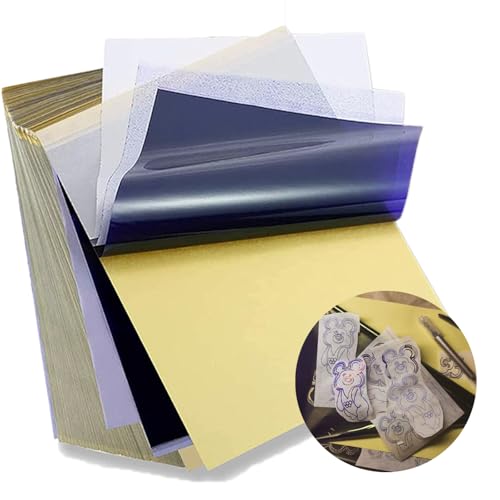
Standard size: Tattoo Transfer Paper is standard A4 paper size, each measures 8.27 in X 11.69 in. There are 4 levels in total. The thickness of the paper is very light and smooth to the touch.

4-layer Design: The 4-layer design ensures a crisp, clean transfer with sharp lines and fine details. Each layer has a specific function — such as holding the stencil ink, releasing it evenly, and protecting the tattoo paper during storage — which minimizes smudging, prevents distortion, and makes application easier on different skin surfaces.
Conclusion
You’re looking at $1,500–$7,000 for your sleeve, depending on size, detail, and your artist’s skill. Don’t forget to budget for tips, touch-ups, and aftercare products. Save up beforehand so you’ll enjoy the process without financial stress. Prioritize quality over speed—this permanent artwork deserves your patience and investment. Start consulting reputable artists, get detailed quotes, and plan your sessions around healing time. Your dream sleeve is absolutely achievable with realistic expectations and smart planning.
Recommended Products

🩺 MEDICAL-GRADE REALISM - Precision 3mm±0.1mm - Calibrated with US studio input to match human forearm density. Holds ink without bleeding - crucial for fine line mastery.

💙PACKAGE AND SIZE- Urknall tattoo practice skin set includes 10pcs of thick tattoo skins, each individually packaged for clean and convenience. With a thickness of 3mm, these tattoo skins measure 7.48" long by 5.62" wide, providing ample space for your tattooing endeavors.

Professional-Grade Realism:Professional Grade 1mm Fake Skin with realistic dermis texture, certified by artists for true needle feedback and ink absorption. This synthetic skin delivers an authentic tattooing experience, making it perfect for beginners to practice safely and build confidence.