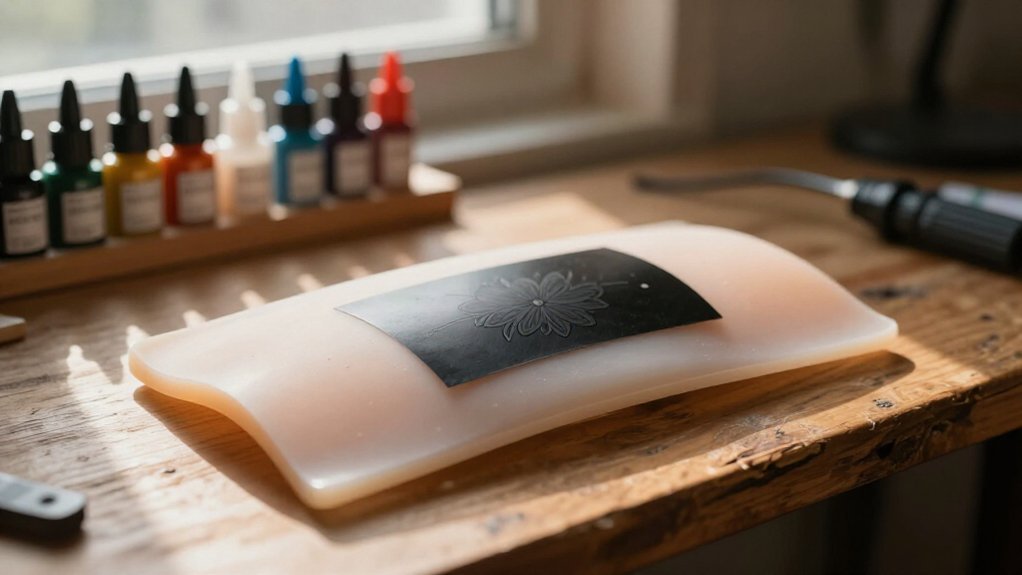

You carry your story on your skin, and sometimes that story demands space to breathe. A freedom tattoo isn’t just decoration—it’s a declaration that you’ve claimed yourself back. But which symbol truly captures *your* liberation? You might be surprised by how many paths lead there, and the choice you face isn’t as simple as you’d expect.
Key Takeaways
- Birds and wings represent unbound movement, with eagles signifying independence and swallows marking journeys survived.
- Broken chains on wrists or ribs visualize release from emotional, relational, or systemic oppression.
- Wildflowers cracking concrete embody growth without permission and survival through adversity.
- Semicolons declare that one’s story continues beyond mental illness, trauma, or addiction struggles.
- Placement choices—visible forearms or hidden ribs—determine whether freedom is publicly claimed or privately honored.
Recommended Products

Versatile Art Stencil – Ideal for painting, wall décor, scrapbooking, signs, and a wide range of creative projects.

▶ Henna Tattoo Kit: 16 sheets tattoo stencils. airbrush tattoo stencils suitable for tattoo lovers. Experience the effects of tattooing without the pain of tattooing.

⯁ 400+ Reusable Henna Stencils: Get 24 sheets of high-quality, self-adhesive hollow templates featuring over 400 unique patterns. These temporary tattoo stencils allow you to create stunning body art including mandalas, butterflies, and dragons. Perfect for practicing techniques without permanence
Birds and Wings: Classic Freedom Tattoo Meanings
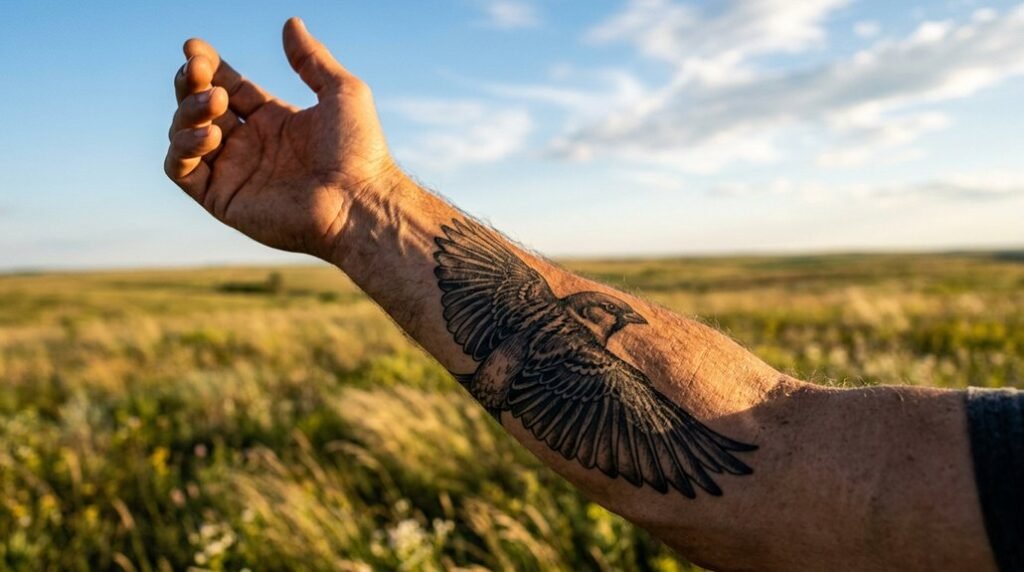
Why do birds captivate us so effortlessly when we think of freedom? You watch them soar beyond your reach, and you understand something primal about release. When you choose a bird tattoo, you’re marking your skin with that same longing.
You might pick an eagle for its fierce independence, or perhaps swallows that sailors once wore to mark miles traveled and safe returns. You feel the weight lift when you trace wing outlines across your shoulder blade. You’re not decorating yourself; you’re declaring intent.
Feathers work similarly. You hold one, and you sense the hollow bone structure that makes flight possible. You understand fragility and strength combined. When you ink feathers onto your wrist, you carry that paradox daily. You remember that freedom requires both lightness and courage.
Recommended Products

Clean, Flawless Transfers: Your artwork will look so clean once transferred to the skin with the Stencil Stuff gel! Gentle on the skin, Stencil Stuff transfer solution helps you achieve clear and sharp tattoo stencil transfers every time!

Warm Tips: The tattoo transfer paper need to work with transfer medias.You will need to purchase the stencil ointment separately. Apply the design made on the master paper. Please pay attention to press the back side of the pattern to the skin for at least 3 seconds
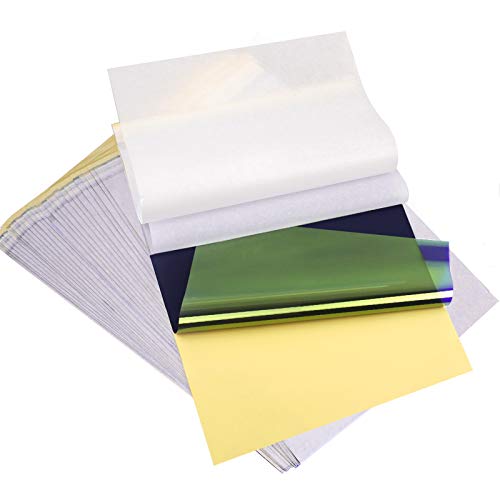
ADVANCED MATERIAL: Tattoo transfer paper is made with the high quality dyes and stencil paper. Transfer marks are very clear, clean and smooth. Tattoo transfer paper kit come with 35 sheets. Great for tattooing, trace and transfer images onto the body.<br>
Broken Chains: Freedom Tattoos That Mark Release
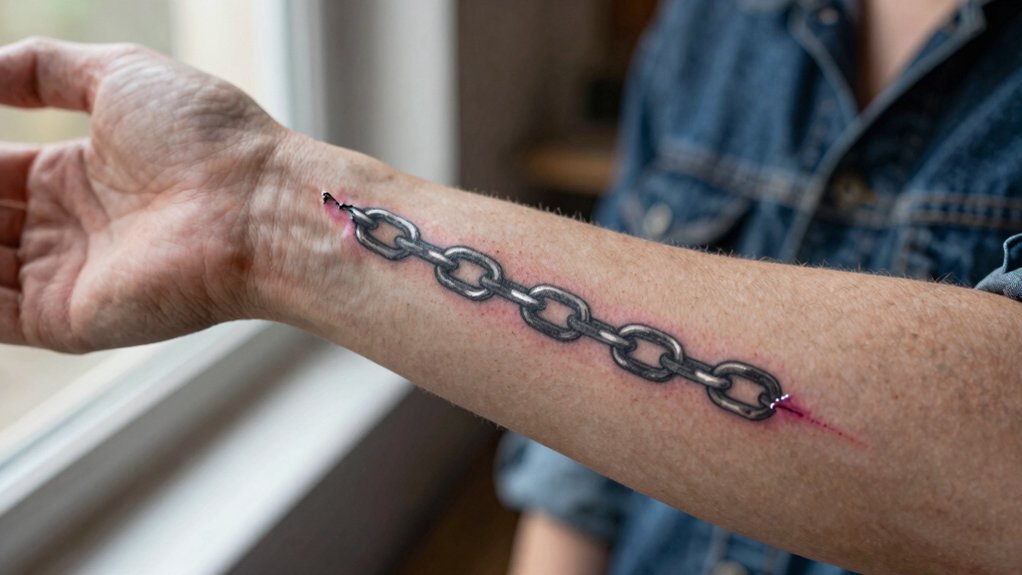
Where does your skin remember what your hands have finally let go? You carry broken chains on your wrist, your ankle, your ribs—wherever the weight once held you down. You shackle links apart with ink and watch them scatter across muscle. You don’t hide the fracture; you flaunt it.
You’ve escaped addiction, abuse, incarceration, or expectations that squeezed your throat. Your tattoo marks the moment you chose yourself. The chain snaps at one link; you decide which one. You might wrap remnants around a phoenix rising, or let them dissolve into smoke.
You trace the design when doubt creeps back. You’re reminding your body: you’ve slipped this before. The metal didn’t yield—you did. You outlasted what bound you.
Recommended Products

Variety Botanical Pattern: This set of hand face painting stencils contains 12 sheets 142+pcs Wildflower Floral tattoo Stencils for daily use, such as wildflower, floral, narrow leaves, plants, Spring flowers, butterfly etc allow children and adult to give full play to their imagination and fill in patterns freely

🌸 LARGE 15x12 WILDFLOWER STENCIL — CRISP RESULTS EVERY TIME: Our precision-cut wild flower stencil delivers sharp, paint-bleed-free results on wood, walls, canvas, fabric, fences, and furniture. Made from premium 10mil PET — noticeably thicker and sturdier than standard 7mil stencils — so it lays flat and gives you professional results whether you're a beginner or experienced crafter.

Package Include: You will receive 13 pieces wild flower stencils with a metal open ring, and each design with various flower patterns which can provide enough choices for your DIY projects, and you can choose them according to your preference, or match the style of your crafts project
Wildflowers Through Concrete: Nature-Inspired Freedom Tattoos
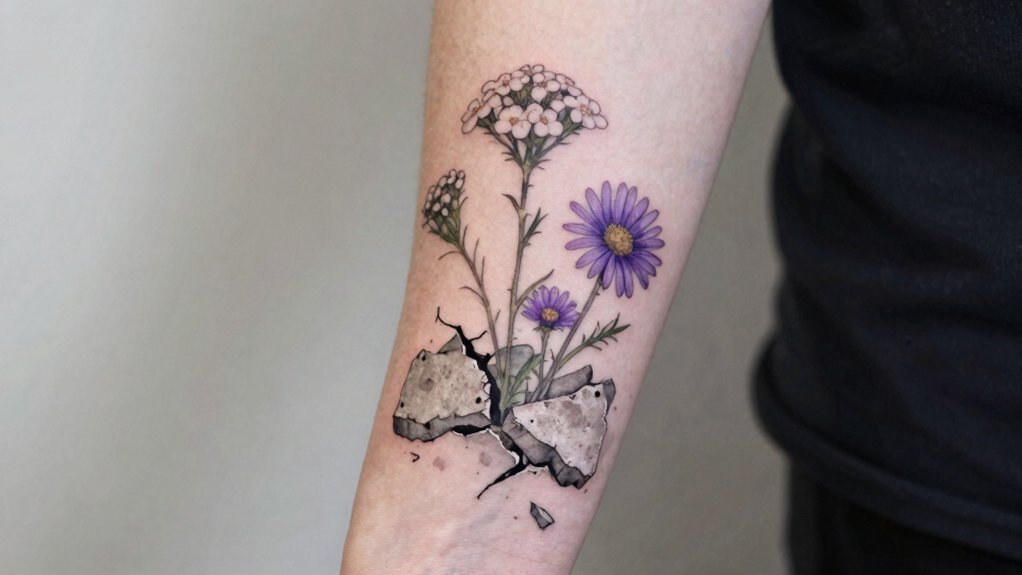
How does your skin testify to what refused to stay buried? You press wildflowers into concrete, not gardens. Your tattoo shows dandelions splitting asphalt, roots cracking what held them down. You choose thistles that thrive where nothing should grow. You’re marking survival, not decoration.
You trace vines that climb prison walls, lotus rising through murk, cacti blooming in drought. Each needle stroke claims: you pushed through. You didn’t wait for permission or perfect soil. You grew anyway.
Your body carries these emblems of stubborn life. When you look down, you see what breaks through, not what broke. You’re wearing proof that pressure creates bloom, that confinement fails. You’ve inked the moment before the flower opens—tension, potential, the inevitable yes.
Recommended Products

CONTINUE PACK CONTENTS: Set of 54 contemporary black temporary tattoos featuring 18 unique mental health awareness designs, with 3 copies of each design. Symbolic designs including semicolons, butterflies, hearts, yin-yang symbols, and inspirational 'continue' text messages.

Self-Love Symbol Dual Design: This semi-permanent tattoo pack has two unique sheets with tiny mini graphics: semicolons, crown heart hands, floral blooms, arrow accents and positive affirmation "I am enough". Semicolons stand for mental strength & survival, crown hearts represent self-worth, quotes deliver positive affirmation. The small, minimalist design makes it perfect for subtle placements on fingers, wrists, or arms.

🌟 EMPOWERING HEALTH DESIGNS: Includes 8 sheets (96 PCS) of beautifully designed temporary tattoos featuring positive, motivational quotes. Perfect for spreading health awareness and inspiring confidence in kids, teens, and adults. Each sheet measures 6.3 x 4.7 inches. TEMPORARY TATTOOS FOR PARTY DECORATIONS ONLY.
Semicolons and Recovery: Freedom Tattoos for Mental Health
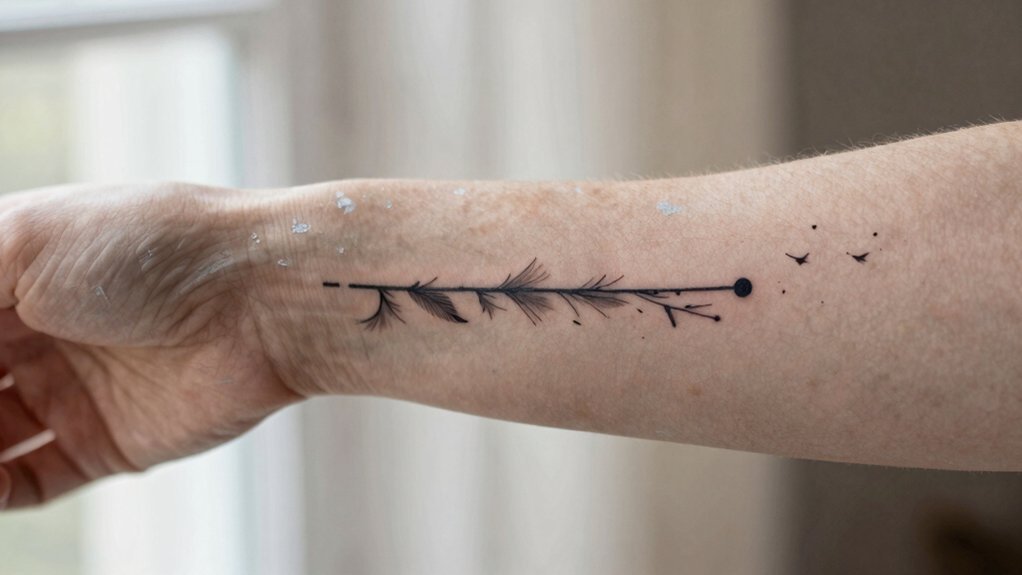
When did you learn that a sentence doesn’t end where someone else decided? You discovered this truth somewhere between the darkness and the dawn, and now you wear it on your skin. The semicolon tattoo marks where you chose to continue your story instead of ending it.
You don’t need elaborate designs to carry profound meaning. A simple semicolon on your wrist reminds you daily that you’re still writing, still breathing, still free from the grip of despair. You’ve reclaimed your narrative from mental illness, addiction, or trauma.
This symbol connects you to others who’ve made the same choice. You see someone else’s semicolon and you know—you’re not alone in your fight. Your tattoo declares that freedom isn’t the absence of struggle; it’s the courage to keep going.
Recommended Products

Dragon Phoenix Stencil: You will receive 3 pieces of painting stencils which have beautiful patterns in animal theme. There are 2 phoenix and 1 dragon patterns on the stencils. Our templates are suitable for you to make handmade projects by yourself.
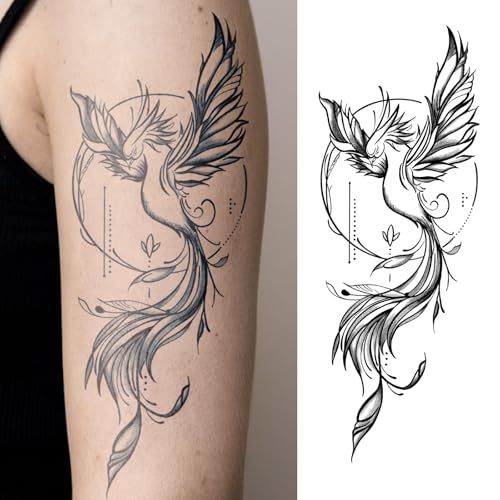
MYTHICAL PHOENIX ART: Features a breathtaking rising phoenix soaring gracefully amid minimalist circular lines and delicate linear accents. This powerful legendary bird motif is crafted using a digital hand-drawn fine line tattoo ensures crisp lines and flawless gradient shading to perfectly capture its sweeping wings, detailed layered feathers, and long, flowing tail plumage with artistic precision.

【 575+ Fun Assorted Tattoo Stencils 】-The ChurlChurl tattoo stencils collection includes 575 high quality stencils with multiple themes. enjoy cute trendy tattoo stencil designs like butterflies, words, flowers, symbols, totem, Egypt style patterns and more.
Open Doors and Unlocked Locks: Geometric Freedom Tattoos
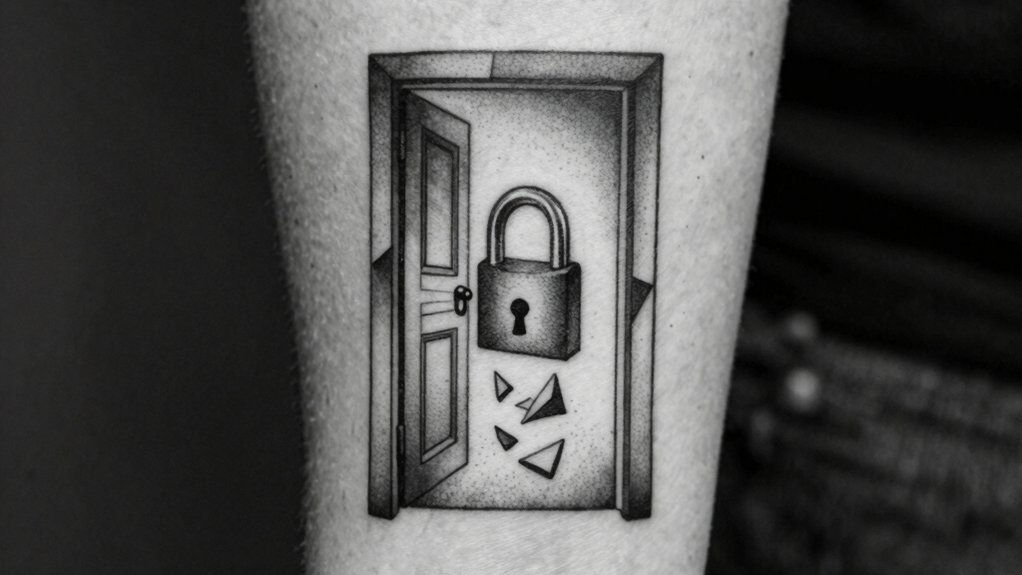
Why draft your liberation in perfect angles and negative space? You transform abstract freedom into architecture. Your skin becomes a floor plan for escape—doorways drawn with single continuous lines, locks rendered as hollow squares where the keyhole carries all the meaning.
You’re etching passage itself. An open door tilts on your forearm, its vanishing point aimed toward bone. You sketch padlocks with shackles broken cleanly, the gap more visible than the metal. Circles represent cycles you’re exiting; triangles point toward futures.
Geometric precision doesn’t cage your meaning—it clarifies it. You strip away ornament until only intention remains. Your tattooist maps these symbols with rulers and intent, and you wear the blueprint of your own unbinding.
Recommended Products

INCREDIBLE VALUE – 281 Unique Designs: This extensive henna tattoo kit includes 281 diverse patterns suitable for full creativity across hands, arms, and body. Featuring mandalas, florals, paisley, and geometric motifs, these flexible henna stencils allow you to mix and layer styles freely. The collection of henna temporary tattoos ensures you always have the perfect design for festivals, parties, or personal expression

[Tattoos Stencils Kit]: 24 sheets, each sheet including 4 patterns total 96pcs tattoo stencil. Which featuring Playing card patterns, flowers, lizards, scorpions, rabbits, spiders, butterflies, geckos, small birds, insects, hearts, stars, abstract and tribal motifs and more tattoo designs, enough quantity and different pattern for you create your style.

Versatile bird stencils: Our bird stencils are not just limited to birds, but also include a variety of other drawing stencils. They are suitable for painting on wood, canvas, paper, fabric, wall, and furniture.
Words That Set You Free: Script Freedom Tattoos
Where else can you carry your manifesto but in flesh? You choose words that crackle with voltage—”unbound,” “sovereign,” “exhale”—and etch them where you’ll see them daily. You select scripts that match your voice: sharp block letters for declarations, flowing cursive for quiet revolutions, ancient scripts for ancestral weight. You might ink “free” in your mother’s tongue, reclaiming language they tried to take. You place phrases that broke your chains: song lyrics from the night you left, a poem that found you in darkness, your own words screamed into mirror. These tattoos speak when you cannot. They remind you who you’ve become. You read them like compass, like prayer, like promise you’re still keeping.
Recommended Products

1. Safe and Healthy: Meet rigid safety and non-toxic materials standard, no irritation to the skin. Plus, It also has Clean Dry Protection Skin antiperspirant and deodorant functions.
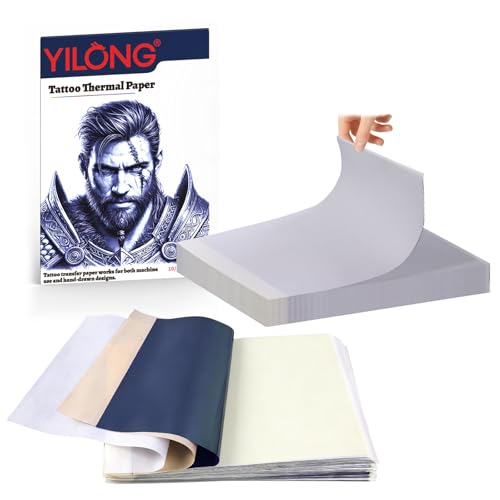
【4 Layer A4-sized Stencil Transfer Paper】- 10.9*8.4 inch tattoo transfer paper features four layers: a protective layer, design layer, release layer, and a yellow backing layer. The white master sheet is for design application, with a removable translucent protective sheet (needs to be removed before use), blue carbon paper, and an additional backing layer for enhanced stability. It's fade-resistant, easy to use with a thermal copier or ballpoint pen, making it convenient and user-friendly

Great Value Kit: Cridoz tattoo transfer paper kit come with 50 sheets tattoo stencil paper, great for tattooing, trace & transfer images onto the body. Warm Tips: The tattoo transfer paper need to work with transfer medias. You will need to purchase the stencil ointment separately
Where to Put It: Placement and Visibility
How do you want to carry your freedom—openly declared or held close like a secret? Your answer shapes where you’ll place your tattoo.
You choose visibility when you select your forearm, wrist, or neck. These spots broadcast your liberation daily. You catch strangers noticing; you spark conversations. Your statement lives in daylight.
You choose intimacy when you pick your ribcage, thigh, or shoulder blade. You control who sees. You decide when to reveal. Your freedom becomes yours alone—private, protected, deeply personal.
You balance both worlds with upper arms, calves, or collarbones. You hide them with clothing; you display them at will.
Consider your profession, your lifestyle, your comfort. Your body offers canvas space. You determine the terms. Your placement reflects your relationship with freedom itself.
Recommended Products

Package Includes:15pcs flower stencils for crafts reusable, great for your various crafts needs.

Package Includes:These floral stencils for painting on wood includes 14 designs in various beautiful patterns, such as wildflower, butterflies, dandelion,mushrooms, and more.

TRUSTED FAMILY-OWNED BUSINESS: We are a USA trademarked brand dedicated to providing high quality stencils and our promise of satisfaction. If you are not satisfied for any reason, we will refund your order. Thank you for considering our stencils.
Finding Your Freedom Tattoo: Matching Design to Story
What story does your freedom tell? You’re not picking a random image—you’re translating your journey into ink.
Start with the moment you felt truly liberated. Was it breaking an addiction, leaving a hometown, or surviving something that nearly broke you? Let that memory guide your choice. A bird works if you escaped confinement. A key fits if you unlocked your own potential. Broken chains suit those who severed toxic ties.
You’ll match symbols to specifics. Your grandmother’s handwriting carries more weight than generic script. The coordinates of your first apartment alone mean something no one else owns.
Trust your gut when designs resonate. You’ll know you’ve found the right match when explaining it feels like breathing—natural, necessary, and entirely yours.
Recommended Products

Blue Purple Semicolon Butterfly is a retro vintage Graphic design for anti-suicide motivational for people suffering from depression, stress, panic attacks, self-harm, anxiety, addiction, bullying, suicidal thoughts or any other mental health disorder.
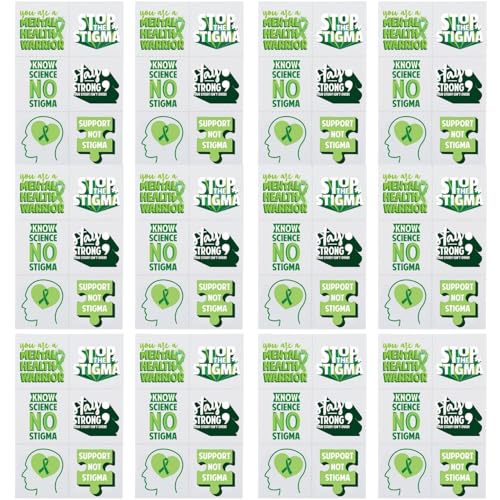
Mental Health Awareness Temporary Tattoos - Apparel Accessories - 72 Pieces

What to Ask Your Artist Before You Book
Why settle for any artist when your freedom story deserves a translator, not just a technician? You need to vet them thoroughly before you commit.
Ask to see their healed work, not just fresh photos. Freedom tattoos age; you want proof they last. Request their experience with your specific symbolism—whether that’s birds, broken chains, or open roads. Not every artist grasps metaphor.
Question their design process. Do they sketch from your story or pull from flash? You deserve custom work. Discuss placement strategy; some symbols flow with muscle movement, others fight it.
Clarify their comfort with revisions. You’re not being difficult—you’re protecting meaning. Finally, ask about their sanitation protocols. Your health isn’t negotiable.
You’re trusting someone with permanent skin. Ask boldly.
Recommended Products

【Realistic Semi-Permanent Look】Boldink temporary tattoos are designed to look more like real tattoos than traditional temporary tattoo stickers. They are waterproof, smudge-resistant, and non-shiny for a natural-looking finish. The tattoo will appear silver at first and gradually darken into a rich, realistic color within 48 hours. For best results, avoid contact with bare skin, especially the face, and cover the tattoo with clothing while sleeping to prevent transfer.

RICH TEMPORARY TATTOO KIT - Contains tattoo templates (77 patterns),4 tattoo inks in 3 colors (black Maroon Cherry Red),4 disposable gloves 1 pack of cleaning supplies for a hassle-free temporary tattoo experience.

1Pc Fire Phoenix Pattern Stencil: Can meet your different needs, well made and fun to creat craft projects for families and friends, offers endless possibilities for transforming your home decor
Aftercare: Protecting Your Freedom Tattoo
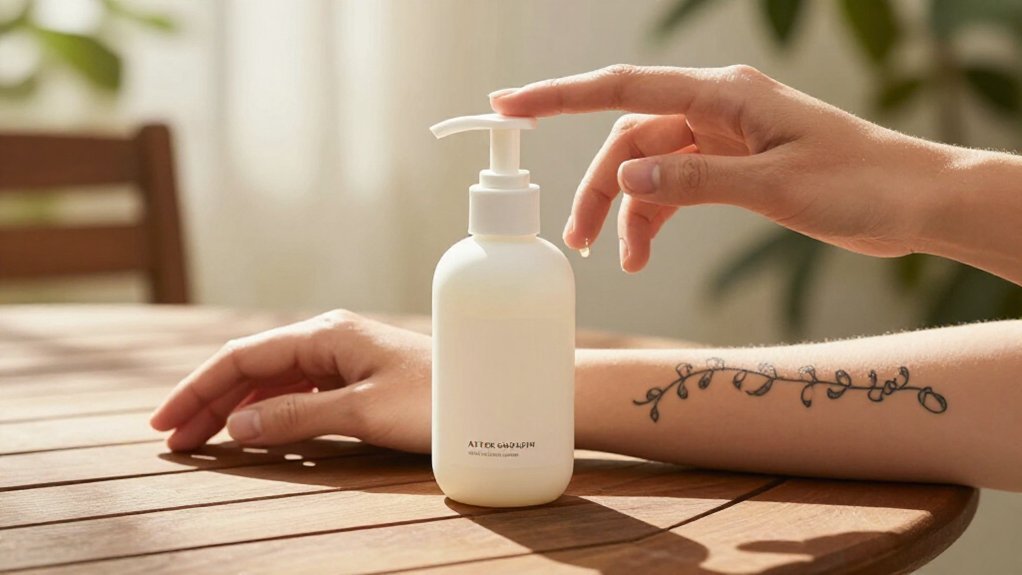
The moments after your session end matter as much as the ink itself. You protect your freedom tattoo by following your artist’s instructions without deviation. You wash your hands, then gently clean the area with fragrance-free soap. You pat it dry—never rub. You apply a thin layer of recommended ointment, keeping the skin hydrated but not suffocated.
You avoid soaking your tattoo in baths, pools, or oceans during healing. You resist scratching when it itches; you slap it instead. You keep it out of direct sunlight and wear loose clothing that won’t stick to the fresh ink.
Your tattoo represents liberation. You honor that symbol by preventing infection and preserving its clarity. You invested in permanent art. You complete the process through disciplined aftercare.
Conclusion
Your freedom tattoo becomes a permanent reminder of what you’ve overcome and where you’re headed. Choose symbols that resonate with your journey, place them where they’ll serve you best, and commit to proper aftercare. The ink settles, but the meaning deepens. Wear your liberation proudly.