
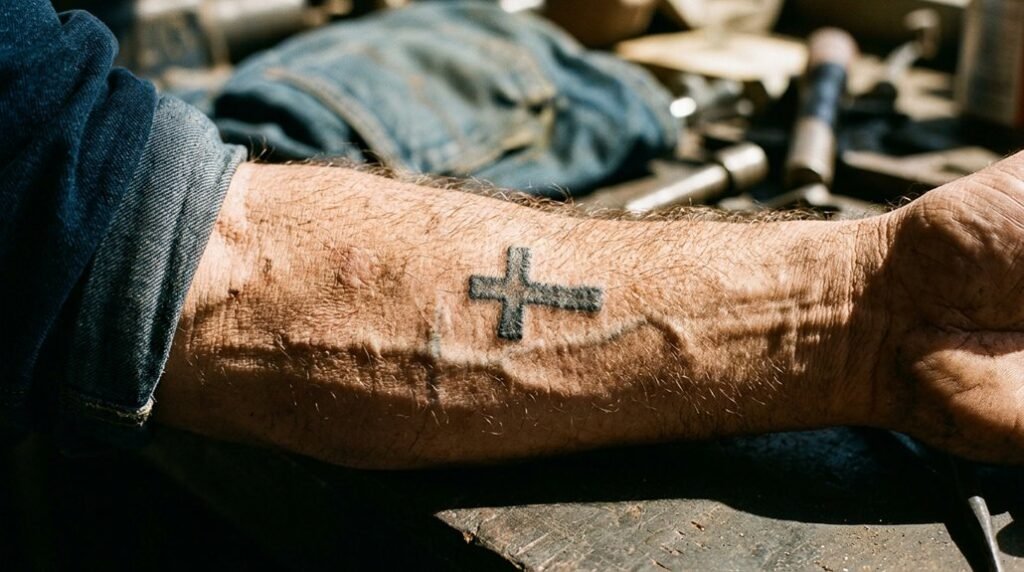
You might think a cross tattoo simply signals faith, but its meaning shifts dramatically based on what you believe, what you’ve lost, and where you place it. Your design choices—whether you add wings, knots, or keep lines stark—reshape how others interpret your ink. Before you commit to this permanent mark, you’d want to understand why its symbolism stretches far beyond church walls, and why that matters for your own story.
Key Takeaways
- Representations of Christian faith vary by cross design and denomination.
- Memorial tattoos honor deceased loved ones with names, dates, or symbolic elements.
- Cultural heritage markers include Celtic, Ethiopian, Armenian, and Orthodox crosses.
- Gothic, punk, or minimalist aesthetics prioritize visual impact over religious significance.
- Religious critiques, survivor symbolism, and personal healing journeys reclaim cross imagery.
Recommended Products

✨ Complete Set: Each kit contains 6 large A4 sheets with up to 100 distinctive patterns (depending on the theme). From delicate flowers to fierce animal totems, this bulk collection offers endless creativity for DIY body art lovers, ensuring you always have the perfect design for any mood.
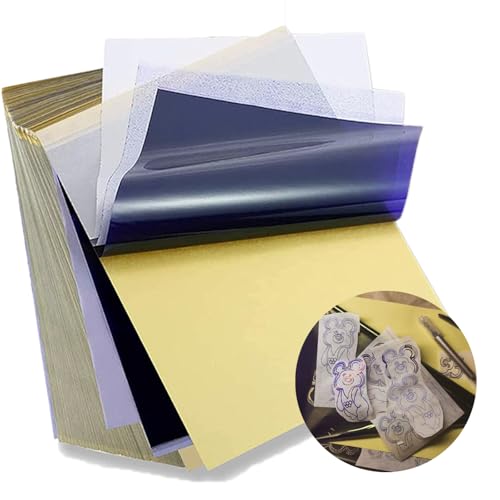
Standard size: Tattoo Transfer Paper is standard A4 paper size, each measures 8.27 in X 11.69 in. There are 4 levels in total. The thickness of the paper is very light and smooth to the touch.

Warm Tips: The tattoo transfer paper need to work with transfer medias.You will need to purchase the stencil ointment separately. Apply the design made on the master paper. Please pay attention to press the back side of the pattern to the skin for at least 3 seconds
Before You Get Inked: Pain, Cost, and Artist Selection
How much thought have you given to what happens before the needle touches skin? You’ll feel the buzz, not just hear it. Pain levels vary wildly—ribs and feet challenge your tolerance, while shoulders and forearms offer relief. Budget matters: a simple black cross runs $50–$250, but intricate designs or reputable artists demand $300–$800+. You’re paying for permanence, so resist bargain hunting.
Research drives everything. You must scrutinize portfolios, verify sterilization practices, and read reviews. A skilled artist doesn’t just execute; they refine your vision. You schedule consultations, ask about needle types, and discuss aftercare protocols. You inspect their workspace for cleanliness.
This preparation protects you from infection, regret, and costly cover-ups. You owe yourself that diligence before committing your skin forever.
Recommended Products
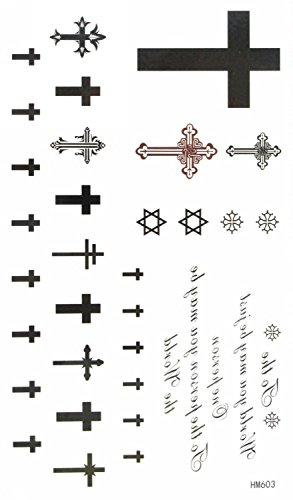

Waterproof Tattoos: The temporary tattoos are waterproof and can be worn for festivals or parties.
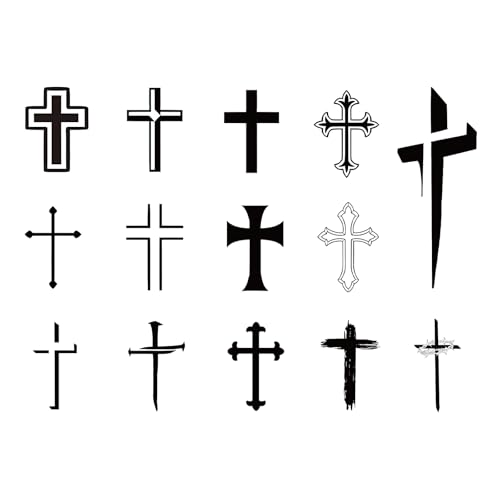
11 FAITH CROSS DESIGNS: Features a comprehensive variety of eleven unique religious symbols, including clean traditional crucifixes, bold modern abstract shapes, rugged brushstroke effects, and thorns-wrapped variants.
What Cross Tattoos Mean Across Different Faiths
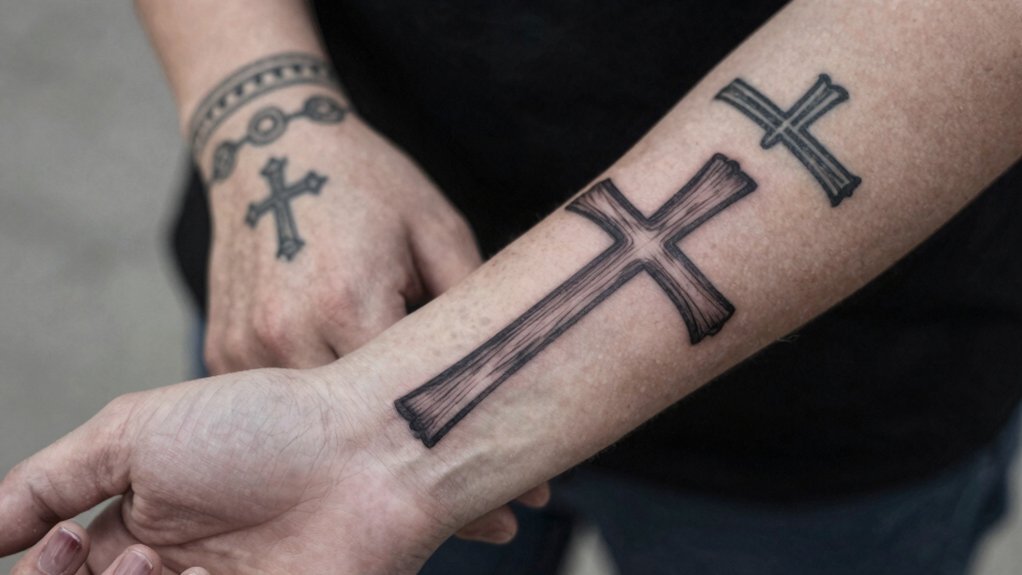
Although you might assume a cross tattoo carries one universal meaning, you’ll find its significance shifts dramatically once you start exploring different faith traditions.
In Christianity, you’ll encounter multiple variations. You might choose a Latin cross to emphasize Christ’s sacrifice, or you’ll select an Orthodox cross with its distinctive three bars representing different aspects of faith. If you’re drawn to Eastern traditions, you’ll discover the ankh symbolizing Egyptian eternal life, or you’ll encounter the swastika—originally a Hindu and Buddhist symbol of prosperity before its appropriation.
You’ll notice Celtic crosses merging Christian and pagan imagery, while Ethiopian crosses showcase intricate geometric patterns unique to that tradition. When you examine Coptic crosses, you’ll see loops representing eternal life.
Even within Islam, you’ll find the cross pattée appearing in historical contexts, though you’ll rarely see it as personal devotion today.
Each tradition offers you distinct visual vocabulary and spiritual resonance.
Recommended Products


CONTENTS: Pack includes 9 modern cross temporary tattoos in 3 distinct styles - geometric pattern, brushstroke, and tree of life designs
![Celtic Designs Coloring Book for Adults: 200 Celtic Knots, Crosses and Patterns to Color for Stress Relief and Meditation [Art Therapy Coloring Book Series, Volume Three]](https://m.media-amazon.com/images/I/51YglIHCaWL._SL500_.jpg)
Is a Cross Tattoo Always Religious?
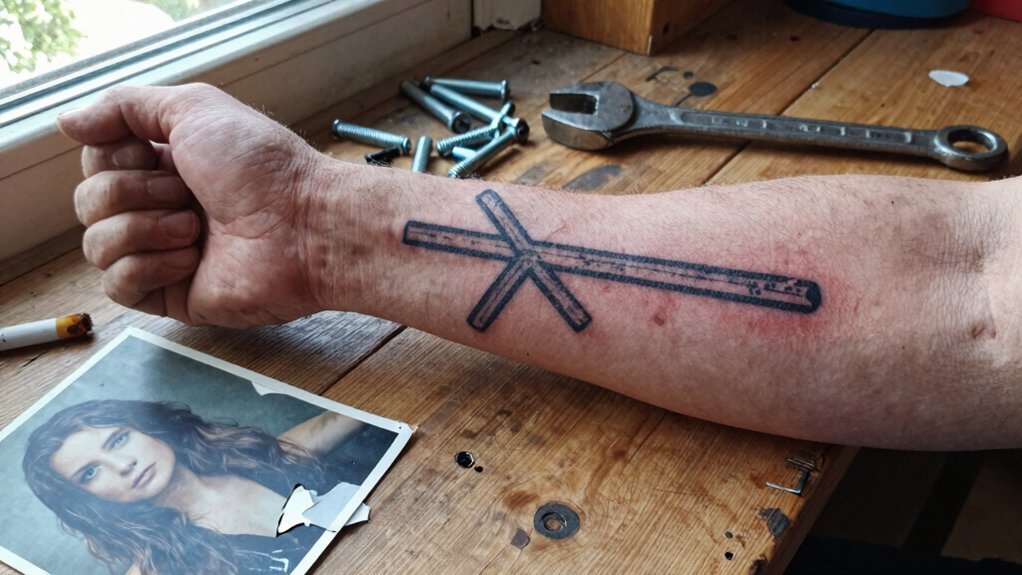
Beyond faith traditions, you’re seeing crosses appear in tattoo culture for reasons that have nothing to do with belief. You might choose a cross to memorialize a lost loved one, marking a grave site or date alongside the symbol. You’re also finding crosses in gothic and punk aesthetics, where you’re drawn to their visual starkness rather than their spiritual weight. You can spot them in protest movements, where you’re reclaiming a symbol of institutional power to critique it. You’re wearing them as heritage markers too—Celtic, Armenian, or Ethiopian crosses asserting cultural identity over religious practice. Sometimes you’re simply attracted to the form: its balance, its vertical punch against skin. When you ink a cross, you’re not always making a statement about God. You’re often making one about yourself.
Recommended Products

Add a touch of elegance to your DIY faith-based art project with this sign stencil featuring the iconic IC XC NI KA 8-inch tall Cross; this 8" x 10" stencil is perfect for decorative and tole painting crafts and a must-have for anyone who loves Christian Byzantine family arts and crafts and desires to create stunning works of art that showcase your creativity and passion for your faith

Enhance your orthodox decor and DIY craft signs with this byzantine cross stencil featuring the IC XC NI KA (jesus christ conquers all) with old-style christian cross; stencil size 8-inch x 10-inch, image sizes come in 2-inch, 3-inch, and 4-inch; perfect for a variety of your faith-based orthodox craft projects

Add some byzantine flair to your christian family home decor with this orthodox budded cross symbol stencil; includes (5) different shae sizes on a 8-inch x 12-inch stencil that are easy to paint for a variety of DIY craft projects
How Cross Tattoo Styles Reshape Their Meaning
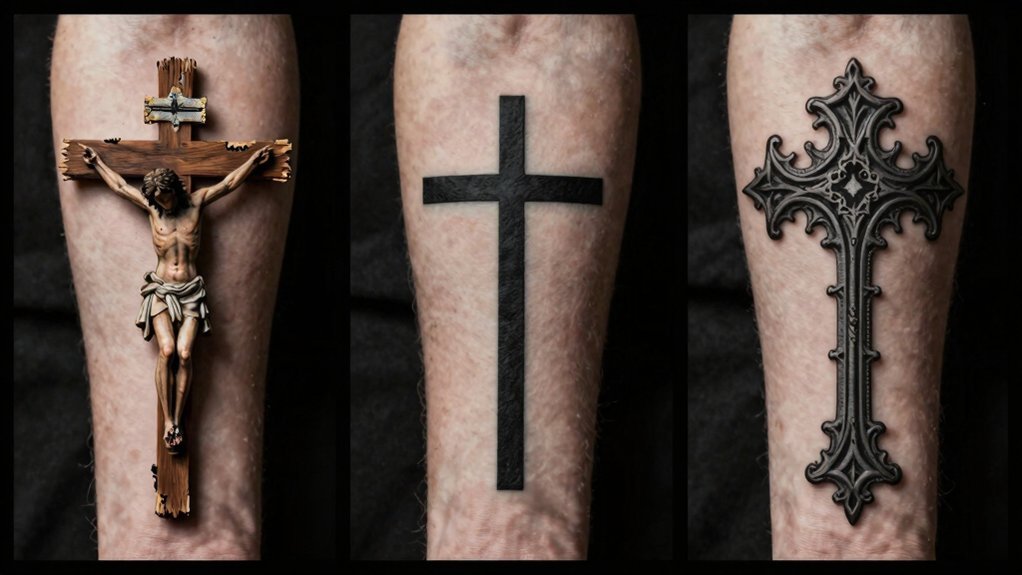
Why does the same symbol whisper prayer when rendered in weathered woodgrain but shout resistance as a stark geometric glyph? You choose your cross’s style, and you rewrite its meaning entirely.
You select ornate Celtic knots, and you invoke ancestral heritage and eternity’s weave. You pick minimalist black lines, and you declare modern faith stripped of excess. You request a cross dripping with baroque flourishes, and you embrace theatrical devotion or gothic sensibility.
You blend your cross with roses, and you soften sacrifice with beauty’s persistence. You fracture it, splinter it across your skin, and you speak of brokenness held together. You wrap it in thorns, in flames, in wings—each addition shifts the narrative.
Your artist’s hand matters as much as your intention. You don’t simply wear belief; you design its voice, its volume, its dialect.
Recommended Products

QUICK HEALING:A&D ointment gel is rich in essential vitamins A and D,which is very important for aftercare microblading ,effectively helping to remove burns,cuts,surgical marks and the impact of marks on beauty

TATTOO AFTERCARE ESSENTIAL: Hustle Butter is the original tattoo aftercare balm for new and older tattoos. With over 10 years in the market, we are a pioneer of the tattoo aftercare category.

TATTOO AFTERCARE ESSENTIAL: Hustle Butter is the original tattoo aftercare balm for new and older tattoos. With over 10 years in the market, we are a pioneer of the tattoo aftercare category.
Cross Tattoo Placement: What Your Choice Reveals
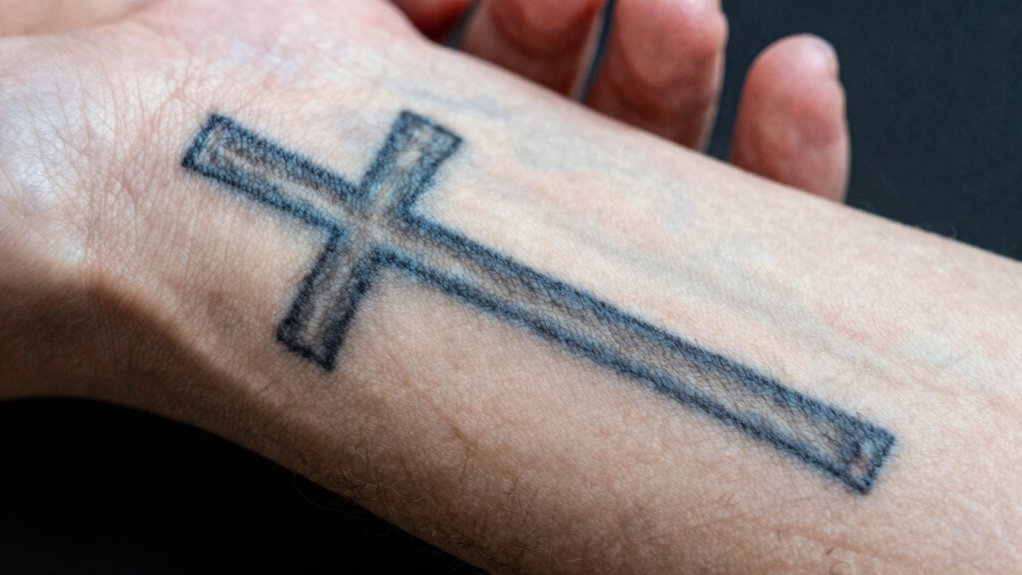
Where you place your cross speaks before you do. You choose visibility or intimacy, and that choice reveals your relationship with the symbol.
You wear your cross on your forearm, and you’re announcing faith openly. You’re starting conversations without speaking. You place it on your chest, over your heart, and you’re guarding something private. You’re honoring what you feel deeply.
You ink your cross behind your ear, and you’re whispering devotion. You’re keeping belief close, personal. You select your wrist, and you’re marking time with constant reminder. You’re checking your own pulse against what matters.
You position it on your hand, and you’re reaching outward with conviction. You’re touching the world through that lens.
Each placement transforms the message. You’re not just choosing geography; you’re defining accessibility. You’re deciding who sees, who asks, who knows.
Recommended Products

Precision Transfers & Long Lasting: Tattoo stencil paper delivers vibrant, high-definition transfers even for intricate designs. Creates crisp, dark lines that transfer cleanly to skin (clearly on different skin tones) which are easy to follow during tattooing. The carbon layer made from high-quality dyes ensures sharp outlines without smudging or fading and maintains crisp lines visibility throughout long tattoo sessions, so you can focus on creating art instead of re-drawing lines

Premium Quality 1.5mm Silicone Material – Crafted from premium 1.5mm thick silicone, this tattoo skin offers a true-to-life feel with excellent durability and a smooth surface for effortless needle movement during practice.
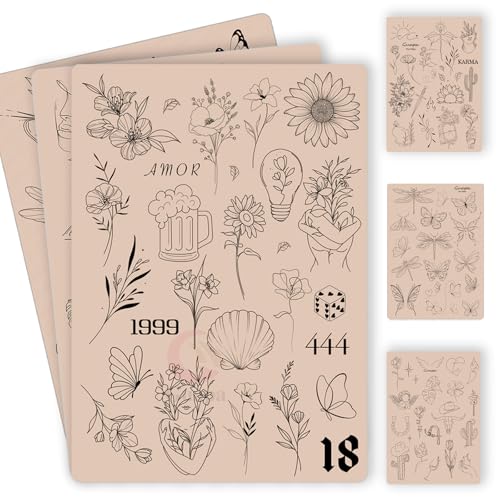
100+ Pre-Printed Designs – Features a wide variety of fine line and tiny tattoo stencils to enhance detailing skills.
Cross Tattoos for Memorials, Grief, and Remembrance
When grief settles into bone, you search for language it hasn’t stolen, and often you find it in ink. You choose a cross to carry someone forward—dates etched beneath, names woven through the beams, perhaps a heartbeat line that flatlines and rises again into the vertical stroke.
You position it where you’ll see it daily: over your heart, along your forearm, behind your ear where memory pulses. The pain of the needle mirrors the ache you already know.
You don’t expect closure. You expect witness. The cross anchors your love in something visible when photographs fade and rooms empty. It marks what you’ve lost without pretending you’ve finished losing. You’re still here, and so are they—held in skin, held in symbol, held in the constant act of remembering.
Recommended Products

Crown, crown tattoo, Cross, Jesus, Christianity, Crucifix, King, Lord, religious tattoo, Jesus Christ, King of Kings

【Realistic Semi-Permanent Look】Boldink temporary tattoos are designed to look more like real tattoos than traditional temporary tattoo stickers. They are waterproof, smudge-resistant, and non-shiny for a natural-looking finish. The tattoo will appear silver at first and gradually darken into a rich, realistic color within 48 hours. For best results, avoid contact with bare skin, especially the face, and cover the tattoo with clothing while sleeping to prevent transfer.
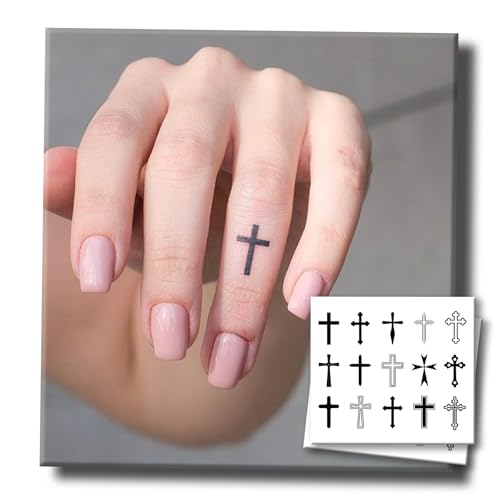
Minimal Tiny Cross Design: This semi-permanent tattoo pack holds two sheets with assorted slim & ornate mini cross patterns with clean thin outlines. Cross symbolizes faith, hope, protection and inner peace; Specifically sized for discreet placements like the fingers, behind the ear, or the side of the wrist, they offer a realistic ink appearance without the commitment. Perfect for those seeking a subtle yet powerful way to express their spiritual beliefs or personal values.
Cross Tattoos That Mark Survival and Personal Healing
How did you survive what should have broken you? You carry that answer in your skin now. When you choose a cross tattoo to mark survival, you’re not decorating—you’re testifying. You’ve endured illness, addiction, abuse, loss, or darkness that swallowed years whole. The cross becomes your permanent witness. You’ve walked through fire, and this mark proves you’re still standing.
You might inscribe a date, a word like “broken” crossed out, or scars integrated into the design itself. You decide what heals you. The ink traces where you’ve been and declares where you’re going. Some of you blend crosses with semicolons, phoenix imagery, or renewed birthdates. Your healing isn’t linear, but your tattoo anchors you. You’ve survived. You chose to stay.
Recommended Products

Durable and Comfort - Oriented Design: This men's workout training tank top is stitched neatly at the neck, sides, and hem. The solid stitching prevents curling, reduces chafing, and ensures long - lasting durability. Its loose style offers great freedom during intense workouts, whether you're doing high - intensity interval training or powerlifting


Cultural Cross Tattoo Designs: Respect, Appropriation, and Meaning
Because a cross carries centuries of meaning across civilizations, you’re borrowing weight far heavier than ink when you choose one. You must ask yourself: do you understand what you’re wearing?
When you select a Celtic cross, you’re touching Irish heritage and pre-Christian sun symbols. You’re engaging with Norse runestones if you pick a Nordic cross design. You’re stepping into Ethiopian Coptic traditions with certain ornate styles. Research matters deeply here.
You risk appropriation when you grab aesthetics without context. You’re showing respect when you learn origins, acknowledge communities, and choose artists connected to those traditions. You’re making meaning, not just decoration.
Your skin becomes dialogue between cultures. Let that conversation be thoughtful, informed, and earned.
Recommended Products

72 Unique Reusable Christian Faith Painting Templates for Spiritual Crafting:Unlock your creativity with 72 different stencil designs featuring classic symbols of Christian faith. The collection includes crosses in various styles (solid, outlined, ornate), biblical phrases (e.g., "Trust in the Lord," "Amazing Grace," "King of Kings"), doves, Bibles, praying hands, angels, churches, candles, olive branches, and inspirational words like "Faith," "Hope," and "Love." This wide variety provides endless inspiration for creating meaningful faith-based DIY projects, cards, gifts, and home decor. (Keywords: Christian stencils, 72 pack faith stencils, reusable Bible stencils, Christian DIY)

Enhance your historical DIY craft signs and home decor with this cross stencil featuring the iconic jerusalem crusades orthodox cross in 3 sizes, 1.5", 2", 3"; perfect for showing your faith in christianity during so many years of struggle in the church

72 Unique Inspirational Designs --- Create meaningful projects with our collection of 72 laser-cut stencils featuring iconic Christian symbols like crosses, doves, praying hands, angels, lilies, and the Ichthys (fish). Uplifting words and phrases include "Give Thanks," "Faith Hope Love," "Let Your Light Shine," "Trust in the Lord," "Jesus."
Conclusion
You carry your story in ink, and a cross tattoo speaks volumes—faith, loss, resilience, heritage. Your design choices shape its meaning, from subtle devotion to bold witness. Before you commit, weigh the pain, cost, and artist carefully. Research cultural origins to honor, not appropriate. Whether minimalist or ornate, memorial or spiritual, your cross becomes deeply personal. Make it intentional, respectful, and true to who you’re becoming.
Recommended Products
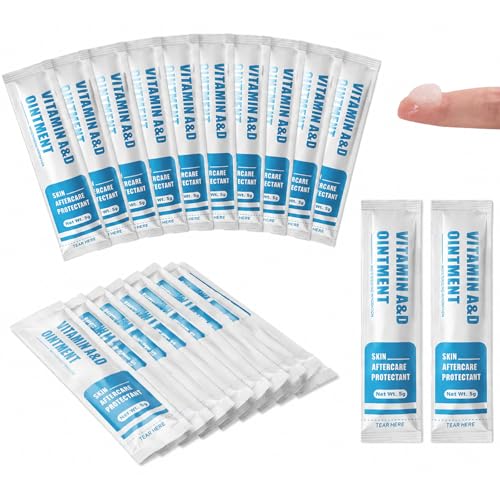
Honest, Accurate Care – This protective ointment comes in 50 hygienic single-serve packets for mess-free, on-the-go convenience. Easy to apply for tattoo protection anytime.

COMPLETE AFTERCARE KIT FOR NEW & EXISTING TATTOOS: This Tattoo Aftercare Kit brings together 3 essentials, Antimicrobial Soap, Tattoo Balm, and Tattoo Lotion, to help cleanse, protect, and moisturize fresh ink. Useful after tattoo sessions and throughout healing, it supports vibrant color and skin comfort for dedicated ink enthusiasts and artists

Upgraded Design, Easy to Use --- Tattoo aftercare balm comes in a tube,this container allows you to glide on the butter easily,Rolls on smoothly and evenly on your skin,No more mess or residue on your finger,convenient to use