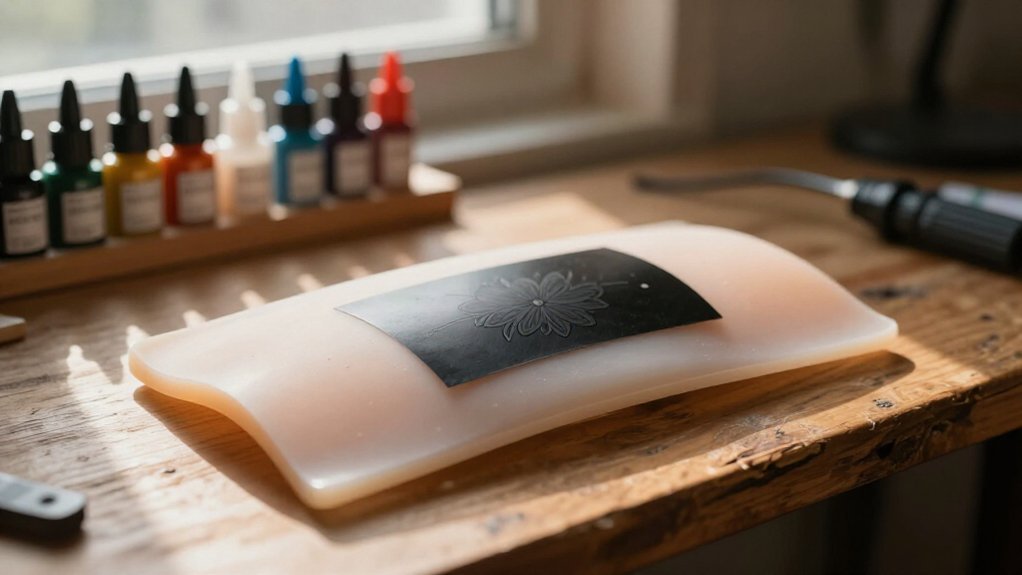

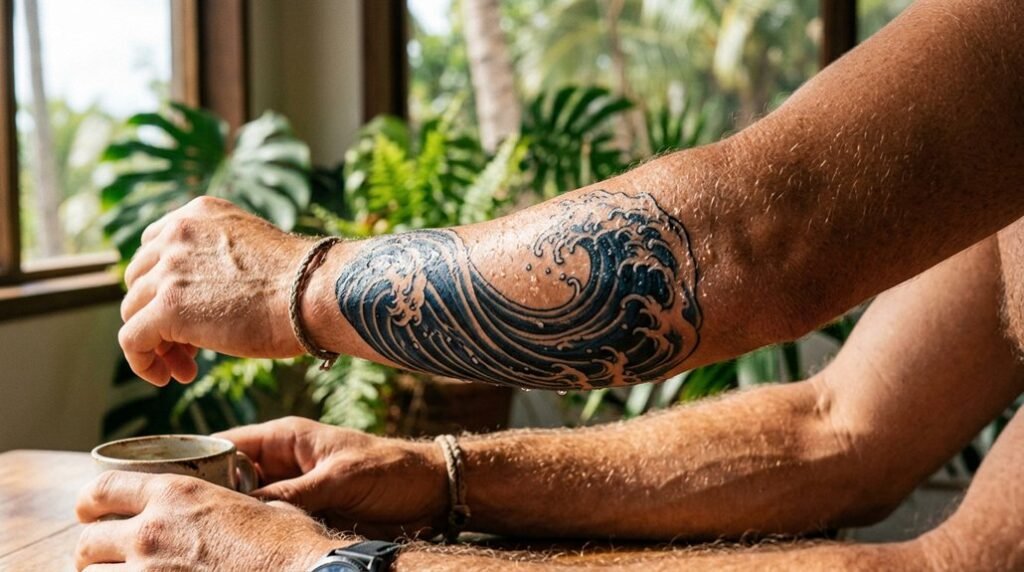
You’re drawn to wave tattoos for reasons you might not fully grasp yet. They speak of something ancient—resilience shaped by salt and time. But the meanings run deeper than you’d expect, threading through cultures and personal stories you haven’t considered. Before you commit the design to skin, you’ll want to understand what you’re really carrying forward.
Key Takeaways
- Waves symbolize resilience, representing the ability to bend without breaking through life’s challenges.
- They embody constant change and personal transformation, mirroring how circumstances continuously shift.
- Wave tattoos connect to cultural heritage, from Japanese ukiyo-e to Polynesian navigation and Celtic knotwork.
- Placement deepens meaning: wrists suggest motion, ribs indicate hidden strength, ankles ground movement.
- Combined symbols personalize the design, like moons for emotion, compasses for direction, or mountains for ambition.
Recommended Products

⯁ 400+ Reusable Henna Stencils: Get 24 sheets of high-quality, self-adhesive hollow templates featuring over 400 unique patterns. These temporary tattoo stencils allow you to create stunning body art including mandalas, butterflies, and dragons. Perfect for practicing techniques without permanence

1. Safe and Healthy: Meet rigid safety and non-toxic materials standard, no irritation to the skin. Plus, It also has Clean Dry Protection Skin antiperspirant and deodorant functions.

1 Set = 12 Sheets Henna Tattoo Stencils, 6 Pairs Right and Left hands stencils. Pasting position: Hand, Finger,Forearm, etc. Suitable for Henna tattoo, Airbrush Painting, Glitter tattoo, and so on;
What Wave Tattoos Symbolize: Resilience, Change, and Flow
Why do so many people choose to ink a wave onto their skin? You recognize the wave’s power as a mirror for your own life. When you face setbacks, you remember how waves crash and reform without breaking. You tattoo this symbol to remind yourself that resilience means bending, not shattering.
You embrace change through this image too. Waves never hold one shape, and neither do you. You mark your skin to celebrate how you’ve transformed through seasons and storms.
You also value flow—that surrender to forces larger than yourself. You don’t fight the current; you ride it. Your wave tattoo captures this trust in movement, in patience, in knowing that still waters and crushing breaks both pass. You carry the ocean’s wisdom with you.
Recommended Products
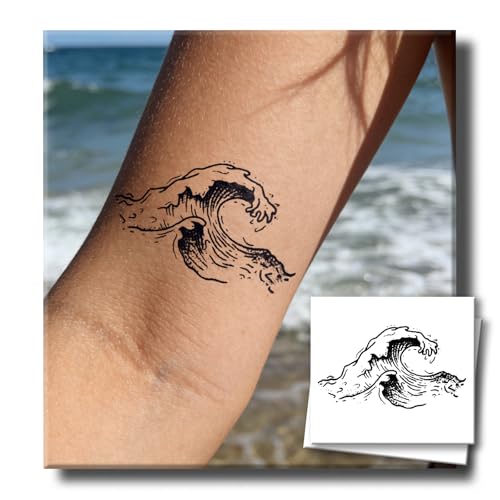
Minimalist Ocean Wave Design: A single, continuous line captures the eternal motion of the ocean—the curl, the foam, the energy. Ocean waves symbolize freedom, flow and inner strength. This minimalist wave is a tribute to the sea's power and serenity, designed for anyone who feels a deep connection to the water's edge, whether they surf its waves or simply love its view.


Celebrate your love of Japanese culture with this vintage design "Great Wave off Kanagawa". Perfect for fans of anime, manga and Japanese Harajuku streetwear. Japanese tattoo art graphic of Kanagawa wave, otaku anime clothing
Cultural Wave Tattoo Meanings: Japanese, Polynesian, and Celtic Traditions
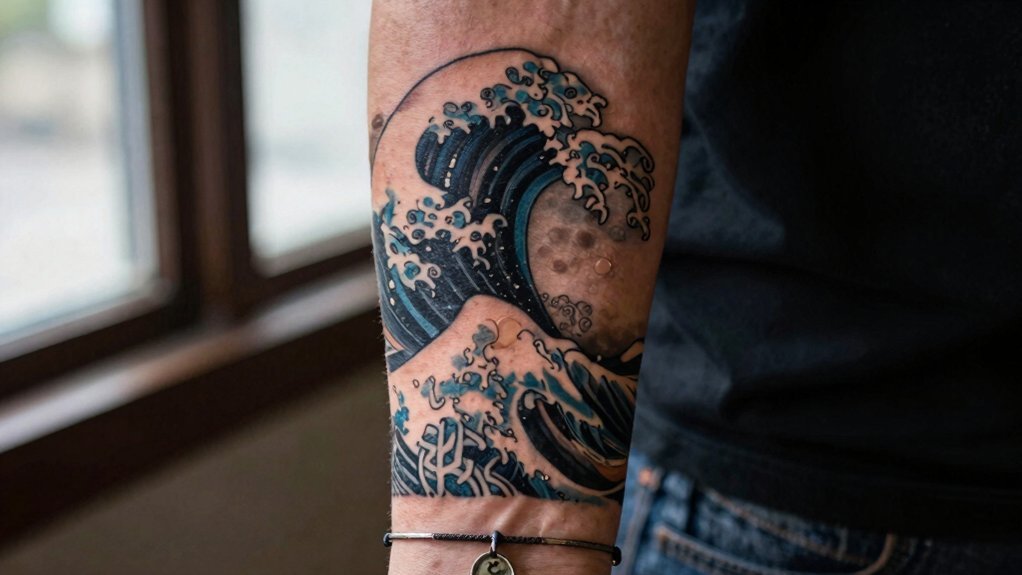
Wherever you travel across cultures, the wave carries distinct weight. In Japanese tradition, you encounter the *Great Wave*—a symbol of life’s uncontrollable forces and fleeting beauty. You choose this design when you respect nature’s power and accept impermanence.
Polynesian waves speak differently: you trace sacred geometric patterns that connect you to oceanic ancestry and spiritual navigation. Your tattoo becomes a map of identity and protection.
Celtic traditions offer another layer—you weave endless knotwork into crashing forms, representing eternal cycles and transformation. You honor the sea’s role in pilgrimage and rebirth.
Each culture gives you distinct visual language. You don’t simply duplicate; you study these roots before adapting. Your wave tattoo becomes a conversation across time and place, carrying meanings deeper than surface aesthetics.
Recommended Products

GET A TURTLES AND WAVES TEMPORARY TATTOO FOR YOUR LUAU PARTY! - Whether you're dressing up as a tribal warrior or just want to add some fun flair to your party, these temporary tattoos are perfect! Apply using water and they'll last for 1 day or evening event. To remove, have a warm bath or shower and use soap - they'll come right off!
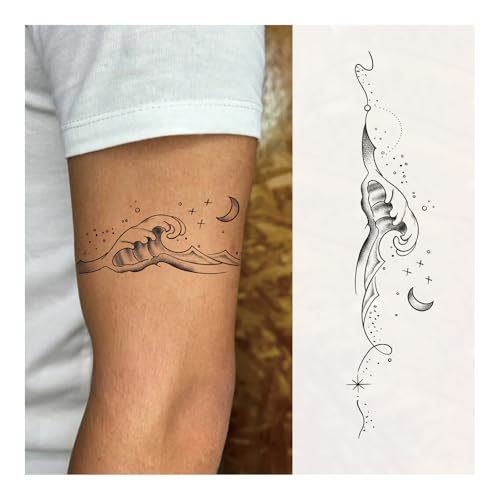
OCEAN & BEACH DESIGN: Featuring a beautiful graphic illustration of rolling sea waves cresting under a crescent moon and starry sky, this digital hand-drawn tattoo captures the refreshing essence of beach culture and the vast mystery of the night sea with crisp linework and elegant shading.

Ocean Animal Temporary Tattoos: 12 sheets Maori stingray shark whale hippocampus polynesian tribal Hawaiian fake tattoos, 6 patterns and each pattern have 2 sheets. Size: 4.13" x 2.36" / sheet
How Placement Changes Wave Tattoo Meaning
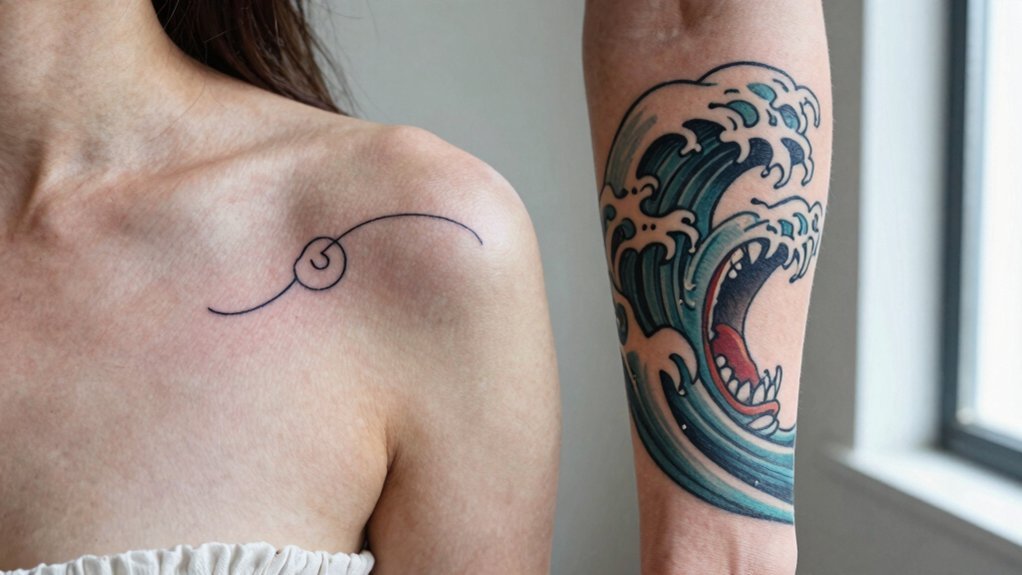
How your wave moves across your body shifts what it communicates before you speak a word. You choose your wrist, and you’ve embraced constant motion—something you glance at when tides turn against you. You ink your ribcage, and you’ve hidden strength there, protecting what crashes beneath your surface. You place waves across your shoulder, and you’re carrying weight that rolls rather than breaks. You wrap them around your ankle, and you’ve anchored yourself to movement, never losing ground. Your neck becomes a current others follow upward. Your spine transforms into shoreline, every vertebra a different breaking point. You don’t simply select a spot; you’re mapping where resilience lives in your physical self. The wave doesn’t change, but you do depending on where you dare to let it live.
Recommended Products
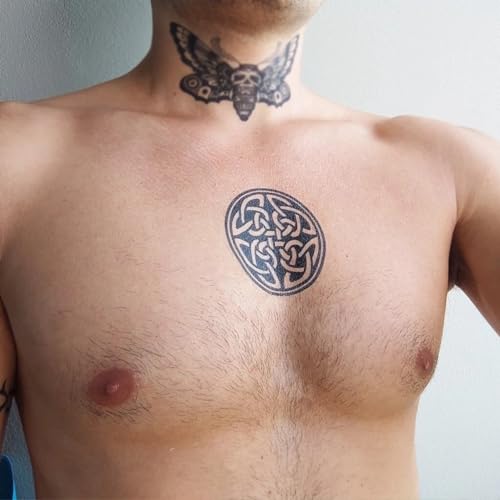
Intricate Celtic knot is famous symbol extensively used throughout history in celtic culture & art
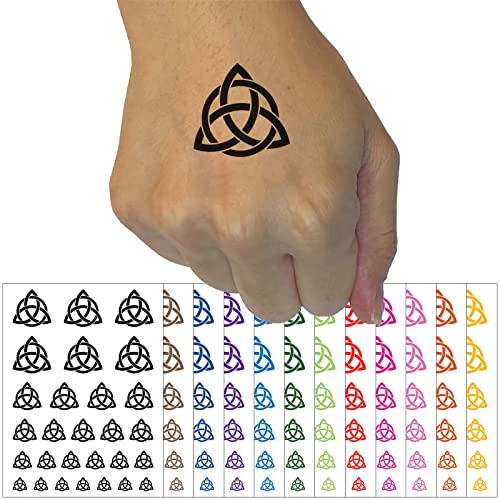
FUN TATTOOS - Enjoy this fun sheet of temporary tattoos that can be applied on skin or used as a waterslide decal on a variety of surfaces. Temporary tattoos are great for party favors, events, costumes and dress-up, permanent tattoo testing or just for fun.
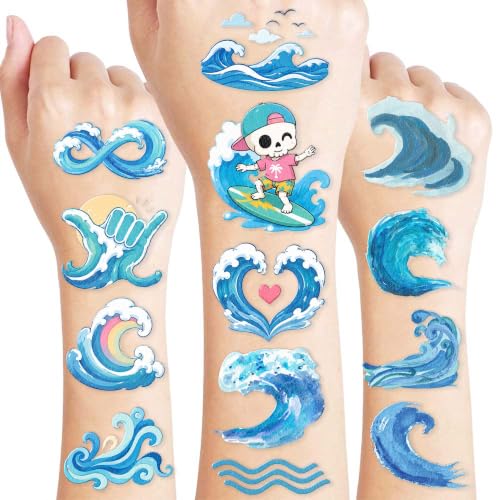
🏄PACKAGE INCLUDES: The package includes 10 sheets, each with 120 PCS and measures 6.3 x 4.7 inches, as well as a full set of 1st wave tattoos. This amazing ornament assortment is sure to exceed your expectations.
Wave Tattoo Styles That Deepen the Symbolism
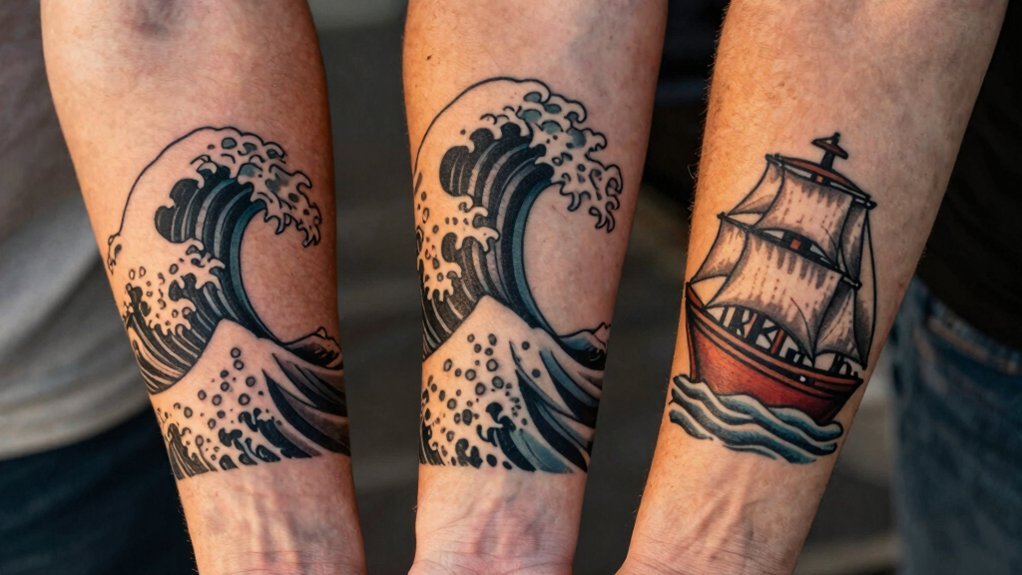
Once you’ve mapped where your wave lives, you turn to how it takes shape. You choose Japanese irezumi, and you capture waves as dynamic, myth-laden forces that crash with fierce intention.
You opt for fine-line minimalism, and you distill motion to its essence—quiet resilience in a single stroke.
You select blackwork, and you build stark contrast; depth emerges from shadow alone.
You embrace watercolor, and you let boundaries bleed; your wave becomes memory, not monument.
You pick dotwork, and you construct texture through patience—each point a meditative breath.
You blend realism, and you freeze a moment: light catching salt, foam suspended midair.
Whatever style you commit to, you’re not decorating skin. You’re translating inner weather into visible form.
Personalizing Your Wave Tattoo With Combined Symbols
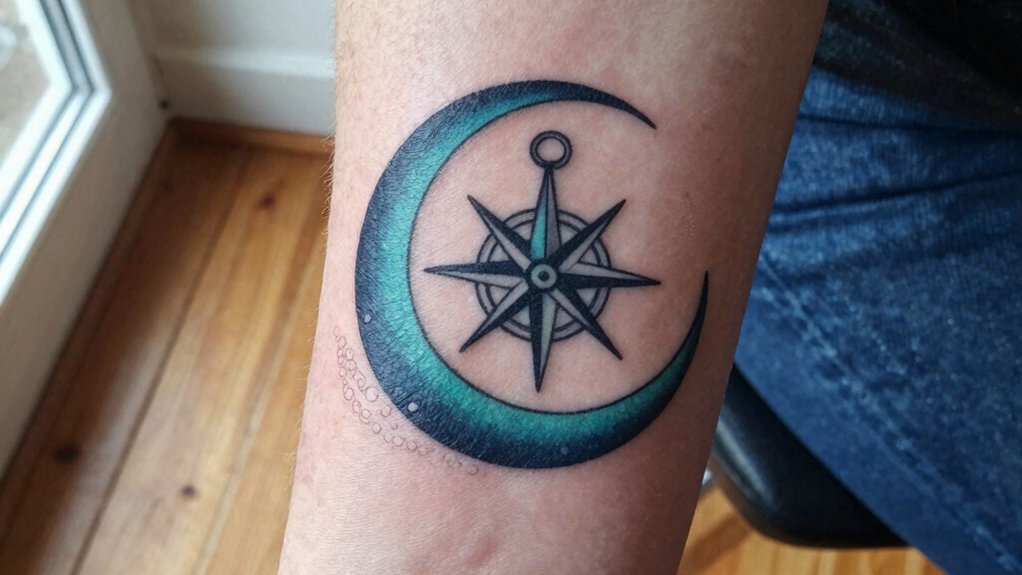
Why anchor your wave in isolation when you can tie it to deeper meaning? You could pair it with a compass to show you’re navigating life’s currents. Add a moon, and you’re capturing how emotions pull like tides. You’ll find that birds in flight above crashing waves speak to freedom beyond struggle. A sun breaking through dark water? That’s resilience you wear proudly. You might wrap waves around a mountain to merge your love of sea and summit. Each symbol you choose layers your story, letting you build a visual language that’s unmistakably yours. You’re not just decorating skin—you’re encoding memory, hope, and identity into ink that moves with you.
Recommended Products

VARIETY OF OPTIONS - This set of temporary tattoo stencil includes 262 different theme patterns. butterfly, mermaid, flower,pirate,animal,shark,crown, dinosaur etc daily kid’s favorite design, also have like as pumpkin, spider, bat, skull, snowflake, etc Halloween, Christmas festive Style in 14 pages A4 size.

Product List: You’ll Receive: 10 Bottles of Temporary Tattoo Ink (Cyan, Red, Brown, Orange, Green, Deep Red, Violet, Rose Pink, Black, Blue), 8 Pairs Glove Stencils, 86 Cool Stencils – Ideal for Hand Painting or Exclusive Body Art at Party/Events

Easy Application: Made of durable 3-layer PVC material, these henna tattoo stencils are flexible, waterproof and easy to apply. The self-adhesive design helps keep patterns in place for clean and precise temporary tattoo designs. Does not includ ink
Conclusion
You carry resilience inked in curve and crash, a reminder that you bend without breaking. Your wave adapts as you do—through cultures, placements, and personal symbols you choose. Whether honoring ancestors, eternal cycles, or your own journey, you define its meaning. Let your tattoo flow with memory and hope, marking not just skin, but who you’re becoming. Trust the current; meaning reveals itself in time.
Recommended Products

Japanese Style Tattoo Designs::-- These 6 full arm temporary tattoos feature traditional Japanese designs, including dragons, koi fish, phoenix, and samurai, bringing an authentic touch to your look.

There is no pain, no need to spend a lot of money to have a real tattoo and the design can be changed frequently.