
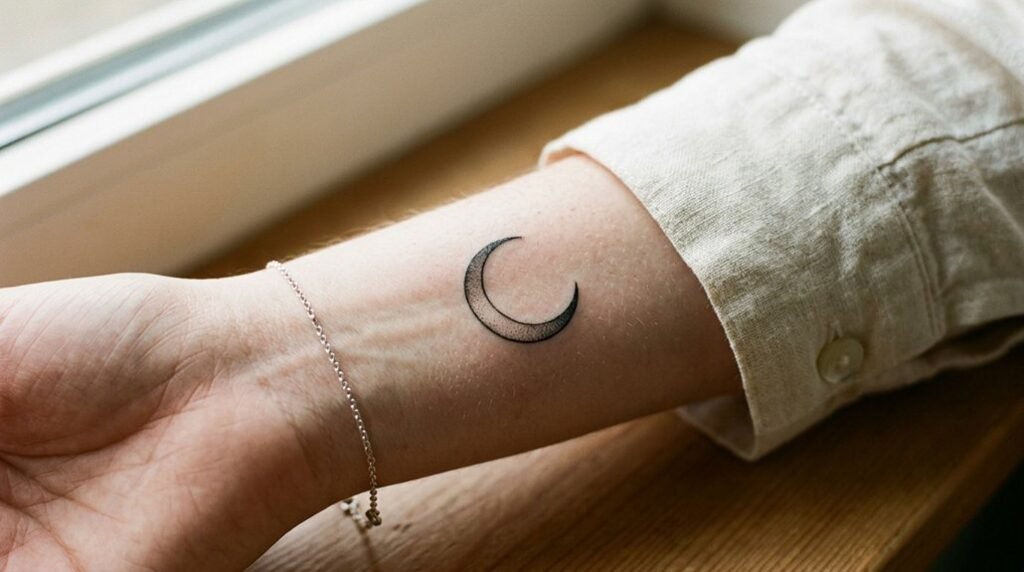
You might think a crescent moon tattoo is simply a pretty night-sky image, but you’d be overlooking centuries of layered meaning. This small curved sliver carries weight—marking transitions you haven’t finished, cycles you’re still living through. Before you commit ink to skin, consider what direction the moon faces, what crowds it, and where it rests on your body. The answers change everything.
Key Takeaways
- Represents transition, change, and the liminal space between endings and beginnings.
- Embodies personal growth, endurance, and the constant flux of evolving identity.
- Connects to feminine energy, intuition, cycles, and creative potential across cultures.
- Waxing crescents signal growth; waning crescents channel introspection and release.
- Serves as a permanent talisman for spiritual practice, protection, and intention-setting.
Recommended Products

✨ INSTA GLAM GLITTER FRECKLES Create instant viral-inspired glitter freckle makeup looks with premium waterproof metallic makeup patches for face and body. These blue ombre and silver celestial moon and star freckle and motifs deliver a sparkling glitter effect inspired by TikTok beauty trends, festivals, and editorial glam.

Waterproof Stickers - These funny Sun Moon Temporary Tattoos Stickers are made of high quality vinyl PVC which is sun protection and waterproof, safe and durable. The design is more precise and clear, and the color hardly fades. These reusable stickers are easy to paste or peel off without leaving any residue.
Core Symbolism of the Crescent Moon
Why does the crescent moon captivate so many who choose to wear it permanently? You recognize its elegant curve immediately—an ancient shape that balances darkness and light in perfect tension.
You’ll find the crescent represents transition. It marks the space between endings and beginnings, between what you’ve left behind and what you’re becoming. You embrace this symbol when you’re navigating change.
Your tattoo speaks to feminine energy too, regardless of gender. You connect with cycles, intuition, and creative potential. The moon doesn’t rush; it waxes and wanes with steady patience. You mirror this rhythm in your own growth.
You also claim protection through this image. Sailors once trusted lunar guidance across dangerous waters. You carry that navigational wisdom forward, trusting your inner compass through uncertainty’s tides.
Recommended Products

PACKAGE INCLUDES: You will receive a set ,5pcs moon phase stencils, each measuring 11.8 x 11.8inch/30 x 30cm, 1mm thick. Recording the different variations of the moon from the first quarter to the full moon, the rich and varied patterns can meet your DIY needs. NOTE:Please refer to the picture for the detailed pattern size on the stencil.

Moon Phase Stencil: You will receive 10 pieces of painting stencils which have beautiful patterns in border theme. There are moon phase, mountain, sun patterns on the stencils. Our templates are suitable for you to make small border decoration by yourself.

[Tattoos Stencils Kit]: 40 sheets Ramadan style tattoo stencils featuring moon,star, butterfly,floral,lamp design. Enough quantity and different pattern for you unleash your creativity and adorn yourself with beautiful henna designs. Variety of options to meet your every need.
Crescent Moon Meanings Around the World
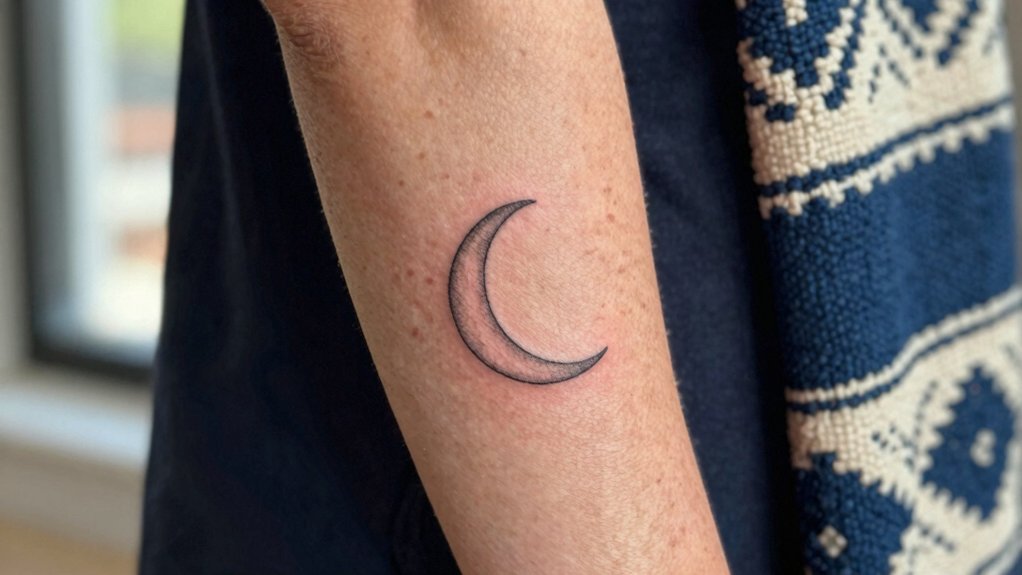
Wherever you travel, you’ll discover the crescent moon etched into skin carries distinct echoes across cultures. In ancient Greece, you’ll recognize it as Artemis’s bow, symbolizing feminine strength and the hunt.
When you explore Hindu traditions, you’ll find it adorning Shiva’s forehead, representing cosmic consciousness and the cyclical nature of time. You’ll spot it on Islamic flags and monuments, where it signals religious devotion and marks lunar calendars.
Native American tribes taught you to read it as the moon’s protective embrace, guarding travelers through darkness. In Celtic lands, you’ll trace its connection to the Triple Goddess, marking life’s phases.
You’ll notice Japanese artists rendering it as autumn’s melancholy beauty, while Polynesian navigators once relied on its sliver to guide canoes across vast oceans. Each culture hands you a different lens, yet all speak of transition, mystery, and light persisting through darkness.
Recommended Products

Material: S925 Sterling Silver with Gold Tone or White Silver Tone. Nickel-free, Lead-free, Cadmium-free and Hypoallergenic.

This ceramic bone china trinket dish is inspired by the wiccan triple moon symbol and is the perfect size for holding jewelry and other small accessories. You can also use this ceramic dish as a small appetizer or salad plate.

DESIGN: Hollow out simple phase of the moon design.
Waxing vs. Waning: Direction in Crescent Moon Tattoos
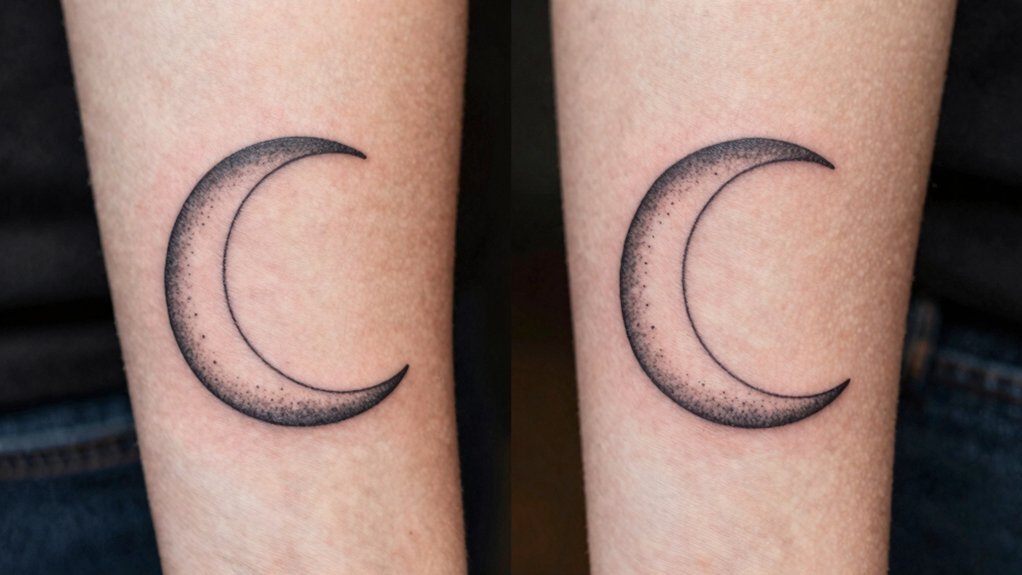
How you position the crescent’s curve shapes what you’re signaling to the world. Turn the open side right, and you’re wearing growth, ambition, and forward momentum—you’re capturing the waxing moon’s promise of expansion and new beginnings.
Flip it left, and you’re embracing release, introspection, and letting go; you’re honoring the waning moon’s pull toward rest and reflection.
You’re making a choice between accumulation and surrender, and this distinction matters deeply in how others read your ink. Some artists recommend placing waxing crescents on your dominant side to amplify your drive, while waning designs suit your passive arm to channel introspection outward.
You’re not just picking a shape; you’re declaring where you stand in your personal cycle. Your tattoo becomes a compass others use to understand your mindset.
Recommended Products

Life Tree Necklace - This beautiful witch accessories gemstone crystals necklace is wrapped with copper wire as a life tree on a crescent moon pendant. Life tree are used to energetically influence the senses, balancing the body, mind and soul. Showing positive energy and style, our crystal necklace is suitable for work, sports, parties, or yoga and more, ideal for daily wear or special events to enhance your charm and style.

[Wonderful Package]: You'll get 1 * sliver crescent moon necklace in a wonderful small box.Easy storage and ready to be given as a gift.Just a set of moon phase as you see : NEW MOON/FULL MOON/WANING MOON.

Material: Made of Quality Stainless Steel, Hypoallergenic, Free of Lead and Nickle, Fadeless and Durable
Spiritual Tattoo Practices: Wicca, Witchcraft, and Mystical Traditions
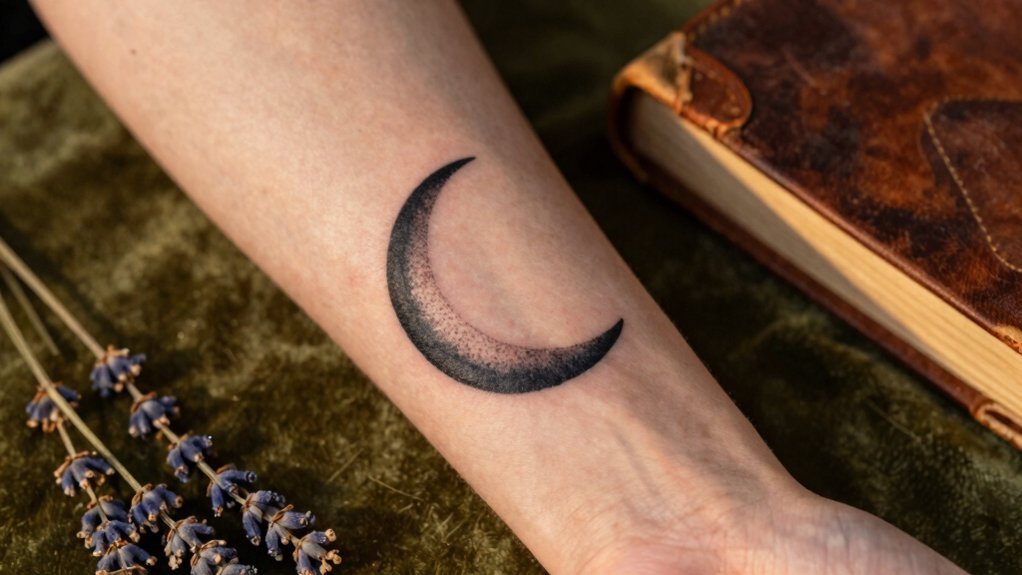
When you’re drawn to a crescent moon tattoo, you’re stepping into a far older conversation than you might realize—you’re tapping into spiritual traditions that have marked skin as sacred for millennia.
In modern Wicca, you’ll find practitioners who choose this symbol to honor the Triple Goddess, particularly her Maiden aspect. You’re expressing devotion to lunar cycles that guide ritual timing and spellwork. If you walk a witchcraft path, you’re likely drawn to how this emblem connects you to intuitive practices and shadow work.
Across mystical traditions, you’re participating in an act of intention-setting. The tattoo becomes your permanent talisman, charged during specific moon phases. You’re not merely decorating skin; you’re inscribing a working symbol that amplifies your personal energy and declares your spiritual allegiance to observant others.
Recommended Products

🌕Striking Black & White Moon Artwork – This high-resolution canvas print showcases a dramatic moon design in timeless monochrome, perfect for adding celestial elegance to any space. Ideal for modern, minimalist, or astronomy-themed decor

What you receive: the package that you receive includes 5 pieces of moon phase wall hanging decors in 5 styles, includes 4 pieces of moon shapes and 1 piece of round moon, the sufficient quantity and various styles for you to hang on your bedroom wall as you want

Symbols That Transform Crescent Moon Tattoos
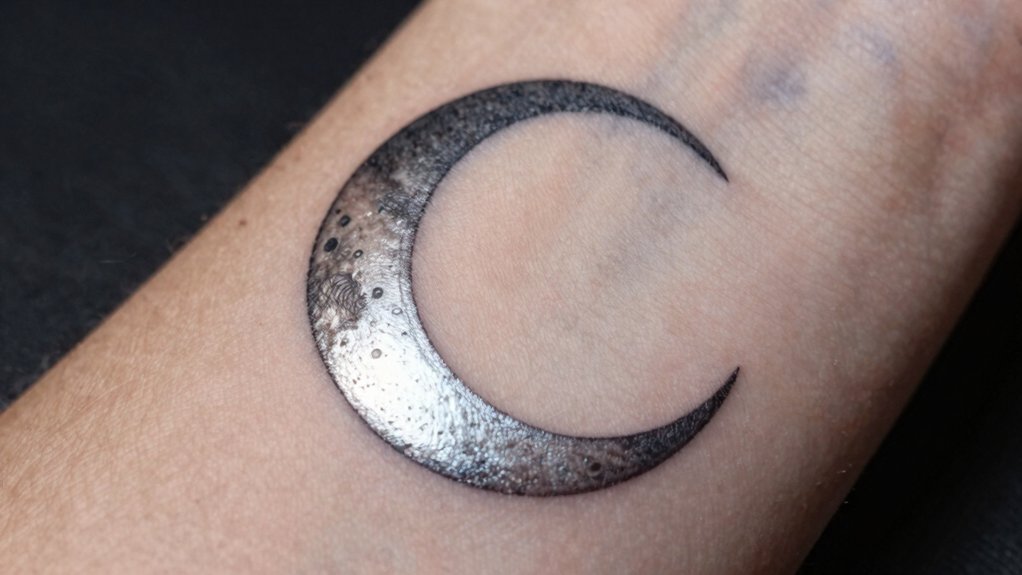
Why settle for a single symbol when you can weave deeper meaning into your crescent moon tattoo? You transform your design when you add complementary elements. You place stars nearby to capture guidance and aspiration. You incorporate flowers like lotus or roses to fuse lunar cycles with growth and blooming. You add wolves or cats to channel instinct and nocturnal energy. You weave in ocean waves to mirror tides and emotional depth. You etch feathers nearby to suggest freedom and spiritual ascent. You integrate mandalas or geometric patterns for balance and cosmic order. You inscribe runes or minimal text to personalize your message. Each combination shifts your tattoo’s story, creating visual poetry that speaks to your specific journey without needing elaborate explanation.
Recommended Products

Innovative Skin-Sync Technology: We don't just sit on the skin; we interact with it. By reacting organically with naturally occurring proteins in your skin's outermost layer (stratum corneum), our plant-based formula magically transforms from a transparent guide into a rich, ultra-realistic navy-black. It looks exactly like a healed, permanent tattoo—without the needles or depth.

【48H Natural Color Development | Realistic Mini Sun Moon Star & Tiny Heart Tattoo】This semi-permanent tattoo features realistic mini sun moon star & tiny heart patterns. It looks silver at first, darkening naturally to a rich tone in 48 hours. Avoid sensitive skin like the face; cover with clothing while sleeping to prevent transfer. Perfect for back, thigh, arms and wrists, suited for adult men and women who love subtle lifelike body art

[Semi-Permanent, Realistic Tattoos] INKARTLINK semi-permanent tattoos are lifelike, durable, waterproof, and sweat-resistant, lasting 7–14 days and gradually fading as the skin’s outer layer sheds. They’re perfect for everyday wear, events, or themed occasions. From the beach to the office, they stay vibrant, allowing you to effortlessly showcase your body art in any setting.
Beyond the Crescent: Eclipse and Blood Moon Designs
Where does your lunar fascination lead when you outgrow the simple crescent? You turn toward the dramatic interplay of eclipse and blood moon designs. These bolder statements capture celestial moments when light yields to shadow, then transforms entirely.
You choose solar eclipses to represent fleeting convergence—two bodies meeting in rare alignment. You mark personal turning points with this cosmic collision of dark and bright.
Blood moons command deeper commitment. You wear the copper-red lunar disc when you’ve weathered transformation’s fire. This shade arrives only through Earth’s shadow filtering sunlight; you understand beauty demands obstruction.
These designs demand more skin. You accept larger scales because these phenomena refuse minimalism. You’re tracing actual astronomical events now, not symbols. Your tattoo anchors you to specific cycles—moments when ordinary rules suspended themselves and you witnessed something change.
Recommended Products

Layered Moon Stencil: You will receive a creative hollow out painting template with a space theme. The stencil is patterned with moon, including the moon, the full moon and the crescent moon. also decorated with stars.

【Henna Tattoo Kit】 16 sheets tattoo stencils. Henna stencils for hands. airbrush tattoo stencils suitable for tattoo lovers. Henna tattoo kit for beginners. Experience the effects of tattooing without the pain of tattooing.

6PCS Sun Moon Stars Stencils: You will receive a creative hollow out fantasy theme template with 1PC plastic paint brush. The template features sun, moon, clouds, stars, moon phases and dream catchers patterns, unique designs will surely design inspire you.
Where You Put It Changes What It Means
How does a symbol shift when you move it across your body? You choose your wrist, and you wear change openly—daily reminders you can’t hide. You ink your ribs, and you guard something intimate; only trusted eyes witness your crescent’s glow. You place it behind your ear, and you whisper secrets to yourself, personal mantras no one hijacks. You trace your ankle, and you ground lunar energy in every step forward. You etch your shoulder blade, and you let strength carry your cycles. Each placement rewrites meaning. You’re mapping intention onto flesh, not just decorating. Your crescent becomes private prayer or public declaration based solely on where you commit it. Location isn’t logistics—it’s the message itself.
Recommended Products

Adjustable cuff ring with the Waxing, Full, and Waning Moon phases stamped dark into a silvery background.
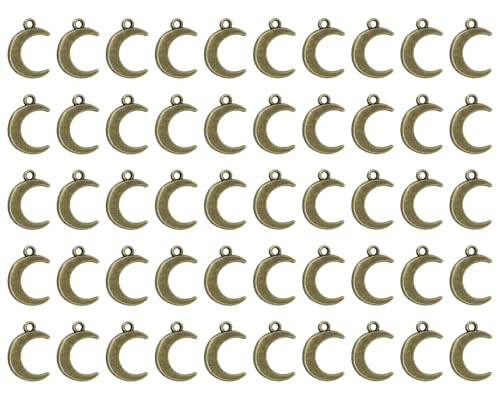
Size:Length: 19mm / 0.75inch; Width: 13mm / 0.51inch; Thickness: 2mm / 0.08inch; Hole diameter: 2mm / 0.08inch.
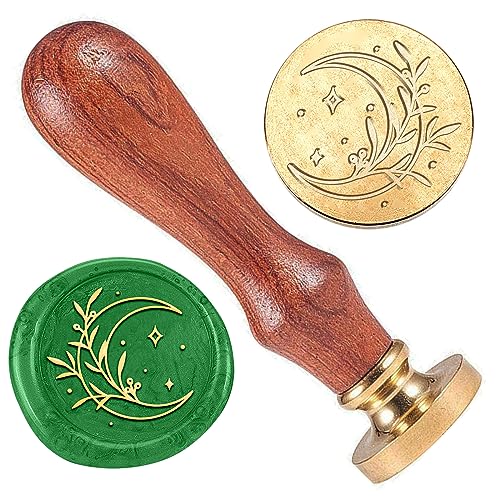
Moon Wax Stamp: The crescent moon represents new life and the olive leaf symbolizes peace. The whole pattern is designed harmoniously and beautifully. You can use it on the cards, envelopes or gift wrapping to bring an unusual flair to your handmade crafts.
Matching Crescent Moon Tattoos for Couples and Friends
You mapped intention onto solitary skin, yet you can also mirror the crescent across two bodies. Matching crescent tattoos bind you to another through shared symbol. You choose this path when words feel insufficient, when you want visible proof of connection.
Couples often split the waxing and waning phases—you carry the growing moon, your partner carries the fading, together completing the cycle. Friends might select identical crescents, placed where you catch glimpses of each other’s ink. You decide who completes your sky.
The meaning shifts from personal growth to mutual witness. You mark not only what you believe but whom you walk beside. Placement matters less here than alignment—two people choosing the same light, the same shadow, the same reminder that you orbit together.
Recommended Products

12 ZODIAC PERSONALIZED JEWELRY: This zodiac necklace features the 12 astrological signs of the zodiac. Your zodiac sign or star sign, reflects the position of the sun when you were born. Show your personality with this dainty zodiac necklace

Material: Made of selected brass and 14k gold plated,not easy to fade,lead free and nickel free; it is a great choice for sensitive skin.Comfortable and safe to wear for long time

【Moon&Star】:Rhinestone star moon tassel pendant women single layer long sweater chain necklace choker .
Beyond Femininity: Why Women Choose This Symbol
Why do so many women ink this shape when femininity is only half the story? You reclaim the crescent as a badge of resilience, not delicacy. You mark phases of survival—grief, reinvention, quiet triumphs—onto your skin. The slivered light mirrors your own: present even in darkness.
You choose it to honor cyclical change, not as weakness but as power. You track personal growth through its waxing and waning. You reject the flattening of womanhood into softness alone; you carry steel and shadow too.
Sisters, mothers, daughters—you bond through shared moons, encoding lineage without words. You embrace ambiguity. You’re not fully illuminated, never completely hidden. You own that liminal space. The tattoo declares: you contain multitudes, you shift, you endure.
Recommended Products

Amazing Art - This artwork is printed onto a matte vinyl 12"x16" panel.

REFRESH YOUR SPACE with this moon art print set from Haus and Hues. These moon prints depict the progress of the moon as it goes through 3 different phases. The large dark spots and greyish moonshine light are emphasized by the solar white background. Decorating your home with celestial-inspired wall decor, like moon paintings and lunar phases posters, has never been easier and more accessible

Perfect Wall Decor: You will received 4 pieces a full set of wooden moon phase wall decor, designed in 4 different patterns and diamond shaped. Each wall pediments measures about 11.81 x 5.90 inches that can decorate the wall as a kit or hang independently
Conclusion
You carry your crescent moon tattoo as a private compass—marking where you’ve been and where you’re growing. It holds your rhythm, your shadows, your light. Whether waxing toward intention or waning toward release, you choose the meaning. The ink becomes your witness: patient, shifting, and entirely yours.