
You sit in the chair, and the technician fires a laser at your ink. The light passes straight through your skin—but your tattoo isn’t gone yet. Somehow that beam shatters pigment without burning you, and your body does the real work afterward. You won’t see the full picture after one session, and there’s a reason for that. What happens under your skin in the weeks between appointments is what makes removal possible—and it’s not what you’d expect.
Key Takeaways
- Laser pulses fragment tattoo ink into tiny particles through photoselective thermolysis.
- Different wavelengths target specific ink colors for optimal absorption and breakdown.
- Immune cells gradually clear shattered ink particles over several weeks.
- Multiple sessions spaced 6–8 weeks apart allow complete fading.
- Frosting, redness, and scabbing occur during healing with gradual results.
Recommended Products

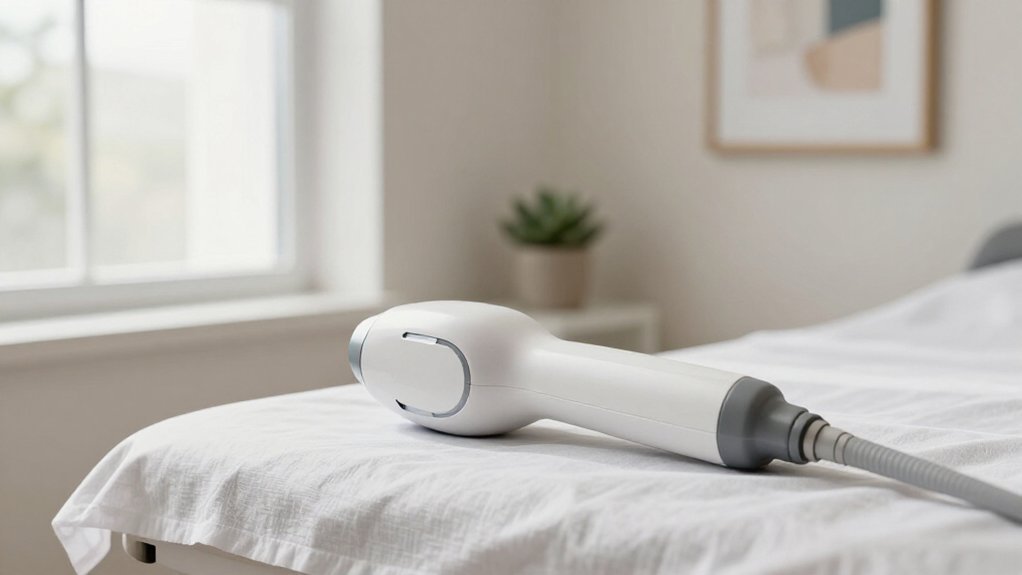
【Durable ABS Housing With Easy Clean Surface】Constructed from high-quality, wear-resistant ABS with a sleek white finish, this pigment remover withstands daily use in busy salons. The smooth exterior wipes clean effortlessly, maintaining a professional appearance for long-lasting home and clinic use.

Special designed for 532nm 1064nm laser OD6(0.000001)

Bulk 50-Pack for Efficiency and Convenience: Save time while ensuring your clients have all the pico laser post care information they need. Our 50-Pack ensures you have an ample supply of pico laser aftercare cards on hand, ready to provide personalized pico laser care for every client.
How the Laser Shatters Ink Beneath Your Skin
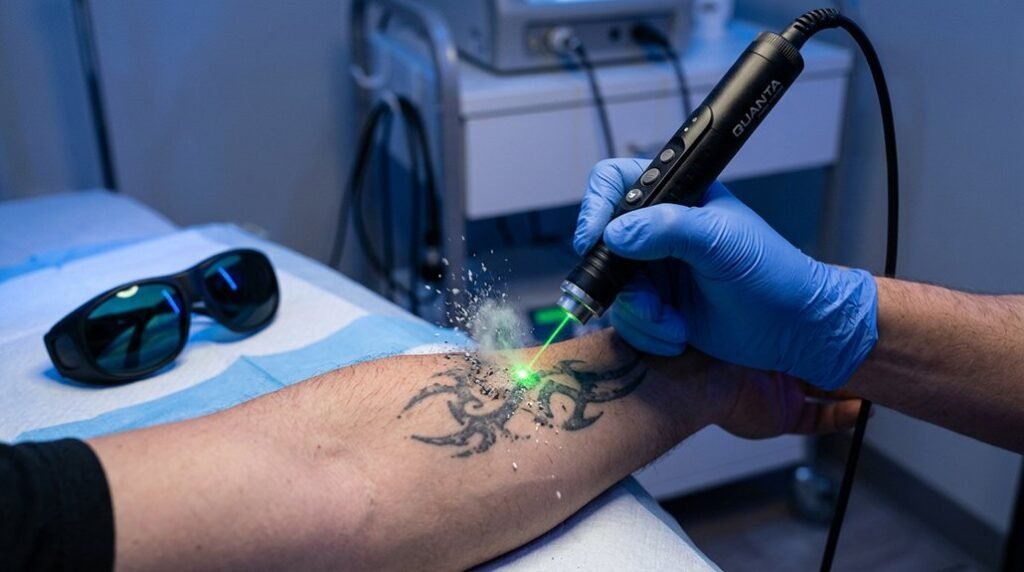
A focused beam of light enters your skin and targets the tattoo ink directly. You’re witnessing photoselective thermolysis in action—the laser delivers pulses so brief that ink heats up before surrounding tissue burns.
The ink absorbs this concentrated energy, and you’re breaking chemical bonds holding those particles together. You’re shattering large pigment chunks into fragments small enough for your immune system to handle. Different wavelengths tackle different colors—you’ll zap black ink with 1064nm light, while you’ll switch to 532nm for reds.
You’re adjusting pulse duration based on particle size. Picosecond lasers fire trillionths-of-a-second bursts, creating pressure waves that fracture stubborn ink more effectively than older nanosecond devices. You’re essentially turning big rocks into pebbles your body’s cleanup crew can haul away through lymphatic channels over subsequent weeks.
Recommended Products

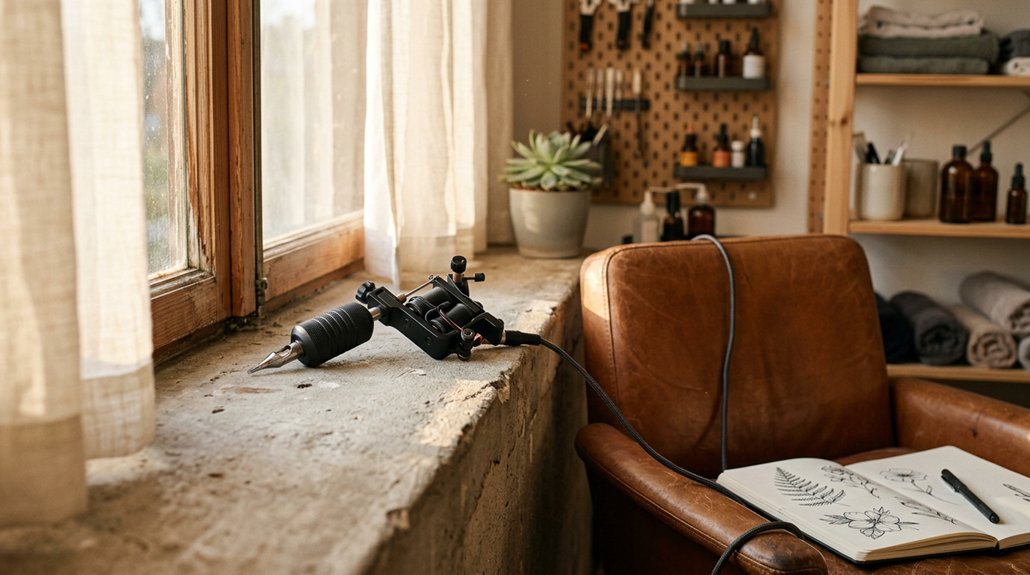
【Professional Rotary Machine】HM119-1 model (123x16mm, 116g) with 3.5mm stroke delivers precise control for lining, shading & permanent makeup. Compatible with all standard cartridge needles.

Laser Safety Glasses Protection Scope:200 - 540nm O.D 6+ & 800 - 1100nm O.D 5+ ;transmittance 30%;

COMPLETE KIT CONTENTS: The Tattoo pen kit includes 1 x Battery Tattoo Pen, 1 x Extra Battery, 20 x Tattoo Cartridges Needles, 1 x Self Cohesive Tattoo Grip Cover, 40 x Ink Caps, 2 x Practice Skin, 2 x Transfer Paper, 10 x 5ml Tattoo Ink, 1x 30ml Black Tattoo Ink, 1 x Tattoo Gloves, , 1 x Tattoo sticker, 4 x Tattoo Table Mat and 1 x instruction and essential accessories for immediate use
How Your Skin Reacts to the Laser (and Recovers)
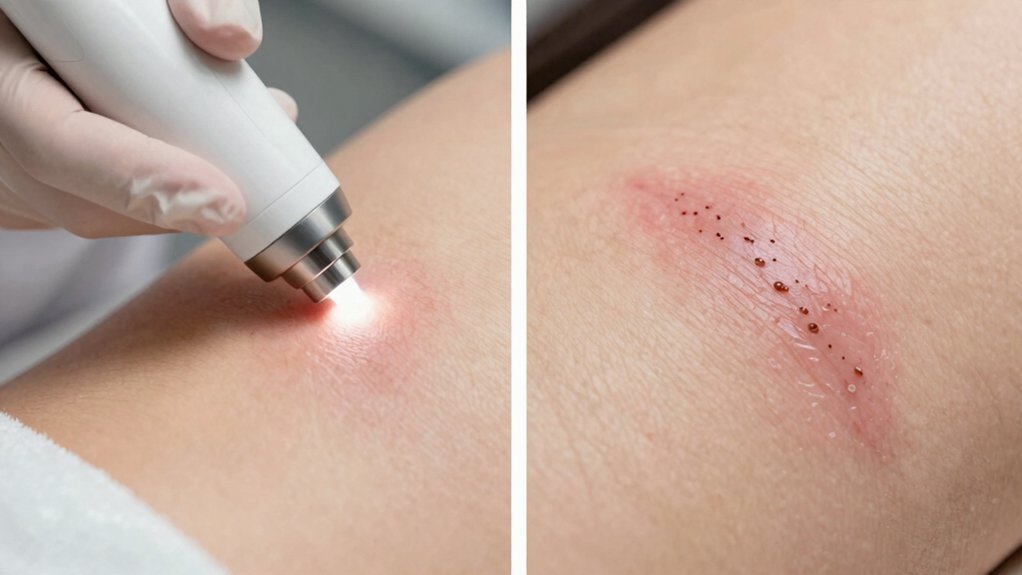
Why does your skin turn frosty white immediately after the laser fires? You’re witnessing “frosting”—a temporary reaction caused by rapid heating and micro-bubbles forming around shattered ink particles. This effect fades within minutes.
You feel a sharp snap, like a rubber band striking your skin. Your immune system immediately mobilizes. White blood cells rush to the treated area, recognizing fragmented ink as foreign debris. They engulf these particles and carry them toward your lymphatic system for gradual elimination.
You’ll notice redness, mild swelling, and perhaps pinpoint bleeding. Your skin forms a protective scab within days. You must keep the area clean and shielded from sun exposure. Over the following weeks, your skin repairs itself completely, leaving no trace of the intervention as healing progresses beneath the surface.
Recommended Products

💎【PRO-GRADE DURABILITY】Crafted with high-impact plastic, Yuelong tattoo ink mixer resists breaks & drops. Ultra-lightweight yet tough – ideal for busy studios & apprentices. Mix inks, pigments, microblading supplies safely!

1.MULTIPURPOSE-This electric tattoo pigment mixer can be used for tattoo ink,watercolor Ink,painting pigment,microblading supply tool ect.

TATTOO SUPPLY KIT: Tattoo ink mixer machine with 100 Tattoo ink mixing sticks. Durable and long-term use. The tattoo ink mixing stick is made of high-quality materials, sticks are only one time use, clean and sanitary.
Why Your Tattoo Needs 6–12 Sessions to Vanish
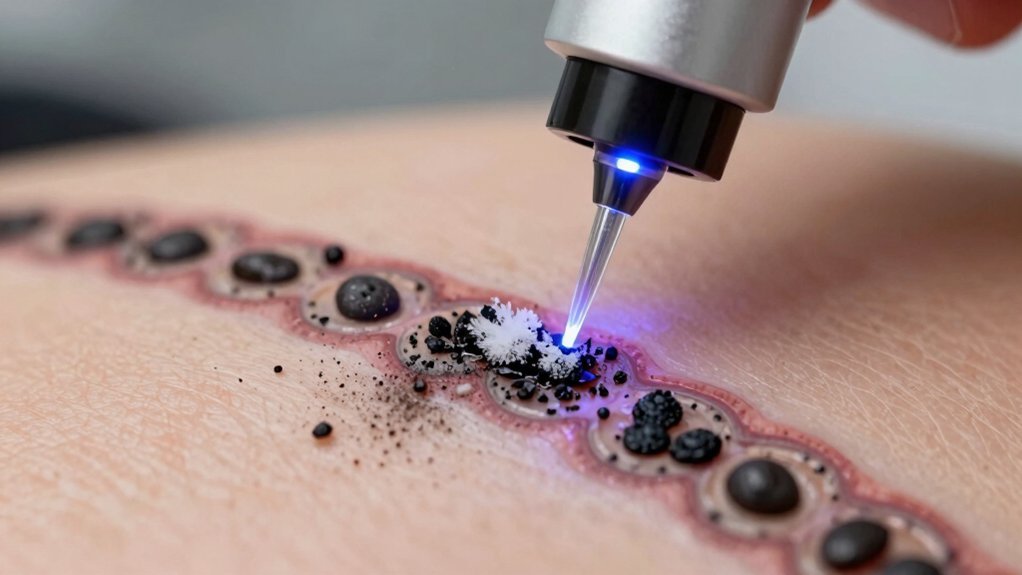
Just how long does it take to erase something meant to be permanent? You’ll need 6–12 sessions, and here’s why.
Your tattoo sits in multiple layers of skin. The laser shatters ink particles, but it can’t blast everything at once without damaging surrounding tissue. Your technician targets specific ink depths each visit. Larger particles require more energy and time to break down. The shattered fragments travel through your lymphatic system, and your body needs weeks to flush them out. That’s why sessions space 6–8 weeks apart—you’re literally waiting on your immune system to do its job.
Darker, older tattoos often fade faster. Bright colors, dense shading, or deep placement mean you’ll likely hit the higher end of that range. Patience isn’t optional; it’s biology.
Recommended Products
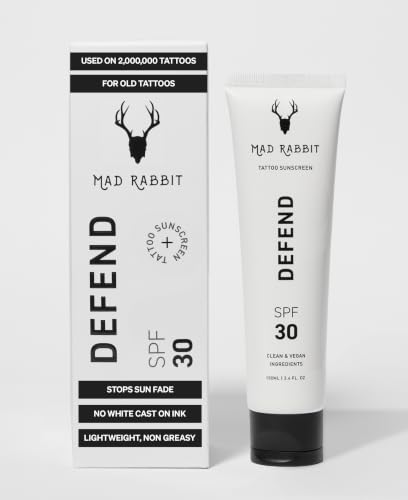
FOR ALL SKIN TYPES, INKED OR NOT - This daily, 100% mineral sunscreen works hard to protect skin and tattoos from the damage caused by exposure to harmful UVA & UVB rays.
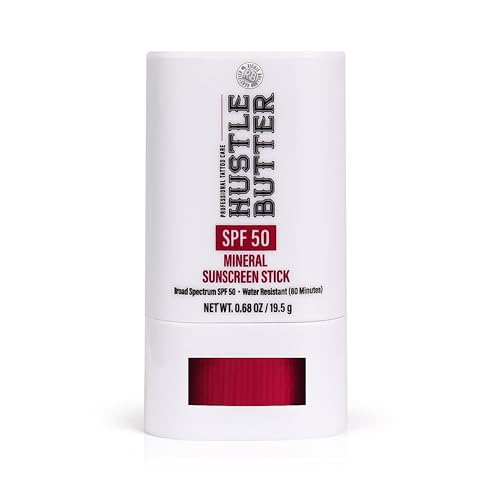
Tattoo Sun Protection, SPF 50: Our tattoo sunscreen stick provides broad-spectrum UVA/UVB coverage, preventing sun damage and fading, keeping tattoo ink vibrant and sharp.

Tattoo-Safe Mineral Formula: Our tattoo sunscreen lotion uses non-nano zinc oxide, a physical barrier that sits on the skin to block UVA/UVB rays without penetrating or irritating tattoos. This helps prevent fading, discoloration, or damage to tattoo ink caused by sun exposure.
Does Removal Hurt More Than Getting the Tattoo?
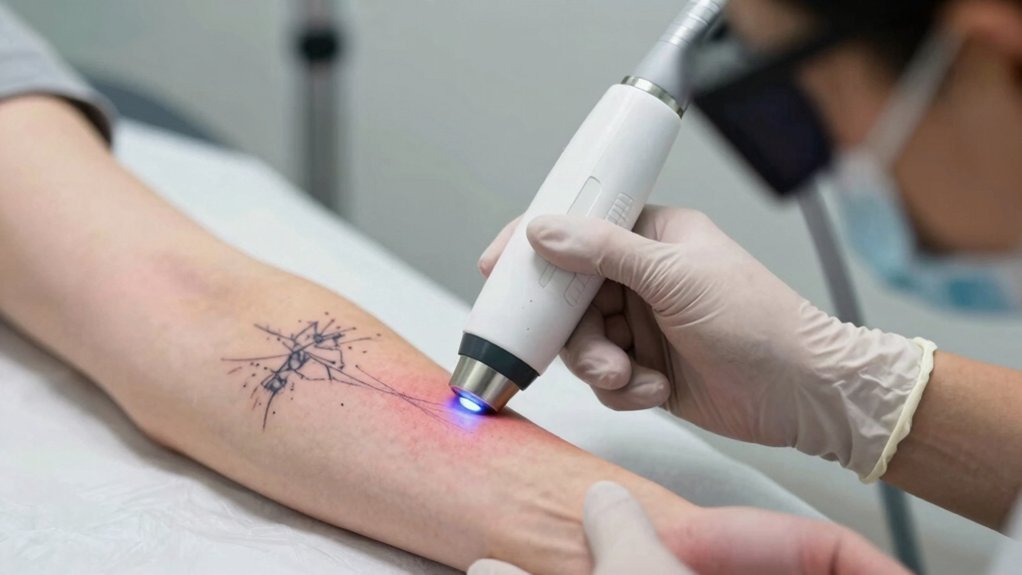
How much does it hurt to undo the ink you’ve already sat for?
You’ll likely find removal more uncomfortable than getting tattooed. While needles drag slowly across your skin during application, lasers fire rapid pulses that shatter ink particles beneath the surface. Most people describe the sensation as hot rubber bands snapping against you. You’re not wrong to brace yourself.
However, sessions wrap up much faster than marathon tattoo appointments. You’re in and out in minutes, not hours. Many clinics offer numbing creams or cooling devices to take the edge off, and you’ll build tolerance as you return for multiple treatments.
Pain varies by placement, size, and your personal threshold. What’s manageable for you might overwhelm someone else. Ultimately, you’re trading temporary discomfort for permanent results—and you’ll decide if that exchange feels worthwhile.
Recommended Products
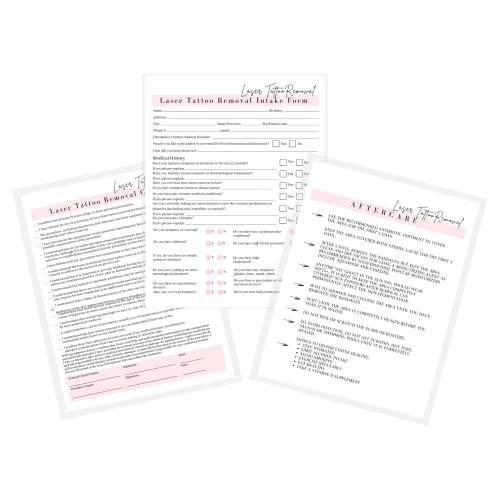
75 TOTAL PAGES consisting of 25 consent forms, 25 client intake forms, 25 aftercare pages.
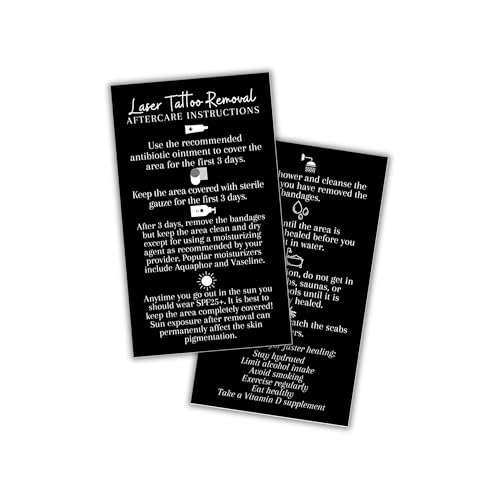
50 TOTAL CARDS printed front and back on a 2x3.5 inch inches card. 14 pt. matte card stock thickness!

HOME USE PERSONAL CARE: Designed for home-use personal care. Intended for removal of unwanted body and facial hair.
When You’ll See Results: and What’s Left Behind
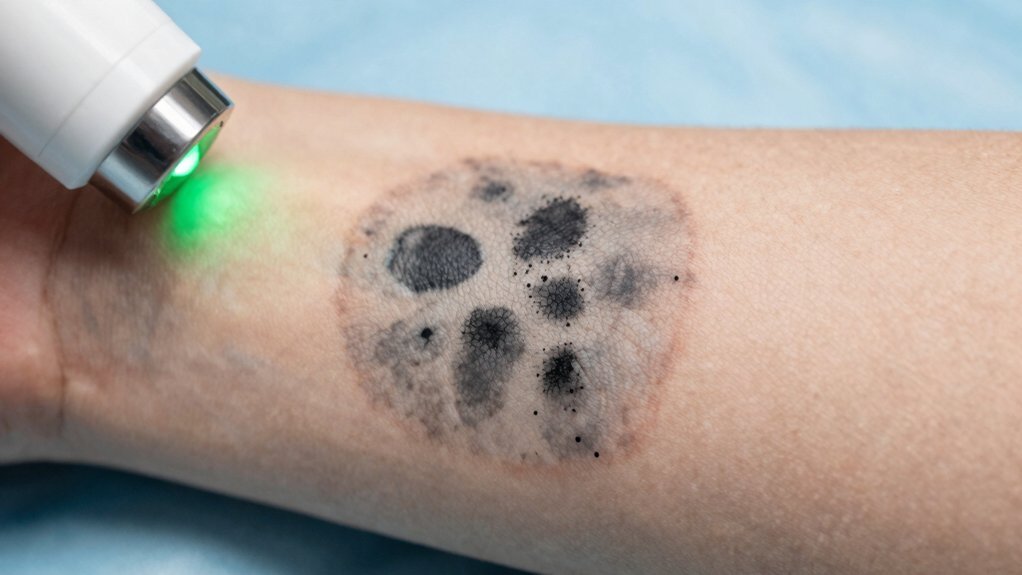
Once you’ve braced through the discomfort of a session, you’re already wondering what actually changed under your skin.
You’ll notice immediate whitening from laser-induced frosting; this fades within hours. Real results emerge slowly. Your immune system clears shattered ink over weeks, so you’ll judge progress between sessions, not right after treatment.
Most tattoos need 6-12 sessions spaced 6-8 weeks apart. You’re watching ink fade gradually, not vanish overnight. Factors you’re fighting against include tattoo age, ink depth, color variety, and your body’s own lymphatic efficiency.
What’s left behind? You’re typically seeing clear skin, though some deal with residual ghost images or slight texture changes. You’re risking hypopigmentation, especially with darker skin tones or aggressive settings. You’re also possibly facing scarring if you’ve picked scabs or got poorly treated infections. Sun protection becomes your priority during healing.
Recommended Products

87-PIECE PROFESSIONAL TATTOO KIT: Everything you need in one box! This complete POSEIDON tattoo kit includes a high-performance wireless tattoo machine, 20 assorted tattoo needle cartridges (5x1205RL/5x1207RL/5x1209RS/5x1207CM), two 2300mAh high-capacity batteries, grips, stencil paper, marker pen, ink set, ink cups, table mats, practice skin(3mm thickened), and more. Perfect for professional studios or on-the-go artists, ensuring you're always prepared.

Complete Tattoo Kit: Wormhole wireless tattoo machine delivers smooth 6500 RPM performance—ideal for mastering linework, shading, and basic designs; With 7 adjustable stroke lengths, 4 adjustable speed settings and 3 working modes, it evolves with your skill level; The tattoo kit includes dual power units for seamless, uninterrupted operation, from first practice to professional results

Solong rotary tattoo pen is CNC-Machined by aircraft Aluminium alloy and then anodized finish.The motor is 10w made in Taiwan,low noise,strong and stable to work, no hot for long time working
Conclusion
You’ll watch your tattoo fade gradually as the laser breaks down ink particles and your immune system flushes them away. While you can’t rush the process—those 6–12 sessions give your body time to clear the fragments—you’ll see progressive lightening with each appointment. Stay consistent with aftercare, and you’ll maximize removal, though some faint shadows might linger depending on the ink colors and your skin type.
Recommended Products

1[MULTIPURPOSE]This electric tattoo ink mixer can be used for blending tattoo Eyebrow ink,watercolor Ink,nail polishes, liquid,painting pigment, microblading supply tool and other artistic applications.
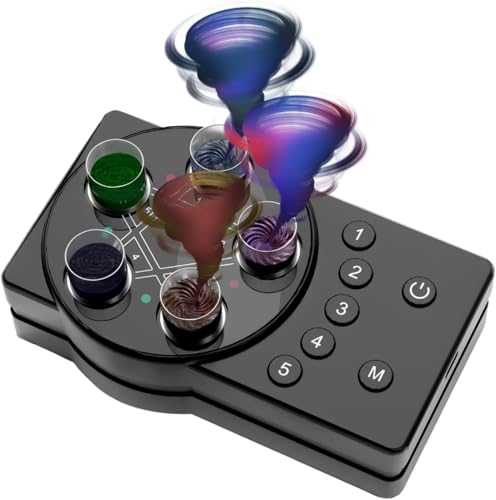
AUTOMATIC BLENDER:The blender has 5 start switches, 1.2.3.4.5, adjustable voltage, and can be easily operated with just one “M” button. Unlike traditional hand-held blenders, our product can completely free your hands and realize fully automatic blending