
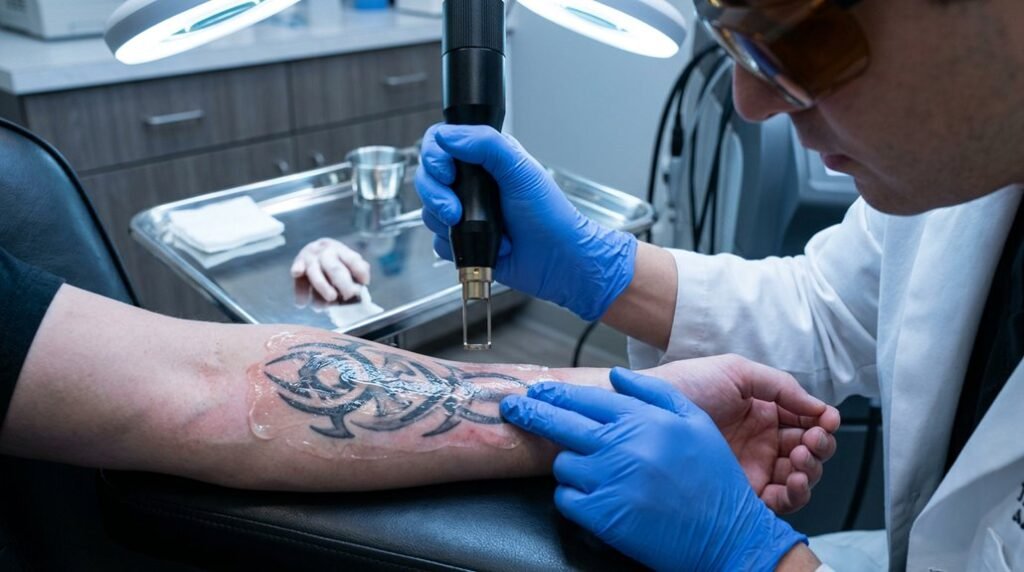
You’re probably wondering if that ink you once loved can disappear without agony. The truth is, laser removal delivers a different sting than the tattoo gun did—not deeper, but sharper and hotter, snapping against your skin in rapid bursts. Your pain tolerance isn’t the only factor; where your tattoo sits on your body matters enormously. Some spots you’ll barely flinch through. Others? You’ll be counting seconds until it ends. But here’s what most people miss completely.
Key Takeaways
- Tattoo removal pain feels like sharp rubber band snaps combined with burning heat from the laser.
- Laser removal delivers sudden, unpredictable zaps that differ from the gradual irritation of getting tattooed.
- Numbing options include professional-grade topical creams, nerve blocks, and cold air devices to reduce discomfort.
- Nerve-dense areas like ribs, ankles, and collarbone experience the most intense pain during treatment.
- Most patients need six to twelve sessions spaced weeks apart, with aftercare managing sunburn-like post-treatment soreness.
Recommended Products

Fast Acting Hemorrhoid Cream - Made with 5% Lidocaine, this topical anesthetic provides temporary relief from discomfort, itching, and burning associated with hemorrhoids and other anorectal irritation.

FSA HSA Eligible Over-the-Counter Medication - This topical lidocaine numb cream with Allantoin, Vitamin E, and Aloe is clinically proven to temporarily relieve pain, burning, itching, discomfort, inflammation, and soreness in local and anorectal areas

FSA HSA Eligible Over-the-Counter Medication - This topical lidocaine numb cream + spray set with Allantoin, Vitamin E, and Aloe is clinically proven to temporarily relieve pain, burning, itching, discomfort, swelling, inflammation, and soreness in local and anorectal areas
How Bad Does Tattoo Removal Actually Hurt?
How much does tattoo removal actually sting? You’ll feel it, but you’re not facing torture. Most people describe the sensation as a rubber band snapping against your skin—repeated, sharp, and insistent. You’re also dealing with heat from the laser, so it burns a bit too. Your pain tolerance shapes everything here. You’ve got nerve-dense spots like ribs, ankles, and inner arms that’ll make you wince more than a meaty shoulder or thigh. You’re in sessions for mere minutes, though, not hours. You can handle it. You’re numbing the area beforehand with cream or ice, which dulls the edge. You’re breathing through it. Afterward, you’re nursing tenderness like a sunburn for a couple days. You manage. You’ve survived worse.
Recommended Products
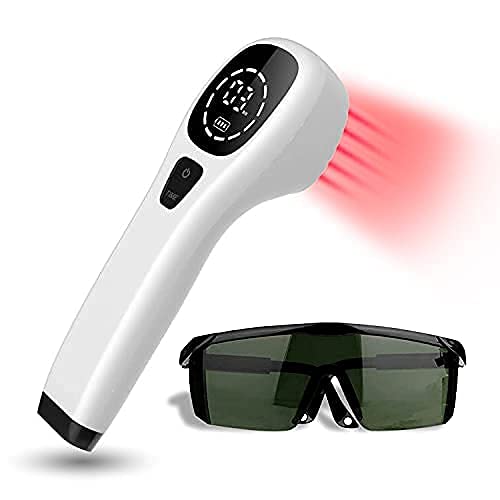
ESAY TO USE: Stylish and compact design, portable size for easy carrying when travel. Easy to operate with user-friendly guide included. Lighter or deeper penetration suitable for both professional and personal use.
⭐The cooling gel is designed to help cool and hydrating the skin, which will keep your skin in a comfortable state when you use the hair removal device or other beauty devices.

【Effective Pain Relief】 This low level laser therapy device, specifically designed for pets/human, utilizes a combination of 650nm & 808nm wavelengths to enhance cell function and promote natural healing. It has been proven effective in easing aches, accelerating recovery, and providing relief from sports sprains injuries, joint and muscle pain, and soft tissue injury.
Why Laser Pain Feels Nothing Like Getting Tattooed
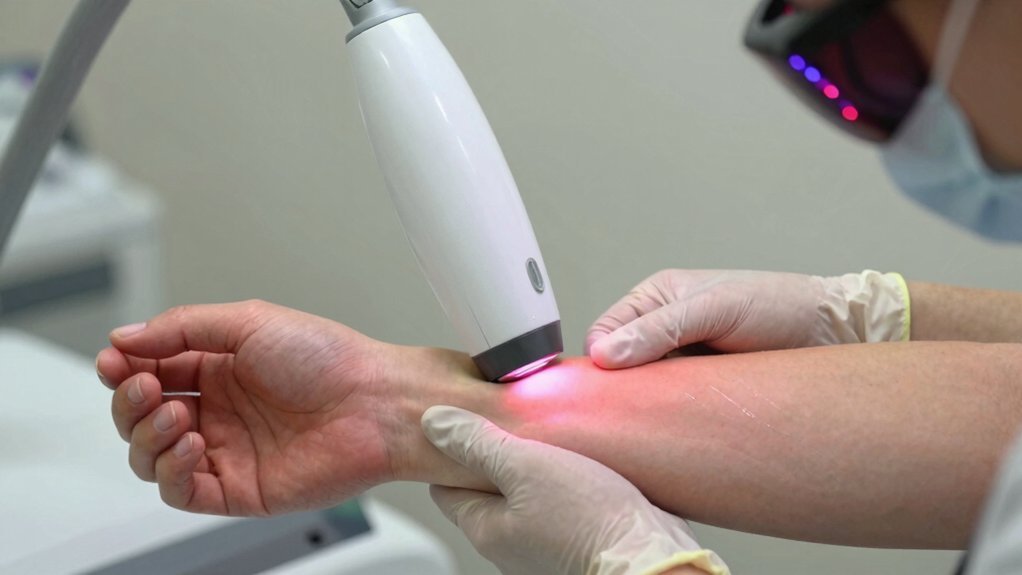
Why does laser removal sting differently than the needle? When you’re getting tattooed, the needle scratches and drags, creating a burning, scraping sensation that builds gradually. You’re prepared for that rhythmic irritation.
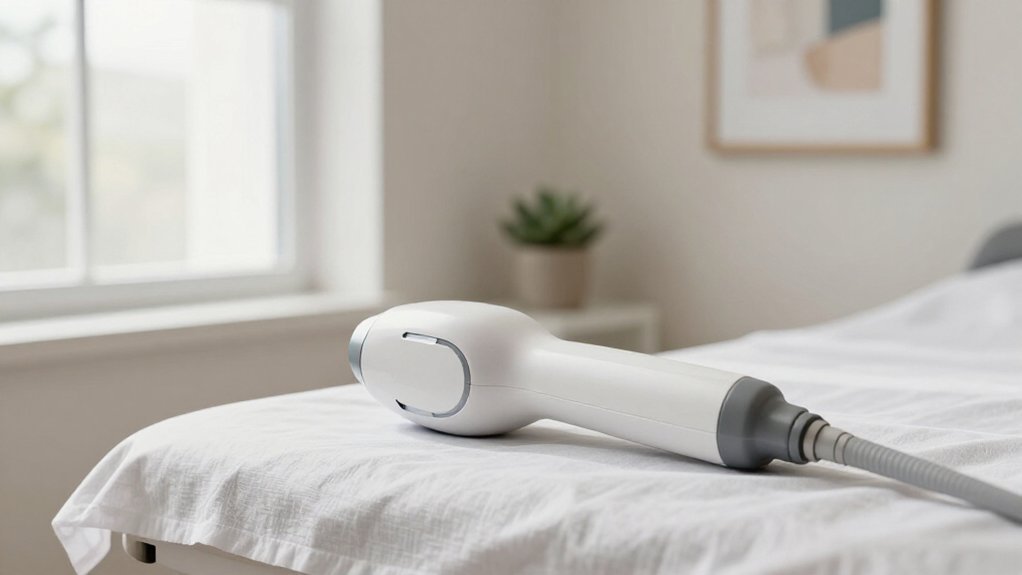
Laser removal delivers a completely different beast. The beam fires in microsecond pulses, striking your skin like a rubber band snapping against sunburn—sharp, sudden, and singular.
You’re not braced for each zap because they come faster than you anticipate. The heat explodes ink particles instantly, creating a shockwave your nerves register as a deep, snapping throb rather than surface abrasion.
Your tattoo session numbs you with repetition; laser removal keeps you alert with surprise. You’ll feel the difference in your shoulders tensing, your breath catching, your body reacting to a threat it can’t predict.
Recommended Products
After Waxing Protection, Post-waxing Buddy: Lessen redness, protect your skin from inflammation and reduce the risk of infection after waxing! It nourishes your skin underneath, too! A great addition to your waxing regime to complete that ultimate waxing experience.

Soothing Aftercare Essential: Designed for post wax care, this cooling gel refreshes and soothes skin instantly. Perfect for reducing redness and irritation after waxing sessions.

FORMULATED WITH ALOE & VITAMIN E–Preserves your skin and extend your tan
What Actually Works to Numb the Pain
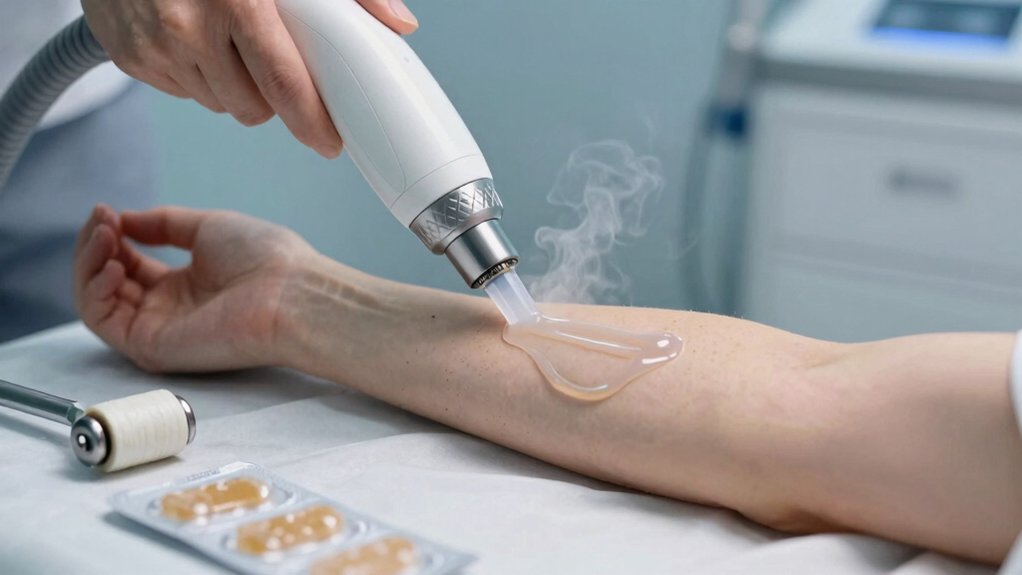
So where does that leave you when the rubber band snaps keep coming? You reach for numbing options that actually work.
You’ll find topical anesthetic creams containing lidocaine, tetracaine, or benzocaine at most clinics. Apply them 30–60 minutes before your session; they’ll dull the surface pain substantially. Some practitioners offer prescription-strength formulations or injectable nerve blocks for dense, sensitive areas.
You can also request cold air devices that blast chilled air onto your skin during treatment. This distracts your nerves and reduces discomfort considerably.
Avoid relying on over-the-counter gels alone—they rarely penetrate deep enough. Ask your technician what they provide; most reputable clinics stock professional-grade numbing agents.
Don’t tough it out unnecessarily. Effective numbing exists, and you deserve to use it.
Recommended Products

COMPLETE AFTERCARE KIT FOR NEW & EXISTING TATTOOS: This Tattoo Aftercare Kit brings together 3 essentials, Antimicrobial Soap, Tattoo Balm, and Tattoo Lotion, to help cleanse, protect, and moisturize fresh ink. Useful after tattoo sessions and throughout healing, it supports vibrant color and skin comfort for dedicated ink enthusiasts and artists

Nourishes Healing Ink for Vibrant Color: Tattoo Goo supports healing tattoos & maintains vibrancy on healed ink with a lightweight formula rich in olive oil, lavender oil, cocoa butter, and beeswax. It absorbs quickly, moisturizes deeply, and helps reduce dryness, itch and tightness so your tattoo looks and feels comfortable through everyday routines

TATTOO AFTERCARE ESSENTIAL: Hustle Butter is the original tattoo aftercare balm for new and older tattoos. With over 10 years in the market, we are a pioneer of the tattoo aftercare category.
Where Does Laser Tattoo Removal Hurt Most?
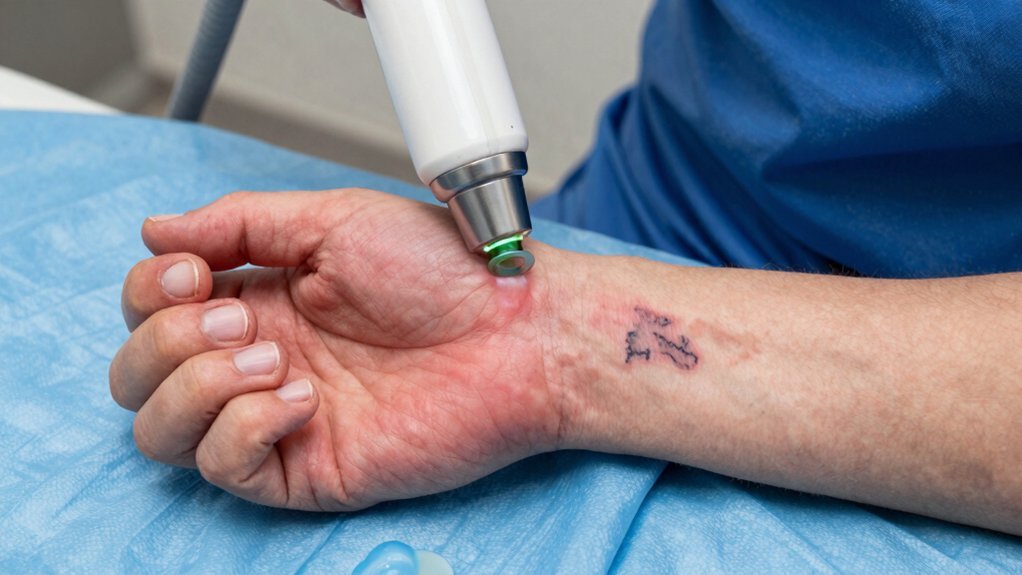
Pain isn’t distributed evenly across your body, and tattoo removal follows the same rule: some spots you barely notice, others make you grip the chair.
You’ll feel the most intense sensations where your skin sits thin and close to bone. The ribs, sternum, spine, and collarbone area deliver sharp, stinging zaps that linger between pulses. Your ankles, wrists, and feet also pack a punch—there’s little fat padding there to buffer the laser’s heat.
Fleshier regions like your outer arm, thigh, or belly register milder discomfort. You’ll still feel it, but it’s manageable, more like rubber bands snapping against stretched skin.
Nerve density matters too. Fingers, toes, and kneecaps contain abundant nerve endings, amplifying every flash. You can request breaks, shift your breathing, or ask for numbing help, but location determines your baseline experience.
Recommended Products

Solong rotary tattoo pen is CNC-Machined by aircraft Aluminium alloy and then anodized finish.The motor is 10w made in Taiwan,low noise,strong and stable to work, no hot for long time working

7 Adjustable Stroke, Versatile for All Needs: Operating at 4-12V (accurate to 0.1V), this tattoo machine suits both beginners and professionals; With 7 adjustable strokes (2.4mm/2.7mm/3.0mm/3.3mm/3.6mm/3.9mm/4.2mm) and 1mm–4.2mm needle depth, this wireless tattoo pen offers precise control for lining, shading, coloring,and details, this versatility makes it easy to tattoo in various styles
How Many Removal Sessions Will You Need?
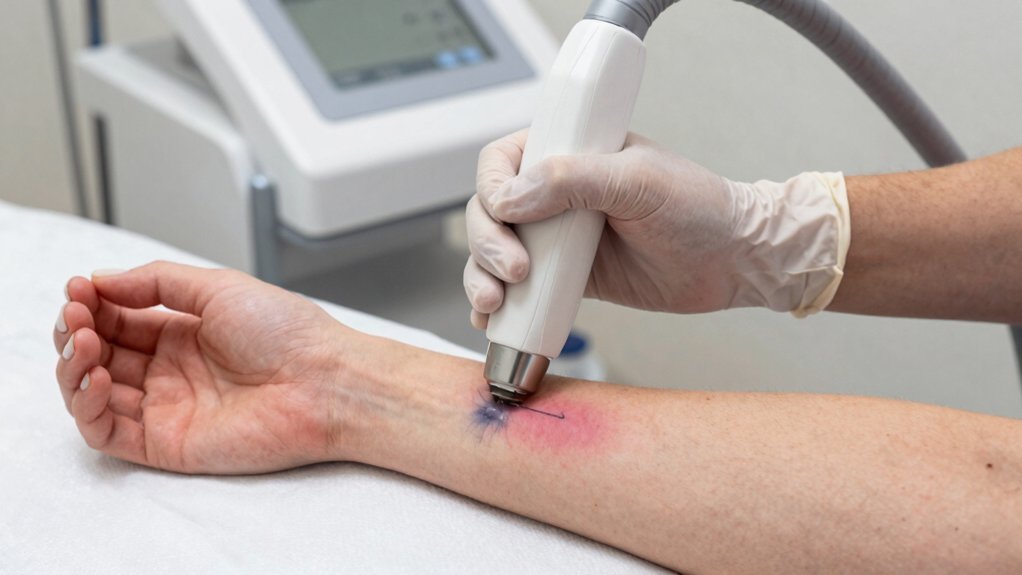
The sting fades, but the real question on your mind is how long you’ll keep coming back.
You’ll typically need six to twelve sessions, spaced six to eight weeks apart.
Your body determines the pace.
The laser shatters the ink, and your immune system flushes it away over time.
You’ll see fading after each visit, but complete removal demands patience.
Small tattoos often clear faster.
Large, dense pieces require more rounds.
Older tattoos usually break down quicker than fresh ones.
Your ink sits at varying depths, so multiple passes ensure thorough clearance.
Each session builds on the last.
You’ll notice the laser targeting different pigment layers each time.
There’s no rushing the process—your skin needs recovery between treatments, and your lymphatic system works gradually.
Commit to the full plan, and you’ll watch your tattoo disappear.
Recommended Products

Fast Acting Hemorrhoid Cream - Made with 5% Lidocaine, this topical anesthetic provides temporary relief from discomfort, itching, and burning associated with hemorrhoids and other anorectal irritation.

LIDOCAINE 5% PAIN CREAM | Experience deep pain relief with the strongest formulation of lidocaine available OTC.

5% Lidocaine Cream Maximum Strength Formula: Formulated with 5% lidocaine, this topical cream provides temporary relief from localized discomfort such as itching, burning, or minor skin irritation. A powerful solution for external use when your skin needs extra care.
Do Certain Ink Colors Hurt More to Remove?
How much does your tattoo’s color palette influence the sting? You’ll feel it more with certain shades.
Black ink absorbs laser wavelengths most efficiently, making it easier to break apart and less painful to remove. You won’t struggle as much with dark blues and greens either—they respond similarly well.
But you’ll brace yourself for brighter colors. Yellow, orange, and fluorescent inks reflect more light, forcing technicians to crank up energy levels or switch to specialized wavelengths. You feel that difference directly.
White and skin-tone inks pose another challenge: they can oxidize darker during treatment, requiring additional sessions. That means more appointments, more zaps, and cumulative discomfort.
Your tattoo’s age and depth matter too, but color remains a key pain predictor. You can’t change what you’ve got, but you’ll at least know what’s coming.
Recommended Products

4 Timers & 4 Powers: Timers: 5/10/15/20min. Power lever: L1, L2, L3, L4. Long-press the “on/off” button to turn it on; the screen is illuminated. One click again to start working. Twice-Press protection is set to avoid accidental emission.

【Upgraded Dual-Wavelength Technology】 Powered by Low Level Laser (LLLT) technology, this Cold Laser Therapy Device combines 3×808nm infrared and 18×650nm red light to deliver balanced surface and deep-reaching light care for overall joint and muscle comfort. (Note: 808nm light is invisible to the eye but detectable with phone cameras.)

【Scientific red light therapy】: The 650nm*14 tubes of red light emitted by the laser therapy device can act on the skin to promote blood flow, vasodilatation, lymphatic circulation and blood circulation. The 808nm*4 tubes of near infrared light from the red light devices can penetrate deep into the tissues, improves joint & muscle aches & pains, stimulate lymphatic patterns, activate cells & accelerated recovery. Red Light Low Level Laser Therapy device is indicated for muscle soreness, fatigue reduction and relaxation. (Note: 4x808nm not visible to the naked eye when working)
Tattoo Removal Recovery: Your First 24 Hours
What happens once you leave the clinic? Your skin immediately responds to the laser treatment. You’ll notice redness, swelling, and a stinging sensation similar to a sunburn. This reaction peaks within the first few hours.
Apply ice packs wrapped in clean cloth for fifteen-minute intervals. This reduces inflammation and numbs discomfort. Keep the treated area elevated when possible to minimize swelling.
You must protect the site. Cover it with sterile, non-stick gauze and avoid tight clothing that rubs against your skin. Skip hot showers, saunas, and strenuous exercise for twenty-four hours. Heat and sweat irritate freshly lasered skin.
Cleanse gently with mild, fragrance-free soap and pat dry. Don’t pick at any scabs or blisters that form. Your body starts breaking down ink particles immediately, so rest and hydrate to support this process.
Recommended Products
Protect your Body Art: Getting inked takes a toll on your skin. What you lose in moisture, we give right back. Our formula mimics your skin’s natural hydration so it absorbs fast, works harder, and helps your skin recover faster

INSTANT RELIEF: Fast-acting lidocaine gel with 0.72% Lidocaine Hydrochloride provides temporary relief from sunburns, windburns, insect bites, minor burns, scrapes, and other skin issues. Great for everyday sun care needs.

Protect Your Body Art: Moisturizing with the bonus of itch relief! Tattoo Goo's Tattoo Care Lotion soothes healing skin & keeps healed ink looking sharp for life. With olive oil & glycerin, it delivers deep, breathable hydration that won’t clog pores
Is Tattoo Removal Worth the Pain? See Real Results
Why endure the discomfort? You weigh your options and decide what matters most. That faded name, regretted design, or career barrier—you want it gone.
You watch real results unfold across weeks. Your ink breaks down, fades, and eventually disappears. Sessions sting, yes, but you manage them. Numbing creams help. Cooling devices assist. You pace yourself between appointments.
You peek at progress photos online. Strangers document their journeys—half-finished sleeves becoming bare skin, neck tattoos vanishing completely. You see what’s possible.
You calculate costs against confidence gained. Freedom from cover-up makeup. No more explanations required. You reclaim your canvas.
Most patients report they’d repeat the process. You understand why. Temporary pain yields permanent change. You’re investing in yourself, not just erasing ink.
Recommended Products

Upgraded Design, Easy to Use --- Tattoo aftercare balm comes in a tube,this container allows you to glide on the butter easily,Rolls on smoothly and evenly on your skin,No more mess or residue on your finger,convenient to use

💼【Portable Professional Care】 - 50 single-use packs (5g each!) fit in pockets, gym bags, or travel kits. Never deal with messy jars! Each sealed packet locks in freshness for on-the-spot relief after workouts, flights, or tattoo sessions. Stay prepped anywhere!

HUSTLE BUTTER ESSENTIALS TATTOO AFTERCARE KIT: This Essential Kit includes our Hustle Butter Tattoo Balm (1 fl oz), Hustle Bubbles Foaming Soap (3.4 fl oz), and our Hustle Butter Tattoo Aftercare Wrap - Small (6 in x 2.2 yds)
Conclusion
You’ll feel discomfort during tattoo removal, but it’s manageable and brief. The sharp snap and heat sensation isn’t like getting tattooed at all—it’s quicker and more intense per pulse. Numbing options work well, and fleshy areas hurt less than bony spots. Recovery’s straightforward, and results make the sting worthwhile. Weigh your commitment against your tattoo regret; if you’re ready to move on, the pain won’t stop you.