
You’re standing at the shop counter, wallet in hand, but the artist’s first question isn’t about your design—it’s about your age. Whether you’re sixteen with parental permission or waiting for your eighteenth birthday, the rules shift dramatically depending on where you live. Some states will tattoo you today; others won’t bend no matter what mom or dad say. You’ll need to know exactly which laws apply before you walk through that door.
Key Takeaways
- No federal minimum age exists; most states set 18 as the baseline requirement.
- Some states permit minors to get tattoos with verified parental or guardian consent.
- A few states like Vermont require tattoo recipients to be 18 under all circumstances.
- Florida prohibits tattooing anyone under 16, even with parental permission present.
- Valid government-issued photo ID is mandatory, and shops often require notarized consent forms.
Recommended Products

All-In-One 75-Pack – Includes 25 consent forms, 25 intake sheets, and 25 aftercare instruction pages—everything needed for a full session workflow.

Generous Quantity: 5 sheets x 5 = 25 temporary tattoos

Size: 8X4 INCH. / Click/Slide To The Next Pictures For The Size.
Tattoo Age Laws by State: The Complete 50-State Guide
Wondering where you can legally get inked? You’ll find no federal law sets a minimum tattoo age. Instead, you’re navigating a patchwork of state regulations. Most states require you to be 18, period. You’ll encounter this rule in California, New York, Texas, and dozens more. Some states add twists—you’re looking at 16 with parental consent in states like Florida and Idaho, though Vermont demands you’re 18 regardless. You’ll discover Illinois leaves age requirements to local jurisdictions. You’re wise to research your specific state, as penalties for tattooing minors fall heavily on artists. Don’t assume neighboring states share your home’s rules. You’re responsible for verifying current regulations, as laws shift. Check your state’s health department website before you book that appointment.
Recommended Products

Suitable for carrying with you while traveling, attending tattoo conventions, going to work. *For more comprehensive steps, please refer to the video on the Product...
Parental Consent Rules: When Minors Can Get Tattooed Legally
While most states set the bar at 18, you’ll find several that open the door earlier if a parent signs off. You’ll need to research your specific state’s rules, as they vary widely.
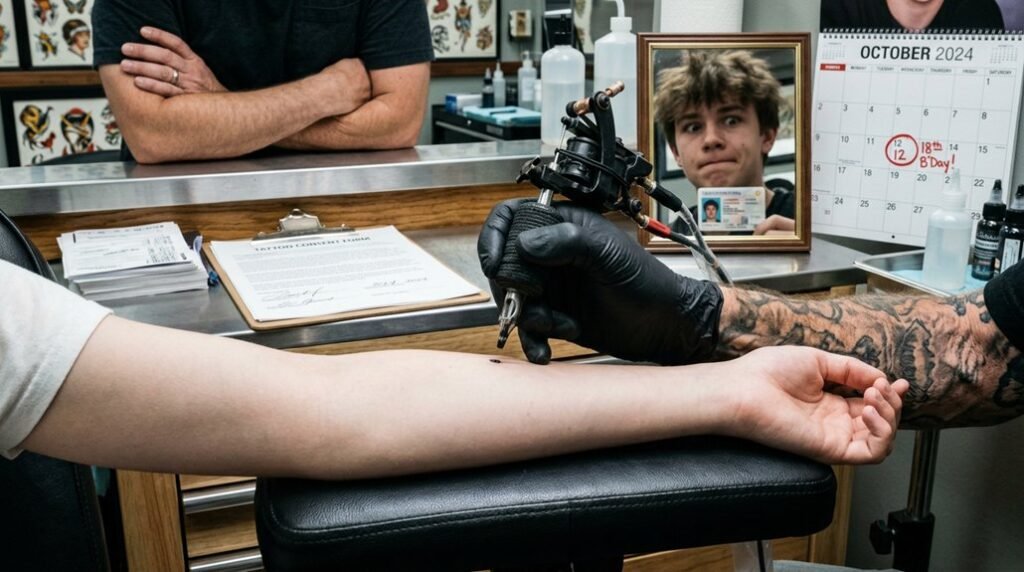
Some states allow 16-year-olds to get tattooed with parental consent. Others drop the age to 14 or even remove any minimum altogether when a guardian participates. You’ll typically need your parent physically present, not just a signed note. Many shops require notarized consent forms to protect themselves legally.
You’ll discover that consent rules aren’t uniform. Texas permits minors with parental approval, while Florida bans tattooing anyone under 16 regardless of consent. Maine allows it at any age with a guardian’s involvement.
Don’t assume neighboring states share policies. Crossing state lines won’t help if you’re evading home-state restrictions. Always verify current local laws before booking your appointment.
Recommended Products
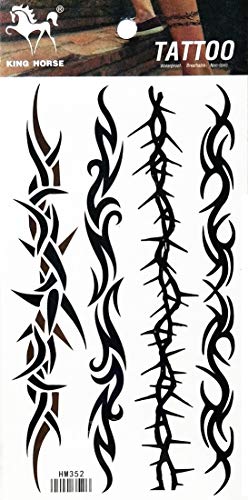
Waterproof Tattoos: The tattoos are waterproof and can be used for temporary body art. Vintage Style: The tattoos feature a vintage floral pattern with barbed wire design....
ID Requirements Tattoo Shops Actually Accept
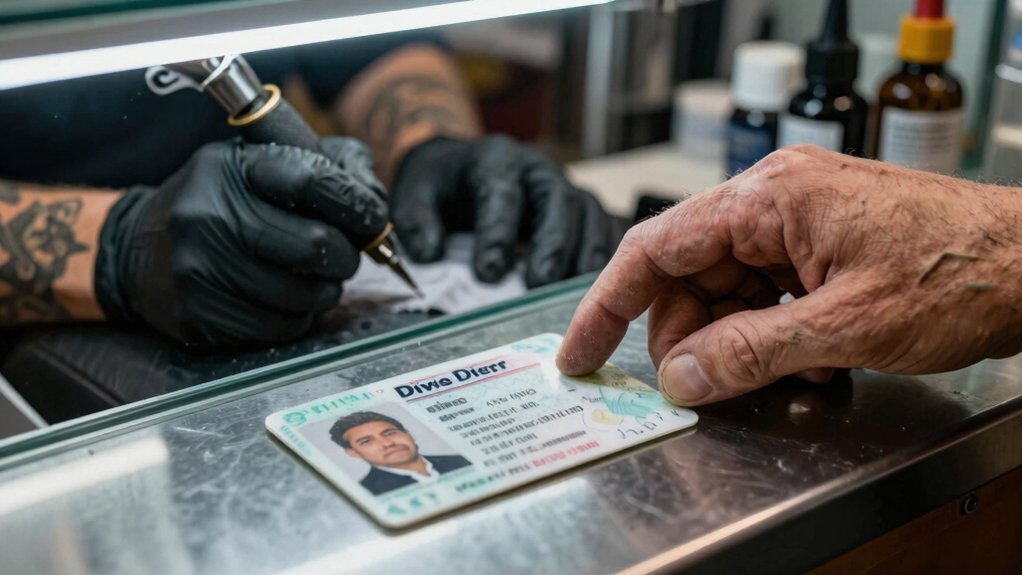
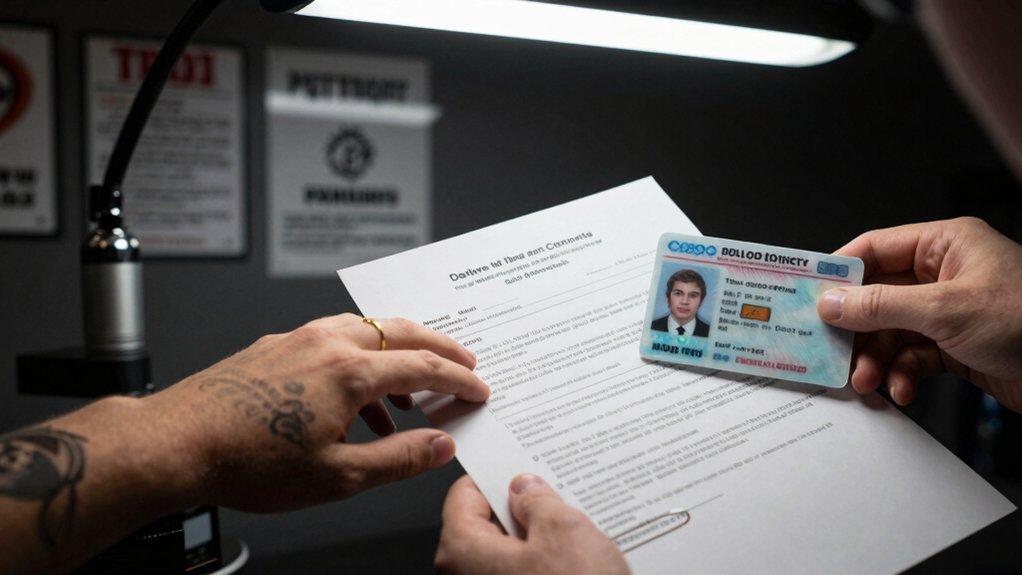
What exactly do you need to bring to prove you’re old enough to get tattooed? You’ll need valid government-issued photo identification. Most shops accept driver’s licenses, state IDs, passports, or military IDs. They won’t accept student IDs, photocopies, or pictures on your phone. Your ID must be current and not expired. Some states require you to bring a birth certificate alongside your photo ID if you’re close to the minimum age. If you’re under 18 and your state allows parental consent, both you and your parent must bring ID. Your parent also needs to prove legal guardianship through a birth certificate or court documents. Call ahead to confirm exactly what your shop requires, as policies vary. Don’t expect exceptions—legitimate artists follow strict ID protocols to protect their licenses.
Recommended Products

TRADITIONAL FLAIR: Get ready to unleash your inner rebel with Savvi's American Traditional Flash Temporary Tattoo Pouch. Have fun on a wild ride of traditional American flash...
How to Prepare for Your First Tattoo Appointment
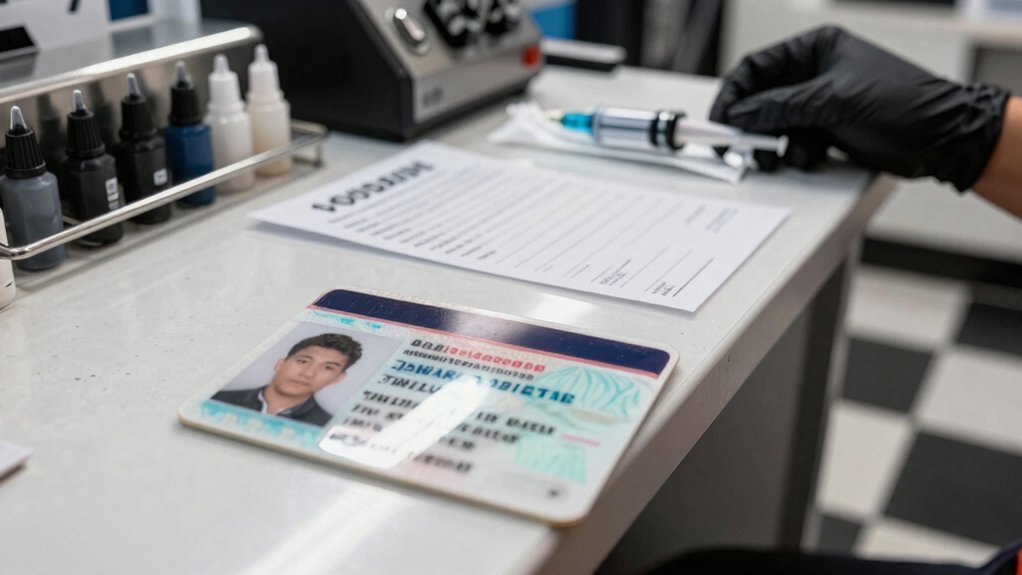
How exactly do you set yourself up for a smooth first tattoo experience? You’ll want to research your artist thoroughly. Check their portfolio, verify their license, and read client reviews. Book a consultation to discuss your design, placement, and any concerns you’ve got.
Before your appointment, hydrate well and eat a solid meal. Avoid alcohol for 24 hours and skip blood thinners if possible. Wear comfortable clothing that gives easy access to your chosen spot. Bring a valid ID—shops won’t tattoo you without proper identification.
Pack snacks, water, and entertainment for longer sessions. Get plenty of sleep the night before. Moisturize your skin beforehand, but don’t apply lotion the day of. Follow your artist’s specific aftercare instructions closely. Remember, preparation directly impacts your comfort and your tattoo’s quality.
Recommended Products

Too Young Now? Your Timeline to Legal Ink

You’ve got your consultation booked and your design pinned down, but there’s one detail that stops the process cold: your age. Most states require you to hit eighteen before you can legally get tattooed without parental consent. Some places let sixteen-year-olds ink up with a guardian’s signature, but those states are shrinking fast.
Check your local laws—they vary wildly. Colorado demands you’re twenty-one, while Arkansas allows tattooing at any age with parental permission.
If you’re underage, don’t risk a shady artist willing to bend rules. Unlicensed work brings infections, scarring, and regret. Instead, use the wait to refine your design, research artists thoroughly, and build a budget for quality work.
Time moves faster than you think. When that birthday hits, you’ll walk in prepared, not impulsive.
Conclusion
You’re ready to check your state’s specific laws and gather your ID. If you’re under 18, you’ll need a parent present in most places. Book with a licensed artist, follow their prep advice, and commit to proper aftercare. Not quite old enough? Mark your calendar and research artists while you wait. Your legal ink’s coming.