
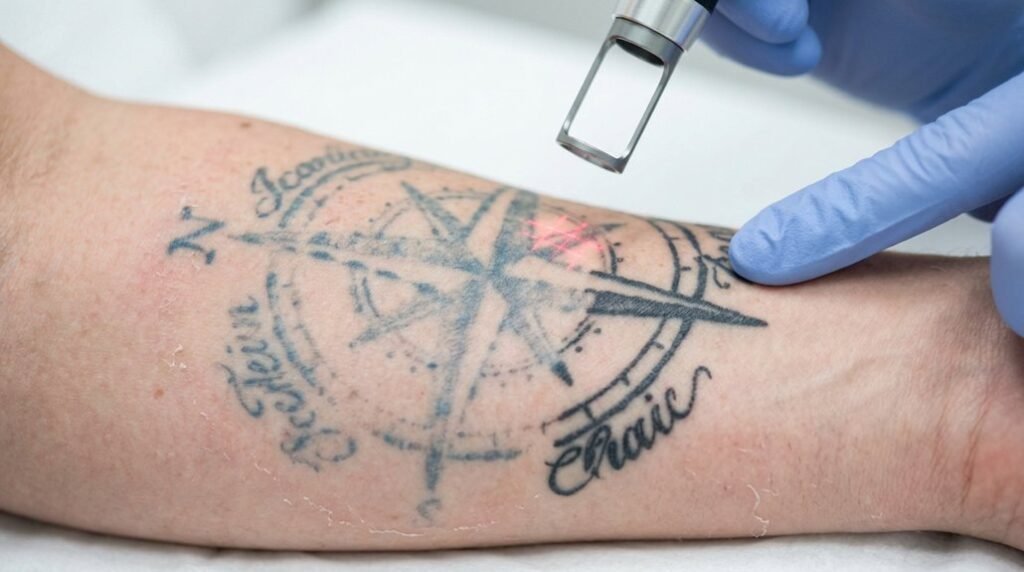
You’re looking at that tattoo and wondering how many sessions it’ll take to disappear. The answer isn’t simple—you could need anywhere from four to fifteen or more, depending on factors you haven’t considered yet. Your ink color, skin type, and even where the tattoo sits on your body all shift the numbers. Before you book that first appointment, you’ll want to understand why yours might land on the high end.
Key Takeaways
- Average sessions range from 6–12, but individual factors vary results significantly.
- Black ink fades fastest; bright colors (green, blue, teal) require more sessions.
- Darker skin tones need 10–15 sessions versus 6–10 for lighter complexions.
- High-circulation areas (chest, neck) clear faster than ankles or fingers.
- Sessions require 6–8 week intervals for lymphatic clearance between treatments.
Recommended Products

【Enriched with Vitamins A & D】This tattoo scar gel is formulated with naturally derived vitamins A and D, plus skin-calming ingredients. It helps support your skin's natural recovery process while keeping the tattoo area moisturised.

✡Various Purpose - Care for all types of wounds; Waterproof cover; Fixed dressing; Tattoo aftercare. It can help lock in the color, protect your tattooed skin, and reduce scabbing when you wash or moisturize your tattoo, quickly form a protective film then accelerate your recovery

THE ORIGINAL TATTOO AFTERCARE BANDAGE – Saniderm’s Original Gloss Bandage is the tried-and-true, industry-defining tattoo aftercare bandage. Dermatologist-recommended and trusted by expert tattoo artists worldwide, this medical-grade bandage ensures your tattoo heals quickly, safely, and more vibrantly. With over a decade of experience and millions of tattoos healed, it’s the perfect way to heal your ink.
6 to 12 Sessions: What “Average” Actually Means for You
Why do most clinics quote 6 to 12 sessions when you ask about tattoo removal? They’re giving you a statistical middle ground that covers most cases without overpromising. Your specific number depends on factors you can’t fully predict upfront.
You’ll find that “average” doesn’t mean uniform. Your tattoo’s size, ink density, and color complexity all push that number higher or lower. Black ink absorbs laser light efficiently, so you’ll see faster progress there. Blues and greens fight back harder. Your skin type matters too—darker tones require cautious approaches that extend your timeline.
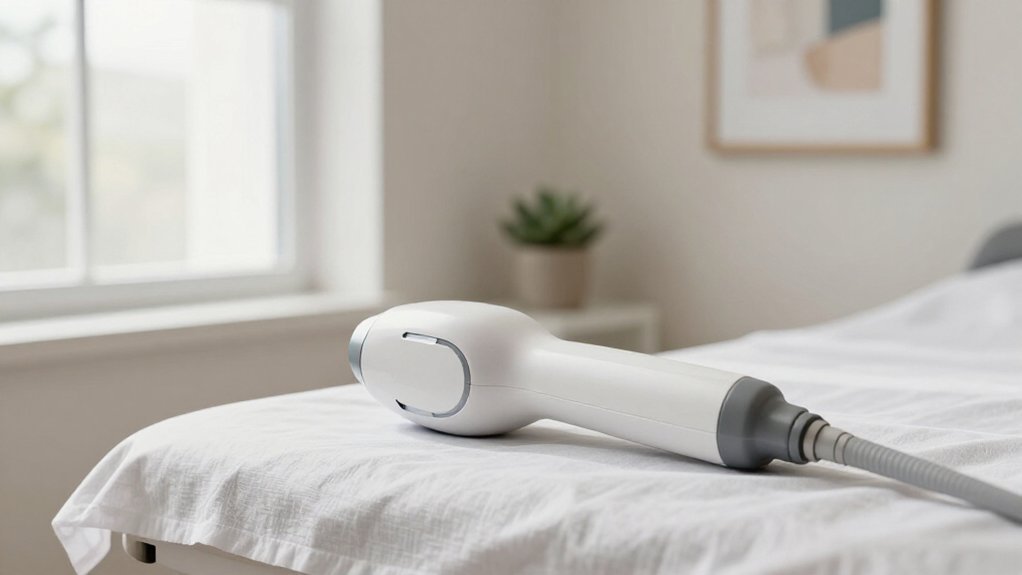
You can’t rush lymphatic drainage. Your immune system clears shattered ink particles between sessions, and that biological process won’t accelerate on demand. Expect 6-8 week intervals. You’re playing a long game, not sprinting. Respect your body’s pace, and you’ll reach clear skin without setbacks or scars.
Recommended Products

100% brand new and high quality

100% new brand and high quality. Favored among professional tattoo technicians.

100% new brand and high quality. Favored among professional tattoo technicians.
Why Some Tattoos Fade in 4 Sessions
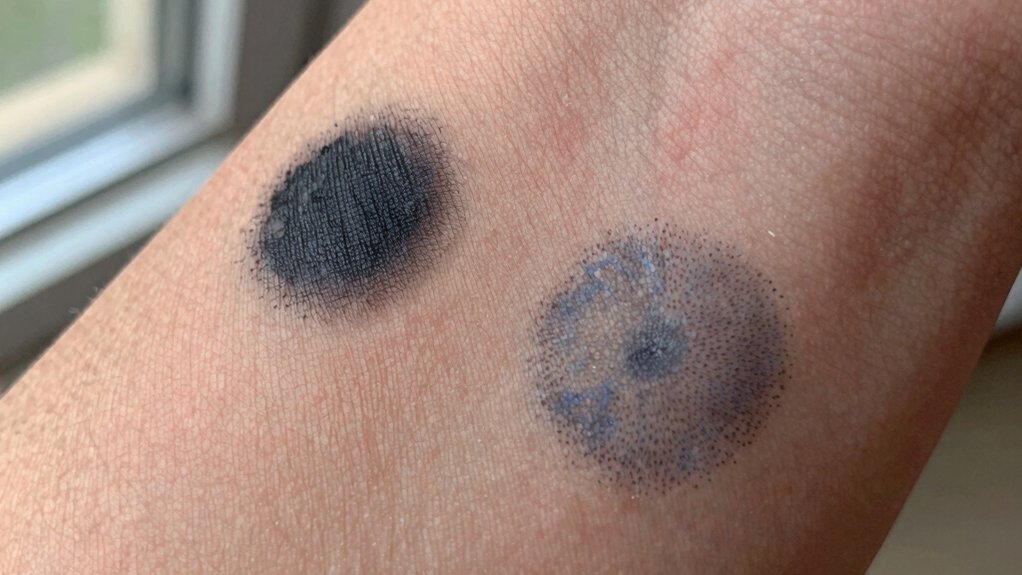
How do certain tattoos clear in just four sessions when others require triple the time? You’ll find your answer in three key factors.
Professional tattoos with lighter ink density and older pieces break down faster because they’ve naturally faded already. Your immune system plays a starring role too—if you’re young, healthy, and hydrated, your lymphatic system actively flushes shattered ink particles with impressive efficiency. Placement matters enormously. Tattoos on your chest, neck, or upper back typically fade quicker than ankle or wrist ink because these areas boast better circulation and proximity to lymph nodes. Smaller designs obviously require fewer treatments. You can’t control every variable, but you’ll maximize your results by choosing an experienced technician with advanced laser technology and following all aftercare instructions precisely.
Recommended Products

1. Specialized Protection for Laser Tattoo Removal These laser safety glasses are engineered specifically for Laser tattoo removal, offering OD 5+ protection across 180–532nm and 900–1080nm. They function as dedicated Laser tattoo removal protective glasses, ensuring reliable eye safety during every tattoo-removal session.

✅The 532nm wavelength is most effective for use with red & warm tone colour including violet, orange, yellow and brown. 532nm probe is specially designed for removing freckle and color pigment.

1. Specialized Protection for Laser Tattoo Removal These laser safety glasses are engineered specifically for Laser tattoo removal, offering OD 5+ protection across 180–532nm and 900–1080nm. They function as dedicated Laser tattoo removal protective glasses, ensuring reliable eye safety during every tattoo-removal session.
Why Color Ink Needs More Laser Removal Sessions Than Black
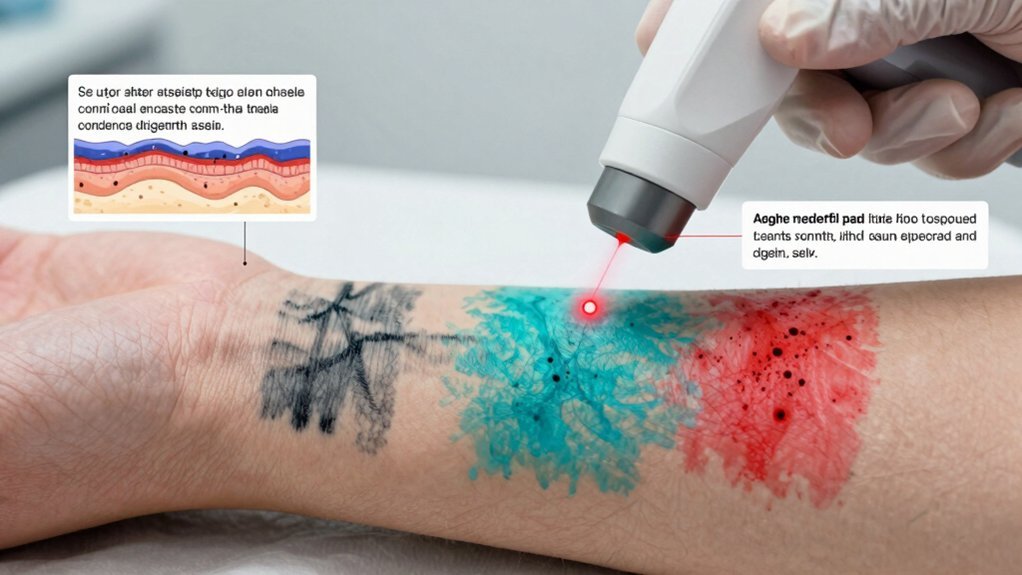
Where does your vibrant sleeve stand the best chance of disappearing?
Unfortunately, bright pigments fight hardest against laser energy. Black ink absorbs every wavelength you throw at it, shattering quickly under Q-switched beams. But your teal, yellow, and green pigments reflect specific light frequencies, forcing technicians to switch wavelengths repeatedly. You can’t blast emerald ink with the same beam that erases charcoal; it simply bounces off untouched.
White and flesh-tone inks actually darken under standard lasers, requiring completely different approaches. Each color demands its own strategy, spacing sessions further apart while your lymphatic system clears fragmented particles. You’re essentially removing multiple tattoos stacked atop each other, not just one. That’s why your rainbow artwork needs significantly more appointments than your friend’s basic black band.
Recommended Products

Mast Pro purple tattoo cartridges needles have been providing with high density clear plastic body

√ Cartridge Needles Sizes: 20 pcs 7RL tattoo cartridge needles for lining. The needle edges are specially designed to catch more ink. Transparent body, high visibility. Great gifts for tattoo artist and beginners.

Efficient Stencil Removal: Tattoo Lovers Care Stencil Remover is designed to efficiently remove stencil ink from the skin, leaving a clean surface ready for tattooing. The formula works to quickly eliminate stencil marks without any residue, helping tattoo artists achieve crisp, sharp designs, ensuring smoother, clearer tattooing with results that will stand out for their precision and clarity
When Tattoo Removal Needs 15+ Sessions
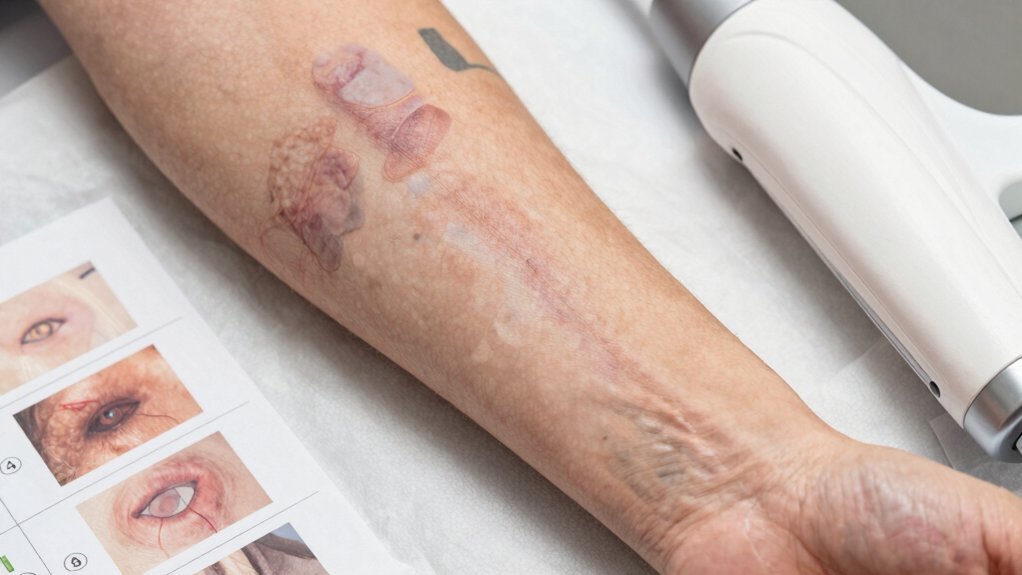
What pushes some tattoos past a dozen sessions into seemingly endless territory? You’re facing the dreaded fifteen-plus marathon when dense, amateur work meets fluorescent pigments. Deep, heavy saturation traps ink beyond your immune system’s reach, forcing you to return month after month. You’ve got layered cover-ups hiding old mistakes beneath new ink, doubling the defensive wall your lymphocytes must breach. Pastel yellows and whites laugh at standard wavelengths, demanding specialized lasers that inch along slowly. Treatment on your ankles or lower legs drags because sluggish circulation stalls clearance significantly. You picked a dense tribal piece or professional-grade bombast with ink packed to the dermis’s basement. Each session shatters only fractions of these stubborn reservoirs, so you’re committing to years, not months, of consistent zapping.
Recommended Products
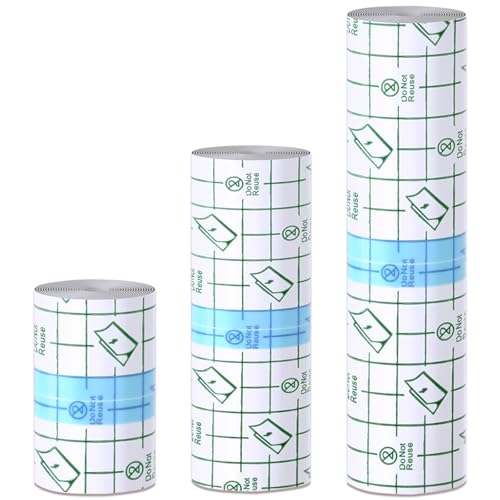
Triple-Size Value Pack for Every Tattoo Style - Get 3 full rolls of premium second skin tattoo cover (2" x 2.2 Yd, 4" x 2.2 Yd, 6" x 2.2 Yd) - sized for wrist art, back pieces, or sleeve designs. The tattoo aftercare bandage can be cut freely to match any ink!

Express yourself with BodyMark by BIC Temporary Tattoo Markers!

Fun Face Temporary Tattoos INCLUDES a set of 12 tattoos that are a great party favor addition to any graduation, retirement, or birthday party.
How Skin Tone Affects Your Laser Removal Session Count
Why does your skin’s melanin content reshape the entire removal timeline? Your melanin competes with tattoo ink for laser absorption, forcing technicians to lower energy settings on darker skin. You’ll need more sessions because safer, gentler wavelengths work slower to avoid burns or discoloration. Your Fitzpatrick skin type directly dictates your protocol—types IV through VI require Nd:YAG lasers with longer pulses, not the aggressive Q-switched settings fair skin tolerates.
You risk permanent hypopigmentation if clinicians ignore your undertones. Your technician must customize spot sizes and cooling methods based on your specific melanin density. You’re paying for precision, not power. Your darker complexion demands patience; expect 10-15 sessions versus 6-10 for lighter skin. You’ve chosen safety over speed, protecting your skin’s long-term appearance while eliminating unwanted ink.
Recommended Products

COMPLETE AFTERCARE KIT FOR NEW & EXISTING TATTOOS: This Tattoo Aftercare Kit brings together 3 essentials, Antimicrobial Soap, Tattoo Balm, and Tattoo Lotion, to help cleanse, protect, and moisturize fresh ink. Useful after tattoo sessions and throughout healing, it supports vibrant color and skin comfort for dedicated ink enthusiasts and artists

Gentle, Deep Cleansing: Tattoo Goo Foaming Cleansing Soap for tattoos and piercings helps remove impurities and clean the inked or pierced areas at a deep level by removing dirt, dead skin cells, and killing germs without damaging the skin

HUSTLE BUTTER ESSENTIALS TATTOO AFTERCARE KIT: This Essential Kit includes our Hustle Butter Tattoo Balm (1 fl oz), Hustle Bubbles Foaming Soap (3.4 fl oz), and our Hustle Butter Tattoo Aftercare Wrap - Small (6 in x 2.2 yds)
How Tattoo Age and Body Location Speed Up or Slow Down Fading
How quickly your tattoo fades depends heavily on when you got it and where it sits on your body. Older tattoos fade faster because your immune system has already broken down much of the ink over time. You’ll notice fresher pieces require more sessions since the pigment remains dense and deeply embedded.
Your tattoo’s placement dramatically affects removal speed too. Locations with high blood flow—like your chest, neck, and upper arms—flush ink quickly since your immune cells access these areas easily. You’ll wait longer for results on your ankles, feet, or fingers where circulation runs poorer. Tattoos sitting closer to your heart generally disappear faster than those on extremities. You can’t change where you got inked, but understanding these variables helps set realistic expectations.
Recommended Products
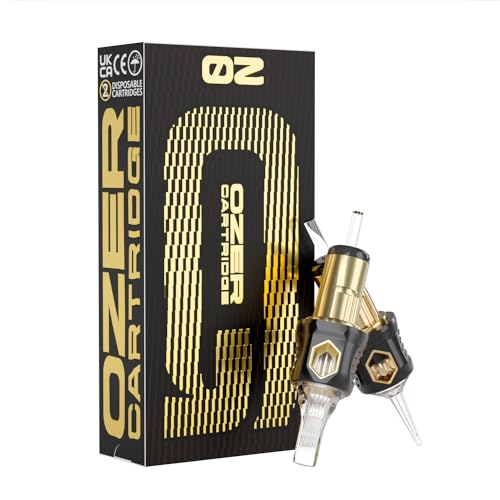
OZER G Tattoo Needles Tip - 304L fine needles, welded to perfection, can work continuously for 4-6 hours without edge wear and still sharp, the industrial manufacture of the needles achieves the highest precision in needle control. these cartridge needles are fitted with a rubber finger ledge that provides a comfortable grip, reducing hand fatigue and ensuring superior quality for professional Tattoo artists.

Bulk 50-Pack for Efficiency and Convenience: Save time while ensuring your clients have all the pico laser post care information they need. Our 50-Pack ensures you have an ample supply of pico laser aftercare cards on hand, ready to provide personalized pico laser care for every client.

Larger Ink Storage for Continuous Long Lines: Hyperink cartridges feature an enlarged ink reservoir paired with a transparent viewing tip. Artists can quickly check remaining pigment at a glance, minimize mid-tattoo refills. The round liner needle group is ideal for outlines, lettering, borders and intricate detail lines.
Why You Can’t Zap Weekly: The Biology Between Sessions
When you’re eager to erase a tattoo, waiting weeks between sessions feels frustrating—but your body needs that downtime to do the actual removal work.
Laser treatment shatters ink particles, but your immune system clears the debris. Macrophages engulf and transport these fragments through your lymphatic system over several weeks. If you zap weekly, you’re blasting ink that hasn’t broken down yet, wasting energy and traumatizing skin that’s still healing.
Your skin also needs time to repair. Collagen rebuilds and inflammation subsides between treatments. Rushing creates higher risks: blistering, scarring, permanent hypopigmentation. Treated skin stays sensitive and compromised immediately after; early retreatment damages tissue without improving results.
Each session typically requires six to eight weeks of recovery—longer for larger pieces or sensitive locations. Patience isn’t passive; it’s your body actively completing the removal process you started.
Recommended Products

1. Specialized Protection for Laser Tattoo Removal These laser safety glasses are engineered specifically for Laser tattoo removal, offering OD 5+ protection across 180–532nm and 900–1080nm. They function as dedicated Laser tattoo removal protective glasses, ensuring reliable eye safety during every tattoo-removal session.

FAST & EASY REMOVAL: Wipe away any temporary tattoo in seconds. No scrubbing, no mess, no sticky residue.

Supports Natural Tattoo Fading Process – Formulated to gently accelerate skin cell turnover, helping reduce the visibility of old tattoo pigments over time without harsh chemicals.
3 Ways to Actually Speed Up Tattoo Removal
Waiting weeks between sessions doesn’t mean you’re powerless—there’s plenty you can do to help your body work faster.
First, stop smoking. Your blood carries ink particles away, and nicotine chokes circulation. You’ll flush debris slower if you’re lighting up.
Second, move your body. Exercise boosts circulation and lymphatic drainage. You’re literally pushing broken ink toward elimination.
Third, hydrate and protect your skin. Drink water and keep the treated area out of the sun. Sun damage triggers melanin that competes with laser targeting, forcing extra sessions. Damaged skin heals poorly, delaying your next appointment.
These three habits won’t replace the laser, but they’ll maximize what it breaks. You’re shortening gaps between sessions, not the number you’ll need.
Recommended Products

PACKAGE: Wormhole Tattoo Cartridge Needles are individually packed, and for disposable use only

NO SPIT-BACK MEMBRANE: Internal membrane stops ink backflow into your machine, keeping your grip clean so you focus on the line, not the mess.

TATTOO ARTIST ESSENTIALS: Our versatile tattoo ink wipes are designed for pro artists, offering a mess-free alternative to tattoo green soap for tattooing. These tattoo essentials clean skin without over-wiping or ruining ink, making these aftercare tattoo wipes superior to green tattoo soap during the process.
Finished for Good: How to Tell Your Tattoo Is Actually Gone
After months of appointments and healing cycles, you’ll eventually face one final question: is the ink actually gone or just faded enough to fool you?
You’ll know you’re finished when the treated skin matches your surrounding tone in all lighting conditions. Check under natural sunlight, artificial bulbs, and angled shadows. Run your fingers across the area; you shouldn’t feel any raised texture or notice residual pigmentation. Your technician will compare before-and-after photos under magnification to confirm zero ink particles remain.
Don’t rush this judgment. Wait at least six weeks after your final session for complete cellular turnover. Schedule a follow-up appointment if you spot any shadowing or uneven patches. Trust the process, but verify through documentation. You didn’t invest this time for “almost” clear skin.
Recommended Products


Supports the Natural Fading Process for Unwanted Ink-This tattoo care spray is formulated with botanical extracts to support the skin’s natural appearance over time. Designed for daily use, it helps maintain skin health on areas with old or unwanted tattoos, providing a gentle and non-invasive approach to your personal care routine
Conclusion
You’ll likely need 6 to 12 sessions, but your tattoo’s unique factors—colors, placement, skin type, and age—ultimately determine your count. Black ink fades faster than stubborn greens and blues, while healthy habits and proper spacing between visits help your body clear pigment efficiently. Trust the process, follow your technician’s guidance, and you’ll reach that clean slate.