
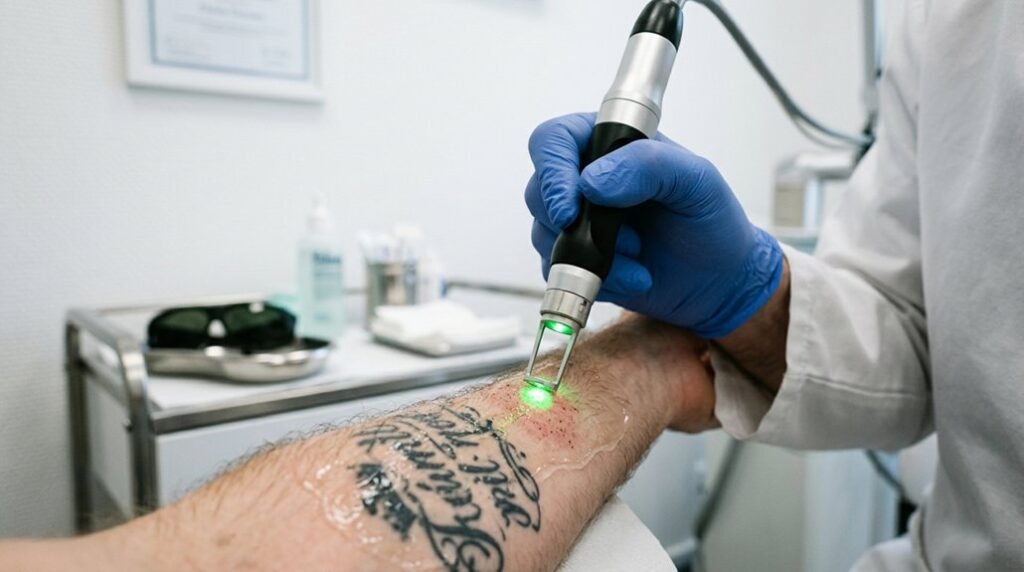
You want that ink gone, but you’re wondering if the laser will damage your skin in the process. The short answer: it’s generally safe when done right, yet “done right” hides more complexity than most clinics advertise. Your choice of provider, laser type, and even your medical history could tip the scales toward smooth results—or lasting regret.
Key Takeaways
- Laser tattoo removal is clinically proven safe when performed by qualified, certified practitioners using proper protocols.
- Picosecond lasers offer enhanced safety through shorter pulse duration, reducing thermal damage and treatment sessions needed.
- Serious complications are rare; scarring affects fewer than 5% of patients with appropriate technique and aftercare.
- Honest disclosure of medical history, medications, and skin conditions during consultation minimizes individual risk factors.
- FDA-cleared equipment and board-certified dermatologists or plastic surgeons ensure adherence to established safety standards.
Recommended Products

Bulk 50-Pack for Efficiency and Convenience: Save time while ensuring your clients have all the pico laser post care information they need. Our 50-Pack ensures you have an ample supply of pico laser aftercare cards on hand, ready to provide personalized pico laser care for every client.

Laser Safety Glasses Protection Scope:200 - 540nm O.D 6+ & 800 - 1100nm O.D 5+ ;transmittance 30%;

HOME USE PERSONAL CARE: Designed for home-use personal care. Intended for removal of unwanted body and facial hair.
How Safe Is Laser Tattoo Removal? The Data-Driven Verdict
Why does safety dominate every conversation about laser tattoo removal? You’re right to ask. When you undergo this procedure, you’re trusting a powerful device to penetrate your skin without causing permanent damage. Clinical studies show you face minimal risks when qualified practitioners operate FDA-cleared equipment. You’ll likely experience temporary redness, swelling, or blistering—these indicate your immune system has begun flushing shattered ink particles. Serious complications remain rare; scarring affects fewer than 5% of patients when proper protocols are followed.
You reduce your risk considerably by choosing certified clinics that conduct thorough consultations. They’ll assess your skin type, medical history, and tattoo characteristics before treatment. Your safety depends on honest disclosure about medications, sun exposure, and previous skin conditions. The data supports this verdict: laser tattoo removal proves remarkably safe for informed, properly screened patients.
Recommended Products

1. Specialized Protection for Laser Tattoo Removal These laser safety glasses are engineered specifically for Laser tattoo removal, offering OD 5+ protection across 180–532nm and 900–1080nm. They function as dedicated Laser tattoo removal protective glasses, ensuring reliable eye safety during every tattoo-removal session.

1. Specialized Protection for Laser Tattoo Removal These laser safety glasses are engineered specifically for Laser tattoo removal, offering OD 5+ protection across 180–532nm and 900–1080nm. They function as dedicated Laser tattoo removal protective glasses, ensuring reliable eye safety during every tattoo-removal session.

1. Specialized Protection for Laser Tattoo Removal These laser safety glasses are engineered specifically for Laser tattoo removal, offering OD 5+ protection across 180–532nm and 900–1080nm. They function as dedicated Laser tattoo removal protective glasses, ensuring reliable eye safety during every tattoo-removal session.
Which Laser Type Is Safer: Q-Switched or Picosecond?
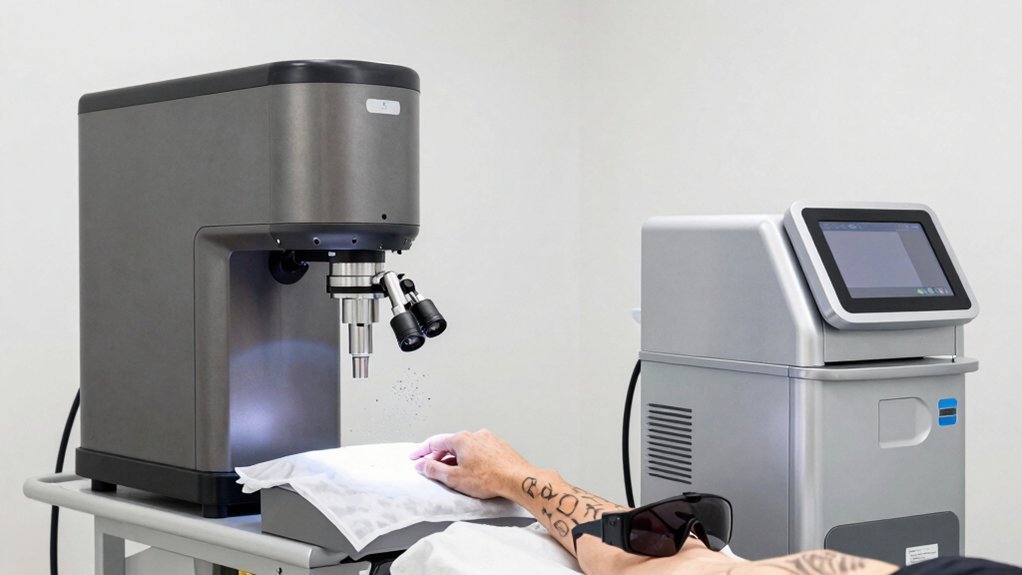
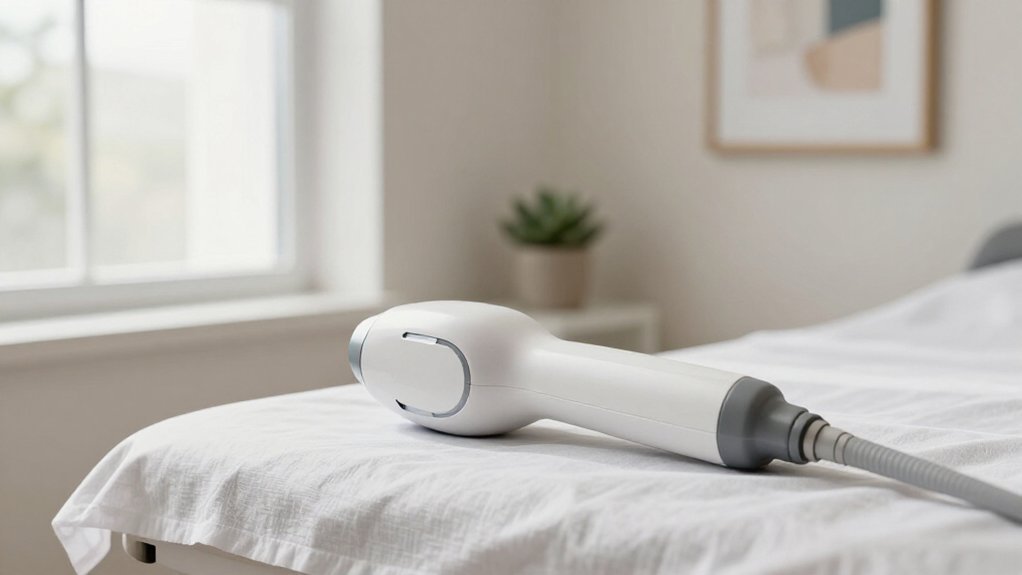
How do you choose between Q-switched and picosecond lasers when both promise safer tattoo removal? You’ll find picosecond lasers deliver energy in trillionths of a second, while Q-switched lasers operate in billionths. This shorter pulse duration means picosecond devices shatter ink with less heat buildup, reducing your risk of burns, scarring, and skin discoloration.
You should know Q-switched lasers dominated tattoo removal for decades and still perform reliably on dark inks. However, you’re likely to need more sessions with this older technology, increasing cumulative skin exposure. Picosecond lasers tackle stubborn colors like blue and green more effectively, meaning you undergo fewer treatments overall.
For you, picosecond technology generally offers the safer profile—less thermal damage, faster clearing, reduced treatment count. Still, you’ll pay premium prices, and skilled technician operation matters more than brand choice.
Recommended Products

Supports the Natural Fading Process for Unwanted Ink-This tattoo care spray is formulated with botanical extracts to support the skin’s natural appearance over time. Designed for daily use, it helps maintain skin health on areas with old or unwanted tattoos, providing a gentle and non-invasive approach to your personal care routine

FAST & EASY REMOVAL: Wipe away any temporary tattoo in seconds. No scrubbing, no mess, no sticky residue.

20 Count Individually Wrapped - Each wipe is single-use and sealed for better hygiene, portable and easy to carry in pockets, bags or backpacks for outdoor activities and events.
Who Should Avoid Laser Tattoo Removal Entirely
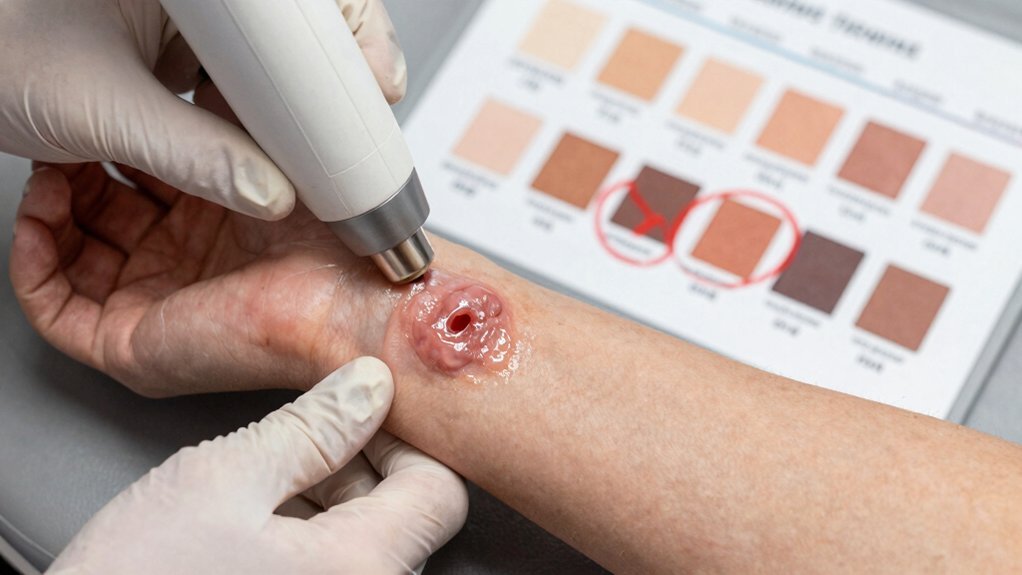
You’ll also want to avoid treatment if you’re taking photosensitive medications like certain antibiotics or acne treatments. These drugs make your skin react unpredictably to laser energy.
Don’t schedule sessions if you have an active skin infection, open wounds, or eczema flare-ups in the area. Your compromised skin barrier invites complications.
If you’ve got a history of keloid scarring, you’re facing higher risks of permanent scarring from the procedure. Your skin overreacts to injury, and lasers trigger exactly that response.
Finally, skip it if you have immune disorders or uncontrolled diabetes. Your body can’t heal properly, and that’s dangerous for any aesthetic procedure.
Recommended Products

【Enriched with Vitamins A & D】This tattoo scar gel is formulated with naturally derived vitamins A and D, plus skin-calming ingredients. It helps support your skin's natural recovery process while keeping the tattoo area moisturised.

💼【Portable Professional Care】 - 50 single-use packs (5g each!) fit in pockets, gym bags, or travel kits. Never deal with messy jars! Each sealed packet locks in freshness for on-the-spot relief after workouts, flights, or tattoo sessions. Stay prepped anywhere!

TATTOO AFTERCARE ESSENTIAL: Hustle Butter is the original tattoo aftercare balm for new and older tattoos. With over 10 years in the market, we are a pioneer of the tattoo aftercare category.
Normal Side Effects vs. Warning Signs to Watch For
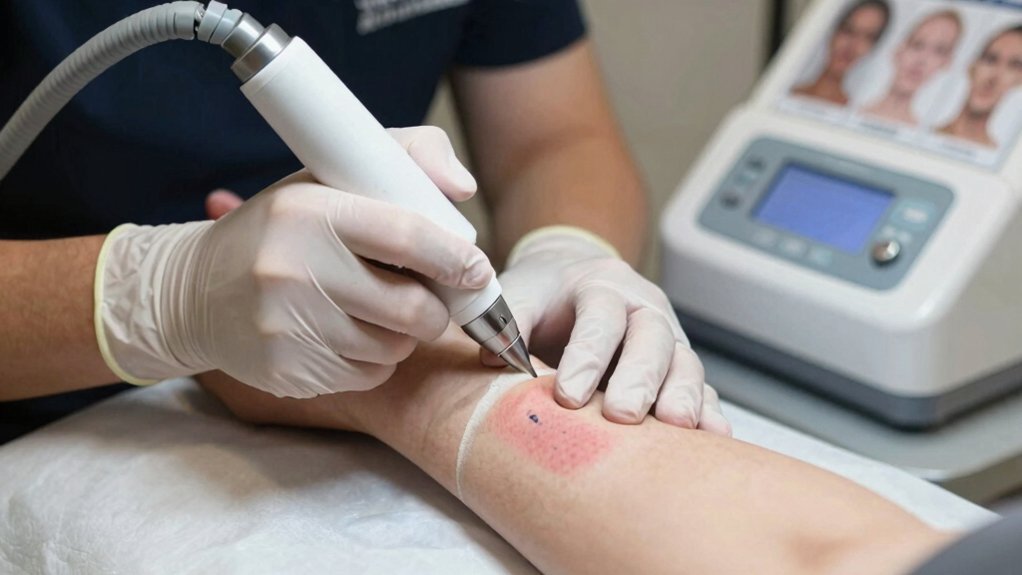
Even if you’re cleared for treatment, your skin won’t react quietly to laser energy. You’ll notice redness, swelling, and mild blistering within hours. These responses mean the laser’s working. Your skin might crust or scab as it heals. Don’t pick at these areas.
You’ll see pinpoint bleeding and temporary whitening called “frosting” immediately after sessions. These effects fade within days to two weeks. Itching and tenderness accompany normal healing.
Watch for warning signs that demand immediate contact with your provider. Spreading redness, warmth, or pus indicates infection. Fever accompanies serious complications. Excessive swelling that worsens after 48 hours signals trouble. Unusual color changes, severe or increasing pain, or skin breakdown aren’t typical responses.
Trust your instincts. When symptoms escalate beyond expected timelines, you must seek professional evaluation promptly.
Recommended Products

Quickly and easily remove any brand of metallic temporary tattoos with no mess
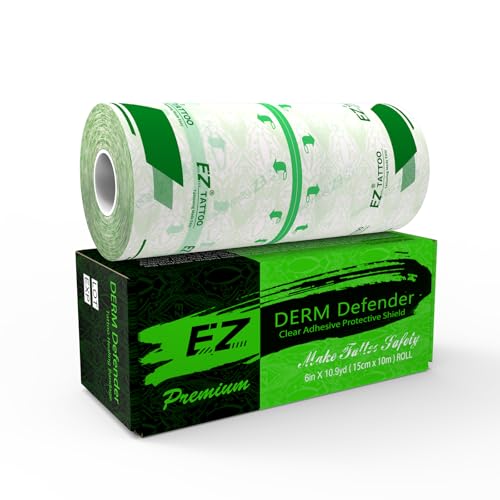
【Easy to Use, Premium Types】Tattoo aftercare film has grid lines in the back paper, easy to apply and cut to different sizes. Tattoo bandages is 3 layers, composed of PET backing, PU film, pressure-sensitive glue and release paper. Lamination method is simple.

Package and Size - Receive a complete tattoo skin practice kit containing 20 sheets of 7.5x5.5 inches 1mm thick individually packaged fake skin sheets and 20 sheets of A4 size reusable transfer paper measuring 11.61x8.2 inches.
Can Laser Tattoo Removal Cause Scarring?
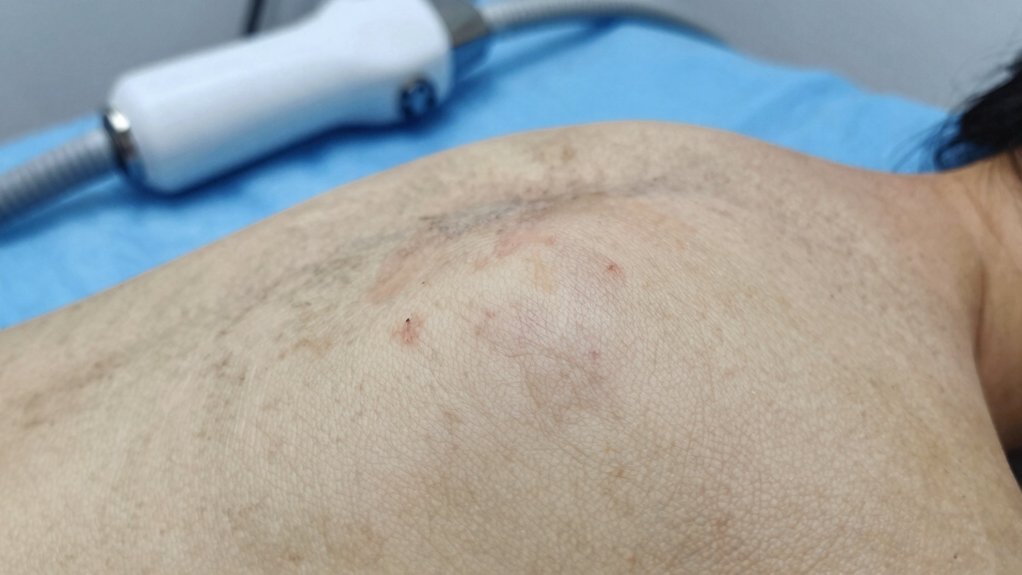
What actually causes scarring after laser tattoo removal?
Scarring doesn’t come from the laser itself. It comes from how your skin heals after treatment. You raise your risk when you pick at scabs, skip aftercare instructions, or expose fresh skin to sun. Pre-existing scars within your tattoo also become visible once ink fades.
You control most scarring risks. Follow your provider’s wound care directions exactly. Keep the area clean, moisturized, and protected from UV rays. Don’t scratch or peel flaking skin.
Your skin type, tattoo location, and medical history also shape outcomes. Keloid-prone skin demands extra caution.
Quality equipment matters too. Older lasers or improper settings damage surrounding tissue. You ensure safer results by choosing modern technology operated by experienced hands.
You can minimize scarring. You just need discipline and realistic expectations.
Recommended Products

Solong rotary tattoo pen is CNC-Machined by aircraft Aluminium alloy and then anodized finish.The motor is 10w made in Taiwan,low noise,strong and stable to work, no hot for...
How to Choose a Safe, Qualified Provider
Scarring risks drop sharply when you’re in competent hands. Seek board-certified dermatologists or plastic surgeons with dedicated laser experience. Verify their credentials through state medical boards. Ask how many tattoo removals they’ve performed and which laser systems they use. Request to see before-and-after photos of similar tattoos. Avoid med spas where technicians lack medical supervision or training. Insist on a consultation before treatment—you deserve an honest assessment of your tattoo’s complexity, your skin type, and realistic outcome expectations. Probe their protocol for complications: do they offer follow-up care if problems arise? Check reviews for mentions of burns, permanent damage, or abandoned patients. Trust your instincts. Walk away from high-pressure sales tactics or prices that seem too good to be true. Your skin demands expertise.
Recommended Products

✅The 532nm wavelength is most effective for use with red & warm tone colour including violet, orange, yellow and brown. 532nm probe is specially designed for removing freckle and color pigment.
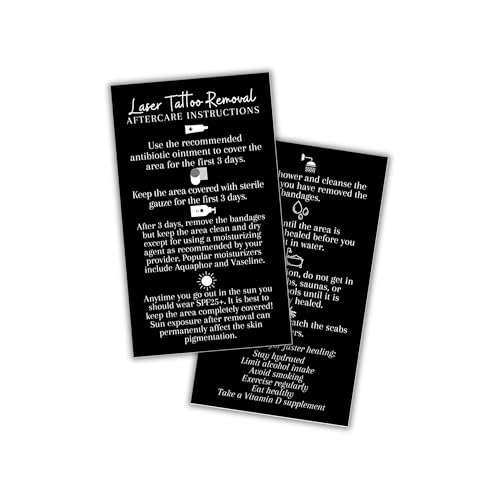
50 TOTAL CARDS printed front and back on a 2x3.5 inch inches card. 14 pt. matte card stock thickness!
Laser Tattoo Removal Aftercare: Dos and Don’ts
Once you’ve committed to laser tattoo removal, how you treat your skin afterward shapes your results as much as the procedure itself.
You’ll protect your investment by following these essential guidelines. Do keep the treated area clean and dry for the first 24 hours. Apply the recommended healing ointment your provider suggests, and you’ll speed recovery significantly. You’ll also want to wear loose clothing over the site to prevent irritation.
Don’t pick at scabs or blistering that develops—this action risks scarring and infection. You’ll avoid sun exposure completely, as tanned skin can’t undergo subsequent treatments safely. Skip swimming pools, hot tubs, and strenuous workouts for 48 hours.
You’ll ice the area periodically to reduce swelling. Stay hydrated and you’ll support your immune system as it flushes fragmented ink particles. Call your provider immediately if you notice discharge or fever.
Recommended Products

98% + VISIBLE HAIR REDUCTION — SAY GOODBYE TO RAZOR BURN: Faine IPL laser hair removal device — a fast, reliable ipl hair removal device for daily use — is designed to show 98% + visible hair reduction in as little as 2-4 weeks with consistent use. For best results, use it 3 times per week during your first month, then switch to once-a-month maintenance sessions. No more razor burn or ingrown hairs, just smooth, salon-quality skin at home: this hair removal device supports facial hair removal for women plus full-body, with no appointment needed.
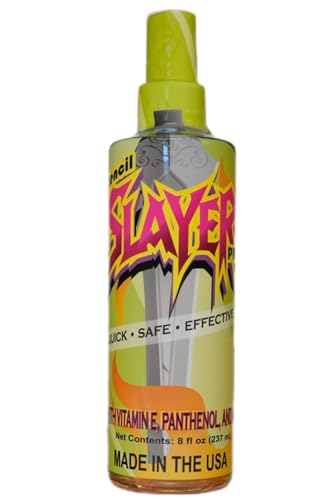
PROFESSIONAL FORMULA: Quick-acting, EFFECTIVE stencil remover with Vitamin E, Panthenol, and Aloe; designed specifically for and with professional tattoo artists.

Efficient Stencil Removal: Tattoo Lovers Care Stencil Remover is designed to efficiently remove stencil ink from the skin, leaving a clean surface ready for tattooing. The formula works to quickly eliminate stencil marks without any residue, helping tattoo artists achieve crisp, sharp designs, ensuring smoother, clearer tattooing with results that will stand out for their precision and clarity
What FDA Clearance Actually Means for Patients
Why should you care about FDA clearance when researching laser tattoo removal?
FDA clearance means the device meets safety standards, not that it’s risk-free. You’ll want to verify the laser carries 510(k) clearance, which confirms substantial equivalence to approved devices. Check that your provider uses FDA-cleared equipment, not imported or modified units.
Don’t confuse clearance with approval. The FDA clears lasers through a different pathway than drugs. You’re trusting your skin to this technology, so ask directly: “Is this laser FDA-cleared?” Request documentation if unsure.
Clearance doesn’t guarantee results. It validates basic safety and effectiveness against similar devices. You still need skilled hands operating the equipment. Research the specific laser model, not just the clinic’s reputation. Your safety depends on verified technology plus qualified application.
Recommended Products

QUICK HEALING:A&D ointment gel is rich in essential vitamins A and D,which is very important for aftercare microblading ,effectively helping to remove burns,cuts,surgical marks and the impact of marks on beauty

QUICK HEALING:A&D ointment gel is rich in essential vitamins A and D,which is very important for aftercare microblading ,effectively helping to remove burns,cuts,surgical marks and the impact of marks on beauty
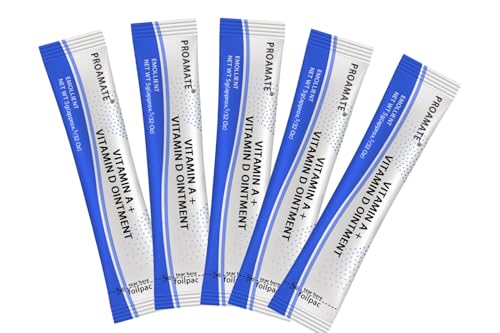
Natural ingredients -This Tattoo Scar Repair Gel is rich in natural vitamins A and D and skin soothing ingredients, can prevent scars and nourish your skin.With natural ingredients, safe, non - toxic and harmless. It has extremely efficient skincare, with a very safe and vegan formulation.
Conclusion
Laser tattoo removal is safe when you choose qualified providers with FDA-cleared equipment. You’ll minimize risks by following aftercare instructions and attending all consultations honestly. Picosecond lasers may reduce your scarring risk, but both technologies work well with proper protocols. Watch for warning signs beyond normal redness, and you’ll likely avoid complications. Research your provider’s credentials thoroughly—your skin deserves board-certified expertise. With informed choices, you can remove unwanted ink safely and effectively.