
You’re standing in the shop, staring at flash sheets, and an eagle catches your eye. You know it means something fierce—but you’re not sure what exactly, or whether you’re ready for what it says about you. Before you commit, you’ll want to understand why this particular bird carries weight across centuries and skin.
Key Takeaways
- Eagle tattoos symbolize power, vision, and fierce independence through their predatory nature.
- Military and patriotic meanings span Roman legions, Napoleonic empires, and American national identity.
- Spiritual traditions associate eagles with divine messengers, transformation, and cosmic consciousness across cultures.
- Pose selection dramatically shifts meaning: perched denotes vigilance, diving signals aggression, soaring represents freedom.
- Design elements like color, placement, and accompanying symbols further personalize the tattoo’s core statement.
Recommended Products

Standard size: Tattoo Transfer Paper is standard A4 paper size, each measures 8.27 in X 11.69 in. There are 4 levels in total. The thickness of the paper is very light and smooth to the touch.

Warm Tips: The tattoo transfer paper need to work with transfer medias.You will need to purchase the stencil ointment separately. Apply the design made on the master paper. Please pay attention to press the back side of the pattern to the skin for at least 3 seconds

Spirit Tattoo Classic Thermal Transfer Paper, 8.5” X11” (100 Sheets): Established since 1946, the original and trusted choice of tattoo artists globally, offering reliability and consistency in tattoo stencil creation.
What Eagle Tattoos Actually Mean (Before You Choose)
Why do so many people choose an eagle for their ink? You’re drawn to its raw power and unmistakable presence. When you select this bird, you’re not just picking a pretty image—you’re claiming something fierce.
You’ll find eagles dominate shoulders, chests, and backs because they demand space. Their wings spread wide, catching wind that doesn’t exist. You feel that motion frozen in skin.
Before you commit, you should know what you’re actually getting. You’re choosing a predator, not a pet. You’re embracing solitude, vision, and sudden violence. The eagle doesn’t flock; it hunts alone.
Your artist will ask about pose—perched, diving, soaring. Each changes your statement. You’re building permanence here. Make sure you understand what you’re carrying forward, because once it’s yours, it stays.
Recommended Products

EAGLE TEMPORARY TATTOOS: Set of 100 mini temporary tattoos featuring team spirit designs including paw prints, footballs, foam fingers, and sports equipment in various colors. Select your design - tattoos measure approx 1" each and are printed 4 on sheet, 25 sheets in a pack.

⚡ Four 6"x9" sheets with 32 tattoos inspired by our deep connection to the cycles of the moon

Sailor Jerry Traitional American Tattoo Flash
Eagle Tattoo Meanings Across Cultures
Wherever you travel, you’ll find the eagle perched in human meaning—no culture leaves it untouched.
In Native American traditions, you’ll see the eagle as the Great Spirit’s messenger, carrying prayers skyward with feathers you’ve earned, not bought. You’re honoring sacred law when you wear this.
Ancient Greeks placed the eagle at Zeus’s right hand—you’re channeling divine authority and triumph over fate.
Norse warriors trusted the eagle to guide fallen souls; you’re etching protection for your final journey.
Egyptian souls merged with the eagle-headed god Horus—you’re claiming rebirth and cosmic vision.
Celtic druids watched eagles pierce cloud cover between worlds; you’re marking yourself as a seer who crosses boundaries.
Each culture hands you a lens. You choose which truth sharpens your ink—power, transcendence, or the bridge between realms.
Recommended Products

▶ Henna Tattoo Kit: 16 sheets tattoo stencils. airbrush tattoo stencils suitable for tattoo lovers. Experience the effects of tattooing without the pain of tattooing.

🦅 FESTIVAL & PARTY READY: Instantly transform your look without the pain of real ink. Perfect for weekend concerts, beach trips, or testing tattoo placements before making a permanent commitment.

【 575+ Fun Assorted Tattoo Stencils 】-The ChurlChurl tattoo stencils collection includes 575 high quality stencils with multiple themes. enjoy cute trendy tattoo stencil designs like butterflies, words, flowers, symbols, totem, Egypt style patterns and more.
Military and Patriotic Eagle Traditions
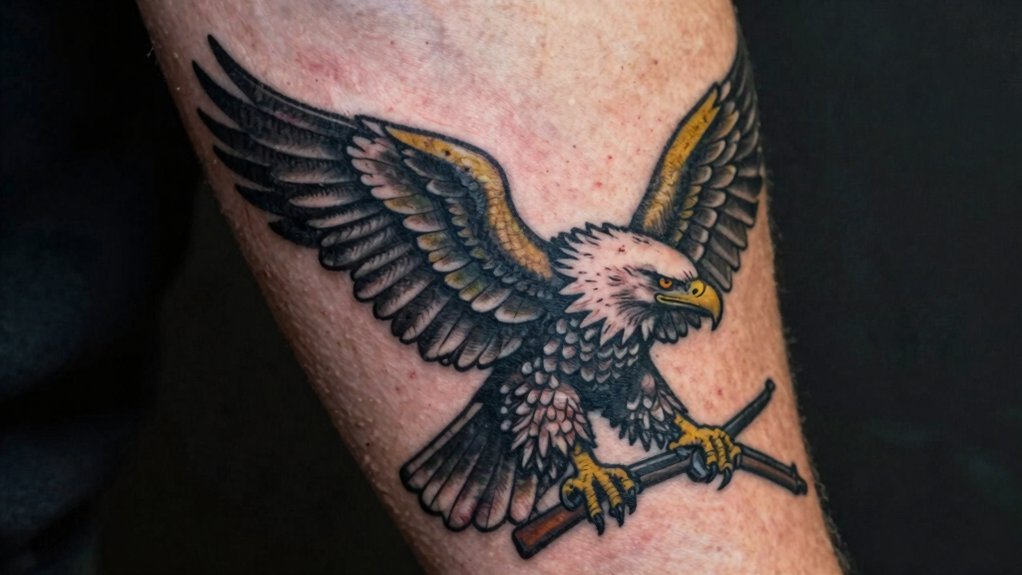
How does a bird of prey become stitched into the fabric of nations and sewn onto the sleeves of soldiers? You trace this lineage through empires that’ve claimed the eagle as their standard bearer.
You see Rome’s aquila first—legions carrying golden eagles into battle, losing one meant disgrace.
You watch Napoleon’s imperial eagles inspire fear and loyalty across Europe.
You recognize how America’s founding fathers seized this tradition, making the bald eagle your national emblem in 1782.
You notice it’s clutching arrows and olive branches—you’re meant to read power balanced with peace.
You find eagle tattoos on veterans who’ve served, on patriots who’ve never worn uniform, on immigrants claiming adopted homeland.
You understand this ink declares allegiance, marks sacrifice, asserts belonging.
You’re witnessing how symbols compress centuries of martial pride into singular, skin-deep declarations of self.
Recommended Products

Size:60mm x 105mm (2.36" x 4.13")
【Natural & Skin-Friendly】Made with plant-based extracts and free from harsh chemicals, UBICA semi permanent tattoos are gentle on all skin types—even sensitive skin. Express yourself without irritation!

DYNAMIC FLYING BIRD ART: Features an elegant collection of freedom-inspired avian designs, including detailed soaring swallows, graceful sparrows in mid-flight, and micro minimalist bird silhouettes. This beautiful wildlife layout is crafted using a digital hand-drawn fine line tattoo ensures crisp lines and flawless gradient shading to deliver life-like wing textures, smooth aerodynamic curves, and sharp, sweeping tail feathers.
Spiritual and Religious Eagle Symbolism
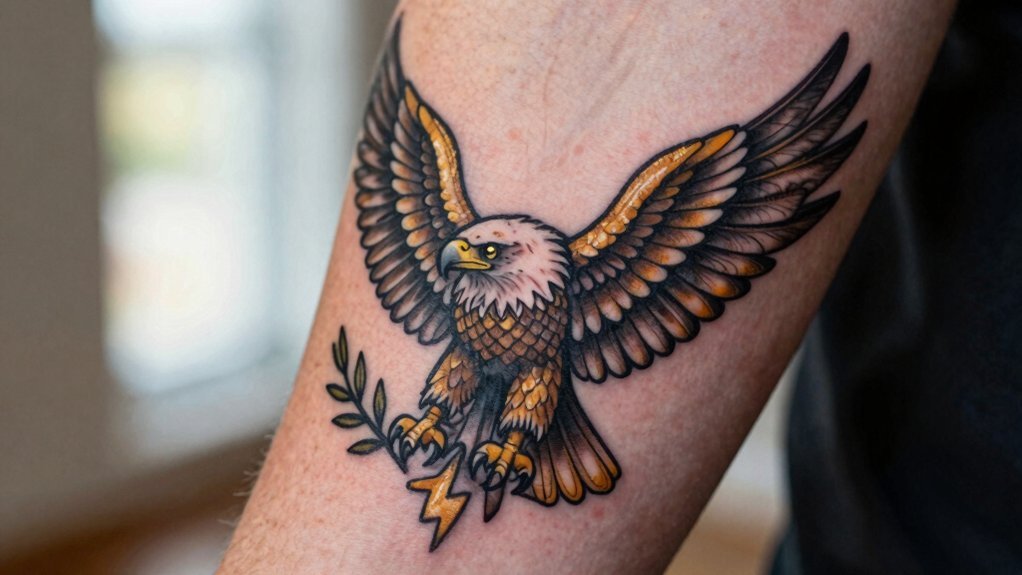
When you look beyond the battlefield, you’ll find the eagle carrying souls instead of standards. You encounter this creature across faiths and spiritual paths, each offering distinct meaning for your skin.
In Christianity, you’ll spot the eagle representing John the Evangelist and Christ’s ascension. You’re seeing divine perspective, resurrection, and the soul’s flight toward heaven. Native traditions teach you to view the eagle as a sacred messenger, ferrying prayers between earth and sky. You’re connecting with the Great Spirit when you wear this symbol.
Hinduism and Buddhism show you Garuda, the eagle deity who’ll destroy serpents of ignorance. You’re embracing spiritual protection and liberation. Ancient Egyptian thought lets you witness Horus, where you’re claiming divine kingship and cosmic order.
You choose this tattoo to mark transformation, heightened vision, or communion with forces beyond yourself.
Recommended Products
【Premium US Flag Temporary Tattoos】Made of waterproof material, not easy to fade, not easy to fall off and dry ,can maintain bright colors for a long time; tear off without residue, you can use it with confidence

Independence Day Theme Temporary Tattoo: Looking for a unique way to show your patriotism on the 4th of July? Try our American-themed temporary tattoo! Yazhiji Fourth of July temporary tattoos are included different Patriotic elements designs: fireworks, American flag, eagle, love America, different shapes of flags, stars, hats, balloons, Medal of Freedom, these tattoos are the perfect accessory for your Independence Day festivities.

Pack Includes: 12 sheets of 4th of July tattoos (2.68 x 4.72 inches each). Our Fourth of July accessories boast varied designs, adding festive patriotic fun.
Eagle Tattoo Styles and What Each Says About You
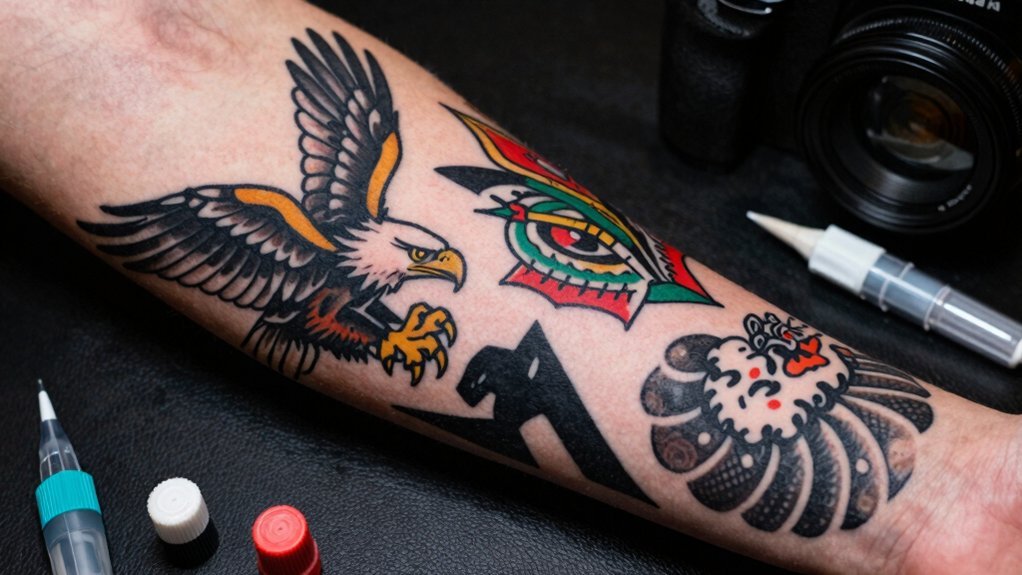
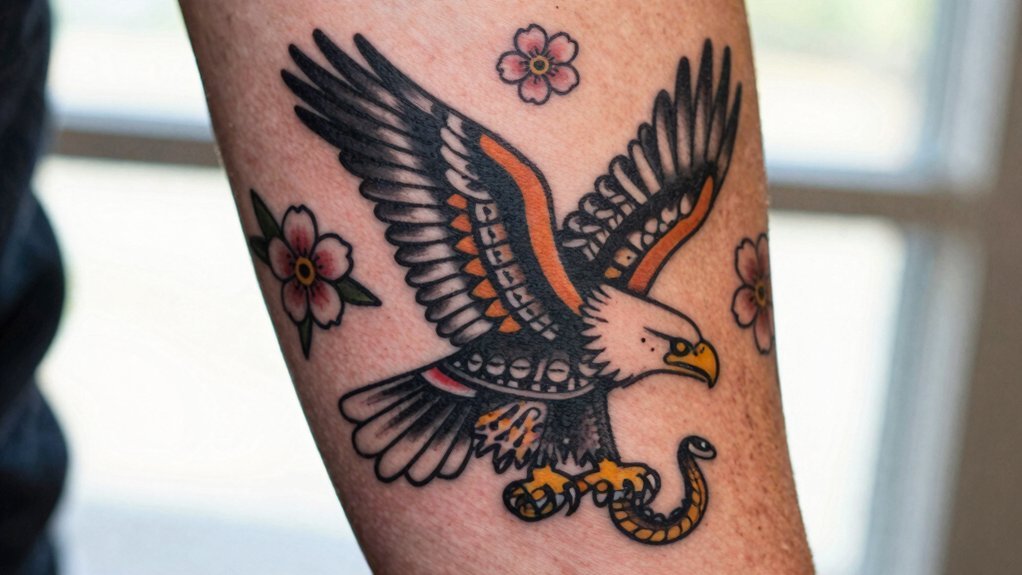
You carry spiritual weight, but your style choice reveals your personality. You select traditional American, and you honor heritage, embracing bold lines and timeless rebellion.
You pick realism, and you demand precision, craving detail that captures nature’s raw power.
You choose geometric, and you balance chaos with order, finding structure in flight.
You opt for tribal, and you connect ancient wisdom to modern skin, respecting lineage through pattern.
You embrace watercolor, and you break boundaries, letting emotion bleed beyond lines.
You favor minimalist, and you speak quietly, trusting negative space to convey strength.
You select neo-traditional, and you blend nostalgia with innovation, honoring roots while pushing forward.
Your eagle becomes mirror, reflecting not just what you believe, but how you move through the world.
Recommended Products
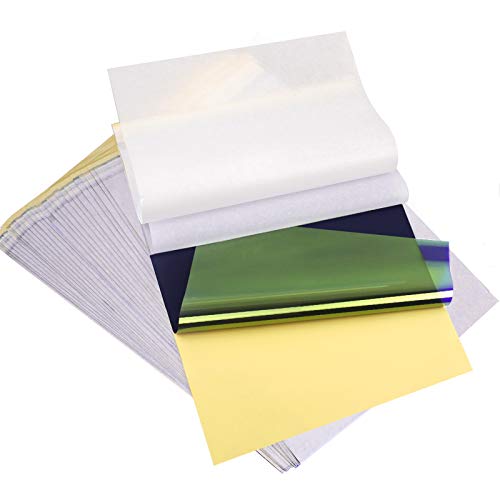
ADVANCED MATERIAL: Tattoo transfer paper is made with the high quality dyes and stencil paper. Transfer marks are very clear, clean and smooth. Tattoo transfer paper kit come with 35 sheets. Great for tattooing, trace and transfer images onto the body.<br>

Precision Transfers & Long Lasting: Tattoo stencil paper delivers vibrant, high-definition transfers even for intricate designs. Creates crisp, dark lines that transfer cleanly to skin (clearly on different skin tones) which are easy to follow during tattooing. The carbon layer made from high-quality dyes ensures sharp outlines without smudging or fading and maintains crisp lines visibility throughout long tattoo sessions, so you can focus on creating art instead of re-drawing lines

🔍 Precision Industry-Standard Transfer - Engineered 4-ply stencil paper (8.25"x11.75") with high-density dyes delivers defined lines for intricate tattoo stencils. Compatible with major thermal printers for reliable tattoo transfer paper workflows.
Where to Place Your Eagle Tattoo
Where an eagle lands on your body shapes its meaning as much as its design. You choose your chest when you want the bird to represent courage and guardianship, beating close to your heart. You spread wings across your back when you crave freedom and personal transformation, letting the eagle soar across your largest canvas. You place it on your arm when you wear strength openly, greeting the world with extended talons. You select your shoulder when you carry responsibility and pride. You ink your neck or hand when you refuse to hide your convictions. Small eagles behind your ear whisper intimate rebirth; full sleeves shout dominance. Your ribs protect quieter resolve. Each placement shifts the conversation from decoration to declaration.
Recommended Products


Dopetattoo Waterproof High-Quality Easy-Use Long-Lasting Temporary Tattoos.You can take it to the beach, swimming pool, bath and any other water activities. Without excessive friction. It will last 3-5 days.

Large size, (approx) 19 x 12 cm/7.48 x 4.72 inch, for arms, legs, shoulders and more.
Color vs. Black-and-Grey: How Your Choice Changes Meaning
How exactly does a splash of crimson or a wash of gold redirect what your eagle communicates? When you choose vibrant hues, you’re signaling passion and vitality. A golden beak emphasizes prosperity, while red talons suggest courage or sacrifice. These choices amplify the bird’s natural associations with power and pride.
Conversely, when you opt for black-and-grey, you strip away distraction and expose raw structure. You’re choosing timelessness and solemnity. The shadows carve out resilience and grit without the gloss of romance. This approach suits memorial pieces or stark declarations of freedom.
Your palette dictates emotional temperature. saturated tones shout; monochrome whispers. You decide whether your eagle soars through dawn’s fire or hunts in midnight mist. Either way, you’re not just picking ink—you’re calibrating intensity.
Recommended Products

✨ 10 Extra-Large Designs: This set features 5 large A4 sheets with 10 massive tribal patterns, including the Tiger, Dragon, Wolf, Eagle, and Scorpion. Each design is perfectly sized for high-visibility areas like the upper arm, back, chest, or thigh, providing a bold and professional tattoo look.

Versatile Art Stencil – Ideal for painting, wall décor, scrapbooking, signs, and a wide range of creative projects.

LARGE FULL ARM PATRIOTIC TATTOOS::-- This set includes 6 large 6.7 x 17.7 inch USA-themed temporary tattoos, featuring bold and iconic designs like the American Flag, Bald Eagle, and Statue of Liberty, perfect for showing off your patriotic spirit.
Combining Eagles With Other Symbols
An eagle rarely flies solo in tattoo art. You pair it with flags when you’re expressing patriotism, letting the bird’s wings frame stars and stripes for maximum impact. You add roses or olive branches if you want to soften the image, suggesting peace alongside power.
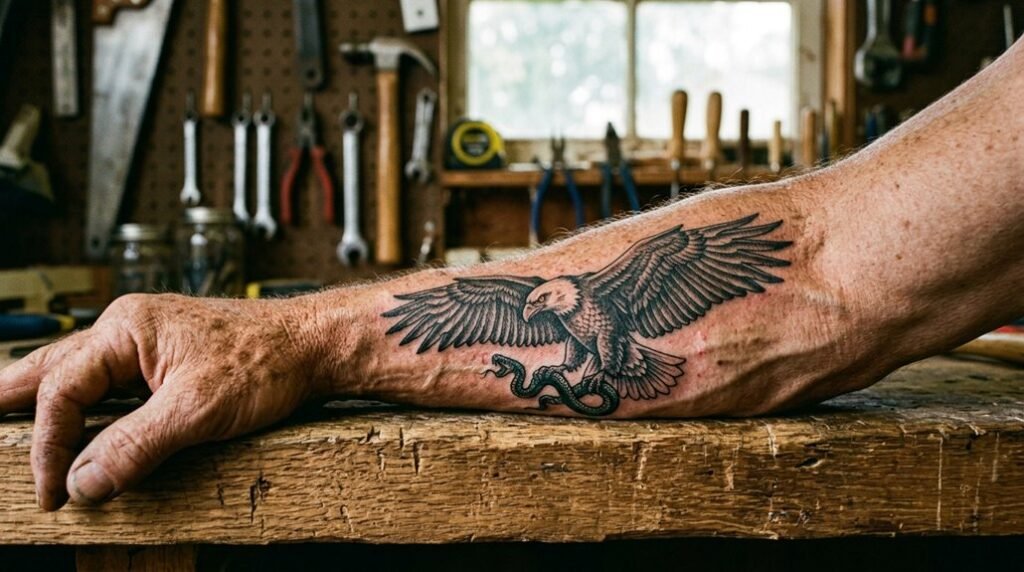
Some of you incorporate snakes in the beak or talons, channeling Mexican heritage or Revolutionary War imagery. Clocks and hourglasses remind you that freedom demands vigilance. You might anchor your eagle with scriptures or names, personalizing the symbol without diluting its strength. Skulls beneath the wings create striking contrasts between life and death.
You choose complementary elements carefully—each addition reshapes your message, transforming a straightforward national emblem into something uniquely yours while preserving the eagle’s commanding presence.
Recommended Products

Includes:168 packs of parrot theme tattoos temporary, the number is enough to meet your needs and they can let you get an impressive happy party.

🐤【15 Sheets in One Package】Distinctive Design Brand FANRUI Temporary Tattoos For Women Kids Girls Adults Teens Lovers Boys Baby Teens Child Daughter Son Children Tattoo Paper 3D DIY Custom Tatoos Cover Body Art Drawings Painting Sets.

How Much Eagle Tattoos Cost (and Why Size Matters)
The price of your eagle tattoo hinges almost entirely on how much skin you’re willing to surrender. Small eagles, perched on a wrist or ankle, demand fewer hours and less ink, typically costing between $150 and $300. You’ll pay more for intricate details in compact spaces.
However, when you commit to a full chest piece or back piece, you’re buying time. Large-scale work requires multiple sessions, shading complexity, and color saturation, pushing your investment toward $800 or well over $2000. Remember size amplifies every element—feather textures, talons, and backgrounds consume resources proportionally.
You should budget not just for the initial session, but for touch-ups too. Bigger surfaces mean longer healing and potential fading. Your wallet feels the wingspan as much as your skin does.
Recommended Products

🇺🇸Amercan 250 Years Anniversary Celebration Tattoos - our unique patriotic temporary tattoos is a great way as 250 years anniversary celebration, kids birthday favors gifts, patriotic decorations, birthday party supplies.

CELEBRATE AMERICA: Celebrate America's 250th anniversary with this bulk value pack of 144 USA-themed temporary tattoos! Featuring 12 unique patriotic designs, perfect for little patriots ages 3+ ready to show their American spirit!
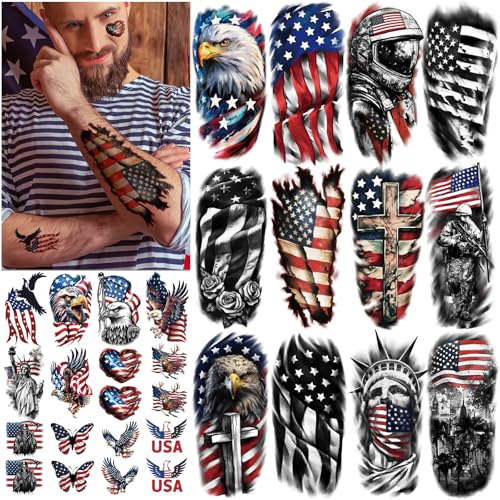
LARGE SIZE AND MORE QUANY -- Total 77 Sheets Temporary Tattoo Stickers for Men and Women Adults Including 17 Sheets Large Size (7.48*3.74 inches) and 60 Sheets Small Size (3.85*2.28 inches), The large size can cover more arm area and the small size can show your personality
How to Find an Artist Who Specializes in Eagles
Where should you begin when every portfolio looks polished online? Start by digging deeper. You’ll search hashtags like #eagletattoo or #neotraditionalbird on Instagram, but don’t stop there. You’ll examine healed tattoos, not just fresh photos. You’ll visit shops in person and ask artists directly about their experience with feather textures, talon mechanics, and beak structure. You’ll check who’s regularly posting birds of prey versus one-time flash pieces. You’ll read client reviews mentioning longevity and detail retention. You’ll attend conventions where wildlife specialists gather. You’ll trust your gut when an artist discusses raptor anatomy with genuine enthusiasm. You’ll book consultations with two or three prospects, comparing their sketch interpretations. You’ll invest time now so you’re not covering up mediocrity later.
Conclusion
Your eagle tattoo becomes whatever you need it to be—power, freedom, resilience, or remembrance. You’ve got options: bold color or timeless grey, soaring or diving, pure or paired with symbols. Choose your placement deliberately, invest in quality artistry, and you’ll wear something meaningful for life. The real meaning isn’t borrowed from tradition—it’s what you bring to it. So make your choice personal, make it bold, and let it take flight on your skin.