
You stand before the mirror, tracing the outline of a blade on your skin, and you wonder what story you’re really telling. A dagger isn’t just a weapon—it’s a question you’re asking yourself about protection, loss, or transformation. But the answer shifts depending on how you hold it, where you place it, and what wraps around its steel.
Key Takeaways
- Dagger tattoos symbolize duality: protection and aggression, loyalty and betrayal, or endings and new beginnings.
- Historical roots include sailors warding off drowning, soldiers marking battles, and 1950s biker outlaw identity.
- Common designs carry specific meanings: roses for love’s pain, snakes for wisdom through danger, hearts for survival.
- Blade direction matters—downward suggests sacrifice, upward signals aggression or active protection.
- Placement transforms meaning, with over-the-heart designs guarding vulnerability and forearm ink serving as visible warning.
Recommended Products

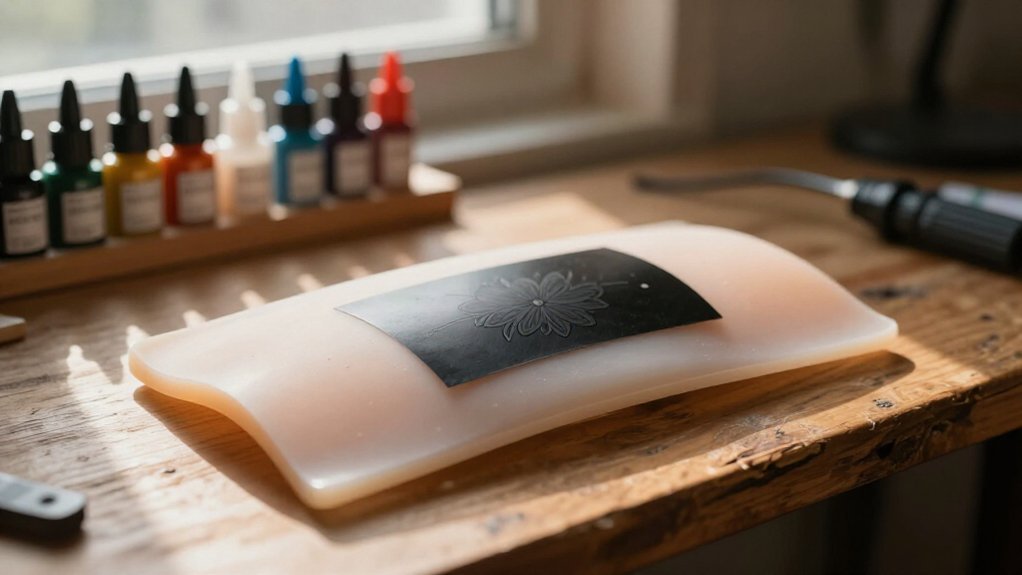
Premium Quality 1.5mm Silicone Material – Crafted from premium 1.5mm thick silicone, this tattoo skin offers a true-to-life feel with excellent durability and a smooth surface for effortless needle movement during practice.

【 575+ Fun Assorted Tattoo Stencils 】-The ChurlChurl tattoo stencils collection includes 575 high quality stencils with multiple themes. enjoy cute trendy tattoo stencil designs like butterflies, words, flowers, symbols, totem, Egypt style patterns and more.

▶ Henna Tattoo Kit: 16 sheets tattoo stencils. airbrush tattoo stencils suitable for tattoo lovers. Experience the effects of tattooing without the pain of tattooing.
What Does a Dagger Tattoo Mean?
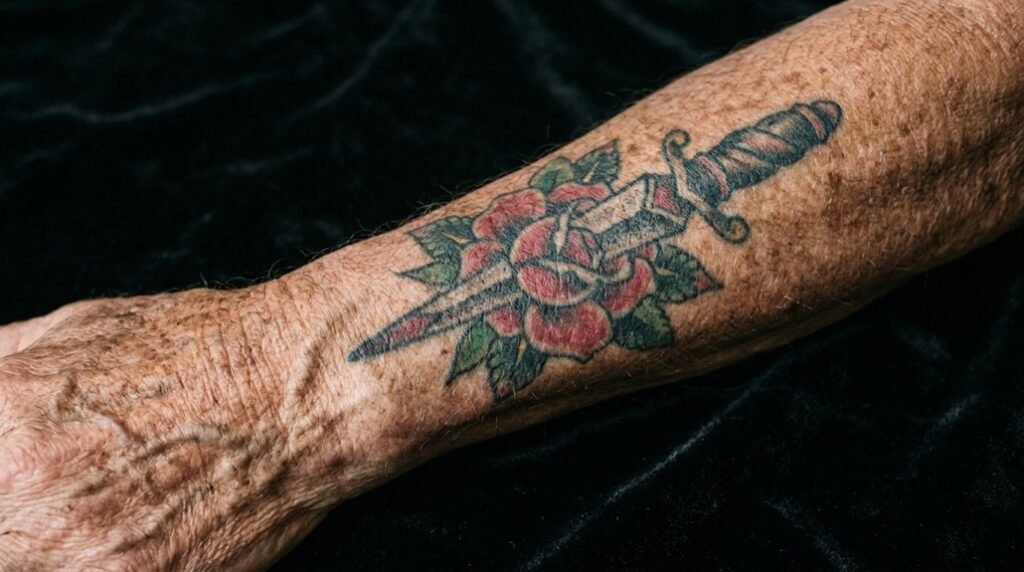
Why do so many people choose to ink a dagger permanently on their skin? You recognize that daggers carry layered meanings stretching across centuries and cultures. You’ll find that ancient civilizations viewed daggers as symbols of power, sacrifice, and the threshold between life and death. You encounter dual interpretations: protection and aggression, betrayal and loyalty, endings and new beginnings. You see that a dagger piercing a rose speaks of love’s pain, while a snake wrapped around the blade suggests wisdom through danger. You notice that placement matters—a dagger over your heart differs from one on your forearm. You understand that tattoo meanings shift with personal context. Your dagger might commemorate survival, mark transformation, or honor heritage. You realize that ultimately, you assign significance through your own story and intention.
Recommended Products

Gothic Snake Rose Dagger Design: This semi-permanent temporary tattoos pack holds 2 sheets with assorted motifs including coiled snake with rose, decorative daggers, butterfly and bat heart patterns. Snake symbolizes rebirth, transformation and primal energy; rose stands for passion, beauty and delicate charm; daggers represent courage and self-protection. Edgy dark fine-line style fits arm, wrist, hand and ankle. Ideal for gothic aesthetic fans and anyone seeking edgy symbolic body art.


Genuine Zippo windproof lighter with distinctive Zippo "click"
Why People Choose Dagger Tattoos: Protection, Remembrance, and Rebellion
What drives someone to etch a blade permanently onto their skin? You choose this symbol for deeply personal reasons that transcend mere aesthetics.
You might seek protection, positioning the dagger as a talisman against harm—a visual shield you carry always. The blade faces outward, warning threats away, or points inward, guarding your vulnerabilities.
You also honor loss through this mark. When someone’s thread cuts short, you inscribe their memory alongside the dagger, transforming grief into permanent tribute. The weapon becomes a bridge between presence and absence.
Or you embrace rebellion, rejecting conformity with sharpened steel. You reject softness expected of you. You claim agency over your body, your narrative, your defiance. The dagger declares: you won’t yield easily.
Each motivation intertwines, creating meanings as individual as the skin beneath the ink.
Recommended Products

🎃[10 Sheets Long Lasting Temporary Tattoos Snake] There are 10 Sheets Large Snake Temporary Tattoos For Men Women Kids Children Adults,You Can See Different Designs Including Black Rose Flower Sword Cobra Mamba Viper Serpent Skull Snake Tattoos Snakes.

Temporary Tattoo Sticker

【Style and Elements】 3 sheets of realistic 3D snake temporary tattoos with 9 patterns including Vipera Ursinii, Milk Snake, Kingsnake, Smooth Green Snake, Snake with Star, Snake with Rose, Floral Snake, Snake Wrapped Around Hourglass and more.
How Dagger Tattoo Meanings Have Evolved Over Centuries
How have meanings shifted as daggers moved across skin and centuries? You trace this evolution through history’s ink. Sailors etched daggers on their forearms centuries ago, warding off drowning and marking battles fought. You’d find these same blades among soldiers, commemorating campaigns and fallen brothers.
The 1950s saw daggers surge through biker culture, where you’d wear them as badges of outlaw identity. Prison ink adopted the motif, encoding rank and conviction through specific placements. Today’s collectors choose daggers without singular obligation to tradition. You might select one for aesthetic edge alone, or layer personal meaning atop historical weight. The blade stays sharp, but you’ve freed it from fixed narrative. Your dagger carries what you decide—heritage, danger, transformation—shaped by centuries yet owned by your skin alone.
Recommended Products

[Semi-Permanent, Realistic Tattoos] INKARTLINK semi-permanent tattoos are lifelike, durable, waterproof, and sweat-resistant, lasting 7–14 days and gradually fading as the skin’s outer layer sheds. They’re perfect for everyday wear, events, or themed occasions. From the beach to the office, they stay vibrant, allowing you to effortlessly showcase your body art in any setting.

Cute and Edgy Y2K Vibes - Bold mix of neotribal tramp stamps, firey hearts, butterflies, stars, metallic glam, glittery accents, and more!

Temporary Tattoo Sticker
Snake, Rose, and Heart Daggers: What Specific Designs Mean
Where exactly do you anchor meaning when a dagger coils with a snake, blooms with a rose, or pierces a heart? You stake your claim in symbols rich with contradiction.
You wrap a snake around your blade, and you’re embracing duality: danger and healing, betrayal and transformation. The serpent guards; the dagger strikes. Together, they demand that you confront what threatens you.
You plant a rose at your hilt, and you’re bleeding beauty through pain. The thorn cuts; the bloom rewards. You carry this when you’ve survived something that should’ve destroyed you.
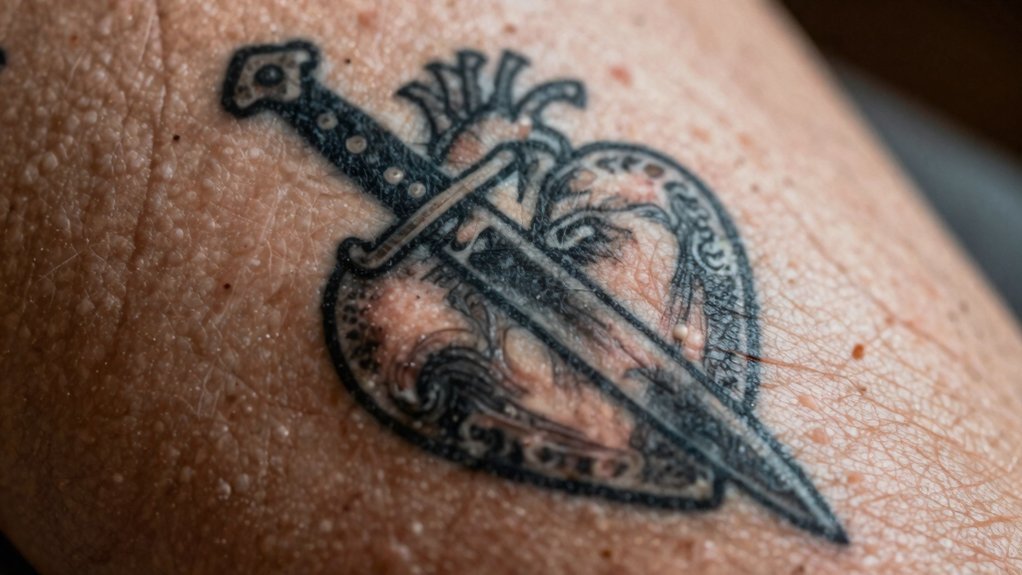
You drive steel through a heart, and you’re not just mourning—you’re choosing. You remember the wound, but you wear the weapon. You’re the one who dealt it, who survived it, who keeps it close.
Recommended Products

Package Included: Pack of 12 Sheets temporary tattoo stencils. All the designs are shown in the pictures. Only has tattoo template, no tattoo ink

⯁ 400+ Reusable Henna Stencils: Get 24 sheets of high-quality, self-adhesive hollow templates featuring over 400 unique patterns. These temporary tattoo stencils allow you to create stunning body art including mandalas, butterflies, and dragons. Perfect for practicing techniques without permanence

[Tattoos Stencils Kit]: 24 sheets, each sheet including 4 patterns total 96pcs tattoo stencil. Which featuring Playing card patterns, flowers, lizards, scorpions, rabbits, spiders, butterflies, geckos, small birds, insects, hearts, stars, abstract and tribal motifs and more tattoo designs, enough quantity and different pattern for you create your style.
Dagger Tattoo Symbolism in Japanese, Celtic, and Sailor Traditions
Why does a blade mean one thing in Tokyo, another in Dublin, and something else entirely below deck? You’ll find the answer in three distinct traditions that shaped dagger tattoo meaning.
In Japanese irezumi, you encounter the tantō as a symbol of samurai honor and ritual suicide—seppuku rendered in ink. The blade speaks of duty, sacrifice, and warrior code.
Across Celtic lands, you discover the sgian-dubh and athame representing spiritual protection. Your dagger draws from druidic roots, warding evil and cutting ethereal bonds.
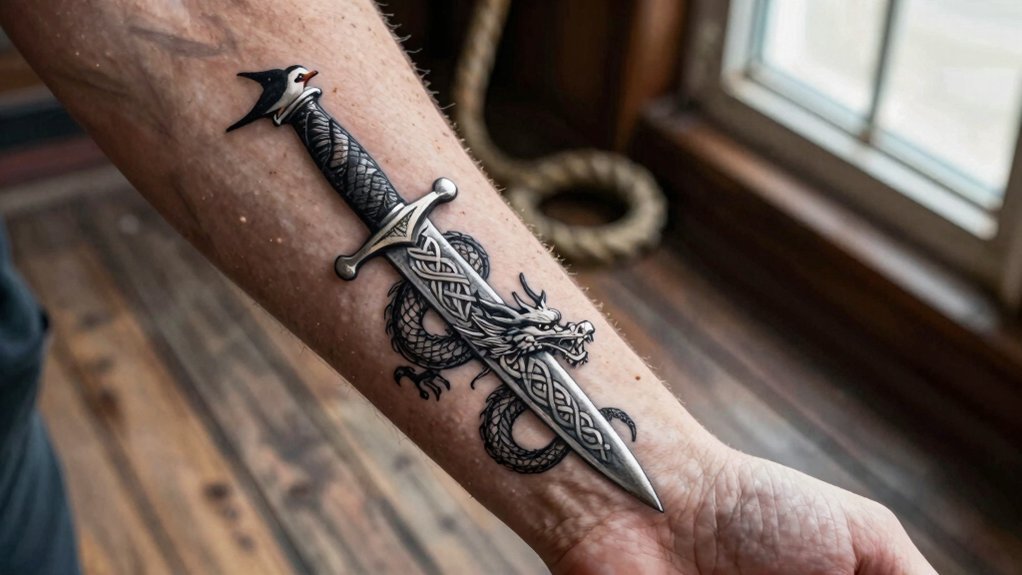
Below deck, sailors forged their own lexicon. You’d ink a dagger through a swallow to mark nautical miles sailed, or cross it with a rope to commemorate a deckhand’s death. These maritime traditions gave you stark, utilitarian symbolism: survival, violence endured, and brothers lost at sea.
Recommended Products


Product Kits: You will receive 12 A4 sheets featuring 142 unique henna tattoo stencils patterns including butterflies, flowers, words, symbols, totems and egyptian designs. Our versatile temporary tattoos adult with stencils collection offers something for every taste with its wide variety of artistic models.

【 What's included 】- 12 pages of unique and strong adhesive tattoo stencils, (no pigment included): (including 12 A4 patterns sheets) Almost unlimited creative combinations and options to meet your every need.
How Direction and Placement Affect Dagger Tattoo Meaning
Does a dagger point south on your arm mean something different from one aimed at your heart? You’ve got to reflect on direction carefully.
When you place a dagger pointing downward, you’re embracing sacrifice or letting go of something painful. Point it upward, and you’re showing aggression, protection, or readiness to fight. You’ll notice warriors traditionally chose upward blades.
Your placement matters too. Put it over your heart, and you’re guarding what you love most. On your forearm, you’re displaying strength openly. Choose your ribcage, and you’re keeping pain private. Wear it on your calf, and you’re marking your foundation, your stability.
You control the message through angle and location. Consider how you’ll see it daily versus how others will. Your dagger’s direction shapes its story completely.
Recommended Products

Showcase your passion for classic traditional aesthetics with this traditional tattoo flash art design. Featuring a fierce panther, rose, dagger, and hourglass, this graphic is perfect for ink lovers, tattoo artists, and alternative streetwear fans.


Temporary Tattoos stickers contain: 12 large different tattoo stickers and a manual
How to Choose a Dagger Design With Personal Meaning
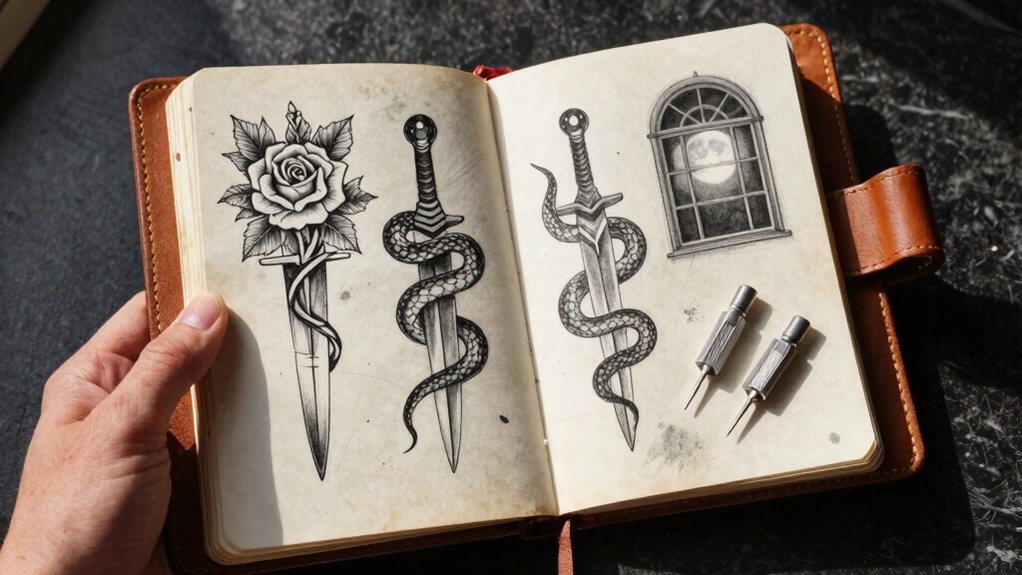
How do you freeze a feeling into ink? Start by asking what you’re actually fighting for—or against. You choose the blade’s direction, its companions, its wounds. A dagger through a rose speaks to love’s sharp edges; one entwined with a serpent hints at danger you survived. You pick metals that mirror your temperament: tarnished iron for rough seasons, polished silver for clarity found.
Consider what pierces the blade. Is it a heart you’ve broken or mended? A skull you’ve outlasted? You don’t copy trends; you interrogate your own symbol system. What’ve you survived? What do you guard? The design emerges from honest answers. You narrow until the image breathes your specific tension. That’s when ink becomes yours—when strangers see a dagger, but you read your own encrypted history.
Recommended Products

🌊【8 Sheets Groovy 3D Realistic Snake Temporary Tattoos For Women Men Adults 】TASROI Unique Design Snake Tattoos For Men Realistic Halloween Black Cobra Serpent Tattos. 【Size】8 Sheets Fake Tattoos For Women Template 7.4"x3.7".

This gold and red python scale tattoo sticker features magnificent colors and delicate textures, outlining the unique luxurious shine of python scales. Gold and red intertwined, such as molten gold flowing over the red flame, both noble and elegant, but also through the wild charm, instantly for the skin with a layer of mysterious and enchanting armor.

REALISTIC SNAKE WRAPPED AROUND BLADE ART: Ultra-fine printing with plant-derived gardenia ink creates bold, lifelike snake wrapped around blade tattoos with detailed designs that mimic real ink. Our semi-permanent formula sits subtly under the skin for au
What to Ask Your Tattoo Artist Before Getting Inked
You’ve settled on a design that holds your story—now the person holding the needle matters just as much. Ask your artist how much experience they’ve got with daggers specifically. Geometry’s unforgiving—slanted blades ruin the whole piece.
Quiz them about placement. Will your chosen spot distort the image over time? How’ll the dagger flow with your body’s lines? Demand to see healed photos, not just fresh work. Everyone’s skin reacts differently to red ink or heavy black lines.
What’s their sterilization protocol? Don’t feel awkward verifying single-use needles.
Discuss pain management openly. Certain areas ache worse than others.
Finally, nail down touch-up policies and pricing. Hidden costs sting worse than the needle. You’re wearing this forever—make sure you’ve vetted every detail.
Recommended Products

Sexy Styles Temporary Tattoos: Large succubus heart navel temporary tattoos perfect for women, ladies and adults fun, perfect to show off your sexy body.


Conclusion
You carry a dagger tattoo as more than ink—it’s your shield, your memorial, your defiance etched in skin. Whether pointing up in warning or down in surrender, entwined with roses or serpents, you’ve claimed a symbol that bends to your story. Choose wisely, wear it boldly, and let it speak when words fail you.
Recommended Products

Package Includes: You will receive 20 sheets reusable tattoo stencils, enough quantity to meet your daily requirements. The mehndi stencils are suitable for airbrush painting, glitter tattoo, and so on.

REUSABLD VARIETY OF OPTIONS - This set of temporary tattoo stencil includes 123 different patterns for adult,male. Scorpion tiger dragon cow eagle skeleton Tribal Symbols geometric design etc patterns in 20 pages A4 size, Almost unlimited creative combinations and options to meet your every need.

1. Safe and Healthy: Meet rigid safety and non-toxic materials standard, no irritation to the skin. Plus, It also has Clean Dry Protection Skin antiperspirant and deodorant functions.