
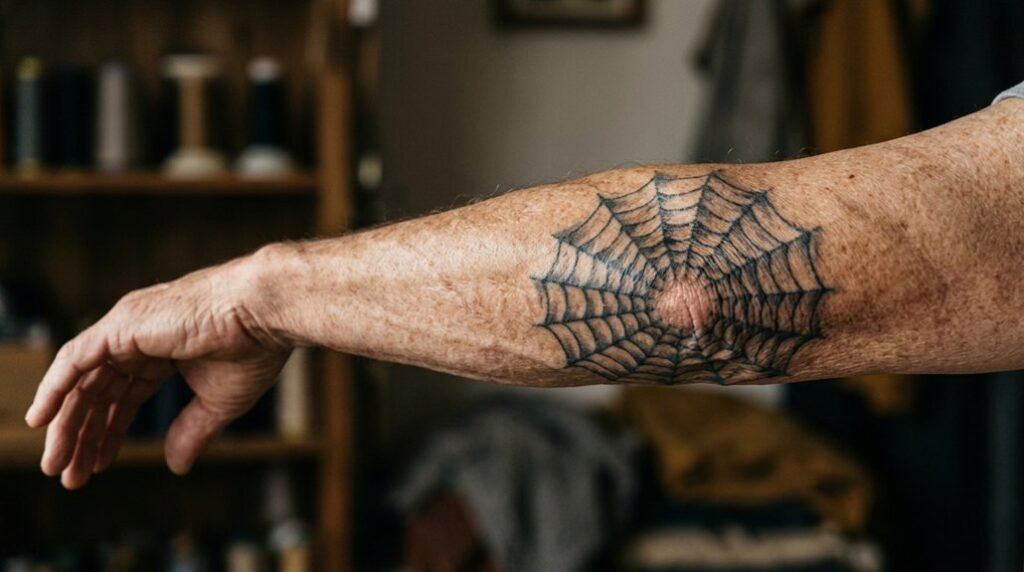
You spot a spider web tattoo on someone’s elbow and wonder what story it holds. It might signal time served, personal struggle, or simply an appreciation for nature’s geometry. The meaning shifts dramatically based on placement, design details, and who’s wearing it. Before you assume anything, you’ll want to understand how this symbol traveled from prison yards to recovery circles and art studios—and why its interpretation keeps evolving.
Key Takeaways
- Originally denoted years served in Russian and American prisons, with each strand representing incarceration time.
- Carried racial undertones and white supremacist associations within certain prison systems and extremist subcultures.
- Recovery communities reinterpret the web to symbolize interconnected healing, sober time, and rebuilt life connections.
- High-quality shading, color integration, and nature scenes distinguish modern artistic expressions from crude prison ink.
- Ultimate significance now derives from wearer intent and personal narrative rather than placement or historical coding alone.
Recommended Products

Temporary Tattoos could be used for men women adults neck arm chest.

Amazing Product: Different from you know ordinary temporary tattoo stickers or fake tattoos. It is so real and comparable to the real tattoo. It is a semi-permanent technology, waterproof, friction-resistant, and can last for a long time, staying on your skin for 1-2 weeks.

Large quantity: you will receive 12 sheets of spider face tattoos in 12 different styles, each sheet contains various designs and sizes, enough quantity can meet your different decorative demands, and assorted styles will add much fun to your theme party, costume party, etc.
Prison Origins: Where This Tattoo Actually Started
Where did this ink actually begin? You trace its roots to Russian prison culture, where spider webs emerged as coded symbols decades ago. You’d find these tattoos on elbows, knees, or throats—marking time served. Each web represented years trapped inside, with strands counting sentences completed. You might wear one after five years, adding complexity as duration grew.
You’d also encounter racial undertones. In some systems, you claimed this ink after killing a minority, or you displayed it as white supremacist identification. You’re looking at a visual calendar of incarceration, a badge earned through endurance.
You should recognize how American prisons later adopted and adapted this imagery. You see convicts importing these traditions through the twentieth century, webs spreading across racial lines and region. You’ve witnessed a symbol born in Soviet gulags travel continents, transplanting itself into entirely different penal systems.
Recommended Products
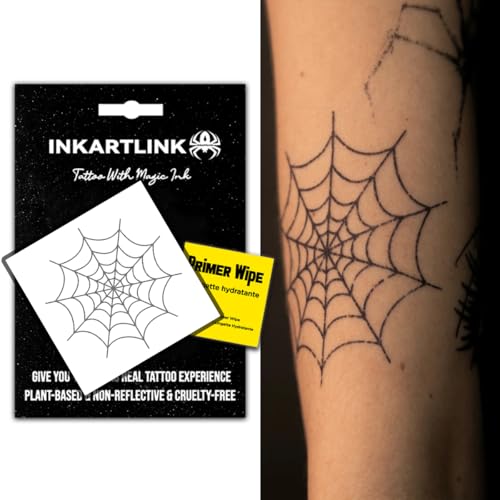
[Semi-Permanent, Realistic Tattoos] INKARTLINK semi-permanent tattoos are lifelike, durable, waterproof, and sweat-resistant, lasting 7–14 days and gradually fading as the skin’s outer layer sheds. They’re perfect for everyday wear, events, or themed occasions. From the beach to the office, they stay vibrant, allowing you to effortlessly showcase your body art in any setting.

SAFE TATTOO STIKERS. Leoars halloween temporary tattoos are printed with high quality tattoo ink and paper meeting rigid safety and NON-TOXIC materials requirements. Do not apply to sensitive skin, near eyes, or if you are allergic to adhesives.

🎃3D SPIDER TATTOOS FOR HALLOWEEN THEME PARTY IDEAS-- Package contain 80+ Horror creativity halloween temporary tattoos for kids , With these halloween theme temporary tattoos ,will provide big fun for both children and adults alike!
Not Every Spider Web Tattoo Means Prison: Here’s How to Tell
How do you distinguish between a mark of time served and a simple aesthetic choice? You look for context clues that reveal the wearer’s intent.
You examine the overall style first. Prison tattoos typically feature rough, single-needle work with limited ink colors—usually black or blue. You notice crude lines and uneven spacing between web strands. Professional pieces show cleaner execution, varied shading, and color integration.
You consider accompanying imagery too. Prison webs often sit alone or connect to explicit criminal symbols. You find decorative webs paired with flowers, skulls, or geometric patterns that signal artistic preference rather than institutional history.
You ask directly when possible. Many people choose spider webs for their visual appeal, gothic aesthetic, or personal symbolism—trapped situations, creativity, patience. You shouldn’t assume incarceration; you should recognize that tattoo culture has absorbed this design into mainstream expression.
Recommended Products

Dragonhawk Tattoo Needles: High-quality tattoo needles, manufactured under the trusted Dragonhawk brand, are perfect for all-purpose work. With a polished, long taper design, these needles ensure reliable performance and excellent control.

Cartridge Needles Sizes: 20 pcs tattoo cartridge needles include 3RL 5RL 5RM 7RM, each size has 5pcs. Those tattoo needles can be used for lining and shading, which can assist you with the entire tattoo work
Do Elbow, Neck, and Shoulder Placements Mean Different Things?
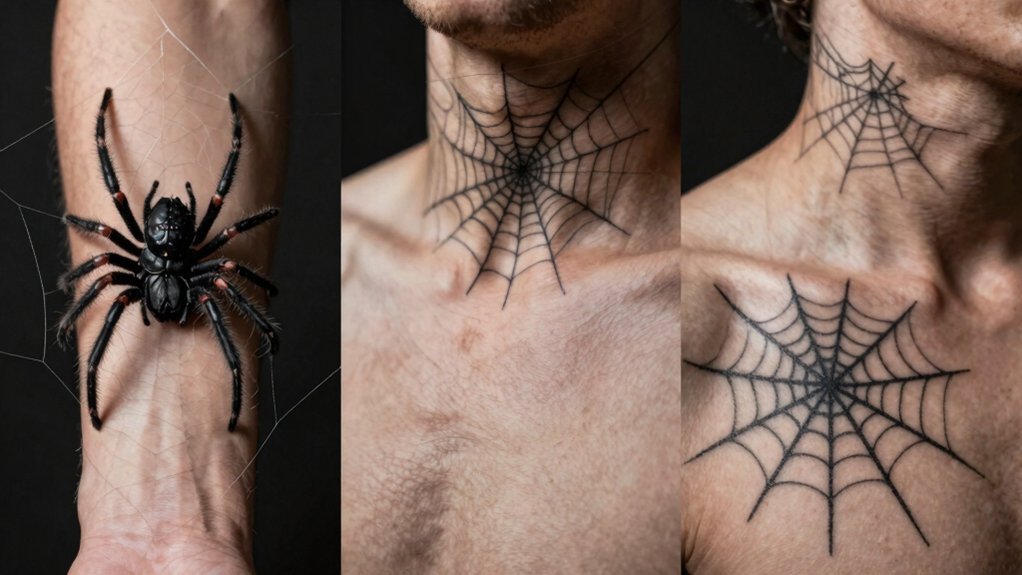
Why do certain placements carry heavier reputations than others? You’ll notice the elbow sits at the center of this debate. Tattoo artists and historians recognize the elbow as the classic prison placement—you can’t reach it yourself, so another inmate inks you.
You’ve likely heard the neck carries similar weight, signaling visible defiance against mainstream society. The shoulder offers more ambiguity; you’re wearing something easier to hide, which softens its edge.
You’ve probably spotted these tattoos on musicians, athletes, and neighbors who’ve never seen a cell. Placement matters less today than it did decades ago. You’re living in an era where context—surrounding imagery, the wearer’s background, your own observation—reveals far more than location alone. Don’t let position fool you; meaning travels with the person, not the coordinates.
Recommended Products
Transform your Halloween look with our spooky motifs 24pcs Halloween face makeup realistic eye temporary tattoos stickers, designed to provide a striking and spooky appearance for any festive party occasions

Package content: You will get 29 pairs /9 sheets of Halloween eye shadow sticker temporary tattoos, which look real and natural. You can use it easily and the tattoo stickers can add more festive atmosphere

【MORE QUANTITY】10 sheets 80+ PCS Halloween spider web temporary tattoos for for kids men women. Much quantity Halloween makeup kit are enough for you share it with your family and friends.
Why White Supremacists Tried to Claim This Design
Prison gangs and extremist groups have never owned this design, but that hasn’t stopped them from trying. You can trace their interest to the tattoo’s existing prison associations. They saw an established symbol with built-in credibility in incarcerated spaces and recognized its adoption potential. You’re looking at a calculated strategy: co-opt something already present, then redefine it for ideological purposes. They leveraged the web’s imagery—trapped prey, radial centers, territorial marking—to align with narratives of racial entrapment or predation. You find the same pattern with other symbols: identify visual power, then overlay new meaning. The design’s organic ambiguity helped them; it carries no fixed cultural anchor, so competing claims can stick. You can’t ignore how this appropriation attempt has complicated what you might project or interpret when you wear or encounter this tattoo today.
Recommended Products

😺【75 SHEETS SELIDODO Black Snake Flower Temporary Tattoos For Girls Women Adults】Package Includes 12 Sheets Realistic Waterproof Tribal Coloful Half Sleeve Temporary Tattoos For Adults and 63 Sheets Cute Tiny Small Temporary Tattoos For Kids Boys Girls Teens 3D Gothic Tatoos Universe Planets Star Moon Animals Spider Web Cross Birds Scorpion Bat Ghost Elephant Flower Floral Pirate Compass Anchor Butterfly Skull Skeleton Maori Totem Wolf Tiger Lion Dragon Eagle Owl Bear Crown Mountain Sea Wave Snake Tree Coyote Feather Astronaut Whale Lotus Dreamcatcher.

ABUNDANT QUANTITY: Our Day of the Dead sugar skull tattoos,Halloween sugar skull temporary face tattoos, include 20 sheets, 2 different styles, Including 8 large sheets halloween temporary face tattoos, measures 21*15cm(8.3*5.9inch), and 12 sheets sugar skull tattoo, measures 6*6cm/(2.4*2.4inch), sugar skull makeup kit, day of the dead skeleton face temporary tattoo, enough to share with friends
You will receive 25 sheets totally 100pcs in 20 different designs day of the dead skeleton face temporary tattoo face kit, black white blue pink brown gold silver fluorescence multicolor apply in to create more interesting experiences and celebrate life! each pattern measures 4.6*4.6cm/ 1.82*1.82inch , one size fit all girls boys kids Women Men Adult and Kids
How Recovery Communities Gave the Tattoo a New Purpose
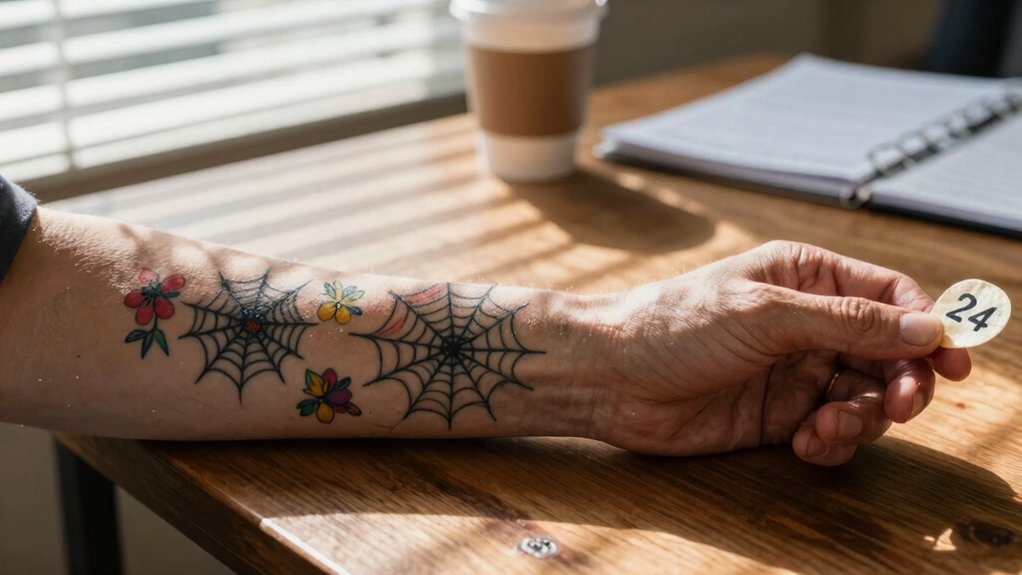
Recovery communities saw something different in the web’s strands—interconnection, fragility, the painstaking work of rebuilding. You reclaim the symbol when you ink it as a survivor of addiction, eating disorders, or trauma. You’re marking not incarceration, but liberation. The web becomes your map of progress: each thread represents a choice you made, a day you fought, a connection you repaired. You wear it where others once wore prison ink, and you transform the narrative. Group members often spot the tattoo on each other. You nod, recognizing the shared language of struggle without speaking. Some artists now specialize in this reclamation, designing webs that incorporate recovery dates, recovery symbols, or simply cleaner lines that signal hope. You’re not erasing history—you’re redirecting it toward survival.
Recommended Products

VARIETY OF HALLOWEEN DESIGNS::-- These Halloween temporary tattoos feature 12 sheets of detailed spider web, bat, bloody wound, stitch scar, and scab designs, perfect for adding a spooky touch to your Halloween costume, cosplay, festivals, and parties. Each sheet measures 6.2 x 6.2 inches.

Package Contents:Package contain 10 sheets (10 PCS)Halloween tattoos and suitable for any one, this means that every one at the party can get a cute temporary tattoos
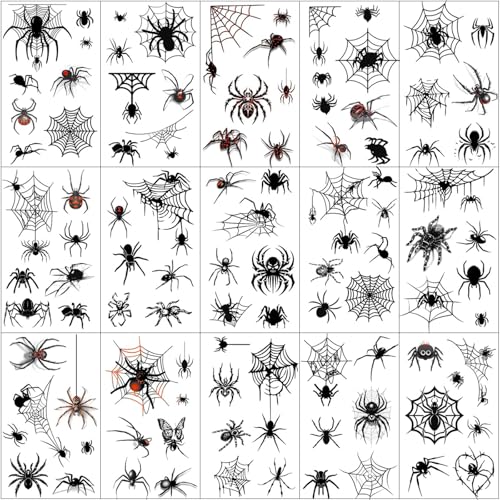
MORE DESIGN-30 Sheets 200+ PCS Halloween spider web temporary tattoos for for kids men women. Much quantity Halloween makeup kit are enough for you share it with your family and friends.
What Nature-Lovers and Gothic Fans Actually Mean by It
When you step outside the shadow of prison yards and recovery circles, you’ll find the spider web tattoo means something far simpler: you love how nature builds, or you love what nature fears.
You get this ink because you’ve watched spiders engineer perfect geometry at dawn. You’re amazed by silk stronger than steel, woven without tools or blueprints. You don’t see entrapment; you see architecture.
Or you’ve embraced the dark aesthetic. You wear black lace, read Poe at midnight, and collect bat figurines. The web suits your wardrobe of velvet and silver. It whispers of haunted attics and autumn forests, not jail time.
Either way, you reject the heavy meanings others impose. You picked this design because webs fascinate you, plain and simple. Your reasons need no justification.
Recommended Products

【Realistic Semi-Permanent Look】Boldink temporary tattoos are designed to look more like real tattoos than traditional temporary tattoo stickers. They are waterproof,...
How to Read the Context Without Asking Awkward Questions
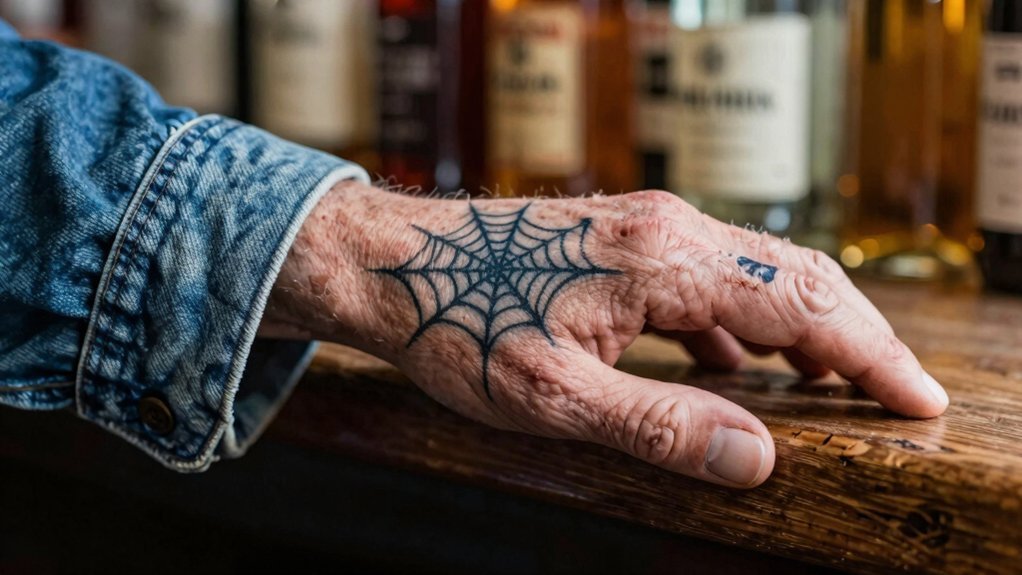
Spotting a spider web tattoo on someone’s elbow or neck doesn’t require you to interrogate them about their past. You’ll gather meaning by observing context instead. Check placement first—elbows traditionally signal incarceration time, while fingers or behind ears suggest decorative choice. You’re reading their overall style too. Multiple nature tattoos signal an aesthetic preference. Dark, aggressive imagery clustered nearby hints at harder symbolism. You can notice their demeanor and environment without staring. They’re presenting themselves deliberately. You’re absorbing what they show publicly. Social media often reveals their stated intent if you’re researching generally. You’re respecting boundaries while still understanding visual communication. Context clues replace intrusive questions. You’re decoding without demanding explanations. Your observation skills handle this. You’ll recognize when symbolism matters versus when it’s simply ink.
Recommended Products

【The Companion on the Tattoo Road】- Considering every detail during your tattoo process, making your tattoo process easier.

Complete Packaging: 50pcs mixed size tattoo cartridge needles set, includes 5pcs each of 1205RL 1207RL 1209RL 1205RS 1207RS 1209RS 1207RM 1207M1 1215M1 1215RM. The unique design of the needle can store more ink, and the sharp needle thread better completes tattoo activities, suitable for both professional tattoo artists and beginners.
Complete Package: 20 pcs 1215RM tattoo cartridge needles for Liner. Achieve various types of tattoo designs with these 1215RM standard cartridge needles.
Why Some Employers Still Misread This Tattoo
Why do hiring managers still flag spider web tattoos as automatic red flags? You face this bias because outdated stereotypes die hard. Many recruiters cling to 1990s prison documentaries and crime dramas where spider webs signified racist affiliations or time served. You encounter HR professionals who never questioned these sources. They haven’t updated their mental catalogs as tattoo culture evolved. You see them making snap judgments during screenings, conflating your ink with violence. They skip context clues—placement, style, your demeanor. You’re fighting decades of pop culture misinformation packed into brief training sessions.
Some industries, particularly conservative ones, actively discourage body art. You navigate workplaces where “professional appearance” codes still criminalize symbols they misunderstand. Your tattoo tells your story, but they’re reading from a script that ended years ago.
Recommended Products

🔥【Halloween Style】 You will receive 8 sheets of waterproof face tattoos. The unique design makes it a highlight of the festival

Package content: You will get 10 sheets eye shadow tattoos and 10 sheets Halloween face temporary tattoos for the Halloween party face eye makeup
How Tattoo Artists Are Redesigning the Symbol Today
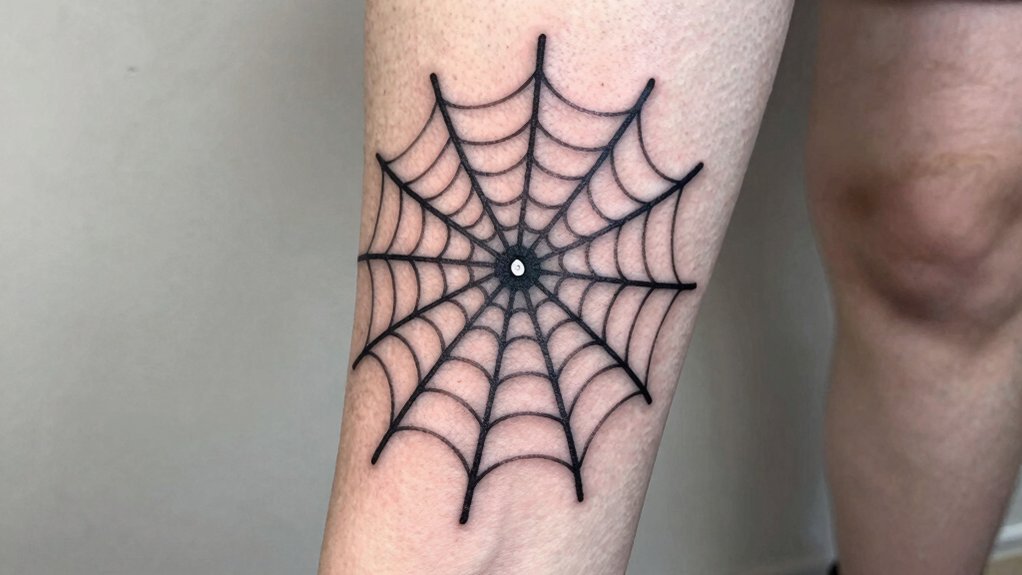
Where do you turn when old meanings trap your ink in someone else’s past? You seek artists who’re breaking the web’s coded history. They’re splashing it with watercolor blooms, trapping geometric jewels instead of flies, or stretching threads across your shoulder like abstract constellation maps. You’re watching them weave 3D illusions that’ll make viewers question where skin ends and shadow begins.
Some artists stitch webs into larger nature scenes—dewdrops at dawn, not prison bars. You’re choosing placements that disrupt old assumptions: ribs, hips, behind the ear.
You’re collaborating on designs that speak your specific story—recovery, patience, creativity. These artists aren’t erasing history; they’re outgrowing it. Your web becomes yours because craftsmanship now outweighs shorthand.
Recommended Products

🎡【Package Includes:】 71 Sheets Watercolor Temporary Tattoos For Women Men Adults Including 12 Sheets Half Arm Sleeve Tattoo Stickers and 59 Sheets Tiny Cute Small Fake Tattoos For Kids Boys Girls, 3D Gothic Tatoos Universe Planets Star Moon Spider Web Cross Birds Scorpion Bat Ghost Elephant Flower Floral Pirate Compass Anchor Butterfly Skull Skeleton Maori Totem Wolf Tiger Lion Dragon Eagle Owl Bear Crown Mountain Sea Wave Snake Tree infinity Letter Words Clock Quotes Abstract ECG Feather Gangster Minimalism Coyote Feather Astronaut Whale Lotus Dreamcatcher.

Package Contains: You will receive 8 eyeliner stickers containing 24 pairs of different shapes and patterns. You can paste them like our design in the image, or paste them with your own design. Just use your imagination and creativity

Package Include: This halloween tattoos set includes 30 sheets skull spiderweb tattoos. Easy to apply and idea for any halloween occasions, these halloween tattoos are great for halloween goodie bag fillers, makeup accessories and halloween party supplies
What Your Spider Web Tattoo Might Mean in Ten Years
How will your web read once today’s ink settles into tomorrow’s skin?
You’ll watch meanings shift beneath your skin as culture moves. What signaled rebellion now whispers heritage; what marked time becomes art history. Your elbow web won’t scream the same story at fifty that it shouted at twenty-five.
You’re collecting interpretations, not locking one. Prison origins fade; Indigenous significance resurges. You’re choosing which threads dominate: struggle, patience, signal, or soul.
In ten years, you’ll explain less. The questions will soften. You’ll catch someone young studying your faded lines, and you’ll recognize that hunger—the same one that pulled you toward the needle.
Your web stretches across who you were, who you’re becoming. You’re wearing time itself, and time keeps weaving.
Conclusion
Your spider web tattoo carries whatever meaning you give it. You might wear it as a badge of survival, a symbol of recovery, or simply art you love. Context shapes how others read it, but you control your story. As artists keep reimagining the design, its old stigma fades. Choose your placement, add personal details, and let your web reflect where you’ve been—and where you’re headed.