
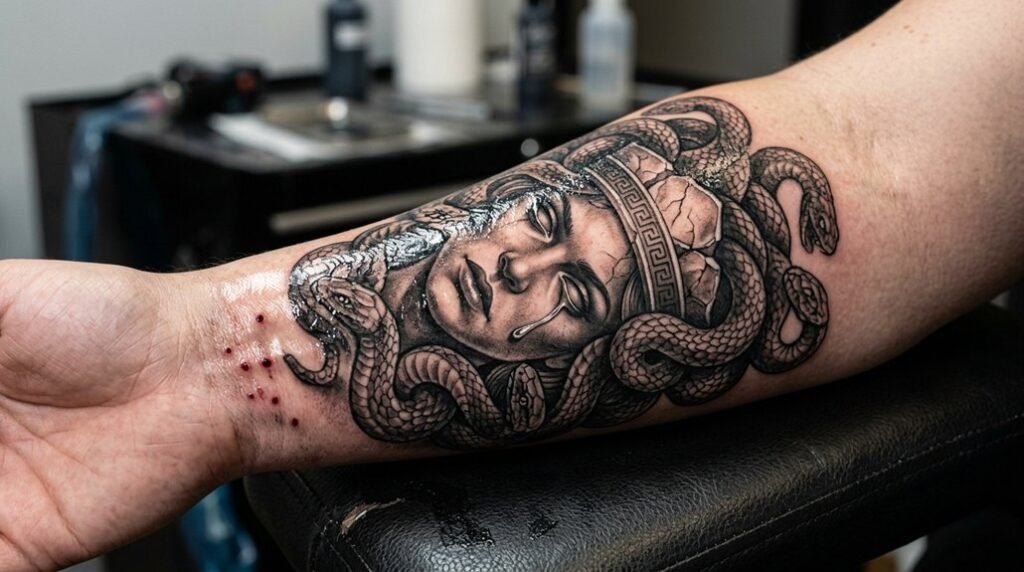
You might scroll past a dozen Medusa tattoos before one stops you cold. When it does, you’re seeing more than ink—you’re witnessing someone who turned pain into stone-cold resolve. But what exactly are they claiming? The answer shifts dramatically based on who’s wearing it and why.
Key Takeaways
- Medusa tattoos symbolize reclaimed power, survival, and personal transformation from victimhood.
- They represent feminist refusal of shame, reframing Athena’s punishment as armor against patriarchal narratives.
- Imagery choices—weeping or defiant, flowing or geometric—reflect specific lived experiences of trauma and resilience.
- Placement determines messaging: visible locations broadcast survival publicly while hidden spots preserve intimate meaning.
- Style selection reshapes meaning, with blackwork conveying menace and fine-line suggesting delicate resilience.
Recommended Products
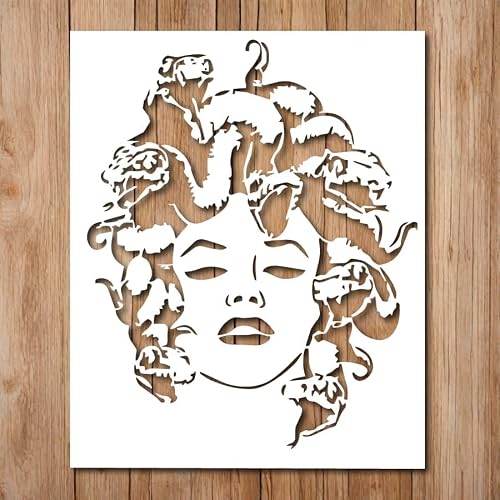
Create artistic masterpieces with ease using our precision-cut, reusable stencil for endless crafting adventures

【Realistic Semi-Permanent Look】Boldink temporary tattoos are designed to look more like real tattoos than traditional temporary tattoo stickers. They are waterproof, smudge-resistant, and non-shiny for a natural-looking finish. The tattoo will appear silver at first and gradually darken into a rich, realistic color within 48 hours. For best results, avoid contact with bare skin, especially the face, and cover the tattoo with clothing while sleeping to prevent transfer.

Snake and Botanical Flowers Stencil: You will receive 9 pieces of painting stencils which have beautiful patterns in animal theme. There are snake and botanical flowers, stars, moon, moon phases, human hands patterns on the stencils. Our templates are suitable for you to make handmade projects by yourself.
What Draws People to Medusa Tattoos: and Whether You Should Too
Why do so many people choose Medusa for their ink? You’ll find her staring back from countless arms, backs, and chests today. She’s become a symbol of reclaimed power, and you might feel drawn to that energy yourself. When you wear her image, you’re claiming survival and transformation.
You should ask what Medusa means to you personally before committing. She represents different things: protection, female rage, or overcoming assault. Your reason matters more than trends.
You’ll want quality artwork—her snake-hair demands skilled hands. Consider placement carefully; she’s confrontational and draws attention.
If her story resonates with your own struggles, you’ll carry her proudly. But don’t choose her lightly. She’s not decorative—she’s declaration. Make sure you’re ready for what she announces about you.
Recommended Products

All Skin Types & Plant-Based: VERDBOOK temporary tattoos use gardenia-based pigments with no harsh chemicals. Compatible with sensitive skin, dry skin, and first-time users. The ink sits subtly under the skin, creating a clear, natural-looking design.

Amazing Product: Different from you know ordinary temporary tattoo stickers or fake tattoos. It is so real and comparable to the real tattoo. It is a semi-permanent technology, waterproof, friction-resistant, and can last for a long time, staying on your skin for 1-2 weeks.

【Mythology Medusa Design】This set features bold Medusa artwork inspired by ancient mythology and feminine power. Designed for larger placements on hands and arms, the detailed linework and dramatic composition create a striking visual presence. These tattoos embody strength, mystery, and fearless self-expression.
The Original Myth: and Why It Gets Medusa Wrong
How exactly did Medusa become a monster? You probably know the version where she’s born terrible—snake hair, stone gaze, instantly monstrous. But that’s not the original myth. In Ovid’s telling, Medusa starts as a beautiful priestess. Poseidon assaults her in Athena’s temple, and Athena punishes Medusa by transforming her into something hideous and deadly. You read that correctly: the victim becomes the monster.
You’re seeing the distortion clearly now. The myth reframes survival as sin and punishes the wrong person. It asks you to accept that female victimhood deserves further violence. When you encounter Medusa today, you’re inheriting centuries of this backwards narrative. But you’re also positioned to recognize the lie, to spot how patriarchal storytelling turns women’s trauma into their defining monstrosity.
Recommended Products
![[3 PCS] Medusa Sticker Powerful Feminine Art Design with Snakes and Gold](https://m.media-amazon.com/images/I/51r8f2WCw0L._SL500_.jpg)
🐍 Luxteeva Powerful Feminine Medusa Symbol Design: This striking medusa sticker represents quiet strength and inner power through a bold mythological figure. The detailed artwork also stands out as expressive medusa face stickers with glowing eyes and flowing snake hair. Many people choose meaningful stickers for women that reflect confidence and individuality. It also makes a strong statement as feminist gifts for women who embrace power, mystery, and self expression.

[Semi-Permanent, Realistic Tattoos] INKARTLINK semi-permanent tattoos are lifelike, durable, waterproof, and sweat-resistant, lasting 7–14 days and gradually fading as the skin’s outer layer sheds. They’re perfect for everyday wear, events, or themed occasions. From the beach to the office, they stay vibrant, allowing you to effortlessly showcase your body art in any setting.

Pattern Rich Variety: Funny Feminist Women Power Rights Gender Equality Temporary Tattoos for Kids include 8 Sheets 96 PCS, the size of each sheet is 6.1 * 3.1 inches. Having a variety of characteristics, shapes and vibrant colors can stimulate your children's imaginations and bring a creative atmosphere to your Feminist Party
How Medusa Tattoos Became Feminist Icons
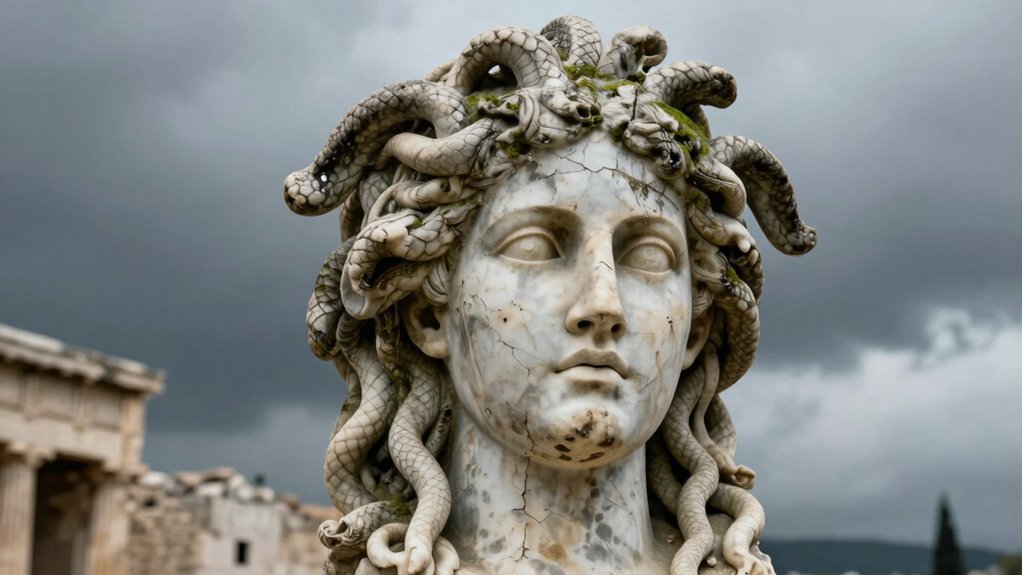
You can’t undo that myth, but you can reclaim it. You ink Medusa onto your skin, and suddenly she’s yours. Feminist scholars reimagined her first—she wasn’t a monster, she was a victim who fought back. You carry that reinterpretation forward. Your tattoo rejects the narrative that punished her for her own assault. You wear her snakes as armor, not shame. Social media amplified this shift; you saw others posting their Medusa tattoos with captions about survival and rage. You recognized yourself in that collective reclamation. The image spread through feminist circles, transforming ancient victimhood into contemporary power. You choose her because she turned the gaze back on itself. Your skin becomes the text where you rewrite her ending.
Recommended Products

🌼 Beautiful Hand-drawn Fine Line Style Tattoos - Black and White Fine Line Flowers, Roses, Branch, Butterfly, Arrows, Hearts, Stars

Insta-Glam Tattoo Set: Peel, press, and slay your way to the most extra look in the room!
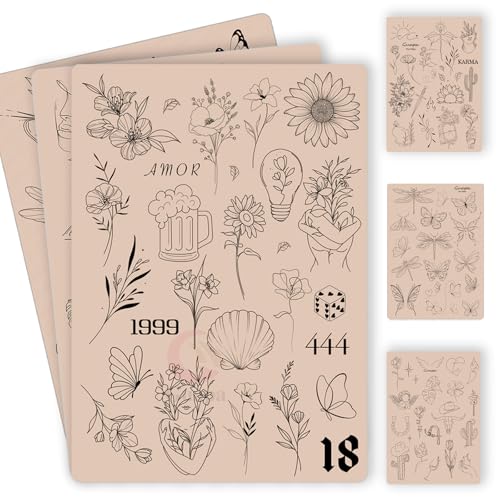
100+ Pre-Printed Designs – Features a wide variety of fine line and tiny tattoo stencils to enhance detailing skills.
What Medusa Means to People Healing From Violence
Where does healing begin when the world names you victim? You reclaim Medusa not as monster, but as mirror. Her story speaks your language—the assault, the blame, the transformation others fear. You don’t choose her lightly. You choose her because she survived the gaze that punished her for existing.
You wear her on your skin and feel something shift. The snakes that once marked her curse now guard your throat, your wrist, your spine. You’ve stopped apologizing for what grew back stronger. She doesn’t ask you to forgive, to soften, to shrink. She asks you to look directly at what hurt you and dare others to flinch first.
This isn’t about becoming stone. It’s about refusing to crumble.
Recommended Products

【Realistic Semi-Permanent Look】Boldink temporary tattoos are designed to look more like real tattoos than traditional temporary tattoo stickers. They are waterproof,...
When Medusa Outperforms Other Protective Symbols
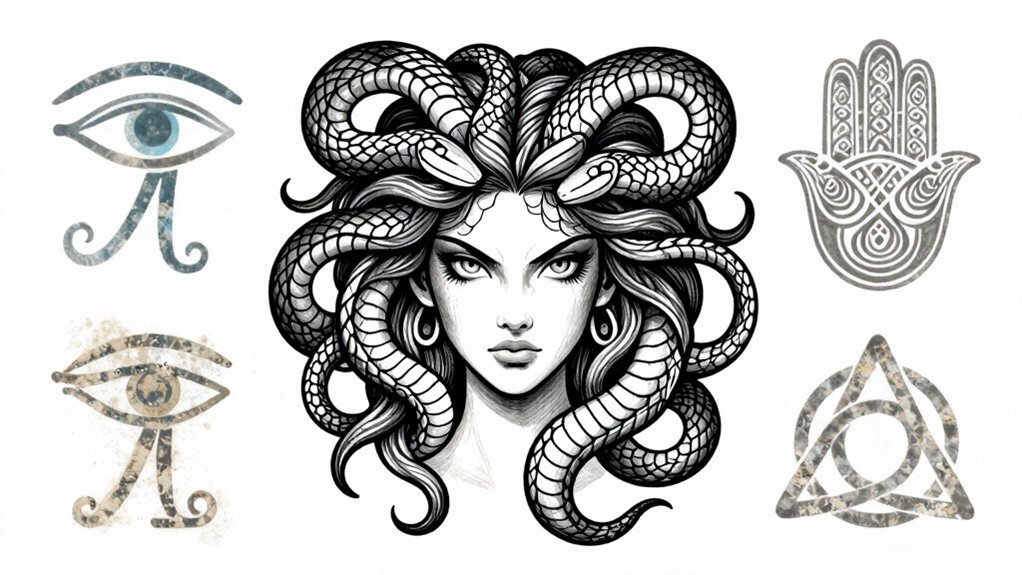
Though protective symbols crowd the tattoo parlor walls—evil eyes, hamsas, guardian angels—Medusa commands a different kind of attention. You choose her when passive protection feels insufficient. She’s active threat, not mere shield.
Other symbols ask harm to glance away. Medusa promises consequences. You carry her when you’ve survived something that demands acknowledgment, not gentle deflection. She transforms your skin into warning.
Where guardian angels suggest rescue from above, Medusa locates power within you. You don’t wait for salvation; you embody it. Hamsas ward. She strikes.
You select her specifically because she frightens. That fear protects you differently—preemptively. Predators recognize something in her stare. You’ve stopped trying to appear harmless. Medusa lets you reclaim the monstrous label others gave you.
Recommended Products

Temporary Tattoo Sticker

Package:You will get 4 Sheets snake tattoo stickers for Halloween medusa cosplay costume

EXPRESS YOUR ALTER EGO: Designed for the magical, our face jewel sets are made to elevate your Halloween makeup game. Perfect for festivals, costume parties, club nights, or even your most dramatic TikTok moment, these jewels instantly take your look to a haunting new level.
Signs Medusa Is the Right Tattoo for Your Specific Situation
Certain moments reveal Medusa as your only honest choice. You recognize these signs when standard symbols feel hollow. You carry hidden wounds from violations you survived. You want power reclaimed, not pity displayed. You reject fragile femininity and embrace dangerous strength.
You feel drawn to her duality: victim and monster, destroyed and destroying. You seek protection that warns predators proactively. You value mythology that acknowledges women’s rage as righteous. You want your body to tell a story of transformation, not victimhood alone.
You need art that confronts viewers, that demands they look and understand their own risk. You prefer complexity over comfort. These signals confirm Medusa matches your specific truth. You aren’t decorating skin; you’re declaring sovereignty. Trust that clarity.
Recommended Products

Greek Mythology Art design. Medusa, Medusa Tattoo, Greek Mythology, Goddess, Snake, snake tattoo

Greek Mythology Tattoo design. Medusa, Medusa Tattoo, Snakes, Snake Tattoo, Crescent Moon, Spider Web Tattoo, Greek Mythology

[Semi-Permanent, Realistic Tattoos] INKARTLINK semi-permanent tattoos are lifelike, durable, waterproof, and sweat-resistant, lasting 7–14 days and gradually fading as the skin’s outer layer sheds. They’re perfect for everyday wear, events, or themed occasions. From the beach to the office, they stay vibrant, allowing you to effortlessly showcase your body art in any setting.
Why Visibility Level Changes Your Medusa’s Message
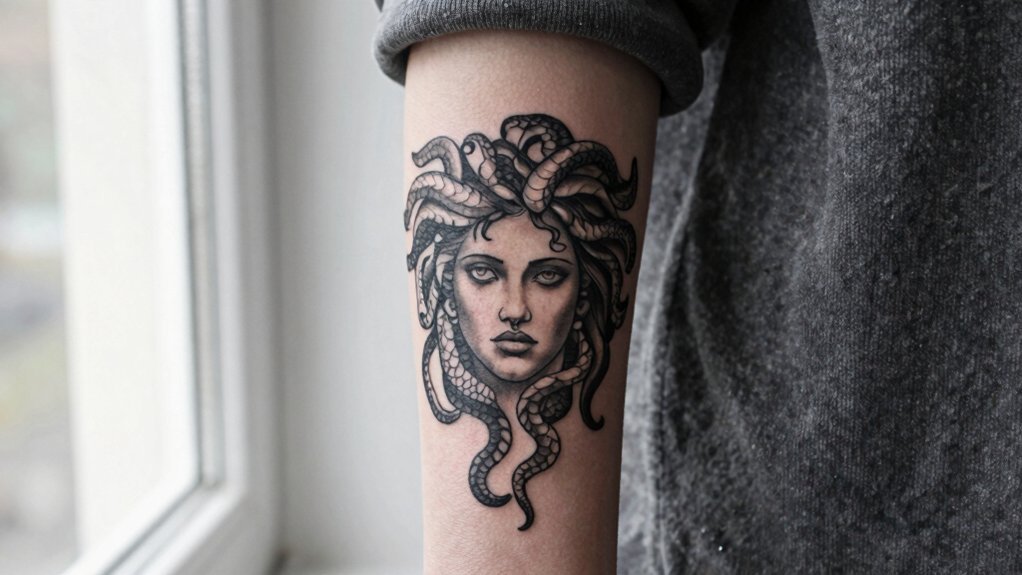
How you display your Medusa shapes what she communicates. You choose visibility like you choose words—deliberately, strategically.
When you place her on your forearm or neck, you’re broadcasting. You declare survival publicly, inviting conversation, connection, even confrontation. This placement demands acknowledgment; you’re refusing to hide your trauma or your strength.
Conversely, hiding her beneath clothing creates intimacy. You carry her for yourself, not spectators. This privacy deepens the meaning—you’ve internalized protection, needing no external validation. The secret becomes power.
Partial visibility offers negotiation: a collarbone peek, a thigh glimpsed selectively. You control revelation, revealing your story on your terms.
You’re not just selecting location. You’re scripting interaction. Consider who’ll see her, when, and how you’ll feel exposed—or shielded. Your visibility choice transforms Medusa from passive symbol into active communication.
Recommended Products

40 assorted temporary tattoos Non-toxic, conforms to ASTM D4236 safety standards Portfolio package: 8.5 x 4.5” Ages 3+
Tattoo Styles That Transform Medusa’s Meaning
Your artistic choices reshape Medusa entirely. You select blackwork, and she becomes stark warning, all shadow and severity. You choose neo-traditional, and her serpents bloom with color, turning menace into gorgeous spectacle. You pick fine-line, and Medusa softens, becomes almost wistful, tragedy overtaking threat.
You wield geometric patterns, and Medusa fractures into mathematical goddess, controlled chaos beneath calculated angles. You commission Japanese-inspired waves around her, and she’s yōkai now, foreign yet familiar. You ask for sketch-style, and Medusa bleeds, unfinished, perpetual becoming.
Each technique carries philosophy. Bold traditional spits defiance. Watercolor washes suggest she’s dissolving, maybe escaping her myth entirely. You’re not just picking aesthetics. You’re deciding which Medusa lives on your skin—victim, villain, survivor, or symbol beyond definition. Your vision determines her power.
Recommended Products

Premium Quality 1.5mm Silicone Material – Crafted from premium 1.5mm thick silicone, this tattoo skin offers a true-to-life feel with excellent durability and a smooth surface for effortless needle movement during practice.

Exclusive Mother and Baby Design: Inspires creativity while practicing intricate tattoo techniques.
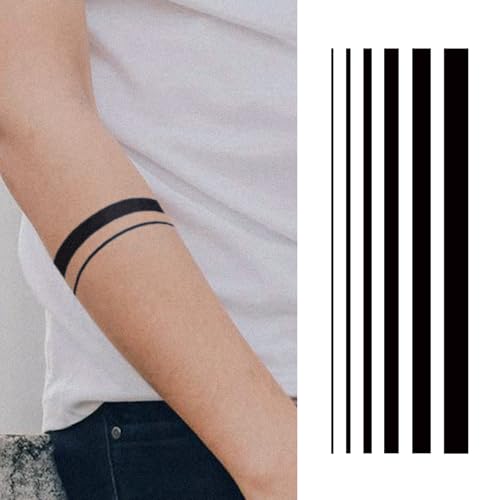
GEOMETRIC LINE & ARMBAND DESIGNS: Features a striking minimalist collection of continuous parallel lines engineered in varying stroke weights. This modern unisex set ranges from delicate hairline threads to bold solid blackout bands
The Communities Reclaiming Medusa
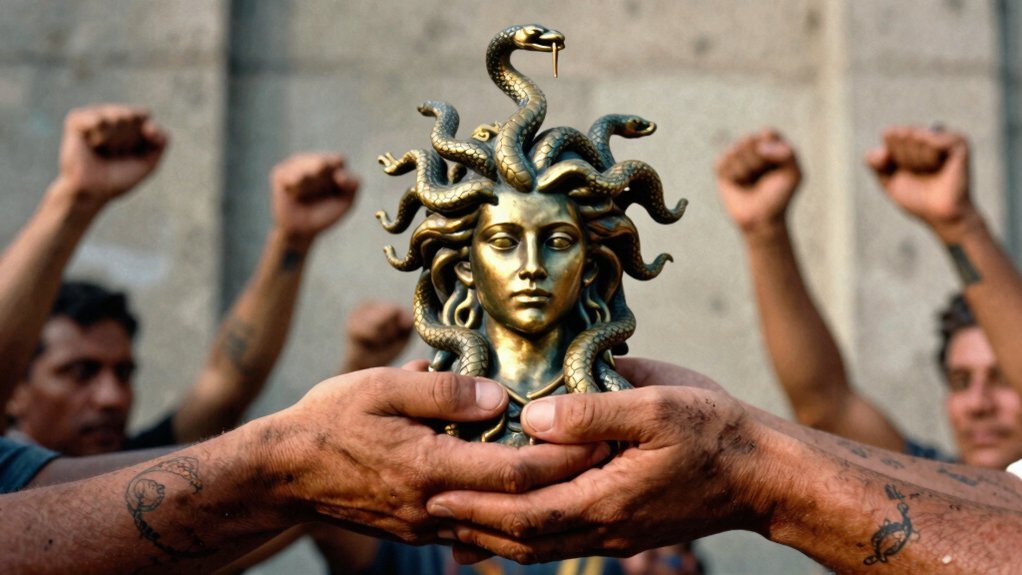
Beyond artistic interpretation, Medusa’s image has found new life in the hands of communities rewriting her narrative for themselves. You see survivors of sexual violence reclaiming her as a symbol of resistance against victim-blaming. You witness feminist movements embracing her snake-haired visage to challenge patriarchal myths that punished female power. You observe LGBTQ+ communities adopting Medusa to represent transformation and defiance of societal condemnation.
These groups don’t simply decorate their skin with ancient imagery. You’re watching them actively transform a supposed monster into proof of survival and strength. When you choose this symbol, you’re joining collective efforts to correct historical wrongs. You’re participating in a reclamation that turns punishment into power, silence into statement, and isolation into solidarity across communities who refuse to accept old narratives.
Matching Medusa Imagery to Your Experience
Where do you start when you’re staring at flash sheets and artist portfolios, trying to capture something this personal? You begin with your own story.
What draws you to Medusa? You might choose a weeping face if you’re honoring pain survived, or a defiant gaze if you’re claiming power reclaimed. You could pair her with snakes rendered as flowing curves for feminine resilience, or stark geometric lines for hardened resolve. You’re matching imagery to lived experience, not aesthetics alone.
You work closely with your artist, sharing what you need this image to carry. You ask questions about composition, about whether you’ll include Perseus’s reflection or leave her solitary. You’re building visual shorthand for transformation only you fully understand. Your tattoo becomes mirror, armor, and testimony—distinctly yours.
Conclusion
You’ve explored Medusa’s layers—myth, feminism, survival, and style. Now you’re equipped to decide if she’s your symbol. Remember, your tattoo’s meaning lives in your intention, not anyone else’s interpretation. Choose placement that feels right, style that resonates, and imagery that mirrors your truth. Whether you wear her visibly or keep her close, you’re reclaiming a narrative that’s yours alone. Trust that instinct. Your Medusa waits.