
You stand before the mirror, tracing the shape you’d ink permanently onto your skin. A cross seems simple enough—until you realize how many stories it already carries. Is it faith you’re marking, or something more private? The answer shifts with every style, every placement, every pair of eyes that’ll interpret what you choose to reveal. Before you commit, you’ll want to know which meaning truly belongs to you.
Key Takeaways
- Cross tattoos often represent Christian faith, sacrifice, and resurrection hope.
- They serve as memorials for lost loved ones, transforming grief into permanent presence.
- Many wear crosses to mark personal transformation and survival through hardship.
- Designs carry distinct meanings: Celtic for heritage, Gothic for strength, wooden for authenticity.
- Placement shapes intimacy, from public declarations to private reminders hidden from view.
Recommended Products

✨ Complete Set: Each kit contains 6 large A4 sheets with up to 100 distinctive patterns (depending on the theme). From delicate flowers to fierce animal totems, this bulk collection offers endless creativity for DIY body art lovers, ensuring you always have the perfect design for any mood.

【19 Large Reusable Stencils & Colorful Unique Designs】Create professional-quality body art with multiple trending patterns across 16 durable sheets. Perfect for arms, ankles, shoulders - endless customization for parties/cosplay.
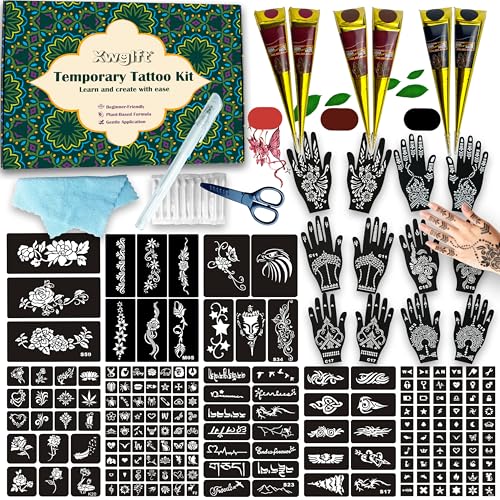
🎁 【PERFECT GIFT FOR TEEN GIRLS】 Beautifully packaged in an organized gift box with an easy-to-follow user manual included! This temporary tattoo kit makes the ultimate birthday, holiday, and Christmas gift for teen girls. Sparks endless creative fun for birthdays, sleepovers, and family DIY nights.
What a Cross Tattoo Means to Different People
Why do millions choose to etch a cross onto their skin? You might seek meaning beyond religious doctrine. You reclaim the symbol after rejecting organized faith. You honor a loved one’s memory without professing belief. You wear it as cultural shorthand—your grandmother’s pendant, your hometown’s architecture, your language’s idioms.
You don’t need pew or prayer for the shape to resonate. You find the vertical and horizontal lines aesthetically balanced. You appreciate how a simple form carries weight without screaming for attention.
You’ve seen the cross on punk jackets and high-fashion runways. You recognize its migration across subcultures. You add your own elements—roses, thorns, names—to make it yours.
You participate in a visual conversation older than any single interpretation. You contribute to its evolving significance.
Recommended Products
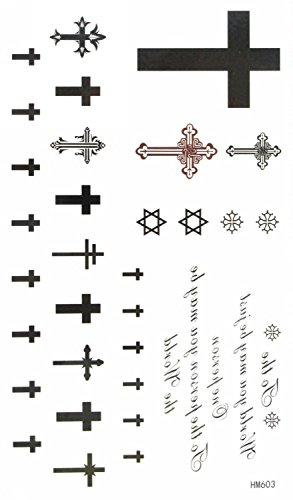
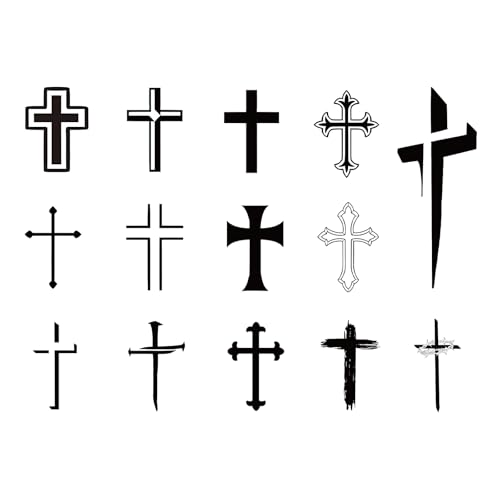
11 FAITH CROSS DESIGNS: Features a comprehensive variety of eleven unique religious symbols, including clean traditional crucifixes, bold modern abstract shapes, rugged brushstroke effects, and thorns-wrapped variants.

LARGE SIZE AND MORE QUANY -- Total 77 Sheets Temporary Tattoo Stickers for Men and Women Adults Including 17 Sheets Large Size (7.48*3.74 inches) and 60 Sheets Small Size (3.85*2.28 inches), The large size can cover more arm area and the small size can show your personality
The Religious Roots: Faith, Sacrifice, and Spiritual Connection
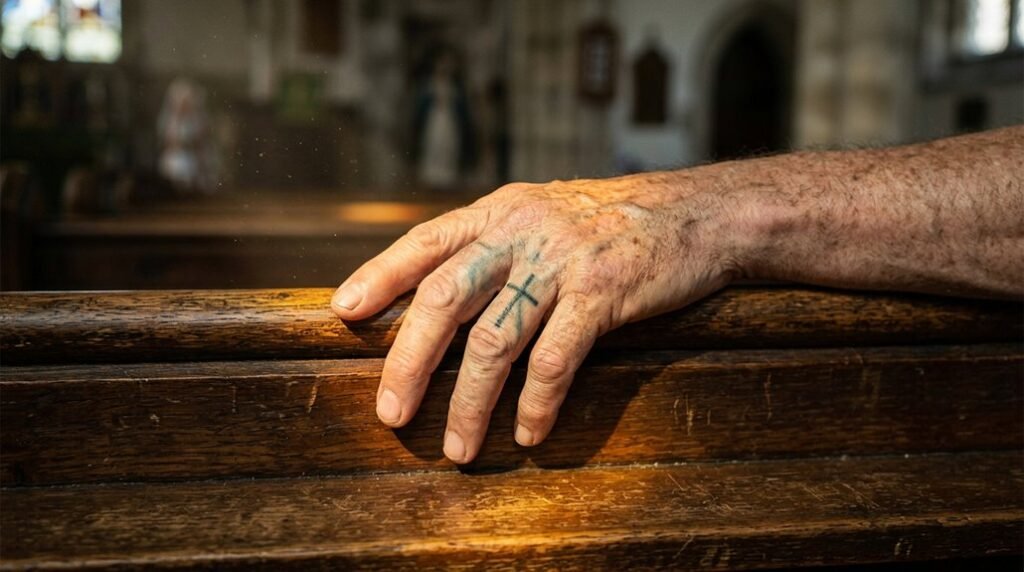
When you trace the cross to its origins, you encounter a symbol rooted in sacrifice and redemption. You recognize it as the instrument of Christ’s crucifixion, and you grasp why believers have revered it for millennia.
You wear this tattoo as a declaration of faith, a permanent reminder of divine love. You mark your skin with the same symbol that early Christians risked death to display. You connect yourself to a tradition of martyrs and saints who found meaning in suffering.
Your cross anchors you during doubt. It speaks of resurrection, not merely death. You find spiritual connection in its intersecting lines—where the horizontal meets the vertical, where humanity touches divinity. You’re drawn to its paradox: an instrument of torture transformed into hope.
Recommended Products


CONTENTS: Pack includes 9 modern cross temporary tattoos in 3 distinct styles - geometric pattern, brushstroke, and tree of life designs
![Celtic Designs Coloring Book for Adults: 200 Celtic Knots, Crosses and Patterns to Color for Stress Relief and Meditation [Art Therapy Coloring Book Series, Volume Three]](https://m.media-amazon.com/images/I/51YglIHCaWL._SL500_.jpg)
Secular Meanings: Grief, Hope, and Personal Transformation

How do you carry loss without letting it define you? You mark it. A cross tattoo becomes your memorial, your private language of grief etched into skin. You transform absence into presence, keeping someone close without clinging.
You don’t need faith to seek hope. You inscribe resilience on your body after surviving what broke you. The cross represents your pivot point—the moment you chose forward over backward, rebuilt over surrendered.
You reclaim symbols. What once belonged to religion becomes your vocabulary of personal transformation. You mark sobriety dates, survival anniversaries, or the day you finally walked away. Your skin documents metamorphosis.
You decide what redemption means. The cross stands for your second chance, your third, your fourth. You wear your evolution visibly, permanently, unapologetically.
Recommended Products

★【5 Sheets! Tattoo Sticker 】:Black and looks like real tattoo sticker

【 575+ Fun Assorted Tattoo Stencils 】-The ChurlChurl tattoo stencils collection includes 575 high quality stencils with multiple themes. enjoy cute trendy tattoo stencil designs like butterflies, words, flowers, symbols, totem, Egypt style patterns and more.

▶ Henna Tattoo Kit: 16 sheets tattoo stencils. airbrush tattoo stencils suitable for tattoo lovers. Experience the effects of tattooing without the pain of tattooing.
Which Cross Style Matches Your Story?
Where does your story live—in the rough edges of a wooden cross, the stark geometry of a Latin cross, or the intricate knots of Celtic tradition?
You choose the wooden cross when you embrace raw authenticity and unpolished faith. You select the Latin cross when you value clarity, balance, and timeless devotion. You lean toward the Celtic cross when your roots run deep and you honor interconnected journeys.
You might prefer the Gothic cross for its dramatic strength or the Russian Orthodox cross for its layered complexity. You could gravitate toward the simple Tau cross for minimalist conviction.
Each style carries distinct visual weight. You match your cross to your lived experience—not borrowed meaning, but personal truth rendered in ink. Your selection speaks before you do.
Recommended Products

【TEMPORARY TATTOO PACK FOR MAN WOMEN ADULTS KIDS】Each Size is about 11.4 x 21 cm / 4.48 x 8.26 inch. Contains 8 sheets temporary tattoo paper stickers which are printed with non-toxic ink.

【73 SHEETS Jesus Temporary Tattoos For Men Women Adults】Package Includes 12 Sheets Realistic Waterproof Tribal Half Sleeve Temporary Tattoos For Adults and 61 Sheets Cute Tiny Small Temporary Tattoos For Kids Boys Girls Teens 3D Gothic Tatoos Universe Planets Star Moon Spider Web Cross Birds Scorpion Bat Ghost Elephant Flower Floral Pirate Compass Anchor Butterfly Skull Skeleton Maori Totem Wolf Tiger Lion Dragon Eagle Owl Bear Crown Mountain Sea Wave Snake Tree infinity Letter Words Quotes Abstract ECG Feather.
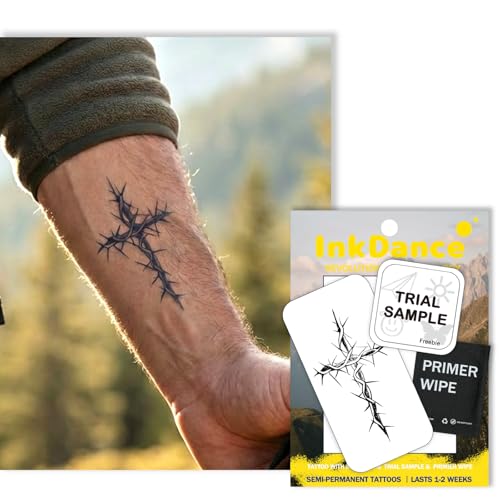
Innovative Skin-Sync Technology: We don't just sit on the skin; we interact with it. By reacting organically with naturally occurring proteins in your skin's outermost layer (stratum corneum), our plant-based formula magically transforms from a transparent guide into a rich, ultra-realistic navy-black. It looks exactly like a healed, permanent tattoo—without the needles or depth.
Where You Put It: How Placement Shapes the Message
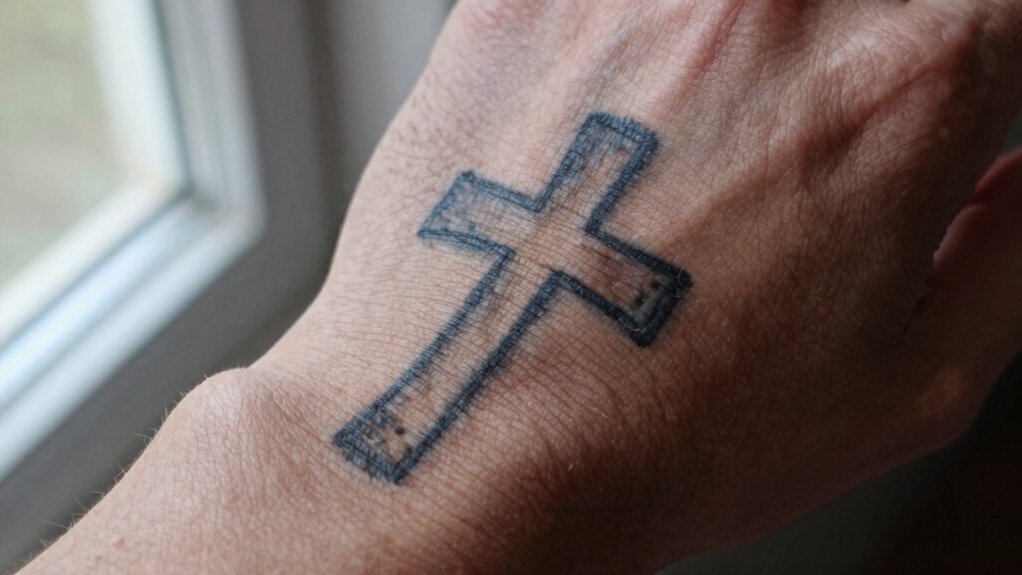
A cross behind your ear whispers differently than one across your chest, doesn’t it? You choose visibility, and you choose who sees your faith. You ink your wrist, and you display conviction openly—every handshake, every gesture speaks. You hide it on your ribcage, and you keep meaning private, personal, close to your heartbeat.
You place it on your forearm, and you invite conversation. You choose your shoulder blade, and you carry weight without announcement. You mark your neck, and you refuse to shrink your beliefs. You select your ankle, and you walk with quiet purpose.
Placement shapes interpretation. You’re not just choosing skin; you’re choosing audience, tone, and intimacy. Where you put it determines how loudly your cross speaks.
Recommended Products

RICH TEMPORARY TATTOO KIT - Contains rich tattoos pattern templates (126 designs),6 tattoo inks in 2 colors (black and brown),4 disposable gloves 1 pack of cleaning supplies,allowing you to easily create unique personalized tattoos

Complete Temporary Tattoo Set:This kit includes 2 brown tattoo pastes, 1 cherry-red paste, 100pcs reusable tattoo stencils, and 1 outline pen—everything you need to easily create realistic body art, faux tattoos, or festival-style skin painting at home.

Deluxe All-in-One Tattoo Kit:Includes 20 reusable tattoo stencils, 14 tattoo paste cones in 10 vibrant colors, tattoo paste mixing bottles, cotton swabs, and disposable gloves—everything needed for advanced DIY body art and color creativity.
Celtic, Gothic, and Tribal: Cultural Styles Explained
Once you’ve chosen where your cross lives, you face another decision: what it looks like.
You’ll encounter three dominant cultural styles. Celtic crosses wrap your skin in interlaced knots and circular halos, evoking Irish heritage and eternal spiritual cycles. You carry centuries of monastic tradition when you choose this path.
Gothic crosses demand attention through sharp angles, elongated arms, and ornate baroque flourishes. You’re embracing medieval European aesthetics—mortality, mystery, and dramatic faith.
Tribal crosses strip away ornament for bold black lines and geometric precision. You’re connecting to Polynesian and indigenous traditions where patterns signify rank, protection, and belonging. Modern interpretations let you personalize these ancient visual languages.
Each style speaks differently. You must ask: whose voices echo through your skin?
Recommended Products

✝️ Empower Your Faith - Find inspiration and comfort with our Christian imagrey. Each tattoo serves as a personal reminder of God's presence to strengthen your faith journey.

【Develops Fully in 48H】Your cool cross christian tattoos for men will initially appear silver before naturally darkening to a rich finish within 48 hours. For optimal results, avoid contact with bare skin (particularly the face) and cover the area with clothing during sleep to prevent transfer.

Unique Design Christian Temporary Tattoo: Yazhiji Christian tattoos serve as a modern testament to timeless faith-based imagery, Styles like blackwork, traditional, and black and grey realism are particularly suited to this tattoo idea, emphasizing the solemnity and importance of the symbols, Common placements include the forearm, chest, and back, areas large enough to accommodate the intricate details of biblical scenes or the solemnity of crosses.
Choosing Your Cross: A Framework for Meaningful Decisions

Why settle for decoration when your cross can carry real weight? You start by asking yourself what you’re actually marking—grief, faith, transformation, or heritage. This anchors every choice that follows.
You match style to substance. A simple Latin cross suits quiet devotion; intricate Celtic knots honor ancestry; stark geometric lines express modern resilience. You consider placement deliberately—visible wrists proclaim openly, hidden ribs protect intimacy.
You research artists who specialize in your chosen tradition. You bring reference images, but you collaborate rather than copy. You discuss line weight, negative space, and how the design ages on skin.
You sit with the decision. You don’t rush permanence. When you finally commit, you’ve built something that speaks your specific truth—no borrowed meaning, no empty symbol.
Recommended Products

Durable and Comfort - Oriented Design: This men's workout training tank top is stitched neatly at the neck, sides, and hem. The solid stitching prevents curling, reduces chafing, and ensures long - lasting durability. Its loose style offers great freedom during intense workouts, whether you're doing high - intensity interval training or powerlifting


Conclusion
You carry your story on your skin, and a cross tattoo lets you wear what matters most. Whether you’re marking faith, loss, or transformation, your choice of style and placement shapes the message. Trust your instincts, research traditions that resonate, and find an artist who understands your vision. In the end, the meaning isn’t fixed—it’s yours to define, evolve, and carry forward.
Recommended Products

171 PCS Different Styles Halloween Tattoos Stencil: Our hallloween temporary tattoo stencils sheet comes with 171 different hallloween design such as pumpkin lamps, black cats, skulls, wizards, witch hats, ghoost, witch, Spider Web, Skeleton more halloween Style in 12 sheets A5 size. Perfect for couple halloween party and decoration.
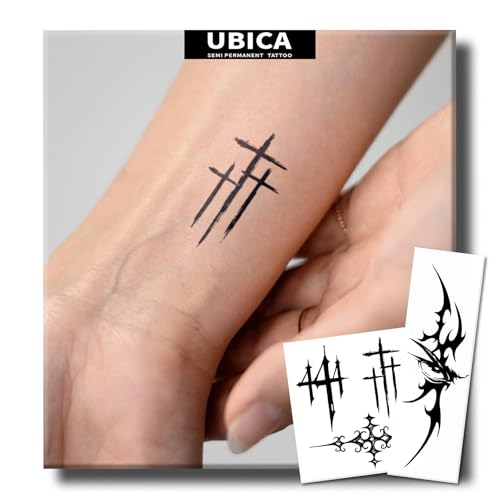
【Unique & Artistic Designs】All UBICA tattoo designs are uniquely created by our talented in-house designers. With a wide range of styles—from bold to minimalist—there’s something for everyone. Each temporary tattoo stickers is a work of art, thoughtfully crafted to meet the highest standards of creativity and quality.

72 Unique Reusable Christian Faith Painting Templates for Spiritual Crafting:Unlock your creativity with 72 different stencil designs featuring classic symbols of Christian faith. The collection includes crosses in various styles (solid, outlined, ornate), biblical phrases (e.g., "Trust in the Lord," "Amazing Grace," "King of Kings"), doves, Bibles, praying hands, angels, churches, candles, olive branches, and inspirational words like "Faith," "Hope," and "Love." This wide variety provides endless inspiration for creating meaningful faith-based DIY projects, cards, gifts, and home decor. (Keywords: Christian stencils, 72 pack faith stencils, reusable Bible stencils, Christian DIY)