
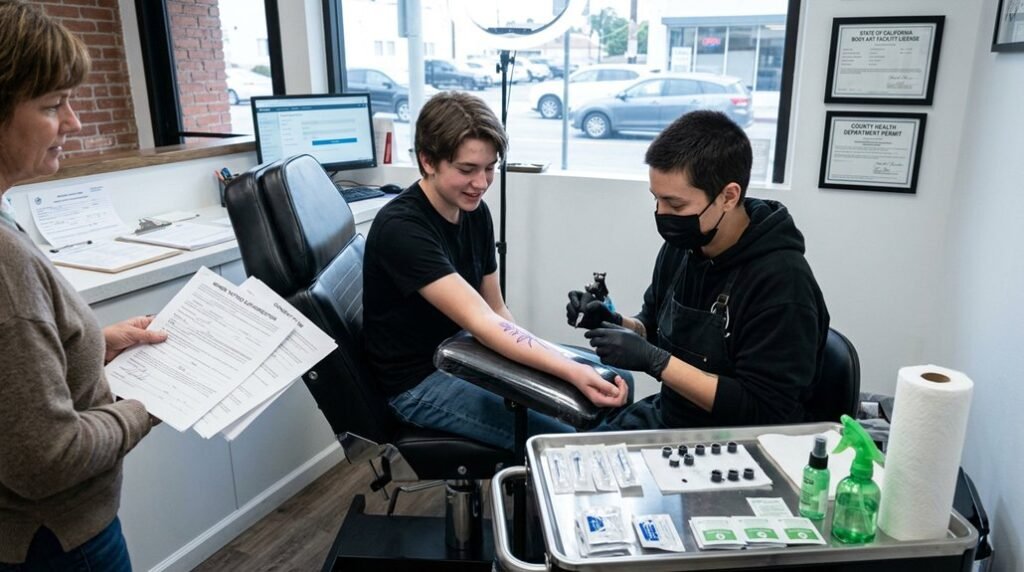
You walk into a tattoo shop with your parent, confident you’ve got everything sorted. Your state allows minors with consent, and you’ve brought the form. But the artist might still refuse you. Before you make the trip, you’ll want to know exactly what separates a “yes” from a “no.”
Key Takeaways
- State laws vary widely: Some states ban minor tattoos entirely; others permit them with parental consent under specific conditions.
- Parental consent requires documentation: Most shops need a signed, notarized form plus the parent’s valid government-issued photo ID.
- Shops can refuse even with consent: Reputable studios often impose stricter age policies than state law requires.
- Illegal tattooing carries serious penalties: Violations may result in fines, jail time, license revocation, or civil lawsuits.
- Call ahead before visiting: Requirements differ by location; confirm needed documents and shop-specific rules in advance.
Recommended Products

All-In-One 75-Pack – Includes 25 consent forms, 25 intake sheets, and 25 aftercare instruction pages—everything needed for a full session workflow.

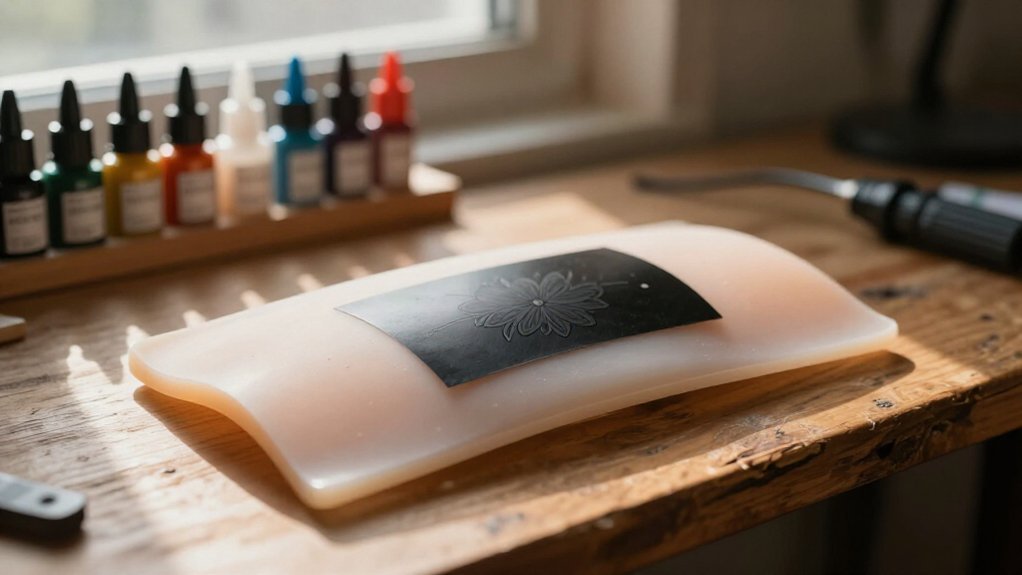
Improve Tattoo Skills: These soft tattoo practice skins can be curved to mimic real skin, helping you learn to tattoo contoured body parts. They are ideal for beginners practicing tattoos, eyebrows, eyeliner, and lips
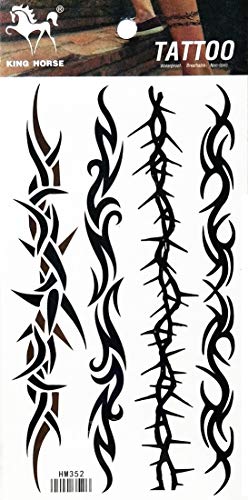
Waterproof Tattoos: The tattoos are waterproof and can be used for temporary body art.
Where Can Minors Get Tattoos With Parental Consent?
Where exactly can you take a minor to get inked? You’ll find that laws vary dramatically by location. Some states ban all tattooing of minors regardless of parental consent, while others permit it under specific conditions. You must research your specific state regulations before booking any appointment.
Professional tattoo shops in permissive states often maintain their own policies stricter than local laws require. You’ll encounter establishments that refuse minors entirely, even with parental presence. Others accept clients aged sixteen or seventeen with proper supervision.
You should avoid unlicensed artists operating from homes or informal settings despite apparent convenience or lower costs. These environments present serious health risks including infections and bloodborne pathogen transmission. Reputable shops maintain sterile equipment, autoclave sterilization, and licensed practitioners who follow established safety protocols.
Recommended Products
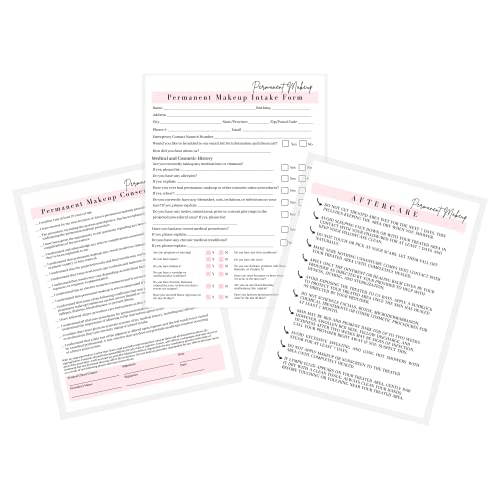
75 TOTAL PAGES consisting of 25 consent forms, 25 client intake forms, 25 aftercare pages.
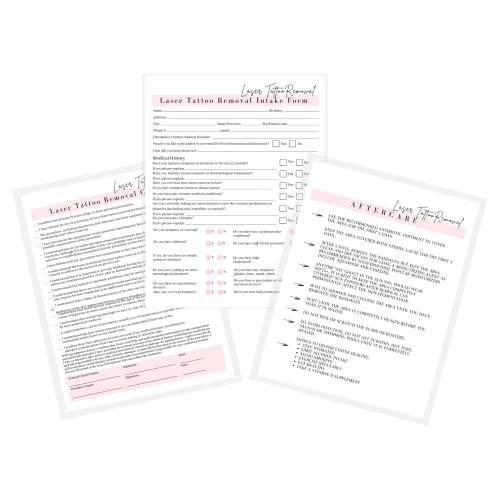
75 TOTAL PAGES consisting of 25 consent forms, 25 client intake forms, 25 aftercare pages.

100 TOTAL PAGES consisting of 25 consent forms, 25 client intake forms, 25 aftercare pages, 25 consultation forms.
What Documentation Counts as Legal Parental Consent?
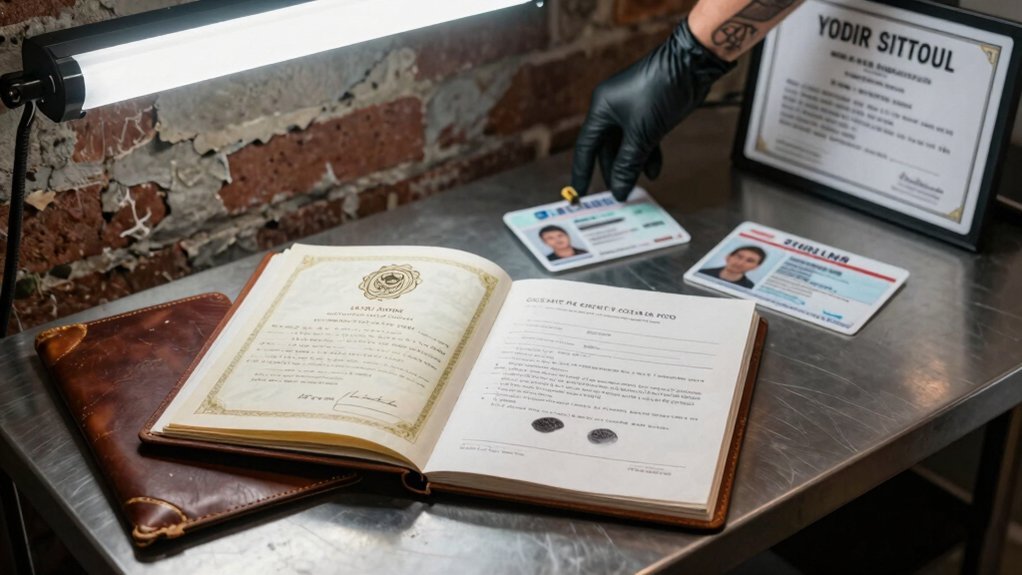
Once you’ve found a shop that accepts minors, you’ll need proper documentation proving parental consent. Most shops require a signed, notarized consent form that specifically authorizes the tattoo procedure. You’ll want to check your state’s requirements, as some mandate specific forms while others accept general notarized statements.
Bring the original document—copies often won’t suffice. Some jurisdictions require the consent form to include exact details about the tattoo’s location, size, and design. You’ll also need your parent’s government-issued photo ID attached to or referenced in the documentation.
If your parents are divorced, you’ll need to verify which parent holds legal custody, as many shops require consent from the custodial parent specifically. Courts sometimes issue written guardianship documents that substitute for parental consent when applicable.
Recommended Products

【Adjustable Temperature & Time】The temperature and cleaning time can be adjusted as required. The time can be adjusted from 0-60 minutes, the temperature can be adjusted from 50°C to 220°C/122℉-428℉, and the machine will automatically shut down when it reaches the maximum temperature

Reliable Sterilization – Designed for use as sterilization pouches, autoclave pouches, and steam sterilizer bags for dental, medical, and salon tools.

Characteristic of magnetic induction switch system.
How to Prove Your Parent’s Identity at the Shop
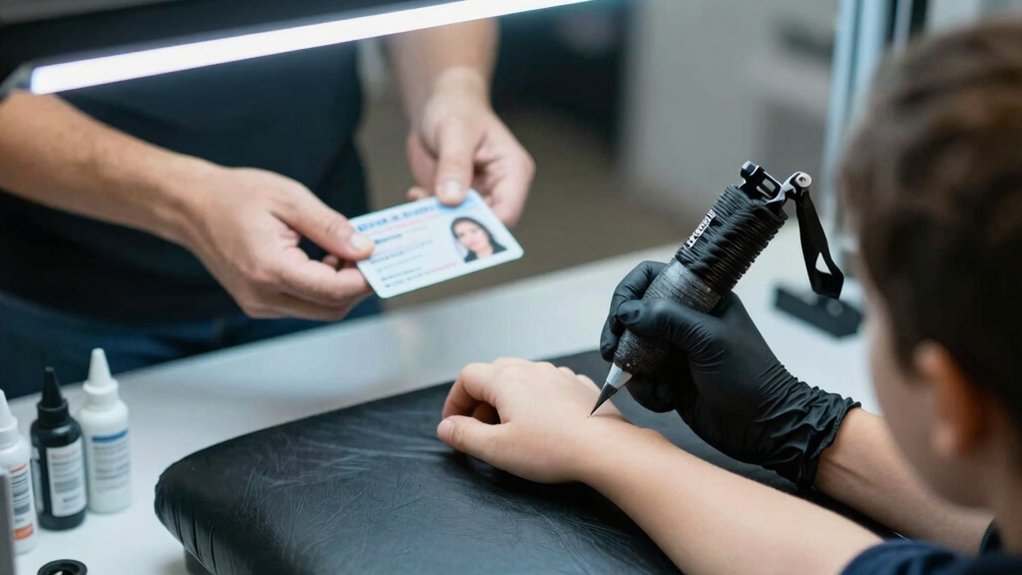
Why would a shop turn you away after you’ve secured notarized consent? They’ll reject you if you can’t prove your parent’s identity. You must bring valid government-issued photo ID for your parent, matching the name on the consent form exactly.
Bring your parent’s driver’s license or passport. Bring a copy? No. You need the original document. The shopkeeper compares the photo to the person standing before them. No photo ID means no tattoo, even with perfect paperwork.
Double-check the expiration date. An expired license won’t work. Ensure the name matches the consent form letter-for-letter. Middle initial versus full middle name? That discrepancy kills your chances.
Call ahead. Ask what specific ID they accept. Some shops demand two forms. Don’t assume. Confirm, then gather exactly what they require.
Recommended Products

Tattoos Set – Personalized Fun for Any Occasion – Custom face tattoos made from your photo, perfect for birthdays, weddings, bachelor parties, Halloween, and festivals. These fake tattoos face and customized tattoos temporary add instant fun.

12-Set Tattoos – Personalized Fun for Any Occasion – Custom face tattoos made from your photo, perfect for birthdays, weddings, bachelor parties, Halloween, and festivals. These fake tattoos face and customized tattoos temporary add instant fun.

🎉 12- Set Tattoos - Personalized Fun for Any Occasion – Custom face tattoos with your photo perfect for birthdays, weddings, bachelor parties, Halloween, festivals ....
Why Shops Might Still Refuse With Valid Consent
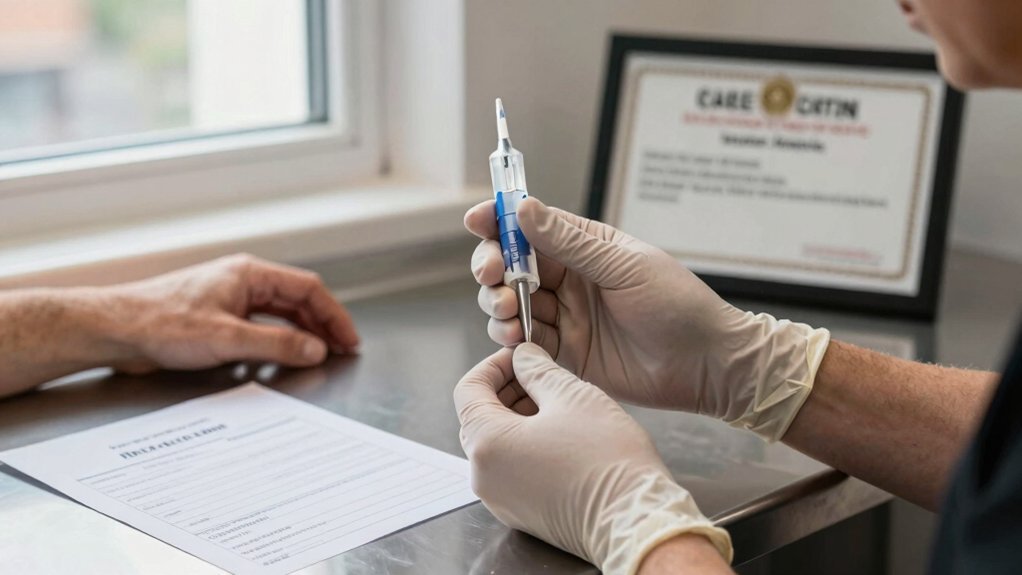
Even with flawless paperwork and your parent’s ID in hand, the shop can still send you home empty-handed. Many reputable artists maintain personal policies against tattooing minors regardless of parental consent. They’ll prioritize their professional reputation and ethical standards over your business.
You’ll encounter artists who believe minors lack the maturity for permanent body art decisions. They’ll worry you’ll regret the choice or that your parents might pressure you into something unwanted. Some studios prohibit minor tattoos entirely to avoid future disputes or liability concerns.
Shop owners can set stricter rules than state law requires. They’ll enforce age minimums above the legal threshold or ban certain tattoo styles and placements on anyone under eighteen. When you call ahead, ask specifically about minor policies. You’ll save yourself a disappointing trip if the studio won’t budge.
Recommended Products
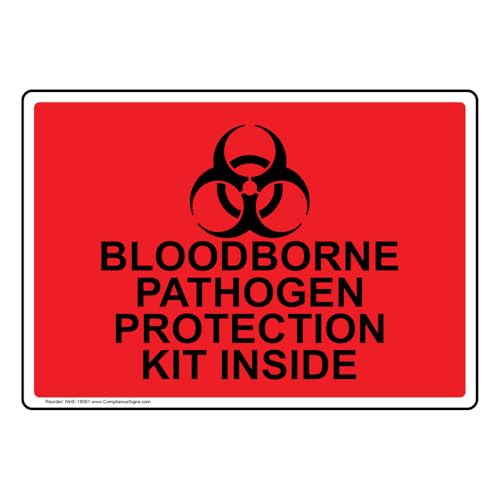
4-pack of permanent labels makes your Spills message clear with English text on a red backgound


Bloodborne pathogens sign includes critical information on whereabouts of BBP kit.
What Happens to Artists Who Tattoo Minors Illegally?
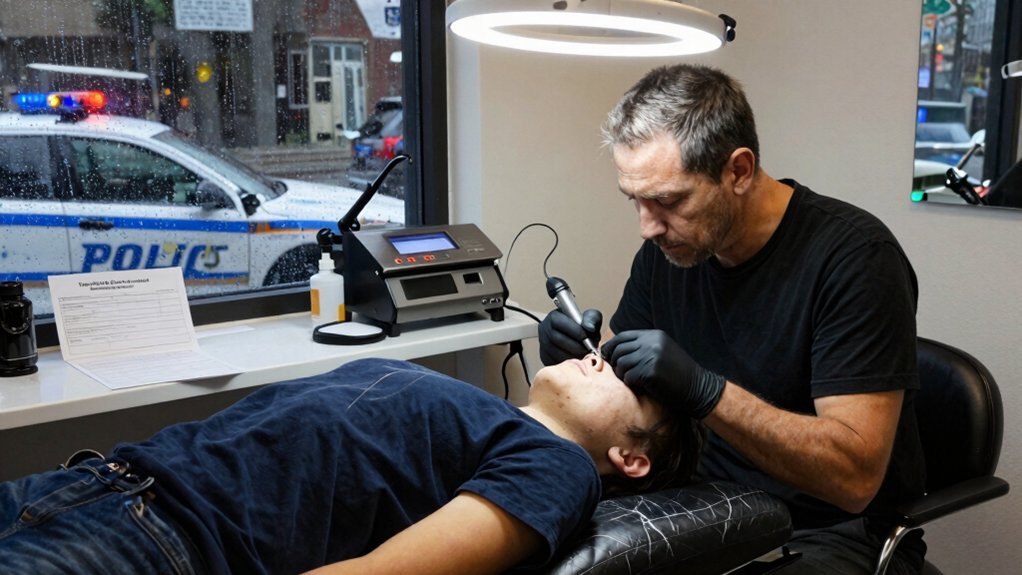
How harshly does the law punish artists who ignore age restrictions? You’ll face consequences that vary by state, but they’re never light. Most jurisdictions classify illegal tattooing of minors as a misdemeanor, costing you fines between $500 and $5,000. You’re risking jail time too—often up to one year behind bars. Your professional license hangs in the balance; authorities can revoke it permanently. You might also face civil lawsuits from parents seeking damages.
Some states treat repeat offenses as felonies, exposing you to harsher penalties. Beyond legal trouble, your reputation crumbles. Clients abandon you, colleagues shun you, and finding future work in the industry becomes nearly impossible. Insurance companies drop your coverage, leaving you financially exposed. Simply put, you’re gambling your entire career for one customer’s payment.
How Piercing Rules Compare to Tattoo Rules for Minors
Where exactly do piercing laws diverge from tattoo regulations for minors? You’ll find that piercing rules tend to be more lenient across most states. While you’re likely facing blanket tattoo prohibitions for minors—even with parental consent—earlobe piercings often receive exceptions. You can legally pierce a minor’s ears in many jurisdictions without any paperwork.
However, you shouldn’t assume all piercings follow this pattern. You might encounter stricter age floors for tongue, genital, or nipple piercings compared to standard ear work. Some states classify these as tattoo-equivalent procedures, demanding you’re eighteen regardless of parental involvement.
You’ll also notice enforcement differences. Tattoo violations typically trigger harsher penalties, whereas piercing infractions sometimes result in warnings or lesser fines. You must research your specific location, as these distinctions create a patchwork system where piercing availability frequently exceeds tattoo access for minors.
Recommended Products

75 TOTAL PAGES consisting of 25 consent forms, 25 client intake forms, 25 aftercare pages.

Generous Quantity: 5 sheets x 5 = 25 temporary tattoos

75 TOTAL PAGES consisting of 25 client intake forms, 25 aftercare pages.
What Minimum Ages Apply Even With Parental OK?
Piercing laws might offer more flexibility, but tattoo regulations draw harder lines. You’ll encounter varying minimum ages depending on which state you’re in, and parental consent won’t always bridge the gap. Some states enforce strict age floors—sixteen or even eighteen—regardless of parental approval. You can’t assume your parents’ signature grants universal access.
You’ll need to research your specific jurisdiction before booking any consultation. Texas requires parental consent for minors sixteen and up, but many reputable shops set eighteen as their firm cutoff regardless. California won’t let anyone under eighteen get tattooed, period—you’ll wait regardless of parental support. Louisiana permits fourteen-year-olds with proper documentation, while you’ll find Iowa completely prohibits tattooing minors without exception. Check local statutes directly; assumptions waste your time and risk legal consequences for the artist.
Recommended Products
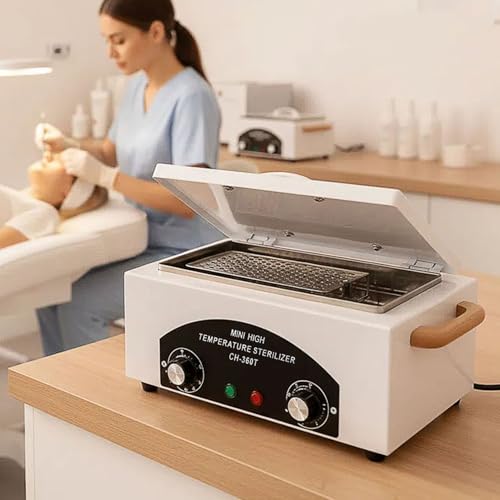
Remove protective film: It is important to note that several internal light blue protective films must be removed before use, otherwise there will be a smell of plastic...
What Minors Need to Bring to a Tattoo Appointment
Why walk into a shop unprepared when you’ll need more than just parental good intentions? You’ll pack specific documents or you’ll reschedule. First, bring your government-issued photo ID—your driver’s license, passport, or state ID proves your age. Your parent or legal guardian brings their matching ID too. Don’t forget your birth certificate; it establishes the relationship between you both when surnames differ. Some shops demand court custody papers if guardianship isn’t obvious. You’ll also carry proof of address for both parties. Call ahead—you’ll confirm each requirement varies by location and state law. Arrive with clean skin, wear comfortable clothing accessing the tattoo area, and bring payment methods the shop accepts. You’ll save everyone time and frustration when you’ve packed properly.
Recommended Products
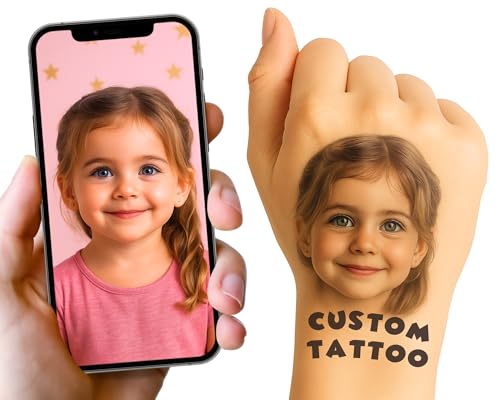
🎉 Die Cut- Set Tattoos - Personalized Fun for Any Occasion – Custom face tattoos with your photo perfect for birthdays, weddings, bachelor parties, Halloween, festivals...
Conclusion
You’ve got the facts, but local laws and shop policies ultimately decide if you’ll get inked. Call ahead, gather proper documentation, and respect that artists can refuse even with parental consent. Protecting your safety and their reputation matters more than your design. Research thoroughly before booking.
Recommended Products

Bloodborne: 1-3 boxed set (graphic novel)

HIGHLY VISIBLE BOTH DAY AND NIGHT - Combination of aluminum plate and high reflective film .

Workplace Safety Poster: Ensure optimal safety at the workplace with health protocols in place. Help personnel and visitors stay protected by keeping them aware of the best bloodborne infection guidelines