
You’ll walk into a shop thinking you’re prepared, but age requirements aren’t as straightforward as you’d expect. Some states shut you down completely until you’re 18, while others quietly let parents sign away permission years earlier. The rules shift based on where you’re standing, and misjudging them costs more than a wasted trip. Before you book that appointment, you need to know exactly which laws apply to you.
Key Takeaways
- Most U.S. states require individuals to be at least 18 years old to get tattooed legally.
- Eighteen states enforce absolute minimum age bars with absolutely no exceptions permitted.
- Some states allow minors to obtain tattoos with verified parental consent and documentation.
- Strict states like California and Massachusetts prohibit all tattooing for anyone under eighteen.
- Valid government-issued photo identification is mandatory before any tattoo artist begins inking.
Recommended Products

Fun Face Temporary Tattoos INCLUDES a set of 12 tattoos that are a great party favor addition to any graduation, retirement, or birthday party.

Tattoos Set – Personalized Fun for Any Occasion – Custom face tattoos made from your photo, perfect for birthdays, weddings, bachelor parties, Halloween, and festivals. These fake tattoos face and customized tattoos temporary add instant fun.

Creative & Fun Custom Temporary Tattoos - Depending on the style you select, and click "Customize Now" to upload your image. Any graphics can be customized a tattoo. Face tattoo is suggested, like couple face, single face, dog face and so on.
How Old to Get a Tattoo in Every U.S. State
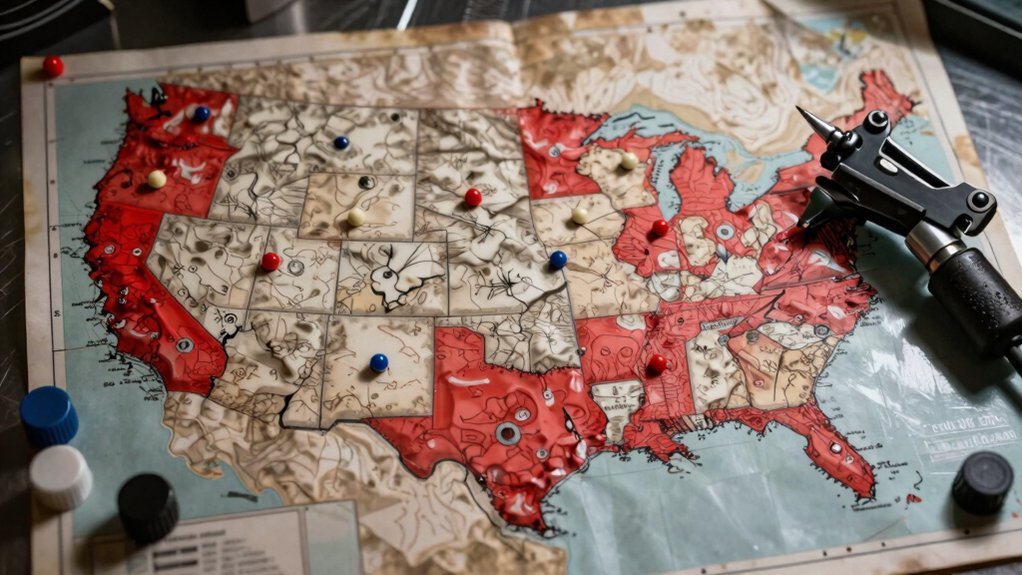
What’s the minimum age for getting inked? You’ll find that most states set it at 18, with no exceptions. You can’t walk into a licensed parlor in California, Texas, or New York if you’re younger—artists will turn you away at the door.
You might assume there’s wiggle room, but you’d be wrong. States like Florida and Illinois enforce this strictly; tattooing minors constitutes a misdemeanor, punishable by fines or license revocation. You won’t find loopholes in Ohio or Michigan either.
However, you’ve got options if you’re underage. You can wait, or you can research states with parental consent provisions—which this section won’t cover. For now, understand that 18 states operate under absolute bars. You must present government-issued identification proving your age before any artist picks up a needle.
Recommended Products

My First Tattoo 18 Years Old Adult Body Ink Art Men Women. Cool design for any man or woman who finally got their first tattoo. Lightweight, Classic fit, Double-needle sleeve...
States Where Parent Consent Lowers the Tattoo Age
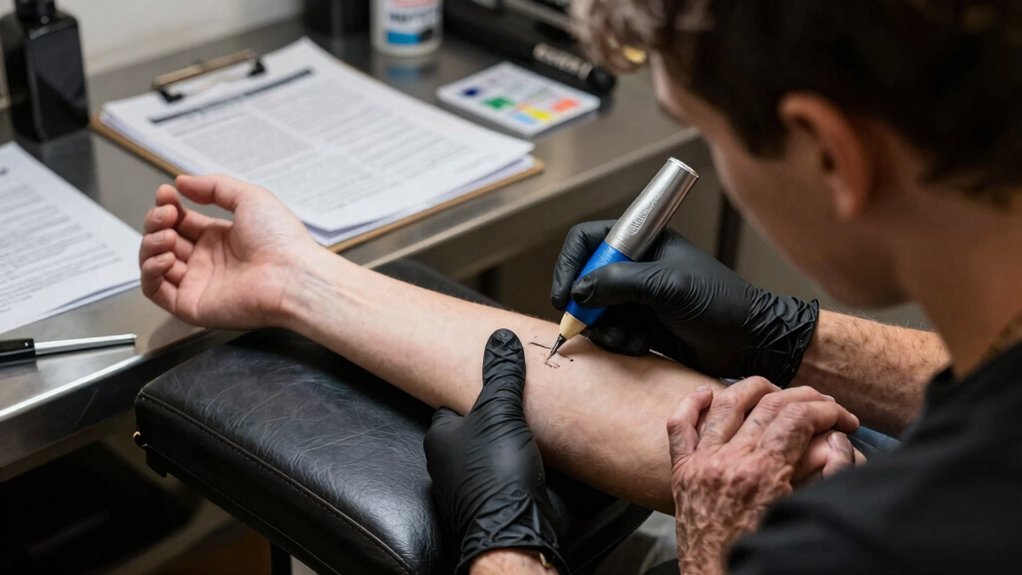
If you’re under eighteen, not every state shuts you out. Several states let you get tattooed younger when a parent consents. You’ll find this option in places like Florida, where sixteen-year-olds can get tattoos with parental permission.
Texas allows minors who’re at least eighteen—no, wait, that state’s strict. Let me correct: Arizona permits you at sixteen with a parent’s okay.
Alabama drops the age to fourteen with proper consent.
Colorado and Delaware both set the bar at eighteen normally, but with parental involvement, exceptions emerge.
You should check whether your state demands the parent present during the procedure or simply sign paperwork beforehand. Don’t assume consent rules apply uniformly—some states require notarized forms, while others need the guardian physically there. Always verify current local regulations before booking that appointment.
Recommended Products

All-In-One 75-Pack – Includes 25 consent forms, 25 intake sheets, and 25 aftercare instruction pages—everything needed for a full session workflow.

Improve Tattoo Skills: These soft tattoo practice skins can be curved to mimic real skin, helping you learn to tattoo contoured body parts. They are ideal for beginners practicing tattoos, eyebrows, eyeliner, and lips
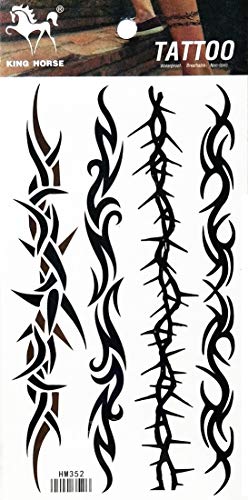
Waterproof Tattoos: The tattoos are waterproof and can be used for temporary body art.
States With No Exceptions: Strict Tattoo Age Laws
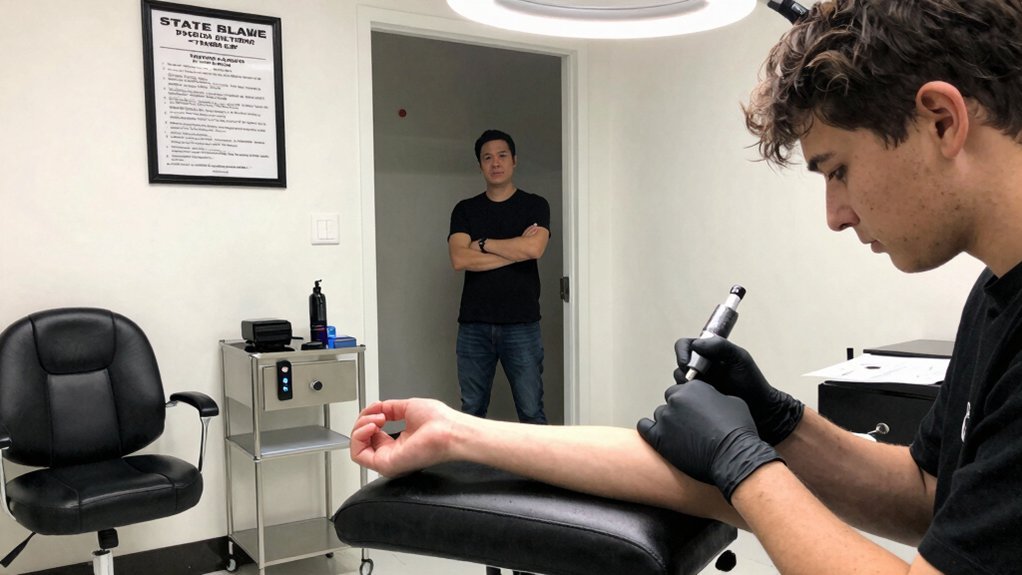
Where can you turn if you’re under eighteen and lack parental consent? Nowhere—at least not legally. Several states enforce absolute minimum age requirements of eighteen for all tattoos, period. You’ll find zero wiggle room in places like California, Massachusetts, Nevada, Washington, and Maine. No parent can sign you through. No judicial loophole exists.
In these states, lawmakers have drawn hard lines. You can’t argue artistic necessity or maturity. Shops face severe penalties if they ink you, including hefty fines, license revocation, even criminal charges. As a minor, you don’t just risk shop trouble—you won’t find reputable artists willing to jeopardize their careers.
You simply wait, or you cross state lines into more permissive territory. Those are your options. Time becomes your only path to legal body art.
Recommended Products

All-In-One Complete Tattoo Kit - No need to purchase extra accessories; This tattoo gun kit includes everything you need to start tattooing: 1 pink tattoo pen, 2 wireless power supplies, 10 bottles of 5ml tattoo ink (vibrant colors for diverse designs), 20 tattoo cartridge needles, 30ml blue soap, 30ml transfer gel, 50ml foaming bottle, 3 transfer papers, 3 practice skins, 4 tattoo bibs, and 40 ink cups; Suitable for beginners to practice and professional artists to work

There are 4 Pro tattoo machine gus for liner and shader

Solong rotary tattoo pen is CNC-Machined by aircraft Aluminium alloy and then anodized finish.The motor is 10w made in Taiwan,low noise,strong and stable to work, no hot for long time working
How Tattoo Shops Legally Check Your Age
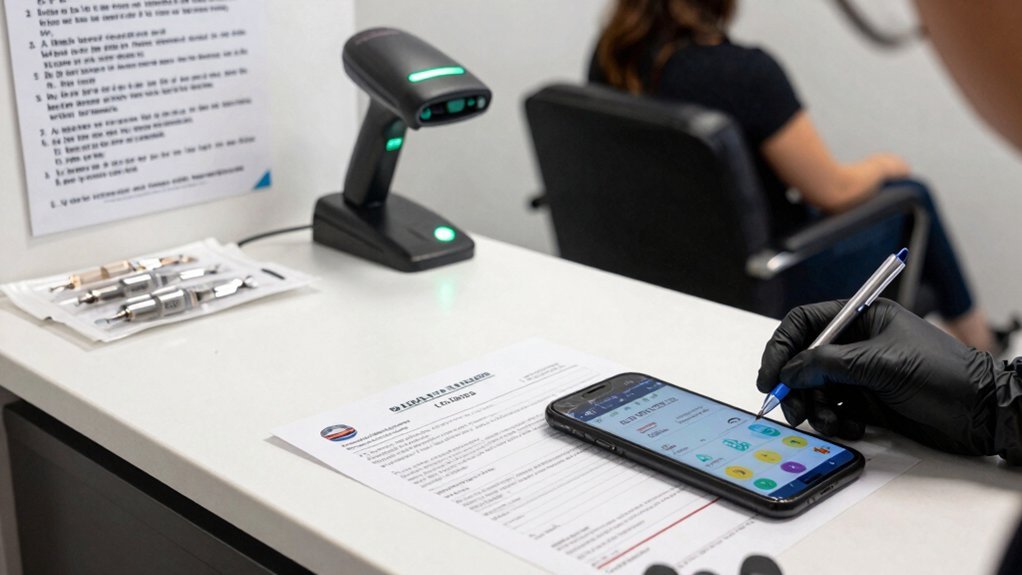
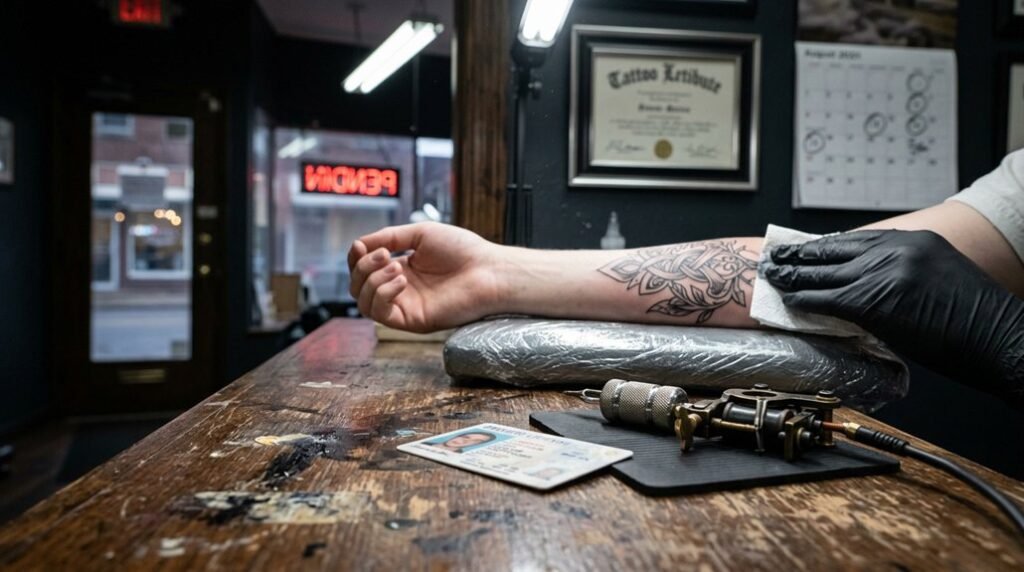
How do shops actually stop underage clients? You’ll need to prove your age before anyone starts inking. Most shops require government-issued photo identification—your driver’s license, passport, or state ID card works. They’ll check the expiration date and photo match carefully. Some shops photocopy your ID for their records, creating a paper trail that protects both you and the artist.
Don’t expect sympathy if you forgot your wallet. Reputable shops turn away clients without proper documentation, no exceptions. Some even use electronic ID scanners to detect fakes. Parental consent doesn’t bypass ID requirements in most states—shops still verify everyone’s age regardless of permission slips.
You’ll sign consent forms attesting your age, sometimes under video surveillance. These verification steps aren’t excessive; they’re legal necessities. Shops refusing to compromise protect themselves and maintain industry standards you’ll appreciate when seeking quality work.
Recommended Products

【VARIETY OF CUSTOMIZATION】This custom temporary tattoo is available in a variety of styles.To create your own temporary tattoo, you can choose photos, faces, names, logos, text and other elements.
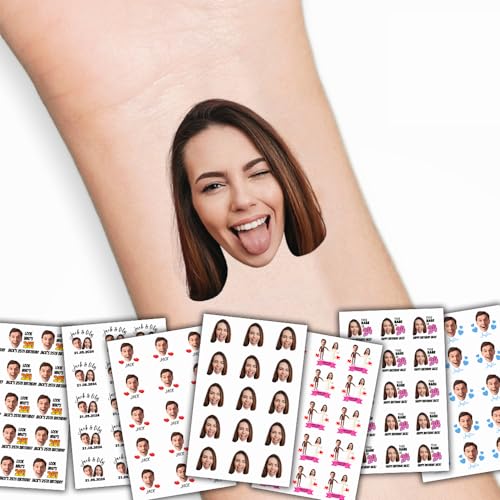
【Custom Fun Face Temporary Tattoos】:Depending on the style you select, please provide the required custom info or photo for your tattoos (name, text, age, etc.); Please upload the 1 high resolution photo and we’ll take care of cropping out their face ourselves.

12-Set Tattoos – Personalized Fun for Any Occasion – Custom face tattoos made from your photo, perfect for birthdays, weddings, bachelor parties, Halloween, and festivals. These fake tattoos face and customized tattoos temporary add instant fun.
Penalties for Artists Who Tattoo Minors Illegally
Because tattooing a minor violates the law in nearly every jurisdiction, you’ll face serious consequences if you ignore age verification requirements. State laws vary, but you’re typically looking at hefty fines ranging from hundreds to thousands of dollars per violation. You’ll also risk losing your professional license, effectively ending your career.
Some states classify illegal tattooing as a misdemeanor, while others treat it as a felony, especially for repeat offenses. You could serve jail time in severe cases. Civil lawsuits present another threat—parents of tattooed minors can sue you for damages, and courts rarely sympathize with artists who skipped proper ID checks.
Your reputation suffers too. Health departments maintain violation records, and social media spreads news of illegal work fast. You’ll struggle to find employment at reputable shops once you’ve demonstrated such poor judgment. Simply put, verifying age protects everyone involved.
Tattoo Age Laws Outside the U.S
When you cross international borders, you’ll encounter tattoo age laws that diverge sharply from American standards. You’ll find that most European countries set eighteen as the minimum age, though Spain permits tattoos at fourteen with parental consent. If you travel to the UK, you’ll need to wait until you’re eighteen—no exceptions exist under British law.
In Japan, you’ll face no national age limit, but most reputable shops require you to be twenty. You’ll discover that South Korea bans tattooing entirely for non-medical professionals, making legal tattoos difficult to obtain regardless of age.
If you visit Australia, you’ll follow regulations similar to America, with most states requiring you to be eighteen. You’ll notice Canada mirrors this standard, though some provinces allow sixteen with parental permission. Always research local laws before booking your appointment abroad.
What ID You’ll Need to Get Your First Tattoo
Wherever you book your appointment, you’ll need to prove your age with valid identification. You’ll typically bring a government-issued photo ID, such as your driver’s license, passport, or state identification card. Don’t bring photocopies or digital versions—artists must inspect the physical document.
You’ll want to check that your ID hasn’t expired, as shops won’t accept invalid credentials. If you’ve recently changed your name, you’ll need supporting documents linking your current identity to your legal records. Some states require tattoo shops to photocopy your ID for their files, so don’t be surprised when they ask.
Minors with parental consent need even more paperwork. You’ll bring your birth certificate plus your parent or guardian’s ID. They’ll sign consent forms in person—no exceptions. Double-check your shop’s specific requirements before you arrive, because requirements vary by location and showing up unprepared means you’ll reschedule.
Recommended Products
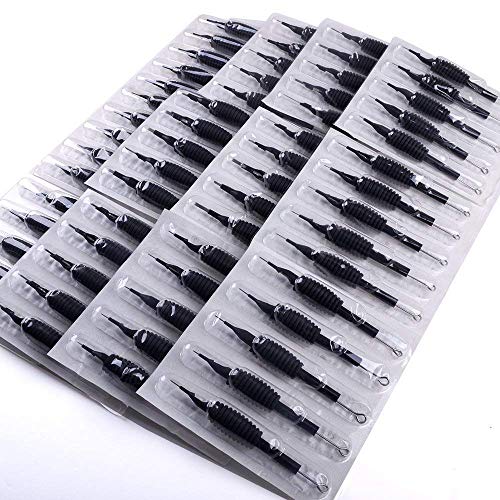
50 Counts needle with matching 5/8" rubber tube grip

GREAT FOR BEGINNER, APPRENTICE, OR PROFESSIONAL TATTOO ARTISTS!

Xtreme Tattoo Ink Compatible & Skin-Safe Formula: Designed for seamless ink delivery with Xtreme Tattoo Ink, this pen ensures smooth, consistent flow for flawless lines and shading. Constructed with skin-safe, hypoallergenic materials and a safety-focused design, it’s ideal for professional
Conclusion
You’ll need to verify your state’s specific laws before booking, since rules vary widely across the U.S. Most places require you to be 18, though some states let you get tattooed younger with parental consent. Always bring government-issued ID, expect shops to check it carefully, and remember that artists face serious penalties for breaking age laws. When traveling abroad, research local regulations too—don’t assume they’ll match what you’re used to at home.
Recommended Products
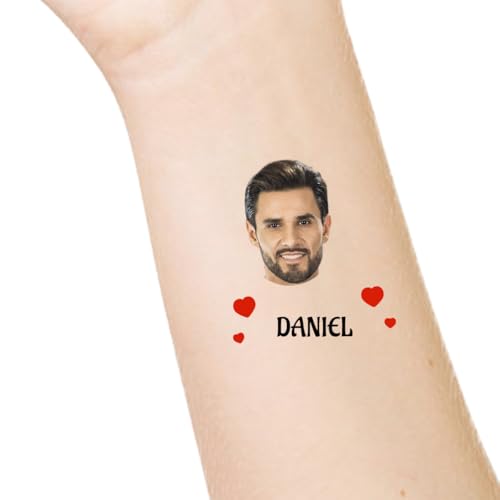
Custom Temporary Tattoos:Click on our products to "Customize Now", upload your photo, choose your favorite style and style, and create a unique tattoo sticker. You can even add your name, age and date, we ensure that each tattoo is as unique as you are!

CUSTOM PHOTO FACE TATTOOS – Create personalized temporary tattoos using your own photo to turn faces into a fun party feature, making each tattoo a memorable addition for celebrations and group events.

Create Your Own Custom Tattoos – Upload any photo to turn it into a realistic fake tattoo. Our custom tattoos let you test your design before committing to real ink.