
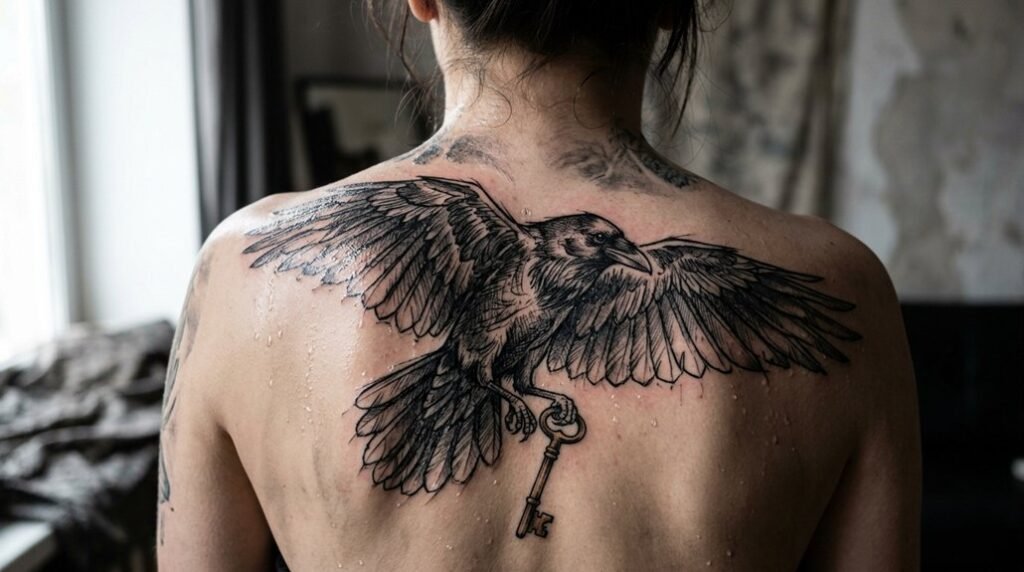
You might see a raven tattoo and think darkness, but you’re only catching half the story. These inked birds carry centuries of wisdom across your skin, whispering of Odin’s thought and memory while guarding life’s fragile cycles. They mark transformation, not just endings. There’s far more lurking in those black feathers than you’d expect.
Key Takeaways
- Ravens symbolize transformation, embracing life’s cycles without fearing darkness or death.
- They represent duality: death and wisdom, shadow and insight, endings feeding new beginnings.
- In Norse mythology, Odin’s ravens Huginn and Muninn embody thought, memory, and the pursuit of truth.
- Cross-culturally, ravens appear as creators, tricksters, prophets, and messengers between worlds.
- Design choices—such as placement, style, and paired symbols—deepen personal meaning and narrative intent.
Recommended Products


What You’ll Receive: 8 sheets of gothic crow-themed temporary tattoos with over 200 designs, featuring bold silhouettes of ravens, intricate feather patterns, and moonlit night scenes. Perfect for adding a dark, elegant touch to crow party decorations or Halloween-themed events

Temporary Tattoos could be used for men women adults neck arm chest.
The Core Raven Tattoo Meaning Across Cultures
Why do ravens command such enduring fascination across tattoo culture? You recognize their silhouette instantly—black wings, sharp beak, knowing eyes. You’re drawn to what they represent.
You’ll find ravens carry transformation’s weight. They don’t flinch at death; they clean what remains, making you confront life’s cycles without fear. You’re acknowledging darkness isn’t evil—it’s necessary.
Across cultures, you’re tapping into layered meanings. Native traditions show you the raven as creator and trickster, stealing light to give humanity fire. Celtic lore presents you with prophecy and protection, these birds guarding secrets between worlds. Japanese art offers you guidance toward the divine, ravens as messengers from beyond.
You’re choosing more than aesthetic. You’re wearing duality itself—death and wisdom, shadow and insight—permanently marked where you can see it daily.
Recommended Products

Quantity: 1 Sticker as pictured. Size: 5" x 3" (12.7cm x 7.6cm). Check the instruction in our picture

Quantity: 1 Sticker as pictured. Size: 5" x 3" (12.7cm x 7.6cm). Check the instruction in our picture

Dopetattoo Waterproof High-Quality Easy-Use Long-Lasting Temporary Tattoos.You can take it to the beach, swimming pool, bath and any other water activities. Without excessive friction. It will last 3-5 days.
Norse Mythology: Odin’s Ravens Huginn and Muninn
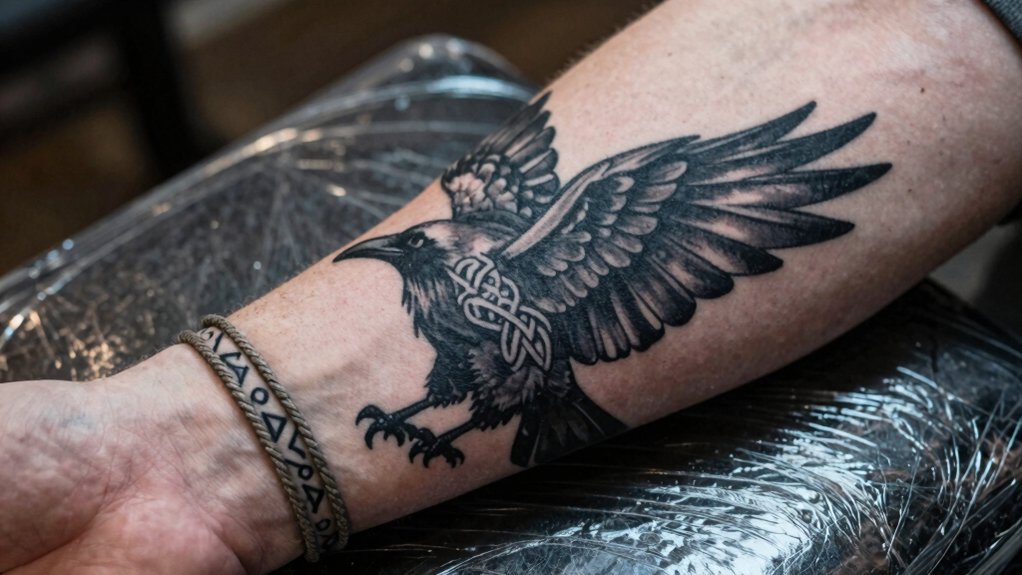
The raven’s shadow stretches deep into Viking lore, where you’ll find its most iconic pairing. You’ll discover Huginn and Muninn perched on Odin’s shoulders each dawn, then flying across Midgard to gather news. Huginn represents thought; Muninn embodies memory. They’ll return at dusk and whisper all they’ve witnessed into the Allfather’s ear.
When you choose this tattoo, you’re claiming Odin’s relentless pursuit of knowledge. You’re marking yourself as someone who seeks truth, who values awareness over ignorance. The design demands two birds—never one alone. You’ll often see them circling Valknut symbols or Mjölnir. Some wearers pair them with Odin’s single eye, recognizing that insight comes at cost. You’re embracing mystery, yet rejecting blindness. Your ink becomes a vow: you’ll observe, you’ll remember, you’ll understand.
Recommended Products

This Nordic Viking symbol Valknut is a Mystic Symbol from the old times of the gods around Ragnar Lodbrok and his Viking companions. Odins Ravens Huginn Muninn. Cool crow or raven and in the background the Viking symbol Valknut from Valhalla.

This Omega Raven Skull sculpture is 2" tall, 6.25" wide and 2.5" deep approximately. It weighs about 8 ounces.

This Thor Hammer With Odin's Raven measures 9" Tall, 6.25" Wide and 4" Deep approximately. It weighs about 1.5 pounds.
Raven Tattoos as Death Symbols vs. Life Messengers
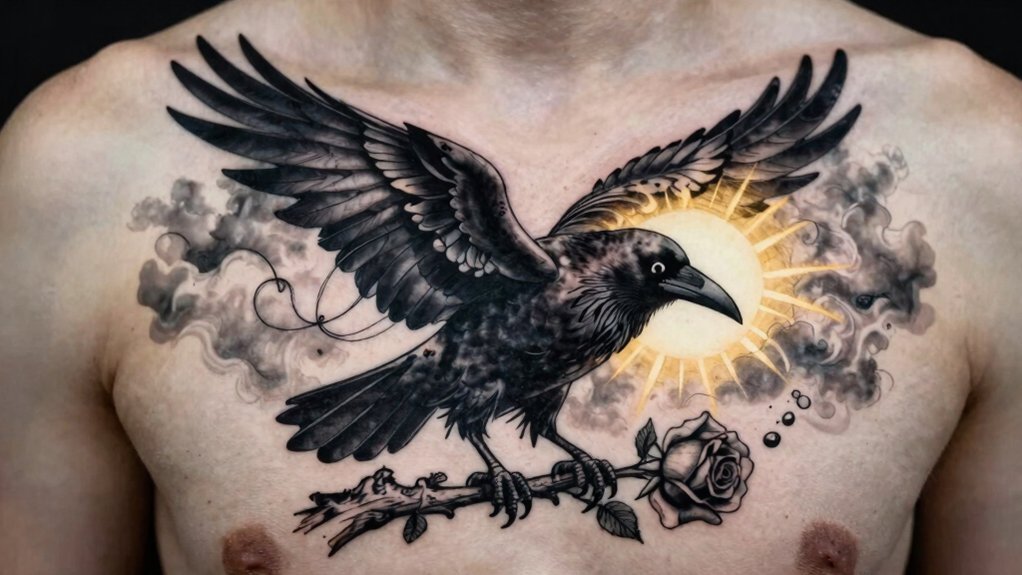
Ravens carry heavier baggage than Odin’s whispered secrets. You confront their dual nature every time you consider this tattoo. You see death in their black wings—carrion birds circling battlefields, guiding souls to the afterlife in Celtic and Native traditions. You’re not wrong. They’ve shadowed plague carts and gallows for centuries.
Yet you also recognize their role as life messengers. You understand they clean what death leaves behind, transforming decay into continuation. You choose which story your skin tells. Maybe you acknowledge both truths simultaneously—mortality and renewal locked in feathered tension. Your raven becomes a personal memento mori, reminding you that endings feed beginnings. You don’t flinch from darkness; you wear it as testament to cycles you’re still living through.
Recommended Products

TEAM PRIDE - Fans show off your team pride with this beautiful metallic vinyl decal of your favorite teams logo

Unique Design Viking Temporary Tattoo: Yazhiji Vikings were not only super cool, but also a symbol of strength, passion, and determination, reflecting strength, bravery and courage, the image of the Viking attracts the attention of history buffs and body art enthusiasts alike.

【Creative Pattern Design】CUTELIILI celtic viking tattoos using Norse and Viking style patterns are very individual, you can choose different patterns to meet different interests and needs.
Raven Tattoos as Symbols of Intelligence and Adaptation
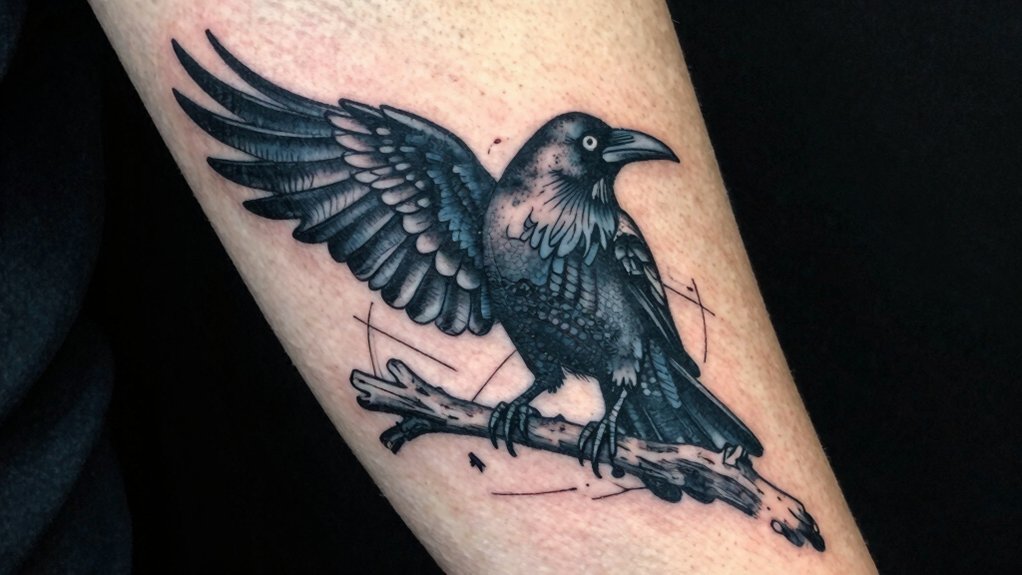
How do you ink adaptability itself? You choose a raven. These birds solve puzzles, use tools, and recognize faces—skills you’d want to embody. When you wear raven ink, you’re claiming that sharp mind. You’re showing you’ve survived, adjusted, thrived through every shift life threw at you.
Ravens don’t just endure; they outsmart. They drop nuts on roads for cars to crack. They memorize thousands of hiding spots. Your tattoo nods to that resourcefulness. It’s not about brute force—it’s about thinking faster, bending smarter.
In cities, wilds, or wastelands, ravens flourish everywhere. You probably admire that versatility. Your skin carries the mark of someone who reads rooms, pivots plans, masters new terrain. You’ve chosen a symbol that says: whatever comes, you’ll figure it out.
Recommended Products

✿【Viking tribal Tattoo Style】: fake tattoos are designed to reflect the latest aesthetic trends, with Viking-inspired tribal totems and mysterious patterns that are both edgy and fashionable. With their intricate and bold designs, these tattoos are sure to make a statement wherever you go. Viking tribal Norse theme temporary tattoos for adult women men kids

Premium Norse Mythology Design — Featuring authentic Viking tattoo-inspired graphics, these hoodies celebrate the rich heritage of Norse mythology with bold and intricate artwork.

Badass Viking Warrior Face Temporary Tattoo set!
Transformation and Rebirth in Raven Tattoo Symbolism
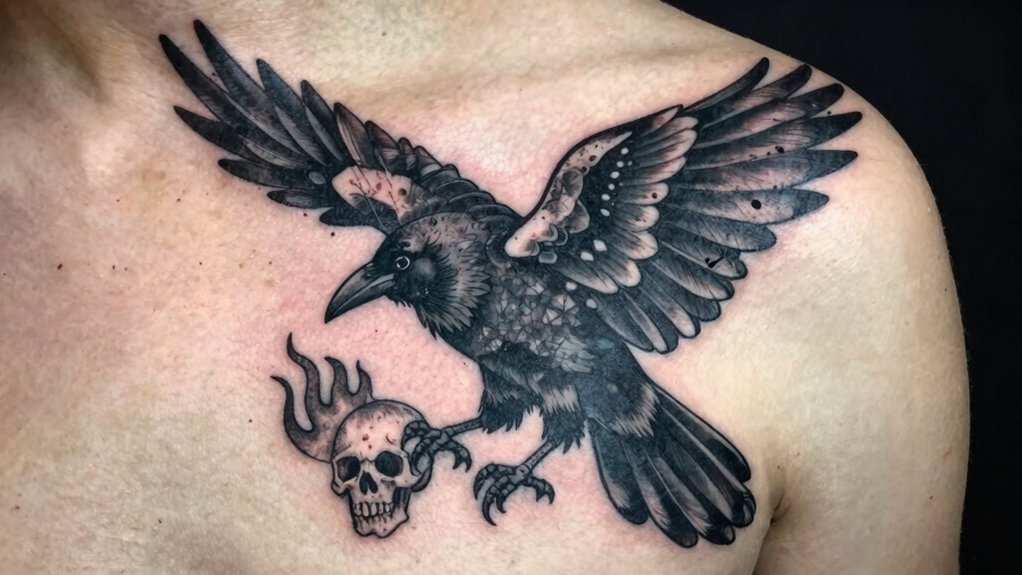
Why settle for a symbol that stays static when you could wear one that shifts? You embrace transformation when you choose the raven. These birds molt completely, shedding old feathers for new plumage. You mirror that cycle on your skin.
You carry rebirth in ink. Ravens feed on carrion; they transform death into life. You acknowledge that endings birth beginnings. Your tattoo marks a chapter closed, a self remade.
You connect to mythic roots. Odin’s ravens renewed his knowledge daily. Native traditions honor the raven as creator and trickster, forever changing form. You tap that fluid power.
You don’t stay who you were. Your raven tattoo declares: you evolve, you return, you rise.
Recommended Products


Great gift: Birthday party gifts for women, children, daughters and sons.
Raven Tattoo Designs: Single Bird or Flock?
Where do you place your focus—on one piercing gaze or a storm of wings?
You choose a single raven when you want intensity. One bird commands your skin with solitary confidence. It locks eyes with viewers. It suggests you walk alone, think deeply, trust your own counsel. The lone raven carries weight—every feather, every shadow matters.
You select a flock when you crave movement and collective power. Multiple birds transform your body into something alive, swirling, impossible to pin down. They speak of community, of ancient patterns you follow without question. You feel the rush of many beating hearts, shared purpose, safety in numbers.
Neither choice limits your meaning. You decide what resonates: individual strength or gathered force. Both designs honor the raven’s wild nature.
Recommended Products

Design of Huginn and Muninn (Old Norse), a pair of raven crows that fly all over the world, Midgard, and bring information to the god Odin.
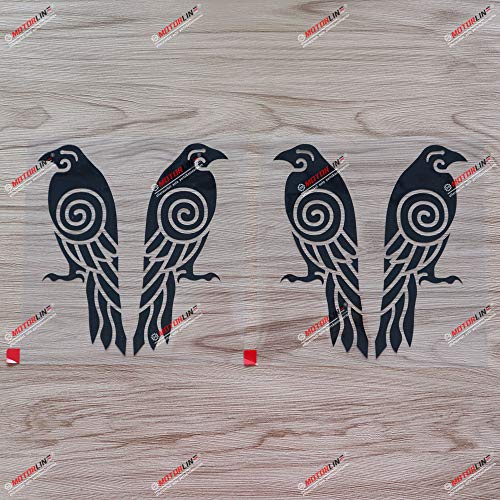
Quantity: 2 Stickers as pictured. Size: 4" x 3.7" (10.2cm x 9.4cm). Check the instruction in our picture

Multiple sizes & colors are available for most products—images are for reference and may not show every variation; order by the size/color in your selected option; size refers to the longer border.
Raven and Skull Tattoos: Death Symbolism Explained
You’ve considered the raven alone and in numbers—now you pair it with what waits beneath the skin. You choose the skull, and you plunge straight into death’s own vocabulary.
You’re not just wearing darkness; you’re commanding it. The raven scavenges battlefields—you’ve seen that in every myth. It consumes what’s finished, then takes flight. The skull anchors this cycle: rot made visible, the final door everyone enters. Together, they transcend mere gloom. You claim transformation. You acknowledge mortality without bowing to it.
You might ink this pairing after loss, or before a reckoning you’ve planned yourself. Either way, you reject sugar-coated comfort. You stare at endings until they blink. The raven doesn’t mourn; it survives. Neither do you.
Recommended Products

HUGINN & MUNINN NECKLACE: This unique Viking necklace features two ravens forming a heart shape pendant, inspired by Odin's pair of ravens in Norse mythology

HUGINN & MUNINN NECKLACE: This unique Viking necklace features two ravens forming a heart shape pendant, inspired by Odin's pair of ravens in Norse mythology

Searching for Norse Viking Mythology Graphic Designs? Make a statement with this Vegvisir Runes Odin's Raven Huginn & Muninn Midgard graphic design tee. Makes a great idea for all fans of Germanic Pagan Nordic Culture Asgard Valhalla Edda Symbols.
Realistic, Tribal, or Abstract: Picking Your Raven Style
How do you want the bird to live on your skin? You choose between three distinct paths, each carrying its own weight.
Realistic ravens demand detail. You capture every feather, every glint in the eye. This approach grounds your tattoo in nature’s truth—you honor the actual creature, its intelligence, its physical presence.
Tribal styles strip the form to bold lines and geometric patterns. You connect to ancient traditions, to Celtic or Native American roots where ravens spoke between worlds. The design carries ancestral energy without literal representation.
Abstract work frees you completely. You splash ink, suggest wings through negative space, let color bleed like emotion. Your raven becomes pure symbol—mystery, transformation, whatever meaning you assign.
Your choice shapes how others read your story. Pick deliberately.
Recommended Products

【Creative Pattern Design】CUTELIILI celtic viking tattoos using Norse and Viking style patterns are very individual, you can choose different patterns to meet different interests and needs.

Creative Pattern Design: CUTELIILI celtic viking tattoos using Norse and Viking style patterns are very individual, you can choose different patterns to meet different interests and needs

𝗘𝘅𝗽𝗿𝗲𝘀𝘀 𝗬𝗼𝘂𝗿 𝗦𝘁𝘆𝗹𝗲 𝘄𝗶𝘁𝗵 𝗠𝗲𝗮𝗻𝗶𝗻𝗴: Each design carries powerful symbolism-angel wings for freedom and protection, wolf for courage and loyalty, Celtic knots for eternity, and rattlesnake for strength. Ultra-realistic look lets you express your identity like a real tattoo
Chest, Back, or Forearm: How Placement Changes Meaning
Once you’ve settled on how your raven looks, you decide where it’ll live. You place it on your chest when you want it close to your heart, guarding your secrets or representing transformation you’ve undergone personally.
You ink it across your back when you’re carrying something—ancestral wisdom, burdens, or protection that shadows you wherever you go.
You choose your forearm when you want the world to see your resilience immediately, announcing that you’ve faced darkness and emerged changed.
Smaller pieces on wrists whisper; full back pieces declare.
You’re not just picking a spot—you’re deciding who sees your story and when. The raven doesn’t change, but your relationship to it does. Your body becomes the landscape where meaning lands.
Recommended Products

Large Quantity Viking Tattoos : 77 sheets in total,17 sheets half arm sleeve viking tribal nordic fake tattoos in size 7.48"*3.74" and 60 sheets small viking tattoos in size 3.85"*2.28". Tribal Norse Viking temporary tattoos for adult men women kids

TEAM PRIDE - Fans show off your team pride with this beautiful metallic vinyl decal of your favorite teams logo
Ubbe inspired Viking temporary tattoo!
Is a Raven Tattoo Right for You?
Where does a raven belong—not just on your skin, but in your story? You carry transformation, mystery, or memory. You embrace shadows without fear. If you resonate with these truths, a raven tattoo fits you.
Consider your motivations carefully. You aren’t following trends; you’re marking something personal. Ravens demand commitment—they’re bold, unmistakable, and loaded with meaning. You accept that strangers will ask questions. You welcome the conversation.
Reflect on your pain tolerance and lifestyle. You know larger pieces require sessions and healing. You understand visibility affects professional settings. You weigh these factors honestly.
Trust your instinct. You feel drawn to the symbol for reasons you mightn’t fully articulate yet. That’s exactly where meaningful ink begins. You don’t need permission. You need certainty.
Conclusion
You’ve explored raven tattoos from Odin’s messengers to symbols of transformation and death. Whether you’re drawn to wisdom, resilience, or embracing life’s cycles, you’ll find meaning that resonates with your journey. Consider your personal connection, placement, and style carefully. Trust your instincts—you’re choosing a powerful emblem of truth-seeking and renewal that’ll carry significance for years to come.