
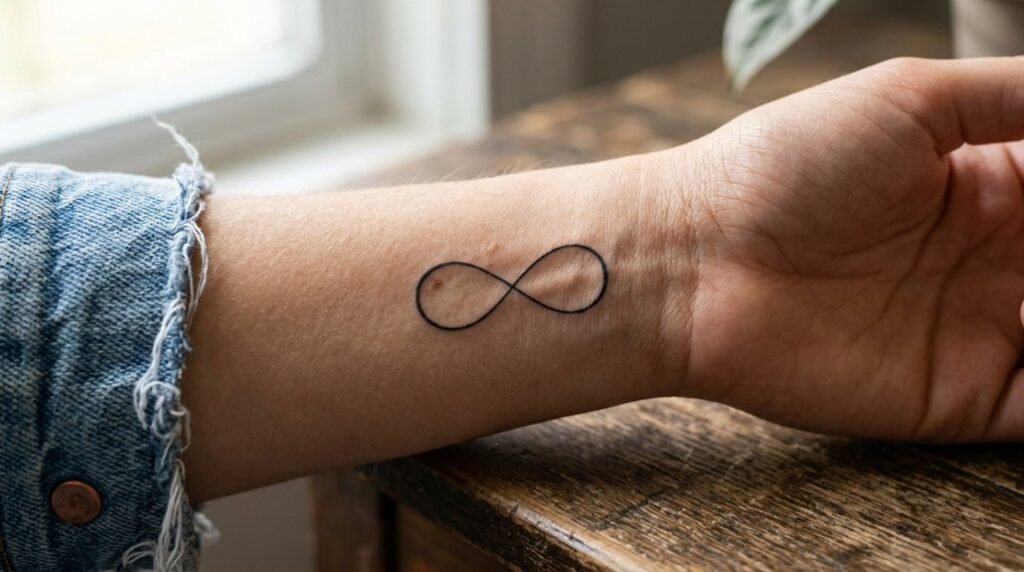
You’ve probably seen infinity tattoos on wrists, ribs, or behind ears, and wondered what drives someone to etch that endless loop into their skin. It’s not just a trendy shape—it’s a loaded symbol that carries weight you can’t see at first glance. Before you decide to get one, you’ll want to understand what you’re actually committing to.
Key Takeaways
- The infinity symbol represents eternal love, friendship, or faith as a visible promise of permanence.
- Originating from mathematician John Wallis in 1655, it carries centuries of philosophical and intellectual weight.
- The tattoo signifies unending bonds that outlast distance, time, or life’s challenges.
- Designs range from simple loops to customized pieces incorporating names, dates, hearts, or watercolor elements.
- Placement choices affect visibility and pain, with prices typically between $50–$300 depending on complexity.
Recommended Products
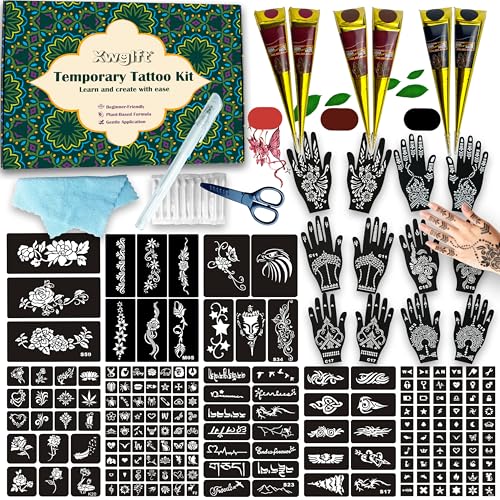
🎁 【PERFECT GIFT FOR TEEN GIRLS】 Beautifully packaged in an organized gift box with an easy-to-follow user manual included! This temporary tattoo kit makes the ultimate birthday, holiday, and Christmas gift for teen girls. Sparks endless creative fun for birthdays, sleepovers, and family DIY nights.

【 575+ Fun Assorted Tattoo Stencils 】-The ChurlChurl tattoo stencils collection includes 575 high quality stencils with multiple themes. enjoy cute trendy tattoo stencil designs like butterflies, words, flowers, symbols, totem, Egypt style patterns and more.

RICH TEMPORARY TATTOO KIT - Contains tattoo templates (77 patterns),4 tattoo inks in 3 colors (black Maroon Cherry Red),White Tattoo Outline Pen, Cotton Swabs & Tool,1 pack of cleaning supplies for a hassle-free temporary tattoo experience.
The Real History Behind Infinity Tattoo Symbolism
Where did infinity symbolism come from before you ever saw it inked on skin? You trace it back to 1655, when mathematician John Wallis first used the lemniscate in his work. He didn’t explain his choice, but you’ll find similar curves in ancient Roman mosaics and alchemical texts. You see the symbol’s roots stretching further—ouroboros serpents devouring their tails in Egyptian and Greek traditions, representing eternal cycles. You encounter it in the Möbius strip’s endless surface, discovered in 1858. You recognize how 20th-century mathematicians formalized infinity’s paradoxes, making the symbol intellectually respectable. You watch it migrate from equations to jewelry, then skin. You understand your tattoo carries centuries of mathematical mystery, philosophical weight, and cultural drift before you ever sat in that artist’s chair.
Recommended Products

【TEMPORARY TATTOO PACK FOR MAN WOMEN ADULTS KIDS】Each Size is about 10.5 x 6 cm / 4.1 x 2.36 inch. Contains 2 sheets temporary tattoo paper stickers which are printed with non-toxic ink.
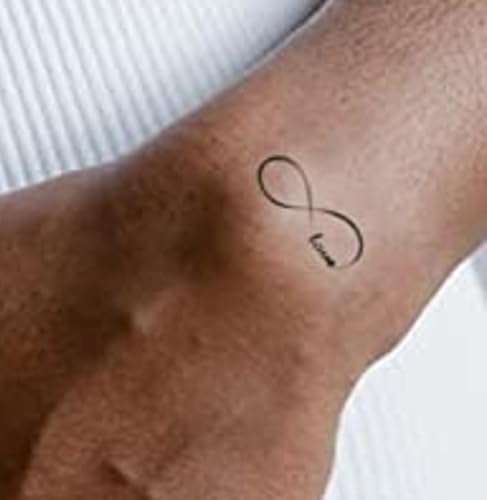
24 Uplifting Tattoos Included – 2 sheets of 12 small infinity symbol temporary tattoos, each featuring a positive message integrated into the design.
🐤【52 Sheets 300+ Patterns Temporary Tattoos For Men Women 】Brand FANRUI Distinctive Design Black Realistic Temporary Tattoos For Women Men Adults Lady Lovers Female Child DIY 3D Custom Tattoo Cover Up Makeup Tips Styling Tools.
What Infinity Tattoos Mean for Love, Friendship, and Faith

Why do so many people choose the infinity symbol to mark what matters most? You see it inked on wrists, ankles, collarbones—always carrying something deeply personal. When you wear this symbol for love, you’re declaring that your bond won’t end. You’re saying “forever” without needing words.
For friendship, you’re honoring someone who stays, no matter how life twists. You’re marking loyalty that outlasts distance and time.
For faith, you’re expressing belief in something eternal—whether that’s God, the universe, or your own spiritual path. You’re carrying hope that transcends your present moment.
Each infinity tattoo you choose becomes a quiet promise you make visible. You’re not just decorating skin; you’re anchoring meaning to your body where you’ll see it daily.
Recommended Products

Waterproof Temporary Tattoos: The temporary tattoos are waterproof and can be worn in the water or pool

What's Kit Included: Complete tattoo machine kit comes with everything you need to get started and then some, from the stencil printer to tattoo cartridges and practice skin. 1 tattoo stencil printer, 1 adjustable stroke tattoo machine, 10 tattoo needles, 10 transfer papers, 2 practice skins, 40 ink cups, 2*15 ml black tattoo ink, 2 dental bibs, 3 tattoo stickers, a pair of gloves and a easy to carry case.
CUSTOM TEMPORARY TATTOOS - Custom Temporary Tattoo Personalize Your Name,Words,Text Body Art,Text Tattoos Quote, Hashtag, Temporary Tattoo Stickers Adult Tattoo. One word or short phrase of your choosing printed as a temporary tattoo! Customized name and text of temporary tattoos, personalized fake tattoos, you can share with friends, family, classmates, bestie, sister, brother unique gifts. We will design temporary tattoo according to your idea. party, play, birthday tattoo, body art.
Infinity Tattoo Designs: Simple Loops to Custom Creations
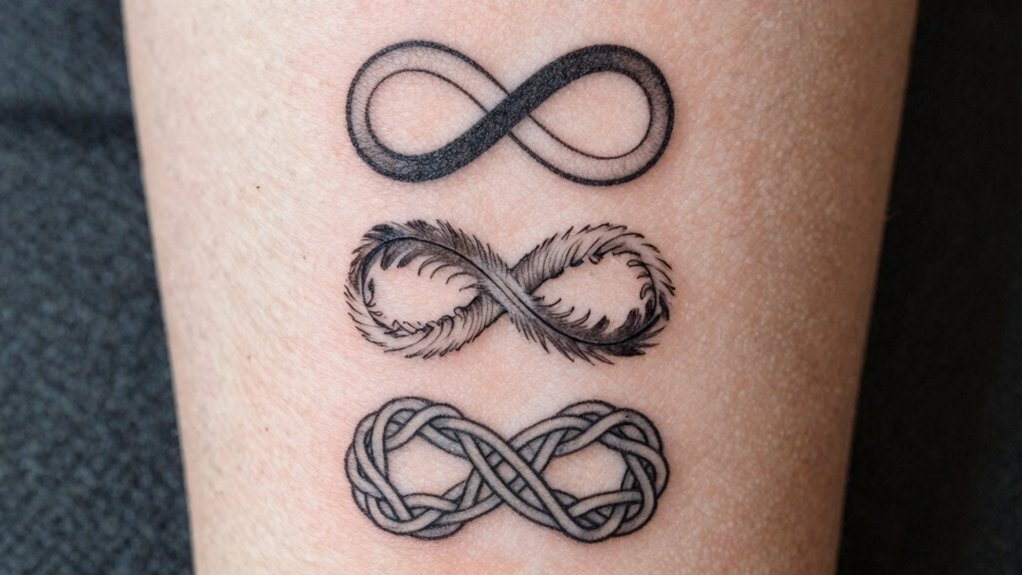
How do you want your infinity symbol to look? You can choose a clean, single-line loop that speaks through simplicity, or you can weave your personal story into the design. You might double the lines for visual depth, or interlace them with names, dates, or meaningful words that arc along the curves. You could transform the loops into hearts, anchors, or feathers—whatever mirrors your journey. You can add watercolor splashes behind the symbol, or keep it stark black against your skin. You control the thickness, the flow, the finish. Your artist can customize the crossover point, elongate the curves, or break the lines deliberately. Every choice you make turns this universal symbol into something only you wear.
Placement Choices That Change Your Infinity Tattoo’s Impact
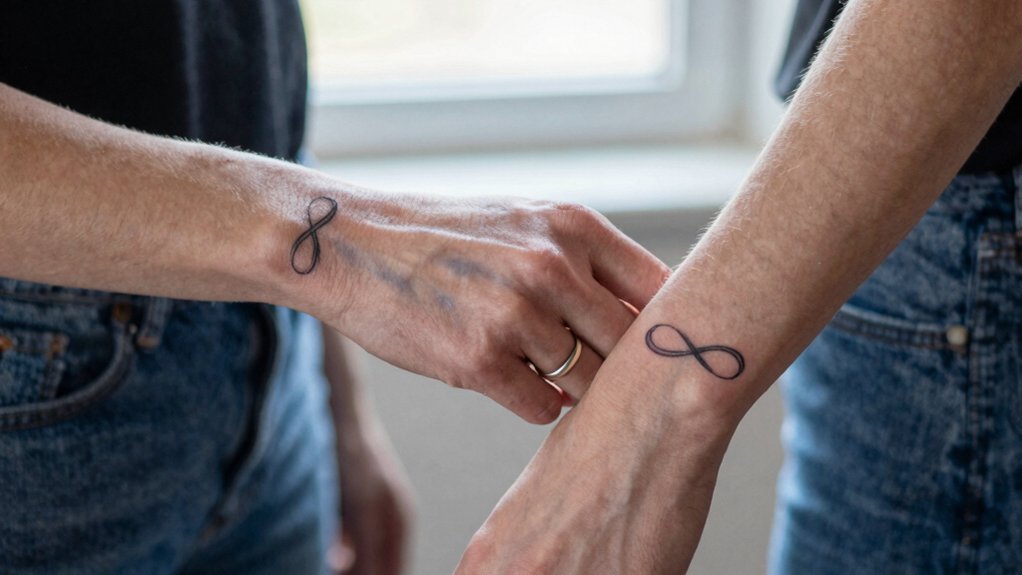
What happens when you shift the infinity symbol from your wrist to your ribcage? You trade visibility for intimacy. Your wrist advertises permanence to every stranger; your ribcage guards meaning for those you’ve chosen. You decide who sees your commitment, your loss, your hope.
You place infinity behind your ear when you want whispers, not declarations. You anchor it to your ankle when you demand movement with your meaning. You trace it along your collarbone and you’ve framed it like art; you’ve made your body both canvas and gallery.
Pain shapes impact too. You endure sharper sensations over bone. You commit more deeply when the needle bites harder. You choose placement, and placement chooses your audience. Your infinity tattoo doesn’t just exist—it performs exactly where you’ve positioned it.
Recommended Products

Authentic .925 Sterling Silver Style – Designed in real .925 sterling silver, this piece shines with quality and style. Designed to be effortlessly cool and versatile, it’s the perfect accessory to mix and match with any look.

Package includes: You will receive 100pcs infinity charms in total, 2 colors(gold and antique silver), 50pcs for each color. Enough quantity will meet your various needs in daily life.

COMPLETE JEWELRY SET: Includes one gold-tone necklace with pi symbol pendant and one pair of matching dangle earrings featuring the mathematical π symbol in vibrant enamel finish.
Color, Style, and Size Decisions That Affect Longevity
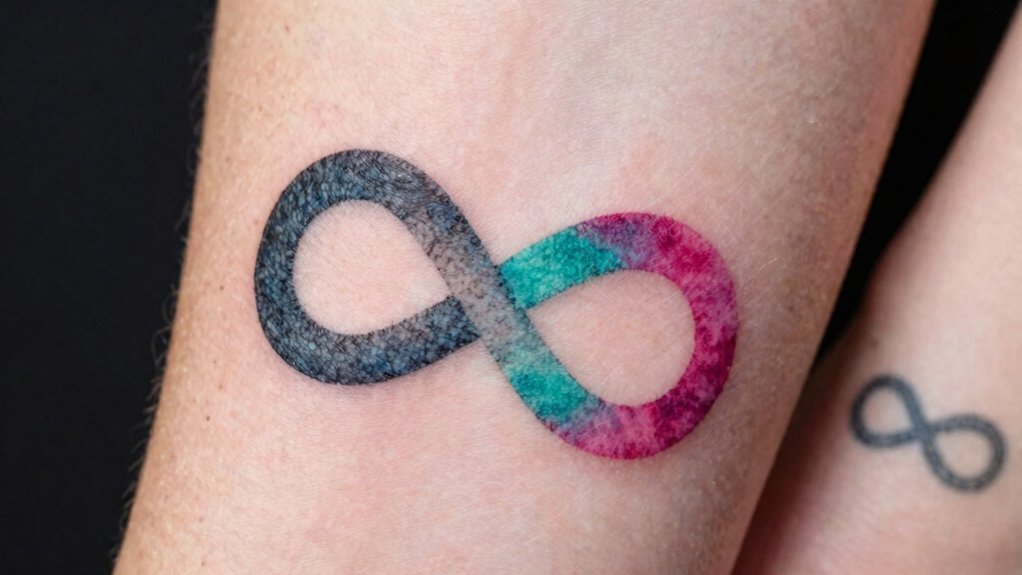
Where exactly does your infinity tattoo begin to fade—along the delicate loops or within the ink itself?
You choose color, and you choose consequence. Black ink penetrates deepest and resists sun damage longest. Vibrant yellows and pastels surrender faster, demanding touch-ups within years. You select style—intricate dotwork or watercolor washes—and you select fragility. Fine lines blur; bold outlines endure. Minimalist infinity symbols measuring under two inches lose definition as skin shifts and ages. You scale larger, and you secure sharper details for decades.
You place your ink on high-friction zones, and you accelerate fading regardless of artistry. You invest in saturated pigments and substantial sizing, and you buy permanence. You’re balancing aesthetic vision against biological reality—your skin doesn’t negotiate.
Recommended Products

Complete Temporary Tattoo Set:This kit includes 2 brown tattoo pastes, 1 cherry-red paste, 100pcs reusable tattoo stencils, and 1 outline pen—everything you need to easily create realistic body art, faux tattoos, or festival-style skin painting at home.

Deluxe All-in-One Tattoo Kit:Includes 20 reusable tattoo stencils, 14 tattoo paste cones in 10 vibrant colors, tattoo paste mixing bottles, cotton swabs, and disposable gloves—everything needed for advanced DIY body art and color creativity.

【19 Large Reusable Stencils & Colorful Unique Designs】Create professional-quality body art with multiple trending patterns across 16 durable sheets. Perfect for arms, ankles, shoulders - endless customization for parties/cosplay.
Infinity Tattoo Pain, Healing, and Cost: What to Expect
Your infinity tattoo’s longevity depends on choices you’ve already made, but the experience of getting it hinges on factors you haven’t faced yet.
You’ll feel pain most acutely where bone sits close to skin—wrists, ribs, ankles. Fleshier areas cushion the needle’s sting. Expect two to three weeks of healing: you’ll wash gently, avoid sunbathing, and resist picking scabs. Moisturize sparingly; overdoing it suffocates the wound.
Simple infinity symbols run $50–$150 at reputable shops. Intricate designs with names or flourishes climb toward $300. You get what you pay for—bargain work risks infection and fading.
Budget for touch-ups too. Even perfect application loses crispness as skin ages. You’re investing in permanence, so prioritize artist skill over convenience or discount rates.
Recommended Products

💕【20 Sheets Mixed Style】--VANTATY Lovely Cute Black Temporary Tattoos For Women Men Adults Body Art Stickers Look Real! Tiny Infinity Geometric Arrow Smile Face Flowers Crescent Moon Sun Stars Temporary Tattoos For Hands Fingers, Realistic Small Butterfly Love Heart Mountain Birds Feather Snake Cat Dog Tattoos For Ear Neck Arm Hands Temp Tatoos Decals.【Click Our Store/brand Name To See More Fashion Designs】

【Unique & Artistic Designs】All UBICA tattoo designs are uniquely created by our talented in-house designers. With a wide range of styles—from bold to minimalist—there’s something for everyone. Each temporary tattoo stickers is a work of art, thoughtfully crafted to meet the highest standards of creativity and quality.
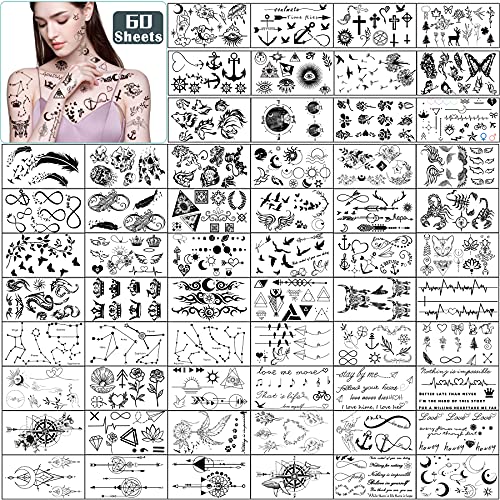
Easy to use: Simply apply with water and remove with alcohol or makeup remover when needed - Great for parties, festivals or everyday wear
Design Mistakes That Ruin Infinity Tattoos Over Time
Certain choices in the design phase set your infinity tattoo up for disappointment years later. You pick overly thin lines, and they blur into indistinguishable smudges within five years. You request intricate details inside the loops—tiny words, feathers, or birds—and they merge into muddy shapes as your skin ages. You place the tattoo on high-friction spots like your wrist or ankle, accelerating wear. You choose colored ink without understanding it fades faster than black, leaving uneven patches. You scale the design too small, sacrificing the negative space that keeps the symbol legible. You ignore your skin’s natural texture, forcing straight lines across uneven areas where they’ll warp. You prioritize trendiness over timelessness, selecting elaborate styles that age poorly. These mistakes compound, transforming your meaningful symbol into an unrecognizable blur you’ll eventually want covered.
Recommended Products

Dopetattoo Waterproof High-Quality Easy-Use Long-Lasting Temporary Tattoos.You can take it to the beach, swimming pool, bath and any other water activities. Without excessive friction. It will last 3-5 days

✿These CUSTOM text sticker will be a huge hit with the guests during the themed party. Sticker tattoos are truly a blast!

【Dog & Paw Love Infinity Design】This semi-permanent tattoos set combines small dog paw prints with infinity symbols and simple line elements, expressing love and connection with pets. The combination of cute sausage dog shapes, delicate paw details, and subtle heart accents brings a charming and emotional touch. Perfect for dog lovers, especially dachshund owners, who want a meaningful, cute, and personal tattoo to celebrate their furry companion.
How to Vet an Artist for Clean, Lasting Infinity Lines
Why trust your skin to chance when the difference between crisp infinity lines and blurred regret comes down to who wields the needle? You’ll scrutinize portfolios first—seek healed infinity tattoos, not fresh ones. Photos fade; healed work reveals truth.
You’ll ask artists how they handle line weights. Thin loops demand precise needle depth. You’ll request to see their setup: single-use needles, autoclave sterilization, pigment integrity. Don’t feel awkward asking—you’re protecting your investment.
You’ll check reviews for mention of blowouts, those fuzzy edges that destroy infinity’s elegance. You’ll skip artists who rush consults or dismiss your placement concerns.
You’ll book someone who maps symmetrical loops with stencils, who understands skin tension changes the curve. Your vigilance pays off in ink that stays infinite years later.
Conclusion
You’re carrying infinity on your skin—a promise that won’t fade. Choose clean lines, skilled hands, and thoughtful placement so your forever symbol stays sharp. Whether it’s love, faith, or friendship you’re sealing, this mark joins you to something bigger than time. Wear it well.
Recommended Products

PACKAGE&SERVICE - Each Pi Mathematical Necklace gift comes in a high quality velvet jewelry pouches and ready for gift giving. Any question please feel free to contact us.

Hair Stylist Jewelry Bracelet – A stylish bracelet designed with sparkling rhinestone scissor charm, pearl heart, and infinity symbol, perfect for hairstylists and cosmetologists.

Lapel Pins By Kiola Designs