
You’re considering a spine tattoo, but you’ve heard the rumors about the pain. The truth is more complex than “yes” or “no,” and several factors determine how much you’ll actually feel. Some areas along your back will test your limits more than others, and your personal pain threshold plays a bigger role than you might expect. Before you commit to the chair, you should know exactly what you’re walking into—and whether the result justifies the discomfort you’ll endure.
Key Takeaways
- Spine tattoos rank among the most painful due to minimal fat padding and direct bone contact.
- Pain peaks over vertebral bumps where nerves cluster and skin stretches thinnest.
- Sensation combines sharp burning with deep, radiating ache through bone vibration.
- Sessions typically last one to four hours, with swelling often limiting longer work.
- Numbing cream, proper hydration, and shorter sessions help manage discomfort.
Recommended Products

Long-Lasting Relief, Maximum Comfort: This numbing cream delivers prolonged analgesic effects, quickly relieving itching, pain, burning sensations, and significantly reducing swelling. It effectively desensitizes the skin for a comfortable experience.
Long-Lasting Relief, Maximum Comfort: This numbing cream delivers prolonged analgesic effects, quickly relieving itching, pain, burning sensations, and significantly reducing swelling. It effectively desensitizes the skin for a comfortable experience.
Long-Lasting Relief, Maximum Comfort: This numbing cream delivers prolonged analgesic effects, quickly relieving itching, pain, burning sensations, and significantly reducing swelling. It effectively desensitizes the skin for a comfortable experience.
Why Spine Tattoo Pain Is Worse Than Other Placements
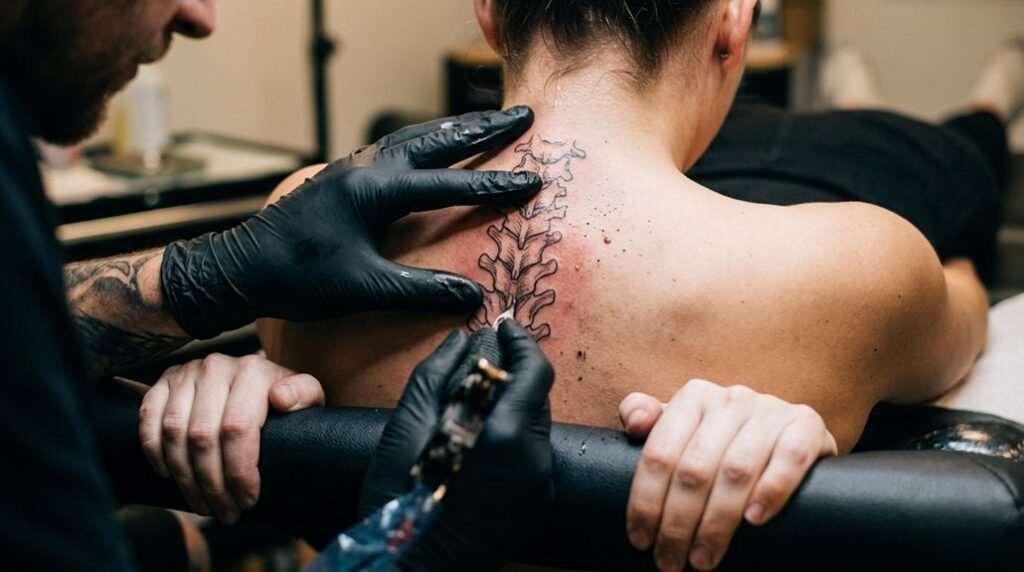
Why exactly does a spine tattoo hurt more than one on your arm or thigh? You feel it more because your spine sits right against bone with barely any padding. Your skin stretches thin there, and you’ll find fewer fat deposits cushioning the needle’s impact. You’ll notice the vibration travels differently too—each strike resonates through bone rather than absorbing into soft tissue.
You’re also dealing with nerve density. Your spinal column houses bundles of sensitive nerves, and you can’t avoid them. The artist works directly over this network, so you register every sensation more intensely.
Your breathing complicates things further. You can’t hold perfectly still when your chest rises and falls, yet the spine demands precision. The artist works slower, and you endure longer sessions. You’ll grip the table tighter here than anywhere else.
Recommended Products

COMPLETE AFTERCARE KIT FOR NEW & EXISTING TATTOOS: This Tattoo Aftercare Kit brings together 3 essentials, Antimicrobial Soap, Tattoo Balm, and Tattoo Lotion, to help cleanse, protect, and moisturize fresh ink. Useful after tattoo sessions and throughout healing, it supports vibrant color and skin comfort for dedicated ink enthusiasts and artists
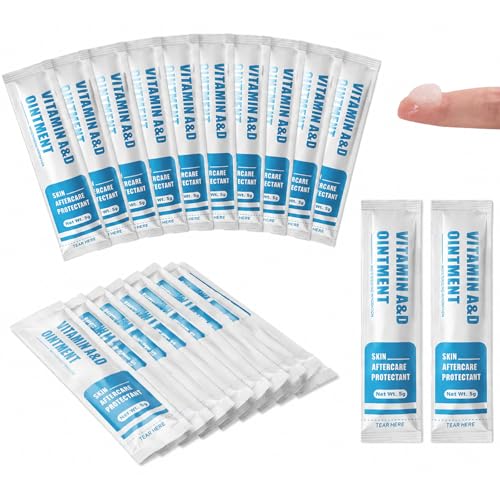
Honest, Accurate Care – This protective ointment comes in 50 hygienic single-serve packets for mess-free, on-the-go convenience. Easy to apply for tattoo protection anytime.

Nourishes Healing Ink for Vibrant Color: Tattoo Goo supports healing tattoos & maintains vibrancy on healed ink with a lightweight formula rich in olive oil, lavender oil, cocoa butter, and beeswax. It absorbs quickly, moisturizes deeply, and helps reduce dryness, itch and tightness so your tattoo looks and feels comfortable through everyday routines
What Spine Tattoo Pain Feels Like (and Where It Hurts Most)
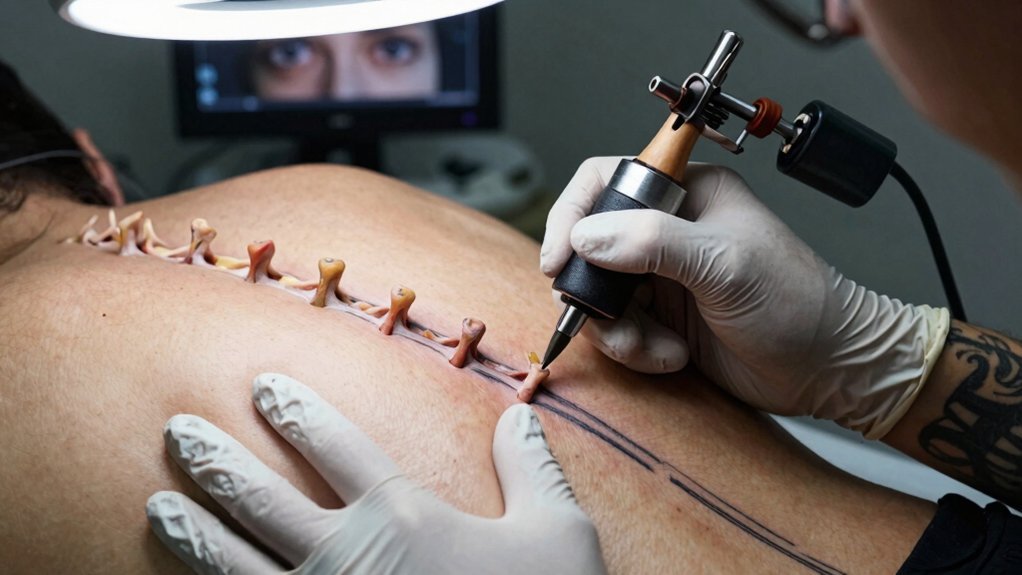
Knowing why the spine stings more prepares you for what you’re actually going to feel. You’ll experience a sharp, burning sensation as the needle drags across bone with minimal padding. The vibration rattles through your vertebrae, creating a deep, nauseating ache that radiates outward.
The pain peaks directly over each vertebral bump—your thoracic and cervical spine hit hardest. You won’t catch much relief between these ridges either, as the surrounding muscle still sits thin against bone. Your lower back fares slightly better; more flesh there dulls the sting marginally.
Skinny clients feel it worse. You won’t avoid the worst spots unless you shrink your design significantly. Breathing steadies you, but each inhale shifts your back against the needle. You ride waves of intensity that spike with every line near your spine’s center.
Recommended Products

FSA HSA Eligible Over-the-Counter Medication - This topical lidocaine numb cream with Allantoin, Vitamin E, and Aloe is clinically proven to temporarily relieve pain, burning, itching, discomfort, inflammation, and soreness in local and anorectal areas

LIDOCAINE 5% PAIN CREAM | Experience deep pain relief with the strongest formulation of lidocaine available OTC.

FSA HSA Eligible Over-the-Counter Medication - This topical lidocaine numb spray enhanced with Witch Hazel, 0.25% Phenylephrine HCl, Allantoin, and Vitamin E is clinically proven to temporarily relieve pain, burning, itching, discomfort, swelling, inflammation, and soreness in local and anorectal areas
How Long You’ll Spend in Pain Per Session
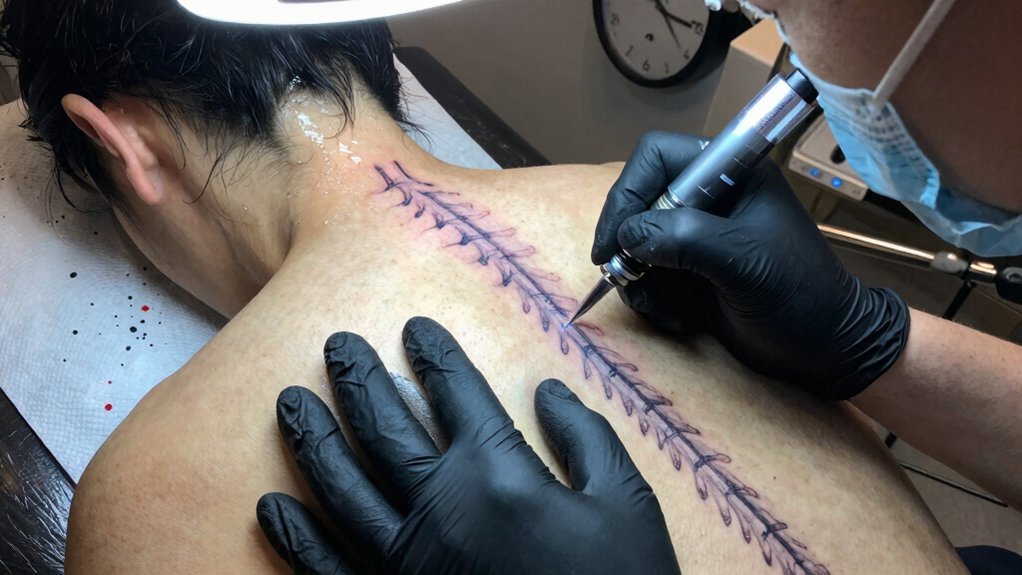
Much depends on how much skin you’re covering. A small design near your lower back might take one to two hours. You’ll endure concentrated discomfort, but you’ll walk out relatively quickly.
Larger pieces—full spine scenes, script running neck to tailbone— stretch across multiple sessions of three to five hours each.
Your artist’s speed matters too. Fast hands mean less time suffering. You’ll request breaks when shaking starts, though each pause extends the total duration. Most artists cap sessions at four hours; after that, your skin swells too much for clean lines, and your pain tolerance crumbles.
You’re paying for this in both money and endurance. Budget four to eight sessions for extensive work. Each appointment demands recovery before the next. You’ll space them two to four weeks apart, dragging the total timeline across months.
Recommended Products

Poseidon cartridge adopt a one-time joint design hygienic standard The material is stainless steel and easy to color,and has better ink flow

【50PCS Mixed Tattoo Cartridge Needles Set】Includes 50 individually packaged tattoo cartridge needles in popular configurations: 1203RL, 1205RL, 1207RL tattoo cartridges, 1209RL, 1205RS, 1207RS, 1207M1, 1215M1, 1209RM, 1215RM (5pcs each). Suitable for both lining and shading needles for tattooing.

10 SIZES, EVERY TECHNIQUE COVERED: This 50PCS pack includes 5 each of 10 go-to sizes — 1203RL/1205RL/1207RL/1209RL for crisp lines, 1205RS/1207RS/1209RS for soft shading, 1207RM/1209RM for smooth blends, plus 1207M1 for solid color packing. One box covers lining, shading and coloring — perfect for artists building a complete needle inventory.
Why Some People Tolerate Spine Tattoos Better
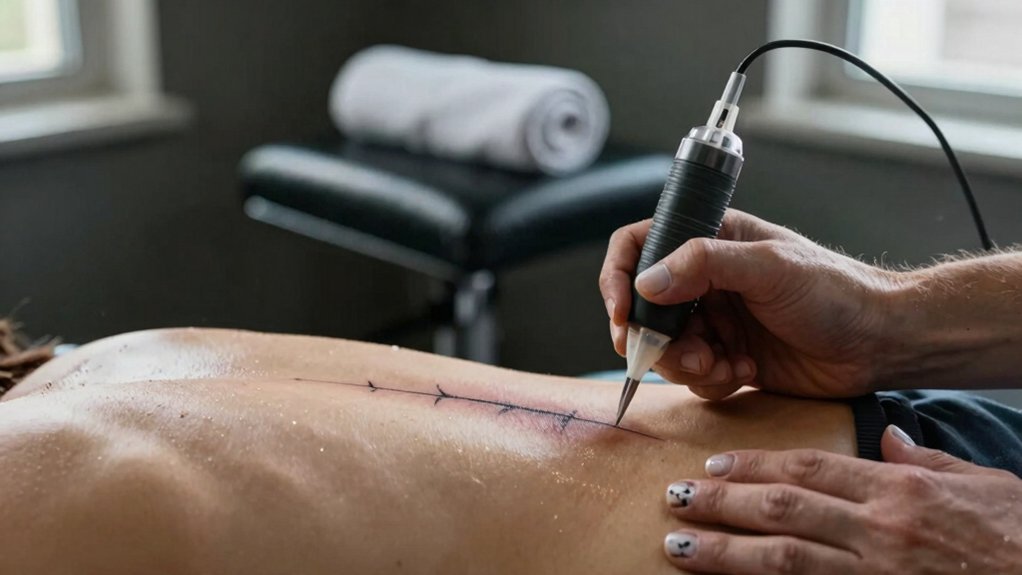
Pain tolerance isn’t distributed equally, and your spine tattoo experience depends on factors you partially control.
Your body composition matters significantly. If you carry more muscle and fat around your spine, you’ll create a natural buffer between needle and bone. You feel less direct vibration on your vertebrae. Your skin thickness varies too; thicker skin distributes sensation more evenly.
You’ve likely conditioned yourself without realizing it. Regular gym-goers manage pain differently because you’ve trained your brain to associate physical stress with progress. Your mental framing shifts how you interpret the same stimulus.
Your tattoo placement along the spine changes everything. You feel less intensity where your spinal column curves naturally outward. Your lower back often registers sharper pain than the upper region where tissue layers differently.
Previous tattoo experience recalibrates your expectations. Once you’ve endured substantial sessions, your nervous system responds with reduced alarm.
Recommended Products

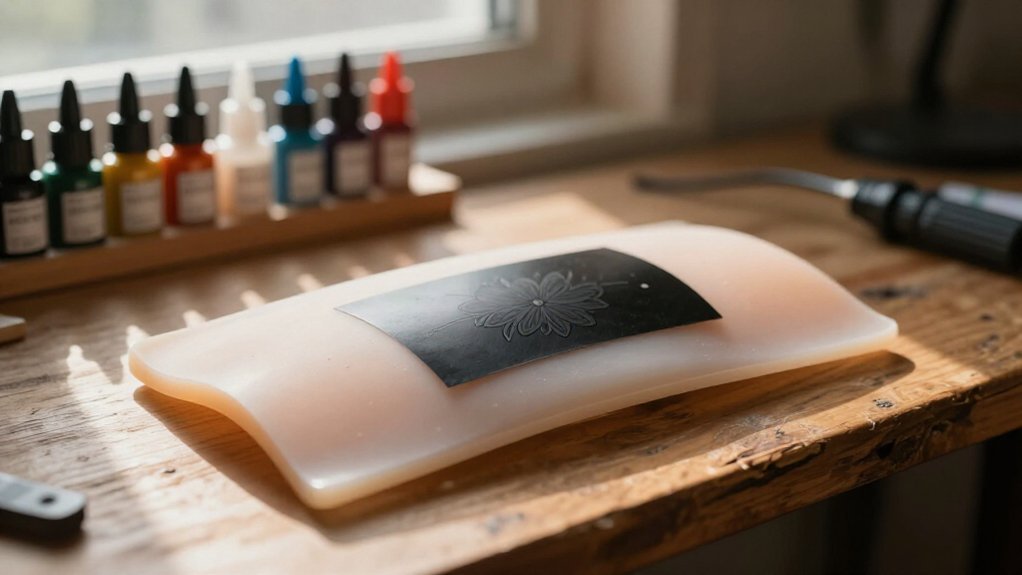
📦 [10Pcs Individually Sealed] 10 sheets of premium tattoo practice skins (8"x6" / 1.0mm thick), each vacuum-sealed for hygiene. Double-sided blank fake skin maximizes usage – wipe & reuse for multiple techniques.

Professional-Grade Realism:Professional Grade 1mm Fake Skin with realistic dermis texture, certified by artists for true needle feedback and ink absorption. This synthetic skin delivers an authentic tattooing experience, making it perfect for beginners to practice safely and build confidence.
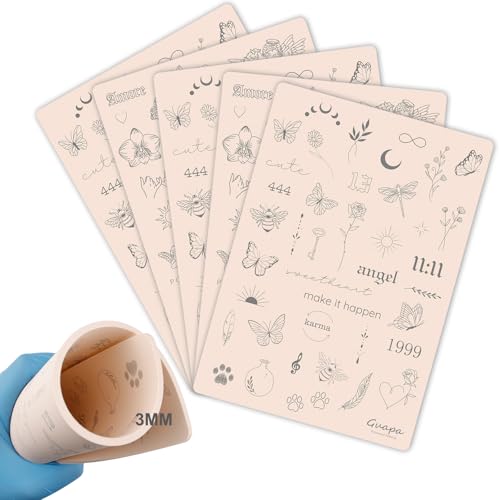
3MM Tiny Tattoo Practice skin Made from high-quality materials, it is closely mimic the texture and feel of real human skin. This gives you a realistic experience, allowing you to refine your skills before working on actual clients
How to Make Your Spine Tattoo Hurt Less
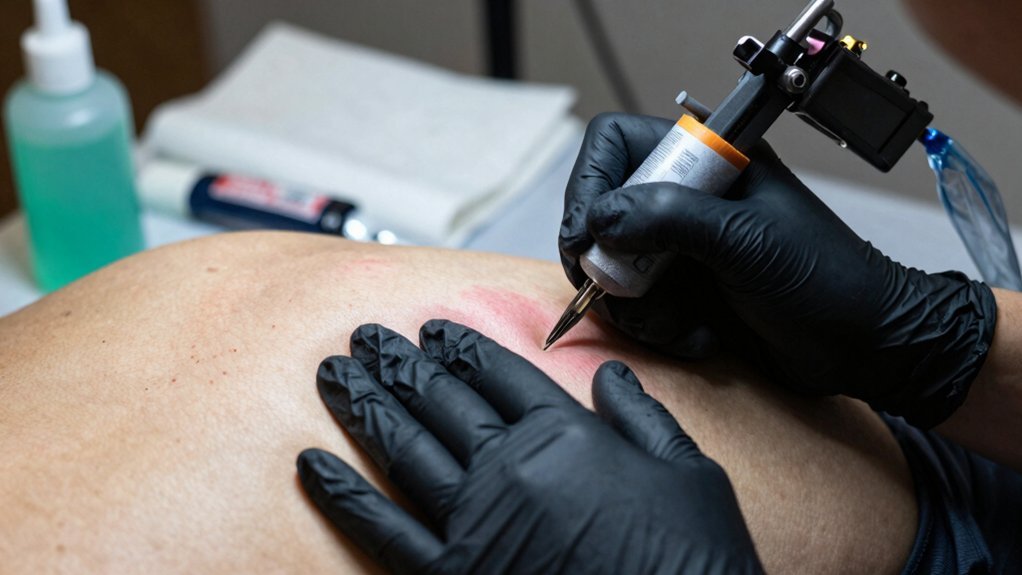
Where exactly can you cut the discomfort without sacrificing your tattoo’s quality? You pick your timing wisely. Schedule your session when you’re well-rested, hydrated, and free from PMS or illness. These factors amplify sensitivity.
You eat a solid meal beforehand. Low blood sugar increases pain perception. You avoid alcohol for 24 hours—it thins blood and heightens sensation.
You request numbing cream. Many artists offer lidocaine products that dull the skin’s surface without compromising ink saturation.
You break the work into multiple shorter sessions. Your endorphins deplete after two to three hours, making subsequent pain sharper.
You practice controlled breathing. Steady inhales and exhales reduce muscle tension and distract your nervous system.
You stay still. Movement irritates the artist’s hand, causing uneven pressure and prolonged Sitting.
Recommended Products

Numbing Effect Lasts Up to 8 Hours: Our tattoo numbing cream before tattoo is specially formulated to provide up to 8 hours of pain relief, itching, soreness, and burning while reducing tattoo swelling. With our cream, you can complete your tattoo session in one step, without the need to pause or slow down. it is numbing cream for tattoos extra strength.

FROM THE LEADER IN TATTOO AFTERCARE: For years now, Mad Rabbit has consistently ranked among the most popular and highest-rated tattoo products on the market. We’ve created a top-of-the-line Tattoo Glide to help professional tattoo artists do their best work.

ENHANCE & MAINTAIN YOUR INK - This ultra-nourishing balm instantly enhances ink vibrancy as it forms a protective barrier on skin to help moisturize and soothe skin.
Is the Pain Worth the Result?
How do you measure whether hours of concentrated discomfort justify a lifetime of ink? You look at your healed spine tattoo in the mirror and feel the answer settle in your bones. You’ve endured the sting, the burn, the persistent ache—and now you wear something permanent.
You weigh the pain against what you carry daily: art that moves with you, claims your space, tells your story without words. The discomfort fades into memory, but the ink remains vivid. You chose this. You sat through it. You transformed temporary suffering into lasting expression.
No one decides this for you. You trace the healed lines and know if you’d do it again. For many, the answer clicks immediately. You didn’t just survive the needle—you earned something that stays.
Recommended Products

【Enriched with Vitamins A & D】This tattoo scar gel is formulated with naturally derived vitamins A and D, plus skin-calming ingredients. It helps support your skin's natural recovery process while keeping the tattoo area moisturised.

QUICK HEALING:A&D ointment gel is rich in essential vitamins A and D,which is very important for aftercare microblading ,effectively helping to remove burns,cuts,surgical marks and the impact of marks on beauty

Nourishes Healing Ink for Vibrant Color: Tattoo Goo supports healing tattoos & maintains vibrancy on healed ink with a lightweight formula rich in olive oil, lavender oil, cocoa butter, and beeswax. It absorbs quickly, moisturizes deeply, and helps reduce dryness, itch and tightness so your tattoo looks and feels comfortable through everyday routines
Conclusion
A spine tattoo will test your pain threshold, but you’ll walk away with striking ink that commands attention. You can’t eliminate the sting entirely, yet numbing creams, breaks, and an experienced artist help. If you’ve sat through rib or foot work, you’ll likely manage. Weigh the burning, vibrating sensation against years of bold artwork—many who’ve endured it say they’d do it again. Trust your preparation and commitment.
Recommended Products

5% Lidocaine Cream Maximum Strength Formula: Formulated with 5% lidocaine, this topical cream provides temporary relief from localized discomfort such as itching, burning, or minor skin irritation. A powerful solution for external use when your skin needs extra care.

HEMP SEED OIL: our 5% Maximum Strength pain relief cream is enriched with ultra-moisturizing Hemp Seed Oil
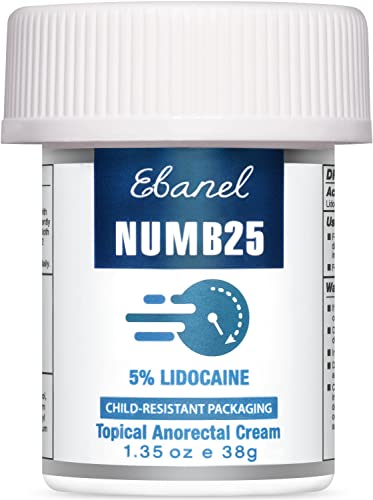
FSA HSA Eligible Over-the-Counter Medication - This topical lidocaine numb cream with Allantoin, Vitamin E, and Aloe is clinically proven to temporarily relieve pain, burning, itching, discomfort, inflammation, and soreness in local and anorectal areas