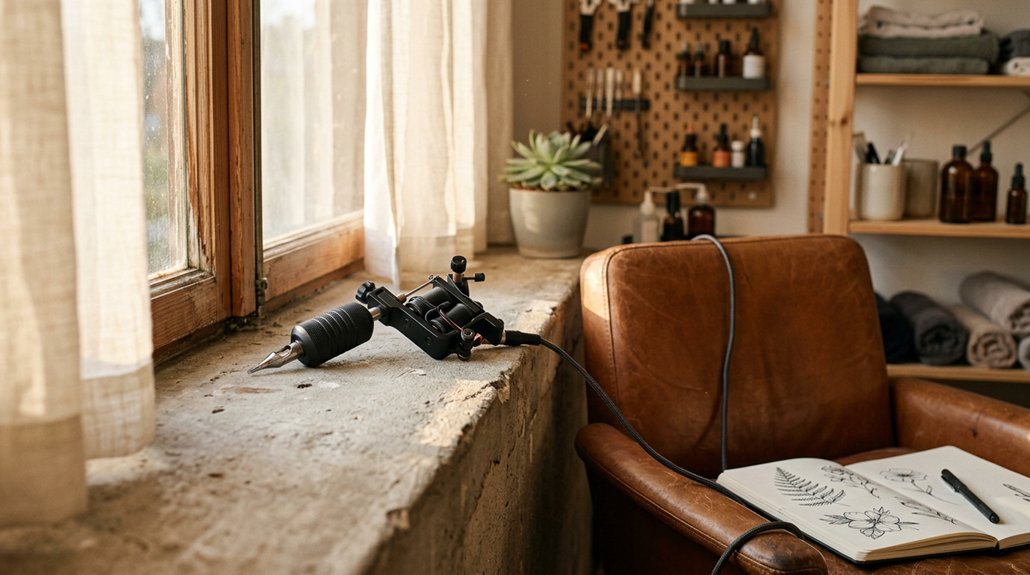

You sit in the chair, and the needle starts buzzing against your skin. It stings more than you expected, but less than you feared. Where you place that ink changes everything—bone-ridden spots punish you, while fleshy areas merely annoy. You’ll discover coping tricks that veterans swear by, plus a few surprises about color work and numbing creams. The real question isn’t whether it’ll hurt; it’s whether you’ll come back for more.
Key Takeaways
- Tattoo pain feels like sharp, repetitive scratching or a rubber band snapping on sunburned skin.
- Pain intensity varies dramatically by body location, with bones and thin skin hurting most.
- Discomfort peaks the first night, fades to tenderness by day three, and heals within two weeks.
- Hydration, sleep, and avoiding alcohol reduce pain; numbing creams offer only moderate relief.
- Mental preparation, controlled breathing, and trusting your artist significantly improve pain tolerance.
Recommended Products

5% Lidocaine Cream Maximum Strength Formula: Formulated with 5% lidocaine, this topical cream provides temporary relief from localized discomfort such as itching, burning, or minor skin irritation. A powerful solution for external use when your skin needs extra care.

Maximum Strength 5% Lidocaine for Fast Relief - For the temporary relief of local discomfort associated with anorectal disorders. For the temporary relief of pain, soreness and burning.

For the temporary relief of local discomfort and itching associated with hemorrhoids and anorectal disorders.
What Does Getting Tattooed Actually Feel Like?
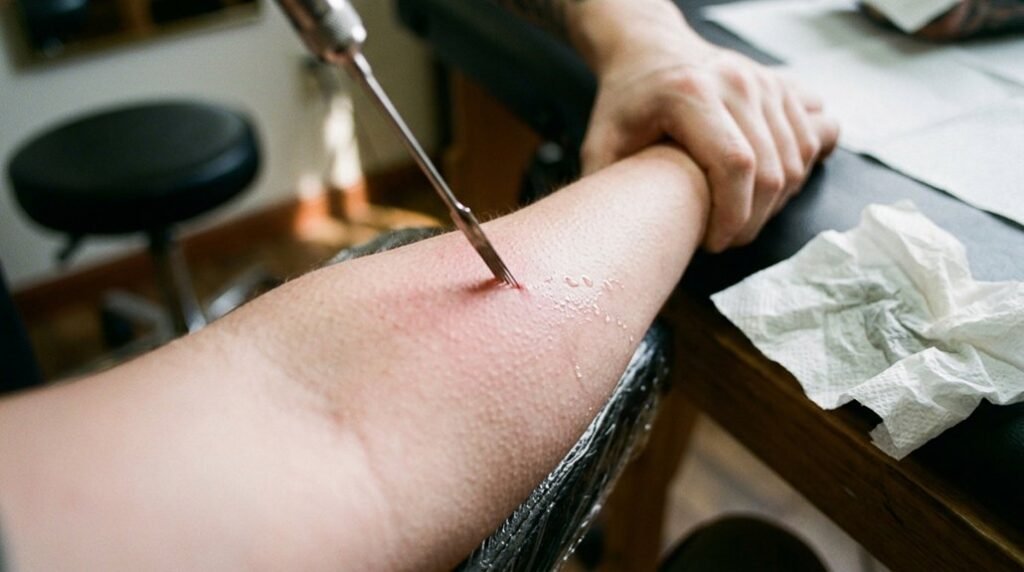
How does a needle piercing your skin thousands of times per minute actually feel? You’ll sense a sharp, repetitive scratching—like a cat scratch dragged slowly across your flesh, or a rubber band snapping against sunburned skin. The vibration hums through your bones.
You’ll notice the sensation shifts. Outlining bites sharper; shading dulls into rough friction. Your adrenaline spikes, then plateaus. Your brain can’t sustain panic forever, so you adapt. You’ll feel heat pooling near the needle, a warm throb spreading outward.
You’re not helpless though. You control your breathing. You clench your fists, release them. You lock onto the mechanical buzz—predictable, rhythmic, almost meditative.
Afterward, you’ll register a raw, stinging tenderness, like road rash. The area swells, radiating warmth for hours. You’ve transformed vibration into permanence.
Recommended Products

TATTOO AFTERCARE ESSENTIAL: Hustle Butter is the original tattoo aftercare balm for new and older tattoos. With over 10 years in the market, we are a pioneer of the tattoo aftercare category.
PROTECT & SOOTHE: Condition & protect your tattoos to keep ink looking bold & vibrant. Soothing, nourishing tattoo care softens fresh tattooed skin, calms redness & irritation, and promotes healing

TATTOO AFTERCARE ESSENTIAL: Hustle Butter is the original tattoo aftercare balm for new and older tattoos. With over 10 years in the market, we are a pioneer of the tattoo aftercare category.
Which Spots Hurt Most: and Which Hurt Least?
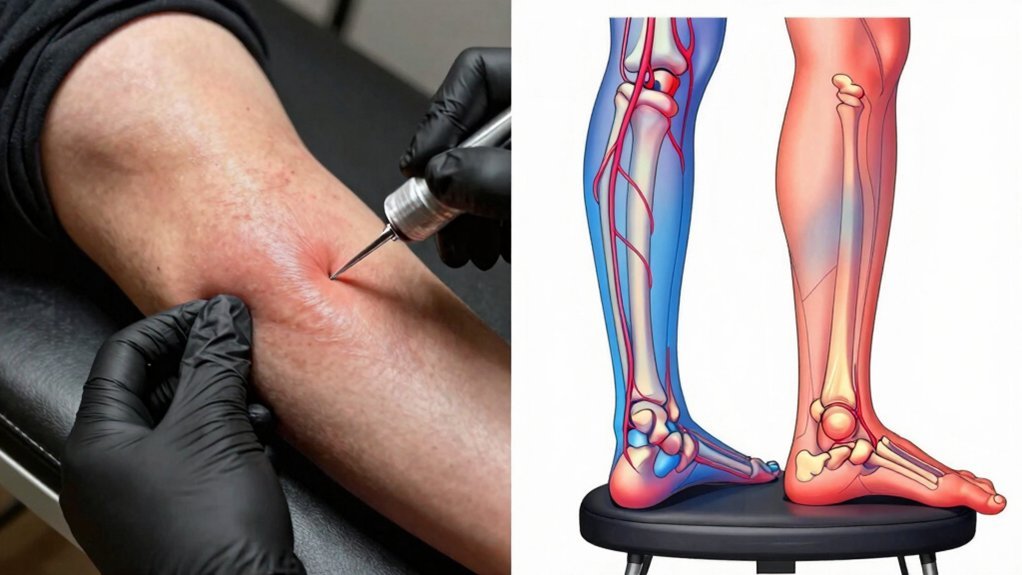
Where exactly on your body you place the ink changes everything. You’ll feel the needle most intensely over bone, nerve clusters, and thin skin. Your ribs, spine, ankles, feet, hands, armpits, and inner thighs scream the loudest. Your kneecaps, elbows, and collarbones aren’t far behind. You might grip the chair when they hit your sternum or Achilles tendon.
But you’ve got options that won’t punish you as much. Your outer upper arms, outer thighs, calves, and buttocks offer thicker skin and more padding. Your forearms and shoulders sit comfortably in the middle. Even your upper back gives you a break.
You can’t avoid all discomfort, but you control the battlefield. Pick your placement wisely if you’re nervous about the sensation.
Recommended Products

INSTANT RELIEF: Cooling gel formula with aloe vera and chamomile extract provides immediate comfort and soothes irritation on fresh tattoos.
How Long Does the Pain Last?
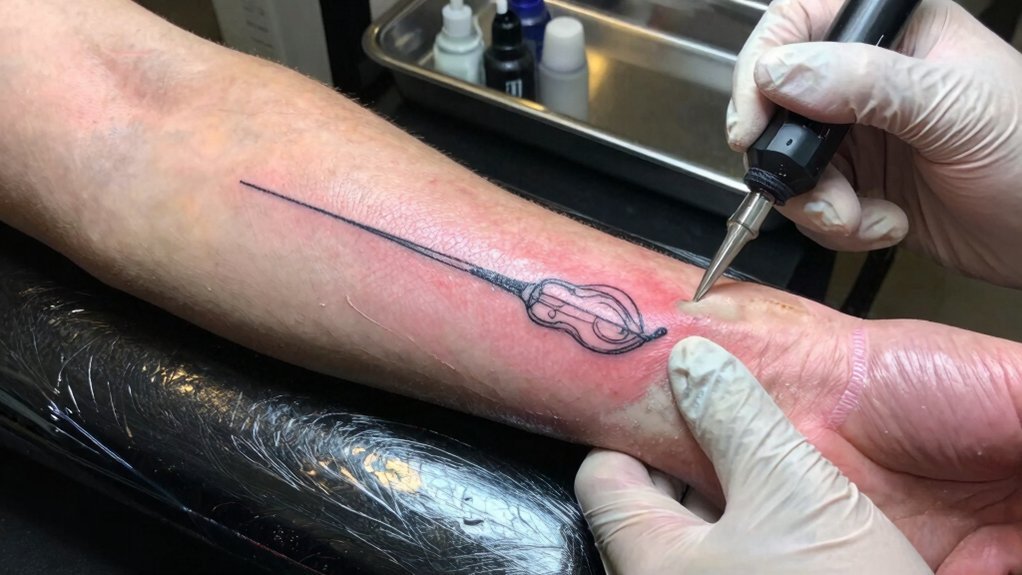
When exactly does the relief arrive depends on what you’re asking about. The needle stops, and the intense scratching sensation vanishes immediately.
You’ll feel buzzing residual soreness for hours after leaving the shop. Your fresh tattoo throbs, stings, and radiates heat like a bad sunburn.
This discomfort peaks during the first night. You might struggle to sleep comfortably.
By day two or three, the sharp pain fades into persistent tenderness. Your skin tightens as it begins healing.
The soreness typically lasts three to seven days. Smaller pieces heal faster.
Larger work on sensitive areas—ribs, feet, hands—can ache for two weeks. You’ll notice itching replaces pain around day four. This signals your skin’s repairing itself. Resist scratching.
The tenderness fully resolves within fourteen days, leaving only occasional twinges when you bump the area.
Recommended Products

Dragonhawk Atom Wireless Tattoo Pen Kit: Contain complete supplies to start your artist work, the Atom tattoo pen has 3.5mm stroke length better for apprentice get easy tattoo lining and shading, permanent makeup work.

COMPLETE TATTOO KIT: This professional all-in-one tattoo kit includes everything you need to start tattooing immediately. It comes with 1 Atom2 pro tattoo machine, 1 Rca adapter, 20pcs tattoo needles, 1 bottle of tattoo ink, practice skin and other essential accessories. No extra purchases needed, making it perfect for beginners and daily tattoo work.
How to Prepare for Less Painful Sessions
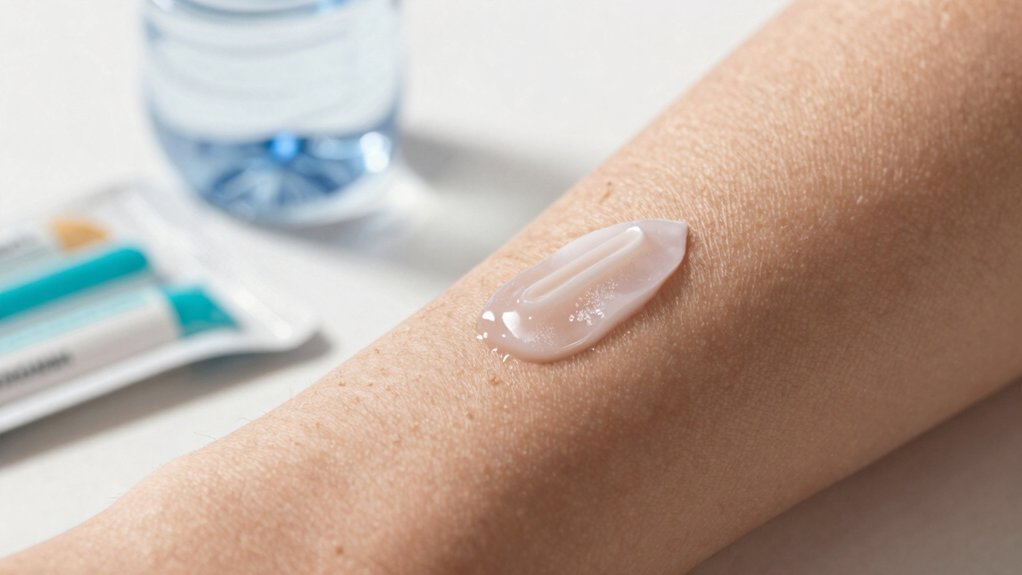
Why endure more discomfort than necessary? You can take steps to minimize the pain before you even enter the shop. Hydrate well starting 24 hours before your appointment—dehydrated skin tattoos poorly and hurts more. Get adequate sleep; exhaustion amplifies pain sensitivity. Eat a solid meal beforehand to stabilize blood sugar and prevent dizziness. Avoid alcohol for 48 hours—thin blood increases bleeding and discomfort. Wear comfortable clothing that grants easy access to the tattoo area. Bring water and a small snack for longer sessions. Time your appointment wisely; schedule when you’re relaxed, not rushed or stressed. Shave the area yourself if you’re comfortable doing so, as this reduces skin irritation. Stay calm, breathe steadily, and trust your preparation.
Recommended Products

FSA HSA Eligible Over-the-Counter Medication - This topical lidocaine numb cream with Allantoin, Vitamin E, and Aloe is clinically proven to temporarily relieve pain, burning, itching, discomfort, inflammation, and soreness in local and anorectal areas

LIDOCAINE 5% PAIN CREAM | Experience deep pain relief with the strongest formulation of lidocaine available OTC.

Fast Acting Hemorrhoid Cream - Made with 5% Lidocaine, this topical anesthetic provides temporary relief from discomfort, itching, and burning associated with hemorrhoids and other anorectal irritation.
Do Numbing Creams Actually Work?
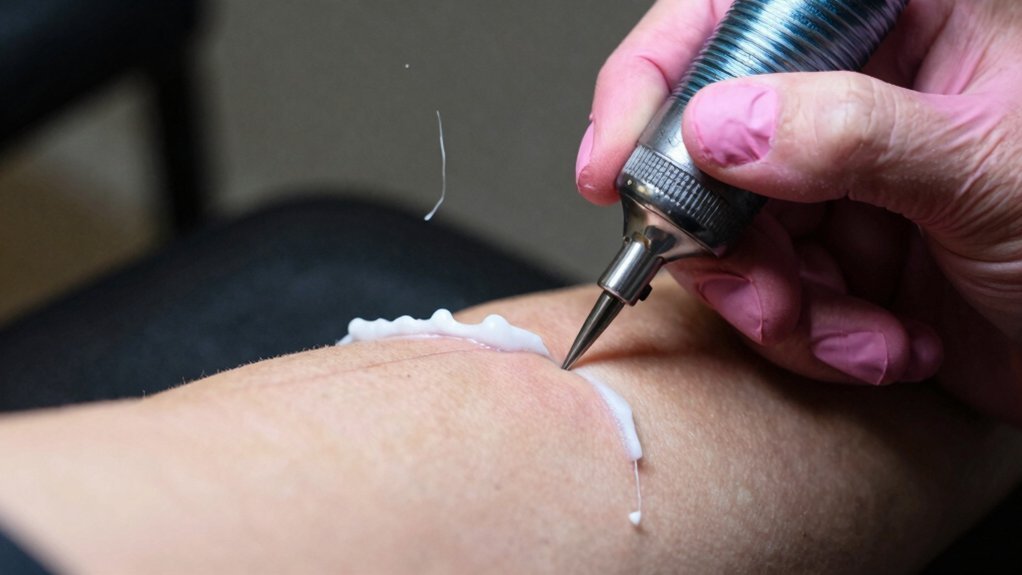
How well do numbing creams actually work when you’re facing the needle? You’ll find they’re moderately effective, but they won’t erase all sensation. Most creams contain lidocaine, which blocks nerve signals at the skin’s surface. You apply a thick layer one to two hours before your appointment and cover it with plastic wrap to help it absorb.
You’ll still feel pressure, vibration, and deeper discomfort because the tattoo needle penetrates below where the cream reaches. Many artists report that numbed skin becomes rubbery, making their job harder and potentially affecting ink saturation in your tattoo. Some studios refuse to work on numbed skin altogether.
If you’re sensitive to pain, you’ll get partial relief, but don’t expect complete anesthesia. Manage your expectations, and you’ll avoid disappointment during longer sessions.
Recommended Products
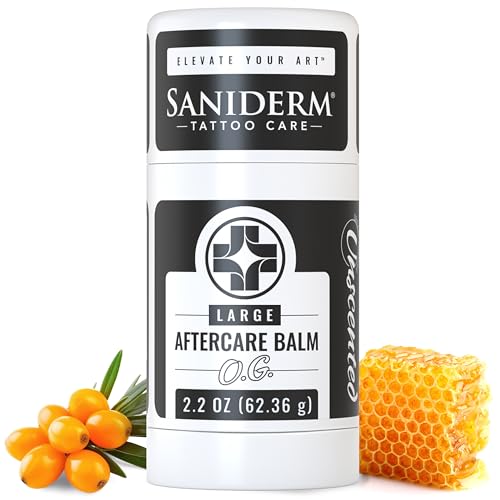
NATURAL AND UNSCENTED FORMULA – Saniderm’s Original Tattoo Aftercare Balm is made using natural ingredients like beeswax, shea nut butter, and sea buckthorn oil. Unlike other common ointments and tattoo balms, Saniderm’s fragrance-free Tattoo Aftercare Balm is also petroleum-free so it won’t suffocate the skin while your tattoo heals.

Upgraded Design, Easy to Use --- Tattoo aftercare balm comes in a tube,this container allows you to glide on the butter easily,Rolls on smoothly and evenly on your skin,No more mess or residue on your finger,convenient to use

☑Natural Safe Organic Ingredients: Tattoo Aftercare Butter is composed of Shea Butter, Jojoba, Macadamia Ternifolia Seed Oil and Vitamin E Complex. Our all-natural butter is also petroleum-free and paraben-free. After use, it can make the tattooed skin heal faster and moisturize the skin. Makes your skin smooth and the tattoo color bright.
Does Size Change How Much It Hurts?
So does a tiny wrist tattoo hurt less than a full back piece? It depends on how you measure pain. A small tattoo finishes quickly—you endure intense sensation for minutes, then you’re done. Large tattoos drag the session out for hours, testing your endurance rather than your pain threshold. You’ll experience pain saturation where adrenaline fades and your skin grows hypersensitive around hour two. However, the needle intensity stays constant regardless of size. Size mainly changes duration, not the sharpness of each prick. You might handle thirty minutes fine but struggle after three hours when endorphins deplete and every line burns fresh. Larger pieces also require multiple sessions, meaning you’ll heal and return repeatedly. Small tattoos offer quick completion; large ones demand sustained tolerance.
Recommended Products

Supports the Natural Fading Process for Unwanted Ink-This tattoo care spray is formulated with botanical extracts to support the skin’s natural appearance over time. Designed for daily use, it helps maintain skin health on areas with old or unwanted tattoos, providing a gentle and non-invasive approach to your personal care routine
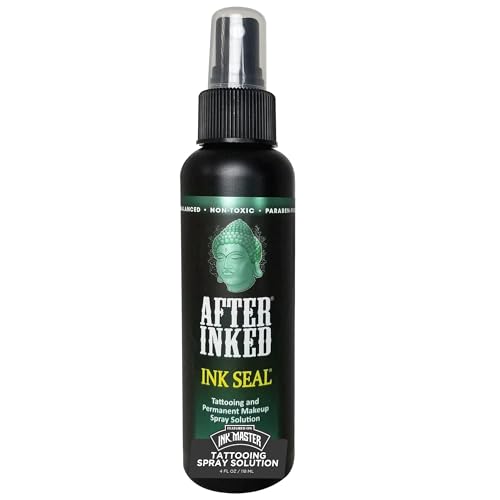
BENEFICIAL CLEANSER: After Inked Ink Seal Spray is a credible and gentle solution for cleaning tattoos and permanent makeup. This formula helps maintain ink clarity, foster hydration, and promotes faster recoup, making it an essential part of the tattooing procedure.
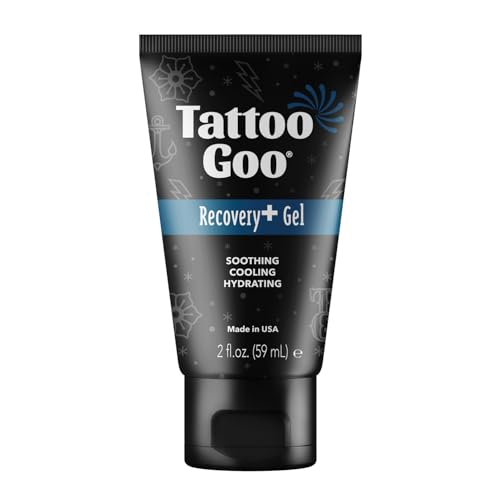
Protect your Body Art: Getting inked takes a toll on your skin. What you lose in moisture, we give right back. Our formula mimics your skin’s natural hydration so it absorbs fast, works harder, and helps your skin recover faster
Does Color Ink Hurt More Than Black?
Where exactly does the rumor come from that colored ink stings worse than black? You’ve probably heard that vibrant pigments deliver extra agony, but that belief doesn’t hold ink. The myth likely stems from color pieces requiring more passes and longer sessions; you’re under the needle more, so you’re feeling more.
Truth is, the needle depth drives your pain, not the pigment itself. You won’t notice a difference between black and colored ink when the artist uses identical techniques. However, lighter colors like yellow or white often demand thicker application or additional layers to show properly. That extra work means prolonged sitting, which tires your skin and amplifies sensitivity. White ink sometimes contains different carriers that resist spreading, forcing your artist to work slower. You’re not imagining the extended discomfort—it’s logistics, not chemistry.
Recommended Products

【Complete Professional Tattoo Kit】This Mast Flip kit includes 1 Mast Flip rotary tattoo machine, 2 replaceable batteries, 1 bottle of black tattoo ink, 10pcs 1203RL & 10pcs 1205RM Mast Pro cartridge needles, 1 beginner practice skin, and other essential accessories. It’s a ready-to-use set for both learning and professional tattoo work.
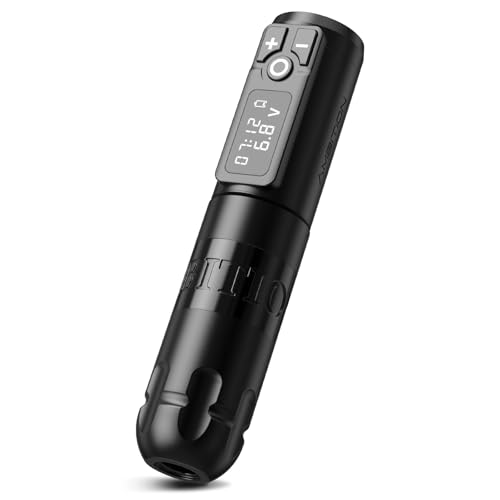
Material:Ambition soldier tattoo machine is made by aluminium alloy. Its length is 148mm, grip diameter is 32mm, and weight is 210g. Well balanced in weight, comfortable to hold.

This kit includes a tattoo machine, a tattoo power supply, 20 tattoo needles (1205RL/1207M1), 0.5 oz triple black ink, and essential accessories—everything you need for a seamless start to tattooing
What If the Pain Becomes Too Much?
When you’re mid-session and the sting shifts from manageable to overwhelming, you’ve got options beyond white-knuckling through it. Tell your artist immediately—they’d rather pause than watch you twitch through sloppy lines. Most will grant a breather, letting you reset mentally and physically.
You control more than you think. Ask your artist to switch areas, tackling less sensitive spots while you recover. Some artists keep numbing sprays on hand, though these work best on broken skin. Deep breathing steadies your nerves; shallow panting amplifies the panic.
Consider splitting the work across multiple sessions. Large pieces rarely demand completion in one marathon sitting. You’re paying—negotiate the timeline without shame.
If dizziness, nausea, or shaking hit, stop entirely. Pushing through risks fainting, injury, or a permanently botched design. Live to finish another day.
Recommended Products
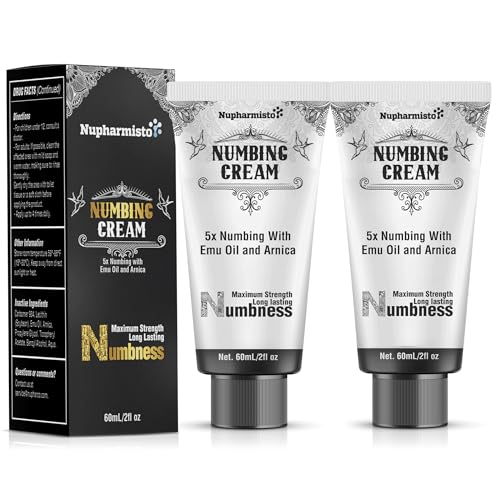
LONG-LASTING COMFORT: This cream is designed to provide lasting comfort and a soothing sensation, helping you feel more comfortable during use.for local and anorectal areas

EXTRA LASTING RELIEF: This numbing cream is provide long-lasting numbing, and temporarily relieve itching, soreness, burning, and reduce swelling caused by hemorrhoids and other minor anorectal irritations, allowing you to feel more comfortable

Fast Acting Hemorrhoid Cream - Made with 5% Lidocaine, this topical anesthetic provides temporary relief from discomfort, itching, and burning associated with hemorrhoids and other anorectal irritation.
Do Touch-Ups Hurt Less?
Typically, yes—though it depends on what you’re getting touched up. You’re working with healed skin, not fresh canvas. The area’s already settled, so the needle isn’t fighting through swelling or raw tissue. You’ll likely notice less sting, especially if the artist’s just darkening faded lines or filling small gaps.
But don’t expect a free pass. If you’re correcting a blowout or adding dense shading over scarred skin, you’ll feel it. The location matters too—touching up your ribs or spine still bites, even on round two.
Your artist might work faster this time, which cuts down your total minutes in the chair. You’ve also got reference for what to expect, and that mental prep actually dulls your perception. You’ve done this before; your body remembers.
Recommended Products

COMPLETE AFTERCARE KIT FOR NEW & EXISTING TATTOOS: This Tattoo Aftercare Kit brings together 3 essentials, Antimicrobial Soap, Tattoo Balm, and Tattoo Lotion, to help cleanse, protect, and moisturize fresh ink. Useful after tattoo sessions and throughout healing, it supports vibrant color and skin comfort for dedicated ink enthusiasts and artists

Nourishes Healing Ink for Vibrant Color: Tattoo Goo supports healing tattoos & maintains vibrancy on healed ink with a lightweight formula rich in olive oil, lavender oil, cocoa butter, and beeswax. It absorbs quickly, moisturizes deeply, and helps reduce dryness, itch and tightness so your tattoo looks and feels comfortable through everyday routines

ENHANCE & MAINTAIN YOUR INK - This ultra-nourishing balm instantly enhances ink vibrancy as it forms a protective barrier on skin to help moisturize and soothe skin.
Will Your Second Tattoo Hurt Less?
How much your second tattoo hurts depends less on the number and more on what you’re getting and where. You’ll learn techniques to manage pain, like controlled breathing and finding your ideal distraction method. Your mind knows what to expect, so anxiety drops substantially. That mental preparation helps you relax into the experience instead of tensing against it.
But don’t expect a free pass. You’re tackling a rib piece or ditch tattoo? Your second session’ll test you harder than your first bicep piece did. Skin thickness, nerve density, and placement matter more than your tattoo count. Some veterans report increased sensitivity where they’ve already been inked. Trust your artist, communicate openly, and remember: you’ve survived this before. That confidence carries weight when needles hit skin again.
Conclusion
You now know what tattooing feels like, where it hurts most, and how long you’ll ache. You’ve got prep tips, numbing cream facts, and color vs. black insights. You understand how to handle overwhelming pain and whether touch-ups or second tattoos ease up. Armed with this, you’ll walk into your session confident, breathing steady, ready to communicate with your artist, and prepared for the healing journey ahead.