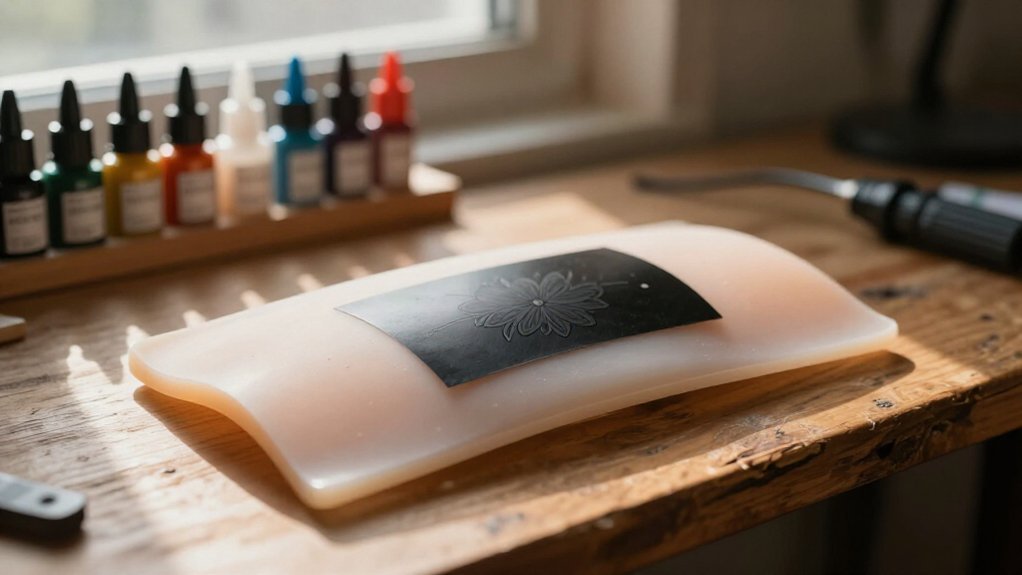

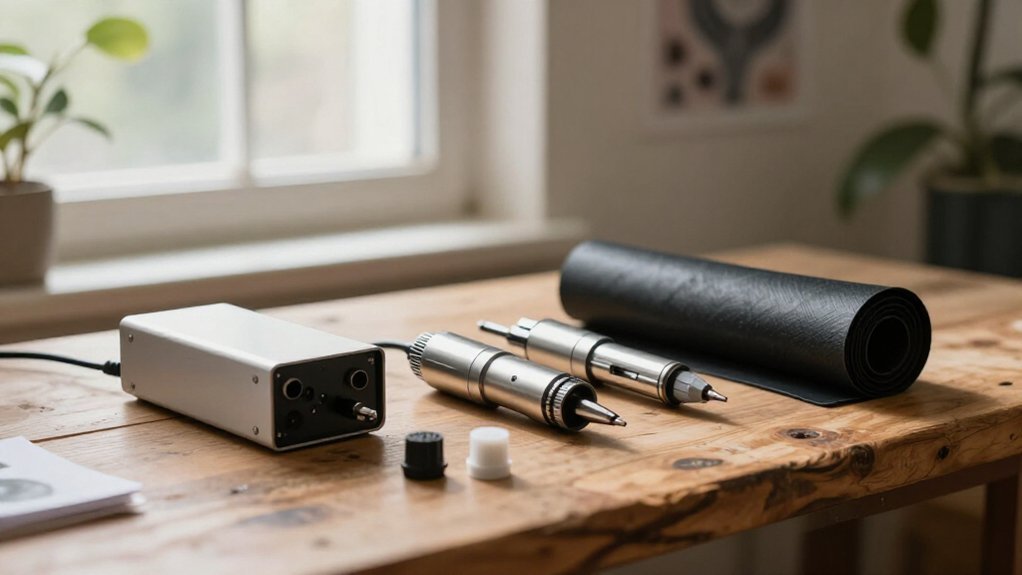
You’re standing at the counter, cash in hand, wondering if that $89 tattoo kit will launch your new career or land you in the ER. Most beginners face this exact moment of uncertainty.
Starter kits range from $50 budget bundles to $600+ professional setups, but price alone won’t tell you what you actually need.
The real question isn’t what you’ll spend today; it’s what you’ll spend for months after, and whether your first machine will even last that long.
Tattoo Starter Kit Prices: $50–$600+ (2024 Guide)
Tattoo starter kits typically range from about $50 to $600+, depending on what you’re actually getting.
1. Budget Tiers for Your First Setup
You’ll find basic beginner tattoo bundles near $50–$150, but these often lack reliable machines. Most artists recommend budgeting $300–$500 for a decent tattoo machine kit with power supply and core accessories.
A complete Phase 1 setup runs closer to $500–$800.
2. Rotary vs. Coil Pricing
Rotary starter kits usually cost $150–$400. One machine handles both lining and shading. Coil kits run $200–$800 because you’ll need separate machines for each function.
3. Wireless Considerations
A Wireless Tattoo Machine Starter costs more upfront due to battery systems. Wired alternatives save money initially but limit your movement. Digital power supplies typically range $80–$300.
Recommended Products

Complete Starter Tattoo Kit: Includes an aluminum alloy rotary tattoo pen, power supply, foot pedal, RCA cord, 20 cartridge needles, 8 bottles of 30ml ink, 2 transfer papers, practice skin, 40 ink caps, grip cover, gloves

WIRELESS FREEDOM WITH DUAL POWER OPTIONS: Enjoy true cordless flexibility with two interchangeable 2000mAh batteries. Each battery delivers up to 7 hours of runtime, providing extended working sessions without frequent charging. When battery power runs low, simply switch to the included RCA adapter and continue working in wired mode. The built-in LED display keeps voltage and battery status visible at all times.

This tattoo kit have two Dragonhawk tattoo machines for lining & shading and friendly beginner start tattooing life, Cast iron tattoo machine 10 wrap coils. Made of superior composite material, the spring is high-elastic and anti-fatigue for long-time working, made of copper coils.
Hidden Costs in Tattoo Starter Kits: What Beginners Forget
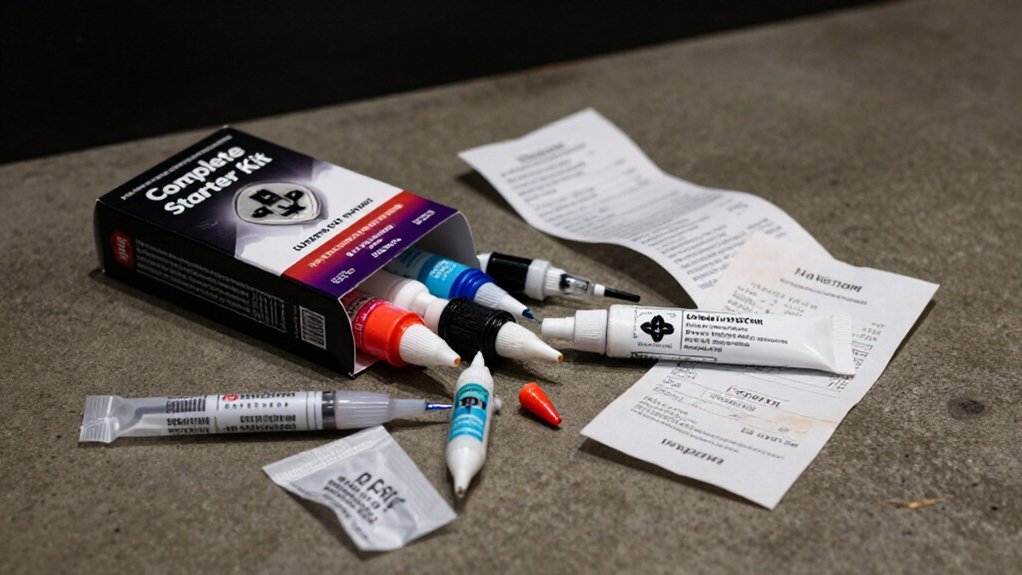
You’ve priced your first machine, but the upfront sticker price rarely tells the full story. Many beginners discover that Starter Tattoo bundles leave out essentials you’ll need immediately.
1. Monthly consumables drain your budget
Replacement cartridge needles, Tattoo Ink, and ink caps add $50–$200 monthly. A kit with 20 cartridges, eight 30ml ink bottles, and 40 ink caps won’t sustain practice for long. You’ll re-buy these repeatedly.
A starter kit’s supplies vanish fast—budget for $50–$200 in monthly refills from day one.
2. Hygiene supplies are separate purchases
Barrier film, surface disinfectant, and gloves rarely appear in basic bundles. Some kits include transfer papers and practice skin, but skip full sterilization workflows entirely.
3. Power limitations cost more later
A Wireless Starter seems convenient, yet battery constraints force workarounds. Wired setups offer uninterrupted power without extra charging breaks or backup batteries.
4. Stencil materials need restocking
Transfer papers and stencil solutions run out quickly. Plan for these recurring expenses before you begin.
Recommended Products

This tattoo set the frame is made of durable and delicate alloy material, lightweight.

All-In-One Complete Tattoo Kit - No need to purchase extra accessories; This tattoo gun kit includes everything you need to start tattooing: 1 pink tattoo pen, 2 wireless power supplies, 10 bottles of 5ml tattoo ink (vibrant colors for diverse designs), 20 tattoo cartridge needles, 30ml blue soap, 30ml transfer gel, 50ml foaming bottle, 3 transfer papers, 3 practice skins, 4 tattoo bibs, and 40 ink cups; Suitable for beginners to practice and professional artists to work

PESLIEF TATTOO PEN KIT PACKAGE: This complete kit includes 1pcs tattoo pen, 1pcs power supply, 1pcs charging cable, 20pcs ink cups, 1pcs 30ml tattoo black ink, 10 colors tattoo ink, 1 pair tattoo glove, 10pcs tattoo cartridge needles, 1pcs tattoo grip cover, 1pcs 30ml green soap, 1pcs practice skin, 5pcs tattoo transfer paper. Everything you need is neatly packed in one portable carrying case – ideal for beginners.
Build Your Own Tattoo Starter Kit or Buy Pre-Bundled?
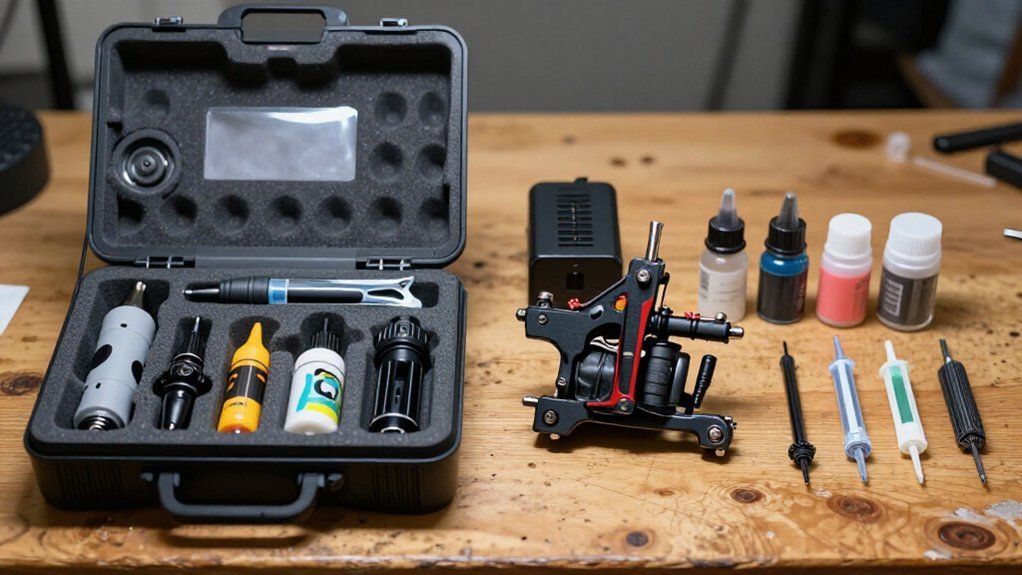
Whether you’re assembling gear piece by piece or grabbing a complete box, you’ll face the same decision every beginner encounters: build your own kit or buy pre-bundled?
1. Pre-Bundled Tattoo Kit Options
A starter bundle typically runs $300–$500 and includes essentials like a rotary pen, power supply, foot pedal, RCA cord, needles, ink, and practice skin. You’ll avoid double-buying consumables. Wireless tattoo kit options cost more but eliminate cords for easier movement.
2. Building Your Own Setup
You can hit the same budget with a rotary machine ($150–$400) and digital power supply ($80–$300). The Mast Fold 2 Pro offers quality rotary performance for lining and shading without needing separate coil machines.
3. Ongoing Costs
Either way, budget $50–$200 monthly for needles and disposables.
Recommended Products

Dragonhawk Traditional Pro Complete Tattoo Kit: Features two cast iron tattoo machines with full set to make tattooing quick and easy. The lining & shading machines help make it easy to get right tattoo style. You can play and adjust any parts with Dragonhawk pro coils machines. The tattoo machines has a powerful, long-lasting coils. The needles are also stainless steel to provide outstanding cutting performance.

There are 4 Pro tattoo machine gus for liner and shader

Hawink 2 x 8 wrap and 2 x 10 wrap coils tattoo machine for liner and shader.runs faster to create fine and precise line work. has higher power to penetrate deep into the skin, creating vibrant and lasting color.
Budget Tattoo Starter Kits Under $75: What’s Included
Most budget tattoo starter kits under $75, like the Dragonhawk A1 wireless bundle at $59.90 or the 58-piece Wormhole WTK070 set, include a rotary pen-style machine, power supply or charging cable, foot pedal (for wired options), RCA cord, 20 starter cartridges, practice skin, and basic protective gear. These kits emphasize setup simplicity and compatibility with standard cartridge needles, so you can practice lining and shading by swapping needles instead of buying multiple machines.
Before you purchase, check whether the kit is wireless or wired, verify the included needle count and ink volume, and confirm the voltage range (often 3–13 V) to ensure it meets your practice needs.
Recommended Products

87-PIECE PROFESSIONAL TATTOO KIT: Everything you need in one box! This complete POSEIDON tattoo kit includes a high-performance wireless tattoo machine, 20 assorted tattoo needle cartridges (5x1205RL/5x1207RL/5x1209RS/5x1207CM), two 2300mAh high-capacity batteries, grips, stencil paper, marker pen, ink set, ink cups, table mats, practice skin(3mm thickened), and more. Perfect for professional studios or on-the-go artists, ensuring you're always prepared.

Dragonhawk Atom Wireless Tattoo Pen Kit: Contain complete supplies to start your artist work, the Atom tattoo pen has 3.5mm stroke length better for apprentice get easy tattoo lining and shading, permanent makeup work.

【Complete Wireless Tattoo Kit for Beginners】Designed for beginners, tattoo apprentices, and art students, this all-in-one tattoo kit includes a wireless tattoo pen, 1600mAh battery, 10 tattoo needles, 30ml black ink, and practice skin — everything you need to start tattooing safely and easily at home or in a studio.
Kit Components Overview
Peeling open a budget tattoo starter kit reveals the core tools you’ll need to begin practicing without overwhelming your wallet. Your Tattoo Kit typically centers on a Pen Starter machine, often a rotary or cartridge-compatible model, paired with an RCA cord and either a wired power supply or wireless batteries. You’ll also find practice skin, stencil papers, transfer supplies, and basic safety items like gloves and ink caps.
Many bundles, such as Wormhole’s WTK070, include 20 cartridge needles, multiple 30ml ink bottles, grip covers, and instructional manuals. Your pen offers adjustable needle depth, usually 0 to 4 mm, and power output ranges from 3 to 13V on wired systems. These universal, cartridge-based setups let you practice lining and shading by simply swapping needles, giving you controlled, hands-on experience from day one.
Value Trade-offs Explained
Now that you’ve seen what a standard kit contains, you’re ready to weigh what $75 actually buys you. Budget beginner kits under $75, like the Dragonhawk A1 wireless starter bundle at $59.90, include a cartridge tattoo pen, basic starter power (wired or wireless), and limited practice supplies. These tattoo starter kit options prioritize getting you practicing over extensive pro features.
Key Value Trade-offs
You’ll receive smaller ink sets and limited consumables. Needles, ink caps, and hygiene supplies deplete quickly, and replacement costs become your bigger expense.
A wireless rotary tattoo machine in this range offers convenience, but durability varies. These kits suit technique practice, yet realistic starter budgets trend toward $300–$500 once you add dependable replacements and essentials.
Mid-Range Tattoo Starter Kits ($75–$150): Best Value for Beginners
You’ll find that mid-range kits, priced between $75 and $150, typically include a cartridge-compatible pen machine, power supply, foot pedal if wired, and starter consumables. This tier offers the strongest balance of quality and affordability, letting you practice with professional-grade features without overspending.
When you compare options, prioritize bundles with universal cartridge support and sufficient included supplies to minimize early extra purchases.
Recommended Products

Poseidon cartridge adopt a one-time joint design hygienic standard The material is stainless steel and easy to color,and has better ink flow

Cartridge Needles Sizes: 20 pcs tattoo cartridge needles include 3RL 5RL 5RM 7RM, each size has 5pcs. Those tattoo needles can be used for lining and shading, which can assist you with the entire tattoo work

Package: 50pcs mixed tattoo cartridge needles, includes 10pcs each of 1203RL, 1205RL, 1207RL, 1209RL, 1211RL.
Kit Features Overview
Your kit should include standard universal cartridge needles, letting you line, shade, and color-pack with common types. This flexibility matters as your skills grow.
Most bundles in this $75–$150 range contain essential supplies: ink bottles, transfer paper, stencil support, and practice skin. Popular options include Dragonhawk’s A3 Pro wireless starter at $72–$85 and the A1 wireless bundle near $74.90. These packages let you begin immediately without separate purchases.
Value Comparison Analysis
Because you’re balancing cost against capability, mid-range kits in the $75–$150 bracket often deliver the strongest starting point for serious beginners. Your value comparison analysis shows these bundles pack real utility without premium pricing.
A quality starter kit for beginners typically includes a wireless tattoo machine, power components, and practice materials. You’ll find options like the Dragonhawk A3 tattoo pen around $75, or the Wormhole 58-piece set near $60 with adjustable 3–13V output.
These mid-range sets beat cheaper alternatives through better control and completeness. You get stroke adjustability, standard cartridge compatibility, and bundled essentials like foot pedals and transfer paper.
Key advantages in this range:
- Wireless convenience eliminates cord hassle during early practice sessions.
- Adjustable voltage and stroke let you refine line work and shading technique.
- Complete starter bundles reduce extra purchases, saving money and setup time.
Prioritize universal cartridge support and stable wireless operation for maximum value.
Premium Tattoo Starter Kits ($150–$300): Worth the Upgrade?
Most aspiring tattoo artists eventually face a decision: stick with a basic kit or invest in a premium starter bundle. In this range, you get a quality rotary machine and a proper digital power system or battery setup. This helps you avoid inconsistent output during longer practice sessions.
Key Features Worth Considering
Many upgrade kits handle lining and shading without multiple machines. You switch cartridge needles to cover RL/lining and RS/magnum/shading workflows. Adjustable-stroke models, offering ranges like ~2.4–4.4mm, improve your control for different techniques compared with fixed-stroke beginner pens.
Examples and Ongoing Costs
You might see options like the Neebol R3 Pro Tattoo ink Pen Machine with Wireless power supply (around $99.99–$169.99), or bundles between $191–$248. Even with this investment, budget $50–$200 monthly for needles and hygiene supplies. These recurring costs affect all tattoo artists regardless of kit tier.
Recommended Products

HAWINK Tattoo Kit with Complete Accessories:This tattoo machine kit includes 1 wireless tattoo gun, 2 x 1600mAh batteries, 10 needles, 7 ink, and other essentials—ideal for beginners, apprentices, and professionals seeking a maquina para tatuar.

ALL-INCLUSIVE TATTOO KIT: Everything you need to start practicing right away: 1 tattoo pen, 40 assorted cartridge needles, 1 wireless battery, 1 self-cohesive grip cover, 1 Type-C charging cable, 40 ink caps, 1 practice skins, 2 transfer papers, 10×5ml color inks, 1×30ml black ink, 1 pair of gloves and 1 instruction manual. A complete starter set for beginners, starters and apprentices

PESLIEF TATTOO PEN KIT PACKAGE: This complete kit includes 1pcs tattoo pen, 1pcs power supply, 1pcs charging cable, 20pcs ink cups, 1pcs 30ml tattoo black ink, 10 colors tattoo ink, 1 pair tattoo glove, 10pcs tattoo cartridge needles, 1pcs tattoo grip cover, 1pcs 30ml green soap, 1pcs practice skin, 5pcs tattoo transfer paper. Everything you need is neatly packed in one portable carrying case – ideal for beginners.
When to Skip the Starter Kit: $300+ Pro Wireless Options
Once you’ve outgrown the limitations of entry-level equipment, you’ll find that $300+ pro wireless kits offer a fundamentally different workflow.
$300+ pro wireless kits deliver a fundamentally different workflow once you’ve outgrown entry-level gear.
You’ll know it’s time to skip the starter kit when you need consistent runtime and professional-grade control. A wireless ink pen machine with adjustable stroke control removes cable drag and lets you move freely. Kits like the “Fold 2 Pro” at $191–$248 or the “Mast Racer Pro” at $209–$239 signal you’re entering pro territory.
For top-tier performance, expect to pay around $579 for hyper-force systems with brushless motors.
Consider upgrading when you recognize these needs:
- Multi-battery setups for uninterrupted sessions
- Defined stroke ranges for precise lining and shading
- Wireless freedom that removes setup friction entirely
You’re investing in longevity, not just features.
Recommended Products

【Professional Rotary Machine】HM119-1 model (123x16mm, 116g) with 3.5mm stroke delivers precise control for lining, shading & permanent makeup. Compatible with all standard cartridge needles.

【All-in-One Tattoo Kit for Beginners & Artists】 This comprehensive tattoo pen kit includes everything you need to start tattooing right out of the box: 1 ergonomic rotary tattoo pen, 1 wireless power supply, 20pcs tattoo cartridge needles, 7 vibrant tattoo inks, practice skin, transfer paper, grip tape, gloves, ink caps, and all essential accessories. No extra purchases required, perfect for both new learners and professional artists.

Beginners Friendly - This Wormhole Tattoo Kit is specially customized for tattoo beginners. Easy to start. It contains a complete tattoo kit, you don't need to buy anything else. Great for practicing tattooing at home. That is absolutely the best choice for tattoo starters
Overpriced Tattoo Starter Kit Red Flags to Avoid
You’ve weighed when to step up to pro-tier wireless gear, but first you need to steer clear of starter kits that cost too much for what they deliver.
1. Missing Essentials
Watch for “starter kits” priced suspiciously low that only include a machine and ink. They often omit a power supply, foot pedal, RCA cord, and enough cartridges for both lining and shading. Without these, you’ll pay extra later.
2. Limited Controls
Avoid kits without adjustable voltage (3–13V) or stroke range. As a beginner, you need dialed-in output and needle depth adjustment (0–4mm) to avoid inconsistent results.
3. Vague Ink Safety
Don’t trust bundles claiming “safe for human skin” without verified testing. Verify ink certifications yourself.
4. Hidden Costs
Beware “SOLD OUT” listings or unclear variants. Missing dual batteries or stroke specs mean buying parts separately. Factor in $50–$200 monthly for needles and sanitation before judging value.
Recommended Products

GREAT FOR BEGINNER, APPRENTICE, OR PROFESSIONAL TATTOO ARTISTS!

【All-In-One Complete Tattoo Kit】Comes with 9 coil tattoo machines, 20pcs tattoo needles, 10 bottles of colored inks, tattoo power supply, foot pedal, practice skin and all other essential accessories. Everything you need is included to start tattoo practice and official work immediately.

Solong rotary tattoo pen is CNC-Machined by aircraft Aluminium alloy and then anodized finish.The motor is 10w made in Taiwan,low noise,strong and stable to work, no hot for long time working