
You’ve probably walked past dozens of tattoos today without registering their silent vocabulary. A stranger’s wrist bears a semicolon; another’s neck holds a geometric wolf. Each mark encodes a decision—sometimes spontaneous, sometimes years in the making. But how do you know which symbols truly resonate with your own story rather than borrowed trend? The answer isn’t found in any catalog. It’s waiting in the space between image and intention.
Key Takeaways
- Anchors, crosses, semicolons, and infinity loops carry universal meanings of hope, faith, survival, and connection.
- Animal tattoos encode specific traits: wolves for loyalty, butterflies for transformation, ravens for mystery.
- Cultural symbols like Māori tā moko and Celtic knots require permission and respectful research before adoption.
- Minimalist shapes—circles, triangles, clean lines—convey deep meaning through simplicity and thoughtful placement.
- Color choice shifts meaning: black for permanence, red for passion, blue for calm, green for growth, yellow for joy.
Recommended Products

Self-Love Symbol Dual Design: This semi-permanent tattoo pack has two unique sheets with tiny mini graphics: semicolons, crown heart hands, floral blooms, arrow accents and positive affirmation "I am enough". Semicolons stand for mental strength & survival, crown hearts represent self-worth, quotes deliver positive affirmation. The small, minimalist design makes it perfect for subtle placements on fingers, wrists, or arms.

Amazing Product: Different from you know ordinary temporary tattoo stickers or fake tattoos. It is so real and comparable to the real tattoo. It is a semi-permanent technology, waterproof, friction-resistant, and can last for a long time, staying on your skin for 1-2 weeks.
What Do Popular Tattoo Symbols Actually Mean? A Quick Taxonomy
Curiosity drives you to decode the ink you see on strangers’ arms, the symbols your friends chose permanently, perhaps even the design you’re considering yourself. You’ll find anchors representing steadiness and hope, often chosen by those who’ve weathered storms. Crosses speak to faith or remembrance, while semicolons signal survival and continuation through mental health struggles. You recognize infinity loops as lasting bonds or limitless potential. Arrows point forward through hardship; they remind you that tension propels release. Feather designs evoke freedom, spirituality, or lost loved ones. You see diamonds marking unbreakable strength, and compasses guiding wanderers home. Clocks freeze pivotal moments; they confront you with mortality. Roses balance beauty and pain through their thorns. Each symbol carries layered significance, and you’ll notice meanings shift across cultures and individual experience.
Recommended Products

🌊【62 SHEETS Halloween Temporary Tattoos For Women Men Adults】GOROMON Unique Design Realistic Waterproof Tattoos Including 10 Sheets Half Arm Sleeve Tattoos For Men and 52 Sheets Small Tattoos Halloween Black Cobra Snake Skull Ghost Skeleton Compass Wolf Lion Tiger Rose Flower Gangster Tribal Maori Totem Spider Demon Scorpion Letter Quotes Infinity Anchor Birds Crown Moon Planets Star Diamonds Rose Cross Butterfly Dandelion Ecg Dog Paws Angel Wings Mountain Geometric Triangle Line Art Design.

【Realistic Semi-Permanent Look】Boldink temporary tattoos are designed to look more like real tattoos than traditional temporary tattoo stickers. They are waterproof, smudge-resistant, and non-shiny for a natural-looking finish. The tattoo will appear silver at first and gradually darken into a rich, realistic color within 48 hours. For best results, avoid contact with bare skin, especially the face, and cover the tattoo with clothing while sleeping to prevent transfer.
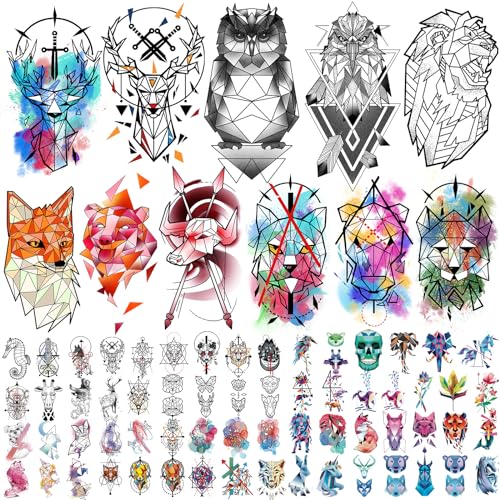
UNIQUE GEOMETRIC DESIGN -- Exquisite designs include animals Lions Fox Wolf Owl Tiger Skull Cat Flowers tattoos and more. Can be attached to various parts of the body, such as arms, shoulders, back, thighs, waist, etc. Perfect for men, women, girls, boys of all ages to get noticed wherever you are
Animal Tattoos Decoded: Wolf, Butterfly, and Beyond
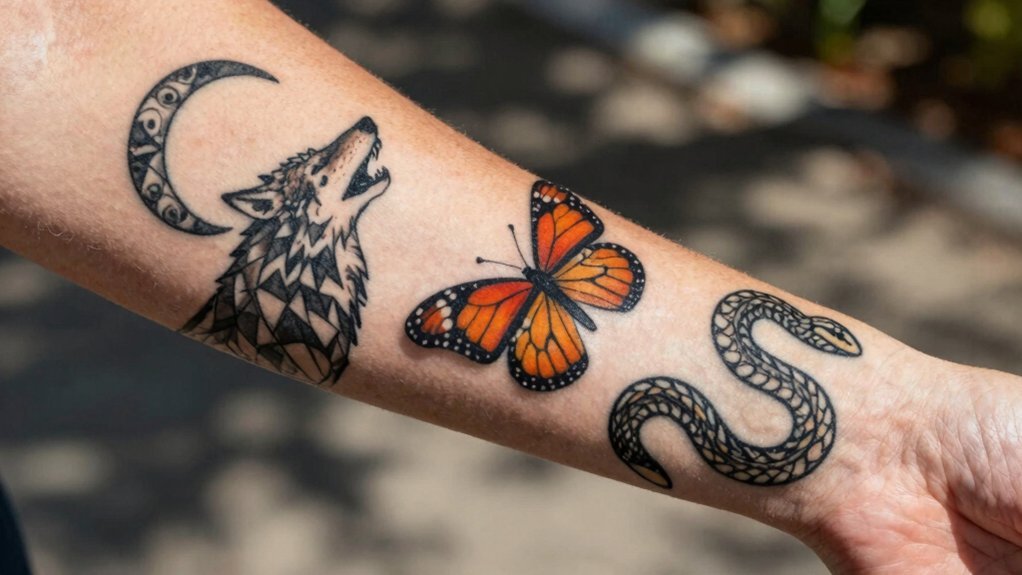
From the emblems people etch into their skin, you now turn to the living creatures they’ve chosen to carry.
You recognize the wolf immediately—it’s loyalty, resilience, and fierce devotion to pack. You spot it on shoulders, throats, forearms, always watching.
The butterfly transforms you; it speaks of metamorphosis, of survival, of becoming. You see it mark those who’ve shed old selves.
You encounter the raven next—intelligence, prophecy, the shadow side. You find the owl guarding wisdom, the bear embodying strength and introspection. You notice snakes coiling around rebirth and healing, not merely danger.
You understand these creatures aren’t decorations. You’re witnessing personal mythology, private translations of instinct and aspiration. You’re reading someone’s chosen familiar, their spirit compressed into ink and motion.
Recommended Products
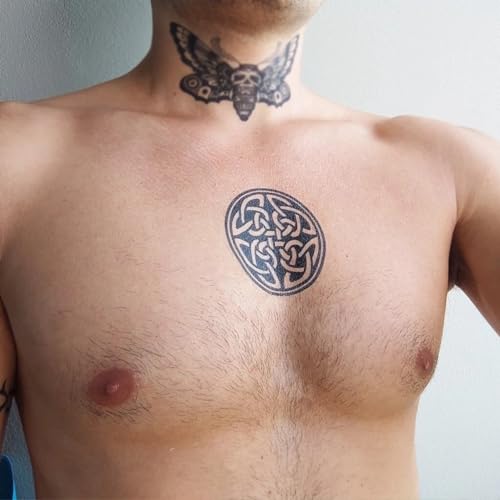
Intricate Celtic knot is famous symbol extensively used throughout history in celtic culture & art


Unique Design Viking Temporary Tattoo: Yazhiji Vikings were not only super cool, but also a symbol of strength, passion, and determination, reflecting strength, bravery and courage, the image of the Viking attracts the attention of history buffs and body art enthusiasts alike.
Sacred Roots: Cultural Icons and Their Living Meanings
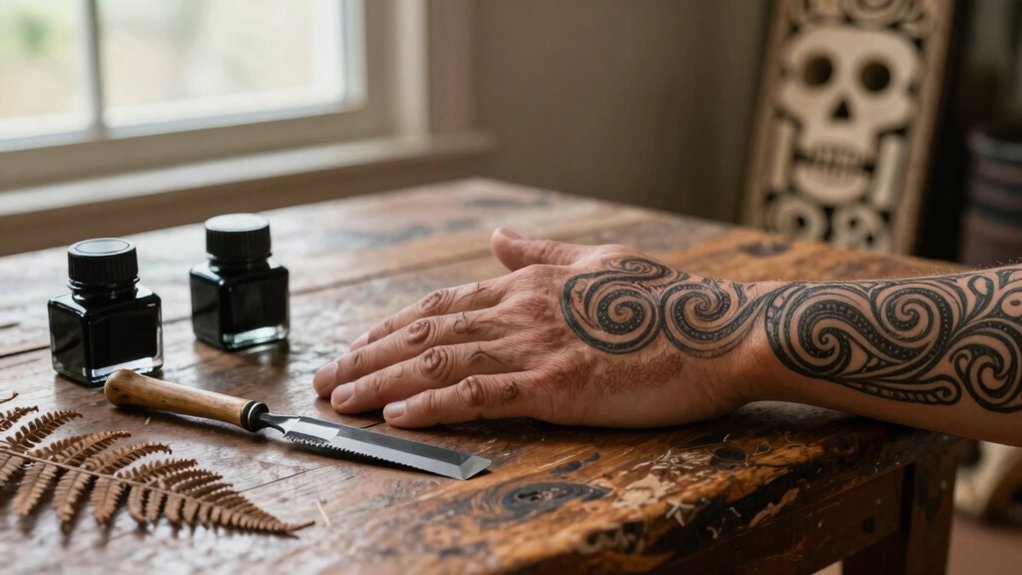
Where do these marks truly begin? You find the answer etched in ceremonies older than memory itself. When you choose a Polynesian spearhead or Celtic knot, you’re carrying millennia of living tradition.
You’ll discover Māori tā moko isn’t mere decoration—it’s your genealogy carved into skin. You’re wearing whakapapa, identity, and social standing in every spiral. You breathe life into symbols when you understand their origins.
You must ask permission before claiming another culture’s sacred imagery. You’re responsible for knowing whether you’ve earned that Maori koru or if you’re appropriating. You honor these roots by researching, by asking, by listening.
You’ll find your own ancestors’ symbols too. Perhaps you’ll unearth a forgotten Norse rune or African Adinkra. You’re not just collecting icons; you’re rebuilding severed connections, stitching yourself back into humanity’s shared tapestry through deliberate, respectful choices.
Minimalist Symbols: How Simple Shapes Carry Deep Meaning
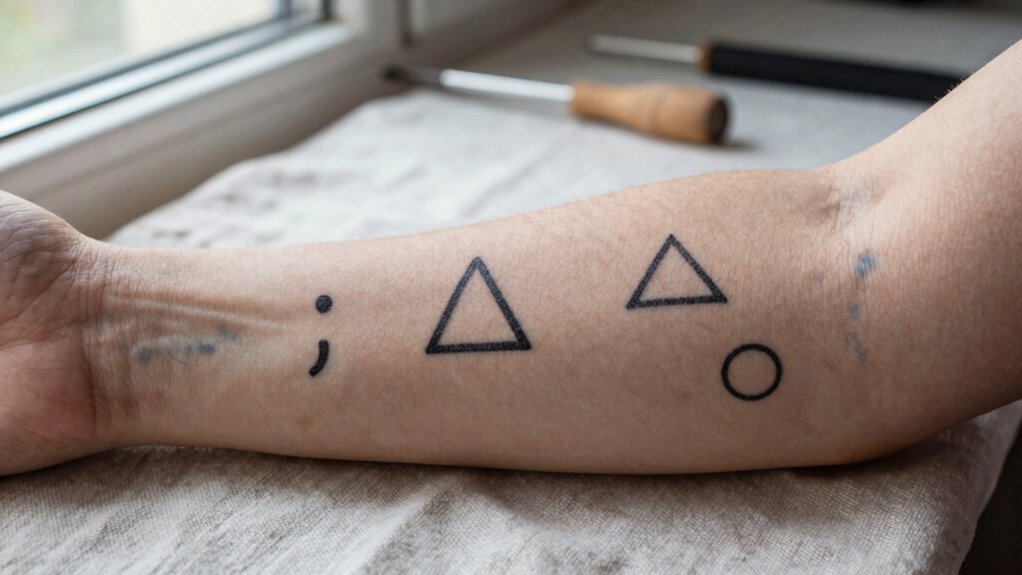
Why do you find yourself drawn to that single line? You recognize how a circle opens infinite interpretations—wholeness, cycles, eternity—without shouting for attention. You choose minimalist symbols because they invite curiosity rather than delivering instant answers.
You trace a tiny triangle on your wrist and feel grounded geometry. You ink a_wave and carry fluid resilience. These sparse marks demand precision; every placement matters. You discover that simplicity amplifies intimacy—the symbol belongs to you first, then others.
You appreciate how these designs age gracefully, their clean lines resisting blur. You understand restraint requires confidence. You whisper meaning instead of declaring it, choosing what remains when ornament strips away. You trust quiet symbols speak longest.
Recommended Products

【TEMPORARY TATTOO PACK FOR MAN WOMEN ADULTS KIDS】Each Size is about 105 x 60mm / 4.13 x 2.36 inch. Contains 15 sheets temporary tattoo paper stickers which are printed with non-toxic ink.
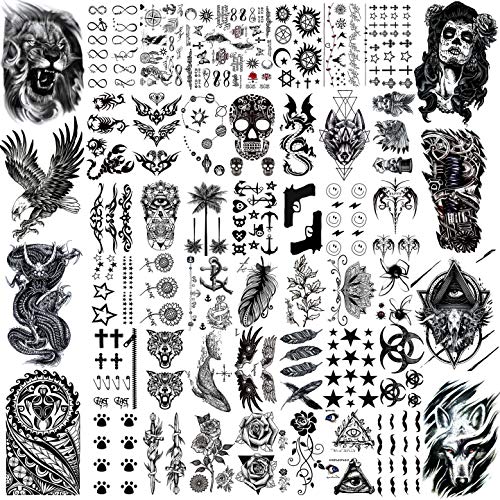
💕【50 Sheets】--VANTATY 3D Temporary Tattoos For Men Women Kids Adults Girls Body Art Stickers Look Real! 【Click Our Store/brand Name To See More Fashion Designs】

WATERPROOF AND LONG-LASTING: Our semi-permanent tech resists water, sweat and friction, so your realistic Jungle Wolf design stays vibrant at the pool, gym or beach for seven to fifteen days without fading
Numbers and Letters: The Hidden Codes in Tattoo Symbolism
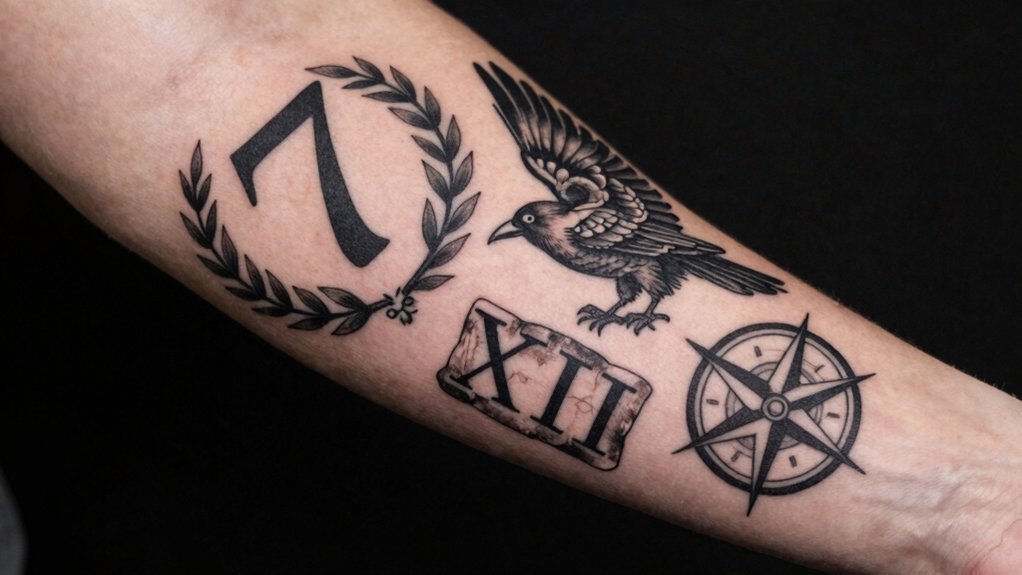
You ink a solitary digit or a single letter and feel the weight of private language. You’ve chosen a Roman numeral, a date, initials rendered in someone’s handwriting—marks that mean nothing to strangers but everything to you. You’re encoding coordinates of a first meeting, a scarred VII for a seventh surgery survived, a parent’s “M” traced from an old birthday card. You don’t explain these tattoos when asked; you smile and deflect. You’ve learned that letters and numbers carry multitudes: 13 becomes luck, not misfortune. XX stands for a twin who never took a breath. You’re building lexicons on your skin, grammars only you speak fluently. You wear your untranslatable story. You’ve hidden in plain sight.
Recommended Products
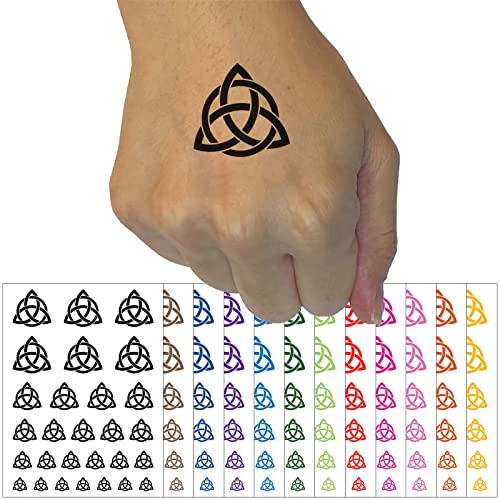
FUN TATTOOS - Enjoy this fun sheet of temporary tattoos that can be applied on skin or used as a waterslide decal on a variety of surfaces. Temporary tattoos are great for party favors, events, costumes and dress-up, permanent tattoo testing or just for fun.

𝗘𝘅𝗽𝗿𝗲𝘀𝘀 𝗬𝗼𝘂𝗿 𝗦𝘁𝘆𝗹𝗲 𝘄𝗶𝘁𝗵 𝗠𝗲𝗮𝗻𝗶𝗻𝗴: Each design carries powerful symbolism-angel wings for freedom and protection, wolf for courage and loyalty, Celtic knots for eternity, and rattlesnake for strength. Ultra-realistic look lets you express your identity like a real tattoo

NORDIC AMULET - Viking bracelet with different amulet has different meanings. The Dara knot is a symbol of tradition, heritage and the power of being connected to your people, bonded to your clan
Color as Symbol: What Your Ink Palette Communicates
Black ink announces permanence before it announces anything else—it’s the standard you’ve inherited, the baseline against which all other choices ripple outward. When you choose color, you’re choosing volume. You turn up the dial on emotion, on visibility, on risk.
Red throbs with urgency—blood, passion, warning. You wear it when you want to stop traffic.
Blue cools things down, carries water, sky, sadness. You pick it for calm or for depth.
Green roots you: nature, growth, envy, balance. You let it ground your design.
Yellow grabs attention, radiates joy, decays quickly on skin—you know you’ll return for touch-ups.
Purple drapes you in royalty, mystery, spirituality.
Your palette telegraphs mood before meaning. You don’t just select shades; you’re curating sensation. Every hue shifts the story your skin tells.
Choosing Your Symbol: Matching Meaning to Personal Experience
What anchors your symbol to your actual life—a date, a face, a failure, a flight? You’ve got to dig past generic meanings. A lotus doesn’t mean rebirth to you until you’ve surfaced from something. A compass points nowhere unless you’ve felt lost.
Match the symbol to the specific dirt under your nails. Don’t pick the wolf because you like lone wolves; pick it because you once abandoned a pack or fought to keep one. Your grandmother’s handwriting beats any font. The coordinates of your breakdown matter more than the city’s skyline.
You’re not collecting meanings from a catalog. You’re pressing permanent ink against the moments that shaped you. Choose what you’ve actually lived, not what photographs well.
Recommended Products

Cool Wolf Temporary Tattoos: Features bold and fun wolf tattoos inspired by wolves and nature. Perfect temp tattoos for kids who love wolves, wildlife, and adventure themes.

Striking Wolf Design – Intricate black-and-white sketch-style wolf art featuring close-up heads with piercing eyes, natural fern accents, and full-body running wolves. Captures raw power, speed, and untamed spirit.
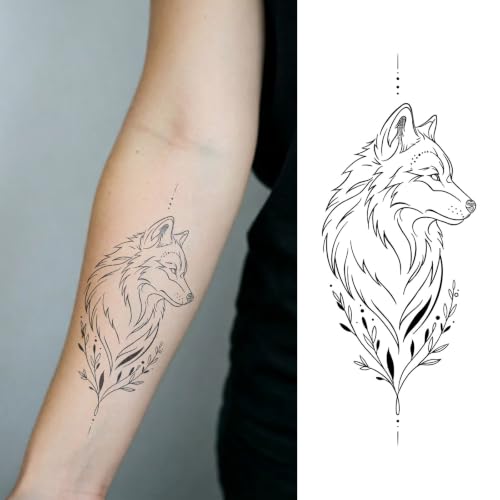
GEOMETRIC BOTANICAL WOLF DESIGN: Featuring a graceful profile of a wild wolf framed by minimalist leafy branches and delicate geometric alignment dots. This digital hand-drawn design beautifully balances wild spirit with soft botanical elements, drafted with high-fidelity precision to ensure every fine line and soft fur texture prints with flawless clarity onto your skin.
Placement Alters Meaning: Where You Wear Your Symbol
A symbol shifts when you move it across skin. You place a heart on your chest, and it pulses with intimacy; you wrap it around your wrist, and it becomes a bracelet of devotion. You decide where your story shows itself.
You feel the difference between hidden and bare. A phoenix climbs your shoulder when you need strength nobody sees. The same bird spreads across your forearm when you want resurrection witnessed. You choose visibility like you choose volume.
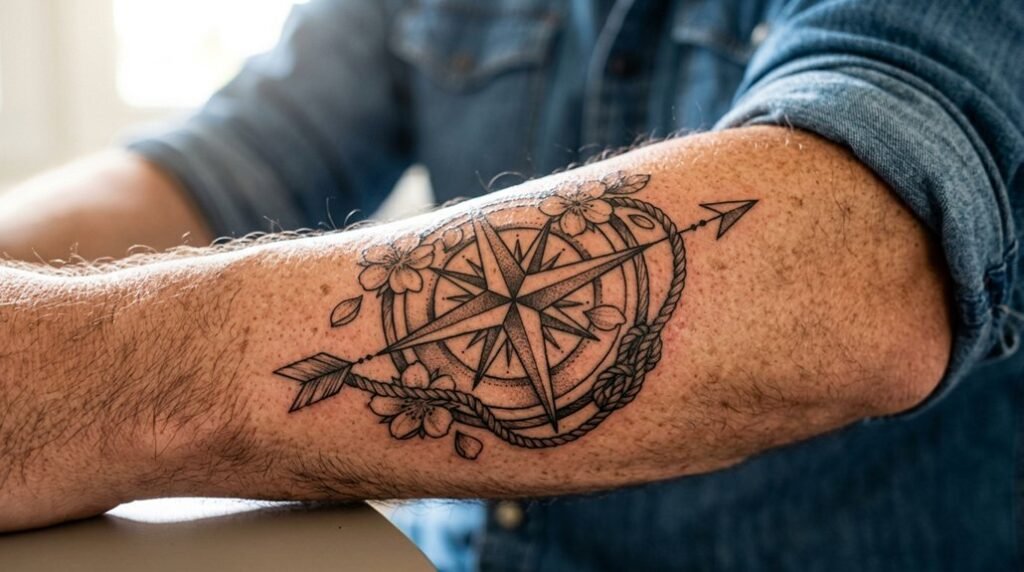
Your hands speak before you do. Your back holds secrets you reveal selectively. You understand that placement bends meaning without breaking it—a compass faces forward when you seek direction, inward when you navigate the self.
You map your body with intention. You carry meaning exactly where you need it.
Recommended Products
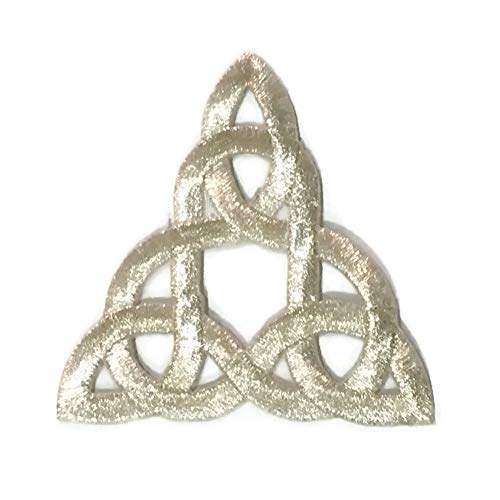
Symbolic Celtic Knot Design: Features a beautifully intricate Celtic knot, representing unity and eternity. Ideal for adding a unique, meaningful touch to jackets, bags, shirts, and accessories
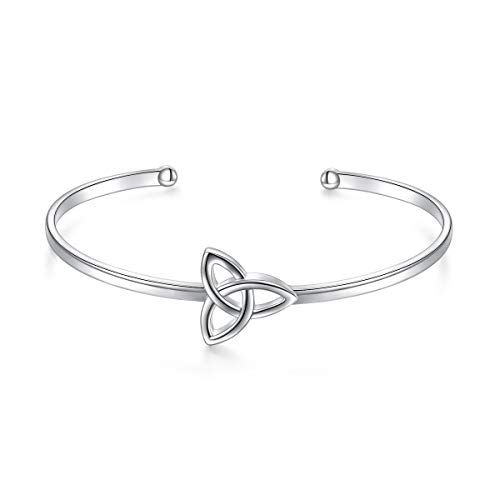
THEME: Celtic Knot is a complete loop that has no beginning or ending and means Faith, Love, Friendship and Eternity.

Creative Pattern Design: CUTELIILI celtic viking tattoos using Norse and Viking style patterns are very individual, you can choose different patterns to meet different interests and needs
Sacred Symbols, Respectful Choices: Avoiding Cultural Appropriation
You’re distinguishing between appreciation and extraction. You’re learning that closed practices remain closed, and you’re respecting those boundaries without complaint. You’re finding alternatives within your own heritage or creating original art instead.
You’re listening to voices from affected communities. You’re correcting your mistakes when you make them. You’re understanding that a tattoo isn’t just personal—it participates in visual culture.
You’re making choices that don’t inflict harm. You’re carrying symbols you understand deeply or you’ve abandoned designs you can’t honor properly. You’re tattooing with integrity.
Conclusion
You’re carrying stories on your skin now—symbols that shift and deepen as you do. Choose meaningfully, wear respectfully, and let your ink evolve with you. Your tattoo speaks. Make sure it’s your truth.