
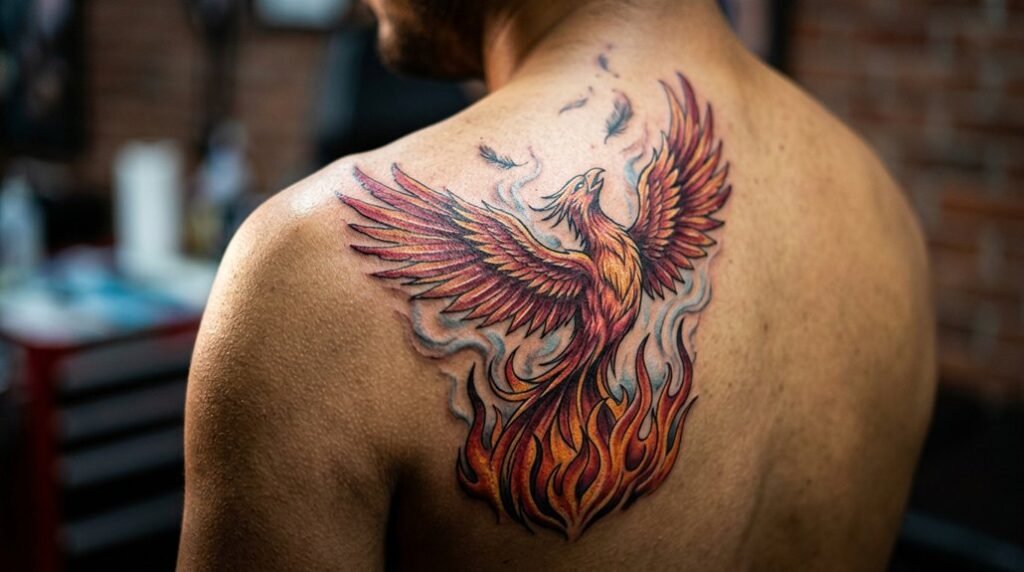
You’ve seen the phoenix rising across shoulders and forearms, but you haven’t stopped to ask what it actually means to the person wearing it. The symbol promises rebirth, yet its true weight shifts with every story it carries. Yours would be different too.
Key Takeaways
- A phoenix tattoo symbolizes rebirth and resilience, representing the wearer’s ability to rise stronger from destruction or hardship.
- It serves as a permanent reminder of personal transformation, marking survival through addiction, grief, illness, or betrayal.
- The design evolves with its wearer, reflecting ongoing growth rather than a single completed achievement.
- Cultural roots span Egyptian sun cycles, Greek renewal myths, and Eastern harmony symbols, enriching its meaning.
- Placement and color choices personalize the narrative, from chest tattoos honoring heartache to gold accents celebrating triumph.
Recommended Products
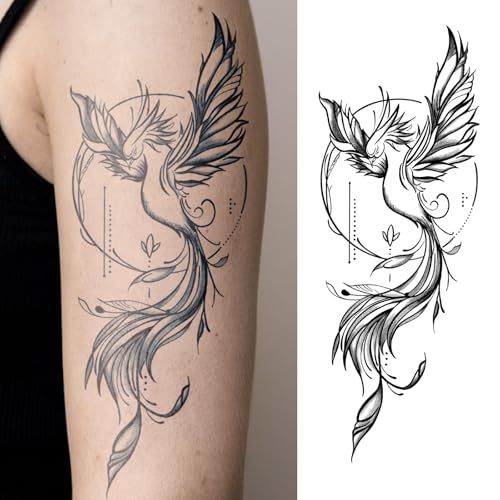
MYTHICAL PHOENIX ART: Features a breathtaking rising phoenix soaring gracefully amid minimalist circular lines and delicate linear accents. This powerful legendary bird motif is crafted using a digital hand-drawn fine line tattoo ensures crisp lines and flawless gradient shading to perfectly capture its sweeping wings, detailed layered feathers, and long, flowing tail plumage with artistic precision.

6PCS Chinese Dragon Phoenix Stencils: You will receive 12 PCS creative hollow out animal theme template with 1PC plastic paint brush. The template features 6 styles Chinese Dragon and Phoenix patterns, the unique designs will surely inspire you. Our stencil are suitable for decorating for easy DIY home decoration, add a splash of color to your home.

【Realistic Semi-Permanent Look】Boldink temporary tattoos are designed to look more like real tattoos than traditional temporary tattoo stickers. They are waterproof, smudge-resistant, and non-shiny for a natural-looking finish. The tattoo will appear silver at first and gradually darken into a rich, realistic color within 48 hours. For best results, avoid contact with bare skin, especially the face, and cover the tattoo with clothing while sleeping to prevent transfer.
What a Phoenix Tattoo Means at Its Core: Rebirth From Ashes
What draws millions to ink this mythical bird onto their skin? You’re seeking something deeper than aesthetics. You’re choosing a permanent reminder that destruction isn’t the end.
You understand the phoenix burns completely before rising renewed. You see your own struggles mirrored in those ashes—your failures, your losses, your moments when everything collapsed around you. You don’t stay down, though. You rebuild, and this tattoo captures that refusal to surrender.
You’re marking transformation. The flames didn’t destroy you; they forged you. Each time you glimpse that ink, you’ll remember who you’ve become through hardship. You wear your resilience visibly, declaring that setbacks are merely preludes to comeback.
Your phoenix represents cyclical renewal—death of the old self, birth of something stronger. You’re not the same person you were before your trials, and you’re proud of who you’ve grown into.
Recommended Products

🔥【Mythical 12-Sheet Collection】Own the legend with 12 sheets of exquisitely designed phoenix silhouette tattoos. Each piece captures the majestic form of the sacred firebird in elegant, intricate outlines—perfect for creating a powerful and cohesive statement.

Geometric Orbit Phoenix Design: This semi-permanent temporary tattoos pack holds two phoenix line art pieces, one full celestial orbit wrapped phoenix and one slim partial feather phoenix with precise geometric star chart frames. Phoenix stands for rebirth, transformation and eternal hope; celestial orbit geometry represents cosmic order, destiny and spiritual exploration. Ideal for mythology stargazing lovers and anyone seeking intricate symbolic body decor.

Japanese Style Tattoo Designs::-- These 6 full arm temporary tattoos feature traditional Japanese designs, including dragons, koi fish, phoenix, and samurai, bringing an authentic touch to your look.
What a Phoenix Tattoo Means in Different Cultures
Your phoenix carries weight beyond your personal story—it echoes through centuries of human belief.
In ancient Egypt, you’d find the phoenix as the Bennu bird, representing the sun’s cycle and creation itself. Your tattoo connects to this eternal return, to Osiris and the soul’s journey.
If you trace Greek origins, you’re wearing the symbol of Heliopolis, where the bird’s fiery death and rebirth marked time’s renewal. Roman soldiers adopted it, and you’d join that legacy of imperial endurance.
In Chinese tradition, your phoenix pairs with the dragon, embodying yin harmony and feminine grace—the Fenghuang brings prosperity and virtue.
Japanese lore gives you the Hou-ou, guarding the south and announcing righteous rule.
Christian medieval artists wove the phoenix into resurrection imagery. You’re wearing layered mythology, each culture adding its voice to your skin’s permanent chorus.
Recommended Products
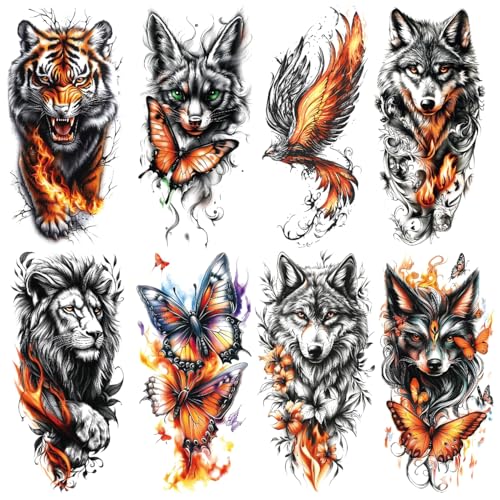
【UNIQUE AMAZING DESIGNS】Each Size is about 11.4 x 21 cm / 4.48 x 8.26 inch. Contains 8 sheets temporary tattoo paper stickers which are printed with non-toxic ink.

【Sacred Rising Phoenix Tattoos】This semi-permanent tattoo set features a mythical rising phoenix combined with tribal sun symbols and elegant feather trails. The design utilizes flowing, bold lines to represent rebirth, resilience, and soaring freedom. Perfectly sized for the shoulder, upper back, or forearm, it is ideal for men and women who seek a powerful symbol of strength and new beginnings. The minimalist yet spirited art style ensures a modern, high-contrast look on any skin tone.

【Develops Fully in 48H】Your unique design Large Bohemian Phoenix Lotus semi permanent tattoo for men women will initially appear silver before naturally darkening to a rich finish within 48 hours. For optimal results, avoid contact with bare skin (particularly the face) and cover the area with clothing during sleep to prevent transfer. Geometric Arrow temporary tattoos, phoenix temporary tattoos fake tattoos, realistic back chest arms calf semi permanent tattoo for men women
Why People Get Phoenix Tattoos After Hardship
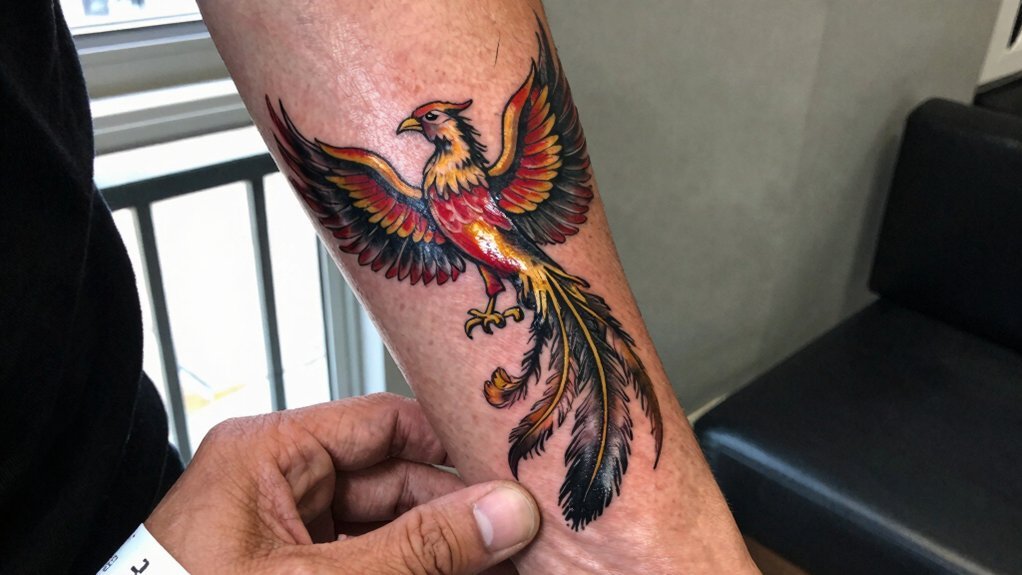
Why do people mark their recovery with flame and feather? You’ve survived something that nearly broke you, and now you’re choosing to wear proof of that survival on your skin.
You don’t get this tattoo for anyone else—you claim it because you’ve earned it. The phoenix burns, dies, and returns. You recognize that cycle because you’ve lived it. Maybe you fought addiction, illness, grief, or betrayal. You fell apart completely, yet you’re still here.
The design becomes your battle scar turned badge. Every time you glimpse it, you remember: destruction wasn’t your ending. You’re rebuilding yourself daily, and this mark anchors that work.
You choose permanent ink because your transformation deserves permanence too. It won’t fade like your struggle might in memory.
Recommended Products

★【27 Sheets Large Watercolor Temporary Tattoos For Women Men】COKTAK Brand Hot Fashion Multicolor Mixed Style Vintage Colorful Animals Temporary Tattoos For Adults. 【Size】Package Includes 12 Sheets 7.8"X3.7" Inches/19.8x9.6cm Large Temporary Tattoos For Arm Thigh Leg Body And 15 Sheets 3.86"X2.28 Inches/9.8x5.8cm Small Temporary Tattoos For Fingers Hands.

SIZE - 10 sheets realistic temporary tattoos with beautiful designs, original brand of Briyhose fake tattoos for adults women kids girl, size is 8.2*4.5 inch (21*11.5cm) 10 Sheets tatoos kit, used for arms, half sleeves, forearm, shoulder, back, spine, neck, hands, legs, thigh and any other part of your body skin.

Unique Pendant: 1” smooth-spinning double-sided glass cabochon (same design on both sides) set in a 1.57” moon frame. Eye-catching statement size. Spinning feature adds fun charm and fidget function
What a Phoenix Tattoo Signals to Other People
Others read your skin without asking. Your phoenix tattoo signals resilience before you speak. Strangers see fire and rebirth; they sense you’ve endured transformation. Friends recognize your triumph over collapse. Employers might note determination etched in ink. Potential partners glimpse emotional depth, a willingness to rebuild rather than retreat.
You broadcast survival without uttering a word. The image declares you’ve met darkness and chosen ascent. Some observers feel inspired, seeing proof that ruin precedes renewal. Others feel challenged, confronting their own unresolved ashes. You can’t control every interpretation, yet you shape the narrative through placement and style. Bold chest pieces demand confrontation; hidden designs invite intimacy. You’re curating perception, offering visual testimony. Your phoenix becomes shorthand: this skin has burned, this person persists.
Recommended Products

【 575+ Fun Assorted Tattoo Stencils 】-The ChurlChurl tattoo stencils collection includes 575 high quality stencils with multiple themes. enjoy cute trendy tattoo stencil designs like butterflies, words, flowers, symbols, totem, Egypt style patterns and more.

▶ Henna Tattoo Kit: 16 sheets tattoo stencils. airbrush tattoo stencils suitable for tattoo lovers. Experience the effects of tattooing without the pain of tattooing.

Dragon Phoenix Stencil: You will receive 3 pieces of painting stencils which have beautiful patterns in animal theme. There are 2 phoenix and 1 dragon patterns on the stencils. Our templates are suitable for you to make handmade projects by yourself.
How to Match Your Phoenix Tattoo to Your Personal Story
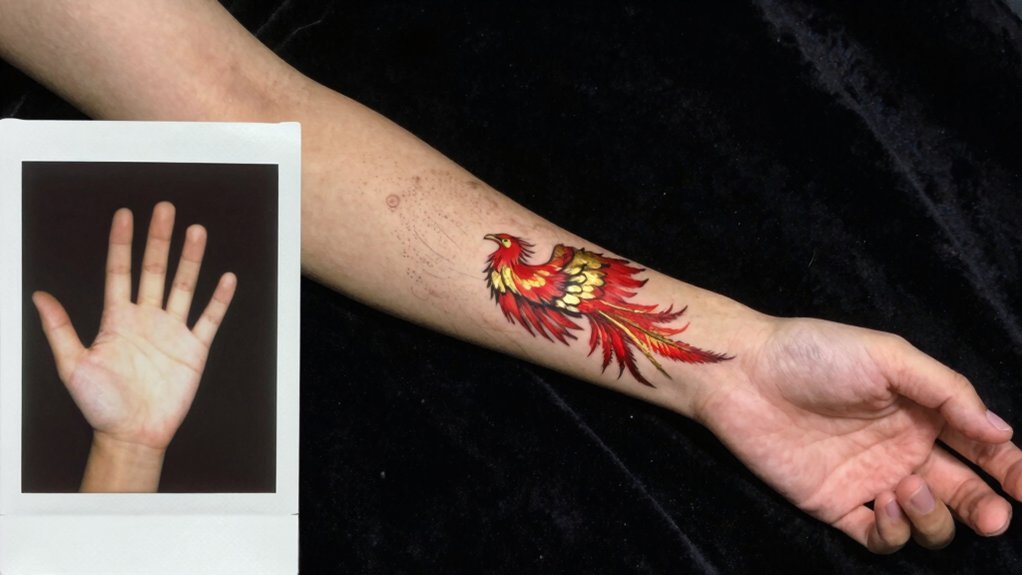
When exactly does ink become memoir—whenever you stop choosing from flash sheets and start shaping the flame yourself. You map your ashes first. What burned? A relationship, an illness, a version of yourself you outgrew? You name it, then you build the rise from it.
You choose your moment of rebirth. Are you mid-flame, still burning, or fully formed, wings spread? That timing carries your truth.
You place the bird where you feel the transformation most—over your heart, along a scar, across skin that survived. You decide if it looks backward at what you lost or forward at what you’ve built.
This is how you stop wearing a symbol and start wearing your own evidence: specific, earned, alive.
Recommended Products

Phoenix Stencils : Plastic stencil is consist of flying phoenix patterns. Ideal for drawing tracing, house embellishment, making a pretty addition to your home. Make your life full of art and fun. Size is 29.7x21cm/11.6x8.3 inch.

About the Stencil: You will receive 1 piece phoenix pattern stencil, which is made of high quality PET Plastic with good flexibility, durability, non-odorless, professionally cutting, rounded edges and corners won't hurt anyone. Size: 8.3inch/21cm wide,11.7inch/29.7cm long.

⯁ 400+ Reusable Henna Stencils: Get 24 sheets of high-quality, self-adhesive hollow templates featuring over 400 unique patterns. These temporary tattoo stencils allow you to create stunning body art including mandalas, butterflies, and dragons. Perfect for practicing techniques without permanence
How Design Style and Color Change the Meaning
How you render the bird shapes what it says about you. You choose tribal patterns when you want to emphasize primal strength and ancestral roots. You pick geometric lines when you’re highlighting logic and transformation through structure. You select watercolor blends when you’re expressing fluid emotions and raw vulnerability.
Your color choices deepen the message. You use red and orange when you’re celebrating passionate rebirth and unbreakable fire. You add blue or purple when you’re acknowledging pain endured before rising. You keep it black and grey when you’re marking solemn remembrance or personal battles fought quietly.
You blend gold accents when claiming triumph and earned wisdom. You let the style mirror your specific journey rather than copying generic flames. Your phoenix becomes unmistakably yours through these deliberate visual choices.
Recommended Products

【Develops Fully in 48H】Your tattoo will initially appear silver before naturally darkening to a rich finish within 48 hours. For optimal results, avoid contact with bare skin (particularly the face) and cover the area with clothing during sleep to prevent transfer.

😺【70 SHEETS SELIDODO Watercolor Temporary Tattoos For Girls Women Adults】Package Includes 12 Sheets Realistic Waterproof Tribal Coloful Half Sleeve Temporary Tattoos For Adults and 58 Sheets Cute Tiny Small Temporary Tattoos For Kids Boys Girls Teens 3D Gothic Tatoos Universe Planets Star Moon Animals Spider Web Cross Birds Scorpion Bat Ghost Elephant Flower Floral Pirate Compass Anchor Butterfly Skull Skeleton Maori Totem Wolf Tiger Lion Dragon Eagle Owl Bear Crown Mountain Sea Wave Snake Tree infinity Letter Words Quotes Coyote Feather Astronaut Whale Lotus Dreamcatcher.

✔[LARGE PHOENIX TEMPORARY TATTOO] Briyhose Large Realistic Sexy Phoenix Tattoos Temporary Can Cover Your Body Parts Large. It Contains 7 Sheets 7.48 * 4.72 Inch (19 * 12cm) and 1 Sheet 7.48 * 3.54 Inch (19 * 9cm) Realistic Half Arm Sleeve Watercolor Fake Phoenix Tattoo Stickers For Adults Women Girl Tatto Kit. You Can Share It With Your Family And Friends.
How Phoenix Tattoo Placement Changes Its Meaning
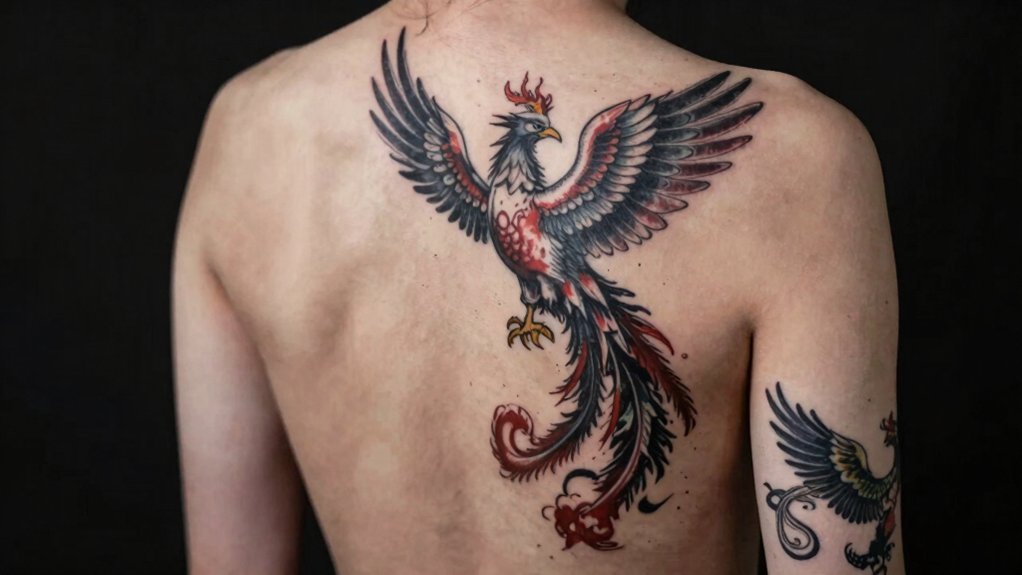
Where you place your phoenix shifts its message entirely. You ink it across your chest when you’re reclaiming your heart after loss. You wrap it around your forearm as a daily reminder of your resilience—you’ll see it constantly, and so will everyone else. You hide it on your ribs or hip when your rebirth feels private, something you’re still processing. You soar it across your back when you’re carrying transformation like wings. You place it behind your ear for quiet strength, whispered rather than shouted. Your neck placement demands attention—you’re announcing change boldly. You choose your ankle for forward movement, each step marking progress. Your shoulder holds the weight of what you’ve overcome. Wherever you decide, you’re mapping your personal legend onto your skin.
Recommended Products

Dopetattoo Waterproof High-Quality Easy-Use Long-Lasting Temporary Tattoos.You can take it to the beach, swimming pool, bath and any other water activities. Without excessive friction. It will last 3-5 days.

Quantity and Style: You'll receive 6 sheets flame tattoo stickers in a variety of unique patterns. with plenty of quantity and style options to meet your decorating needs, this set is also great for sharing with family and friends.
Do Phoenix Tattoos Mean Different Things for Men and Women?
Do gender expectations actually shape what your phoenix tattoo communicates, or does the symbol transcend those boundaries entirely?
You’ll find that society sometimes pushes narrow interpretations onto your choice. People might expect men to emphasize strength and dominance through aggressive poses or fiery masculinity. They might assume women focus on delicate rebirth or emotional healing through softer designs.
But you’re reclaiming this myth on your own terms. The phoenix doesn’t recognize gender—it burns, dies, and rises regardless. You’re choosing meaning through personal experience, not chromosomes. Your resurrection story belongs to you alone.
Artists notice clients increasingly reject these boxes. You’re prioritizing symbolism over stereotype. Whether you select bold lines or flowing curves, you’re expressing universal human struggle. The fire transforms equally—your phoenix embodies whatever truth you need it to carry.
Recommended Products

🐳[8 Sheets Black Dragon Tattoos in One Package!] - Original Brand of TASROI 3D imperial loong Tribal Dragon Temporary Tattoos For Women Men and Adults. Tattoos Temporary Contains 8 Large Sheets Water Transfer Animals Dragon Floral Flower Rose Moon Serpent Totem Armband Etc.

🎡【Package Includes:】 76 Sheets Black Dragon Temporary Tattoos For Women Men Adults Including 12 Sheets Half Arm Sleeve Tattoo Stickers and 64 Sheets Tiny Cute Small Fake Tattoos For Kids Boys Girls, 3D Gothic Tatoos Universe Planets Star Moon Spider Web Cross Birds Scorpion Bat Ghost Elephant Flower Floral Sailing Ship Pirate Compass Anchor Butterfly Skull Skeleton Maori Totem Wolf Tiger Lion Dragon Eagle Owl Bear Crown Mountain Sea Wave Snake Tree infinity Letter Words Quotes Abstract ECG Feather Gangster Minimalism Coyote Feather Astronaut Whale Lotus Dreamcatcher.
How to Deepen Your Connection to Your Phoenix Tattoo’s Meaning
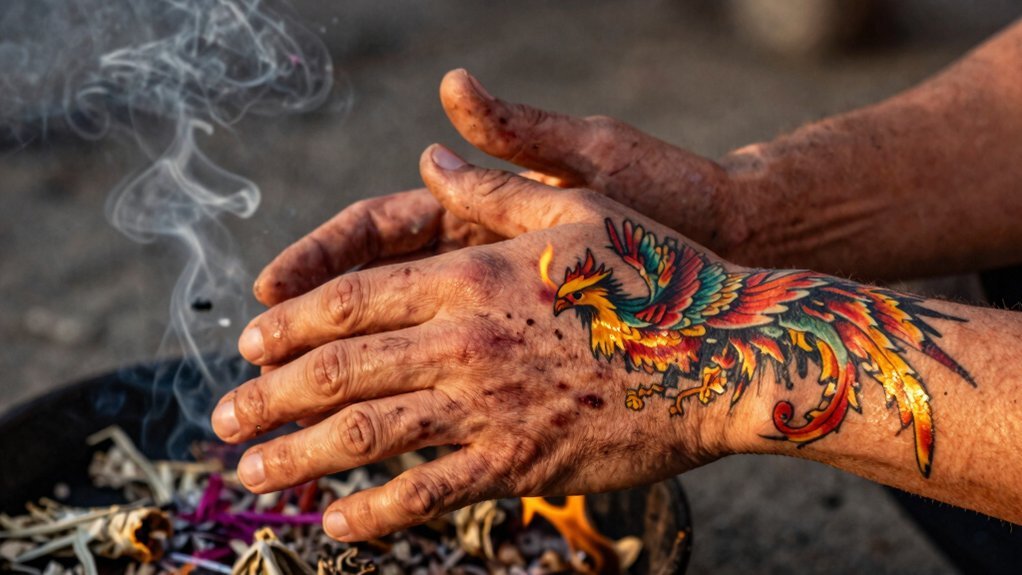
You’ve claimed the symbol on your own terms—now you’ll want to keep its meaning alive long after the ink settles.
Revisit your story regularly. When you trace the lines, recall exactly what you rose from. Journal about moments you embody that rebirth. You’ll strengthen the bond between skin and spirit.
Share your meaning selectively. Explaining your phoenix to someone who matters reinforces its significance in your own voice.
Refresh the imagery around you. Keep sketches, photographs, or objects that sparked your original design nearby. They’ll remind you why you chose fire over ash.
Finally, let the tattoo evolve with you. Your phoenix doesn’t freeze in time—it grows as you conquer new challenges. You’re not finished rising.
Recommended Products

INCREDIBLE VALUE – 281 Unique Designs: This extensive henna tattoo kit includes 281 diverse patterns suitable for full creativity across hands, arms, and body. Featuring mandalas, florals, paisley, and geometric motifs, these flexible henna stencils allow you to mix and layer styles freely. The collection of henna temporary tattoos ensures you always have the perfect design for festivals, parties, or personal expression

4PCS Flame Phoenix Stencil: You will receive 4 PCS creative hollow out animal theme template with 1PC plastic paint brush. The template features 4 styles of flame phoenix pattern, the phoenix rises from the ashes, symbolizing vitality and hope, the unique designs will surely inspire you. Our stencil are suitable for decorating for easy DIY home decoration, add a splash of color to your home.
Conclusion
Your phoenix tattoo represents your unstoppable ability to rise, transform, and keep evolving. Every glance reminds you that destruction precedes growth, and that you’re stronger than what tried to break you. Choose imagery that speaks your truth—whether understated or bold—and place it where you’ll see it daily. This symbol becomes yours through intention, not just ink. Keep rising.