
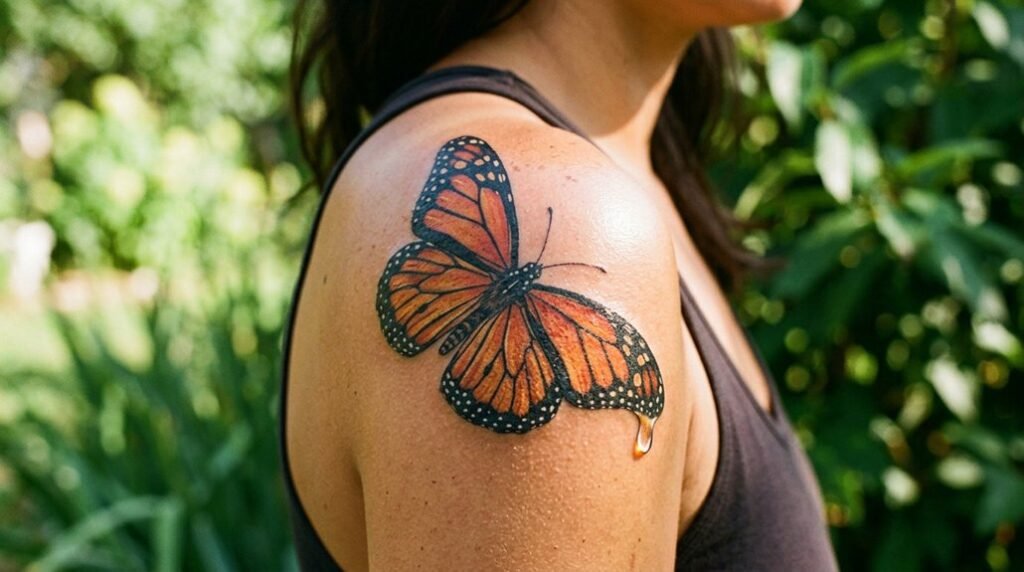
You might think a butterfly tattoo is just pretty, but you’re carrying more than ink. You’re wearing transformation itself—resilience made visible. The question isn’t what it means to everyone else. It’s what you’re signaling about your own evolution, and why you chose this moment to mark it.
Key Takeaways
- Butterfly tattoos symbolize transformation and personal growth through life’s challenges and change.
- They represent freedom, liberation from constraints, and leaving past limitations behind.
- Colors add layers: black for mystery, blue for spirituality, red for passion, purple for sacred transformation.
- Culturally, they signify souls, eternal love, rebirth, and messages between earthly and spiritual realms.
- Design choices—placement, size, and style—reflect whether transformation is private intimacy or public declaration.
Recommended Products

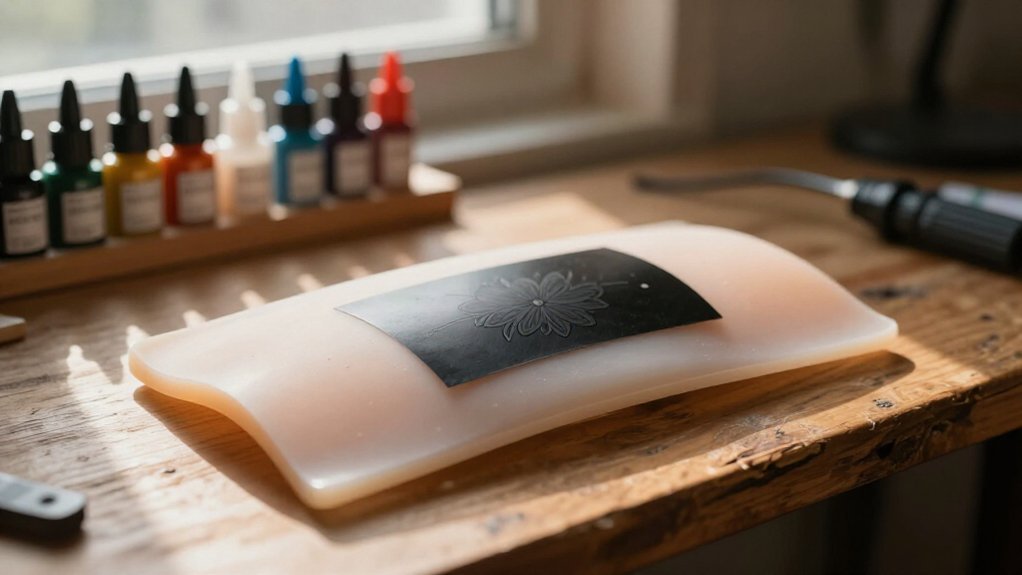
【 575+ Fun Assorted Tattoo Stencils 】-The ChurlChurl tattoo stencils collection includes 575 high quality stencils with multiple themes. enjoy cute trendy tattoo stencil designs like butterflies, words, flowers, symbols, totem, Egypt style patterns and more.

Ample quantity: here will be 16 pieces butterfly theme stencils with reasonable size packaged to you, ample quantity of stencils allow you to use them them for different purposes, such as scrapbooking drawing tracing, house embellishment

You will get: 8 black butterfly temporary tattoos, the entire flower temporary tattoo sticker size is 21*9.8cm/8.26*3.85inch. With sufficient quantities and complete varieties, you can use these realistic small flower temporary tattoo stickers on arms, shoulders, back, chest, legs, neck and any part of the body to become a dazzling presence in the crowd.
The Core Meanings Behind Butterfly Tattoos
Why do so many people choose a butterfly when they’re deciding on their next piece of ink? You’ll find the answer in transformation. A butterfly tattoo represents your personal evolution—how you’ve grown through life’s challenges and emerged stronger.
You’re drawn to this symbol because it mirrors your own journey. You’ve changed, adapted, and become someone new. The butterfly captures that perfectly.
Freedom calls to you too. You’ll see yourself in wings that travel wherever the wind carries them. You crave liberation from constraints, past mistakes, or limiting beliefs.
Beauty and fragility live together in this design. You understand that strength doesn’t always roar—sometimes it floats, delicate and determined.
When you choose this tattoo, you’re marking your resilience. You’re saying you’ve endured the dark cocoon and found your light.
Recommended Products

[Semi-Permanent, Realistic Tattoos] INKARTLINK semi-permanent tattoos are lifelike, durable, waterproof, and sweat-resistant, lasting 7–14 days and gradually fading as the skin’s outer layer sheds. They’re perfect for everyday wear, events, or themed occasions. From the beach to the office, they stay vibrant, allowing you to effortlessly showcase your body art in any setting.

【Package Including] Each package including 10 sheets butterfly temporary tattoos sticker, 100 pcs in total, there are different colors and styles to choose from.

Generous Quantity: 5 sheets containing a total of 55 monarch butterfly tattoos for multiple applications and sharing
Cultural and Spiritual Interpretations Worldwide
Across cultures and centuries, you’ve likely encountered the butterfly as more than just a pretty insect—it carries weight in traditions you’ve never explored.
In Japan, you’ll find the butterfly represents souls and marital joy. Two butterflies fluttering together symbolize a happy marriage. In China, you’re seeing eternal love when you spot this motif, as the word for butterfly sounds like “seventy”—marking long life and romance.
Native American traditions teach you to view butterflies as messengers carrying prayers to the spirit world. When you wear this symbol, you’re honoring ancestors who believed in transformation’s power.
Ancient Greeks connected butterflies to the psyche—the soul itself. You’ll discover Celtic traditions associate them with fire and rebirth.
You’re choosing a symbol that transcends borders, speaking to universal human experiences of change, hope, and spiritual awakening.
Recommended Products
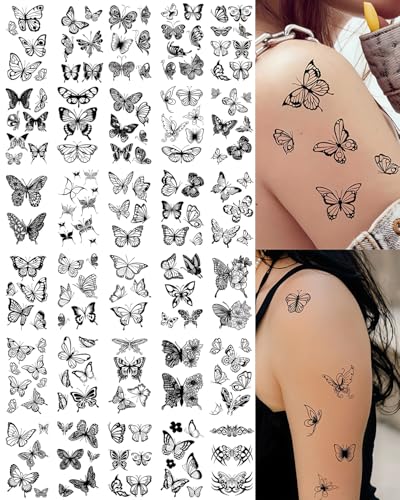
Butterfly Temporary Tattoos for Women: There are 30 black butterfly temporary tattoos in one pack, size 3.93*2.4 inches, you can use these tattoos for arm, shoulder, back, chest, leg, neck, and any part of your body. Butterfly fluttering on the body

Glitter Temporary Tattoos: the fake butterfly temporary tattoos has 12 sheets different butterfly wings patterns. you can used these tattoos for face eyes, neck and worn any where on your body show your personality, Create the popular butterfly makeup on the Internet

Glitter Butterfly Temporary Tattoos: the fake watercolor style temporary tattoos has 10sheets 100pcs different butterfly wing patterns. you can used these tattoos for arms, face, shoulders, back, chest, eyes, legs, neck and worn any where on your body show your personality
What Your Color Choice Really Signals
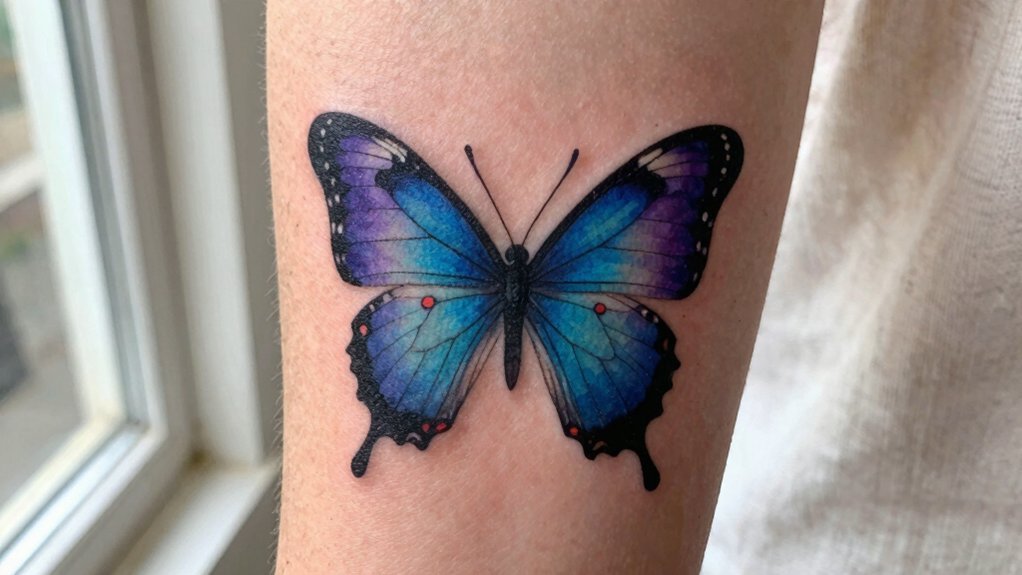
How deeply have you considered what your chosen shade communicates before the needle ever touches skin?
Black ink commands attention. It signals mystery, transformation’s shadow side, or elegant simplicity. You’re drawn to timeless statements.
Blue whispers freedom, spirituality, or calm resilience. You’re navigating change with serenity.
Red shouts passion, courage, or vital energy. You’re marking survival, love, or fierce rebirth.
Yellow captures joy, optimism, new beginnings. You’re celebrating emergence, not just change.
Purple suggests royalty, creativity, or spiritual depth. You’re claiming transformation as sacred.
White or watercolor styles speak to impermanence, ethereal beauty. You’re honoring life’s fleeting nature.
Your combination matters too. Orange and black mimics monarchs—migration, endurance, return. Pastel palettes suggest gentler personal evolutions.
Your color isn’t decoration. It’s vocabulary. You’re selecting precise emotional frequencies, broadcasting your specific transformation story without speaking.
Recommended Products

【TEMPORARY TATTOO PACK FOR MAN WOMEN ADULTS KIDS】Each Size is about 10.5 x 6 cm / 4.1 x 2.36 inch. Contains 2 sheets temporary tattoo paper stickers which are printed with non-toxic ink.

DELICATE BLUE BUTTERFLY DESIGN Intricate butterfly tattoo with vibrant blue tones and fine detail. Approx. 2x2" – ideal for wrist, forearm or ankle placement.

Butterfly Temporary Tattoos for Women: There are 30 sheets large black butterfly temporary tattoos in one package, size is 5.7*9.7 inch, you can used these tattoos for arms, shoulders, back,chest, legs,neck and worn any where on your body, the butterfly dancing on the body
Why People Choose This Design (And What That Says About You)
Perhaps you’ve stood before a mirror tracing an imaginary wing on your shoulder, wondering what draws you toward this particular shape. You’re choosing transformation, not as an abstract concept but as a lived promise. The butterfly marks someone who refuses to stay contained.
Maybe you’ve survived something that nearly broke you. This design announces your emergence without demanding you explain the cocoon. You value beauty that’s earned, not given.
Or perhaps you’re celebrating growth you’ve chosen deliberately—leaving behind versions of yourself that no longer fit. You’re someone who honors process over destination.
You might simply identify with lightness, with movement, with refusing to land anywhere permanently. This choice suggests you trust change more than stasis. You believe reinvention remains possible at any stage, and you’re willing to wear that belief where others can see.
Recommended Products

Sexy Styles Temporary Tattoos: New style Large flowers butterfly lace navel temporary tattoos perfect for women, ladies, girls, and adults fun, perfect to show off your sexy body.

【PACKAGE】Contains 8 Sheets temporary tattoo paper stickers which are printed with non-toxic ink, each sheet measuring 190 x 90 mm / 7.48 x 3.54 inch in size.

【UNIQUE AMAZING DESIGNS】Each Size is about 10.5 x 6 cm / 4.1 x 2.36 inch. Contains 2 sheets temporary tattoo paper stickers which are printed with non-toxic ink.
Butterfly Tattoo Styles: From Fine Line to Watercolor
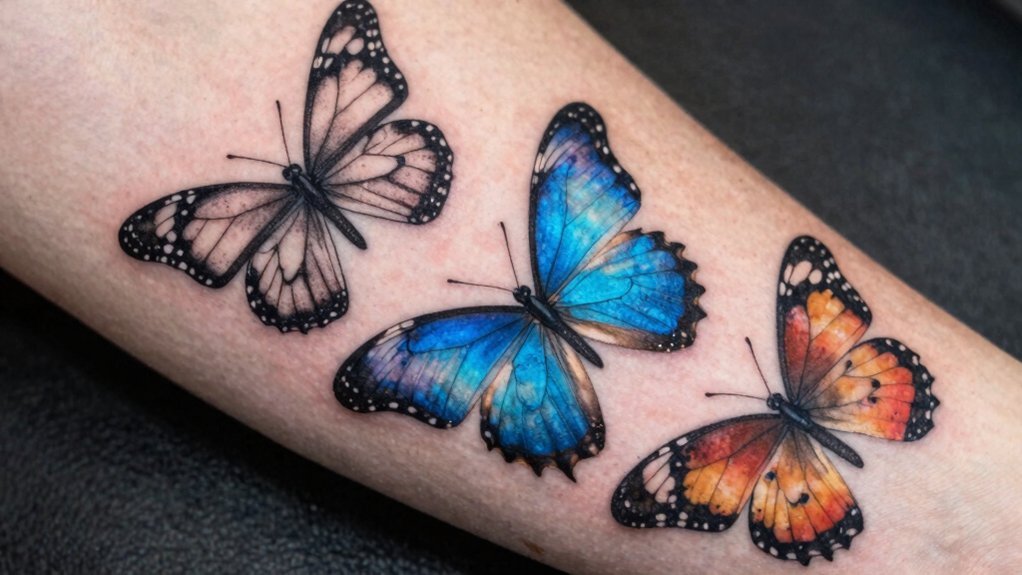
Where you place ink on skin, you’re also choosing a visual language—each style carries its own dialect of meaning. When you select fine line work, you’re whispering transformation through delicate precision, letting thin threads suggest fragility and intention. You opt for minimalism when you want the symbol itself to breathe without noise.
If you choose black and grey realism, you’re grounding metamorphosis in shadow and texture, making it tangible, weighty. You reach for watercolor when you refuse containment, letting pigment bleed beyond outlines like memory dissolving into feeling. Neo-traditional boldness lets you claim the butterfly as banner, not secret. Each technique you pick reframes what change means to you—quiet evolution, dramatic rupture, or something suspended between.
Recommended Products

✨ Superior Value Set: Each kit contains 6 large A4 sheets with up to 100 distinctive patterns (depending on the theme). From delicate flowers to fierce animal totems, this bulk collection offers endless creativity for DIY body art lovers, ensuring you always have the perfect design for any mood.


Placement Strategies: Where the Meaning Shifts
Why settle for a single meaning when your body offers so many dialects? You choose placement carefully, knowing each location speaks differently.
You place butterflies near your wrist to claim transformation openly, letting others witness your evolution. You tuck them behind your ear when you whisper growth to yourself alone. You scatter them across your ribcage, guarding personal change against your heartbeat. You anchor them on your shoulder blade, carrying metamorphosis like wings you can’t yet feel.
Size shifts significance too. You select small tattoos for intimate reminders, large ones for declarations. You position flying butterflies upward to suggest aspiration, downward to signal arrival. You cluster multiple butterflies to show interconnected journeys, isolation to mark solo passages.
Your placement constructs grammar. You write sentences across your skin, each butterfly becoming punctuation in longer stories of becoming.
Recommended Products

Glitter Butterfly Temporary Tattoo: Package includes 12 sheets (100pcs) Glitter Face Sticker Set for Women And Girls. Different pattern designs are suitable for different eye makeup. There are enough quantities and various charming styles to meet your different decoration ideals

【Package Include】Each package including 30 sheets butterfly temporary tattoos sticker, 126 pcs in total, there are different colors and styles to choose from, used for arms, shoulders, back, legs and any other part of your body

【Long Lasting Temporary Tattoos】There are 6 sheets large black temporary tattoos in one package, These came in a nice elegant envelope,size is 4.72*7.48 inch, include Flowers Rose butterfly Leaves Tattoo,look sexy and mysterious.
Building Your Personal Symbol: Combining Elements
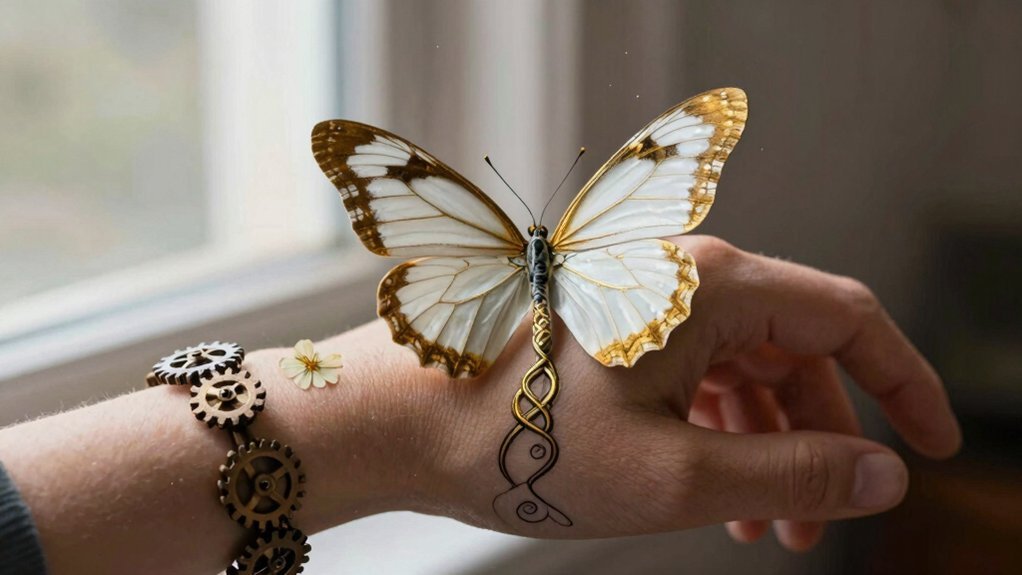
A single butterfly carries weight, but you layer meaning when you combine it with other symbols. You anchor transformation to specific moments by adding dates, names, or coordinates. You pair the butterfly with semicolons to mark mental health struggles you’ve survived. You weave in flowers that bloom from the wings, tying growth to nature’s cycles. You place moons or stars nearby, connecting change to cosmic timing. You add broken chains or open cages to emphasize freedom earned, not given. Each element you choose sharpens the narrative. You work with your artist to balance composition and symbolism. You test combinations: skulls for mortality, clocks for fleeting time, water for emotional flow. You build something no one else owns. Your tattoo becomes a language only you fully speak.
Recommended Products

❤TATTOOS FOR BUTTERFLY THEME PARTY IDEAS-- Package contain 100+ style butterfly glitter tattoos for girls , add a touch of colorful to your arms, shoulders, legs, and other body parts with realistic full-color ,a series of funny style to provide big fun for both children and adults alike!

Glitter Temporary Tattoos: The fake glitter butterfly temporary tattoos has10 sheets different butterfly wings patterns. you can used these tattoos for face eyes, neck and worn any where on your body show your personality, Create the popular butterfly makeup on the Internet

CHARMING BUTTERFLY DESIGNS: This set features 8 sheets - 96 unique temporary tattoos, showcasing a delightful variety of butterfly designs. From elegant monarchs to colorful tropical butterflies, these tattoos encapsulate the beauty of nature and are perfect for butterfly enthusiasts of all ages. Each design inspires creativity and allows kids, teens, and adults to express their love for these graceful creatures in a fun and artistic way.
Conclusion
You’re carrying more than ink—you’re wearing your evolution. Whether you chose delicate lines or bold color, placement that hides or reveals, your butterfly marks where you’ve been and where you’re still going. It’s your reminder that transformation isn’t a single moment but a practice you choose daily. So let it mean what you need it to mean, and let it change as you do.
Recommended Products

Size:60mm x 105mm (2.36" x 4.13")