
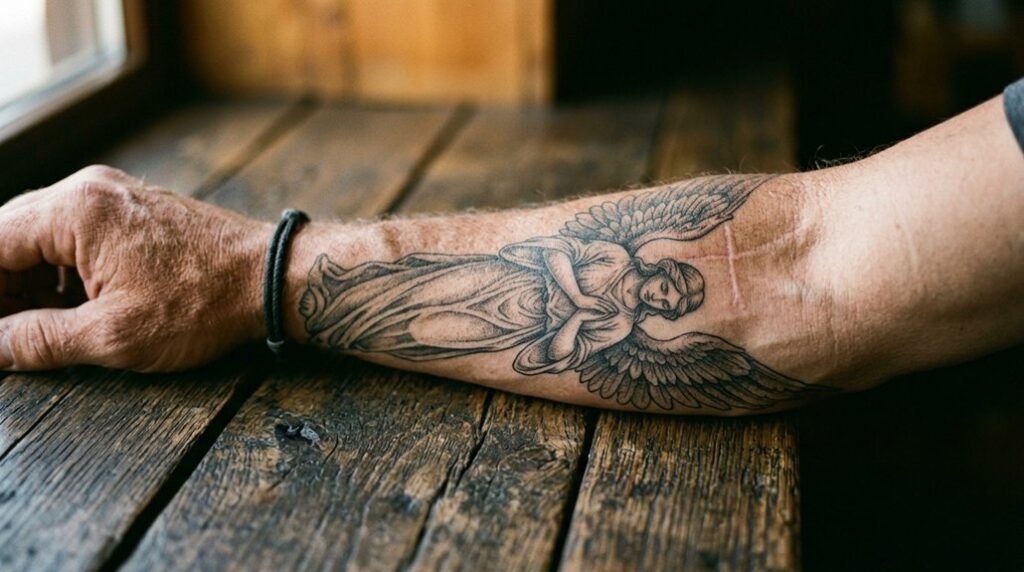
You might think an angel tattoo carries a single, simple meaning, but you’d be mistaken. These designs weave together faith, grief, protection, and rebellion in ways that surprise even seasoned collectors. Whether you’re drawn to guardian wings or a fallen figure, your choice reveals more than you’d expect. The real question isn’t what angels symbolize—it’s what *you’re* trying to say.
Key Takeaways
- Angel tattoos often represent divine protection and spiritual guardianship across religious traditions.
- They frequently symbolize personal faith, grief, survival, or significant life transformations.
- Guardian angel designs serve as permanent reminders of loved ones or invisible protective presence.
- Fallen angel imagery conveys struggle, rebellion, redemption, or complex emotional narratives.
- Meaning ultimately depends on individual belief, chosen imagery, and personal connection to the symbol.
Recommended Products
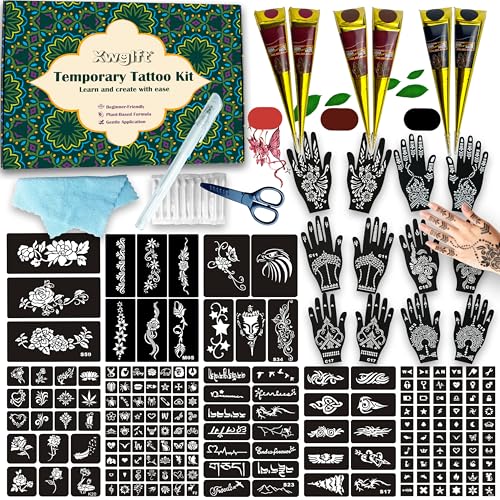
🎁 【PERFECT GIFT FOR TEEN GIRLS】 Beautifully packaged in an organized gift box with an easy-to-follow user manual included! This temporary tattoo kit makes the ultimate birthday, holiday, and Christmas gift for teen girls. Sparks endless creative fun for birthdays, sleepovers, and family DIY nights.

RICH TEMPORARY TATTOO KIT - Contains rich tattoos pattern templates (126 designs),6 tattoo inks in 2 colors (black and brown),4 disposable gloves 1 pack of cleaning supplies,allowing you to easily create unique personalized tattoos

【 575+ Fun Assorted Tattoo Stencils 】-The ChurlChurl tattoo stencils collection includes 575 high quality stencils with multiple themes. enjoy cute trendy tattoo stencil designs like butterflies, words, flowers, symbols, totem, Egypt style patterns and more.
Angel Tattoo Meanings: Spirituality, Culture, and Personal Belief
Why do people etch celestial guardians into their skin? You seek meaning when you choose an angel tattoo, and that meaning shifts depending on where you stand.
You might draw from Christianity, where angels serve as God’s messengers and symbols of divine protection. You’ll find similar threads in Islam, where angels record your deeds and guard your path. In Judaism, you recognize Michael and Gabriel as powerful intercessors.
Your culture shapes what you see. In Mexico, you blend Catholic imagery with folk traditions, creating angels that echo your ancestors’ devotion. In Japan, you might fuse Western angel forms with Buddhist concepts of guiding spirits.
Your personal belief ultimately decides the meaning. You ink an angel to mark grief, celebrate survival, or claim spiritual identity. You don’t need organized religion; your private faith suffices.
Recommended Products

Poseidon cartridge adopt a one-time joint design hygienic standard The material is stainless steel and easy to color,and has better ink flow

Package: 50pcs mixed tattoo cartridge needles, includes 10pcs each of 1203RL, 1205RL, 1207RL, 1209RL, 1211RL.

Complete Packaging: 50pcs mixed size tattoo cartridge needles set, includes 5pcs each of 1205RL 1207RL 1209RL 1205RS 1207RS 1209RS 1207RM 1207M1 1215M1 1215RM. The unique design of the needle can store more ink, and the sharp needle thread better completes tattoo activities, suitable for both professional tattoo artists and beginners.
Guardian Angel Tattoo Ideas: Protection and Personal Connection
Where do you turn when you need protection that follows you everywhere? You ink a guardian angel onto your skin. These tattoos connect you to something larger than yourself—a watchful presence that never sleeps.
You might choose a classic winged figure hovering above clasped hands, or perhaps a subtle silhouette tucked behind your ear. Some of you add names, dates, or initials, transforming universal symbolism into intimate memorials. You’re not just decorating your body; you’re carrying comfort you can actually see.
Placement matters to you. You put these guardians where you need them most—over your heart, along your spine, or wrapped around your wrist like a bracelet. Each glance down reminds you that you’re watched over. You’re building a permanent relationship between belief and flesh, between memory and hope.
Recommended Products

[Semi-Permanent, Realistic Tattoos] INKARTLINK semi-permanent tattoos are lifelike, durable, waterproof, and sweat-resistant, lasting 7–14 days and gradually fading as the skin’s outer layer sheds. They’re perfect for everyday wear, events, or themed occasions. From the beach to the office, they stay vibrant, allowing you to effortlessly showcase your body art in any setting.
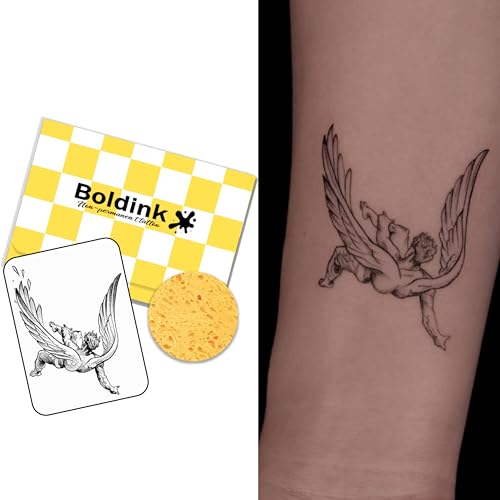
【Realistic Semi-Permanent Look】Boldink temporary tattoos are designed to look more like real tattoos than traditional temporary tattoo stickers. They are waterproof, smudge-resistant, and non-shiny for a natural-looking finish. The tattoo will appear silver at first and gradually darken into a rich, realistic color within 48 hours. For best results, avoid contact with bare skin, especially the face, and cover the tattoo with clothing while sleeping to prevent transfer.

[Semi-Permanent, Realistic Tattoos] INKARTLINK semi-permanent tattoos are lifelike, durable, waterproof, and sweat-resistant, lasting 7–14 days and gradually fading as the skin’s outer layer sheds. They’re perfect for everyday wear, events, or themed occasions. From the beach to the office, they stay vibrant, allowing you to effortlessly showcase your body art in any setting.
Fallen Angel Tattoo Designs: Struggle and Redemption

You fall from grace long before you ever pick up the needle. You carry your battles beneath your skin—choices made, bridges burned, nights you barely survived. The fallen angel you choose isn’t defeat; it’s testimony.
You ink the broken wings spread wide, the shadowed eyes lifting toward light. You’re mapping contradiction: darkness reaching upward, defiance married to hope. Each feather you etch traces a path you’ve walked—rebellion, consequence, stubborn refusal to stay down.
You’re not celebrating the fall. You’re honoring the climb back. The sword dropped but not forgotten. The halo tilted, not shattered.
You wear your worst chapters as armor. You’ve learned redemption isn’t earned in a day. It’s fought for, scar by scar. And you’re still fighting.
Recommended Products
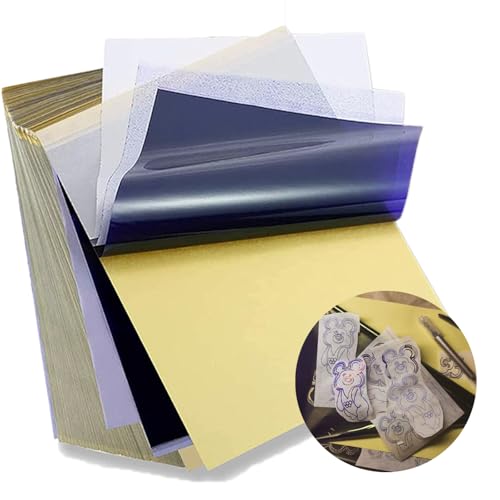
Standard size: Tattoo Transfer Paper is standard A4 paper size, each measures 8.27 in X 11.69 in. There are 4 levels in total. The thickness of the paper is very light and smooth to the touch.

Warm Tips: The tattoo transfer paper need to work with transfer medias.You will need to purchase the stencil ointment separately. Apply the design made on the master paper. Please pay attention to press the back side of the pattern to the skin for at least 3 seconds

Phomemo Tattoo Transfer Paper kit - Paper size: 8.27 in x 11.69 in (210 x 297 mm), Quantity: 1 Box, 100 Sheets in the box, Color: Blue. Phomemo Tattoo Transfer Paper is ideal for tattoo enthusiasts, artists and professional tattoo artists, offering reliability and consistency in tattoo stencil creation
Memorial Angel Tattoos: Honoring Lost Loved Ones With Ink
How do you hold onto someone who’s gone? You ink them into your skin. Memorial angel tattoos let you carry your lost loved ones forward.
You’ll often choose dates, names, or halos merged with angel wings. You’re not just decorating your body; you’re building a permanent tribute. Some pair guardian angels with portraits or favorite quotes. Others integrate birthstones or handprints into the design.
You feel the weight of grief transform into something visible, shareable. Strangers won’t know your story, but you’ll feel that protective presence against your chest or shoulder. You’re honoring a bond that death didn’t sever.
Before committing, you’ll research artists who specialize in this emotional work. You’re trusting someone with your healing process. Each glance at your finished tattoo reconnects you. You’ve made love permanent.
Recommended Products
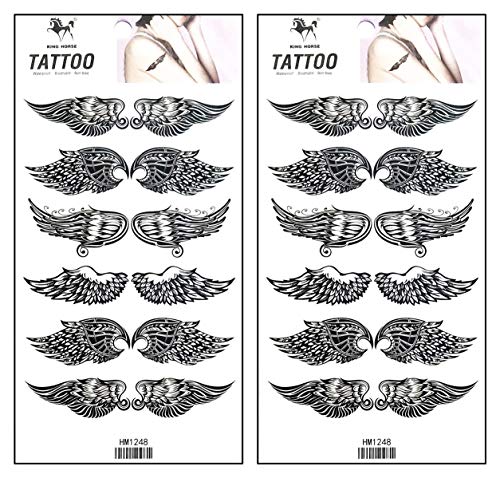
Waterproof Tattoos: These temporary tattoos are waterproof and can be used for parties, events, or just for fun.

【102 SHEETS/LOT】- 102 sheets temporary tattoos, Halloween tattoos include black scary wolf lion tiger skeleton skull temporary tattoos stickers size 4.1*2.4 inch (10.5*6cm), used for arms, shoulders, back, legs and any other part of your body. Semi permanents tattoo also can apply them to some smooth objects, for example, glass, cup, stationery, plastic, phone case, car etc
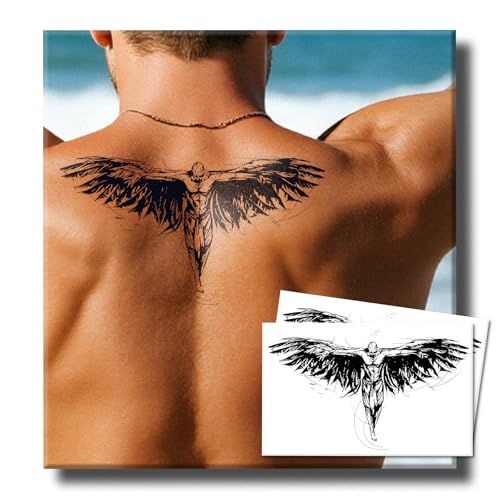
【Develops Fully in 48H】Perfect tattoos gift for men. Your large angel wing tattoos will initially appear silver before naturally darkening to a rich finish within 48 hours. For optimal results, avoid contact with bare skin (particularly the face) and cover the area with clothing during sleep to prevent transfer.
Angel Tattoo Styles: Realistic, Minimalist, and Blackwork
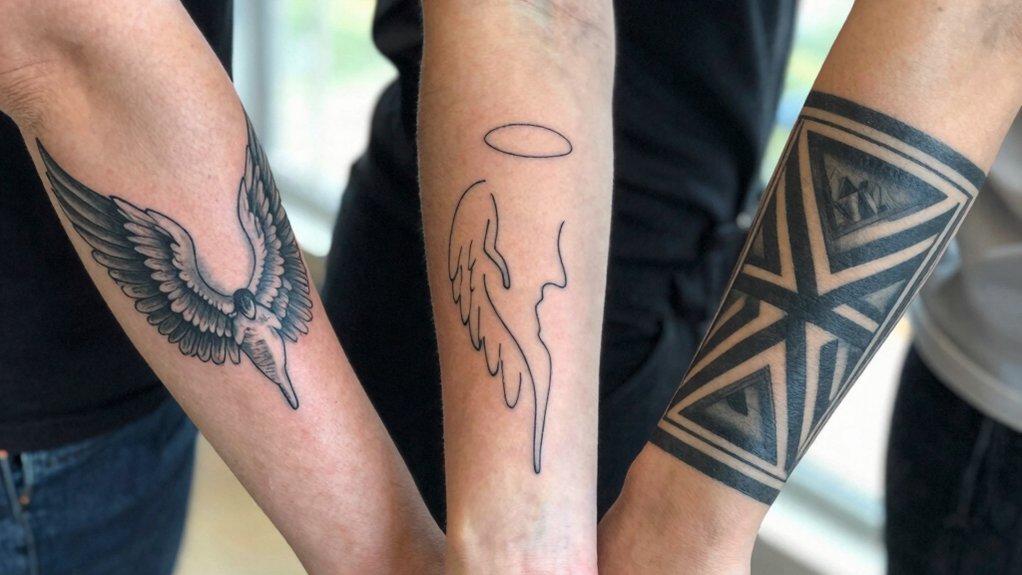
Memorial pieces carry deep meaning, yet the style you choose shapes how that meaning takes form on your skin. You can select realistic portraits that capture every feather and expression, creating lifelike guardians who watch over you with photographic precision.
You’ll find minimalist designs strip away excess, using clean lines and negative space to suggest wings or halos without overwhelming detail.
Blackwork transforms angels into bold silhouettes and intricate patterns, where heavy ink creates dramatic contrast and timeless presence.
Each style speaks differently—realism honors specific individuals, minimalism offers subtle daily reminders, and blackwork makes spiritual statements impossible to ignore.
You’re not just choosing aesthetics; you’re deciding how visibly your beliefs and memories surface. Your artist adapts the same symbolic figure across these approaches, proving that meaning stays constant even as methods shift dramatically.
Recommended Products

Complete Temporary Tattoo Set:This kit includes 2 brown tattoo pastes, 1 cherry-red paste, 100pcs reusable tattoo stencils, and 1 outline pen—everything you need to easily create realistic body art, faux tattoos, or festival-style skin painting at home.

【19 Large Reusable Stencils & Colorful Unique Designs】Create professional-quality body art with multiple trending patterns across 16 durable sheets. Perfect for arms, ankles, shoulders - endless customization for parties/cosplay.

Deluxe All-in-One Tattoo Kit:Includes 20 reusable tattoo stencils, 14 tattoo paste cones in 10 vibrant colors, tattoo paste mixing bottles, cotton swabs, and disposable gloves—everything needed for advanced DIY body art and color creativity.
Where to Place Your Angel Tattoo: Size and Visibility
Where exactly does an angel belong on your body?
You’ve got endless options, and placement shapes everything. Large designs thrive on your back, chest, or thigh, giving wings room to stretch and details to breathe. You’ll command attention there. Smaller angels fit perfectly on wrists, ankles, or behind your ear—intimate spots you choose to reveal or conceal.
Consider visibility carefully. Do you want daily reminders or hidden protection? Your professional world matters too. Hand and neck tattoos announce themselves; you can’t cover them easily. A shoulder blade offers flexibility—show it off or hide it under fabric.
Size demands planning. Intricate faces need real estate; simple silhouettes work anywhere. You balance personal meaning with practical living. Your angel finds its home where your story and lifestyle meet.
Recommended Products

JimKing Tattoo needles and tips are packaged in a disposable sterilization box to prevent secondary infections.

Tattoo Needle Set Contains:#12 Tattoo Needle 03RL,05RL,07RL,09RL,11RL,07RM,09RM,11RM,13RM,15RM 2pcs each, we launch this experience set to meet the needs of beginners on the common tattoo needles, you can only buy a box of needles can experience 10 tattoo artist commonly used models to enrich your practice, we have enough confidence to make you fall in love with this tattoo needle!
How to Find an Angel Tattoo Artist for Your Design
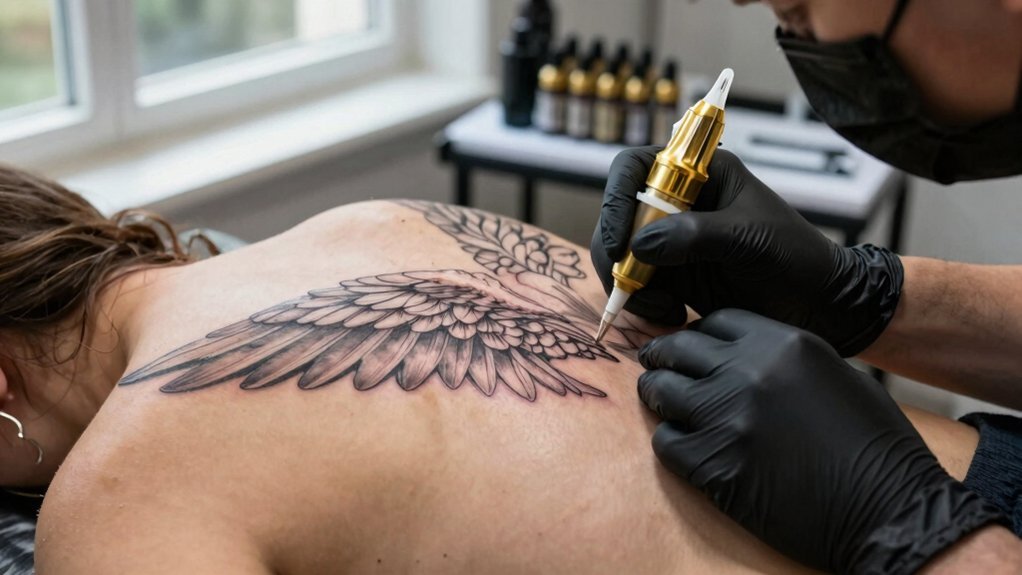
Finding the right artist transforms your vision from idea to skin. You’ll want to start by researching local tattooers who specialize in the style you crave—whether that’s fine-line realism, neo-traditional, or black-and-gray religious imagery. You’ll scroll through Instagram portfolios and scrutinize healed photos, not just fresh work. You’ll visit shops in person and watch how artists interact with clients. You’ll ask about their experience with wings, halos, and ethereal figures. You’ll check that they follow strict sterilization protocols.
You’ll schedule consultations with two or three top choices and discuss your concept openly. You’ll gauge their enthusiasm and listen to their suggestions. You’ll trust your gut when someone truly gets your vision. You’ll book the artist who balances technical skill with creative passion.
Recommended Products

Halloween Face Tattoos: You will get 2 sheets Black White Angel Face Tattoos and 2 sheets Black white Diamond stickers Tattoos for Kids Adults, in 2 different designs. Our Angel Face Stickers are most suitable for festival, Halloween, or Christmas.

▶ Henna Tattoo Kit: 16 sheets tattoo stencils. airbrush tattoo stencils suitable for tattoo lovers. Experience the effects of tattooing without the pain of tattooing.

[Semi-Permanent, Realistic Tattoos] INKARTLINK semi-permanent tattoos are lifelike, durable, waterproof, and sweat-resistant, lasting 7–14 days and gradually fading as the skin’s outer layer sheds. They’re perfect for everyday wear, events, or themed occasions. From the beach to the office, they stay vibrant, allowing you to effortlessly showcase your body art in any setting.
Conclusion
You carry your story on your skin, and an angel tattoo lets you wear protection, loss, or hope where you’ll see it every day. Whether you choose a guardian’s watchful presence or a fallen figure’s raw struggle, you’re marking what matters most. Find an artist who listens, then let your ink speak.
Recommended Products
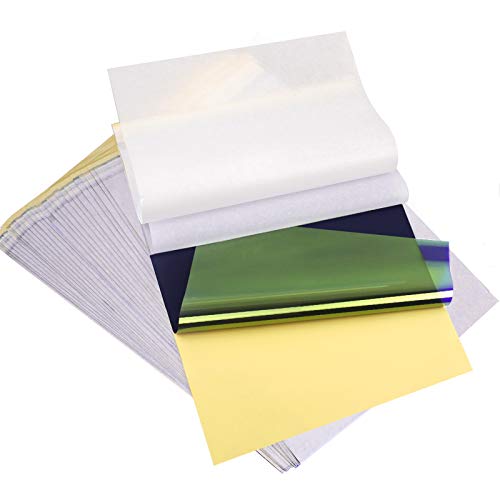
ADVANCED MATERIAL: Tattoo transfer paper is made with the high quality dyes and stencil paper. Transfer marks are very clear, clean and smooth. Tattoo transfer paper kit come with 35 sheets. Great for tattooing, trace and transfer images onto the body.<br>

Precision Transfer Performance - It’s professional-grade tattoo stencil paper delivers vibrant, high-definition transfers even for intricate designs. The carbon layer ensures sharp outlines without smudging or fading, ensuring crisp lines that stay true to your original artwork.

Spirit Tattoo Classic Thermal Transfer Paper, 8.5” X11” (100 Sheets): Established since 1946, the original and trusted choice of tattoo artists globally, offering reliability and consistency in tattoo stencil creation.