
You skip the moisturizer once, then twice, and soon your fresh tattoo starts pulling tight against your clothes. The skin dulls, flakes rise like ash, and you catch yourself scratching before you even realize you’re doing it. What begins as dryness doesn’t stay that way.
Key Takeaways
- Dry skin forms thick scabs that trap ink and distort the tattoo’s original design.
- Peeling and cracking remove pigment, leaving patchy color and pale streaks.
- Scratching dry skin creates permanent scars and pinpoint gaps in the ink.
- Cracks allow bacteria to enter, increasing infection risk and slowing healing.
- Uneven healing from dryness can cause ink to spread beyond intended boundaries.
Recommended Products

Protect Your Body Art: Moisturizing with the bonus of itch relief! Tattoo Goo's Tattoo Care Lotion soothes healing skin & keeps healed ink looking sharp for life. With olive oil & glycerin, it delivers deep, breathable hydration that won’t clog pores

TATTOO AFTERCARE LOTION: After Inked Tattoo Lotion brings hydration and nourishment to your tattooed skin. Formulated with grape seed oil, which helps maintain vibrant ink colors while pacifying the skin and promoting moisture retention.

FRAGRANCE FREE TATTOO AFTERCARE FOR SENSITIVE SKIN - The same #1 artist recommended Hustle Butter formula, now with no added fragrance, dyes, or parabens. The unscented tattoo lotion of choice for sensitive or easily irritated skin.
Why Your Tattoo Dries Out Within Hours
Why does your fresh tattoo sometimes feel tight and itchy before the day even ends? Your skin recognizes the tattoo needle as trauma. It responds by flooding the area with plasma and white blood cells. This inflammatory response creates a warm, swollen barrier that you’ll notice immediately.
Then your body shifts gears. It starts repairing the damage. Your lymphatic system reabsorbs that initial fluid, and your skin begins losing moisture rapidly. You’ve disrupted the protective outer layer, and now water evaporates faster than your body can replace it.
You’re watching this happen in real time. The glossy sheen fades. The skin tightens. Without intervention, you’ll feel that unmistakable pulling sensation across your fresh ink. Your tattoo isn’t just art sitting on your skin—it’s an open wound demanding attention, and it’s drying out whether you’re ready or not.
Recommended Products
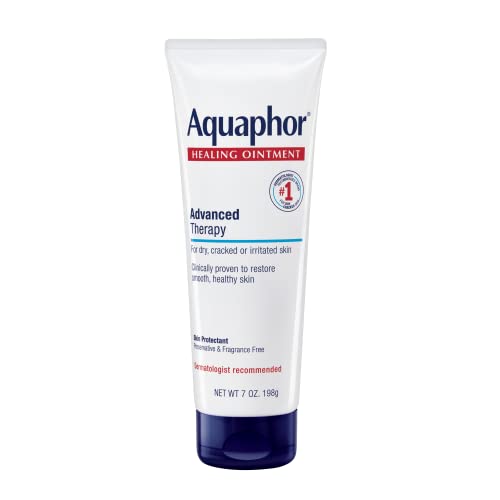
Net Weight and Dimensions: Each tube holds 7 oz. (198 g) of ointment, and measures approximately 19.9 x 5.7 x 5.2 cm; ideal for portability and easy storage

ONE ESSENTIAL SOLUTION: Aquaphor is one essential solution for many skin care needs; use on dry, cracked skin, as a lip moisturizer, facial moisturizer, hydrating mask, minor wound care and much more

Multi-Purpose Use: Effective for dry, cracked skin, minor cuts, burns, chapped lips, and more.
What Scabbing Does to Your Ink Long-Term
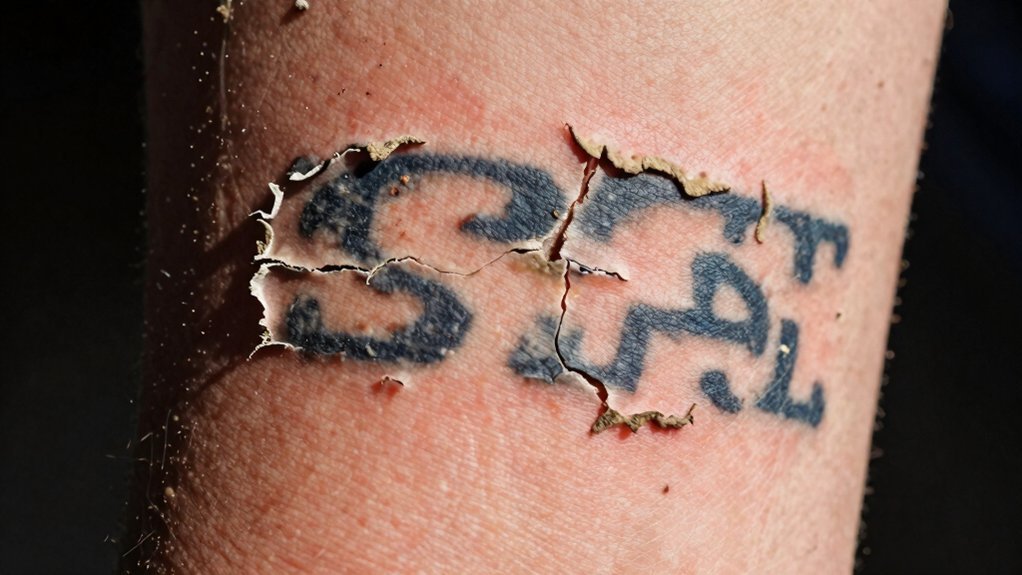
How exactly does a rough patch of scabs threaten the artwork you’ve invested in? You allow thick, dry crusts to form across your fresh tattoo when you skip moisturizer.
These scabs pull upward as they harden, distorting the stencil beneath them. You trap ink within those hardened layers, and what peels away carries pigment with it. You’re left with patchy color where saturation once lived. Your lines blur where scabs protected poorly. You heal with raised scar tissue that catches light differently than smooth skin.
Years later, you notice your blacks have dulled to gray, your reds faded to pink. You’ve effectively filtered your tattoo through a crust that wasn’t meant to be there.
Recommended Products

FRAGRANCE FREE TATTOO AFTERCARE FOR SENSITIVE SKIN - The same #1 artist recommended Hustle Butter formula, now with no added fragrance, dyes, or parabens. The unscented tattoo lotion of choice for sensitive or easily irritated skin.

COMPLETE AFTERCARE KIT FOR NEW & EXISTING TATTOOS: This Tattoo Aftercare Kit brings together 3 essentials, Antimicrobial Soap, Tattoo Balm, and Tattoo Lotion, to help cleanse, protect, and moisturize fresh ink. Useful after tattoo sessions and throughout healing, it supports vibrant color and skin comfort for dedicated ink enthusiasts and artists

TATTOO AFTERCARE ESSENTIAL: Hustle Butter is the original tattoo aftercare balm for new and older tattoos. With over 10 years in the market, we are a pioneer of the tattoo aftercare category.
How Scratching Damages Tattooed Skin Permanently
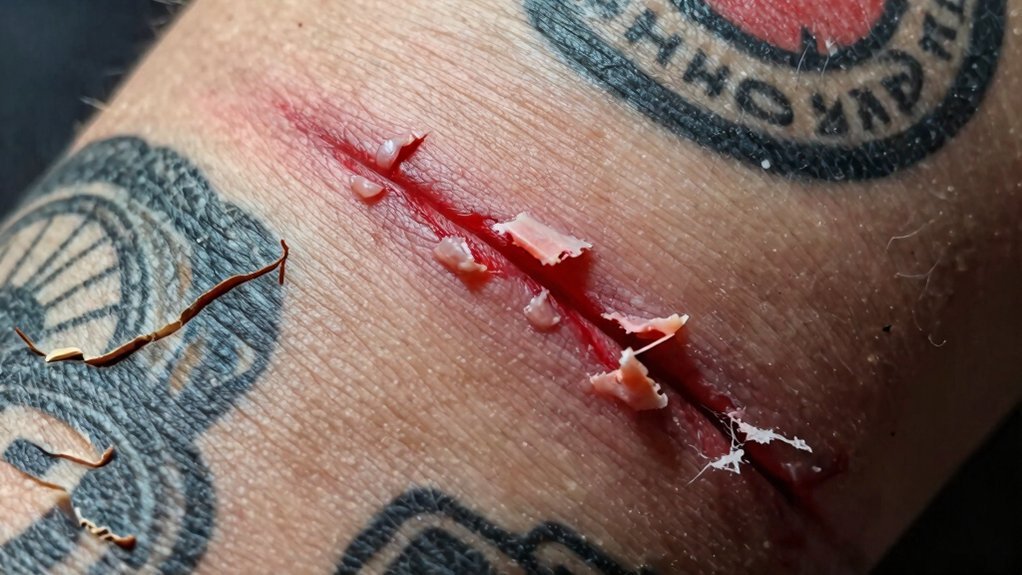
When you drag your fingernails across healing ink, you’re not just soothing an itch—you’re carving permanent channels through the tattoo your artist built. You’re dragging bacteria into open wounds and creating scar tissue that distorts lines forever.
Your healing skin forms a delicate matrix holding pigment in place. When you scratch, you’re disrupting this structure before it stabilizes. You’re pulling pigment out with your nails, leaving gaps that never fill properly. You’re creating raised scar ridges that catch light differently than surrounding skin.
The damage you cause doesn’t heal with the tattoo. You’re imprinting permanent texture changes and color voids that no touch-up fully repairs. You’re transforming crisp artwork into scarred, patchy reminders of your impatience. Dry, unmoisturized skin intensifies itching, making you more likely to inflict this irreversible harm.
Recommended Products

Upgraded Design, Easy to Use --- Tattoo aftercare balm comes in a tube,this container allows you to glide on the butter easily,Rolls on smoothly and evenly on your skin,No more mess or residue on your finger,convenient to use

ENHANCE & MAINTAIN YOUR INK - This ultra-nourishing balm instantly enhances ink vibrancy as it forms a protective barrier on skin to help moisturize and soothe skin.

🔥 KEEP YOUR TATTOO LOOKING FRESH & VIBRANT - Your tattoo is an investment — protect it. This daily aftercare lotion helps prevent fading and dullness caused by dryness and irritation, keeping colors bold and lines sharp.So your ink looks just as good months later as it did on day one.
How Cracking Leads to Color Loss and Blowouts
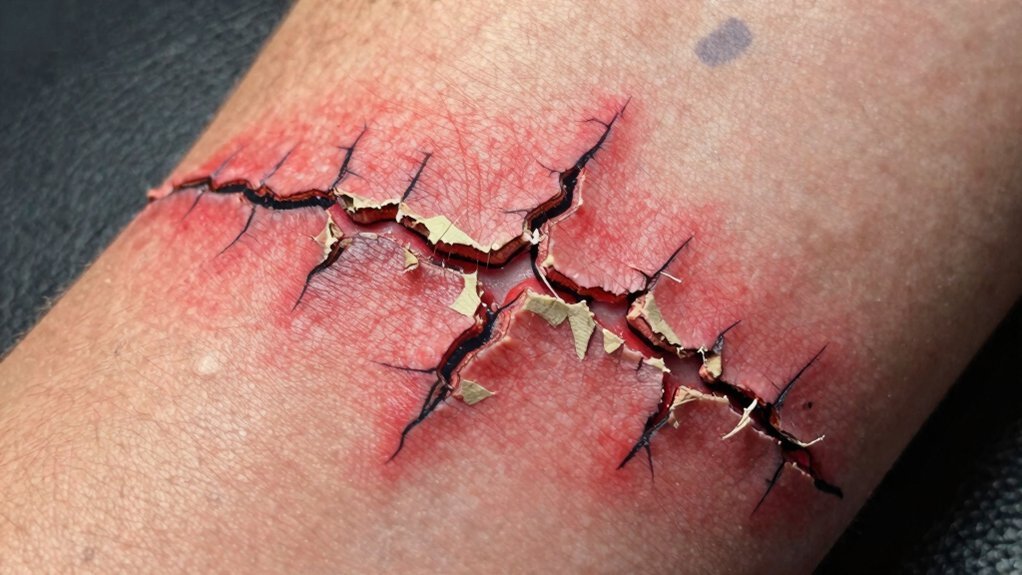
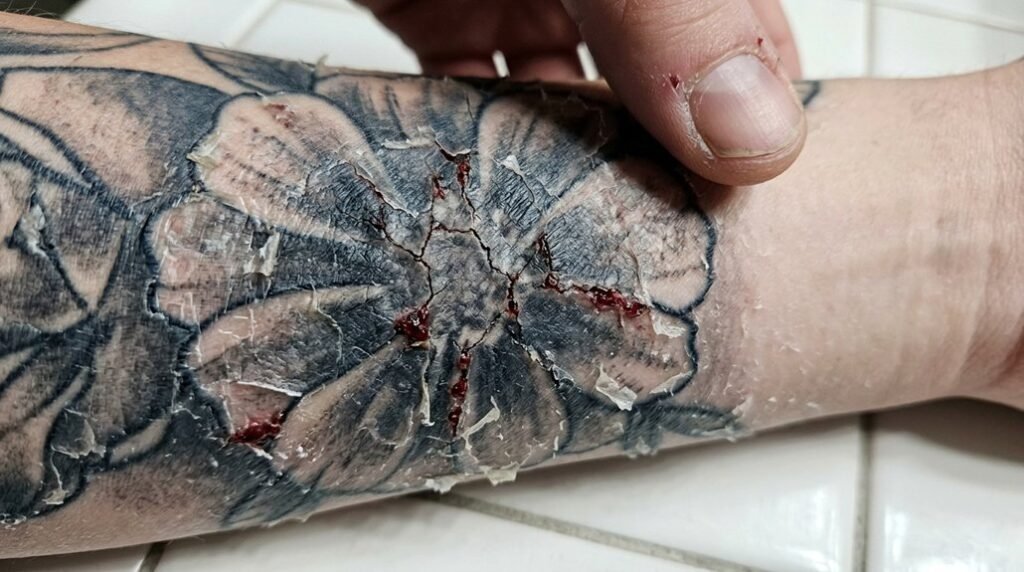
Once the protective barrier your artist sealed disappears, you’re leaving healing skin exposed to air that sucks moisture from every cell. Your tattoo dries rapidly, and the surface begins tightening. You feel the skin pulling. Tiny fissures form across the inked area. You’re watching cracks spiderweb through your fresh tattoo.
These cracks aren’t merely cosmetic. You’re witnessing literal breaks in the healing dermis where pigment sits. When skin splits, you’re losing the very ink particles your artist embedded. Color drops out in pale streaks matching each fissure. You’re creating permanent gaps in the design.
Worse, you’re inviting blowouts. Cracked skin can’t hold ink properly. You’re allowing pigment to migrate beyond intended boundaries as the compromised tissue heals unevenly. What began as sharp lines you’re now seeing blur and feather permanently.
Recommended Products

SOOTHES & MOISTURIZES NEW TATTOOS: Deeply hydrating tattoo aftercare balm that supports the skin’s natural recovery process, helps reduce dryness and itchiness, and keeps fresh ink feeling comfortable.

Tattoo Aftercare Lotion with Rapid Absorption: Our tattoo lotion aftercare is specifically formulated for quick absorption, promoting non-greasy application while aiding swift tattoo healing. This advanced formula ensures your skin receives optimal care during the critical post-tattoo period.

STICK APPLICATION, ZERO MESS: Twist up the tattoo balm stick, swipe directly over the tattoo, and blend as needed. No jar to open, no fingers scooping product, and no need to carry a separate applicator. The solid stick format is easy to keep in a bag, bathroom cabinet or travel kit, making care simple at home or on the go. It gives you controlled application exactly where you want moisture, with less mess than traditional balm jars. Great for quick touch-ups whenever tattooed skin feels like it needs extra care, at home, after work or while traveling.
When Dry Tattoos Become Infection Risks
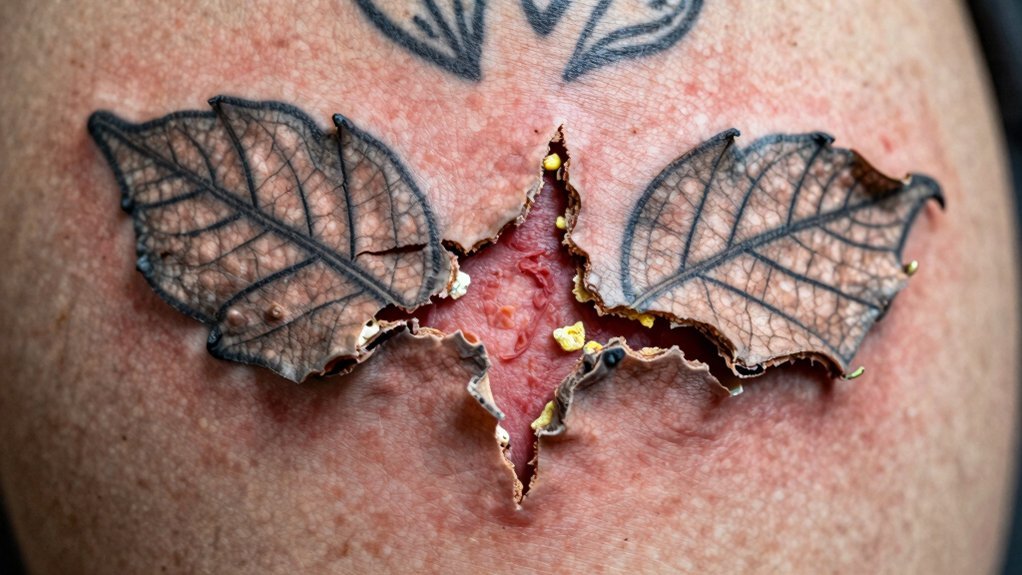
Why does skipping moisturizer turn your healing tattoo into an open door? You starve your skin of the barrier it desperately needs, and cracks split wide like fault lines across fresh ink. Those fissures aren’t just ugly—they’re direct pathways for bacteria.
You touch doorknobs, phones, and gym equipment without thinking. Then you scratch that tight, itchy tattoo. Staphylococcus and streptococcus don’t need invitations; they waltz right through broken skin. You notice redness spreading, warmth building, or pus forming. You’ve got an infection brewing now, and it’s progressing fast.
Your immune system fights on two fronts: healing damaged tissue and battling invaders. You slow the entire recovery process, and scars replace what should’ve been clean lines. You risk blood poisoning if you ignore the warning signs. Moisturizer costs little; infections cost everything.
Recommended Products

CLEAN INGREDIENTS FOR NEW TATTOOS - Our Soothing Gel skips the skin-suffocators and instead focuses on lightweight botanical oils like Sweet Almond and Argan which are naturally rich in fatty acids antioxidants to help nourish and offset environmental stressors that can further aggravate your ink.

DEEP HEALING FORMULA FOR NEW TATTOOS - A blend of organic moisturizers designed to support the natural healing process, reduce dryness, and protect fresh ink. Works like a tattoo healing cream without petroleum or harsh chemicals.

☑Natural Safe Organic Ingredients: Tattoo Aftercare Butter is composed of Shea Butter, Jojoba, Macadamia Ternifolia Seed Oil and Vitamin E Complex. Our all-natural butter is also petroleum-free and paraben-free. After use, it can make the tattooed skin heal faster and moisturize the skin. Makes your skin smooth and the tattoo color bright.
How to Salvage an Overly Dry Healing Tattoo
How badly have you let things go? You’ve got options, but you need to act fast.
First, wash your hands thoroughly. Gently cleanse the tattoo with unscented, mild soap and lukewarm water. Pat it completely dry with a clean paper towel—don’t rub.
Apply a thin layer of fragrance-free moisturizer or tattoo-specific ointment. You’re aiming for hydrated, not greasy. Repeat this process two to three times daily. Don’t pick at any scabs that formed; you’ll cause damage.
If the skin’s cracked or bleeding, scale back to a simpler, hypoallergenic product like plain petroleum jelly temporarily. Avoid direct sunlight, swimming, and tight clothing rubbing against the area.
Monitor closely. If you see spreading redness, warmth, or pus, you’ve crossed into infection territory—see a doctor immediately.
Recommended Products

ONE ESSENTIAL SOLUTION: Aquaphor is one essential solution for many skin care needs; use on dry, cracked skin, as a lip moisturizer, facial moisturizer, body moisturizer, hydrating mask, minor wound care and much more

MULTI-PURPOSE HEALING OINTMENT: Designed to help soothe dry, cracked skin, minor cuts, scrapes, and burns for fast relief.

ONE ESSENTIAL SOLUTION: Aquaphor Baby Healing Ointment is clinically proven to restore smooth, healthy skin, a perfect multi-purpose solution for your baby's many skin care needs, a perfect addition to your diaper bag
How Long You Actually Need to Keep Moisturizing
Although the intense healing phase only lasts two to three weeks, you’ll need to keep moisturizing your tattoo for several months to protect its vibrancy. Your skin continues settling beneath the surface long after the scabs disappear, and you’ll notice this when your tattoo occasionally feels tight or itchy.
Apply a thin layer of fragrance-free lotion daily for at least two to three months. You’ll want to maintain this routine indefinitely if you desire optimal color retention. Dry skin causes tattoos to look dull and faded faster than necessary.
You’ll adapt your approach based on your environment. Winter demands more frequent applications, while humid summers let you scale back slightly. Watch how your specific skin responds and adjust accordingly. Your tattoo represents a permanent investment, so you’ll extend its life through consistent, long-term care.
Recommended Products

NATURAL AND UNSCENTED FORMULA – Saniderm’s Original Tattoo Aftercare Balm is made using natural ingredients like beeswax, shea nut butter, and sea buckthorn oil. Unlike other common ointments and tattoo balms, Saniderm’s fragrance-free Tattoo Aftercare Balm is also petroleum-free so it won’t suffocate the skin while your tattoo heals.

Tattoo Aftercare Balm Stick: our tattoo balm is now available in a balm stick. This tattoo balm stick delivers targeted care to keep your artwork looking and feeling fresh whenever you need it most. For use on all tattoos, just not fresh ones.

GENTLY CLEANSES NEW TATTOOS - Use Repair Tattoo Wash during the healing process to keep your fresh tattoo ink clean or as a perfect prep wash before and after tattooing.
Conclusion
You can’t skip moisturizer without consequences. Your tattoo dries fast, scabs distort the ink, and scratching creates permanent damage. Cracks cause blowouts and color loss while inviting infection. If you’ve let things go too dry, you can still salvage it with gentle care. Keep moisturizing for two to four weeks minimum—your healed artwork depends on it.
Recommended Products
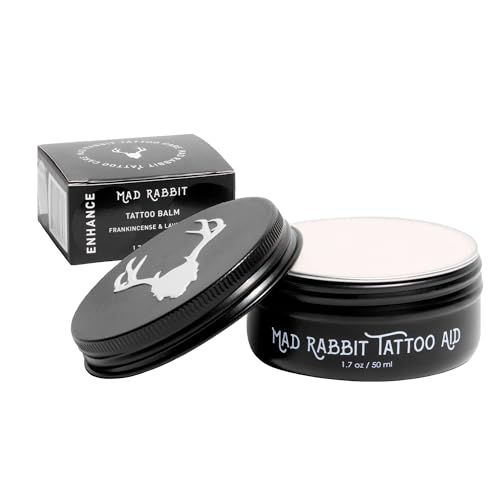
ENHANCE & MAINTAIN YOUR INK - This ultra-nourishing balm instantly enhances ink vibrancy as it forms a protective barrier on skin to help moisturize and soothe skin.

Nourishes Healing Ink for Vibrant Color: Tattoo Goo supports healing tattoos & maintains vibrancy on healed ink with a lightweight formula rich in olive oil, lavender oil, cocoa butter, and beeswax. It absorbs quickly, moisturizes deeply, and helps reduce dryness, itch and tightness so your tattoo looks and feels comfortable through everyday routines

Tattoo Aftercare Essential: This tattoo aftercare balm is suitable for both new and healed tattoos. It is designed to aid in the healing process and reduce irritation for new tattoos, while also rejuvenating older tattoos, and ensures they receive optimal care.