
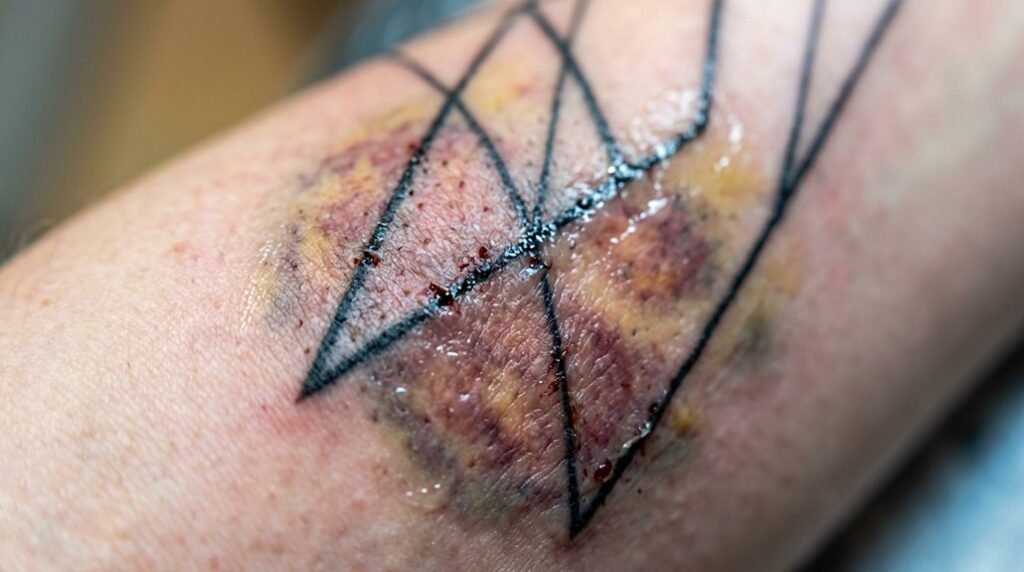
You’ve just peeled back the bandage and noticed purple patches spreading around your fresh ink. Your first instinct might be panic, but that discoloration is often a normal part of the healing process. The real question is whether you’re seeing typical bruising or something that needs attention.
Key Takeaways
- Tattoos bruise because thousands of needle piercings break blood vessels near the skin’s surface.
- Thin-skinned areas with many blood vessels, like the wrist or foot, bruise more easily than others.
- Bruising typically peaks around day two or three, then fades through green and yellow shades.
- Heavy-handed technique, deep needle work, or repeated passes increase trauma and bruising severity.
- Normal bruising improves daily, but spreading redness, heat, or pus may indicate infection.
Recommended Products

Hollywood-Quality Fake Bruise & Scratch Tattoos – Ultra-realistic temporary injury effects, perfect for film, TV, theatre, and special effects makeup.

Upgraded Design, Easy to Use --- Tattoo aftercare balm comes in a tube,this container allows you to glide on the butter easily,Rolls on smoothly and evenly on your skin,No more mess or residue on your finger,convenient to use

STICK APPLICATION, ZERO MESS: Twist up the tattoo balm stick, swipe directly over the tattoo, and blend as needed. No jar to open, no fingers scooping product, and no need to carry a separate applicator. The solid stick format is easy to keep in a bag, bathroom cabinet or travel kit, making care simple at home or on the go. It gives you controlled application exactly where you want moisture, with less mess than traditional balm jars. Great for quick touch-ups whenever tattooed skin feels like it needs extra care, at home, after work or while traveling.
Why Your Fresh Tattoo Is Bruising (and Why That’s Usually Fine)
How exactly does a delicate needle piercing your skin thousands of times affect your body? You’re creating thousands of micro-wounds, and your body responds with inflammation. Blood vessels near the tattoo site break, releasing blood into surrounding tissue. You’re seeing that familiar purplish discoloration—bruising.
Your tattoo’s location heavily influences bruising. You’re likely to bruise more on areas with thin skin or lots of blood vessels: your inner arm, ribs, or thighs. Your artist’s technique matters too. They’re working deeper, faster, or heavier in certain spots, causing more trauma.
You’re probably noticing bruising peaks around day two or three. Your immune system’s already clearing that pooled blood, breaking down hemoglobin. That’s why your bruise shifts through colors—purple to green to yellow.
You’re healing. That bruising typically means your body’s doing exactly what it should.
Recommended Products

COMPLETE AFTERCARE KIT FOR NEW & EXISTING TATTOOS: This Tattoo Aftercare Kit brings together 3 essentials, Antimicrobial Soap, Tattoo Balm, and Tattoo Lotion, to help cleanse, protect, and moisturize fresh ink. Useful after tattoo sessions and throughout healing, it supports vibrant color and skin comfort for dedicated ink enthusiasts and artists
Honest, Accurate Care – This protective ointment comes in 50 hygienic single-serve packets for mess-free, on-the-go convenience. Easy to apply for tattoo protection anytime.

TATTOO SALVE AFTERCARE – The Recovery Aftercare Tattoo Salve will soothe, moisturize and protect your tattoo and skin. This ointment comes in a convenient .75 ounce tin that easy to take with you on the go.
Tattoo Bruising vs. Infection: Know the Red Flags
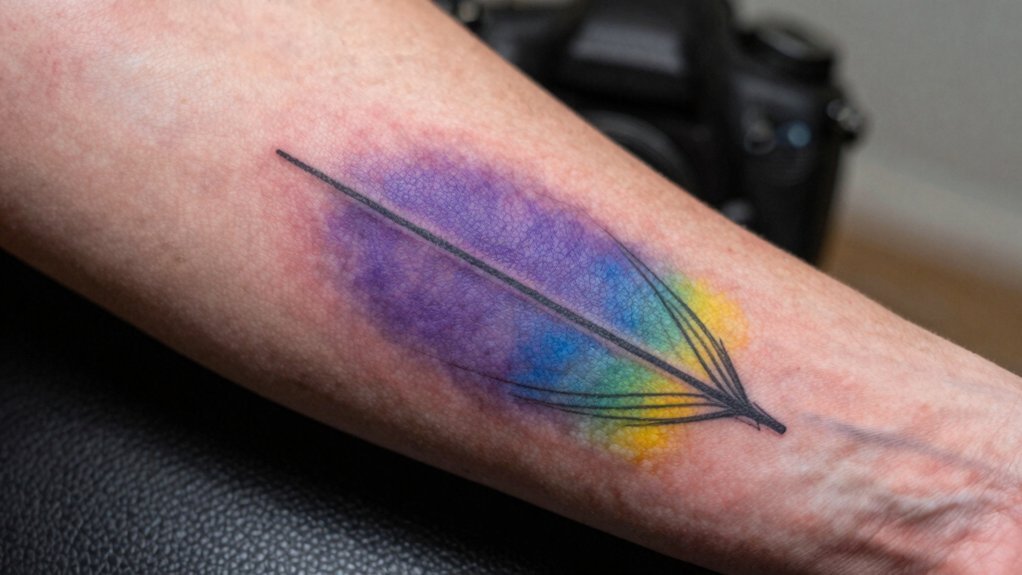
Bruising is normal, but you’re right to watch your healing tattoo closely. You need to know when discoloration signals something worse. Bruises feel tender but improve daily. Infections worsen and demand attention.
You’ll spot infection through distinct warning signs. Your skin radiates heat that doesn’t fade. Redness spreads outward instead of shrinking. You notice thick yellow or green discharge, not clear plasma. Swelling increases after day three. You develop fever or swollen lymph nodes. These symptoms override typical healing.
Bruises shift colors—purple to green to yellow—as they fade. Infection stays angry red or grows. You must check your tattoo twice daily. Touch the surrounding skin. Compare temperatures. Document changes with photos. Trust your instincts when something feels off.
Recommended Products
COMPLETE CLEANSING ACTION - Can be used in conjunction with an antiseptic such as found in X-pression Piercing Aftercare, and anti-bactericide as found in Tattoo Goo Deep Cleansing Soap as well; This treatment method conforms to the requirements as set out by Association of Professional Pierces

Specially formulated to allow fast, thorough and gentle cleansing of wounds in all stages.

MediCleanse Sterile Saline Piercing Aftercare Fine Mist Spray: Contains 7.5 oz bottle of our all-natural, sterile saline for the cleansing and healing of all body piercings and tattoos
When Bruising Means Call Your Doctor
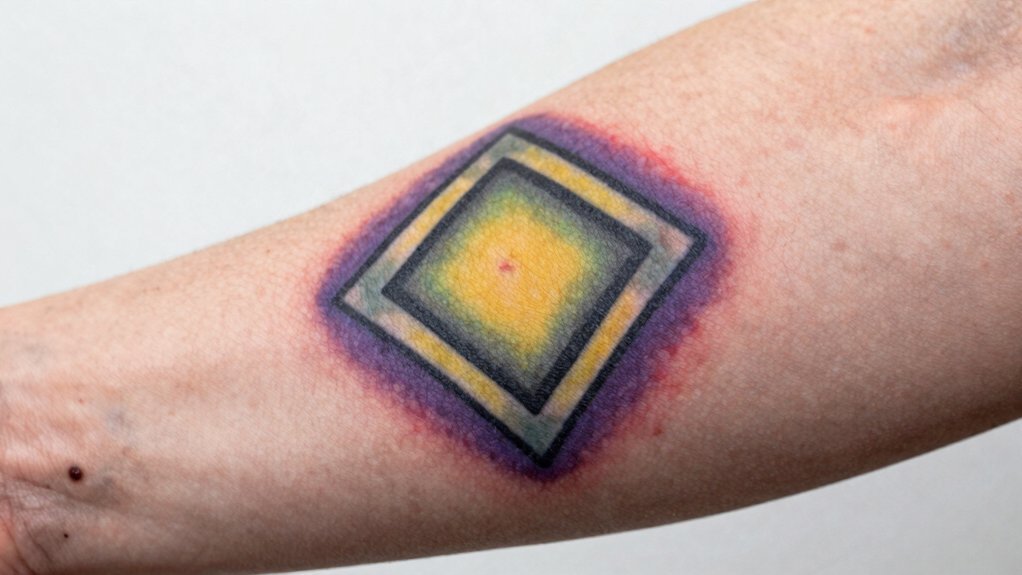
Most bruises fade on their own, but certain signs mean you shouldn’t wait. You need to call your doctor if your bruise spreads rapidly or swells considerably. Watch for skin that feels hot to your touch or looks streaky with red lines. You shouldn’t ignore fever, chills, or pus draining from the area. These symptoms suggest infection rather than simple bruising.
You also need medical attention if bruising appears far from your tattoo site or if you notice numbness or tingling in the limb. If you’re taking blood thinners and the bruise keeps growing, contact your provider immediately. Don’t tough it out when your body signals distress. Prompt action prevents complications and protects your new ink. Trust your instincts—you know when something feels wrong.
Recommended Products

✡Various Purpose - Care for all types of wounds; Waterproof cover; Fixed dressing; Tattoo aftercare. It can help lock in the color, protect your tattooed skin, and reduce scabbing when you wash or moisturize your tattoo, quickly form a protective film then accelerate your recovery

Transparent Matte Film Protection - This breathable tattoo bandage is a must-have in your tattoo supplies, offering latex-free protection that supports gentle healing for new ink.
Triple-Size Value Pack for Every Tattoo Style - Get 3 full rolls of premium second skin tattoo cover (2" x 2.2 Yd, 4" x 2.2 Yd, 6" x 2.2 Yd) - sized for wrist art, back pieces, or sleeve designs. The tattoo aftercare bandage can be cut freely to match any ink!
How Long Does Tattoo Bruising Last?
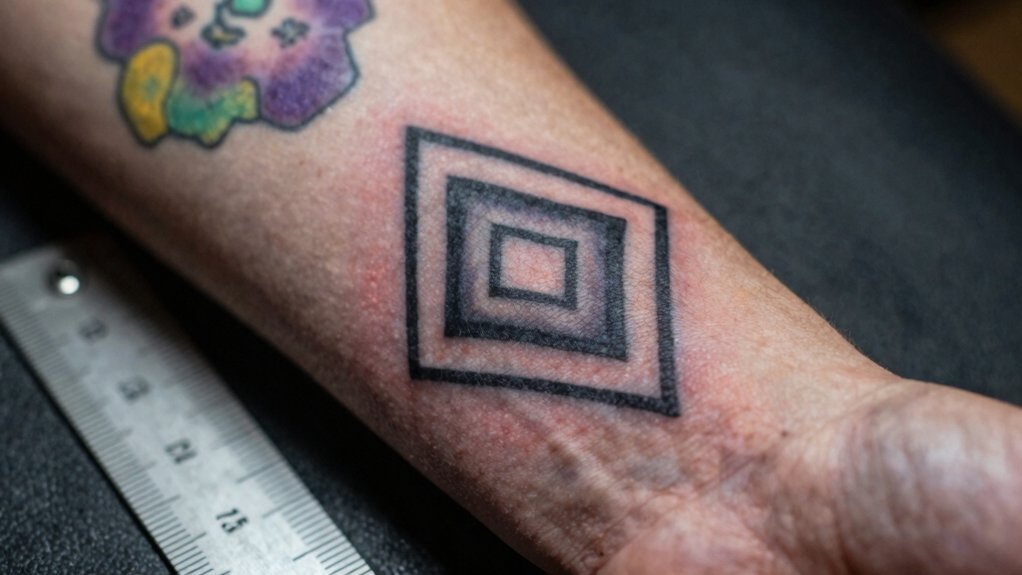
Once you’ve ruled out warning signs, you’re probably wondering when your skin will return to normal. Most tattoo bruising fades within three to seven days. You’ll notice the purple or blue tones shift to green, then yellow, before disappearing completely.
Your healing timeline depends on several factors. Larger tattoos and heavy-handed sessions typically produce deeper bruising that lingers longer. If you’ve bled more than usual during the appointment, you can expect the discoloration to stick around for closer to two weeks. Older skin, certain medications, and nutrient deficiencies also slow your recovery.
You can speed things along by keeping the area elevated when possible and avoiding blood thinners like alcohol. Don’t panic if your bruise outlasts your friend’s—every body responds differently to trauma. Patience serves you better than poking at the discoloration. Trust your healing process.
Recommended Products

Cost-Effective Marketing Tool: promote your business or grand opening event with our affordable outdoor advertising signs. LookOurWay feather flags are a great way to get your business noticed at a low cost

Tattoo Feather Flag Kit: this kit includes 2 tattoo feather flags, 12 ground stakes and 2 portable bags, saving you the stress of purchasing different components separately, so you have everything you need for your ideal display

Where Bruising Shows Up and Why Some Spots Hit Harder
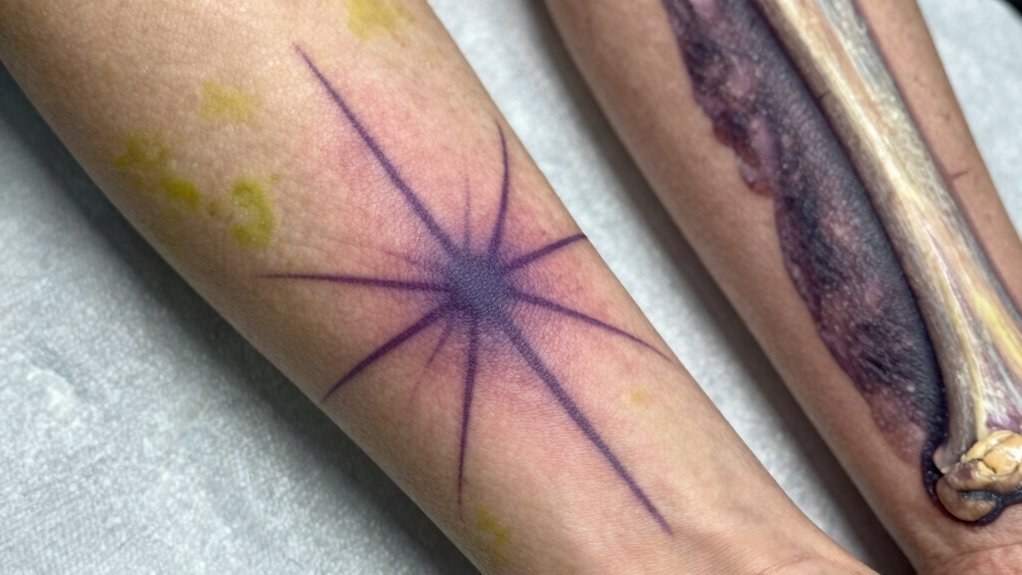
Where you’ll bruise depends heavily on which body part you chose for your ink. You’ll notice darker, more extensive bruising on areas with thin skin and abundant blood vessels. Your inner bicep, ribcage, and throat bruise easily because capillaries sit close to the surface there. You’ll see lighter discoloration on thicker-skinned spots like your outer arm or calf.
You’ll bruise harder where bones protrude. Your ankle bone, collarbone, and spine lack cushioning tissue, so needles disturb vessels more aggressively. You’ll also find that fleshy areas—your thigh or upper arm—spread bruising wider, though it appears less intense.
Your artist’s technique matters too. You’ll collect more bruising if they work slowly or revisit the same spot repeatedly. You can’t control your anatomy, but you’ll understand why your rib tattoo looks battered while your shoulder barely yellows.
Recommended Products

COMFORTABLE - NO SLIP GRIPPER - NO ITCHY TAGS - NO CHAFE SEAMS -- Our no-slip gripper at the top of each tattoo cover sleeve keeps them firmly in place all day long.
PROTECT & SOOTHE: Condition & protect your tattoos to keep ink looking bold & vibrant. Soothing, nourishing tattoo care softens fresh tattooed skin, calms redness & irritation, and promotes healing
COMFORTABLE - NO SLIP GRIPPER - NO ITCHY TAGS - NO CHAFE SEAMS -- Our no-slip gripper at the top of each tattoo cover sleeve keeps them firmly in place all day long.
Bruising or Scabbing? Reading Your Healing Tattoo
Watch the texture. Bruising feels smooth; scabbing feels raised and rigid. Recognizing which you’re dealing with prevents you from picking at the wrong thing and damaging your new tattoo permanently.
Recommended Products

Nourishes Healing Ink for Vibrant Color: Tattoo Goo supports healing tattoos & maintains vibrancy on healed ink with a lightweight formula rich in olive oil, lavender oil, cocoa butter, and beeswax. It absorbs quickly, moisturizes deeply, and helps reduce dryness, itch and tightness so your tattoo looks and feels comfortable through everyday routines

PROTECT & HEAL - H2Ocean Aquatat seals the skin in a moisturizing barrier to protect from irritants while still allowing the skin to breathe. Aquatat will also heal topical wounds on skin such as tattoos, rashes, cuts and scrapes while minimizing scabbing.
ENHANCE & MAINTAIN YOUR INK - This ultra-nourishing balm instantly enhances ink vibrancy as it forms a protective barrier on skin to help moisturize and soothe skin.
How to Fade Bruising and Heal Faster
Fortunately, you can speed up bruise fading without compromising your tattoo’s integrity.
Apply a cold compress during the first 24 hours to constrict blood vessels and reduce discoloration. Wrap ice in a clean cloth—never place it directly on your skin. After 48 hours, switch to warm compresses to boost circulation and clear pooled blood.
Keep your tattoo elevated above heart level when possible. Gravity helps drain fluid and minimizes swelling. Stay hydrated and eat foods rich in vitamin C and K to strengthen capillaries and support tissue repair.
Avoid blood-thinning medications like aspirin unless prescribed. Skip alcohol and intense exercise for several days, as both increase bleeding and inflammation.
Don’t massage the bruised area or pick at scabs. Let your body heal naturally while following your artist’s aftercare instructions precisely.
Recommended Products

ALL NATURAL PIERCING AFTERCARE SPRAY - Base Labs piercing aftercare spray for new and existing piercings is powered by our Isotonic Saline Solution. Use as a cleanser and saline spray for piercings, bumps and keloids on the Ear, Nose, Belly Button, Earrings, Tattoo Aftercare, Wound Wash and more.

No burning or stinging

GENTLE PIERCING CARE – Specially formulated for cleaning and moisturizing new and existing piercings.
Watch Your Recovery: The Day-by-Day Bruising Timeline
How quickly does a tattoo bruise actually clear? You’ll notice swelling and redness within the first 24 hours. By day two or three, you’ll see bruising peak—purple, blue, or even black patches spreading around your fresh ink. Don’t panic; this means your body’s actively responding to the trauma.
Around day four, you’ll watch the color shift. Green and yellow tones emerge as your blood breaks down and reabsorbs. You’ll feel less tenderness now. By day seven, most bruises fade substantially. You’ll spot only faint yellow traces near your tattoo’s edges.
Complete clearance typically takes 10 to 14 days, though larger pieces near joints or bony areas may linger longer. You’re monitoring progress daily. If bruising worsens after a week or feels hot, you’ll contact your artist or doctor promptly.
Recommended Products

What You Get - The tattoo aftercare bandage totall 4.4 yard (6" x 4.4 Yard), you will get tattoo aftercare bandage, the size is 6" x 4.4 Yard. You will the tattoo supplies is best combination of with guaranteed quality. According to the size of the tattoo area, the shape can be freely cut, and it is suitable for all kinds of large-area new tattoos

THE ORIGINAL TATTOO AFTERCARE BANDAGE – Saniderm’s Original Gloss Bandage is the tried-and-true, industry-defining tattoo aftercare bandage. Dermatologist-recommended and trusted by expert tattoo artists worldwide, this medical-grade bandage ensures your tattoo heals quickly, safely, and more vibrantly. With over a decade of experience and millions of tattoos healed, it’s the perfect way to heal your ink.

THE ORIGINAL TATTOO AFTERCARE BANDAGE – Saniderm’s Original Gloss Bandage is the tried-and-true, industry-defining tattoo aftercare bandage. Dermatologist-recommended and trusted by expert tattoo artists worldwide, this medical-grade bandage ensures your tattoo heals quickly, safely, and more vibrantly. With over a decade of experience and millions of tattoos healed, it’s the perfect way to heal your ink.
Conclusion
You’ll likely spot some bruising after your fresh ink—that’s your body’s natural response to thousands of tiny needle pricks. Most bruises fade within a week, shifting through purple, green, and yellow as you heal. Keep the area clean, avoid picking, and watch for warning signs like spreading redness or fever. Trust your healing process, but don’t hesitate to call your artist or doctor if something feels off. Your tattoo’s worth the patience.
Recommended Products

COMPLETE SET: Including 3 temporary tattoo stickers and 3 tattoo removal wipes for easy application and cleaning

TATTOO PIERCING Windless Swooper Flag Feather Banner Sign 3x11.5 ft Tall (Flag Only) kq81

Complete Advertising Set: this tattoo shop signage kit includes 1 feather flag about 1.8 x 5.4 ft, 5 arrow yard signs about 11.8 x 15.8 in, and 10 sturdy stakes, offering unmatched visibility for your business; Whether you're launching a new shop or upgrading your storefront, these high-impact signs ensure long distance recognition, attracting more walk in customers