
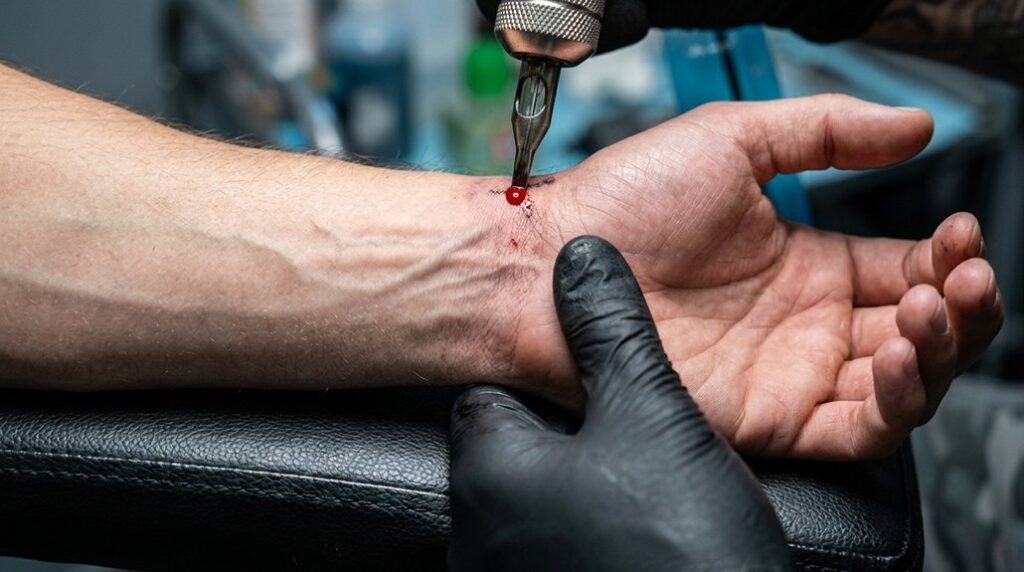
You’re about to sit in the chair, and the artist asks where you want the ink. You’ve heard ribcage tattoos are brutal, but you’re not sure if that’s myth or muscle. The truth depends on bone, nerves, and how much fat cushions the needle’s path. Some spots turn the buzz into a grinding endurance test you don’t expect until you’re mid-session—and unable to quit. You’ll want to know which placement matches your tolerance before the machine starts humming.
Key Takeaways
- Tattoos over ribs hurt most due to thin skin directly covering bone with no muscle cushioning.
- Spine, sternum, and collarbone cause intense pain through bone conduction and vibration throughout skeleton.
- Armpits, elbows, and knees combine dense nerves with constant joint motion that repeatedly stretches skin.
- Head, face, and hands contain extreme nerve density with virtually no protective padding anywhere.
- Pain intensifies where skin stretches thin across bone, tendons, or areas with frequent movement.
Recommended Products

ANTI-FATIGUE MODE:Press the control button to turn on the anti-fatigue mode,indicate light will turn on.Under Anti-fatigue mode,you don’t need to keep on stepping on the...
The Most Painful Tattoo Spots, Ranked
Where exactly does it hurt the most? You’ll find out soon enough if you’re brave enough to sit in that chair. The ribcage tops nearly every list, and you’ll understand why when the needle digs between your bones.
Your spine isn’t forgiving either—each vertebra sends signals straight to your nerves. You haven’t known true discomfort until you’ve felt the needle trace your kneecap or elbow, where skin stretches thin over bone.
Your feet? They’re a minefield of nerve endings. You’ll clench your jaw when the artist works your ankles or shins. Even your inner arm makes you flinch. Fat and muscle cushion some areas, but you’re out of luck where bone sits shallow. You choose your placement, but pain chooses you.
Recommended Products

【Mix Styles】 10 sheets of sexy flower vine butterfly temporary tattoos. Have numerous stunning designs, there are a large selection of tattoos for you to change it at any time/any moment.
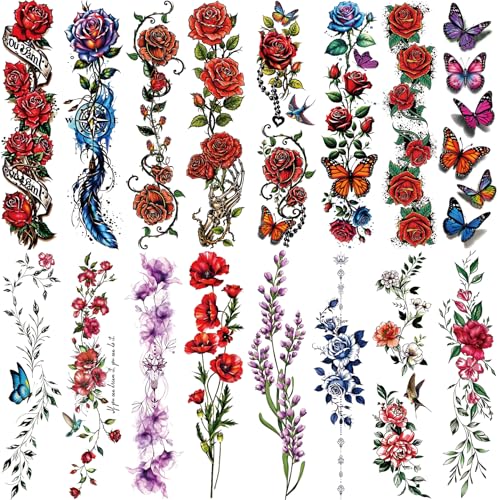
Flower Temporary Tattoos for Women: There are 24 sheets 3D sexy and fresh with different designs tattoos in one package,each piece is 2.36*9 inch,including sketch flower branch butterfly rose tattoos,which look sexy and mysterious,suitable for women who want to try fresh style and body art

Flower Branch Tattoos for Women: There are 24 sheets 3D Black sexy and fresh with different designs tattoos in one package,each piece is 2.36*9 inch,including black sketch flower branch butterfly rose tattoos,which look sexy and mysterious,suitable for women who want to try fresh style and body art
Ribcage Tattoos: Why the Marathon Hurts So Much
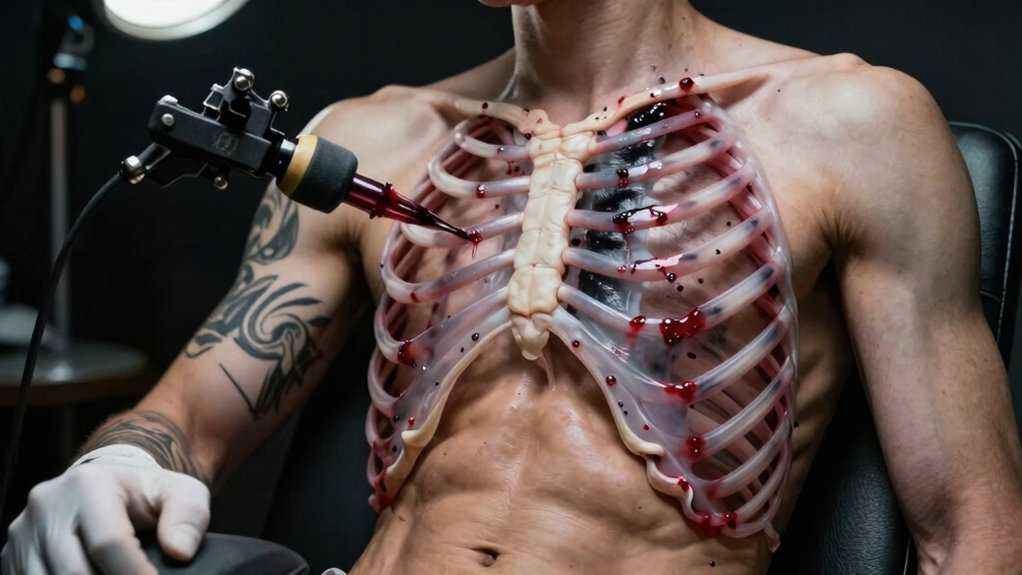
Why does the ribcage earn its reputation as the ultimate test? You’re about to find out when you commit to this marathon session.
You feel every vibration multiply. The needle travels across thin skin stretched directly over bone, with no muscle padding to absorb the impact. Each breath you take shifts the canvas, forcing the artist to work with your constant motion. You can’t hold your breath forever, so you develop a rhythm: breathe in, brace, breathe out, wince.
You’re covering substantial real estate here. Unlike a small bicep piece, this demands hours of continuous work. Your adrenaline drains. Your endorphins deplete. The pain doesn’t spike and fade—it maintains a relentless, grinding presence.
You’re choosing this placement for its dramatic visual payoff. The curves follow your natural anatomy beautifully. But you’ll earn every inch.
Recommended Products

FIND THE STRENGTH TO HEAL. Copper Compression's Arthritis Gloves provide you with the compression you need to help reduce swelling and pressure, increase blood flow, restrict excess fluid build-up, and relieve aching and soreness in joints. The therapeutic value of these fingerless gloves provides support in managing medical conditions such as: arthritis, carpal tunnel, tendonitis, typing, texting, purlicue pain and repetitive stress injuries.

TARGETED COMPRESSION: Our engineered hand & wrist wrap provides compression, stability, and support for weak or arthritic hands and wrists

Ideal for Him & Her: Whether he needs support when sleeping or she wants pain relief during work, our wrist support braces adapt to any routine. A practical gift for men and women – perfect for your dad and mom or other families and friends
Spine, Sternum, and Collarbone: Where Bone Amplifies Every Buzz
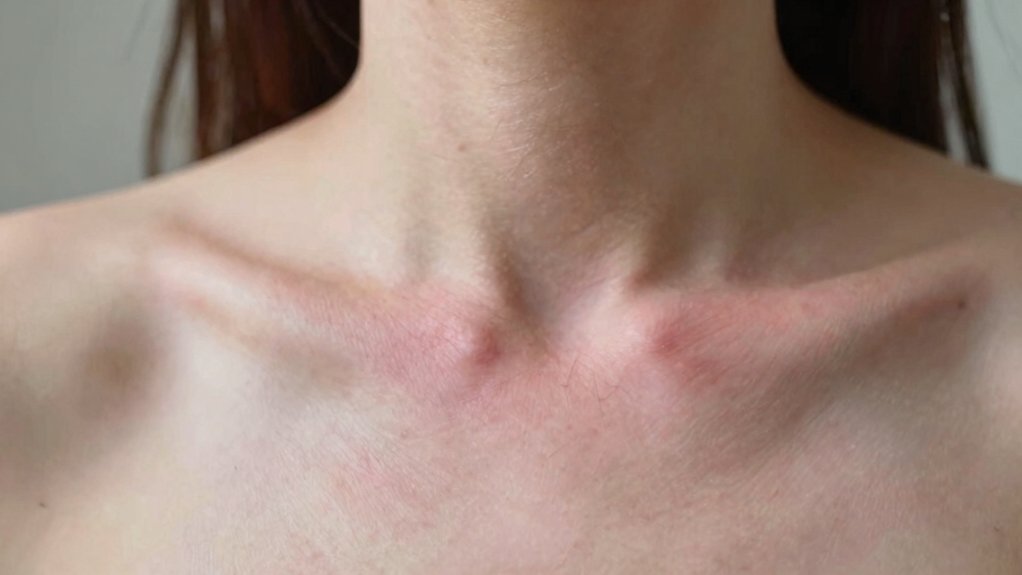
Your ribs might’ve left you gasping, but you’re not done with bone yet. The spine, sternum, and collarbone present a different beast entirely—here, you’ve got almost no padding between needle and bone.
You feel every vibration traveling through your skeleton. The buzz isn’t just noise; it’s a sensation that rattles through your teeth. When the needle strikes your sternum, you’re experiencing direct bone conduction with zero fat to soften the blow.
Your collarbone offers even less protection. Lay your fingers there now—you’re touching bone through skin. That’s what the artist works with.
Your spine creates a unique torture: each vertebra becomes a separate peak of pain, valleys of relative relief between them. You’ll arch involuntarily. You’ll hold your breath. The vibration travels upward, downward, outward through your nervous system like a tuning fork struck too hard.
Recommended Products
True 20-30mmHg Medical Compression: True 20 30mmHg medical grade graduated compression with reinforced arch & Achilles support panels. Instantly relieves plantar fasciitis, heel pain, and Achilles tendonitis. The clinically recognized 20 30mmHg pressure level improves blood flow and accelerates tissue recovery, so you can take that first morning step without sharp pain

Self Adhesive Bandage: Package includes 16 rolls of black self adhesive bandage wrap. Each roll measures 2 inch wide and 5 yards long after stretching. It easily adheres to itself but will not stick to other surfaces such as skin or hair, making it easy to pull off and change bandages

Trusted Brand and Quality: Backed by Champion Quarterback Drew Brees, Copper Compression delivers premium recovery and support products trusted by millions worldwide
Armpits, Elbows, and Knees: Why Stretch Points Sting Worse
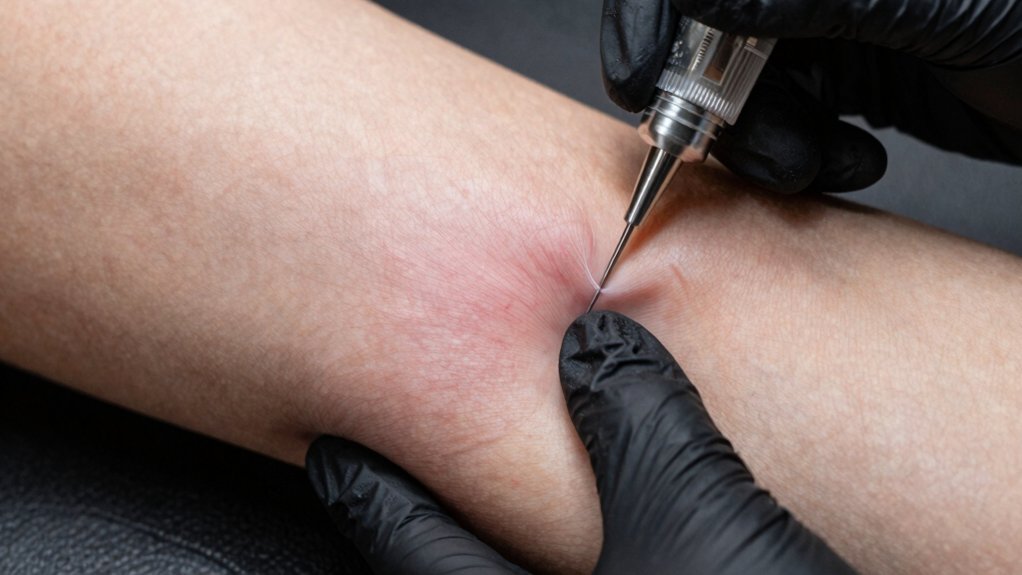
How exactly do you prepare for ink on the parts that bend, stretch, and never truly rest? You brace yourself against a different breed of sting. Your armpits hide dense nerve clusters beneath thin, sensitive skin that rubs constantly. Your elbows and knees present leathered terrain riddled with ulnar and patellar nerves that scream when the needle strikes. You can’t hold these joints perfectly still; every twitch drags the needle across already-irritated flesh. The skin here stretches and contracts thousands of times daily, so the artist stretches it taut while working, amplifying the sensation. You feel the vibration deep in the joint itself. When the machine buzzes across these creases, you’re not just enduring surface pain—you’re absorbing every jolt where bone meets constant motion.
Head, Face, and Hands: Why Nerve-Dense Areas Punish
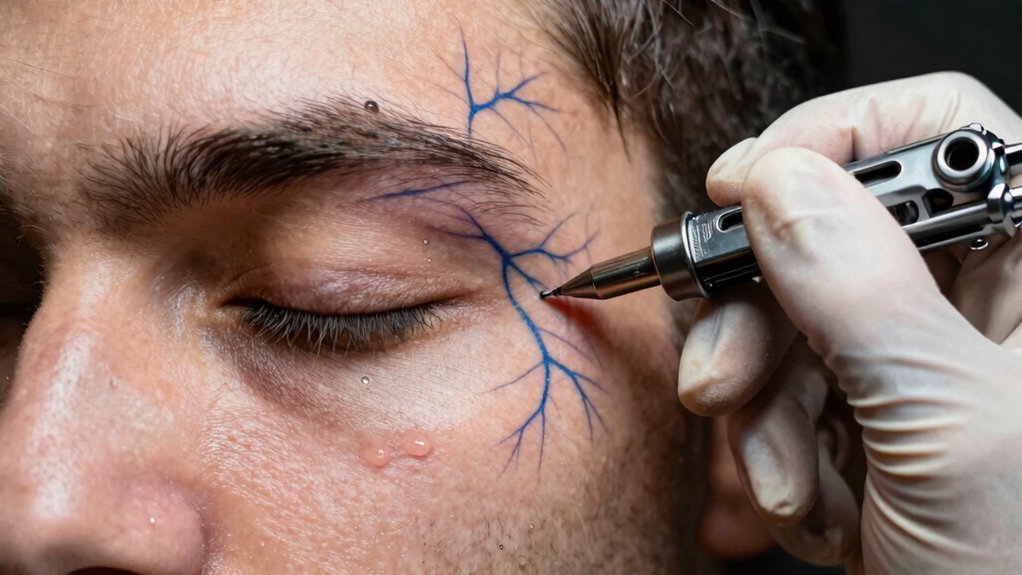
Where exactly does the needle find its cruelest bite? You discover it when you sit for ink on your head, face, or hands. These regions host dense clusters of nerve endings that fire rapidly under the machine’s steady assault.
You feel every vibration through thin skin stretched taut over bone. Your skull offers no cushioning—just raw sensation drilling directly into nerve tissue. Your fingers and palms contain thousands of mechanoreceptors, making each pass excruciating. Your lips, eyelids, and nose tip deliver sharp, stinging reports you can’t ignore.
You can’t flinch. You can’t escape. You simply endure as the artist works across terrain evolution designed for maximum sensitivity. When you choose these placements, you accept pain as the price for visibility.
Recommended Products

🌟[Instant Glam for Any Event] - Elevate your festival, party, or beach look in seconds. These metallic gold temporary tattoos act as stunning body jewelry that catches the light, making you the center of attention without the pain or commitment of real ink.

Great gift: Birthday party gifts for women, men and adults.

Safe And Healthy: Our temporary tattoo stickers are made of water paper, which is environmentally safe and does not harm the skin. There is no pain, no need to spend a lot of money to have a real tattoo and the design can be changed frequently. Stays on the skin for 3 to 5 days.
What Makes Tattoo Pain Worse in Some Spots
Why does one spot make you grit your teeth while another barely raises your pulse? You experience heightened pain where your skin stretches thin across bone or tendon, leaving little cushion between the needle and hard surface. You feel every vibration amplified when the artist works over your ribs, ankles, or collarbones.
Your nerve density directly shapes your suffering. Areas cluttered with nerve endings—like your fingers, lips, and spine—fire sharper signals to your brain. You also endure worse pain where your skin folds and moves constantly; the artist must stretch and re-stretch the area, prolonging your exposure.
You’re more sensitive when you’re fatigued, dehydrated, or hungover, and you’ll notice your skin burns hotter during long sessions when inflammation builds without relief.
Recommended Products

Customized Fit, Tailored Support: This wrist brace features an adjustable compression design, allowing you to fine-tune the fit to your exact needs. Experience personalized support and relaxation in any situation, from daily routines to intense activities

CRS Cross Carpal Tunnel Gel Sleeve nsulates against shock, friction, abrasion, and pressure for the wrist, palm, hand and carpal area. The contoured gel pad on a fingerless sleeve stays in place comfortably over your wrist and palm.

One Device for Carpal Tunnel, Arthritis & More: Made for everyday hand and wrist discomfort from carpal tunnel, arthritis, trigger finger, RSI, and general stiffness. FSA & HSA eligible and backed by our Lifetime Warranty, with many owners reaching for it two years on and still going strong.
The Least Painful Tattoo Placements for Beginners
Your biceps, outer thighs, and upper back offer the gentlest introduction to tattooing. These areas cushion you well because muscle and fat sit thickly beneath the skin, dulling the needle’s buzz. You feel pressure more than sharp pain there.
Your forearms also cooperate nicely, especially the outer surface where nerves stay sparse. You breathe easier as the artist works, and sessions finish without exhausting your composure.
You should consider the calves too. The meaty outer muscle absorbs vibration, letting you settle into the rhythm instead of tensing against it.
You’ll want to avoid spots where bone presses near the surface for your first piece. Stick to these padded zones while you learn how your body processes the sensation. Confidence builds when you start smart.
Recommended Products

★HIGH QUALITY MATERIAL: The tattoo foot pedal is made of Stainless Steel 360 design, Heavy Duty Quality Equipment meant to last!

High cushioning

Match Your Placement to Your Real Pain Tolerance
How exactly do you know what you can actually handle? You’ve got to get honest with yourself. If you’ve never felt tattoo needles, don’t jump straight into ribs or kneecaps. You test the waters first.
Think about how you’ve handled pain before. Did you flinch during a flu shot? Have you sat through dental work without issue? Your past reactions reveal your threshold. Be real about it—there’s no shame in starting small.
Pick placements that match where you actually sit, not where you wish you sat. Maybe that’s outer arm or calf, not sternum. You can always build toward bolder spots later. Your first tattoo shouldn’t break you; it should prove you can finish. Match the placement to you, not to bravado.
Conclusion
You’ll feel the fiercest sting where bone meets thin skin and nerves cluster dense—your ribs, spine, and joints will test your limits. Match your placement to what you can actually endure, and remember: the most meaningful ink often demands the most grit.
Recommended Products

Maximizes Performance & Accelerates Recovery - Unleash your full athletic potential with a kinesio tape specially made for athletes like you. Available in vibrant,...