
{“identification”: “one_paragraph_output”, “content”: “You might wonder if ink can hide those silvery lines on your skin, and the answer isn’t simple. Your stretch marks hold secrets that determine whether a tattoo will heal cleanly or blur into disappointment. The texture beneath your surface changes everything.”}
Key Takeaways
- Wait for stretch marks to fade from red/purple to white/silver before tattooing.
- Choose an artist experienced with scarred skin and expect higher hourly rates.
- Select flowing, organic designs that incorporate rather than conceal stretch marks.
- Use gradual multiple sessions to monitor healing and adapt techniques accordingly.
- Prioritize texture uniformity over perfect color alignment for lasting results.
Recommended Products

Waterproof & Practical: this thin, soft, flexible and stretchy waterproof bandages conforms seamlessly to your body's contours, allowing unhindered movement with no skin pressure— like a second skin; Ideal for post-tattoo care, this transparent elastic transparent adhesive bandage lets you shower or swim as usual without compromise

Waterproof & Practical: this thin, soft, flexible and stretchy waterproof bandages conforms seamlessly to your body's contours, allowing unhindered movement with no skin pressure— like a second skin; Ideal for post-tattoo care, this transparent elastic transparent adhesive bandage lets you shower or swim as usual without compromise

Waterproof & Practical: this thin, soft, flexible and stretchy waterproof bandages conforms seamlessly to your body's contours, allowing unhindered movement with no skin pressure— like a second skin; Ideal for post-tattoo care, this transparent elastic transparent adhesive bandage lets you shower or swim as usual without compromise
Can You Get a Tattoo Over Stretch Marks?
Why do so many people wonder about this? You’ve likely noticed stretch marks on your body after growth spurts, pregnancy, or weight changes, and you’re curious if ink can hide them. You’ll find that yes, you can get tattooed over stretch marks, but you’ve got to understand what you’re working with.
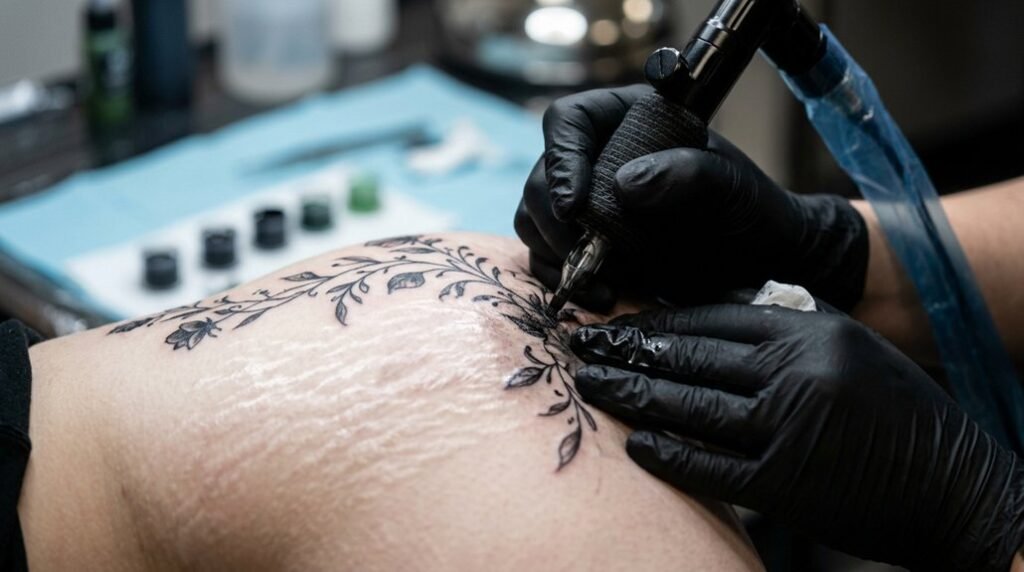
You’ll need to ensure your marks have fully matured first—fresh, red or purple lines won’t hold ink well. You’ll want to consult an experienced artist who’s worked with scarred skin before, as you’ll face unique challenges with texture and elasticity. You’re dealing with compromised skin that absorbs pigment differently, so you’ll see variations in color saturation. You’ll achieve better results when you work with your stretch marks rather than fighting against them, letting the tattoo design incorporate the natural lines.
Recommended Products

COMPLETE AFTERCARE KIT FOR NEW & EXISTING TATTOOS: This Tattoo Aftercare Kit brings together 3 essentials, Antimicrobial Soap, Tattoo Balm, and Tattoo Lotion, to help cleanse, protect, and moisturize fresh ink. Useful after tattoo sessions and throughout healing, it supports vibrant color and skin comfort for dedicated ink enthusiasts and artists

MADE WITH PURE INGREDIENTS: Egyptian Magic Skin Cream is a premium blend of five ingredients - honey, royal jelly, beeswax, olive oil, and bee propolis. Rich in antioxidants and renowned for their nourishing and healing benefits.

MADE WITH PURE INGREDIENTS: Egyptian Magic Skin Cream is a premium blend of five ingredients - honey, royal jelly, beeswax, olive oil, and bee propolis. Rich in antioxidants and renowned for their nourishing and healing benefits.
Fresh vs. Faded: How Stretch Mark Age Affects Results
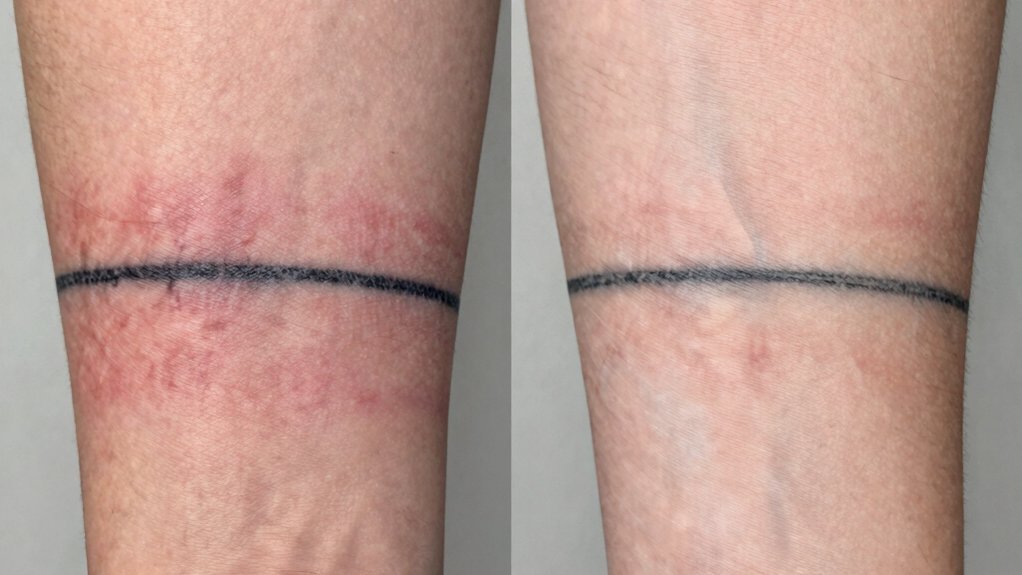
How substantially does timing affect your tattoo outcome? You’ll notice a major difference between working with fresh and faded stretch marks.
Fresh stretch marks, often red or purple, haven’t fully settled. You’ll find they’re still healing, which means your skin actively changes during the process. If you tattoo too early, you’ll watch the ink shift or blur as the mark matures. Your artist will likely refuse fresh marks and tell you to wait six months to two years.
Faded stretch marks, which turned white or silver, tell a different story. They’ve stabilized completely. Your skin isn’t changing anymore, so you’ll get predictable, lasting results. The ink stays where your artist places it. You’ll achieve much sharper lines and more consistent color saturation on older marks.
Wait until yours fade—you’ll thank yourself.
Recommended Products

Poseidon cartridge adopt a one-time joint design hygienic standard The material is stainless steel and easy to color,and has better ink flow

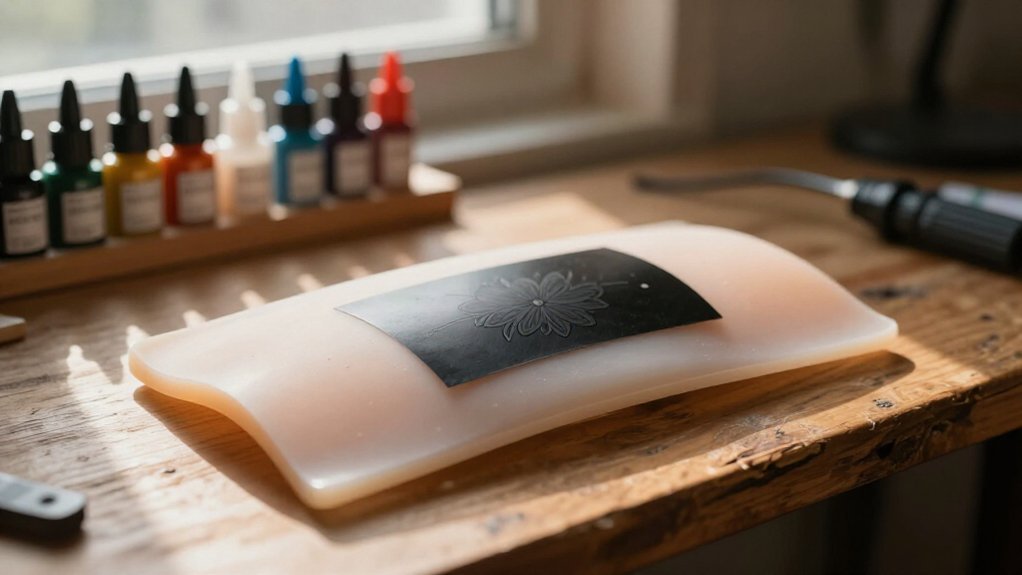
Human Skin-Like Silicone – Soft, flexible silicone material replicates the feel of real skin, ideal for scar camouflage tattoo training.

Package: 50pcs mixed tattoo cartridge needles, includes 10pcs each of 1203RL, 1205RL, 1207RL, 1209RL, 1211RL.
Why Stretch Mark Texture Matters More Than Color
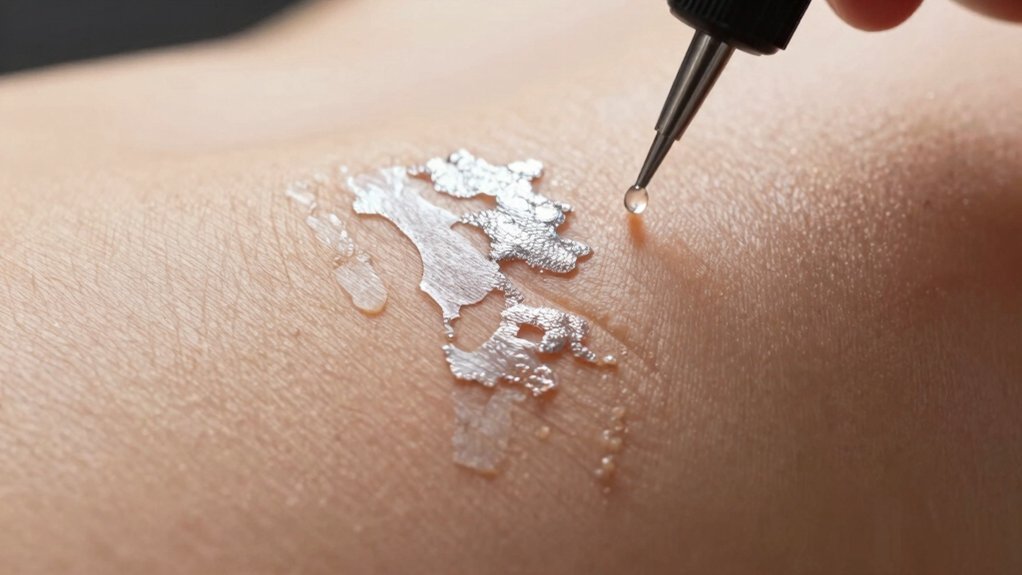
While color reveals a stretch mark’s age, texture dictates how the needle interacts with your skin. You probably notice how fresh stretch marks feel raised and slightly indented compared to surrounding tissue. This uneven landscape challenges tattoo application fundamentally.
You face distinct technical hurdles when the needle crosses scarred terrain. Raised ridges resist ink saturation, while depressed grooves absorb pigment differently. The tattoo machine skips or catches unpredictably across these variances. You can’t control this simply by selecting darker or lighter ink shades.
Your artist must adapt speed, pressure, and depth specifically for your scar’s topography. Smooth, settled stretch marks tattoo more predictably than textured, active ones. You’ll achieve cleaner lines where surface uniformity exists.
Ultimately, you should prioritize how your stretch marks feel over how they look when planning tattoo placement and timing.
Recommended Products
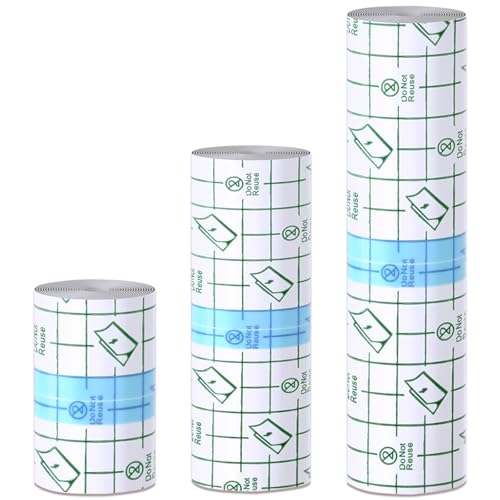
Triple-Size Value Pack for Every Tattoo Style - Get 3 full rolls of premium second skin tattoo cover (2" x 2.2 Yd, 4" x 2.2 Yd, 6" x 2.2 Yd) - sized for wrist art, back pieces, or sleeve designs. The tattoo aftercare bandage can be cut freely to match any ink!

📦 [10Pcs Individually Sealed] 10 sheets of premium tattoo practice skins (8"x6" / 1.0mm thick), each vacuum-sealed for hygiene. Double-sided blank fake skin maximizes usage – wipe & reuse for multiple techniques.

【PREMIUM 3MM THICKNESS】Our practice skins are crafted from 3mm thick, professional-grade silicone to deliver an authentic tattooing experience. This optimal density provides superior needle resistance, elasticity, and durability — just like real skin. Perfect for mastering stretching techniques, shading, and outlining without the pressure of working on live models.
Which Designs Work Best Over Stretch Marks?
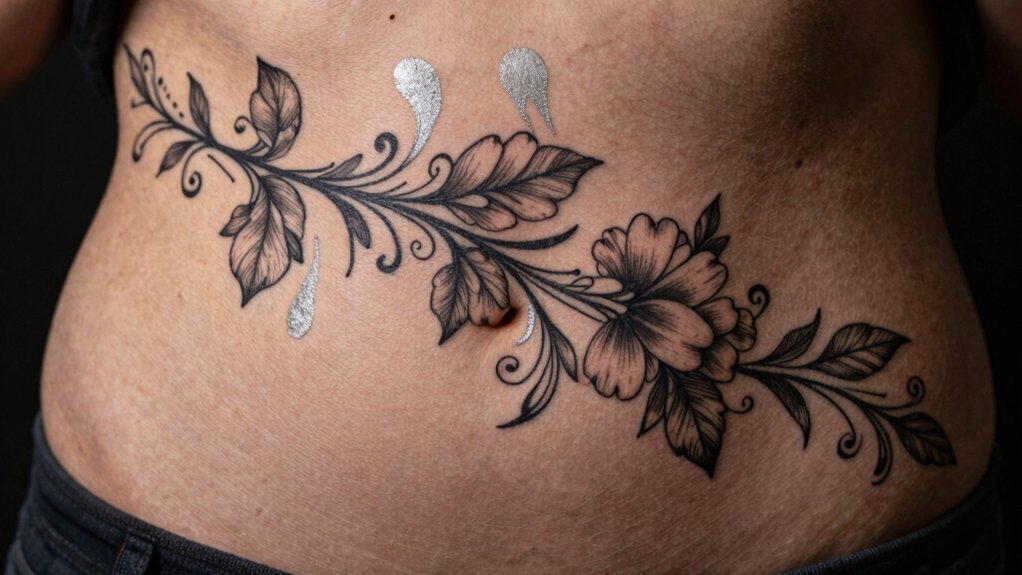
Where exactly you place ink over stretch marks determines which designs hold up. You’ll find that flowing, organic patterns outperform rigid geometric shapes, since straight lines warp visibly when skin texture shifts. Work with your artist to incorporate the stretch marks themselves into the design rather than fighting against them. Think swirling florals, watercolor splashes, or animal fur patterns that absorb irregularities seamlessly. Avoid small, intricate details that blur or distort over textured skin; bolder lines and sufficient spacing between elements maintain clarity as your body changes. You’ll also want to steer clear of large areas of solid black or uniform color saturation, as these highlight uneven skin texture. Instead, opt for designs with natural variation in line weight and shading. Movement-based compositions distract the eye from underlying marks.
Recommended Products

VISIBLY DIMINISHES RED AND WHITE MARKS: Cicatrissim is specifically formulated to help MINIMIZE THE APPEARANCE of both new red and stubborn white stretch marks. While many topical solutions only focus on recent marks, our advanced formula targets the texture of ESTABLISHED WHITE STRIAE, helping to smooth the skin surface and promote a more uniform, blended complexion with consistent application.

COLLAGEN BOOSTING FORMULA: Experience the complex blend of bioactive collagen boosters, vitamins, aloe vera extracts, retinol, hyaluronic acid, and bioactive peptides to deeply nourish, hydrate, and support collagen production while helping reduce stretch marks.
Stretch Mark Tattoo Costs vs. Regular Pricing
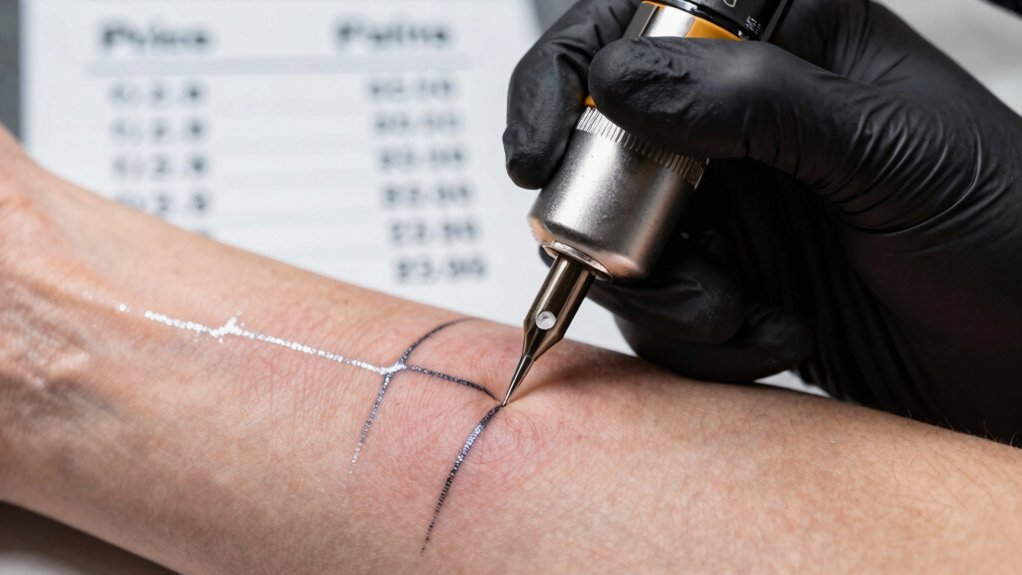
Why does covering stretch marks typically cost more than standard tattoo work? You’re paying for specialized skill. Scarred skin demands extra preparation, slower techniques, and frequent ink touch-ups.
You can’t expect flat rates here. Regular tattoos run $150-$400 hourly, but stretch mark coverage starts higher—often $200-$500 per hour. You’ll need multiple sessions too, since damaged skin absorbs ink unpredictably.
You’re also covering more territory than the marks themselves. Artists must blend surrounding skin tones seamlessly, expanding the work area significantly.
Factor in consultation fees, custom design time, and healing check-ins. Your total investment easily doubles standard pricing. Some artists charge flat project rates instead—$1,500-$5,000 depending on size and complexity.
Remember: you’re commissioning corrective work, not decoration. The premium reflects specialized training your artist invested to transform compromised canvas into lasting art.
Recommended Products

Amount of Packaging: you will receive 2 rolls of waterproof bandages in 2 different sizes, 6 inch x 2.2 yard and 8 inch x 2.2 yard, which can be applied according to your actual needs, enough length and various size also could meet your multiple needs

Waterproof & Practical: this thin, soft, flexible and stretchy waterproof bandages conforms seamlessly to your body's contours, allowing unhindered movement with no skin pressure— like a second skin; Ideal for post-tattoo care, this transparent elastic transparent adhesive bandage lets you shower or swim as usual without compromise
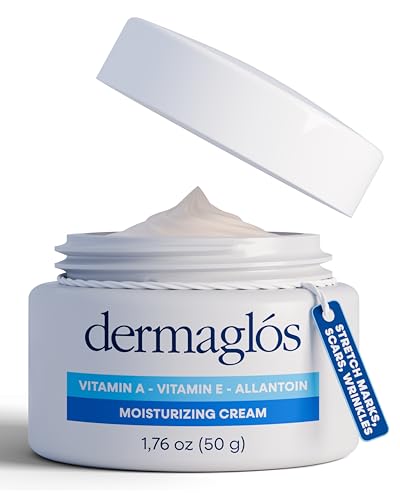
[DERMAGLÓS CREAM]: Our deep hydration cream moisturizes and leaves skin soft, elastic and healthy, The exclusive formulation maintains cellular balance, improving the level of hydration of the skin thanks to the balanced action of their components.
How to Find a Stretch Mark Cover-Up Specialist
You dig into their portfolio first. You look for healed photos, not fresh work. You check if they’ve tattooed over stretch marks specifically, not just scars. You read reviews from clients months after their appointment.
You ask direct questions: How many stretch mark cover-ups have you completed? Can you show me healed results? What’s your approach when ink falls differently on scarred tissue?
You find specialists through paramedical tattoo directories, not general shop listings. You don’t settle for an artist who’s “willing to try.” You hunt for someone who transforms this niche regularly.
You verify credentials, insist on consultations, and trust your gut when something feels off.
Recommended Products

Nourishes Healing Ink for Vibrant Color: Tattoo Goo supports healing tattoos & maintains vibrancy on healed ink with a lightweight formula rich in olive oil, lavender oil, cocoa butter, and beeswax. It absorbs quickly, moisturizes deeply, and helps reduce dryness, itch and tightness so your tattoo looks and feels comfortable through everyday routines

It is composed of three layers of PET backing, adhesive and release paper. The transparent elastic tape has good adhesion, simple use, good air permeability, and prevents cross-infection of injuries and other pollutants. The soft, stretchable non-woven polyester material is very Well adapted to body contours

🌻 ORGANIC SUNFLOWER OIL- Key ingredient in Beesoline, rejuvenates and replenishes skin. Rich in vitamins and antioxidants, it helps restore moisture, soothe irritation, and enhance skin's natural radiance. Experience the revitalizing effects of sunflower oil for a healthier and more vibrant complexion.
What Happens During Your Consultation and Design Session?
Once you’ve found a specialist worth your time, the real work begins in their chair. You’ll strip down so they can examine your stretch marks’ texture, color, and depth. They’ll trace the area, noting where skin changes and how ink might settle differently across the terrain.
Together, you’ll discuss designs that work with—not against—your body’s patterns. Bold lines and strategic shading camouflage better than fine details. They’ll sketch options, adjusting size and placement until you approve a final stencil.
You’ll review color palettes suited to your skin tone and mark maturity. They’ll explain how scarred skin absorbs pigment uniquely and set realistic expectations. You’ll book the actual tattoo session, sign consent forms, and receive prep instructions before walking out with a plan etched in confidence.
Recommended Products

Cartridge Needles Sizes: 20 pcs tattoo cartridge needles include 3RL 5RL 5RM 7RM, each size has 5pcs. Those tattoo needles can be used for lining and shading, which can assist you with the entire tattoo work

REFRESH YOUR CARTRIDGES -It is time to refresh and upgrade your cartridge needles inventory! EZ unlocks the latest technology of cartridge production cartridges so precise you cannot refuse, cartridges that will enable your true artistic talent. tattoo needles in a variety of sizes that are commonly used for lining, coloring, and shading tattoos.The cartridges are compatible with nearly all kinds of rotary and pen style machines.

JimKing Tattoo needles and tips are packaged in a disposable sterilization box to prevent secondary infections.
How Long Do Tattoos Over Stretch Marks Take to Heal?
How quickly your tattoo heals depends heavily on how your stretch marks have matured. Fresh scars take longer to heal than settled, silver ones. You’ll typically need two to four weeks for the surface to close, but stretch mark skin remains delicate. Keep the area clean and moisturized.
Your artist applies a bandage initially. Remove it after a few hours and wash gently with unscented soap. Pat dry—don’t rub. Apply a thin layer of ointment twice daily. Avoid soaking the tattoo in baths or pools until healed.
You’ll notice peeling and itching around day three. Don’t scratch or pick at scabs. Wear loose clothing to prevent friction against textured skin. Full healing beneath takes up to three months, though you’ll see results soon.
Recommended Products

HIGH QUALITY MATERIAL: Silicone materials, individually packaged. These tattoo practice skin are the great gift for tattoo artists

💎 Complete Value Tattoo Practice Kit: Get 8 reusable 3mm fake skin + 10 premium transfer papers! This tattoo skin and transfer paper kit saves cost while offering double-sided blank skins—ideal for studios and beginners mastering designs.

⚡️Premium Practice Kit : No more separate purchases! Get 10 reusable silicone tattoo practice skins (7.4"x5.6") and 20 professional stencil papers (11"x8.5") – A complete bundle to master techniques without wasting supplies. Perfect for tattoo artists & apprentices!
When to Wait or Skip Tattooing Over Your Stretch Marks
Healing time matters, but timing the tattoo itself carries equal weight. You must wait until your stretch marks have fully matured. Fresh, red, or purple marks remain active and unstable. You’ll want them to fade to silver or white first, which typically takes six months to two years.
Skip the tattoo entirely if your stretch marks are still raised, itchy, or inflamed. You shouldn’t proceed if you’re pregnant or planning pregnancy soon, as your skin will stretch further. Avoid tattooing over areas prone to weight fluctuations or where you apply topical medications regularly.
Consult a dermatologist if you’re unsure about your skin’s condition. They’ll assess whether your marks have settled enough for the needle. Prioritize patience over speed. Rushing risks distorted artwork and compromised healing.
Conclusion
You can absolutely tattoo over stretch marks, but you’ll need patience and the right artist. Wait until they’re faded, choose designs that work with the texture, and budget extra time and money. Find a specialist who understands scarred skin, follow their aftercare closely, and manage your expectations—your tattoo won’t erase the marks, but it can transform them into something beautiful you’ll proudly wear.