
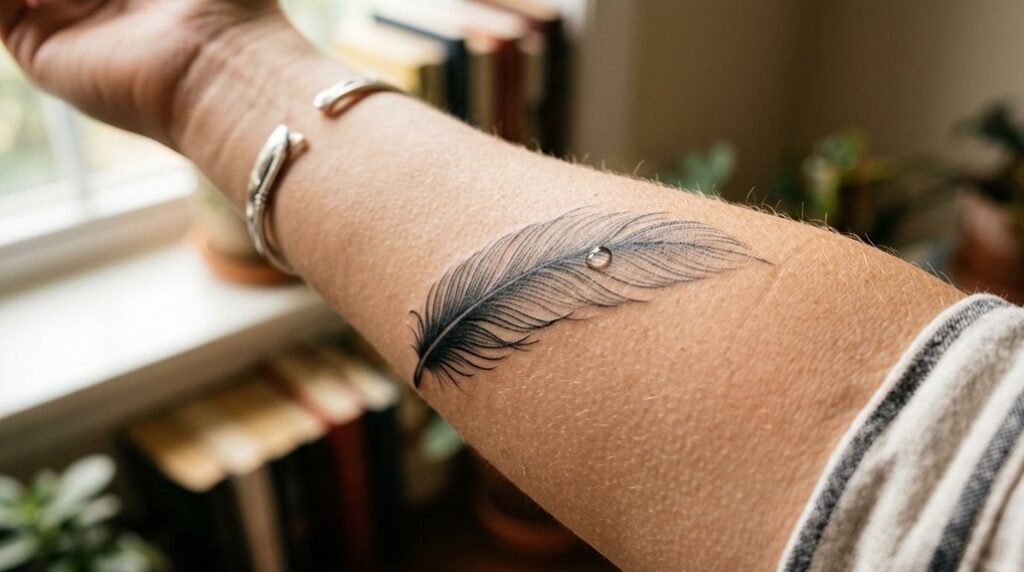
You might think a feather tattoo is simply about lightness, but you’re only scratching the surface. This mark carries ancient weight—freedom, yes, but also grief, protection, and transformation waiting to unfold. The real question isn’t what it means to everyone else.
Key Takeaways
- Feathers symbolize freedom, spirit, and memory, often representing release from earthly constraints.
- Single feathers suggest contemplation and protection, while multiple birds indicate transformation or expansion.
- Design choices—species, color, condition—tailor meaning to personal truths like peace, strength, or pride.
- Memorial feathers incorporate dates, initials, or handwriting to honor loss or mark growth.
- Cultural contexts matter: Native American and Celtic traditions carry sacred significance requiring respectful understanding.
Recommended Products

Standard size: Tattoo Transfer Paper is standard A4 paper size, each measures 8.27 in X 11.69 in. There are 4 levels in total. The thickness of the paper is very light and smooth to the touch.

Warm Tips: The tattoo transfer paper need to work with transfer medias.You will need to purchase the stencil ointment separately. Apply the design made on the master paper. Please pay attention to press the back side of the pattern to the skin for at least 3 seconds
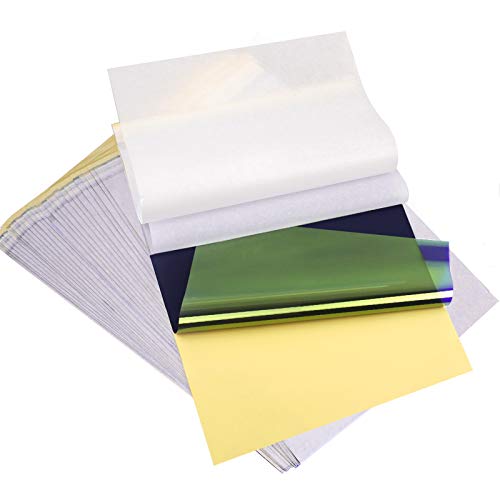
ADVANCED MATERIAL: Tattoo transfer paper is made with the high quality dyes and stencil paper. Transfer marks are very clear, clean and smooth. Tattoo transfer paper kit come with 35 sheets. Great for tattooing, trace and transfer images onto the body.<br>
What Does a Feather Tattoo Mean?
Why has this airy motif dominated skin art for centuries? You encounter feathers etched onto skin everywhere—wrists, ribs, shoulders, ankles. You’ve seen them curve like quills or float like fallen plumes. They speak before you ask.
You choose this symbol because it carries weight without heaviness. It bridges cultures you’ve never visited. Native American warriors wore feathers; Egyptians placed them in tombs; you trace one on your collarbone. The design adapts to your story—peacock for pride, dove for peace, raven for mystery.
You notice how lines mimic barbs and shafts, how artists capture lightness through shadow. You’re drawn to the contradiction: something that falls yet rises, that protects birds and now covers you. You’ve selected more than decoration.
Recommended Products

★【6 Pieces/LOT】--COKTAK Brand Temporary Tattoos Sticker in package.【Size】: 20x15CM 7.8"x5.9"

Waterproof Temporary Tattoo: The tattoo is waterproof and can be worn in water or sweat.

Freedom, Spirit, Memory: The Three Core Meanings
Where does your feather tattoo begin its work—on your skin or in your mind?
You carry freedom when you ink that feather. You’ve watched birds escape gravity, and you crave that release. Your tattoo marks your refusal to stay grounded.
You touch spirit, too. Feathers bridge earth and sky in your personal mythology. You don’t need tradition to feel that connection—you’ve felt weightless moments, glimpsed something beyond yourself. Your artist renders those intangible flights in ink and shadow.
You hold memory closest. Maybe you commemorate someone who flew away too soon, or you mark who you were when you chose this. The feather remembers even when you don’t. You glance down years later and travel back instantly.
Three meanings, one mark. You decide which takes flight.
Recommended Products

Waterproof Tattoos: These temporary tattoos are waterproof and can be used for fantasy fashion, body painting, or as stickers for kids and teens.

WATERCOLOR FEATHER COLLECTION – 12 unique sheets (2.35”x3.93” each) featuring two distinct styles: geometric tribal patterns with rhombus, dots, lines in pink/cyan/blue/red, and realistic peacock feathers with natural eye spots and soft gradient hues.

Explore your artistic side with our 'Henna Tattoo Native American Art Book', a treasure chest of unique, handmade high-resolution tattoo designs crafted by professional artists
Native American Traditions in Modern Feather Tattoos
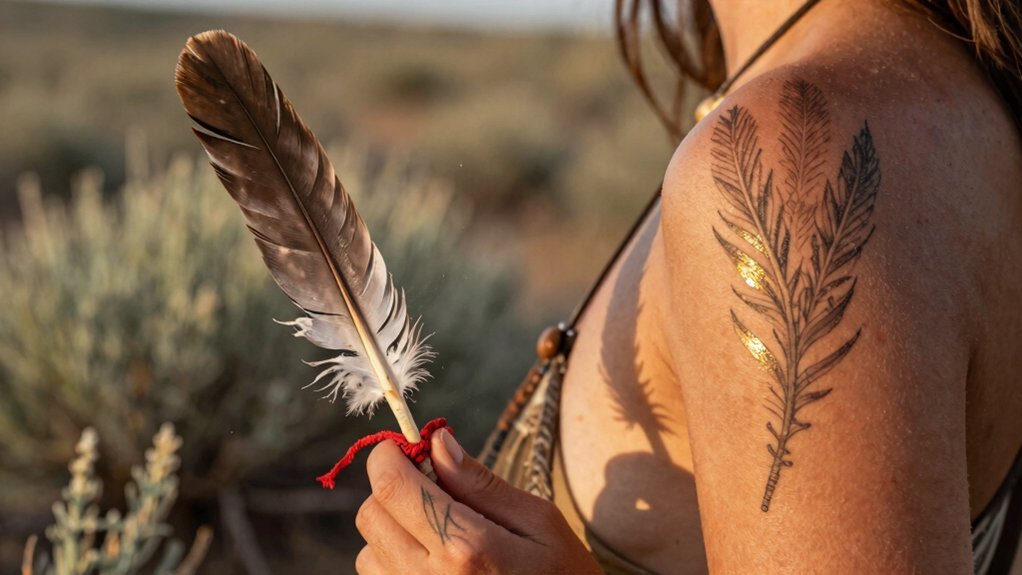
How deeply do you consider the roots before you let an artist etch that feather into your skin? You might see feather tattoos everywhere, but do you know what you’re borrowing?
Native American traditions hold feathers as sacred objects. Warriors earned them. Priests used them in ceremonies. Each feather carries specific meaning—eagle feathers connect to the divine, owls guard wisdom, hummingbirds bring joy. You can’t just pick one because it looks beautiful.
When you choose a feather design, you’re touching living spiritual practice. Tribes today still protect these symbols legally and culturally. You risk appropriation if you don’t understand the context.
Research the specific nation’s beliefs. Honor the source. Maybe you partner with Native artists. You transform your tattoo from decoration into genuine respect when you engage with meaning rather than aesthetics alone.
Recommended Products

20+ BOHO WATERCOLOR DESIGNS - Includes peacock feathers, colorful arrows, floral accents and delicate line art in soft watercolor style. 8 sheets body tattoo sticker as picture shows. Each sheets size about:11 x 6.5 cm / 4.33 x 2.56 inch

【Package Included】Our tattoo sticker includes 6 sheets and each sheet measures 18 cm x 11 cm (7.08 inch x 4.33 inch).
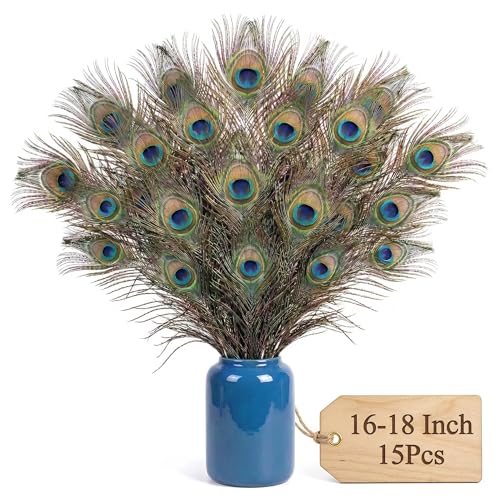
PREMIUM 15-PIECE BUNDLE: You will receive 15 stems of hand-selected, genuine peacock feathers. Each plume measures between 16 and 18 inches in length, offering the ideal height for tabletop vases, floral bouquets, and detailed artistic arrangements.
Celtic Beliefs and the Feather as Soul Symbol
When did you last consider what the Celts believed happened to your spirit after death? You might find their answer woven into their art and oral traditions.
The Celts envisioned your soul as a weightless entity capable of flight. They linked feathers directly to this liberated spirit form, believing your essence could soar beyond mortal bounds after death. You’ll notice this symbolism carved into standing stones and metalwork across Ireland and Britain—feathers accompany figures entering the Otherworld.
Celtic druids taught that your soul transcends the body like a bird leaving its nest. This isn’t mere decoration; you’re carrying an ancient metaphysical statement when you choose this motif. Your feather tattoo echoes their conviction: transformation awaits, and your spirit possesses untethered potential.
Recommended Products

Semi Permanent Tattoo Stickers: High-quality temporary tattoos that last 7-14 days, gradually fading as your skin naturally exfoliates. Made with skin-safe, plant-based inks that meet international safety standards.

【PACKAGE】Contains 2 Sheets temporary tattoo paper stickers which are printed with non-toxic ink, each sheet measuring 105 x 60 mm / 4.13 x 2.36 inch in size.

Exquisite body art that can be worn in place of jewelry. Celebrity inspired.
What Different Feather Types and Colors Signify
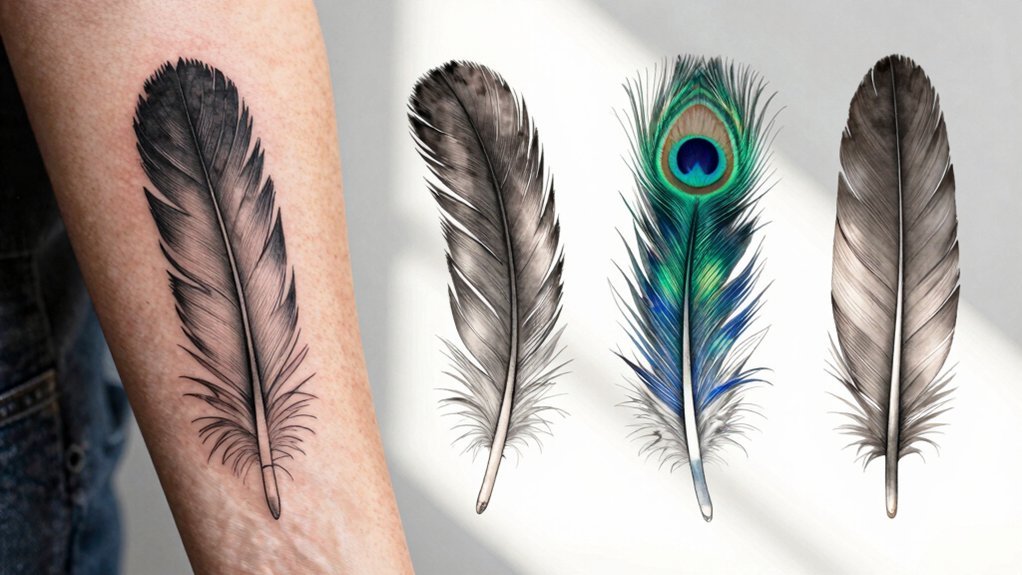
Why limit yourself to generic ink when you can choose a feather that speaks your specific truth? You’ll find that each bird carries distinct symbolism. Peacock feathers showcase your pride and beauty, while eagle feathers mark your strength and freedom. Owl feathers whisper your wisdom and intuition to the world.
You’re coloring matters too. Black feathers guard your mysteries and protect your boundaries. White ones signal your purity and new beginnings. Red demands attention, highlighting your passion and courage. Blue feathers calm your spirit, connecting you to truth and communication.
You’ve got countless combinations to explore. A blue jay feather declares your intelligence and determination. A raven’s black plume embraces your shadow self. You’re not just picking a design—you’re declaring exactly who you’ve become and what you value most.
Recommended Products

Precision Transfer Performance - It’s professional-grade tattoo stencil paper delivers vibrant, high-definition transfers even for intricate designs. The carbon layer ensures sharp outlines without smudging or fading, ensuring crisp lines that stay true to your original artwork.

Spirit Tattoo Classic Thermal Transfer Paper, 8.5” X11” (100 Sheets): Established since 1946, the original and trusted choice of tattoo artists globally, offering reliability and consistency in tattoo stencil creation.

Precision Transfers & Long Lasting: Tattoo stencil paper delivers vibrant, high-definition transfers even for intricate designs. Creates crisp, dark lines that transfer cleanly to skin (clearly on different skin tones) which are easy to follow during tattooing. The carbon layer made from high-quality dyes ensures sharp outlines without smudging or fading and maintains crisp lines visibility throughout long tattoo sessions, so you can focus on creating art instead of re-drawing lines
How to Honor Someone With a Memorial Feather Design
Perhaps you’re searching for a way to keep someone close who’s no longer here. A memorial feather tattoo lets you carry them with you always. You choose a feather that connects to them—maybe a hawk feather for their fierce spirit, or a dove for their gentle nature. You add their initials, birth date, or handwriting sample to make it unmistakably theirs. You might include their favorite color or blend their ashes into the ink itself.
Placement matters to you, so you select somewhere you’ll see daily—your wrist, your shoulder, your heart. You work closely with an artist who understands loss and translates your grief into lasting art. When you glance at your skin, you remember. You’ve built something permanent from love and absence.
Recommended Products

Exquisite body art that can be worn in place of jewelry. Celebrity inspired.


8 sheets body tattoo sticker as picture shows.Each Sheets size about: 11.4 x 21 cm / 4.48 x 8.26 inch
Where to Place Your Feather Tattoo
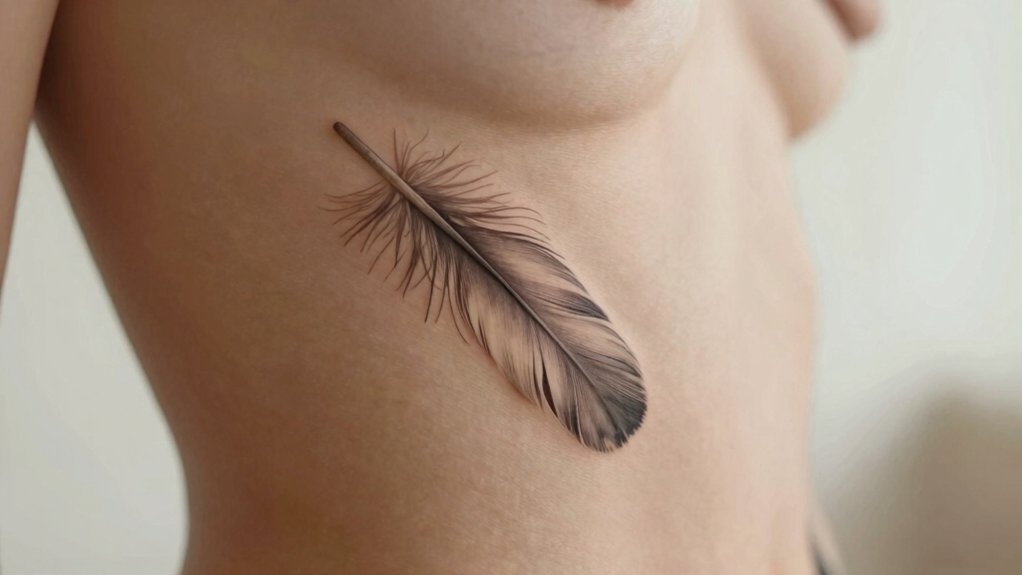
Once you’ve settled on a design that holds meaning, you’ll need to decide where it belongs on your body. Consider your lifestyle and how visible you want your ink to be. If you work in a conservative environment, you’ll likely place it where clothing covers it easily.
Your feather’s size and detail level directly impact placement options. A delicate, small feather wraps nicely around your wrist, ankle, or behind your ear.
Larger, more intricate designs demand space on your ribcage, shoulder blade, or thigh where the artist can execute flowing lines properly.
Think about how your skin moves and ages. Areas with frequent stretching or sun exposure may distort finer details over time. You’ll also want to factor in pain tolerance—bone-adjacent spots like collarbares hurt more than fleshy areas. Ultimately, you’ll choose a spot that feels right for your story.
Recommended Products

Waterproof Tattoos: These temporary tattoos are waterproof and can be worn for long periods of time. Cute Design: Features a cute cartoon design of a dream catcher feather...
Single Feather or Flight of Birds: Choosing Your Design
How do you want your feather to exist—frozen in stillness or caught mid-motion?
A single feather anchors you in contemplation. You isolate detail: barbs, shaft, weightless geometry. This design suits wrists, ribs, or spine—places where you’ll study it daily. You choose this when you honor one specific loss, one private strength, one moment held intact.
A flight of birds releases that energy. You capture ascent, scattering, return. Birds peel from the feather’s source, suggesting origins you’re still tracing. This arrangement demands more space—shoulder blades, thigh, ribcage wrapping. You select motion when you embrace transformation, when you’ve moved through grief into forward momentum.
Neither choice limits meaning. You simply decide how your story breathes: suspended in singular focus, or expanding outward, alive with possibility.
Recommended Products

Pride Tattoos Show Our Pride: Our rainbow temporary tattoos support lesbian gay bi transgender causes is to show our pride, spread the "love is love" attitude with pride accessories and support all activities and causes about LGBT.
Pride Accessories: Pride Tattoos,Pride Decorations,Pride Temporary Tattoos for Adults,Love is Love:

★【4 sheets! Temporary tattoos for Women】:Uniquely designed,looks like real tattoo.
Making the Symbolism Personal to You
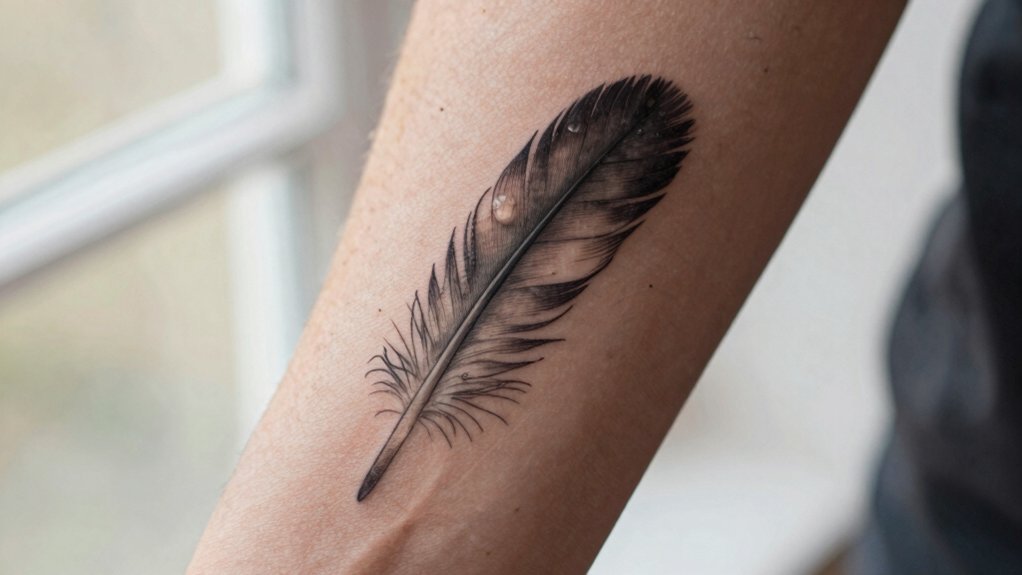
Why settle for borrowed meaning when you can build your own? You decide what your feather represents. You might choose a specific bird species that carries personal weight—perhaps a raven honoring a lost loved one’s memory, or a dove marking your recovery from hardship. You can incorporate significant dates, initials, or coordinates into the design itself. You might select colors that evoke specific moments: sunset oranges for a transformative trip, midnight blues for overcoming depression. The feather’s condition matters too—you might render it pristine, tattered, or mid-shedding to reflect your current chapter. You aren’t bound to tradition. You create the narrative. When someone asks about your tattoo, you’ll speak from authentic experience rather than reciting generic symbolism. Your skin carries your story, not someone else’s.
Recommended Products

Quality temporary tattoos. Safe, sophisticated and realistic.

[Semi-Permanent, Realistic Tattoos] INKARTLINK semi-permanent tattoos are lifelike, durable, waterproof, and sweat-resistant, lasting 7–14 days and gradually fading as the skin’s outer layer sheds. They’re perfect for everyday wear, events, or themed occasions. From the beach to the office, they stay vibrant, allowing you to effortlessly showcase your body art in any setting.

Size:60mm x 105mm (2.36" x 4.13")
What to Ask Your Tattoo Artist
Where you place your feather tattoo and how your artist executes it will shape its impact for decades, so you’ll want to come prepared with specific questions.
Ask how they’d handle your feather’s specific details—barb texture, shading depth, and whether color or black-and-grey suits your skin tone better. You’ll need to know their experience with fine-line work, since feathers demand precision.
Request to see healed photos of similar pieces; fresh tattoos look different than aged ones.
Ask about placement recommendations based on your movement patterns and aging.
Discuss how size affects detail retention over time.
Inquire about touch-up policies.
Verify their sterilization protocols and ink quality.
You’ll want clarity on pricing structure, session length, and aftercare specific to your design.
Don’t hesitate to ask why they suggest certain approaches—your understanding ensures you’ll wear this symbol confidently.
Conclusion
You carry your own meaning in every feather you choose. Whether you’re drawn to freedom, memory, or transformation, this tattoo grows with you. Trust your instincts, research your symbols, and collaborate with an artist who hears your story. Your feather becomes more than ink—it becomes your evolving narrative.