
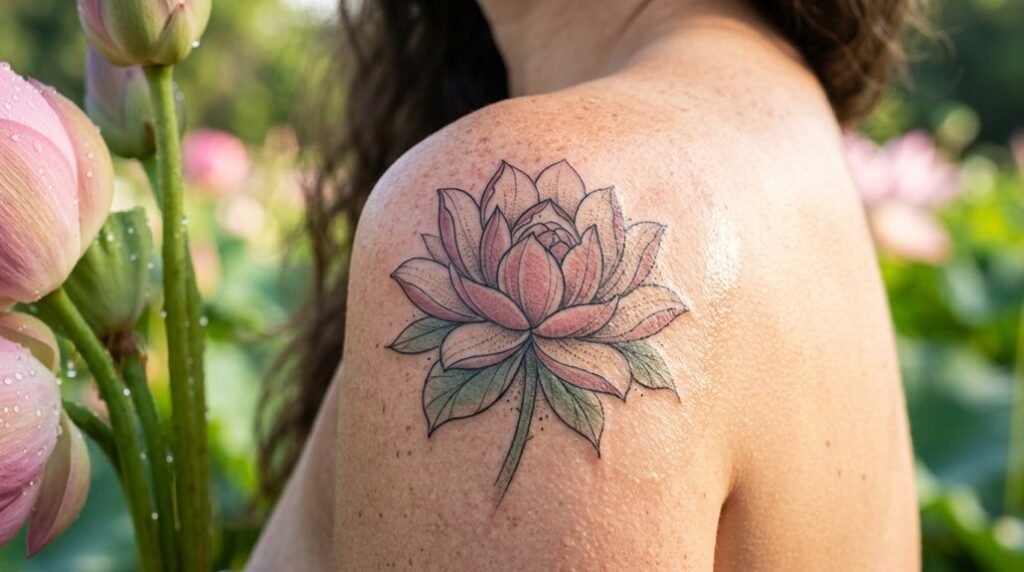
You carry a story of struggle and renewal beneath your skin, whether you know it yet or not. A lotus tattoo speaks to that journey—mud to bloom, darkness to light. But the meaning shifts in ways you might not expect. Color, placement, and paired symbols all reshape what your ink communicates to the world. Before you commit, you’ll want to understand exactly what message you’re sending.
Key Takeaways
- Lotus tattoos symbolize rebirth and transformation, emerging unstained from murky waters as a powerful personal revolution.
- They represent spiritual awakening through distinct Buddhist stages: mud, growth, bloom, and transcending one’s origins.
- Color choice deepens meaning: pink for devotion, white for enlightenment, blue for wisdom, red for passion, black for absolute transformation.
- Placement dictates function—visible areas broadcast resilience, hidden locations guard private strength, and roots-grounded spots link each step to enlightenment.
- Pairing with mandalas, koi, or mantras layers meaning, merging cultural heritage with individualized narratives of perseverance and balance.
Recommended Products

Lotus Flower Pattern Stencils: Can meet your different needs, well made and fun to creat craft projects for families and friends, offers endless possibilities for transforming your home decor

✨ Complete Value Set: Each kit contains 6 large A4 sheets with up to 100 distinctive patterns (depending on the theme). From delicate flowers to fierce animal totems, this bulk collection offers endless creativity for DIY body art lovers, ensuring you always have the perfect design for any mood.

Good Quality: Our lotus mandala stencils are made of made of environmentally friendly PET translucent material, non-toxic and odorless. They are durable, flexible, reuseable, skin-friendly and can be bent. By using the latest laser engraving technology, every detail is the perfect and flawless, the edges are smooth, no sharp edge, without deckle edge and tear.
What Does a Lotus Tattoo Symbolize?
Why do so many people choose the lotus for their skin? You recognize its power as a symbol of rebirth. You emerge from dark times, just as the lotus rises from murky water. You wear it to mark your transformation.
You’ll find the lotus represents purity too. You grow clean despite your origins. You defy circumstances that tried to drag you down.
You might select it for spiritual awakening. You’re opening yourself to deeper consciousness. You’re shedding old layers.
You may appreciate its resilience. You push through barriers. You bloom where others wilt.
You choose colors deliberately. You pick pink for devotion, white for enlightenment, or blue for wisdom. You create personal meaning.
You transform your body into a testament. You’ve survived. You’re thriving.
Recommended Products

【Style and Elements】 30 sheets of Yoga style temporary tattoos in different size including lotus, OM, Sanskrit, Tibetan, lycoris, mandala, flower, elephant, moon, peacock feather, meditation, fearless, golden sun and more.

[Semi-Permanent, Realistic Tattoos] INKARTLINK semi-permanent tattoos are lifelike, durable, waterproof, and sweat-resistant, lasting 7–14 days and gradually fading as the skin’s outer layer sheds. They’re perfect for everyday wear, events, or themed occasions. From the beach to the office, they stay vibrant, allowing you to effortlessly showcase your body art in any setting.

Unique Design Mandala Tattoos: Yazhiji Mandala tattoos are a beautiful blend of artistry, spirituality, and self-expression. They offer a way to wear a design that is not only visually stunning but also rich in meaning and symbolism. Whether you’re drawn to the traditional aspects of mandalas or prefer a modern interpretation, our mandala tattoo can be a deeply personal and reflective choice alowing you to embrace the harmony and beauty of these captivating symbols.
What Do Lotus Stages Mean in Buddhism?
Where do you begin when tracing the lotus through Buddhist teaching? You start with its stages—each a mirror of your spiritual journey.
In mud, you recognize the seed of enlightenment. You’re rooted in suffering, desire, and attachment. This isn’t failure; it’s your foundation. You push upward through water, and you’re cleansing yourself, shedding impurities in daily practice. You’re not pure yet, but you’re transforming.
When you break the surface, you bloom untouched by the mud below. You’ve achieved enlightenment—clarity, detachment, peace. The lotus doesn’t ignore its roots; it transcends them.
Your tattoo captures this progression. You choose where you place yourself: striving, awakening, or fully realized. You’re marking not who you were, but who you’re becoming.
Recommended Products

Innovative Skin-Sync Technology: We don't just sit on the skin; we interact with it. By reacting organically with naturally occurring proteins in your skin's outermost layer (stratum corneum), our plant-based formula magically transforms from a transparent guide into a rich, ultra-realistic navy-black. It looks exactly like a healed, permanent tattoo—without the needles or depth.

🍷15 Sheets Black Lotus Temporary Tattoos Stickers Fashion Designs🍸 EGMBGM Brand Original Sexy Bohemia Boho Indian Black Lace Lotus Fake Jewelry Crescent Moon Moth Flowers Pendant Temporary Tattoos Supplies. There Are 15 Sheets In Each Package Of Size 4.1"x2.3" 10x6cm Gothic Large Temporary Tattoos For Women Girls Adults Daughters Temporal Tattoos.

🐙32 Sheets 89+ PCS Unique Tribal Black Temporary Tattoos:🐠 There Are 32 Sheets With 8 Large Half Arm Sleeve Temporary Tattoos For Women Adults 21x15cm 8.2"x5.9" And 24 Sheets Small Temporary Tattoos For Girls Kids 10.5x6cm 4.1"x2.3" Including Various Popular Gothic Designs 3D Animal Snake Lace Elephant Cross Boho Bohemia Moon Crown Owl Lion Wolf Tribal Tiger Tatoos Skull Skeleton Dreamcatcher Dream Catcher Turtle Lotus Mandala Flower Feather Fake Jewelry Tattos Design.
How Does Color Change a Lotus Tattoo’s Meaning?
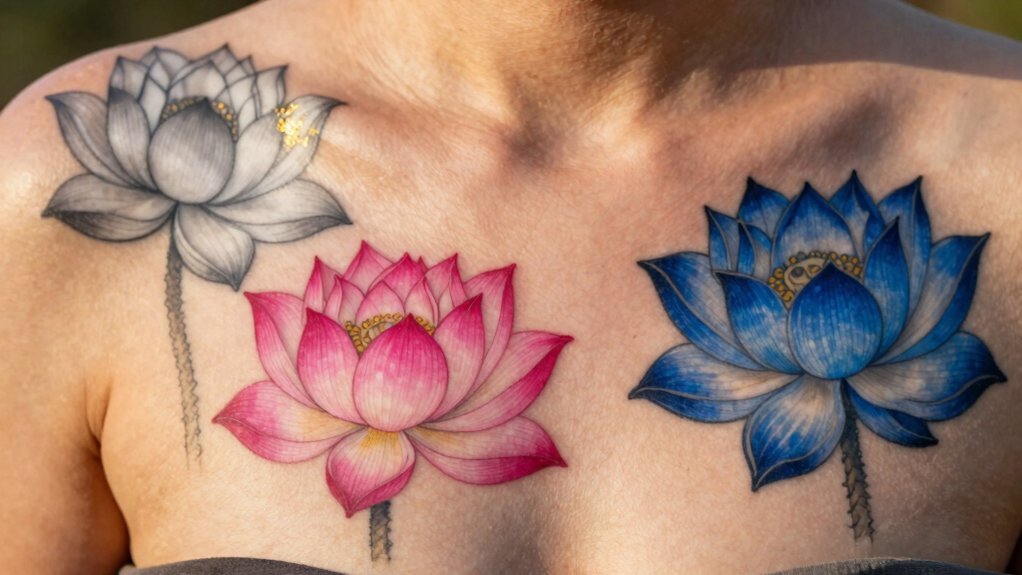
You’ve mapped your spiritual stage onto skin, but the story doesn’t end with form. Color transforms your lotus into a specific declaration of intent.
Choose pink and you’re embracing the Buddha’s earthly history, representing devotion and the highest teachings.
White strips away distraction, pointing toward purity of mind and spiritual perfection.
Red ignites passion, love, and the heart’s raw energy.
Blue anchors you in wisdom, intelligence, and victory over the senses through understanding.
Black demands attention, signaling mystery, rebellion, or absolute transformation from darkness into form.
Purple carries regal spirituality, merging the crown and third eye energies.
Don’t select shade blindly. You’re etching vibration into flesh. Ask yourself what energy you’re willing to carry daily. The color speaks before anyone reads the flower’s shape.
Recommended Products

【PACKAGE】Contains 8 Sheets temporary tattoo paper stickers which are printed with non-toxic ink, each sheet measuring 190 x 90 mm / 7.48 x 3.54 inch in size.

【UNIQUE AMAZING DESIGNS】Each Size is about 11.4 x 21 cm / 4.48 x 8.26 inch. Contains 8 sheets temporary tattoo paper stickers which are printed with non-toxic ink.

【Spiritual Lotus design】This design blends lotus flowers with OM symbols to express harmony, mindfulness, and inner strength. The fine-line approach keeps the artwork calm and refined, making it ideal for hands and arms. A quiet spiritual style with timeless symbolism.
Where Should You Place Your Lotus Tattoo?
How does placement reshape what your lotus communicates? You choose your canvas, and meaning shifts.
Place it on your wrist or forearm, and you’ve turned your lotus into a daily reminder you can’t ignore. You’re wearing resilience where you’ll see it constantly.
Hide it along your ribcage or spine, and you create private strength. You’ve made your symbolism intimate, revealed only when you choose.
Put it on your shoulder or back, and you’re carrying growth like a burden you’ve overcome. You’re building your story into your posture.
Ankle or foot placements root you. You’re grounding enlightenment in every step you take.
Your skin dictates visibility, and visibility dictates function. You’re deciding whether your lotus speaks to you, to others, or waits quietly until you’re ready.
Recommended Products

[Semi-Permanent, Realistic Tattoos] INKARTLINK semi-permanent tattoos are lifelike, durable, waterproof, and sweat-resistant, lasting 7–14 days and gradually fading as the skin’s outer layer sheds. They’re perfect for everyday wear, events, or themed occasions. From the beach to the office, they stay vibrant, allowing you to effortlessly showcase your body art in any setting.

❀FLOWER TEMPORARY TATTOO SET FOR WOMEN ADULTS KIDS❀Contains 50 sheets flower and butterfly temporary tattoo transfer stickers, 6cm*6cm,a variety of flash festive tattoos to express your personality with the appearance of real tattoos. Include flowers, rose, butterfly, leaf, Enough let you shimmer anywhere, like arms, wrists, fingers, ankle, neck, shoulder, feet, legs and even your hair!

Semi Permanent Tattoo Stickers: High-quality temporary tattoos that last 7-14 days, gradually fading as your skin naturally exfoliates. Made with skin-safe, plant-based inks that meet international safety standards.
What Symbols Pair Best With a Lotus?
Placement shapes your message, but pairing determines its depth. You amplify meaning when you combine the lotus with complementary symbols.
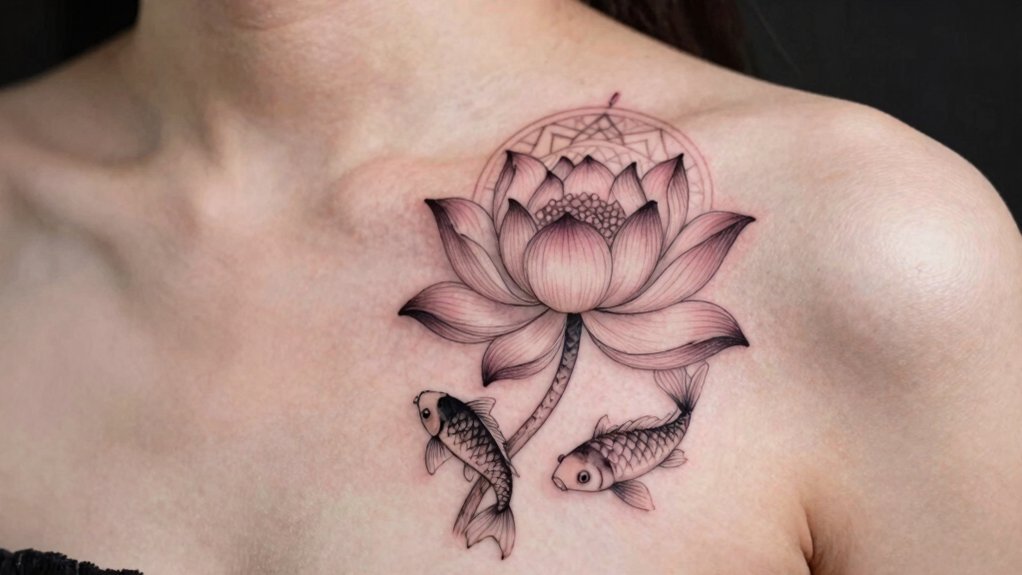
You create spiritual resonance by pairing it with the Om symbol or a mandala. These combinations root your design in meditation and enlightenment traditions.
You express transformation through adding a butterfly or phoenix. You show growth emerging from struggle, matching the lotus’s own journey through mud.
You balance energy by incorporating yin-yang imagery or moon phases. These pairings emphasize the harmony between darkness and light.
You honor cultural heritage with koi fish swimming beneath, a classic motif representing perseverance and good fortune.
You personalize further with Sanskrit mantras, geometric patterns, or water elements. Each addition layers significance without cluttering your vision.
Choose symbols that mirror your own story, not decorative trends.
Recommended Products

Black lotus flowers female temporary Tattoos is 21cm x 15cm

LARGE WALL STENCIL: Include 1pc lotus flower stencil, 11.8x11.8 inch/30x30cm. Large size meets your more needs

Which Lotus Style Fits Your Personality?
Why settle for generic when your lotus can speak your language? You choose a style that mirrors who you are.
You crave simplicity? Pick a minimalist line drawing. You want that clean, modern edge that whispers rather than shouts.
You’re bold and dramatic? Go for a watercolor explosion. Let those purples and pinks bleed across your skin. You own that creative chaos.
You value tradition? Select a Japanese irezumi-style bloom. You honor centuries of craftsmanship with every petal.
You’re spiritual and grounded? Try a geometric mandala lotus. You balance sacred geometry with organic form.
You’re edgy and unconventional? Fuse your lotus with blackwork or dotwork techniques. You transform something delicate into something fierce.
Your tattoo tells your story. You decide which version of yourself you’re inking permanently.
Recommended Products

🎃[4 Sheets Groovy Long Lasting India Tribal Black Tattoos Temporary] There Are 4 Sheets Mandala Flower Temporary Tattoos For Women Girls Teens, You Can See Geometry Round Lace Flower Floral Wedding Bridals Bride Lotus Fake Jewelrys Stencils Template Designs In It.


✔[MANDALA FLOWER TEMPORARY TATTOO] Briyhose Mandala Flower Temporary Tattoos Can Cover Your Body Parts Large. It Contains 6 Sheets 6.22 * 4.72 Inch (15.8 * 12cm) Realistic Mandala Fake Tattoo Stickers For Adults Girl Women Tatto Kit. You Can Share It With Your Family And Friends.
What Should You Ask Your Tattoo Artist?
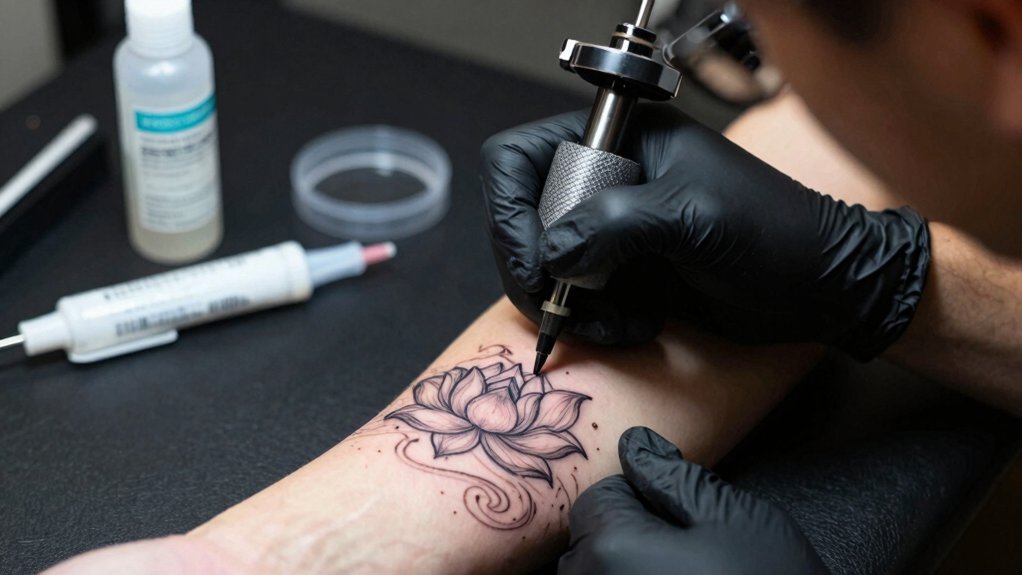
Where exactly will this bloom sit on your body, and how large should it grow? You need clear answers before the needle touches your skin. Ask your artist about their experience with botanical designs and whether they specialize in fine line work or bold traditional styles. Don’t shy away from requesting their portfolio—inspect how they handle petals, shading, and color gradients.
You’ll want to know their sterilization practices and needle disposal protocols. Discuss healing timelines and aftercare specifics. Ask about touch-up policies and how they handle fading. Request a stencil preview so you approve placement before committing. Clarify pricing structure upfront. You’re building trust with someone who’s permanently altering your body, so voice every concern. Speak up if something feels wrong.
Recommended Products

Henna Tattoos Flower Temporary Tattoos: The package comes with 10 sheets black henna Temporary Tattoos. Each pattern has a unique design, attractive and creative. The size of each sheet is approximately 4.7 * 2.7 inches

💕【64 Sheets Black Temporary Tattoos For Women Girls】--VANTATY 3D Realistic Temporary Tattoos For Adults Women Kids Adults Girls Body Art Stickers Look Real! 【Click Our Store/Brand Name To See More Fashion Designs】Tribal Lion Wolf Indian Feather Lotus Butterfly Bohemia Boho Lotus Mandala Flower Floral Animals Elephant Tattoos Dreamcatcher Serpent Dream Catcher Owl Moon Turtle Hummingbird Skull Skeleton Snake Bat Bowknot Dolphin Moon Crown.

✔[LOTUS TEMPORARY TATTOO] Briyhose Lotus Flower Temporary Tattoos Can Cover Your Body Parts Large. It Contains 8 Sheets 7.48 * 4.72 Inch (19 * 12cm) Floral Lotus Indian Tribal Fake Tattoo Stickers For Adults Men Women Tatto Kit. You Can Share It With Your Family And Friends.
Conclusion
You’ve explored how a lotus tattoo carries deep meaning—transformation, resilience, and spiritual awakening shaped by color, placement, and paired symbols. Whether you’re drawn to Buddhist stages, bold reds, or delicate mandalas, your choice tells a personal story. Now you’re ready to collaborate with an artist who’ll honor that vision and bring your symbol of growth permanently to life. Trust your instincts; this ink will remind you daily of your own strength.
Recommended Products

You love yoga and meditation? Here is a great Yoga Lotus Flower outfit for yoga students and yoga teachers for their next yoga session at yoga school. Cool Yoga Lotuscrafts clothing for an esoteric yoga round.

𝐏𝐚𝐜𝐤𝐚𝐠𝐢𝐧𝐠:6 sheets luminous temporary tattoo stickers, measuring approximately 6.2x4.7 inches, each with a different pattern, realistic and diverse. Exquisite tattoo stickers will add your charm and sexiness

【UNIQUE AMAZING DESIGNS】Each Size is about 10.5 x 6 cm / 4.1 x 2.36 inch. Contains 6 sheets temporary tattoo paper stickers which are printed with non-toxic ink.