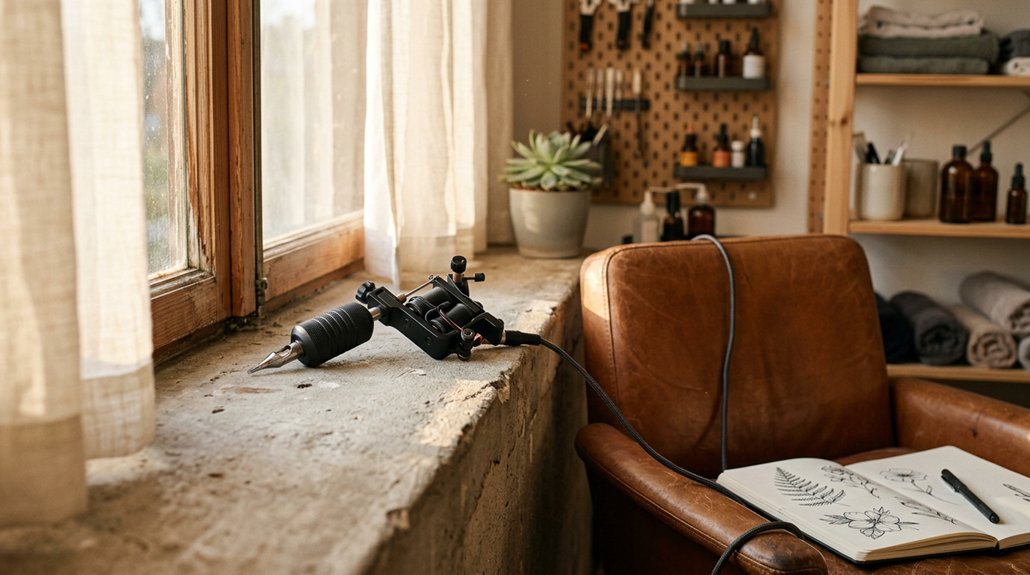

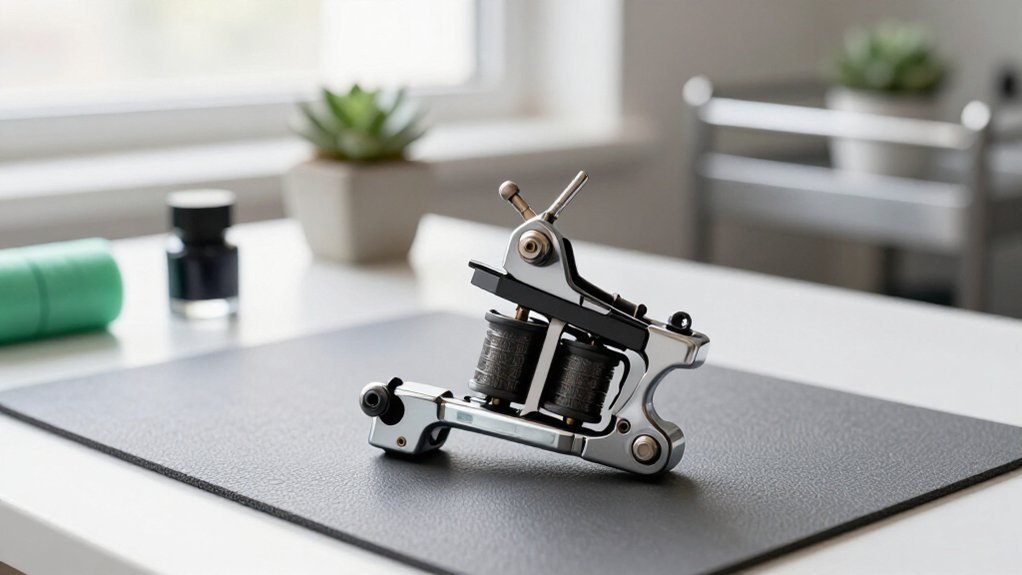
You notice the vibration, you feel the heat, you watch the needle stutter.
These small failures add up, and you deserve to know why they happen.
Five clear differences separate budget machines from professional-grade tools. Each one affects your lines, your clients, and your daily work.
Cheap vs. Professional Tattoo Machines: What Actually Changes?
A tattoo machine is only as reliable as its ability to repeat the same motion, stroke after stroke.
1. Controls and Power Delivery
When you run a professional tattoo machine, you get consistent stroke and voltage options. Cheap tattoo machines often give you fixed settings, or they need constant re-tuning to stop performance from drifting. Your Power Supply matters here, too. Quality machines pair with stable power, while budget setups can stutter or overheat during real work.
2. Coil and Electrical Build
A coil machine with poor winding gives you sliding coils and bad contact. You shim cheap builds, or you fight unreliable hits. Premium copper windings hold geometry, so you tattoo smoother lines.
3. What This Means for You
If you’re doing a beginner tattoo, wireless tattoo machine options and quality machines reduce adjustments. Tighter tolerances mean less vibration, less heat, and fewer repairs.
Recommended Products

POWER SUPPLY FOR TATTOO MACHINES: This power supply unit comes complete with 1 power cord, 1 pedal and 2 clip cords. The LCD display reads out the voltage as the machine runs and has a programmable preset function. This power supply box works with rotary tattoo machines, tattoo guns, and other types of machines. This unit comes with all the parts you need to get down to tattooing.

Hawink CNC Exquisite spare RCA power cord,Color:Black

★ Tattoo RCA Connector Clip Cord is suitable for tattoo machine and power supply that are equipped with RCA interfaces.
Frame and Component Quality: Where Cheap Builds Cut Corners
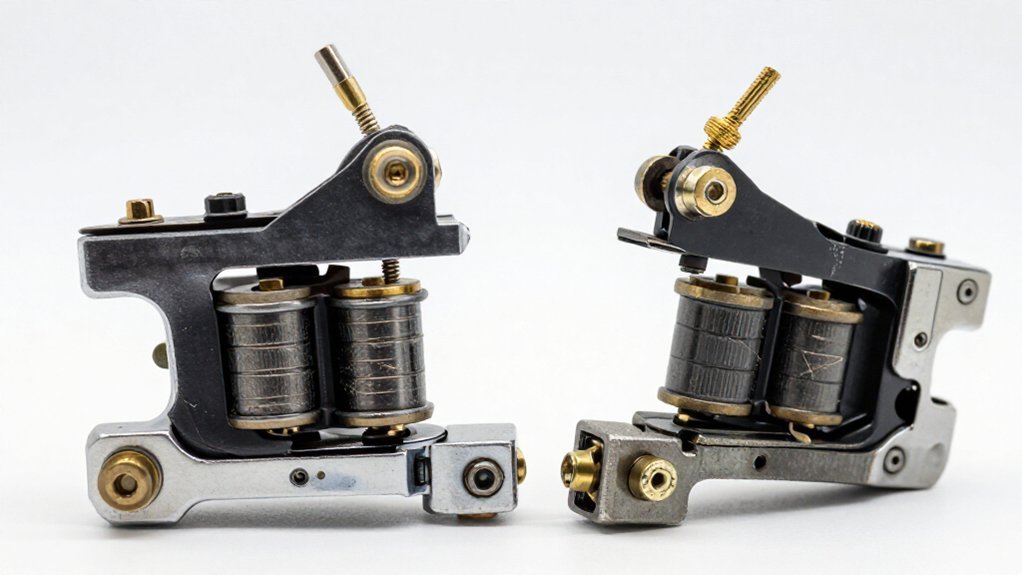
Those electrical and control differences matter, but they’re only part of what separates a reliable tool from a frustrating one. When you examine a tattoo machine up close, the frame and component quality tell the real story.
The frame and component quality tell the real story when you examine a tattoo machine up close.
1. Frame Geometry and Alignment
Cheap machines typically use one-piece bent steel frames with loose, “not square” geometry. You notice misalignment immediately, and your tattoo needles won’t run consistently. A high-quality machine, like those from FK Irons, maintains proper machining tolerances for smoother operation.
2. Spring and Coil Issues
Crappy machines use poor spring stock and incorrect coil alignment. Your armature bar sits unevenly, causing erratic stroke behavior. Budget coils slide up and down the core because shimming is inadequate.
3. Binding and Tolerance Problems
Sloppy front post engagement creates contact issues. Wider tolerances mean parts don’t fit within fractions of a millimeter, so your power delivery suffers and guide breaks happen sooner.
Recommended Products

Tattoo machine spring alignment jig adjuster for front and back springs.


This tool will allow you to align your armature bar and springs perfectly centered with ease. Designed to simplify the process of adjusting tattoo machine springs, ensuring optimal performance and delivering outstanding results.
Real Session Results: When Cheap Machines Fail (And Surprisingly Win)
Strip away the marketing, and you’ll find cheap tattoo machines sometimes outperform expensive ones on real skin.
When Cheap Machines Win
You discover an $80 liner that packs black better than a $400 FK Irons liner. Your $250 rotary pushes color saturation past a $450 Halo 2. Practice make sessions prove price doesn’t guarantee results.
When They Fail
Expensive tattoo machine advantages fade when coils don’t fit together: springs sit crooked, armature bars hit unevenly, and you’re fighting binding mid-session. You adjust, retune, compensate, but geometry wins. Wireless machines with weak motors stutter or jump, forcing you to manipulate give and stroke simultaneously.
The Bottom Line
A good machine stays consistent for hours, but cheap options occasionally deliver better results in single sessions. Choose based on your actual workflow, not price alone.
Recommended Products

8 Wraps Precision Coils – Precision-wound with high-quality copper wire, delivering stable and consistent power for clean, crisp lines in detailed lining work.

Material: Metal with High Elastic, and Not Easily Broken
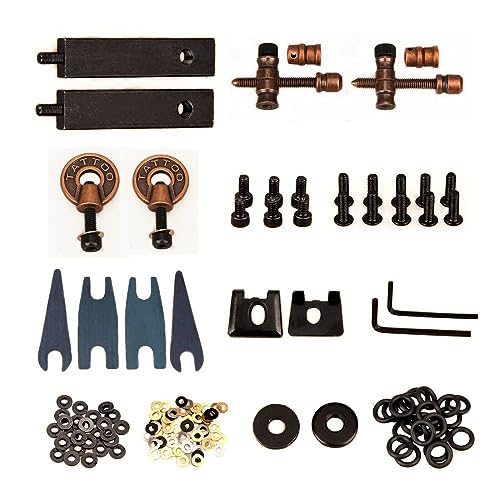
This is a complete set of tattoo machine accessories for 2 tattoo machines(without frame and coils),you only need coils and frames to build 2 tattoo machines with them.
The Hidden Cost: Maintenance Hours Cheap Machines Demand
Count the hours you’ll spend fixing what you saved at checkout.
1. Alignment Drains Your Session Time
Budget Tattoo coil machines ship with tight tolerance problems. You’ll fight binding, weak internal alignment, and parts that aren’t level or hitting right. This means you’re re-shimming and re-aligning before every session, sometimes during.
2. Constant Tuning Replaces Drawing
Cheap tattoo machines demand frequent spring adjustments, armature contact fixes, and stroke consistency checks. You’re tweaking give and stroke together, not drawing. Power matching with your power source becomes a guessing game expensive equipment avoids.
3. Coils Fail, Heat Builds
Poor windings slide on cores, or arrive incomplete. Performance drifts, so you inspect, clean, and rebuild coils often. Low-end machines run hotter, falling out of tune faster. You take cooling breaks, readjust, and lose momentum.
4. Parts Wear Fast
Contact screws weld to springs. You’ll replace springs after just a few uses. These tattoo machines cost less upfront, but they eat your hours.
Recommended Products

【TATTOO KIT】:The Tattoo pen kit includes 1 x Battery Tattoo Pen, 20 x Tattoo Cartridges Needles, 1 x Self Cohesive Tattoo Grip Cover, 1 x TYPE-C Charging Cable, 40 x Ink Caps, 2 x Practice Skin, 2 x Transfer Paper, 10 x 5ml Tattoo Ink, 2x 30ml Black Tattoo Ink, 1 x Tattoo Gloves, 1 x Tattoo sticker, 4 x Tattoo Table Mat and 1 x instruction. The complete tattoo kit is a good choice for beginners, starters, and apprentices.

PRECISION LINER COLLECTION: 50 cartridges built specifically for linework — every configuration is designed for clean outlines, crisp details, and smooth line consistency. Includes 10 each of 3RL, 5RL, 7RL, 9RL, and 11RL, giving artists a complete liner progression from ultra-fine detail work to bold traditional outlines with no wasted needle groupings.

【Complete Tattoo Practice Kit】 The Wireless Tattoo Machine Kit includes a aluminum alloy tattoo gun with an RCA cord, 1pc 1500mAh capacity tattoo battery pack, 10pcs tattoo cartridges needles, 2pc tattoo bandage, 5pcs 5ml tattoo ink, 40pcs tattoo ink cups with base, 2pc tattoo transfer paper, 1pc blank tattoo practice skin, 1pc Type-C cable, 1 pair of blue nitrile gloves. This tattoo kit has everything you need for tattooing and the tattoo gun is easy to use and clean
Match Machine Price to Your Lining, Color, and Budget Needs
You’ve seen how cheap machines steal your time, so now you need to pick equipment that matches what you actually do. Your tattoo work type determines your starting point. For color and blending, you’ll want a rotary tattoo machine that holds stable depth without drifting. For lining, you’ll need finer tuning control, like keeping voltage around 3.5 for crisp small lines.
Budget tattoo machines can work, but you’ll spend more time tuning them. If you prefer coils, prioritize solid alignment and reliable run-to-run behavior, since cheap coils fail to stay shimmed.
Budget machines demand more tuning time; cheap coils lose alignment when shims slip.
Price ranges overlap, so use current windows as rough guides only. Upgrade when you hit repeatable limitations: unstable voltage, overheating, or poor line quality. Expensive features only help if you actually need them.
- Match your machine to your primary work: color work needs consistency, lining needs precision.
- Keep an eye on coil quality: alignment and winding matter more than brand names.
- Upgrade by limitation, not impulse: wireless and premium features solve specific problems, not all of them.
Recommended Products

All-In-One Complete Tattoo Kit with Abundant Extras: This professional kit comes with plentiful accessories to meet all your needs, including 10 tattoo needles, 7 colors of ink, 20ml blue soap, practice skin, transfer paper, gloves and more. It’s a great starter set that provides everything you need right out of the box, perfect for beginners and daily tattoo creation.

Dragonhawk tattoo power supply provide quick and accurate activation/voltage adjustments

Wireless Tattoo Gun: Compact design with ergonomic grip; Weighing 266.51g with a total length of 132mm and a 60mm grip, this wireless tattoo gun offers a balanced, lightweight feel for extended sessions; The ergonomic design ensures precise control and reduces hand fatigue, making it ideal for detailed lining, shading, and color packing