
You trace the needle’s path across your skin, watching pigment sink in, but you don’t see where those particles drift next. Some inks carry PAHs, chemicals linked to cancer in lab studies, and research shows these bits can travel to your lymph nodes for years.
A 2024 study raised questions about lymphoma risk, yet the evidence remains mixed and incomplete. You need clear steps to protect yourself, and the answers start with understanding what’s actually in your ink.
Do Tattoos Actually Cause Cancer?
Why do so many people worry about cancer when they sit down for ink? You deserve a straight answer about tattoo and skin cancer risk.
1. What the Research Actually Shows
Current research hasn’t established a convincing, direct causal link between tattooing and cancer. You might wonder, “Do tattoos actually cause cancer?” The short answer: probably not directly.
Probably not directly: research hasn’t established a convincing, direct causal link between tattooing and cancer.
A 2024 study found lymphoma was 21% more common among tattooed people, but subgroup differences lacked statistical significance. The “within two years” spike of 81% weakened over time, with no definite increase at 3–10 years and only 19% at 11+ years. This pattern doesn’t support clear cause and effect.
Earlier studies showed no significant difference in tattoo frequency among lymphoma cases. When ink is injected, pigment reaches lymph nodes, yet human evidence remains insufficient to prove cancer causation.
2. Your Practical Takeaway
Health risk concerns are understandable, but tattoo ink safety data currently suggests caution, not alarm.
Recommended Products

Serene Elegance Unleashed: Xtreme Ink Pastel Set offers a palette of soothing hues, including Pastel Pink, Yellow, Blue, Green, and Purple, to elevate your tattoo artistry.
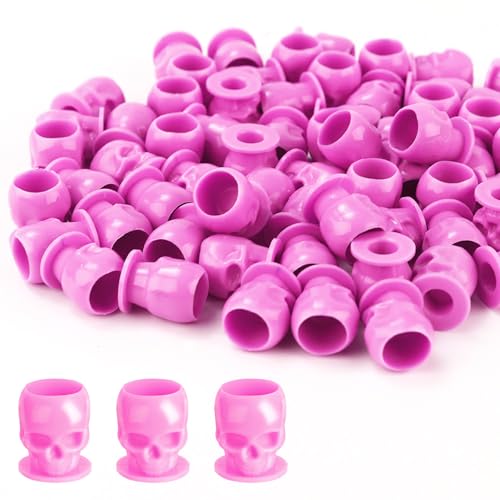
Premium Material: Tattoo ink cup is made of high-quality hard plastic, which is durable, not easy to deform, break, and leak. Avoiding ink leakage accidents during tattooing, ensuring a smooth and easy tattoo process.

【tattoo ink sets professional Rich Color】This set contains 14 colors of tattoo ink, each bottle of tattoo ink capacity of 30ml. Meet your use needs
What Makes Tattoo Ink Potentially Harmful?
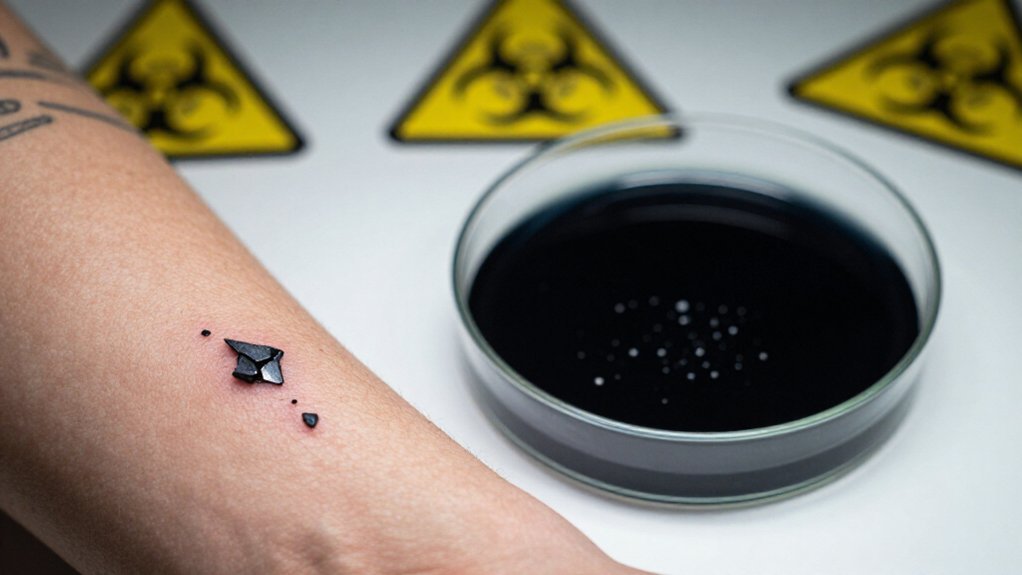
Although tattooing is generally safe when done properly, you should know what’s actually going into your skin. Tattoo pigments injected into the dermis create lasting color, but you’re getting more than just art. Some tattoo ink contains polycyclic aromatic hydrocarbons, which are known carcinogens. These chemicals raise serious concerns about long-term exposure.
Consider what happens beneath your skin:
- Black ink particles sitting in your tissue, discovered to harbor PAHs in 83% of tested samples
- Heavy metals like mercury and copper flowing through colorful pigments
- Permanent substances refusing to fade, exposing you year after year
- Immune cells grabbing pigment particles and carrying them away
Your tattoo ink stays with you indefinitely. This persistence makes potentially harmful ingredients especially troubling, as repeated exposure compounds any risks they may pose.
Recommended Products

Dermatologist-Tested Safety: Plant-extracted formula free of heavy metals, parabens & irritants—hypoallergenic for sensitive skin, compliant with Amazon cosmetic regulations .

100% new brand and high quality. Favored among professional tattoo technicians.

100% new brand and high quality. Favored among professional tattoo technicians.
How Does Tattoo Ink End Up in Your Lymph Nodes?
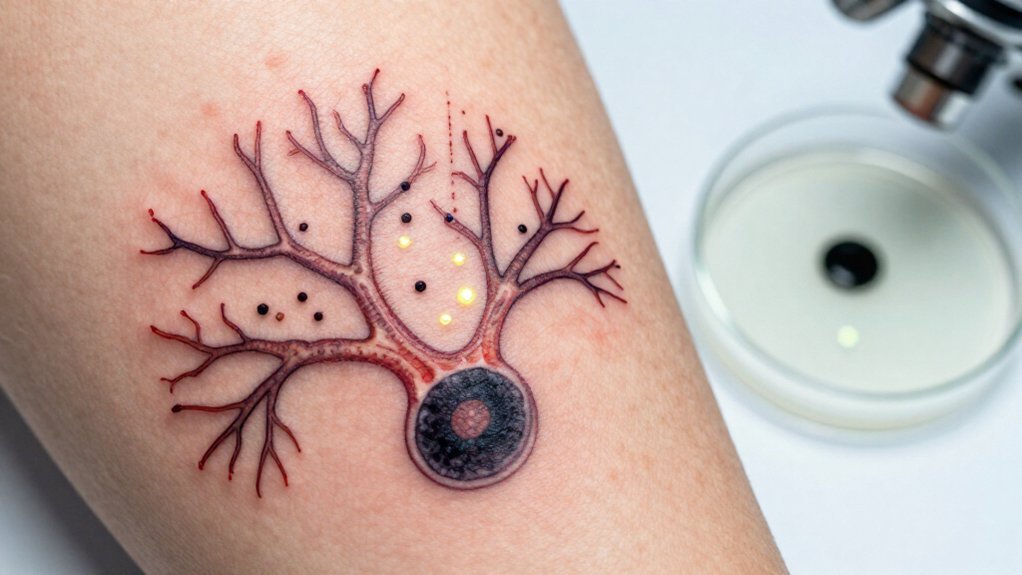
When you get a tattoo, your immune system sees the ink particles as foreign intruders. Specialized cells called macrophages, which are your body’s cleanup crew, engulf those pigment particles in the dermis. These cells can then travel through your lymphatic vessels, and they deposit pigment in nearby lymph nodes, sometimes within just a few weeks.
Recommended Products

100% brand new and high quality

🦋Note:Please shake the ink before use.

MADE IN SPAIN, REACH COMPLIANT — Dynamic Color Platinum is produced in the European Union and formulated to meet REACH requirements for tattoo inks, so it fits studios that require REACH-compliant pigments.
Ink Migration Process
Because your immune system is constantly working to protect you, it responds to tattoo ink as it would to any foreign material. When you get tattooed, pigment particles enter your dermis, and your body begins the ink migration process immediately.
Your lymphatic system carries fluid through vessels toward nearby lymph nodes. Tattoo inks don’t stay put; they travel gradually through these pathways. Studies show pigment reaches enlarged lymph nodes within weeks of application. Once there, ink persists for years, even after laser removal.
This migration shows bodywide exposure occurs, though it doesn’t prove cancer risk.
What happens to your ink:
Tiny pigment particles drift from skin into deeper tissue. Immune cells engulf the color, carrying it like cargo through vessels. Dark traces pool in node tissue, visible under microscope. Permanent pigment deposits remain long after your skin fades.
Immune Cell Transport
Your immune cells treat tattoo ink like debris they need to clear away, so they spring into action the moment pigment enters your skin. Macrophages, a type of immune cell, engulf pigment particles in your tattooed skin. This immune cell transport carries ink through your lymphatic system to nearby lymph nodes.
Researchers have found tattoo pigment in enlarged lymph nodes within weeks of getting a tattoo. This happens because immune-cell traffic from skin to lymph nodes is normal immune surveillance. Your body treats tattoo ink as persistent foreign material.
Ink can remain in lymph nodes for years, even after tattoo removal attempts. This means pigment migration extends well beyond initial healing.
Because lymph nodes connect to your bodywide immune network, some researchers examine whether ink-triggered immune activity could cause systemic effects. While no causal cancer link is established, this retention raises questions about long-term health risk.
What Does Tattoo and Lymphoma Research Really Show?
Research on tattoos and lymphoma is still emerging, so you’ll want to understand what the evidence actually shows before drawing conclusions. Researchers studying this health risk have found mixed results. One study of 737 people found no link between tattoo and lymphoma rates. A larger May 2024 study reported a 21% increased risk, but most subgroup differences weren’t statistically significant.
Tattoo-lymphoma research remains preliminary, with mixed findings—a small study found no link, while a larger 2024 study suggested modest risk increases that lacked statistical consistency.
The timing was inconsistent: risk was 81% higher within two years, showed no clear pattern at 3-10 years, and was 19% higher after 11 years.
Picture needles depositing pigment into waiting skin cells. Imagine immune cells carrying ink particles through lymphatic pathways. Visualize data points scattered across a chart with no clear trend. See researchers puzzling over confounding variables they cannot control.
Without dose-response patterns or consistent trends, current findings suggest association, not proof tattoos cause lymphoma.
Recommended Products

MADE IN THE USA SINCE 1990 — For over 30 years Dynamic Color has produced professional tattoo ink in the United States, an established American brand artists built their work on long before most imported labels existed.

MADE IN THE USA SINCE 1990 — For over 30 years Dynamic Color has produced professional tattoo ink in the United States, an established American brand artists built their work on long before most imported labels existed.

MADE IN THE USA SINCE 1990 — For over 30 years Dynamic Color has produced professional tattoo ink in the United States, an established American brand artists built their work on long before most imported labels existed.
Do Bigger Tattoos Carry More Cancer Risk?
The mixed findings on tattoos and lymphoma leave you wondering whether size matters more than presence. You want a clear answer, but research offers only partial guidance.
What the Evidence Shows
A 2024 lymphoma study found no link between cancer risk and tattoo size or number. The strongest signal appeared within two years, not with larger artwork. This suggests you shouldn’t assume bigger pieces automatically raise your Health Risk.
However, tattoos and skin cancer tell a different story. A 2025 Danish twin study linked palm-sized tattoos to increased skin cancer risk. When you’re exposed to potentially harmful inks across more skin, the exposure adds up.
Bottom Line
Current research doesn’t consistently prove that bigger tattoos carry more cancer risk. You should stay informed, but you need not panic about size alone.
Recommended Products

Transparent Matte Film Protection - This breathable tattoo bandage is a must-have in your tattoo supplies, offering latex-free protection that supports gentle healing for new ink.

COMPLETE AFTERCARE KIT FOR NEW & EXISTING TATTOOS: This Tattoo Aftercare Kit brings together 3 essentials, Antimicrobial Soap, Tattoo Balm, and Tattoo Lotion, to help cleanse, protect, and moisturize fresh ink. Useful after tattoo sessions and throughout healing, it supports vibrant color and skin comfort for dedicated ink enthusiasts and artists

THE ORIGINAL TATTOO AFTERCARE BANDAGE – Saniderm’s Original Gloss Bandage is the tried-and-true, industry-defining tattoo aftercare bandage. Dermatologist-recommended and trusted by expert tattoo artists worldwide, this medical-grade bandage ensures your tattoo heals quickly, safely, and more vibrantly. With over a decade of experience and millions of tattoos healed, it’s the perfect way to heal your ink.
How to Choose Lower-Risk Inks and Studios
Since you can’t eliminate every unknown about long-term ink safety, you can still make informed choices that reduce your immediate and potential risks. Getting a tattoo involves weighing ink safety against your personal health priorities, so you’ll want to take specific steps before sitting in the chair.
You can’t eliminate every unknown about long-term ink safety, but informed choices still reduce your immediate and potential risks.
Picture yourself walking into a spotless studio, where artists tear open single-use needle packages right before your eyes.
Imagine scanning ink bottles for EU ResAP(2008)1 labels, knowing these standards reduce your risk of mystery chemicals entering your skin.
Visualize choosing vibrant colors over heavy black ink, since PAHs lurk more often in dark pigments.
See yourself pointing to a suspicious mole, refusing to cover it, because masking lesions could indicate skin cancer too late.
Ask about brands, verify licensing, and never tattoo over unexamined spots.
Recommended Products

Smooth: A homogenized carrier/pigment mixture that flows easily

100% new brand and high quality. Favored among professional tattoo technicians.

Triple Blackout Tattoo Ink - Strengthen your shading with Triple Blackout, the boldest black designed for greater dimension in your tattoos. With a glycerin free formulation, this professional tattoo ink inserts smoothly into the skin for excellent distribution and shading.
What Skin Changes to Watch for on Tattooed Skin
Although you chose your ink and studio carefully, your responsibility doesn’t end when the bandage comes off. Protecting your skin health means staying alert for early warning signs that tattoos can hide.
Watch for these changes:
- New or changing moles or lesions near inked areas, since pigment obscures size, shape, color, or border shifts tied to skin cancers
- Itching, bleeding, ulcers, or spots that won’t heal in tattooed regions, potential markers of cancer or serious disease
- Growth or irregular borders within the tattoo itself, beyond normal fading
- Spots covered by ink; they’re harder to assess accurately over time
You should evaluate any suspicious area promptly with a dermatologist. Early detection saves lives, even when concerning changes hide within elaborate artwork.
Recommended Products

Dermatologist-Tested Safety: Plant-extracted formula free of heavy metals, parabens & irritants—hypoallergenic for sensitive skin, compliant with Amazon cosmetic regulations .

🌸Note:Please shake the ink before use.

100% new brand and high quality. Favored among professional tattoo technicians.