
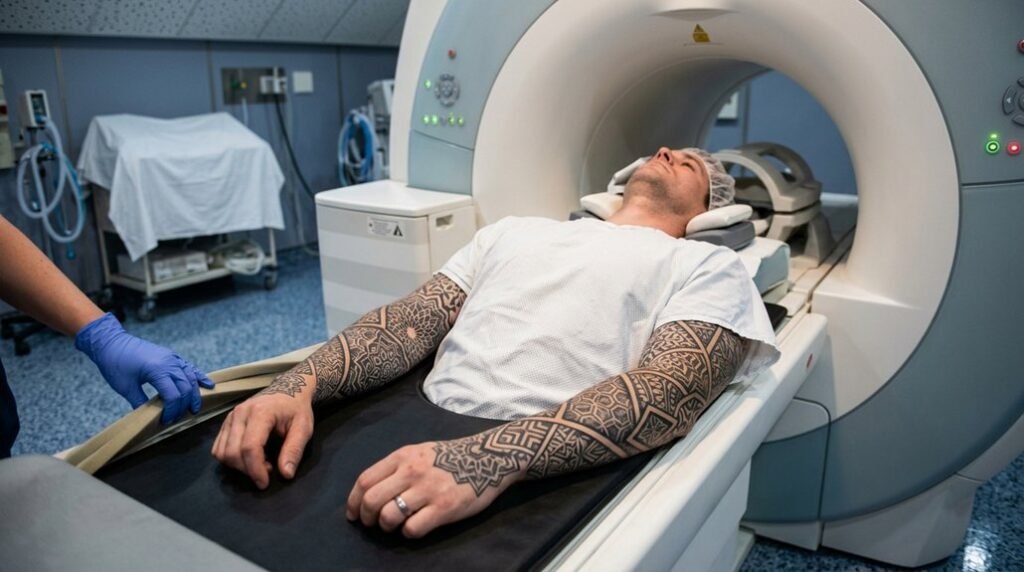
You’ve scheduled your MRI, but now you’re wondering if your ink will cause problems. Most tattoos pose little risk, though certain pigments and placements complicate the procedure. You’ll want to know what to watch for before you slide into that machine.
Key Takeaways
- Most people with tattoos can safely undergo MRI without complications.
- Older inks containing iron oxide may cause heating or image distortion.
- Inform technologists about all tattoos, especially large or cosmetic ones.
- Report any burning or tingling sensations immediately during the scan.
- Modern organic inks rarely contain problematic metallic compounds.
Recommended Products

Maintain the MR Safety System with Clear Visual Signs on Devices, Equipment and Cart

Generous Quantity: 5 sheets x 5 = 25 temporary tattoos

CRITICAL MRI SAFETY PROTECTION - Clearly identifies pacemaker/implant patients to medical staff, preventing dangerous MRI exposure that could be life-threatening
Yes, MRI Is Generally Safe for Most Tattoos
The good news is that having a tattoo doesn’t automatically disqualify you from getting an MRI. You’ll find that most people with tattoos complete their scans without any issues whatsoever. Modern tattoo inks have evolved considerably, and you’re unlikely to encounter problems during routine imaging.
You should know that millions undergo MRIs annually with tattoos present. The scanning process uses powerful magnets, but you’ll typically experience nothing more than mild, temporary sensations. Some patients report slight warming or tingling in tattooed areas, though this rarely prevents completion of the exam.
You’ll want to inform your technologist about your tattoos beforehand. They’ll position you appropriately and monitor you throughout. If you’re feeling anxious, they’ll address your concerns and adjust protocols if needed. Your safety remains their priority, and they’ll ensure you receive necessary diagnostic imaging without unnecessary delay.
Recommended Products

MADE IN THE USA SINCE 1990 — For over 30 years Dynamic Color has produced professional tattoo ink in the United States, an established American brand artists built their work on long before most imported labels existed.

MADE IN THE USA SINCE 1990 — For over 30 years Dynamic Color has produced professional tattoo ink in the United States, an established American brand artists built their work on long before most imported labels existed.

✔ Lightweight, Liquid Consistency – Flows easily for seamless machine application.
What Tattoo Inks Actually Cause MRI Problems
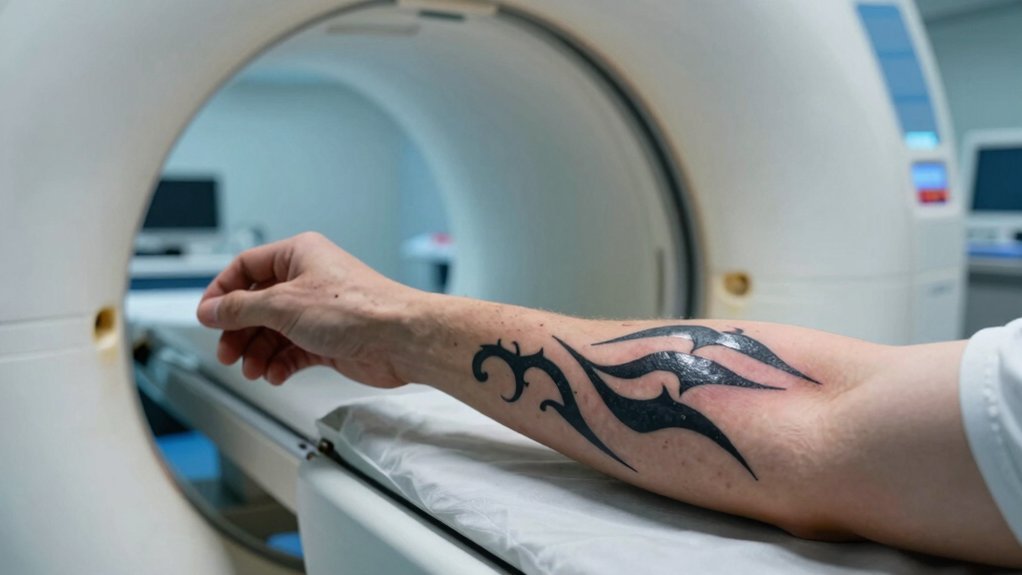
Which inks should make you pause before scheduling that scan? You’ll want to watch out for older formulations containing iron oxide, particularly those cheap red, black, or brown pigments used decades ago. These metallic compounds react to magnetic fields. They can heat up, distort scans, or cause you discomfort during the procedure. Modern organic inks rarely contain these ferrous materials, but cheap imported or prison tattoos might still harbor them. Yellows and blues typically use non-metallic dyes and pose minimal risk. Before your appointment, you should ask your artist about your ink’s composition. If you’ve got vintage artwork or suspect metallic content, mention this to your radiologist. They’ll adjust the machine’s settings or consider alternatives to keep you safe while capturing clear diagnostic images.
Recommended Products

【Ultimate Machine Protection】Made from high-elasticity rubber, this cover forms a complete seal around your machine. It effectively prevents ink from seeping into handpiece seams, switches, or grips, safeguarding your equipment from corrosion and damage for long-term reliability.

All-In-One Complete Tattoo Kit - No need to purchase extra accessories; This tattoo gun kit includes everything you need to start tattooing: 1 pink tattoo pen, 2 wireless power supplies, 10 bottles of 5ml tattoo ink (vibrant colors for diverse designs), 20 tattoo cartridge needles, 30ml blue soap, 30ml transfer gel, 50ml foaming bottle, 3 transfer papers, 3 practice skins, 4 tattoo bibs, and 40 ink cups; Suitable for beginners to practice and professional artists to work

COMPLETE TATTOO KIT: Includes 1x Mast Fold Pro Year of Snake edition pen machine, 2x 3000mAh batteries, 1x USB-C charging cable, 1x power adapter, 32mm and 38mm grip options, tattoo ink, practice skin and 20 assorted cartridge needles (1205RL liners + 1205RS shaders) to start tattooing immediately.
How Tattoo Size and Location Affect MRI Risks
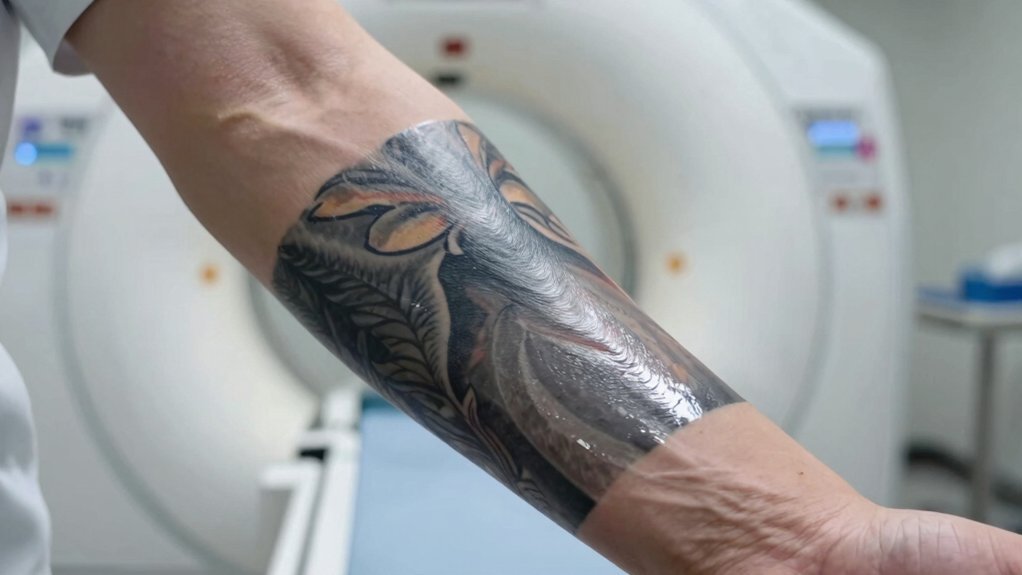
Ink composition isn’t the only factor your radiologist weighs when you’re tattooed and facing an MRI. The size and placement of your ink significantly shape your risk profile.
Large tattoos cover more skin, increasing the total metal-containing pigment in the field. You’re more likely to experience heating or rare adverse reactions when substantial inked areas sit directly under the radiofrequency coils.
Location matters just as much. Tattoos on extremities—arms, legs, hands—generally pose fewer concerns than those on your torso or near major joints where the magnetic field concentrates. Facial and neck tattoos sometimes complicate imaging of nearby structures.
Your radiologist maps these variables against your specific scan protocol. They’ll adjust positioning, select alternative coils, or modify sequences to keep you safe while capturing clear images.
How to Prepare Tattooed Areas for Your MRI
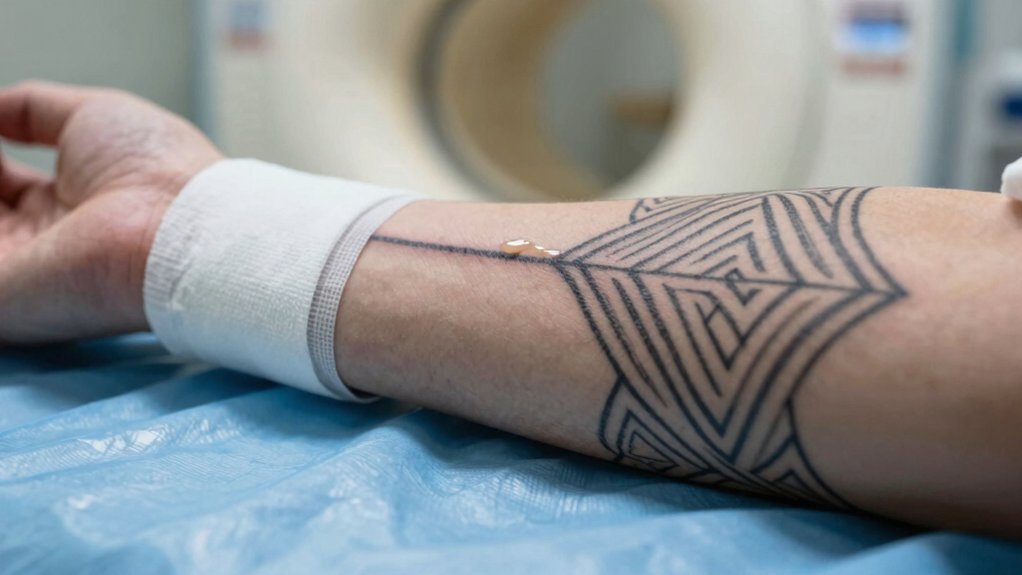
What steps should you take before your scan? You’ll want to tell your technologist about every tattoo you’ve got, including permanent makeup and cosmetic ink. Bring up any reactions you’ve experienced with past imaging. Remove all jewelry near tattooed skin, as metal accessories compound heating risks.
You’ll clean the area thoroughly, removing lotions, creams, or topical products that could trap heat. Wear loose, breathable clothing that won’t press inked skin against your body during the procedure. If you’ve got large or dense tattoos, request a cold compress or padding—you deserve comfort safeguards.
Stay still once positioned. Movement near magnetic coils intensifies any warming sensations. Ask questions if you’re unsure about specific placements. You’re partnering with your team, not just submitting to the machine, so speak up about concerns before they strap you in.
Recommended Products
Premium Tattoo Black Ink – Allegory BLAK is a smooth, consistent blend of liquid dispersed pigment. Many of the most popular tattoo artists around the globe uses Allegory BLAK Ink for precise lining and shading. Allegory BLAK is the stepping-stone to the future of tattooing.

BaodeLi -Tattoo Ink Set:BaodeLi multi in one tattoo ink kit made with professional and harmless tattoo materials.This tattoo ink set have 14 different colors.Our tattoo ink have a high-quality smooth flow rate.Trust it will be your best choice.
POSEIDON tattoo ink has the characteristics of high quality, color saturation, stable performance, fast color, strong penetration, good adhesion;
When Tattoos Distort MRI Images: What Goes Wrong
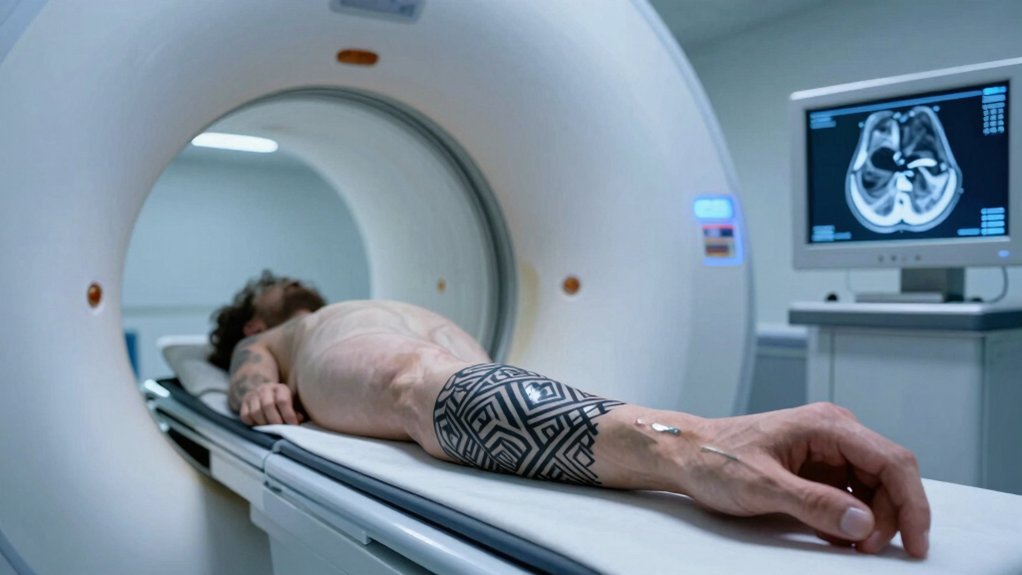
Preparation helps, but it doesn’t eliminate every complication. Sometimes you’ll encounter image distortion despite your best efforts. Metallic pigments in your tattoos interact with the MRI’s magnetic field, creating artifacts that blur or obscure nearby anatomy. You’re seeing signal voids or bright spots where none exist. These distortions compromise the diagnostic quality of your scans, particularly when tattoos sit near the area under examination. Red or black inks frequently cause problems because they contain iron oxides. You’ll notice radiologists struggling to interpret images when tattoos reside on your spine, joints, or abdomen. They may need to rescan using different sequences or reposition you. In severe cases, you’re facing incomplete studies that require alternative imaging modalities entirely.
Warning Signs From Tattooed Skin During Your MRI
How might you know something’s wrong during the scan itself? You’ll feel it first. Your tattooed skin might start tingling, stinging, or burning as the MRI’s magnetic field interacts with metallic pigments. You’re feeling heat building up right beneath your ink.
Watch for these sensations escalating. If your tattoo suddenly feels hot, that’s your warning sign. The radiofrequency energy’s creating localized heating in those metal particles. You’ll want to squeeze the alert bulb immediately.
Don’t tough it out. Report odd sensations the moment they happen. Technicians can adjust sequences or cool your skin between scans. They might reposition you or apply cold compresses.
Some redness or mild warmth proves normal, but sharp pain or intense heat demands action. You’re protecting your skin from potential burns by speaking up fast.
Recommended Products

100% new brand and high quality. Favored among professional tattoo technicians.

MADE IN THE USA SINCE 1990 — For over 30 years Dynamic Color has produced professional tattoo ink in the United States, an established American brand artists built their work on long before most imported labels existed.

🦋Note:Please shake the ink before use.
Special Cases: Cosmetic Tattoos and Permanent Makeup
Where do cosmetic tattoos pose the biggest MRI risks? You’ll find them near sensitive areas—eyelids, lips, and eyebrows—where tissue reacts more dramatically to heating.
Permanent makeup sits closer to bone and thinner skin, so you’ll feel any temperature spike faster there.
Cosmetic pigments often contain iron oxides and other metals that interact strongly with magnetic fields. You’ll face higher chances of burning or stinging sensations during your scan. Unlike body tattoos, you can’t simply move these away from the coil.
Some older permanent makeup formulas used carbon-based inks that heat unevenly. You’ll want to disclose cosmetic procedures specifically, since technicians sometimes miss these when focusing on larger body art.
Your eyeliner could obscure orbital imaging or create artifacts that compromise your results.
Recommended Products

Complete Tattoo Kit: Wormhole wireless tattoo machine delivers smooth 6500 RPM performance—ideal for mastering linework, shading, and basic designs; With 7 adjustable stroke lengths, 4 adjustable speed settings and 3 working modes, it evolves with your skill level; The tattoo kit includes dual power units for seamless, uninterrupted operation, from first practice to professional results
Upgraded Adjustable Tattoo Gun: This wireless rotary tattoo gun features 7-level adjustable stroke from 2.4mm to 4.2mm, perfectly meets lining, shading, coloring and dot work needs. Premium aluminum alloy lightweight body reduces hand fatigue for long-time use

Complete Professional Tattoo Kit--Everything You Need in One Box.Stop juggling separate equipment. Our all-inclusive Tattoo kit contains a premium wireless tattoo machine, assorted professional cartridge needles, vibrant high-pigment tattoo inks, realistic practice skin, and all essential accessories. Whether you're a beginner perfecting your craft or a seasoned pro, the tattoo kit delivers everything required to achieve studio-quality results anywhere, anytime
What to Tell Your Radiologist About Your Tattoos
When you’re scheduling your MRI, disclose every tattoo—including cosmetic tattoos and permanent makeup—before you arrive. You’ll want to specify the number of tattoos you have, their approximate sizes, and their locations on your body. Mention if you’ve experienced any unusual reactions to previous imaging procedures.
Tell your radiologist if your tattoo contains metallic ink or if you’re unsure about the ink composition. You’ll also need to report any recent tattoo work, including touch-ups completed within the past six weeks. Describe any sensations you’ve noticed around your tattoos, such as warmth, itching, or swelling.
Ask questions about cooling methods or protective padding if you’re concerned. You’re partnering with your radiologist for safety, so speak directly and completely. The more details you provide, the better they can customize your scan and monitor you appropriately during the procedure.
Conclusion
You’ll almost certainly complete your MRI without tattoo-related issues, but you should always inform your technologist about your ink beforehand. Remove jewelry near tattooed areas, wear loose clothing, and immediately report any burning or tingling sensations. While modern pigments rarely cause problems, older iron-based inks can occasionally heat or distort images. Your preparation and communication ensure the safest, most accurate scan possible.
Recommended Products

Premium Tattoo White Ink – Allegory White is a smooth, consistent blend of liquid dispersed pigment. Many of the most popular tattoo artists around the globe uses Allegory White Ink for mixing, shading, and highlighting work.

Professional Grade Formula: Black tattoo ink formulated for smooth consistent flow and clean line work in professional tattoo applications

100% brand new and high quality