
You want a tattoo that feels like yours, not a copy of someone else’s feed.
But scrolling through endless images won’t get you there.
You need a system that cuts through the noise and leads you to something lasting, both on your skin and in your satisfaction.
Pick Your Subject Before You Pick a Style
The foundation of any lasting tattoo begins with a subject that genuinely matters to you. You might choose a rose, skull, portrait, or animal, something you’ll still care about once the style changes its appearance.
Your subject stays constant, but tattoo styles reshape everything. An American Traditional rose uses thick black outlines with limited red, green, and yellow. The same subject in Realism Tattoo becomes soft, photo-like shading without hard edges.
The same rose transforms completely—bold outlines surrender to soft, living shadow when style speaks.
Watercolor Tattoo dissolves boundaries into splash-like color, while Japanese Tattoo builds symbolic narrative through specific visual rules.
Consider what your skin tone needs from Black and Grey or color saturation. Match your subject to style demands: bold graphic recognition suits Traditional roots, detail intensity fits Realism Tattoo’s longer sessions, and longevity differs between crisp boldness and softer fade.
Recommended Products

𝗜𝗡𝗖𝗟𝗨𝗗𝗘𝗗: You will get 48 little custom tattoo sheets filled with american traditional style tats. This hand tattoo set is perfect for any old school traditional tattoo and blackwork lovers. Our high quality semi permanent tattoo ink is long lasting, providing you the real looking tattoos that you can reply on for several days. Beautiful designed faux tats come in a variety of sizes and designs.

Sailor Jerry Traitional American Tattoo Flash

Browse the Five Main Tattoo Style Categories
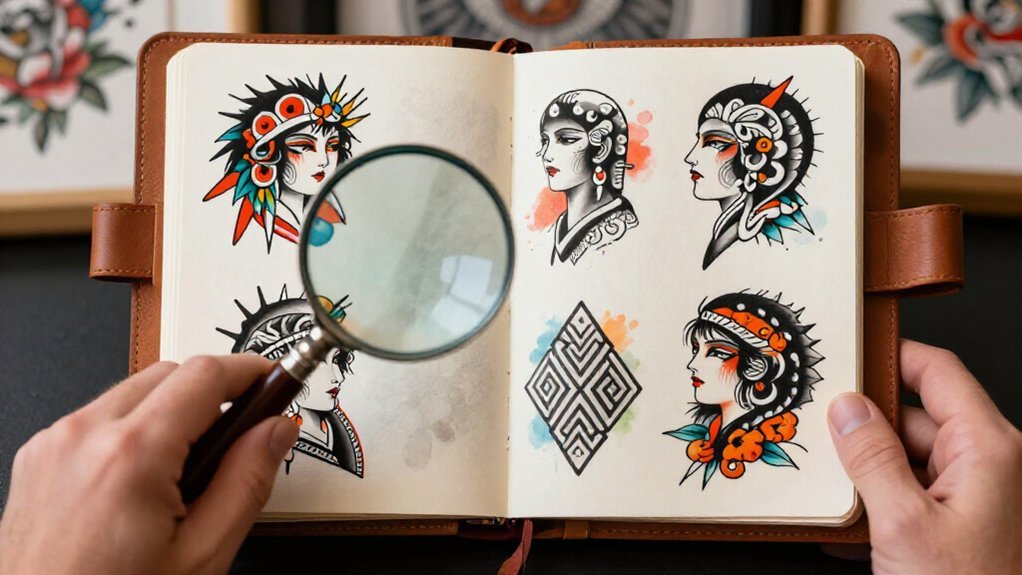
Five distinct categories dominate modern tattooing, and you’ll want to understand each before committing to a design.
1. Traditional and Neo-Traditional
Traditional tattoo styles use bold black outlines, limited colors, and iconic imagery like roses and anchors. Neo-Traditional builds on this with richer palettes and multiple line weights for added detail.
2. Realism Tattoos
Realism tattoos replicate photographs through soft edges and gradient shading. You’ll see portraits, animals, and landscapes rendered without hard outlines.
3. Blackwork
Blackwork relies exclusively on black ink, including tribal, dotwork, and black-and-grey pieces. These high-contrast designs maintain readability over time.
4. Watercolor and Fine Line
Watercolor mimics paint-on-skin effects with softer edges. Fine line uses very thin needle precision for delicate symbols and script. Both demand skilled technique and may need touch-ups.
Use these rules to self-filter: thick line work ages better, while ultra-thin Fine Line depends heavily on placement and artist skill.
Recommended Products

Clean, Flawless Transfers: Your artwork will look so clean once transferred to the skin with the Stencil Stuff gel! Gentle on the skin, Stencil Stuff transfer solution helps you achieve clear and sharp tattoo stencil transfers every time!

Safe and Healthy: Our tattoo transfer gel meets strict safety and non-toxic material standards, non-irritating to the skin and vegan-friendly. Maintains client comfort while achieving clear tattoo stencil transfers.

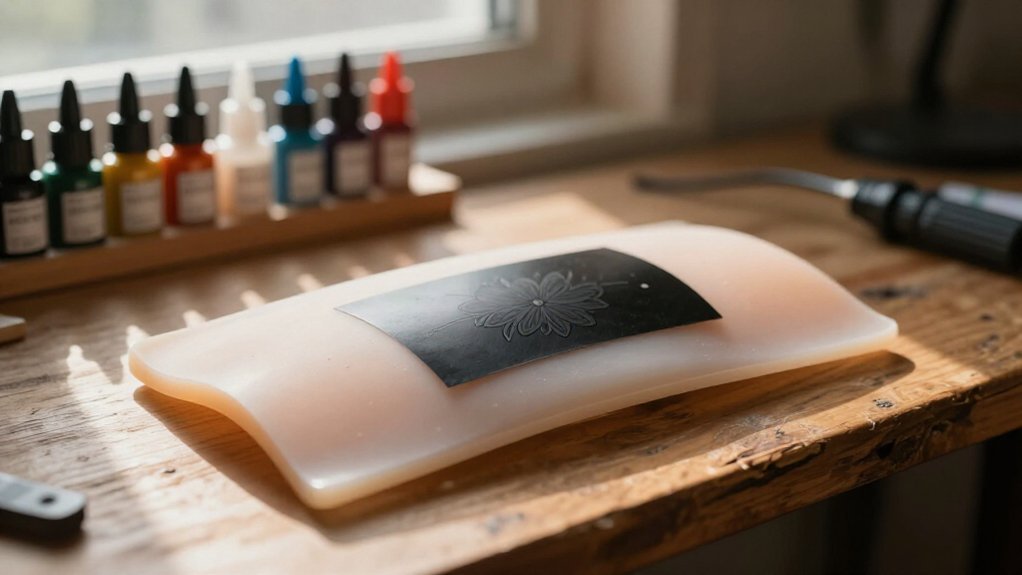
Premium Quality 1.5mm Silicone Material – Crafted from premium 1.5mm thick silicone, this tattoo skin offers a true-to-life feel with excellent durability and a smooth surface for effortless needle movement during practice.
Match Tattoo Styles to What Works On Your Skin
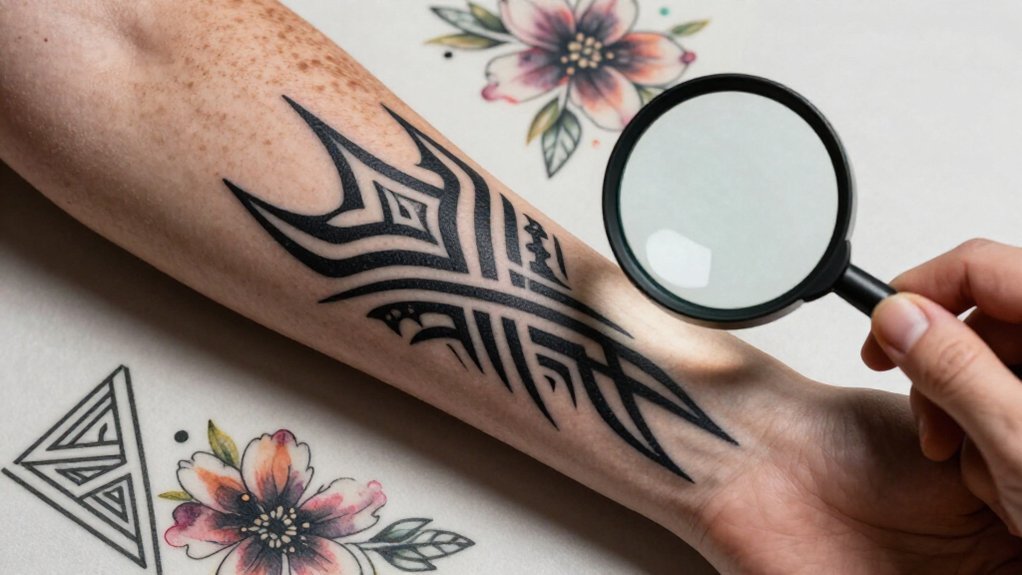
Your skin’s characteristics will steer you toward styles that stay legible for years, not just months. To Choose the Right Tattoo, you’ll match your canvas to proven techniques.
- Black Common Tattoo Styles use bold black outlines and a limited color palette. These read clearly on all skin tones as your tattoo ages.
- Fine line and watercolor paint effects need careful planning. Add subtle grey anchors so shapes don’t blur.
- Realistic tattoo work varies most by skin tone. Artists shift shading strategy to maintain contrast after healing.
- Protect your investment. UV exposure dulls soft styles faster than saturated, thick-lined work. You’ll keep your Right Tattoo Style sharp with diligent aftercare and sun protection.
Recommended Products

Sufficient quantity: there are 16 pieces of African tribal stencils in 16 different styles with 1 piece of metal open ring, each piece of tribal stencil is about 16 x 16 cm/ 6.3 x 6.3 inches. Adequate quantity and proper size can meet your various needs in daily life

Hollow Out Stencil: You will receive a painting template with tribal theme which is made of high quality PET material with good strength and stability, flexible and durable, lightweight and portable, rounded edges and corners won't hurt anyone. The overall size: 11.8inch/30cm wide, 11.8inch/30cm long.

African tribal women stencil: : You will get 6 pcs painting stencil of daily theme. The pattern are african tribal women in different style, unique designs surely design inspire you. Our stencil are perfect for decorating on a budget for easy DIY home decoration, add a splash of color to your home.
Find a Tattoo Artist Who Specializes in Your Style
Once you’ve matched your skin to a workable style, you’ll need someone who can actually execute it. To find a tattoo artist who specializes in your style, filter Tattoo Studio portfolios for your target style among popular tattoo styles like realism, traditional, or watercolor.
1. Evaluate Portfolios Critically
Prioritize healed photos over fresh work to judge long-term results. Look for consistent mastery: dozens of pieces in the same style with repeatable line quality. For realism, confirm correct 3-D shading and smooth value transitions without hard outlines.
2. Verify Technical Competence
Ask direct questions about placement and skin tone handling, including line thickness and color packing.
3. Research Reputation
Read reviews and ask about their stencil workflow and session planning. The best artists demonstrate clinical precision across Black common tattoo styles and different tattoo styles alike. Choose professional tattoo artists who prove they can deliver.
Recommended Products

【 575+ Fun Assorted Tattoo Stencils 】-The ChurlChurl tattoo stencils collection includes 575 high quality stencils with multiple themes. enjoy cute trendy tattoo stencil designs like butterflies, words, flowers, symbols, totem, Egypt style patterns and more.

▶ Henna Tattoo Kit: 16 sheets tattoo stencils. airbrush tattoo stencils suitable for tattoo lovers. Experience the effects of tattooing without the pain of tattooing.

390 PCS Different Styles Tattoos Stencil: Our temporary tattoo stencils sheet comes with 390 different design such as flowers, cats, hearts, skulls, dinosaurs, fruits, deer, scorpions, Hannah, unicorns, whales, cars, rainbows, telescopes, ships, too fast, astronauts, pirates, letters, stars and more Style in 28 sheets A5 size. Perfect for festivals, parties, or daily fashion.
Plan Your Design Session Together
After you’ve selected an artist who masters your chosen style, you’ll move into the collaborative phase where your concept becomes a tattooable design.
Finding the right artist transforms your vision from concept to permanent art through true collaboration.
Build your reference folder. Bring 10–20 healed examples in your chosen style, plus inspiration images. This helps the artist translate your idea into the right visual language.
Confirm style traits explicitly. State whether you want thick outlines, like Traditional, or soft shading without hard edges, like Realism.
Plan for iteration. Complex pieces need multiple sessions for proper proportion and layering.
Review placement together. Check how skin movement affects your design, since small areas can blur fine lines.
Every tattoo requires this groundwork. Make sure you discuss healed expectations, too: black-and-grey lasts, while Watercolor fades faster. It’s a good idea to lock in touch-up plans now.
Recommended Products


Double-Sided Design with 50+ Pre-Printed StencilsOur tiny tattoo practice skin comes with 50+ diverse fine-line stencil designs on both sides, covering floral patterns, zodiac signs, scripts, and mandala work.

142+ Nature-Inspired Tattoos Stencil Designs in 12 Sheets: This temporay tattoo template set features over 142 unique, delicate designs centered on enchanting botanical and natural elements. Discover a vast collection of flowers (daisies, roses, sunflowers, lavender), intricate leaves, winding stems, complete bouquets, elegant wreaths, crowns, bees, and butterflies. Perfect for creating floral temporary tattoos, henna-inspired patterns, and nature-themed body art.