

You run a tattoo studio, and you need to know your real monthly costs before you price your work or book another client.
Fixed expenses hit you whether your chairs are full or empty.
Variable costs climb with every appointment.
Hidden fees, licenses, and maintenance contracts quietly drain your account.
Most artists guess at these numbers, and that guesswork costs them profit every single month.
You will calculate your true baseline, split your costs into manageable categories, and find your exact break-even point, one step at a time.
Fixed Costs Every Tattoo Studio Pays
Because your monthly expenses form the foundation of your studio’s financial health, you’ll want to start with fixed costs, the predictable bills that arrive regardless of how many clients walk through your door.
Fixed costs are the predictable bills that arrive regardless of how many clients walk through your door.
1. Shop Rent and Utilities
Your shop rent typically ranges $2,000–$5,000 per month, often your largest fixed expense. Add rent and utilities at roughly $500–$1,000 monthly.
2. Liability Insurance
Running a tattoo studio requires protection. Liability insurance runs $1,000–$3,000 annually, covering health and safety claims.
3. Professional Services
Budget around $4,000 yearly for accounting and legal fees.
These overhead costs form your baseline operating expenses. When calculating per month costs for your Tattoo Shop, divide annual fees appropriately.
You’ll track these fixed amounts consistently, building financial stability before addressing variable spending.
Recommended Products

Classic Tattoo Theme Design: This metal sign features classic American traditional tattoo designs, perfectly embodying the rebellious spirit and artistic soul of tattoo...
Variable Costs That Scale With Your Appointments

Unlike fixed costs, your variable expenses shift with every client you book. These costs that scale include tattoo supplies, consumables, and cleaning materials you use per appointment.
1. Supply Costs You Will Track
Your monthly tattoo supplies typically run $1,500–$3,000. Each session consumes items like ETERNAL ink ($7.00 per 1/2 oz bottle) and cartridge boxes ($13.99–$16.99 for 20-piece round liners). You will reorder more frequently as bookings rise.
2. Labor and Related Expenses
Artist payout often hits 40%–50% of revenue, so busier months raise your payroll proportionally. The average hourly rate for an artist in the US affects your margins directly. Your number of employees determines how dramatically these costs fluctuate.
3. Additional Scaling Items
You will spend more on tattoo aftercare products, and insurance varies depending on appointment volume. Advertising costs also climb when you push for more bookings.
Recommended Products

100 Pack Professional Tattoo Aftercare Cards Includes 100 high-quality tattoo aftercare cards in a 2 x 3.5 inch business card size. Perfect for tattoo artists, studios, and...
Compliance and Maintenance Costs Most Shops Overlook
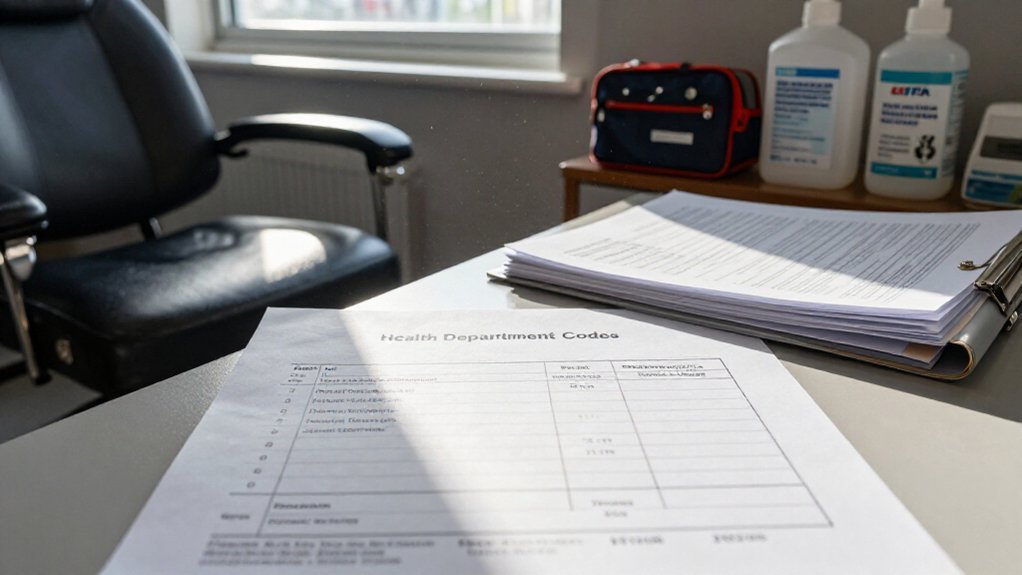
Once you’ve mapped your scaling appointment costs, you’ll want to look at what stays constant regardless of how busy you get. These fixed costs involved in compliance and maintenance can drain your budget if you don’t plan ahead.
1. Regulatory and Administrative Compliance
You’ll pay for permits, licenses, and health-and-safety administration, typically $500–$4,000 annually depending on your location. Insurance, including general liability ($1,000–$5,000/year) and professional coverage ($500–$1,500/year), protects your business from claims.
2. Equipment for Tattooing and Sterilization
Your sterilization equipment needs regular upkeep: ultrasonic cleaners, autoclave maintenance, and disinfectant supplies. Tattoo machines require $25–$100 per unit for maintenance, with power supplies adding $50–$150 each. These costs accumulate steadily.
3. Waste Management
You’ll handle biohazard disposal, sharps containers, and COSHH compliance for hazardous materials like inks and sterilants. Budget waste management as monthly operational expenses, not startup afterthoughts.
Recommended Products

【What You Get】Each pack contains 300 pcs tattoo ink caps in 3 different sizes to meet various tattoo needs.The package includes 100pcs large size tattoo ink cups (0.79" X 0.6"),100pcs medium size tattoo cups (0.67" X 0.43"),and 100pcs small size ink cups (0.47" X 0.39").

❤100 pcs Multi-Colored Color Tattoo Grommets

【Tattoo Ink Caps Kit】Comes with 2pcs black tattoo ink cup holder and 300pcs mixed size tattoo ink caps. The diameter of large ink cups is 15mm, medium 12mm, small 8mm, each size 100pcs. These premium ink caps for tattooing make mixing tattoo ink easier to meet your diverse body art and PMU needs.
How to Calculate Your Studio’s Cost Per Appointment
With your fixed costs mapped out, you’re ready to break down what each appointment actually costs you.
1. Calculate Fixed Costs Per Appointment
Add your rental costs, utilities, cost of insurance, and cost of advertising into fixed monthly costs. Divide this total by your projected appointments. For example, $4,000 in fixed costs divided by 100 projected appointments equals $40 per appointment.
2. Add Variable Costs
Track supplies and consumables, plus artist compensation. If artists earn 40%–50% of revenue, factor this into your variable costs per session.
3. Compute Your Total
Use this formula: (fixed monthly costs + variable monthly costs) ÷ projected appointments. This gives your true cost per appointment.
4. Monitor and Adjust
Revisit your business finances monthly. Update forecasts when appointment volume shifts, ensuring your calculations stay accurate.
Recommended Products

COMPLETE AFTERCARE KIT FOR NEW & EXISTING TATTOOS: This Tattoo Aftercare Kit brings together 3 essentials, Antimicrobial Soap, Tattoo Balm, and Tattoo Lotion, to help cleanse, protect, and moisturize fresh ink. Useful after tattoo sessions and throughout healing, it supports vibrant color and skin comfort for dedicated ink enthusiasts and artists

Travel-Friendly Aftercare: Easy-to-carry pillow packs for convenient aftercare while traveling or trying out

Protect Your Body Art: Moisturizing with the bonus of itch relief! Tattoo Goo's Tattoo Care Lotion soothes healing skin & keeps healed ink looking sharp for life. With olive oil & glycerin, it delivers deep, breathable hydration that won’t clog pores
Monthly Budget Template for Tattoo Studios
You’ll build your monthly budget by separating fixed costs, like rent and insurance, from variable expenses that shift with your booking volume. Track each category closely so you can spot trends before they strain your cash flow.
This structure gives you a clear snapshot of where your money goes, and where you can adjust when needed.
Fixed Costs Breakdown
Because your studio’s survival depends on predictable numbers, you’ll start by locking down every cost that doesn’t change month to month.
1. Core Fixed Overhead
Your Tattoo shop faces initial costs that become steady shop costs. You’ll pay rent, commonly $2,000–$5,000 monthly, plus insurance, often $1,000–$3,000 yearly, spread across each month. Add utilities, about $500–$1,000, and professional retainers for bookkeeping or legal support, roughly $4,000 yearly.
2. Equipment and Maintenance
Equipment needs consistent upkeep. You’ll budget $25–$100 per machine monthly for maintenance contracts, smoothing unexpected repair spikes.
3. Compliance Reserve
Permits and licenses, ranging $500–$4,000 annually, require monthly financial planning. Divide these into a steady reserve.
4. Marketing and Advertising
Set a fixed baseline for marketing and advertising to maintain visibility without overspending.
5. Cost Control and Pricing
Sum these fixed costs for cost control. This subtotal determines your break-even pricing, the minimum bookings you need before variable expenses enter your calculations.
Variable Expenses Tracking
Unlike fixed costs, your variable expenses breathe with your business, expanding when bookings surge and contracting during quiet periods. You track artist commissions (typically 40–50% of revenue) and pay-per-job costs that shift per hour alongside appointment volume. Budget recurring consumables: inks, needles, and cartridges so your spend per appointment stays visible.
Include cleaning and sterilization supplies, often $1,500–$3,000 monthly. Monitor utilities ($500–$1,000) and tattoo equipment maintenance ($25–$100 per machine, plus power supplies at $50–$150 each). Add marketing for social media and tattoo conventions, starting at $500–$1,000.
- Watch your tattoo studio’s supply costs spike when creativity flows, and feel the sting of every wasted cartridge.
- See your shop’s location drain cash through summer AC bills, and tighten your grip on the thermostat.
- Feel the hope of packed chairs at tattoo conventions, then the hollow quiet when you overstocked for crowds that never came.
- Watch your tattoo business thrive or falter in real time, because you’ve finally seen where every dollar breathes.
How Many Clients You Need to Break Even?
How exactly do you know when your tattoo studio stops bleeding money and starts turning a profit? You calculate your break even by dividing fixed monthly cost totals, rent $2,000–$5,000 plus utilities $500–$1,000, by your average net profit per client.
Your studio costs include supplies $1,500–$3,000/month, so factor these into your business plan. Since artists take 40%–50% of revenue, your cost of tattoo pricing must cover remaining overhead. Average cost per session varies by prime location, and costs vary seasonally.
Track your number of clients using utilization rates, because billable hours determine monthly targets. Remember, 40%+ of income comes from repeat customers, so count both first-time and return visits. Recalculate quarterly, save from busy months, and protect your business by ensuring booked clients consistently exceed your break-even threshold before slow periods hit.
Lower Tattoo Studio Costs Without Compromising Work
While you can’t eliminate overhead entirely, you can trim it strategically without sacrificing the quality clients expect. Your Tattoo Shop Costs will vary depending on size and location, but smart moves protect your business.
Choose a smaller, efficient space to optimize rent without sacrificing cleanliness or flow. Cut utility waste with energy-efficient tools, slashing fixed overhead that drains resources.
Forecast consumable need to prevent expired ink and wasted cartridge inventory. Maintain equipment regularly to avoid costly downtime that hurts your reputation.
In the Tattoo Industry, controlling aftercare products and marketing spend keeps you competitive. You don’t need massive budgets to thrive, just disciplined choices that preserve your artistry and your bottom line.
Recommended Products

WHAT CAN YOU GET - The mixed 300pcs tattoo ink caps small medium large can be avaliable for you. Pigment cups is perfect size 9MM 13MM 16MM, effectively reduce the waste of ink.

Ink caps size: 17x14mm

1.HIGH QUALITY MATERIALH:Tattoo ink cup is made of high quality plastic material,it is waterproof,durable and excellent for tattoo use