
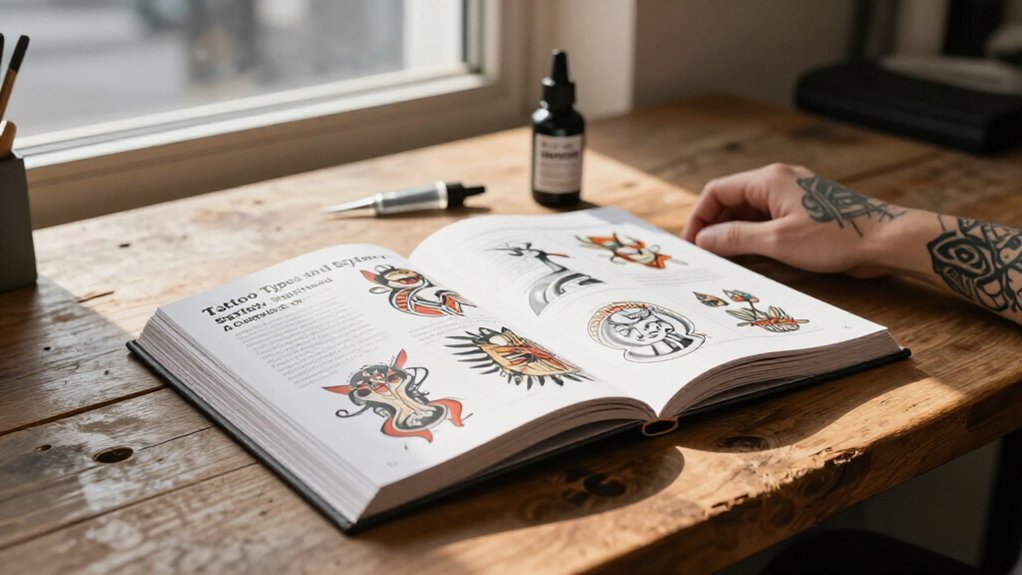
You have roughly ten thousand tattoo styles to choose from, and picking wrong means wearing regret for decades. This guide breaks down what actually matters: line weight, color saturation, cultural roots, and technical execution.
You’ll learn to spot quality work, ask informed questions, and match style to skin for results that age well.
Traditional and Old School Tattoos: Bold Lines, Limited Colors
Most tattoo styles you’ll encounter today trace their origins to one foundational look. That look is the Western tattoo tradition known as Traditional American, or simply old school style.
Nearly every tattoo style today descends from one foundational Western tradition: Traditional American, the original old school look.
What Defines Traditional Tattoos
You’ll recognize old school tattoos by their bold lines and limited color palette. Artists rely on black ink for thick outlines, then add yellow, red, and green sparingly. The use of negative space keeps designs clean and readable. Solid black fills anchor the composition.
Technical Approach
Artists typically use 11 or 14 round liner needles to achieve that signature line weight. This ensures durability and that classic 2-D appearance. Simple shading replaces smooth gradients.
You’ll see recurring motifs: roses, anchors, swallows, skulls, and daggers. These sailor symbols spread through flash walls and electric machines in the early 20th century, making Traditional tattoos widely available.
Recommended Products
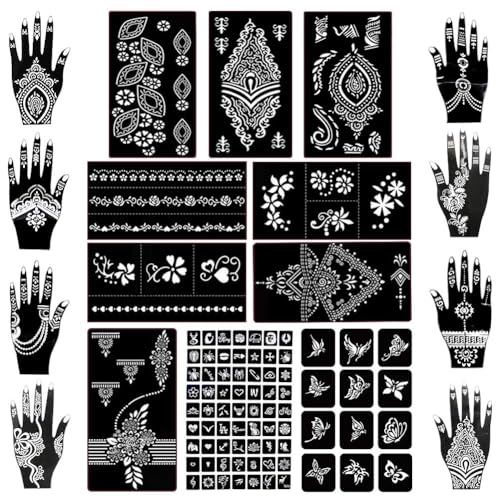
97 HENNA TATTOO DESIGNS IN 18 SHEETS:Includes 8 hand stencils, 8 rectangle flower pattern sheets, and 2 small pattern sheets. Features butterflies, flowers, roses, mandalas, paisley, and traditional Indian/Arabian mehndi designs. Perfect for creating stunning body art for weddings, festivals, and summer celebrations.

1 Set = 12 Sheets Henna Tattoo Stencils, 6 Pairs Right and Left hands stencils. Pasting position: Hand, Finger,Forearm, etc. Suitable for Henna tattoo, Airbrush Painting, Glitter tattoo, and so on;

RICH TEMPORARY TATTOO KIT - Contains rich tattoos pattern templates (126 designs),6 tattoo inks in 2 colors (black and brown),4 disposable gloves 1 pack of cleaning supplies,allowing you to easily create unique personalized tattoos
Neo Traditional vs. New School: Tattoo Styles That Break the Rules
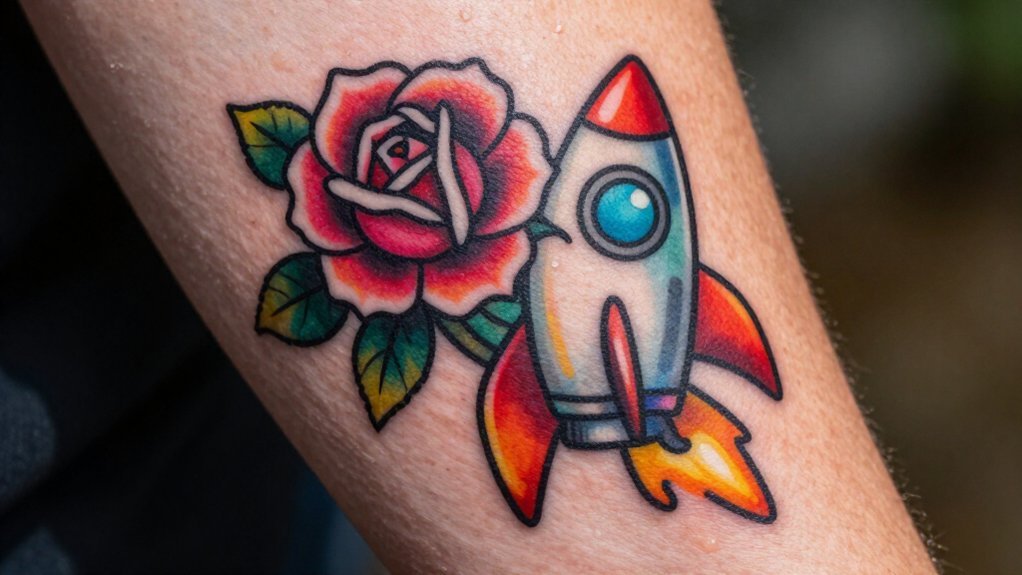
While traditional tattoos set the foundation, two modern styles have emerged that reinterpret those rules in very different directions.
1. Neo Traditional
You’ll recognize Neo Traditional by its refined, decorative approach. It keeps the 2D structure of old school work, but adds 2–3 line weights, ultra-smooth blends, and a muted palette inspired by Art Nouveau and Art Deco. Animals, flowers, and Native American-inspired portraits appear with realistic proportions, clean lines, and white ink highlights for depth.
2. New School Tattoos
New School tattoos push into cartoon territory. You’ll see bright high-saturation colors, graffiti-style 3D effects, and exaggerated facial features: oversized eyes, teeth, and noses that break realism entirely.
Choosing Between These Popular Tattoo Styles
Pick Neo Traditional for controlled, polished results. Choose New School for playful, rule-breaking energy. Both offer fresh alternatives to black and grey tattoos.
Recommended Products

35/09RL, 35 means diameter: #12. 35/09RL means 1209RL.

Poseidon cartridge adopt a one-time joint design hygienic standard The material is stainless steel and easy to color,and has better ink flow

JimKing Tattoo needles and tips are packaged in a disposable sterilization box to prevent secondary infections.
Black and Grey Tattoos: From Realism to Blackwork Techniques
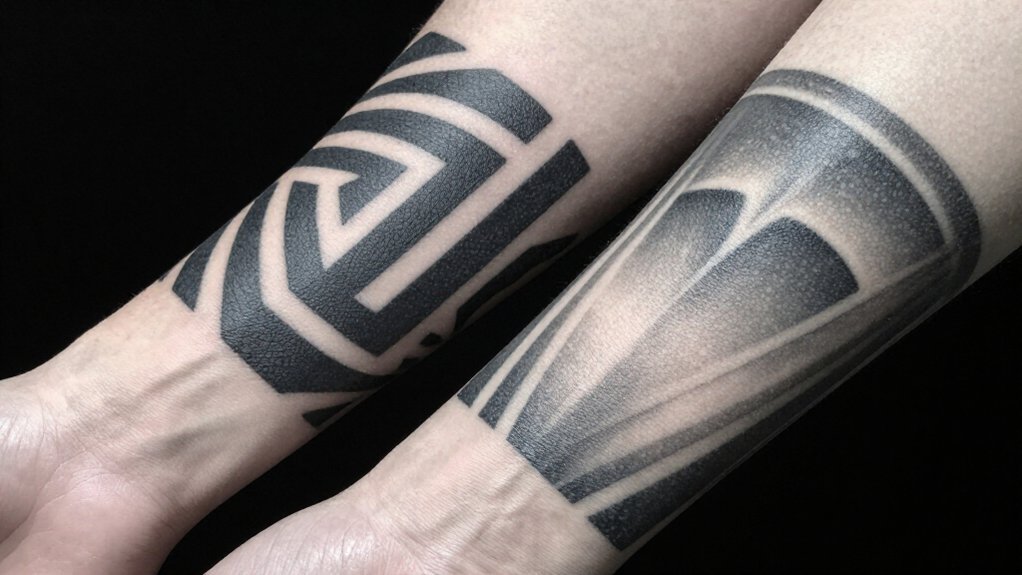
Although color tattoos dominate social media feeds, black and grey work remains the foundation of professional tattooing, and you’ll need to understand its two distinct branches before booking your appointment.
1. Black and Grey Tattoo: The Grey Tattoo Style
This approach uses black ink to create shades of grey through diluted grey-wash values. You’ll notice healed results appear roughly 30% lighter, so artists tattoo slightly darker initially.
For realism tattoo style, soft transitions replace hard outlines, building photo-like depth through careful layering and gradients.
2. Blackwork Tattoos: Bold Contrast
Blackwork abandons grey wash entirely. Artists use bold black saturation and negative space, employing geometric patterns, ornamental designs, and fine line work. Shading and perspective come from shape planning and crisp plane definition rather than smooth blends.
Choose your path based on whether you prefer subtle gradation or striking graphic impact.
Recommended Products

This tattoo kit have two Dragonhawk tattoo machines for lining & shading and friendly beginner start tattooing life, Cast iron tattoo machine 10 wrap coils. Made of superior composite material, the spring is high-elastic and anti-fatigue for long-time working, made of copper coils.

ULTIMATE REFILL SET FOR MORE TATTOO-MAKING FUN – Keep the creativity going with 50 tattoo paper sheets, 50 transfer sheets, and 4 vibrant markers—everything kids need to design even more custom temporary tattoos at home. A must-have expansion pack for Hello Blink Tattoo Maker-lovers!

Cultural Tattoo Traditions: Japanese Irezumi and Polynesian Tatau
Before you commit to a design, you’ll want to understand how cultural tattoo traditions carry meanings that extend far beyond aesthetics.
Japanese Irezumi evolved from criminal markings into decorative art, exploding after 1827 through Utagawa Kuniyoshi’s ukiyo-e prints. Traditional Japanese tattooing uses two-dimensional compositions with bold, curvy linework and rich traditional colors: black, red, and blue. You’ll see dragons, kirins, phoenixes, lotuses and cherry blossoms adorning skin. Despite yakuza associations and rigid placement rules (Buddha only above the waist), Irezumi persevered.
Polynesian Tatau offers black-based designs with intricate patterning from Samoa, Tonga, and Hawaii. These tattoos often mark ancestry and social standing through ocean waves and tiki figures.
Consider these emotional touchstones:
- You honor centuries of resilience worn by outcasts who turned stigma into art.
- You carry your lineage visibly, connecting to ancestors who navigated vast oceans.
- You submit to hours of deliberate pain, earning symbols that demand respect.
- You preserve threatened traditions, becoming a living bridge between past and future.
Recommended Products
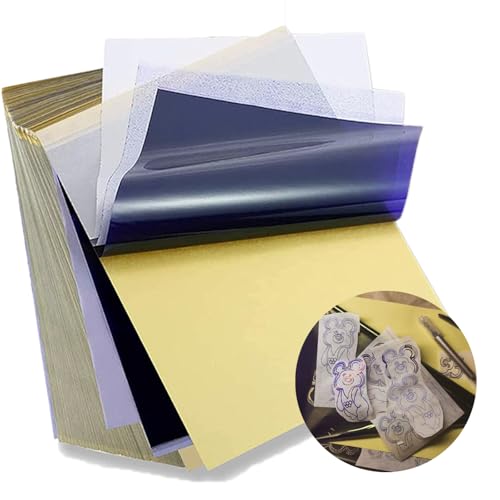
Standard size: Tattoo Transfer Paper is standard A4 paper size, each measures 8.27 in X 11.69 in. There are 4 levels in total. The thickness of the paper is very light and smooth to the touch.

Spirit Tattoo Classic Thermal Transfer Paper, 8.5” X11” (100 Sheets): Established since 1946, the original and trusted choice of tattoo artists globally, offering reliability and consistency in tattoo stencil creation.

Warm Tips: The tattoo transfer paper need to work with transfer medias.You will need to purchase the stencil ointment separately. Apply the design made on the master paper. Please pay attention to press the back side of the pattern to the skin for at least 3 seconds
Abstract and Decorative Tattoo Styles: Watercolor to Geometric
Once you’ve explored cultural traditions, you’ll want to examine styles that prioritize pure visual impact over symbolic narrative.
1. Watercolor Tattoo Techniques
Watercolor tattoos mimic paint on skin with soft, feathered edges and no hard outline. You’ll see vivid color spreading like ink on paper. Artists use whip shading or pendulum shading to create gradual, feathered fades. To soften intensity while keeping readability, they mix pigment with skin-tone matching products like Foundation Flesh by Fusion Ink.
Watercolor tattoos bleed vivid pigment across skin like spilled ink, soft edges dissolving into feathered color with no hard lines to contain them.
For long-term clarity, line work anchors the design as pigments lighten.
2. Geometric and Abstract Approaches
Geometric tattoos build images from mathematically precise shapes: triangles, hexagons, circles. Shading follows light-source logic, lighter where planes face light, darker where they turn away. Black ink and shades of black ink create depth through clean lines.
Geometric shapes echo Art Deco and abstract tattoo traditions, while tribal tattoos share this emphasis on pattern over representation.
Recommended Products

𝗜𝗡𝗖𝗟𝗨𝗗𝗘𝗗: You will get 48 little custom tattoo sheets filled with american traditional style tats. This hand tattoo set is perfect for any old school traditional tattoo and blackwork lovers. Our high quality semi permanent tattoo ink is long lasting, providing you the real looking tattoos that you can reply on for several days. Beautiful designed faux tats come in a variety of sizes and designs.

⚡ Four 6"x9" sheets with 32 tattoos inspired by our deep connection to the cycles of the moon

Sailor Jerry Traitional American Tattoo Flash