
You’re considering a compass tattoo, but you haven’t settled on what it represents for you. That’s where most people get stuck—they love the aesthetic without grasping why sailors trusted this symbol with their lives. Before you commit ink to skin, you’ll want to understand how this simple device carries weight across centuries of human struggle. The meaning runs deeper than most assume.
Key Takeaways
- Compass tattoos symbolize finding direction after hardship, marking personal pivots or promises to keep moving forward.
- Originating with 16th-century sailors, they historically guaranteed safe passage and commemorated completed voyages.
- Minimalist designs emphasize clarity and intention, while ornate versions incorporate maps, roses, or celestial elements for deeper storytelling.
- Popular placements include the forearm for daily visibility, chest for emotional significance, or shoulder blade for subtle concealment.
- Cardinal points carry distinct meanings: North represents home, South adventure, East renewal, and West necessary endings.
Recommended Products

Abstract silhouette of Compass Rose. Well suited as a texture for artwork, drawing paintings, wall decor. Small stencil for scrapbooking. Stencil plantillas for painting on wood. Stencil for painting on wood furniture, estencil para craft, deco wall, decorative

STENCIL TRANSFER SOLUTION – A good stencil will help ensure you’ll deliver a great tattoo. This transfer solution was designed for a detailed accurate representation of your artwork.

【Material】: Made of PET plastic, durable and flexible, cut with laser in a clean and smooth way, washable and reusable
What Compass Tattoo Symbolism Actually Means
You’re marking a decision, a pivot, a promise to yourself that you’ll keep moving. Maybe you’ve wandered through addiction, grief, or decades of confusion. The tattoo anchors you. It’s functional symbolism—you’ll never truly lose your way if you’ve carved intention into your flesh.
People read your compass differently. Some see travel. Others see survival. You’re communicating without speaking: “I’m navigating.” The design varies wildly—minimalist arrows, ornate mandala hybrids, coordinates of somewhere sacred—but the core message holds. You’ve chosen your heading. Now you’re walking it.
Recommended Products

【Vintage Symbolic Design】This large temporary tattoo set combines classic symbols of time, direction, and love into bold, artistic compositions. Featuring a compass, clock, and rose, the designs are made for half-arm coverage and strong visual impact. The realistic shading and matte finish give these tattoos a timeless, old-soul aesthetic.

Paper size 17cm, height 24cm, 8 sheets of 21 tattoo patterns,This is a large size temporary tattoo with a rose flower design as the theme, the rose flower symbolizes love and sincere and pure love, peace, friendship, bravery and dedication, our designer carefully hand-painted the design of the rose flower tattoo

The dimensions shown are the overall stencil sheet size. The graphic fits inside the sheet and is slightly smaller than the overall sheet size
Compass Tattoo History: From Sailors to Modern Skin
Where did this design earn its ink? You’ll find compass tattoos originated among 16th-century sailors who relied on these instruments for survival across open seas. They believed compass imagery guaranteed safe passage and prevented getting lost, both literally and spiritually.
By the 1700s, you’d see expanded adoption among naval veterans and merchant mariners who used these tattoos to mark achievements and commemorate voyages completed. The tradition spread through port cities worldwide.
In the 20th century, you’ve witnessed dramatic transformation. Military personnel adopted compass tattoos during wartime, carrying tokens of direction amid chaos. Then counterculture movements embraced them through the 1960s and 70s.
Today, you’re seeing compass tattoos everywhere—on artists, travelers, adventurers, and seekers of all kinds. The symbol shed its strictly nautical identity, becoming universal shorthand for guidance, purpose, and finding your way through life’s uncharted territories.
Recommended Products

【UNIQUE AMAZING DESIGNS】Each Size is about 11.4 x 21 cm / 4.48 x 8.26 inch. Contains 8 sheets temporary tattoo paper stickers which are printed with non-toxic ink.

【Develops Fully in 48H】Your tattoo will initially appear silver before naturally darkening to a rich finish within 48 hours. For optimal results, avoid contact with bare skin (particularly the face) and cover the area with clothing during sleep to prevent transfer.

【Safe & Skin-Friendly】10.5x6cm small temporary tattoos, No toxic Very friendly material, safe for all skin types including sensitive skin. No irritation, no sticky residue, portable for on-the-go use.
Simple vs. Ornate: How to Choose Your Compass Style
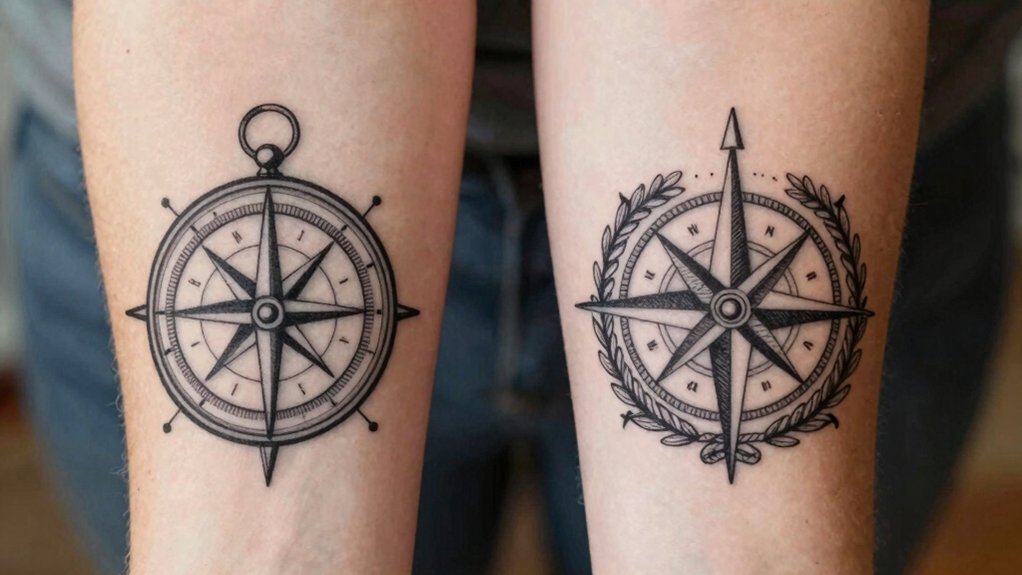
How do you capture your personal relationship with direction in ink? You’ve got to weigh simplicity against ornamentation.
Minimalist designs speak through clean lines and negative space. You’ll find single-needle work, geometric precision, and tiny black-and-grey pieces that whisper rather than shout. These suit you if you value subtlety or professional discretion.
Ornate compasses demand attention. You’ll incorporate roses, maps, clocks, or celestial elements wrapped around Victorian detailing. This style reflects complexity—you’re not just marking direction, you’re documenting an entire journey.
Consider your pain tolerance. Simple tattoos finish faster; elaborate pieces require multiple sessions. Assess your budget too. Intricate work costs more but ages differently than streamlined designs.
Trust your instinct. You’re wearing this forever, so pick the version that feels authentically yours.
Recommended Products

77 sheets american traditional temporary tattoos,17pieces 7.48*3.74 and 60pieces 3.85*2.28,including sailor,anchor,snake,eagle,sailboat,sailor, pentagram,lighthouse,heart,swallow,flower,vintage roses,swallows,demon,butterflies,sword,skull,eagle,scorpion

★【15 Sheets Realistic Cool Y2K Black Temporary Tattoos For Women Men Adults】--COKTAK Brand Vintage Y2K Black Cool MUCH QUANTITY Mixed Style Package Includes 15 Sheets Realistic Waterproof Tribal Totem Half Sleeve Forearm Arm Hand Temporary Tattoos For Adults 3D Snake Spider Scorpion Eye Bat Compass Arrow Blood Vessels Lightning Tattoo Stickers.

Old school Temporary Tattoos: You will receive 12 sheets Classic Temporary Tattoo stickers, each size is 10*6cm/3.93*2.35 inches, feature in different vintage patterns, such as roses, swallows, butterflies, eagle, sword and more.
Best Placement for Your Compass Tattoo
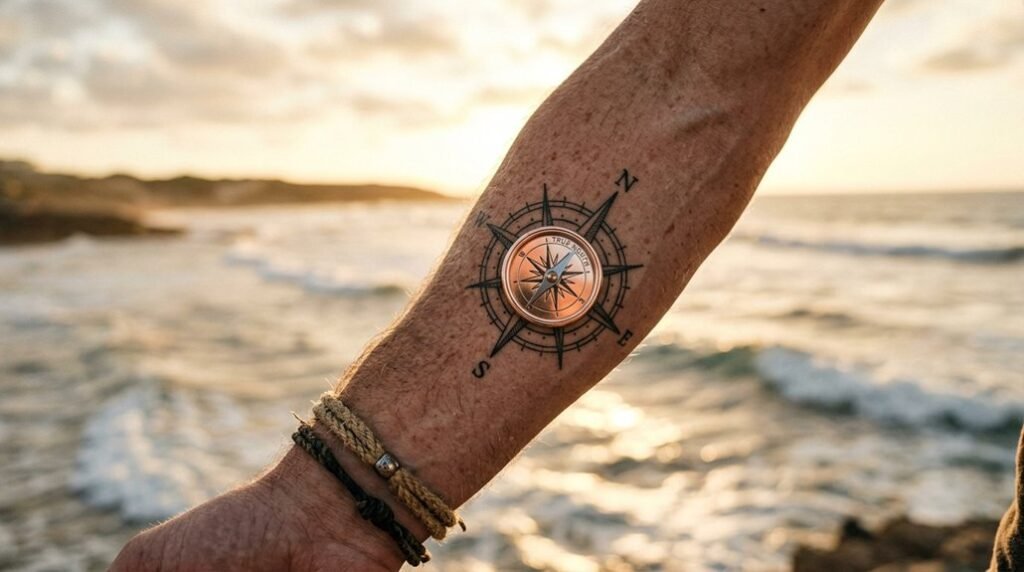
What story do you want your skin to tell? You choose where to place your compass tattoo, and that choice speaks volumes. You might ink your forearm if you want daily visibility—a personal reminder you can’t ignore. You might select your chest, keeping guidance close to your heart. You might opt for your shoulder blade, letting the design peek from beneath sleeves on your terms.
You work with your body’s natural lines. A compass wraps beautifully around a calf or anchors firmly on an ankle. You consider pain tolerance: ribs and feet sting more than thighs or biceps. You think about aging—areas with less sun exposure keep ink sharper longer. You balance symbolism with practicality, ensuring your permanent marker feels right on *your* canvas.
Recommended Products

❤️ [Red Cardinal Temporary Tattoos Set]: Celebrate the beauty of red cardinal birds with vibrant temporary tattoos featuring cardinals, feathers, branches, hearts, flowers, and nature-inspired details. Each sheet measures 6.3 x 4.7 inches, perfect for hands, arms, faces, party cups, bottles, phones, laptops, notebooks, and more.

Realistic Finish: Different from you know ordinary temporary tattoo stickers or fake tattoos. It is so real and comparable to the real tattoo. It is a semi-permanent technology, Water-Resistant, friction-resistant, and can last for a long time, staying on your skin for 1-2 weeks.

SIZE: 6 x 7.87 inches (15 x 20 cm) for each tattoo sheet. Design includes: 7 Red Cardinals Birds
Cardinal Points Explained: North, South, East, West
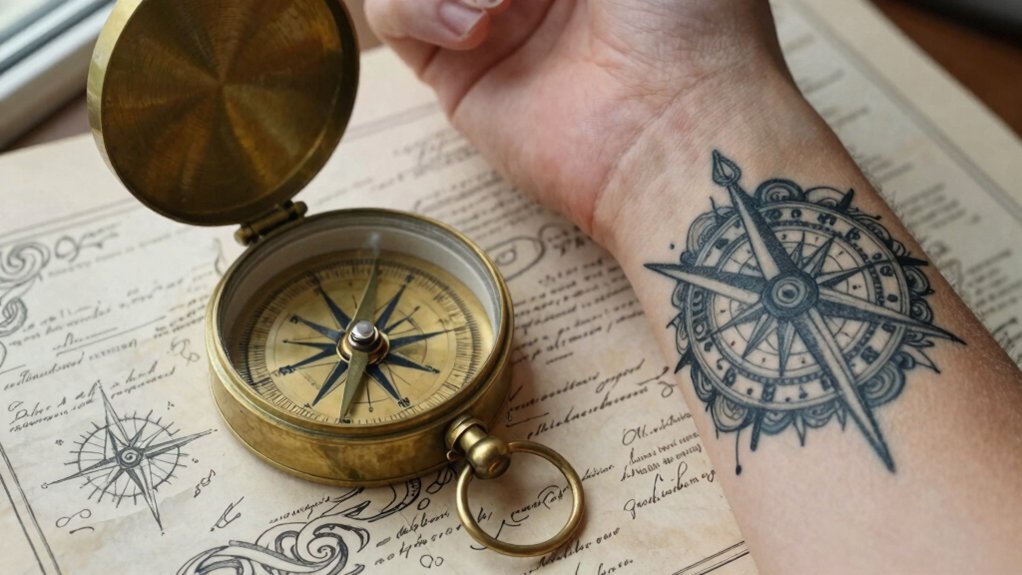
Why do you choose a compass tattoo if not to honor direction itself? You embed the cardinal points into your skin, each carrying weight beyond geography.
North anchors you. You associate it with home, stability, and the star that guided travelers home. It represents where you’ve come from.
South draws you toward warmth, adventure, and the unknown. You chase it when you crave escape.
East greets you with dawn and renewal. You face it when you begin again, shedding who you were.
West closes your day with sunset and reflection. You honor it when you accept endings.
Together, these four points create balance. Your tattoo isn’t decorative—it’s functional. You consult it when you feel lost, and you remember: you’ve always had direction within you.
Recommended Products
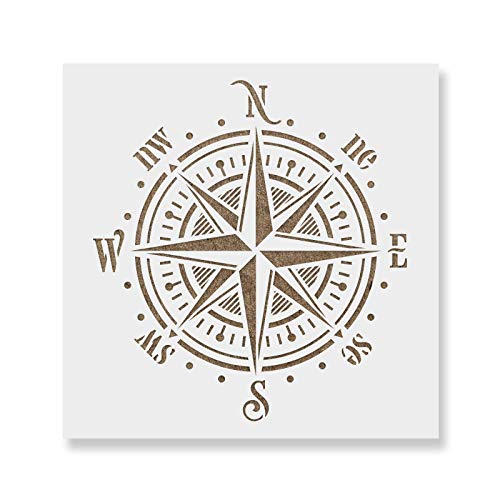
The dimensions shown are the overall stencil sheet size. The graphic fits inside the sheet and is slightly smaller than the overall sheet size
The dimensions shown are the overall stencil sheet size. The graphic fits inside the sheet and is slightly smaller than the overall sheet size

9 Pcs: There are totally 9 pieces of our nautical theme templates, each template has a different pattern, you can combine them as you like. The size is about 6x6 inches/15x15cm.
Matching Compass Tattoos for Couples and Friends
Where else would you ink a shared symbol of journey and trust but side by side?
You choose matching compass tattoos when you want to celebrate a bond that stays steady through miles and years. You might split one design between two bodies—half the rose on your wrist, half on theirs—so you complete each other. Or you mirror identical compasses, proving you navigate life’s chaos with the same true north.
Friends often pick coordinates of where you met, while couples select designs that point toward each other. You aren’t marking ownership. You’re declaring allegiance to a shared direction.
This ink travels with you both. When paths diverge, you carry proof that someone out there holds your matching piece, still oriented toward reunion, still holding course.
Recommended Products
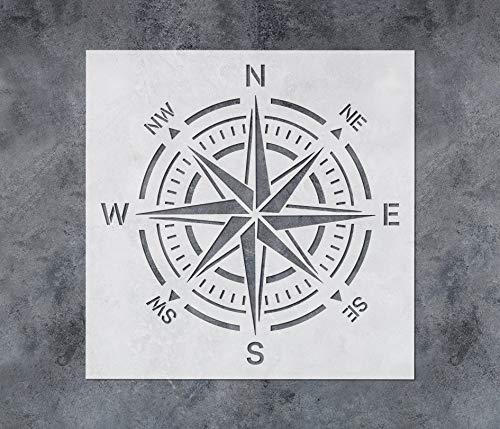
WALL STENCIL:Package contains 1 piece compass large wall stencil - 12x12 Inch.

Unfinished wooden Compass Rose cutouts are made of quality natural wood for durable use; with smooth surface, easy to paint and write.
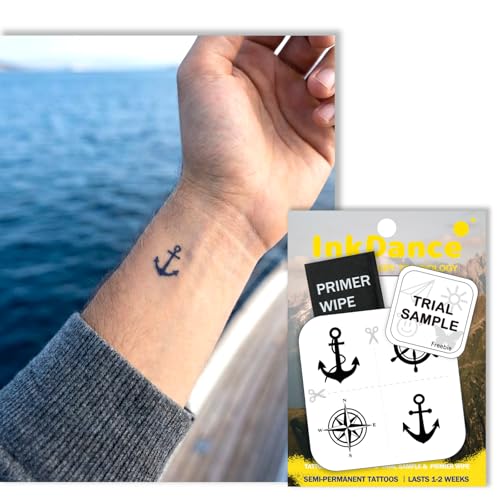
Innovative Skin-Sync Technology: We don't just sit on the skin; we interact with it. By reacting organically with naturally occurring proteins in your skin's outermost layer (stratum corneum), our plant-based formula magically transforms from a transparent guide into a rich, ultra-realistic navy-black. It looks exactly like a healed, permanent tattoo—without the needles or depth.
Compass Tattoo Ideas: Adding Maps, Coordinates, and Roses
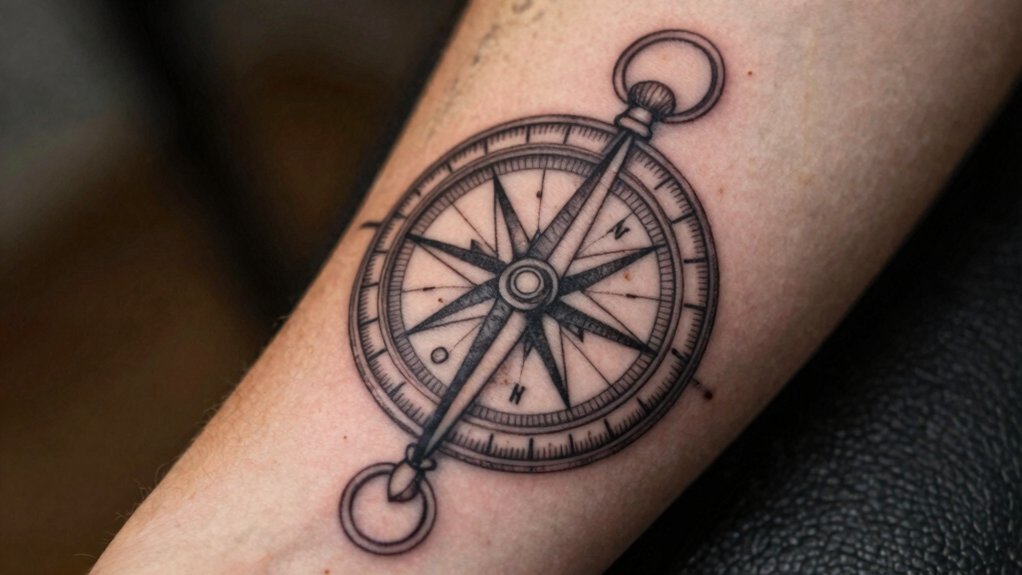
How do you make a compass truly yours? You weave in elements that chart your personal history. You’re adding maps to frame where you’ve wandered or where you’re headed—perhaps coastlines of a hometown or mountain ranges you’ve conquered. You’re inking coordinates that lock in one meaningful spot: where you met someone, where you grew up, where you changed. These numbers carry weight without needing explanation. You’re tucking roses into the design, letting petals soften metal edges. The flower honors someone you’ve lost or love you’ve found. You’re building layers: vintage parchment backgrounds, nautical stars, or broken chains. Each choice transforms a universal symbol into your private legend. The compass points outward, but everything surrounding it points back to you.
Recommended Products

【TEMPORARY TATTOO PACK FOR MAN WOMEN ADULTS KIDS】Each Size is about 10.5 x 6 cm / 4.1 x 2.36 inch. Contains 2 sheets temporary tattoo paper stickers which are printed with non-toxic ink.

Size:60mm x 105mm (2.36" x 4.13")

Amazing Product: Different from you know ordinary temporary tattoo stickers or fake tattoos. It is so real and comparable to the real tattoo. It is a semi-permanent technology, waterproof, friction-resistant, and can last for a long time, staying on your skin for 1-2 weeks.
Color vs. Black and Gray: What Works Best
When you’re staring at that needle, frozen between ink caps, what actually separates a striking compass from a forgettable one? It’s your choice between color and black and gray.
Color commands attention. You’ll grab saturated blues for ocean waves, burnt oranges for sunset backdrops, or metallic golds for the compass rose itself. Color breathes life into nautical themes and pairs well with地图 details you explored earlier. But you’ll need touch-ups, and complex palettes demand skilled hands.
Black and gray delivers timeless understatement. You’re emphasizing line work, shading gradations, and negative space. It ages gracefully, suits professional settings, and lets the compass symbol speak without distraction. You’ll also pay less and sit fewer hours.
Choose color when you’ve got a narrative bursting with place. Choose black and gray when direction itself tells your story.
Recommended Products

【Large American Traditional Black Tattoo Stickers】Tazimi original 12 sheets of super large classic black adult temporary tattoo stickers, old-fashioned traditional tattoo stickers are designed for adults. These retro traditional American elemental tattoos are creatively designed by our artists and are 4.72*9.06 inches in size. These waterproof fake tattoos look very realistic, artistic, eye-catching, and make you shine like a star. Enjoy expressing yourself with these American old tattoos!

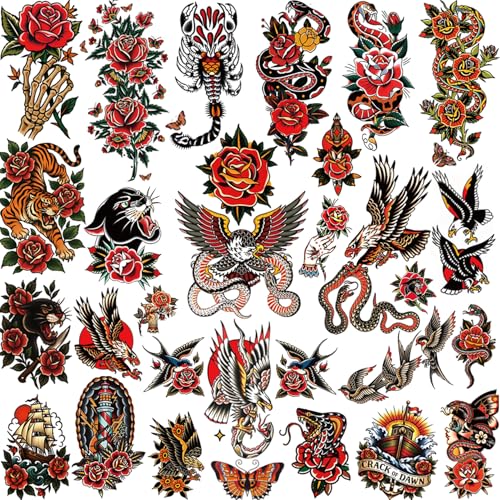
Large American Traditional Colorful Tattoo Stickers: 12 sheets of super large classic adult temporary tattoo stickers, old-fashioned traditional tattoo stickers are designed for adults. These retro traditional American elemental tattoos are creatively designed by our artists and are 4.72*9.06 inches in size. These waterproof fake tattoos look very realistic, artistic, eye-catching, and make you shine like a star. Enjoy expressing yourself with these American old tattoos
How to Find an Artist Who Specializes in Compass Designs
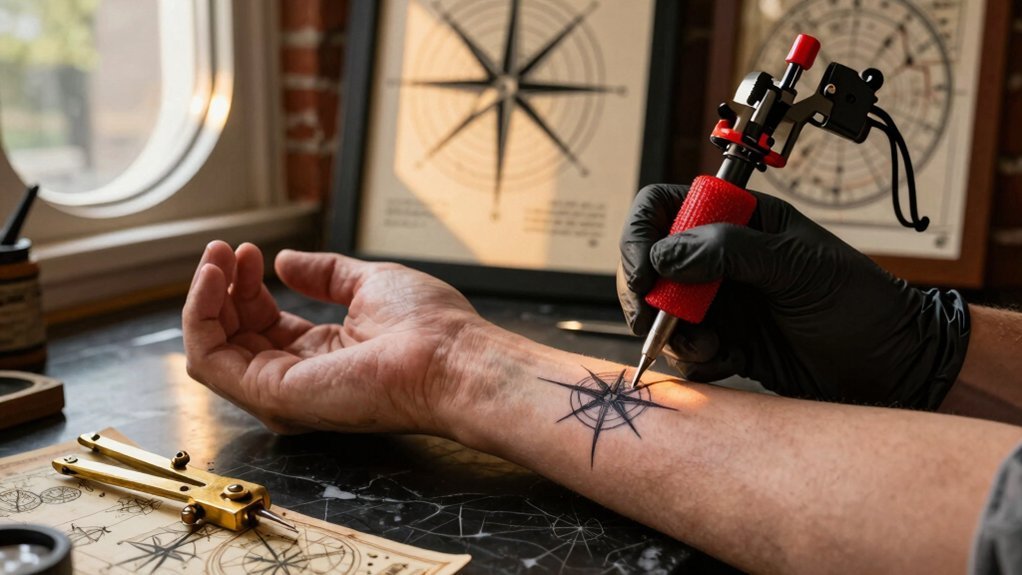
Why gamble with an artist who treats your compass like just another stencil? You’ll want someone who understands symmetry, line weight, and the delicate balance between ornament and meaning.
Start by scrolling through portfolios on Instagram or specialized tattoo websites. You’ll spot specialists immediately: their compasses feature crisp needles, graduated shading, and dimensional depth that pops off the skin. You won’t find wobbly circles or smudged numerals in their healed work.
Don’t hesitate to visit shops and ask directly. You’ll learn quickly who’s confident executing complex mandala patterns or realistic brass finishes.
Check healed photos, not just fresh ink. You’ll see how their lines hold over time.
Book consultations with two or three artists. You’ll compare their approaches and choose the one who transforms your direction into art worth wearing forever.
Recommended Products

Amazing Product: Different from you know ordinary temporary tattoo stickers or fake tattoos. It is so real and comparable to the real tattoo. It is a semi-permanent...
Conclusion
You are carrying more than ink—you are carrying your own direction forward. A compass tattoo keeps your choices visible, your resilience anchored in skin. Whether you opt for clean lines or intricate detail, bold color or subdued gray, the meaning remains yours alone. Find an artist who understands that gravity, trust your vision, and wear your path with purpose.