
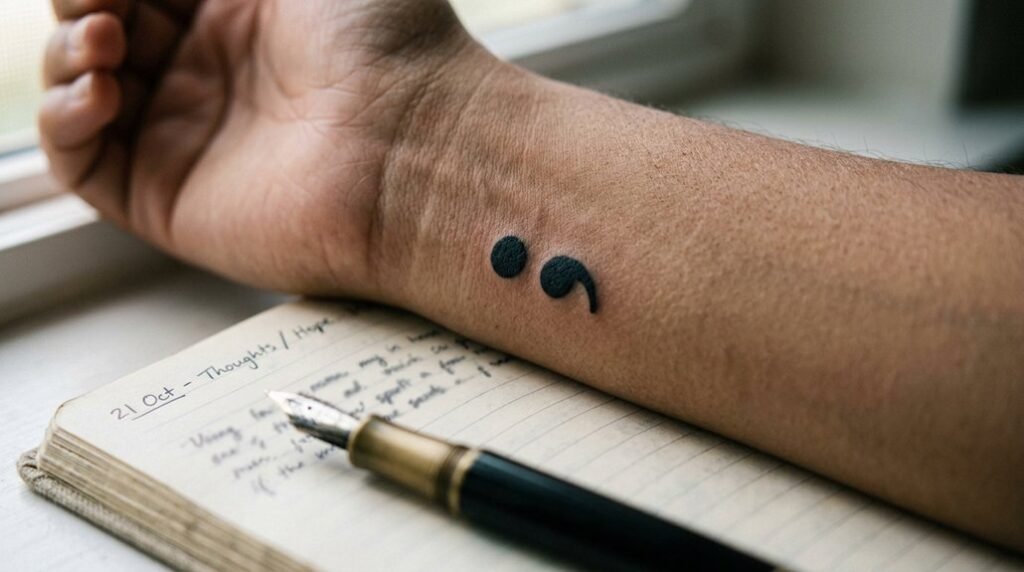
You’ve probably spotted a tiny semicolon inked on someone’s wrist and wondered what it means. It’s more than grammar nostalgia—this mark carries weight you can’t see at first glance. The story behind it might change how you view the person wearing it, or perhaps yourself. There’s a movement here that started quietly but spread across skin worldwide, and its origins reveal why something so small speaks so loudly.
Key Takeaways
- Semicolon tattoos symbolize choosing to continue life despite struggles, representing survival over suicide.
- The design originated from Project Semicolon, founded in 2013 by suicide loss survivor Amy Bleuel.
- The mark signifies that one’s personal story isn’t finished, with more chapters still to be written.
- Placement carries meaning: wrist for visibility, ribcage for privacy, forearm for professional openness.
- Intended for those with lived experience, not as a trend for aesthetic purposes alone.
Recommended Products

Self-Love Symbol Dual Design: This semi-permanent tattoo pack has two unique sheets with tiny mini graphics: semicolons, crown heart hands, floral blooms, arrow accents and positive affirmation "I am enough". Semicolons stand for mental strength & survival, crown hearts represent self-worth, quotes deliver positive affirmation. The small, minimalist design makes it perfect for subtle placements on fingers, wrists, or arms.

CONTINUE PACK CONTENTS: Set of 54 contemporary black temporary tattoos featuring 18 unique mental health awareness designs, with 3 copies of each design. Symbolic designs including semicolons, butterflies, hearts, yin-yang symbols, and inspirational 'continue' text messages.
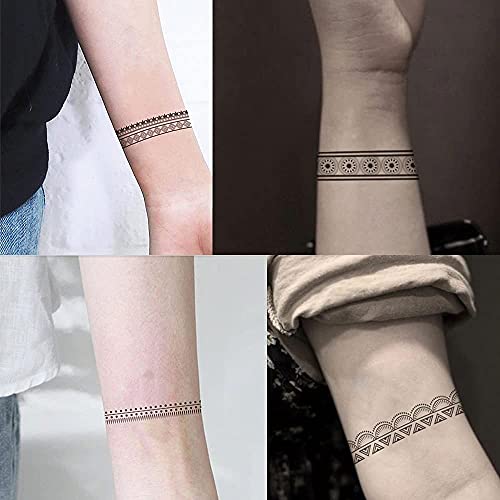
❤️ Bold Tribal Bracelet Designs: This set features 2 sheets of tribal-style temporary tattoos, showcasing intricate black patterns that wrap around your wrist like a bracelet. Perfect for fans of black tattoos and bold, masculine designs.
The Project Semicolon Origin Story (2013)
Why did a simple punctuation mark become a lifeline for millions? You trace this transformation back to 2013, when Amy Bleuel founded Project Semicolon in Green Bay, Wisconsin. She’d weathered depression, addiction, self-injury, and her father’s suicide, and she wanted others to feel less alone.
You recognize the project’s genius immediately: an author uses a semicolon where most would’ve ended a sentence. You’re choosing to continue your story. Bleuel didn’t launch a massive organization—you’re watching something organic bloom. She simply shared her vision online, and people responded. You see strangers connecting through shared pain, offering solidarity without judgment.
Recommended Products
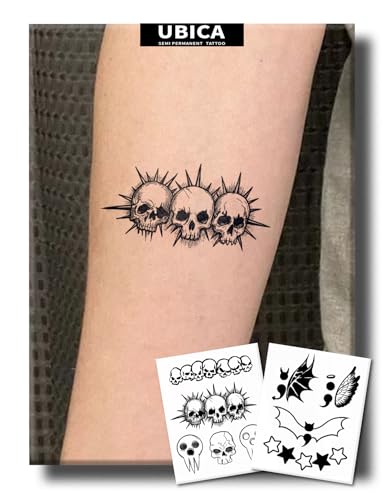
Spiked Skull Devil Wing Design: This semi-permanent tattoo pack holds two sheets with spiked triple skull strips, single skull graphics, bat silhouettes, paired...
Why It Means “My Story Isn’t Over”
The semicolon’s power lies in what it actually does on the page. It forces a sentence to continue when it could’ve ended. You see that moment of hesitation, that breath, and then the story pushes forward. That’s exactly what you’re choosing when you ink this mark on your skin.
You’ve faced moments where ending felt simpler than continuing. The semicolon tattoo declares that you’ve chosen to keep writing. You’re acknowledging the pause, the struggle, the darkness—but refusing the period.
You carry this symbol as both reminder and promise: your narrative stretches beyond today’s chapter. You’ve survived what tried to finish you, and you’ll survive what comes next. Your story isn’t over; you’ve simply paused, gathered strength, and chosen to continue.
Recommended Products
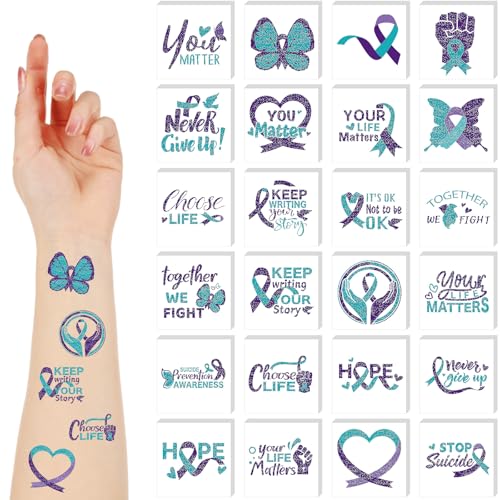
Suicide Prevention Awareness Glitter Tattoos Package: you will get 240 pieces of teal purple ribbon suicide prevention awareness glitter tattoos, each sheet contains 24 different styles of glitter teal purple ribbon stickers, a total of 10 sheets; The abundant quantity and various patterns offer you many choices, is enough to share with people you care about

Extensive Sticker Set: Our Suicide Awareness Roll Stickers includes 1000 pieces of high-quality vinyl stickers. Packaged in 2 rolls, these stickers feature the teal & purple ribbon and semicolon designs, which are recognized symbols of suicide prevention and mental health awareness.

Suicide Prevention Tattoos Bulk: you will get 144 pcs suicide awareness tattoos stickers in 24 styles. The size of each tattoo is 7.87 x 5.91 inches. The rich quantity and various patterns provide you with many choices
Who Should (and Shouldn’t) Get This Tattoo
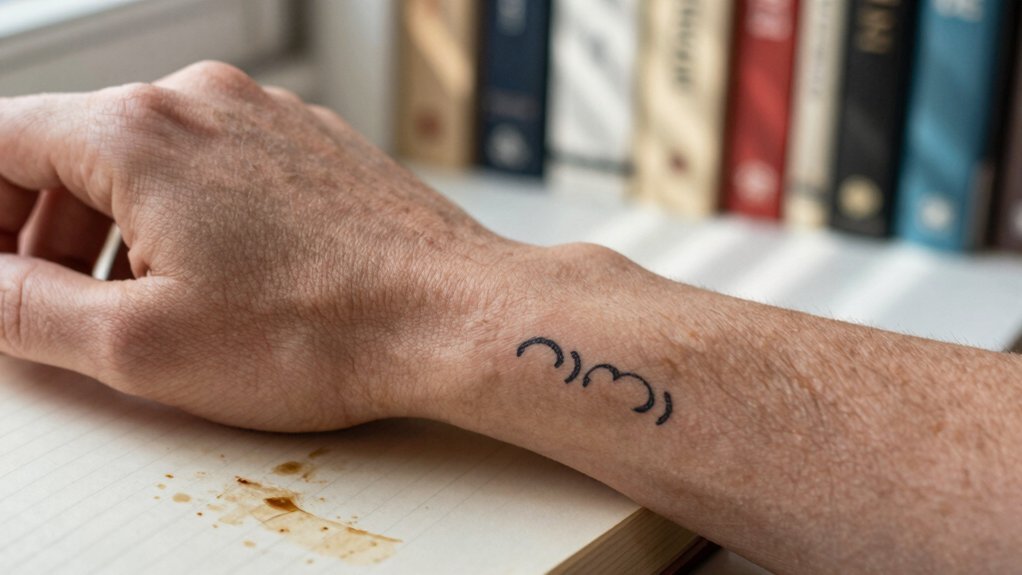
Where exactly does this symbol belong on your body, and more importantly, does it belong there at all?
You should get this tattoo if you’ve battled mental illness, survived suicide attempts, or lost someone to suicide. You carry deep personal connection to the semicolon’s message. You understand it’s not decorative—it’s a commitment to continuing your story.
You shouldn’t get this tattoo if you’re chasing trends or think it looks cool without grasping its weight. You disrespect survivors when you treat their symbol as mere aesthetics. You need genuine understanding, not curiosity.
You must consider permanence. This mark announces your struggles publicly. You can’t remove it when conversations feel inconvenient. You wear others’ hope alongside your own.
Ask yourself: Are you honoring survival, or appropriating pain? Your answer determines whether this belongs on your skin.
Recommended Products

❤Semicolon Jewelry-The Semicolon Movement is presenting hope and love to those who are struggling with depression, suicide, addiction, and self-injury.It's a reminder for them to calm down, take a breather, and then keep going. Continue life as you should, because you've got a beautiful journey ahead.

🍷15 Sheets Black Lotus Temporary Tattoos Stickers Fashion Designs🍸 EGMBGM Brand Original Sexy Bohemia Boho Indian Black Lace Lotus Fake Jewelry Crescent Moon Moth Flowers Pendant Temporary Tattoos Supplies. There Are 15 Sheets In Each Package Of Size 4.1"x2.3" 10x6cm Gothic Large Temporary Tattoos For Women Girls Adults Daughters Temporal Tattoos.

Material: High quality copper and exquisite rhinestones, it is hypo allergenic, it doesn't rust, change colour or tarnish and it is lead free and nickel free.
Best Placement Ideas and What Each Location Signals
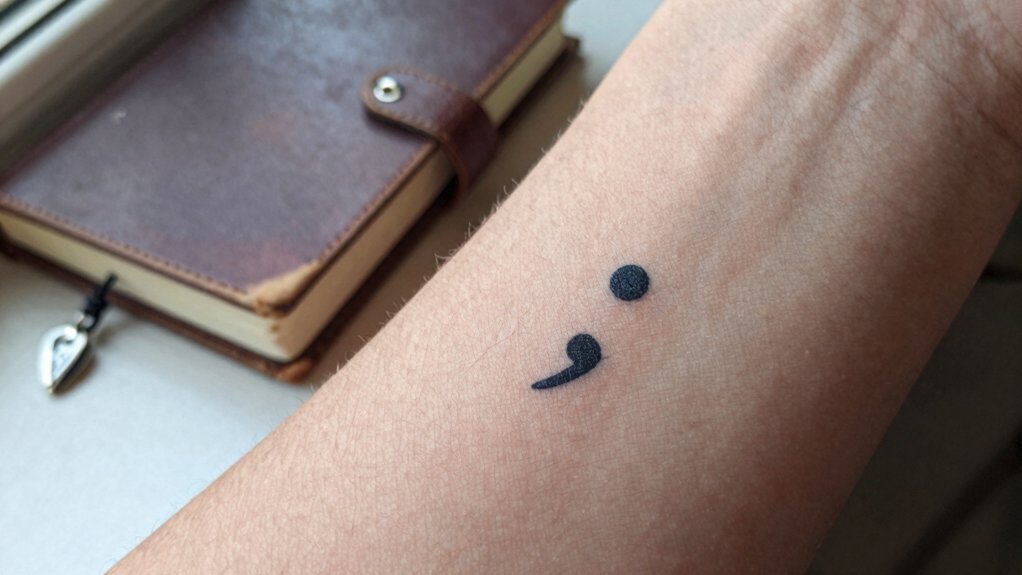
How you position this mark shapes what it communicates before you ever speak. You place it on your wrist when you want it visible—it’s a handshake with strangers, a lifeline you can trace.
You tuck it behind your ear when you’re still navigating who knows; only you and trusted mirrors hold that truth.
Your forearm tells coworkers you’re surviving openly.
Your ribcage keeps the story pressed against your breath, private as a pulse.
You choose your ankle for movement, for walking forward.
You select your finger for constant confrontation, impossible to ignore.
Each placement demands different courage. You’re not hiding or showing off—you’re calibrating visibility to your recovery stage. Where you mark yourself becomes part of the sentence you’re continuing.
Recommended Products

High-Quality & Durable Material: Made from premium waterproof PVC, these neon mental health stickers offer sun protection and long-lasting durability. Perfect for indoor and outdoor use without fading or peeling.

Blue Purple Semicolon Butterfly is a retro vintage Graphic design for anti-suicide motivational for people suffering from depression, stress, panic attacks, self-harm, anxiety, addiction, bullying, suicidal thoughts or any other mental health disorder.

🌟 EMPOWERING HEALTH DESIGNS: Includes 8 sheets (96 PCS) of beautifully designed temporary tattoos featuring positive, motivational quotes. Perfect for spreading health awareness and inspiring confidence in kids, teens, and adults. Each sheet measures 6.3 x 4.7 inches. TEMPORARY TATTOOS FOR PARTY DECORATIONS ONLY.
Size, Style, and Design Variations Worth Considering
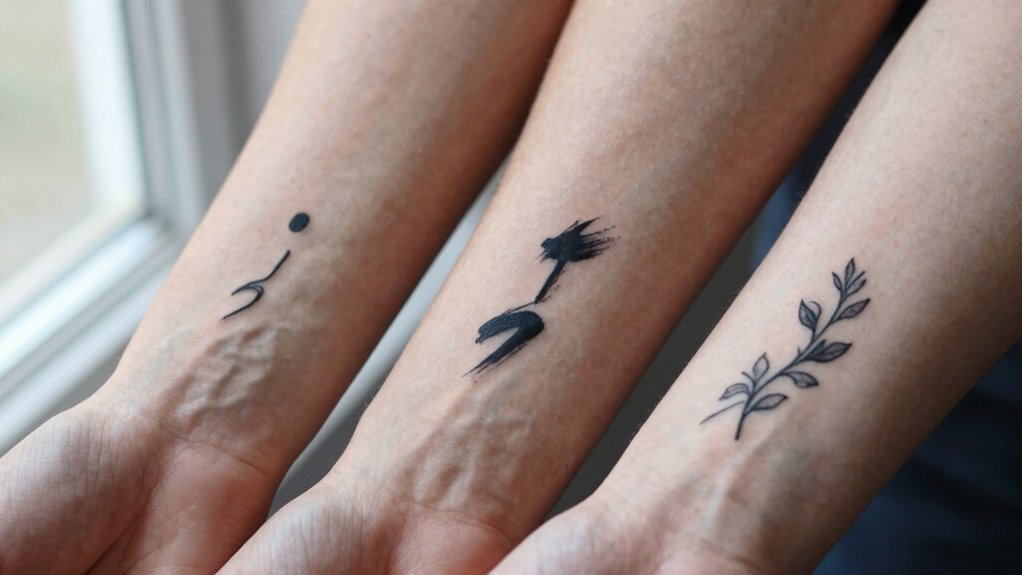
Might you want whisper or declaration? You’ll choose tiny semicolons behind ears or bold statements across forearms. Size dictates visibility; consider your comfort level daily.
Minimalist designs suit you if you prefer clean lines—simple black ink, no embellishment. You might add watercolor splashes behind your semicolon, creating hope emerging from struggle. Floral elements wrapping your punctuation soften edges, while geometric frameworks add structure.
You can select script fonts, typewriter aesthetics, or hand-drawn imperfections. Some artists incorporate birds, butterflies, or anchors alongside your mark. Each variation reflects your individual story without requiring explanation.
Consider healing stages too: larger tattoos demand longer sessions, more aftercare, bigger commitments. Your choice carries weight beyond aesthetics. You’re selecting permanence, so align style with substance that resonates authentically.
Recommended Products
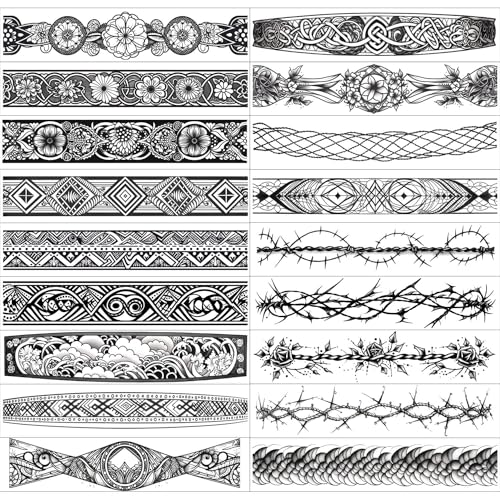
👑[Realistic Tribal Style, Zero Pain] Get the bold look of Polynesian and Maori tribal art without the commitment. These 18-pack extra-long (11") armband tattoos wrap perfectly around biceps, wrists, or ankles, making you stand out at parties, festivals, or beach vacations.

Small removable fake temporary tattoo stickers for women and men, motivational inspiring encouraging quotes, cursive letters words phrases, sayings, writings and scripture tattoos. Size: 5.7x9.7 cm (2.25x3.8 inch).
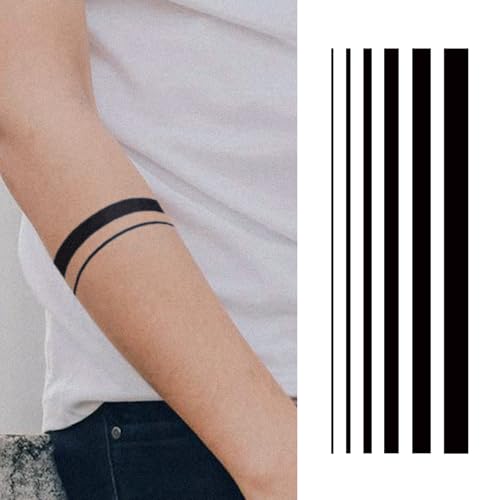
GEOMETRIC LINE & ARMBAND DESIGNS: Features a striking minimalist collection of continuous parallel lines engineered in varying stroke weights. This modern unisex set ranges from delicate hairline threads to bold solid blackout bands
Depression, Addiction, and Other Struggles It Can Represent
Your design choices carry meaning, but they stem from something deeper—the experiences you’re choosing to acknowledge. When you wear a semicolon, you’re marking where you could’ve stopped but didn’t. You’re claiming survival.
Depression writes itself into this symbol naturally. You’ve faced the void, considered the period, and chosen continuation instead. Addiction fits here too—you’ve broken cycles, resisted the pull, started sentences anew. Eating disorders, anxiety, trauma, grief: you’ve carried them, and this mark recognizes that weight.
You might tattoo this after losing someone, honoring their unfinished story alongside your own. You might ink it quietly, needing no explanation. The semicolon doesn’t demand disclosure; it simply states that you’ve struggled and remained. You’re still writing.
First Tattoo? What to Expect at Your Appointment
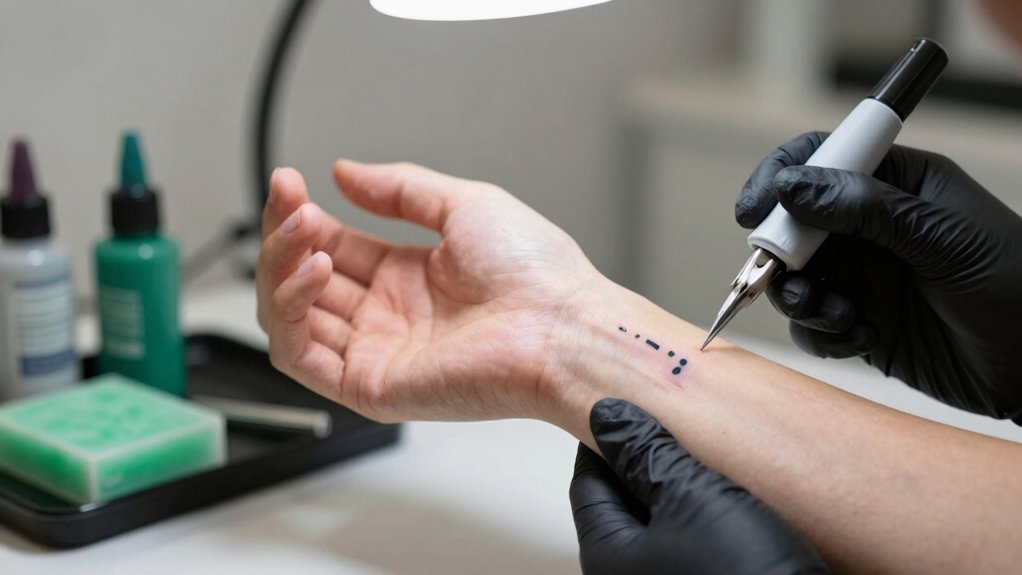
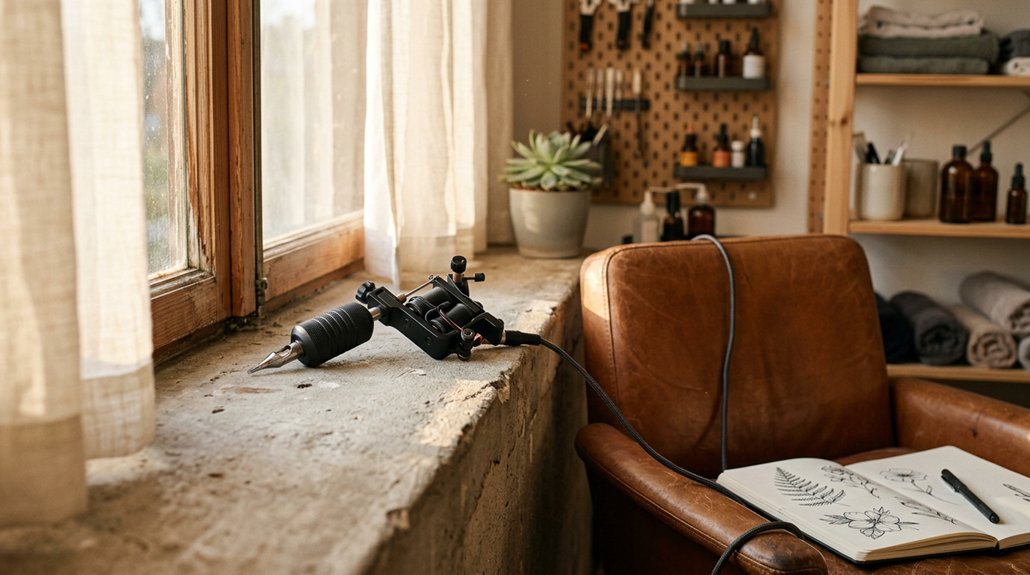
Where exactly does the needle first touch skin when you’ve never sat for ink before? Your artist starts on clean, prepped skin, usually outlining first. You’ll feel a scratching, burning sensation—manageable but unmistakable. Breathe steadily. Tensing makes it worse.
Bring ID, wear comfortable clothing, and eat beforehand. Your artist will stencil the design, let you approve placement, then begin. Sessions vary; a small semicolon takes minutes, not hours. You’ll hear the machine buzz, watch ink wipe away, see your symbol emerge.
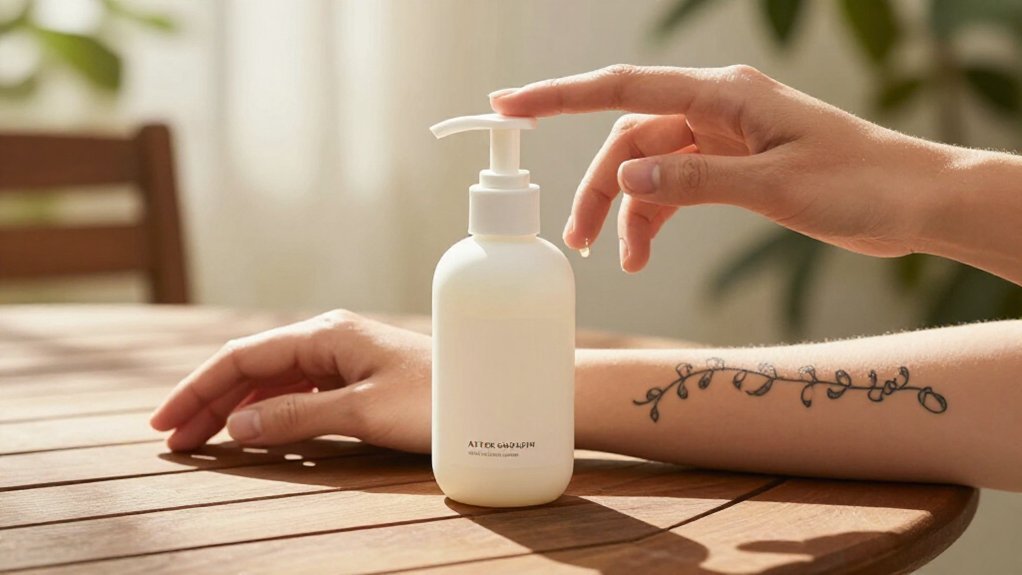
Afterward, they’ll bandage you and explain aftercare. You’ll leave with stinging skin and instructions to keep it clean. The adrenaline fades, leaving soreness and something permanent. You chose this mark. Now you carry it forward.
Recommended Products
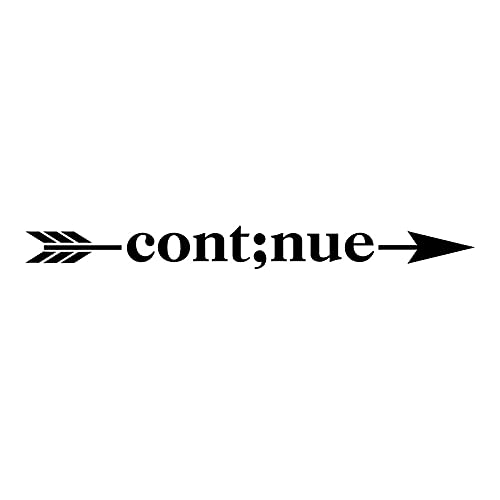
This is a high quality vinyl die cut transfer decal single color with NO background color - FAR better than a bumper sticker

Cancer Awareness Items: The size of the awareness ribbons is 2 * 1.6 inches, each roll of cancer awareness decorations has 300Pcs to meet your needs. Appropriate size allows you to paste cancer awareness stickers on letters, posters, water bottle, scrapbook, notebooks, cars, cups, clothes, gifts and other places.

Generous Quantity: 5 sheets x 8 = 40 temporary tattoos
How to Explain Your Tattoo (Or Not)
Why explain what you’ve permanently etched into your skin? You don’t owe anyone your story. Strangers who ask deserve simple deflections: “It’s personal,” or “I like the punctuation.” You’ve mastered these phrases; they protect your boundaries without closing doors.
When you choose explanation, you control the depth. Close friends might hear about survival. Coworkers might hear about grammar. You’re allowed to edit your narrative for each audience.
Your tattoo speaks when you stay silent. Some recognize its meaning immediately; their knowing nods become wordless solidarity. Others see only ink. Both interpretations belong to them, not you.
Wear long sleeves when you want invisibility. Roll them back when you want visibility. Your body carries this mark; you carry the choice of when to translate it.
Recommended Products

❤Material: Copper and zircon, it is lead free and nickel free.
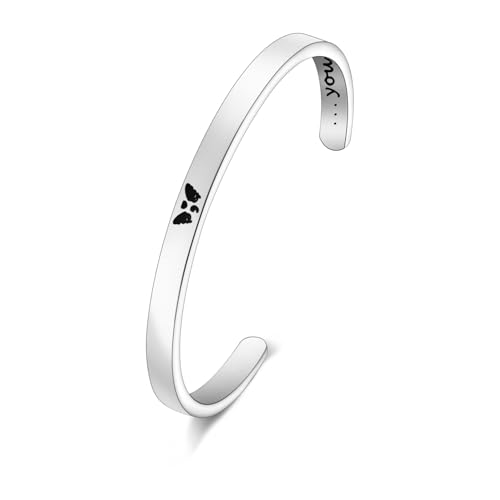
◆ : Inspirational Semicolon gift made of stainless steel ,it is lead free and nickel free.Stainless Steel is hypo allergenic, it doesn’t rust, change colour or tarnish.

ஐMaterial:Stainless steel, it is lead free and nickel free. Stainless steel is hypo allergenic, it doesn't rust, change colour or tarnish.
Crisis Resources and Support Networks
Support networks won’t magically appear when you’re struggling—you’ve got to seek them out before crisis hits. You build your safety net by connecting with therapists, support groups, and trusted friends now, not when you’re already drowning.
You’ll want crisis resources saved in your phone before you need them. Programs like the 988 Suicide & Crisis Lifeline operate 24/7, and text lines offer discreet help when you can’t speak aloud. You can find local resources through your insurance provider or community mental health centers.
You wear your semicolon tattoo as both reminder and invitation—telling others you’ve survived, signaling you’re safe to approach. But ink alone won’t save you. You’ll honor that symbol’s meaning by actively maintaining your support system and reaching out unashamed when darkness returns.
Recommended Products


Product Contents: 180 mental health temporary face tattoos, with 3 distinct designs each offering 12 different patterns, 5 sheets per pattern. This rich assortment provides plenty for sharing at events, promoting mental health awareness

High quality sticker: The sticker is made of waterproof PVC material which are sun protection and waterproof
Conclusion
Your semicolon tattoo tells the world you’ve chosen to keep going. Whether you wear it visibly or hidden, it marks your resilience without requiring explanation. Remember: the story continues because *you* continue writing it. If you’re struggling, reach out—you’re never alone in this chapter. Keep going.