
You’ve just left the studio with fresh ink, and you’re already wondering when you’ll stop worrying about it. The truth is, your tattoo isn’t done with you after the bandage comes off. You might think healing takes a week, but the real timeline stretches longer—and what you do in those first days changes everything.
Key Takeaways
- Surface healing completes in 2–4 weeks as scabs form, peel, and flake away naturally.
- Deep dermal healing continues for 3–6 months while pigment settles and collagen rebuilds.
- First 48 hours require gentle washing, light moisturizing, and loose breathable clothing.
- Days 3–14 bring intense itching and peeling; avoid scratching, hot water, and swimming.
- Seek medical help for spreading redness, pus, fever, or red streaks indicating infection.
Recommended Products

TATTOO AFTERCARE ESSENTIAL: Hustle Butter is the original tattoo aftercare balm for new and older tattoos. With over 10 years in the market, we are a pioneer of the tattoo aftercare category.

TATTOO AFTERCARE ESSENTIAL: Hustle Butter is the original tattoo aftercare balm for new and older tattoos. With over 10 years in the market, we are a pioneer of the tattoo aftercare category.
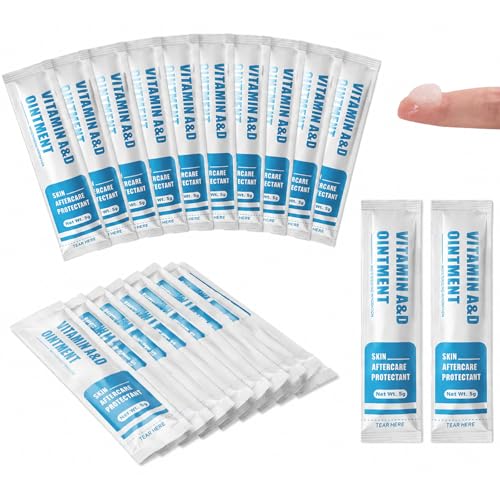
Honest, Accurate Care – This protective ointment comes in 50 hygienic single-serve packets for mess-free, on-the-go convenience. Easy to apply for tattoo protection anytime.
Tattoo Healing Timeline: What to Expect Week by Week
Wondering what your fresh ink will look like in the coming weeks?
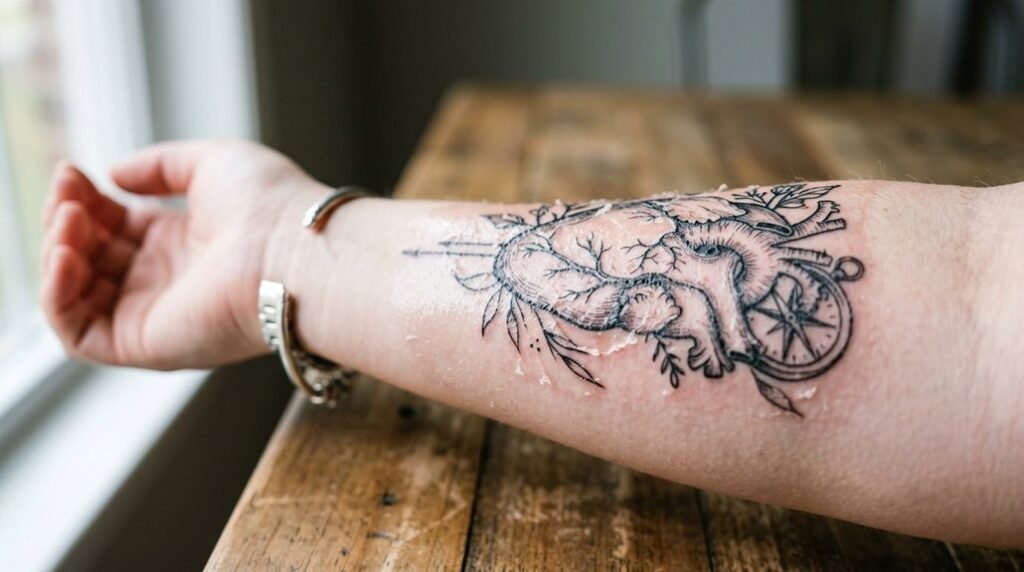
You’ll notice peeling and flaking during days three through seven as your tattoo enters the ugly phase. Don’t panic—this signals proper healing beneath the surface. You’ll resist scratching, though the itch tests your willpower.
By week two, the peeling subsides and colors appear muted under a waxy layer. You’ll keep moisturizing lightly as the skin regenerates.
Weeks three and four bring the most dramatic transformation. You’ll watch dull pigments brighten as the final layer of dead skin sheds. Your tattoo won’t feel raised or tender anymore.
After four to six weeks, you’ll see your artist’s true vision emerge. The skin fully settles, and you’ll protect it with sunscreen to preserve those vibrant lines for years.
Recommended Products

Gentle, Deep Cleansing: Tattoo Goo Foaming Cleansing Soap for tattoos and piercings helps remove impurities and clean the inked or pierced areas at a deep level by removing dirt, dead skin cells, and killing germs without damaging the skin

GENTLY CLEANSES NEW TATTOOS - Use Repair Tattoo Wash during the healing process to keep your fresh tattoo ink clean or as a perfect prep wash before and after tattooing.

Foaming Tattoo Soap: Great for in-process and post-tattoo and piercing care. Keeps new tattoos & piercings clean during the healing process.
The First 48 Hours of Healing: Plasma, Scabbing, and First Washes
Your fresh tattoo enters its most vulnerable phase the moment you leave the studio. You’ll notice plasma oozing from the wound within hours—this clear, sticky fluid forms the foundation of scabbing. Don’t panic; this response means your immune system has activated. You’ll need to gently wash the area with fragrance-free soap after removing the initial bandage, typically within 2-6 hours. Pat it dry with a clean paper towel—never rub.
You’ll repeat this washing routine 2-3 times daily. Apply a thin layer of recommended ointment after each wash. You’ll see thin scabs developing by day two; resist picking them. Your clothing choices matter now—wear loose, breathable fabrics that won’t stick to the plasma. You’ll sleep carefully, avoiding positions that press the fresh ink against bedding. These first forty-eight hours establish your healing trajectory.
Recommended Products

TATTOO AFTERCARE LOTION: After Inked Tattoo Lotion brings hydration and nourishment to your tattooed skin. Formulated with grape seed oil, which helps maintain vibrant ink colors while pacifying the skin and promoting moisture retention.

Protect Your Body Art: Moisturizing with the bonus of itch relief! Tattoo Goo's Tattoo Care Lotion soothes healing skin & keeps healed ink looking sharp for life. With olive oil & glycerin, it delivers deep, breathable hydration that won’t clog pores

16-fluid ounce bottle of Lubriderm Fragrance Free Daily Moisture Lotion + Pro-Ceramide, Shea Butter and Glycerin to help restore skin's moisture barrier for healthier-looking skin
Days 3 to 14: Managing the Itch and Peeling Phase
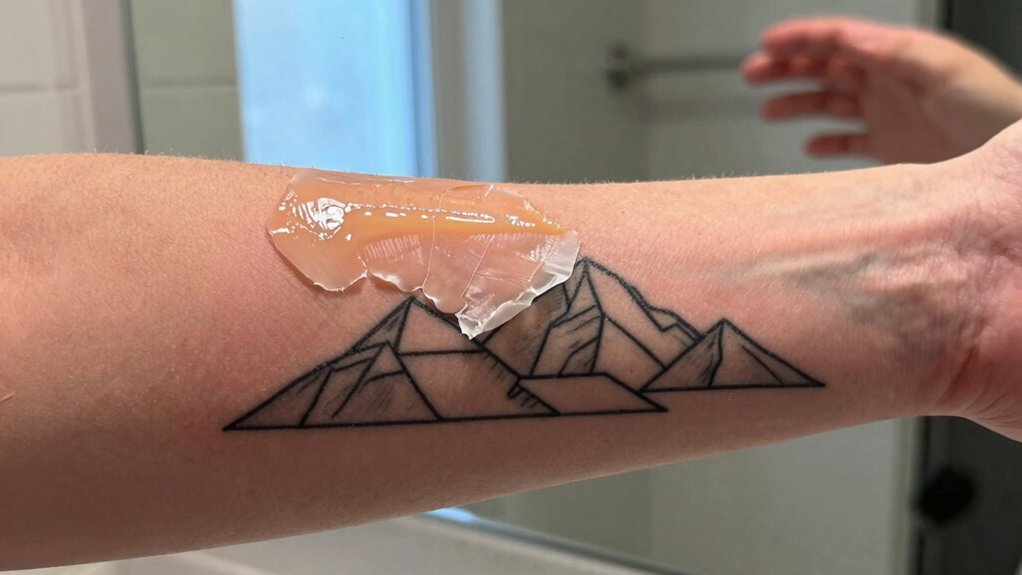
By day three, you’ll notice something strange happening: your tattoo suddenly looks duller beneath a cracked, ashy surface, and the real test begins.
Your skin starts peeling like a sunburn, and you’ll feel an intense itch that demands scratching. Don’t. You’ll damage the ink and risk infection. Instead, you’ll pat the area gently or apply a thin layer of fragrance-free moisturizer. You’re shedding dead skin, and the vibrant colors hide beneath. You’ll wash twice daily with unscented soap, keeping sessions brief. You’ll avoid hot showers, swimming pools, and tight clothing that rubs. You’ll watch flakes fall and trust the process.
The peeling subsides around day fourteen, but you’re not finished. Resist the urge to pick at scabs. You’ll protect your investment through discomfort, knowing patience preserves the art.
Recommended Products

✡Various Purpose - Care for all types of wounds; Waterproof cover; Fixed dressing; Tattoo aftercare. It can help lock in the color, protect your tattooed skin, and reduce scabbing when you wash or moisturize your tattoo, quickly form a protective film then accelerate your recovery

After tattoo care:Helps safeguard new tattoos or retouched areas, supporting a cleaner, smoother healing process. It can help lock the color, protect your tattooed skin, reduce scab when you wash or moisturize your tattoo, quickly form a protective film, and then accelerate your recovery.

Widely Used: Our tattoo film has grid lines on the backing paper, which can be cut into different sizes according to requirements. The size of the film is 6 inches x 8 yards, including 3 layers, namely PET backing, PU film and release paper. Soft and stretchable, which makes it fit perfectly anywhere in the body
Weeks 3 to 6: Why Your Tattoo Looks Healed But Isn’t
Once the peeling stops, you’ll look at your tattoo and think you’re done. The surface looks smooth, the colors appear vibrant, and you’ll feel tempted to skip the aftercare routine. Don’t.
Your skin has healed superficially, but the deeper layers remain active. Collagen continues rebuilding beneath the surface, and the dermis settles into its permanent state. You’ll notice the tattoo looks slightly dull or cloudy during this phase—that’s normal. The skin hasn’t fully regenerated yet.
You must keep moisturizing and protecting the area from sun exposure. UV rays damage healing tissue and fade ink prematurely. You should also avoid soaking the tattoo in pools or baths, as submerged skin absorbs water and disturbs the settling pigment.
Resist scratching any lingering itch. The healing process continues silently, and you’ll compromise the final result if you rush it now.
Recommended Products
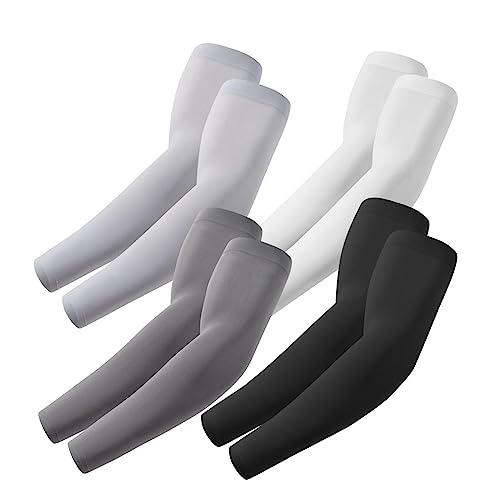
Roxun cooling arm sleeves provide a seamless, snug fit, thanks to the durable blend of 90% nylon and 10% spandex. Forget about constant adjustments or circulation issues

Roxun cooling arm sleeves provide a seamless, snug fit, thanks to the durable blend of 90% nylon and 10% spandex. Forget about constant adjustments or circulation issues

Roxun cooling arm sleeves provide a seamless, snug fit, thanks to the durable blend of 90% nylon and 10% spandex. Forget about constant adjustments or circulation issues
Signs of Infection and Poor Healing (and When to See a Doctor)
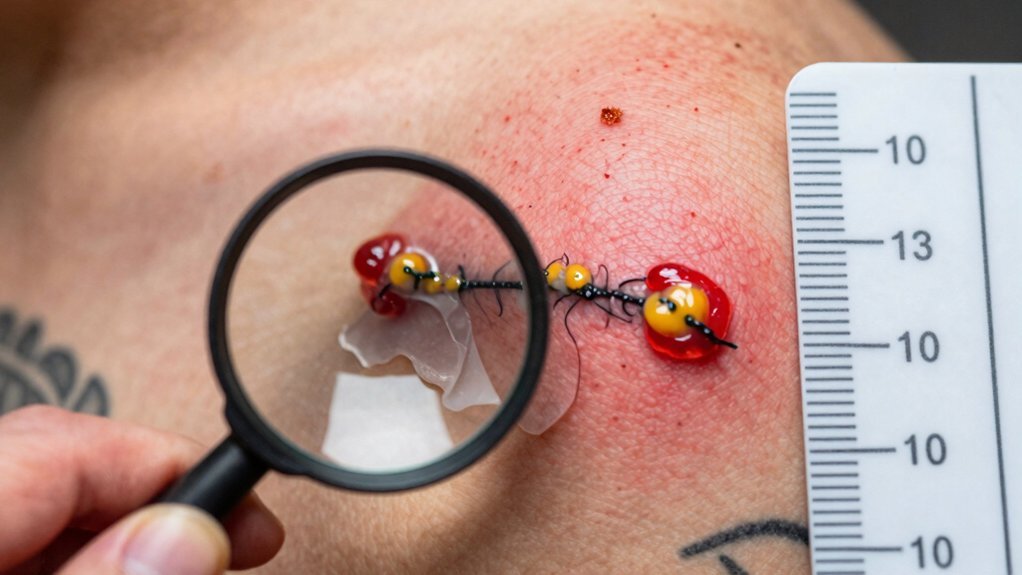
How can you tell when healing’s gone wrong? You’ll notice warning signs that demand attention. Watch for spreading redness, warmth, or swelling that worsens after day three. Pus, foul odor, or red streaks radiating from your tattoo signal infection. Fever, chills, or swollen lymph nodes mean your body’s fighting something serious.
Poor healing shows differently. Scabs that crack and bleed repeatedly, ink falling out in patches, or raised, bumpy skin indicate problems. Don’t ignore allergic reactions—intense itching, hives, or blistering require immediate care.
You should contact your artist first for minor concerns. However, you must see a doctor promptly for fever, spreading infection, or worsening pain. Don’t wait; infections progress fast. Early treatment prevents permanent damage and serious complications. Trust your instincts when something feels off.
Recommended Products

QUICK HEALING:A&D ointment gel is rich in essential vitamins A and D,which is very important for aftercare microblading ,effectively helping to remove burns,cuts,surgical marks and the impact of marks on beauty

COMPLETE AFTERCARE KIT FOR NEW & EXISTING TATTOOS: This Tattoo Aftercare Kit brings together 3 essentials, Antimicrobial Soap, Tattoo Balm, and Tattoo Lotion, to help cleanse, protect, and moisturize fresh ink. Useful after tattoo sessions and throughout healing, it supports vibrant color and skin comfort for dedicated ink enthusiasts and artists

Upgraded Design, Easy to Use --- Tattoo aftercare balm comes in a tube,this container allows you to glide on the butter easily,Rolls on smoothly and evenly on your skin,No more mess or residue on your finger,convenient to use
Conclusion
You’ll heal in stages over 2–6 weeks. Keep your tattoo clean, moisturized, and protected from the sun throughout. Don’t pick at scabs or soak the area. Watch for infection signs like pus, fever, or spreading redness. When in doubt, call your artist or doctor. Your patience now ensures vibrant, lasting ink.
Recommended Products

PERFECT FOR THE TATTOO ARTIST AND COLLECTOR – Whoever you are, you want to make your tattoo aftercare experience convenient and effortless. This soap ensures the tattoo always leaves the shop or house sanitized and moisturized.

GREAT FOR NEW TATTOOS - H2Ocean Blue Green Foam Soap cleanses skin on and around new tattoos and the addition of aloe vera aids the healing process.

RICH LATHER, GENTLE FEEL: This unscented body wash is made with over 70% certified organic oils and a Baby Unscented castile formula that rinses clean, leaves skin feeling fresh, and fits daily family bathing, face washing, and hand care