
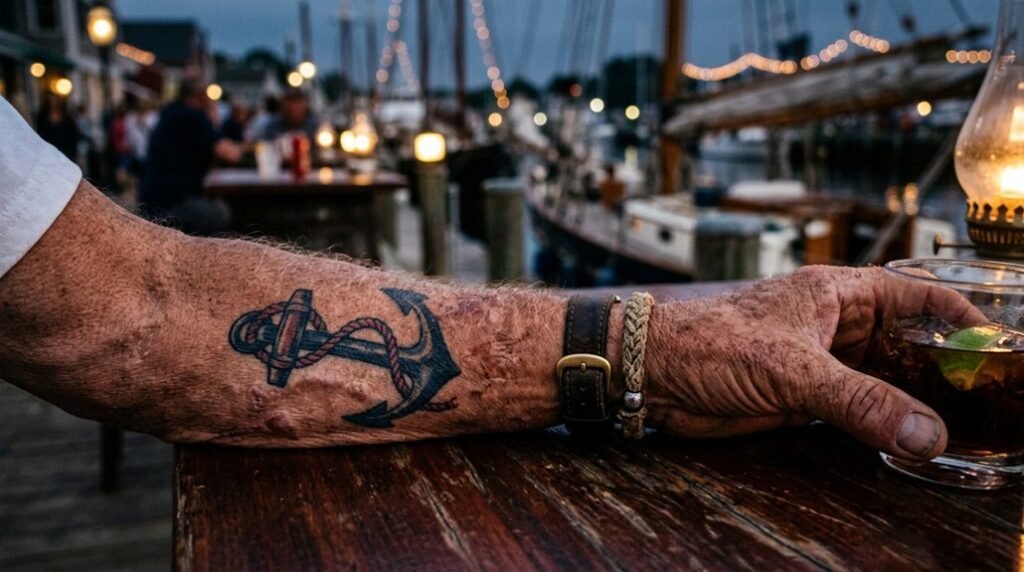
You’ll walk past someone with an anchor inked on their forearm and wonder what keeps them steady. Maybe it’s a person, a purpose, or just the refusal to drift. But the meaning runs deeper than you’d expect, weaving through centuries of maritime tradition and quiet personal transformation. There’s more beneath the surface.
Key Takeaways
- Represents resilience and preservation through trauma or loss.
- Originated from Mediterranean sailors and spread globally via maritime trade.
- Signified safe passage and milestone achievements for seafaring cultures.
- Carries Christian symbolism as a concealed cross representing hope.
- Adapts to various designs and placements reflecting personal interpretations of stability.
Recommended Products

High quality fashionable temporary tattoo, which looks like real

High quality fashionable temporary tattoo, which looks like real
What Anchor Tattoos Mean Today
Why do anchor tattoos still resonate in an era of GPS navigation? You wear this symbol not for nautical utility, but for what it whispers about your inner life. You choose it when you’ve weathered storms—divorce, grief, recovery—and emerged with your grip intact. You ink it when someone grounds you: a child, a partner, a purpose that steadies your drift.
You might pair your anchor with roses, coordinates, or a parent’s handwriting. You’re not copying sailors; you’re adapting their language for your own narrative. The design scales to your wrist, ribcage, or behind your ear. You carry it visibly or hide it closely.
Today, you don’t need to know port from starboard. You only need to recognize when life’s currents pull too hard—and what keeps you still.
Recommended Products

DESIGN OPTIONS: Choose from three distinct spiritual symbols - Fleur de Lis, Om Symbol, and Anchor designs in classic black. Fleur De Lis and Om packs include 20 large tattoos printed on 2" x 2" card plus 20 mini 1/2" tattoos. Anchor pack includes 20 anchors printed on 2"x1.5" card.

【Nautical Culture Design】This set brings classic nautical symbols to life with a clean, realistic aesthetic. Featuring a detailed compass and a timeless anchor, these half-arm designs represent direction, stability, and freedom. The balanced composition and deep black ink reflect traditional sailor tattoo culture with a modern, non-reflective finish.
Where Anchor Tattoos Originated
Your anchor carries weight that stretches back centuries. You trace its origins to the seafaring cultures of the Mediterranean, where Ancient Greeks and Romans first marked sailors with ink. You’d find these early tattoos aboard Phoenician trading vessels and Roman warships, where fighters wore anchor marks to identify themselves and their skills.
You follow the tradition as it spreads through maritime Europe, flourishing in port cities like Liverpool, Hamburg, and Amsterdam during the 1600s and 1700s.
You’re seeing the practice formalize when Captain Cook’s voyages expose Western sailors to Polynesian tattooing techniques in the 1760s. You watch British and American navies adopt and spread the art across seven seas.
You’ve inherited this lineage. Every anchor etched into skin today connects you to those inked hands who hauled ropes and dropped iron across oceans you’ll never cross.
Recommended Products

Sailor T shirt - Anchor T Shirt - The sea will set you free - Sailor Tattoo Captain Anchor Style Retro Tshirt - Sailor gifts
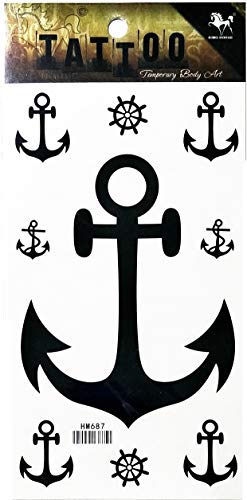

Vintage Nautical Anchor Design: This semi-permanent temporary tattoos pack holds two sheets with large chained anchor, tiny anchor, ship wheel and assorted compass rose graphics with fine sketch line details. Anchor symbolizes stability, hope and safe journey; compass stands for direction, self-discovery and chasing dreams; ship wheel represents control over life’s path. Ideal for ocean travel lovers and anyone seeking timeless symbolic body art.
Why Sailors Got Anchors: Stability at Sea
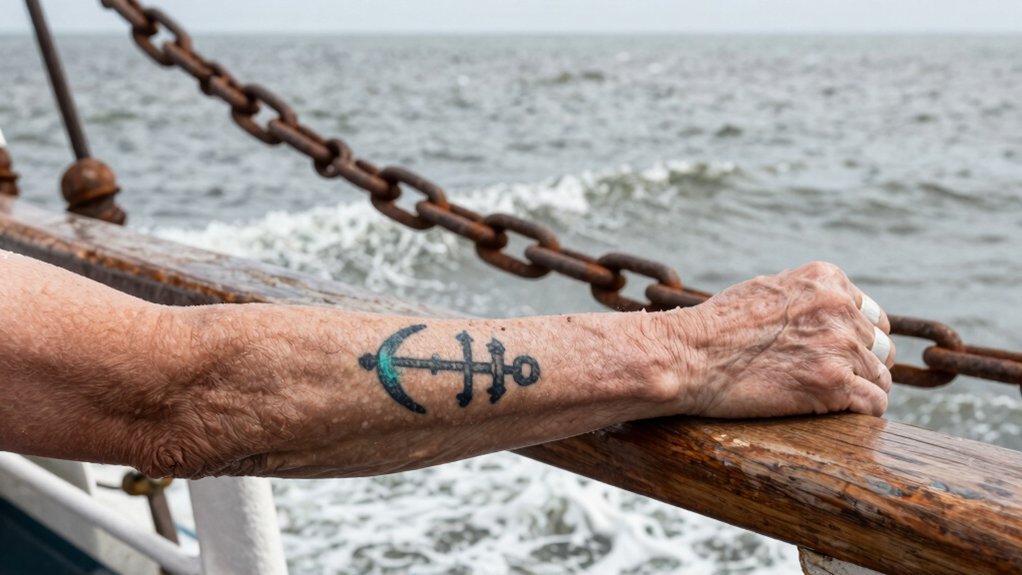
How did a lump of iron become your most sacred protection? You grip the rail as waves batter the hull, and you understand instantly. The anchor keeps you alive.
When you sail, you battle forces you can’t control. Storms surge, currents pull, and wind shreds your sails. You drop anchor, and suddenly you’ve stopped drifting. You’ve claimed stability in chaos. Sailors inked anchors onto their skin because you’d carry that security everywhere. You couldn’t haul iron into every pub or brothel, but you’d wear its shape forever.
You’ve crossed the equator, survived the doldrums, or completed your first voyage—each milestone earned you another mark. The anchor reminded you: you’d returned. You’d cheated the sea again. You’d berthed safely, and you’d do it once more.
Recommended Products

✝️ Empower Your Faith - Find inspiration and comfort with our Christian imagrey. Each tattoo serves as a personal reminder of God's presence to strengthen your faith journey.

【Develops Fully in 48H】Your cool cross christian tattoos for men will initially appear silver before naturally darkening to a rich finish within 48 hours. For optimal results, avoid contact with bare skin (particularly the face) and cover the area with clothing during sleep to prevent transfer.
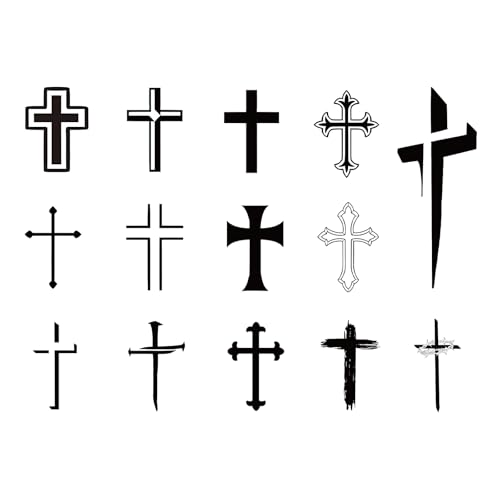
11 FAITH CROSS DESIGNS: Features a comprehensive variety of eleven unique religious symbols, including clean traditional crucifixes, bold modern abstract shapes, rugged brushstroke effects, and thorns-wrapped variants.
How Faith Transformed Anchor Tattoo Symbolism
Where did the anchor drift after it left the sailors’ skin? It found you, or rather, you found it, through centuries of faith.
You discover this symbol anchored deep in Christian tradition. Early believers, facing persecution, embraced the anchor as a disguised cross. You’d see it etched in Roman catacombs, marking believers’ resting places. The symbol merges hope and steadfastness, just as Hebrews 6:19 describes hope as “an anchor for the soul.”
You carry this meaning forward when you choose this tattoo today. Your ink speaks of spiritual grounding amid life’s storms. You’re not just marking skin; you’re declaring resilience through belief. Faith transforms maritime survival into eternal promise. Your anchor holds firm, connecting maritime roots to spiritual depths, bridging sailor legend and sacred commitment in permanent, purposeful art.
Recommended Products
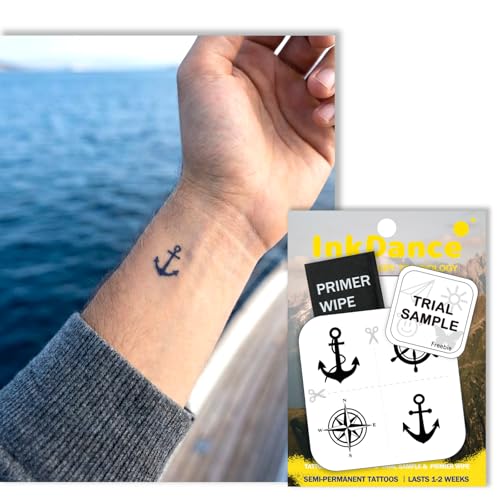
Innovative Skin-Sync Technology: We don't just sit on the skin; we interact with it. By reacting organically with naturally occurring proteins in your skin's outermost layer (stratum corneum), our plant-based formula magically transforms from a transparent guide into a rich, ultra-realistic navy-black. It looks exactly like a healed, permanent tattoo—without the needles or depth.


High quality fashionable temporary tattoo, which looks like real
Designing Your Anchor Tattoo: Rope, Roses, and Lettering
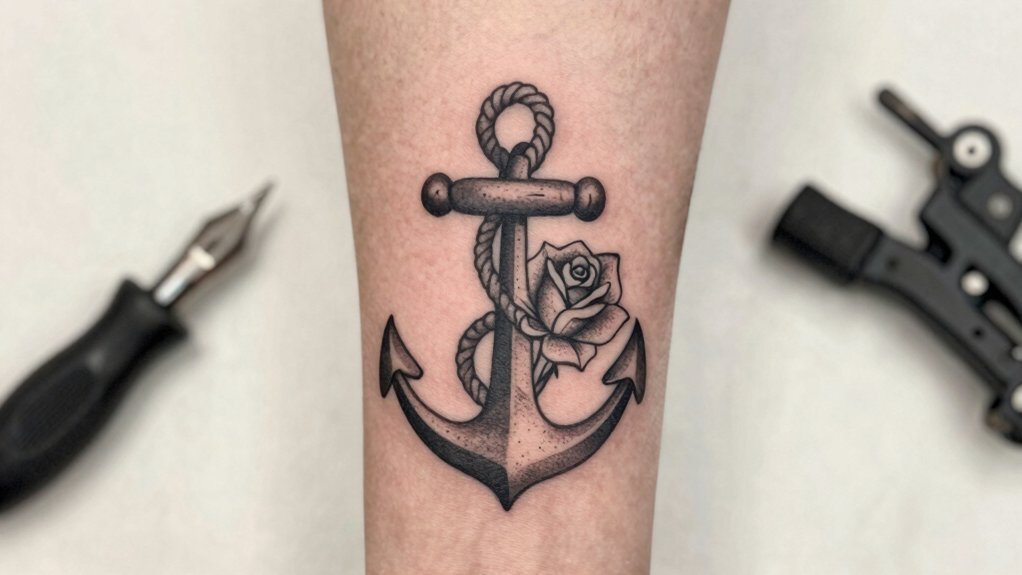
Why settle for a plain anchor when you’re crafting permanent art? You personalize your design with details that amplify its meaning.
Wrap rope around your anchor’s shank to symbolize strength through entanglement or life’s binding commitments. You choose weathered, frayed rope for resilience through struggle, or tight, clean coils for steadfast order.
Add roses at the base or entwined through the flukes. You select deep red blooms for passionate love that grounds you, or white petals for pure, peaceful stability. Thorns remind you that beauty accompanies pain.
Integrate lettering—names, dates, coordinates, or phrases—along the stock or banner-style beneath. You keep script bold and readable; small text blurs over time. Every element you combine transforms universal symbolism into your singular story.
Recommended Products

Realistic Finish: Different from you know ordinary temporary tattoo stickers or fake tattoos. It is so real and comparable to the real tattoo. It is a semi-permanent technology, Water-Resistant, friction-resistant, and can last for a long time, staying on your skin for 1-2 weeks.

Dopetattoo Waterproof High-Quality Easy-Use Long-Lasting Temporary Tattoos.You can take it to the beach, swimming pool, bath and any other water activities. Without excessive friction. It will last 3-5 days.

High quality fashionable temporary tattoo, which looks like real
Finding the Right Placement for Your Design
Once you’ve settled on your design, you’ll need to decide where it lives on your body, as placement shapes how your anchor tattoo reads to others and what it means to you.
You might choose your forearm for visibility, broadcasting stability to the world, or tuck it behind your ear for private significance. Your ribcage offers a large canvas for detailed work, while your ankle suggests a nautical connection to sailing and movement. Consider your pain tolerance—bone-heavy areas like your wrist or collarbone bite harder than fleshy spots. Think about your professional environment too; you can hide or reveal your anchor as needed. Size dictates placement: small anchors suit fingers and wrists, while elaborate designs demand your back or thigh. Wherever you place it, ensure you’ll enjoy seeing it daily.
Recommended Products

High quality fashionable temporary tattoo, which looks like real Size: 4.33" x 5.91" Quantity: 4 in one set Easy to apply, lasts for 2--5 days Produced in standard factory,...
How to Choose an Artist for Clean, Lasting Lines
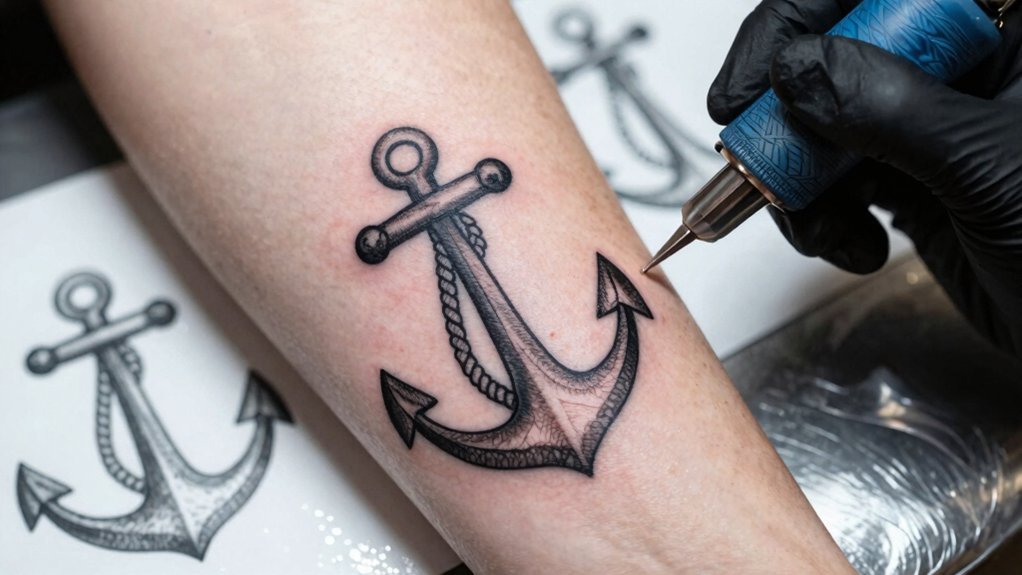
How do you make sure your anchor stays sharp for decades? You pick an artist who masters line work. You research portfolios, hunting for crisp, consistent edges and healed photos that prove longevity.
You don’t settle for convenience. You travel if you must. You check reviews about how tattoos age, not just fresh ink. You ask about needle groupings and machine setup—you deserve technical answers.
You book consultations to gauge professionalism. You watch how they stencil: rushed prep means blurred results. You verify sterile practices; infection ruins lines faster than sun damage.
You invest properly. Bargain hunting betrays your anchor’s future. You tip well, you follow aftercare religiously, and you return for touch-ups when needed.
Your choice of artist determines whether your symbol of stability actually stays stable.
Recommended Products

【Package Included】Our tattoo sticker includes 6 sheets and each sheet measures 18 cm x 11 cm (7.08 inch x 4.33 inch).

Unique Design Pirate Temporary Tattoo: Yazhiji Pirate Fake Tattoo were not only super cool, but also a symbol of strength, passion, and determination, reflecting strength, bravery and courage, sketches of pirate themes tattoos symbolize the spirit of freedom, adventure and rebellion.
Conclusion
You carry your anchor tattoo as a personal promise—whether it’s stability through chaos, faith that holds firm, or a loved one who keeps you grounded. You’ve traced centuries of meaning from sailor superstitions to spiritual symbolism, explored designs that speak your story, and considered where to place this permanent reminder. Now you’re ready to choose an artist who’ll etch your anchor with precision, ensuring your symbol of steadfastness endures as long as the meaning behind it.
Recommended Products
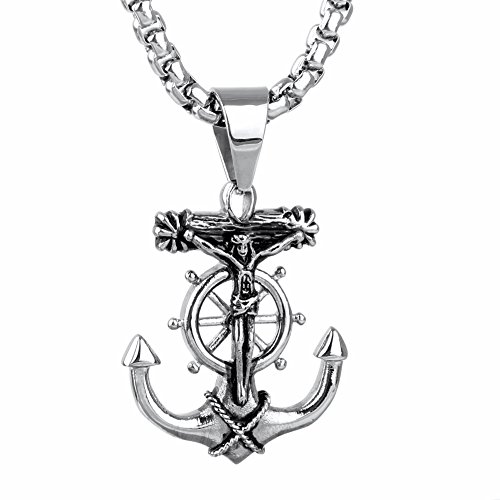
Material: High quality men's stainless steel matte finish anchor necklace,sturdy but classy looking

✝️ Empower Your Faith - Find inspiration and comfort with our curated selection of Bible verses and scripture. Featuring verse references and powerful texts, each tattoo serves as a personal reminder of God's presence to strengthen your faith journey.

✝️ Empower Your Faith - Find inspiration and comfort with our curated selection of Bible verses and scripture. Featuring verse references and powerful texts, each tattoo serves as a personal reminder of God's presence to strengthen your faith journey.