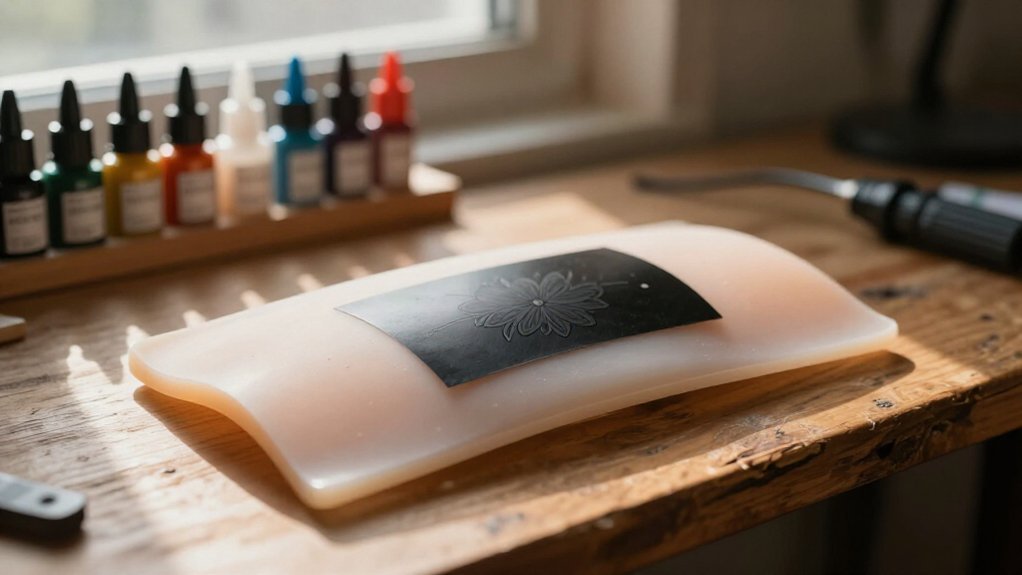

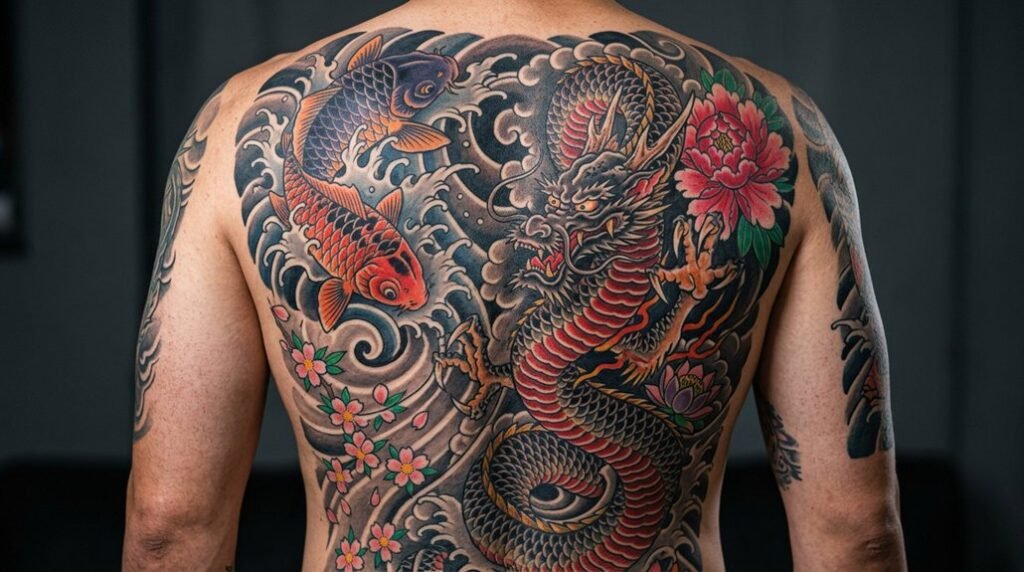
You might think a tattoo is just ink, but Irezumi asks more of you. Imagine sitting for hours as needles rhythmically puncture your skin, each mark carrying centuries of meaning. You’re not choosing decoration—you’re entering a dialogue with Japanese history itself. The question isn’t whether you can handle the pain.
Key Takeaways
- Irezumi is traditional Japanese hand-poked tattooing using needles and ink.
- It originated as criminal punishment during Japan’s Edo period.
- Designs feature symbolic imagery like dragons, koi, and cherry blossoms.
- Master artists use tebori, a rhythmic hand-poking technique.
- Full-body irezumi represents Japanese folklore, Buddhism, and personal virtue.
Recommended Products

This is the perfect design for cats enthusiast that has a unique sense of humor. If you're an animal, pets, feline, or kitten lover, this funny design is for you!

Where Irezumi Originated: From Punishment Mark to Art Form
When you examine irezumi’s origins, you’ll discover it didn’t start as the celebrated art form seen today. You’ll find it emerged during Japan’s Edo period, originally branding criminals with visible marks of punishment. You’d see these tattoos evolved rapidly once urban culture flourished. Workers, firefighters, and laborers adopted them as badges of identity and protection. You’d witness woodblock prints influencing designs, as ukiyo-e artists began creating tattoo stencils.
The term “irezumi” itself derives from ” ire,” meaning to insert, and “zumi,” from “sumi,” the ink you now associate with traditional Japanese tattooing. You’d notice how yakuza later transformed these markings into elaborate full-body suits, cementing their outsider status.
Today, you recognize irezumi’s journey from stigma to UNESCO-recognized cultural heritage, though you still can’t enter many public baths if you wear one.
Recommended Products

MIXED SIZES - 50pcs mixed size tattoo needles for your choice. 1203RL, 1205RL, 1207RL, 1209RL, 1203RS, 1205RS, 1207RS, 1209RS, 1205M1, 1207M1(5pcs per size)

Poseidon cartridge adopt a one-time joint design hygienic standard The material is stainless steel and easy to color,and has better ink flow
What Irezumi Feels Like: Inside the Tebori Process
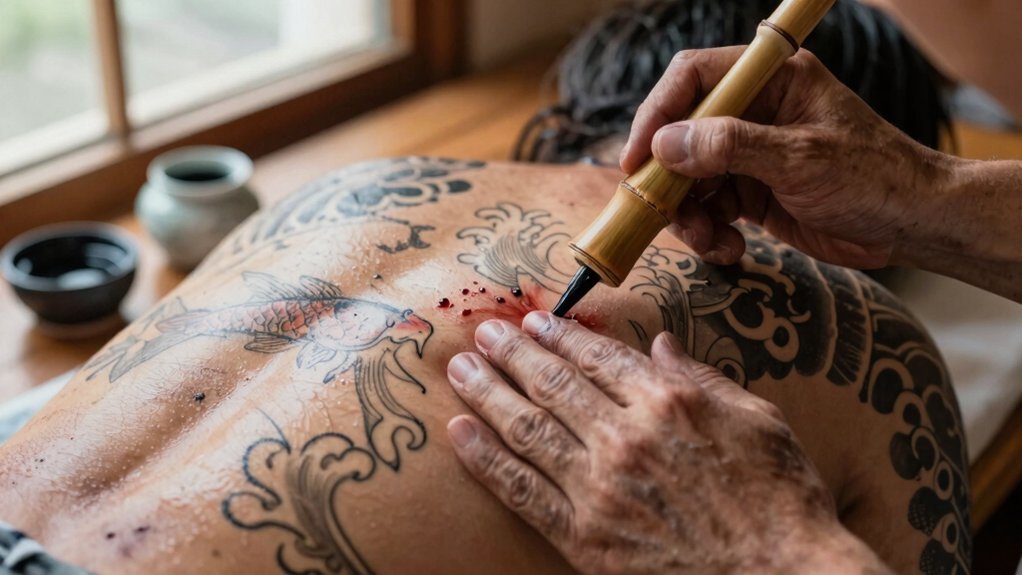
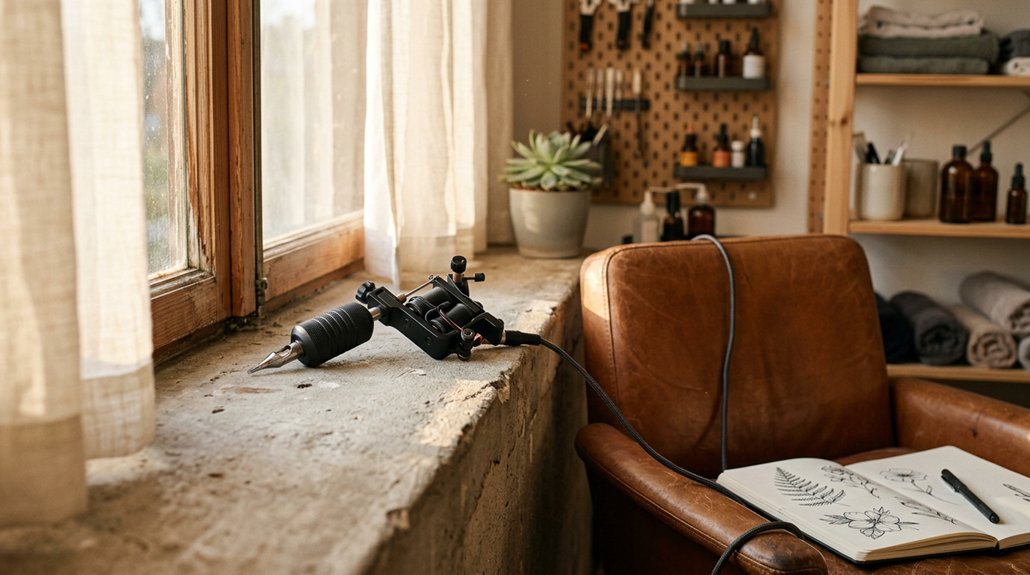
How does a needle dipped in ink, driven by hand rather than machine, transform skin into living canvas? You sit before the artist, feeling the rhythmic tap of the tebori needle entering your skin. The sensation differs from machine tattooing—you’re experiencing a duller, more resonant pressure that seems to echo deeper.
You’ll notice the needle bundle moving slowly, deliberately, as the artist dips and wipes, dips and wipes. The sound of wood against skin creates a meditative percussion. Blood mixes with ink on the surface; you watch the artist wipe it away to reveal emerging lines.
Your skin swells differently under hand-poking. The healing takes longer, but you’re carrying something distinct—ink placed by human rhythm rather than mechanical vibration. You’re participating in a practice unchanged for centuries.
Recommended Products

VIVID COLOR AND DIMENSION - Originally formulated in Japan, Kuro Sumi liner black gives your tattoos life and dimension. The molecular structure of our ink provides long lasting vivid color.

JAPANESE TRADITION: Made from top-secret recipes handed down through generations of Japanese tattoo artists, Kuro Sumi tattoo ink gives your tattoos life and dimension

This bottled Sumi ink is made in Japan for calligraphy and brush painting.
What Dragons, Koi, and Cherry Blossoms Actually Symbolize
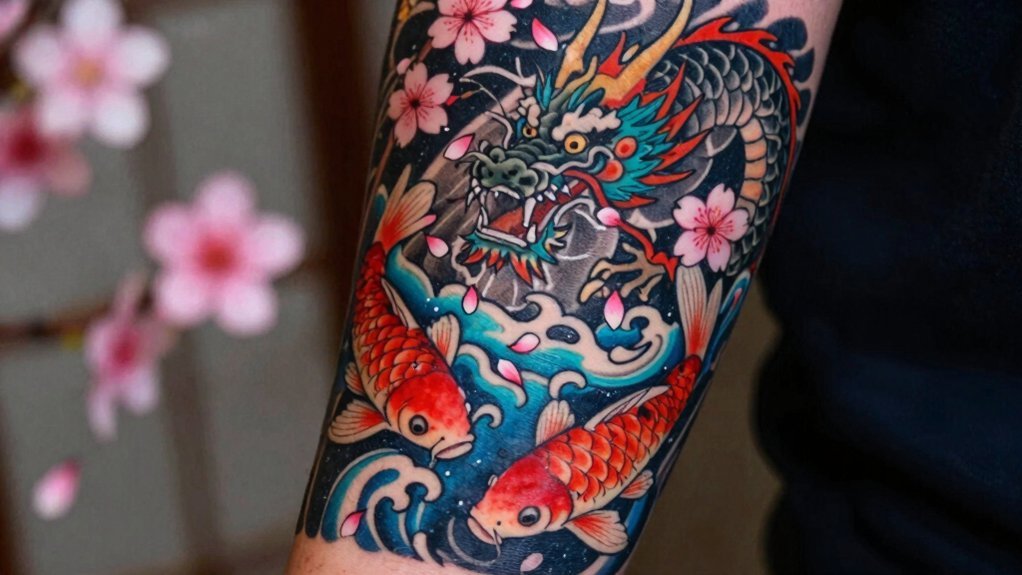
Why do certain images keep appearing across centuries of Japanese tattooing? You’re witnessing a visual language rooted in folklore, Buddhism, and samurai ethics.
When you spot a dragon winding across someone’s back, you’re seeing more than a beast. You’re seeing protection, strength, and mastery over life’s elements—water, wind, fire.
When you notice koi swimming upstream, you’re recognizing perseverance itself. You’re recalling the myth: koi that battle currents become dragons. You’re wearing ambition and transformation.
When cherry blossoms drift across skin, you’re accepting impermanence. You’re embracing that beauty expires, and that finitude makes moments precious. You’re connecting to bushido’s acceptance of mortality.
You don’t merely pick these symbols. You’re inheriting centuries of meaning. You’re choosing what virtues you want to carry, what struggles you claim, what philosophy you embody.
Recommended Products

Intricate Cherry Blossom Design: The 3D Printed Cherry Blossom Dragon features a stunning cherry blossom motif, combining elegance with mythical charm, making it a perfect addition to your collection of 3D printed dragons.

Perfect Companion: This Cherry Blossom Dragon is an excellent companion for friends, and they will surely love it very much. It is suitable for giving to friends on any festival, such as Easter, Christmas, Halloween, and so on

Designed by Cinderwing3D: Proudly crafted by Cinderwing3D, known for their high-quality, detailed 3D printed models, this cherry blossom dragon exemplifies expert craftsmanship and artistic vision, making it a truly unique gift for collectors and dragon lovers alike.
Can Foreigners Get Irezumi? What Changed Since 2015
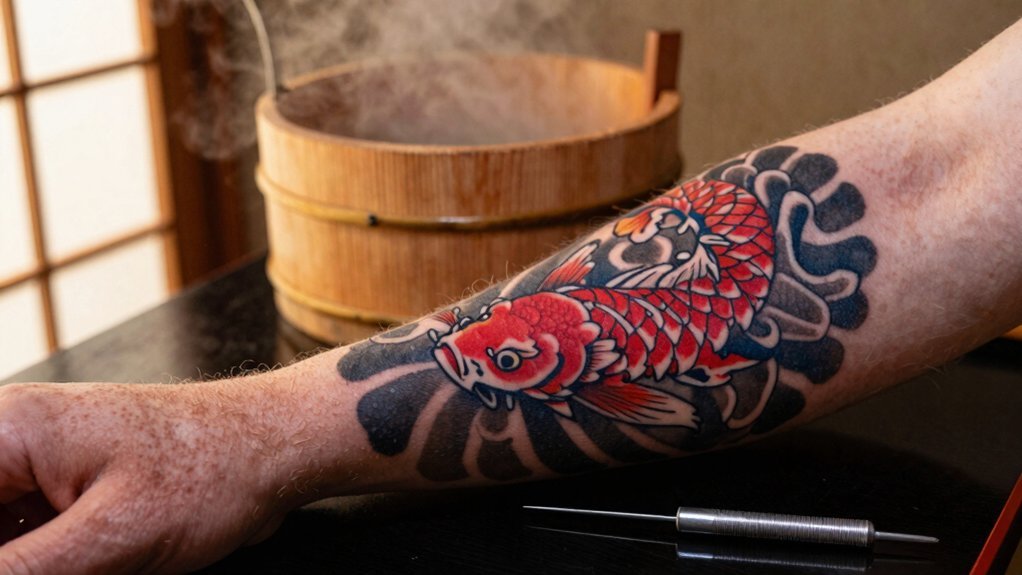
Understanding these symbols marks you as more than a casual observer—you’re approaching something that once belonged exclusively to insiders. Until recently, you’d face rejection if you sought authentic irezumi as a foreigner. Master artists guarded their craft within tight-knit circles, often tied to traditional guilds.
Everything shifted around 2015. Social media exploded, and Japanese tattooists started gaining international recognition. You’d see them posting work on Instagram, attracting global clients. Several masters opened their doors to foreigners, recognizing cultural exchange over rigid exclusivity. You can now book sessions with renowned artists like Horiyoshi III’s successors or the Three Tides crew.
However, you’ll still encounter gatekeepers. Some studios maintain Japanese-only policies. You must research carefully, respect protocols, and demonstrate genuine commitment. The door’s cracked open, but you’re walking into living tradition, not tourist entertainment.
Recommended Products

Warm Tips: The tattoo transfer paper need to work with transfer medias.You will need to purchase the stencil ointment separately. Apply the design made on the master paper. Please pay attention to press the back side of the pattern to the skin for at least 3 seconds
97 HENNA TATTOO DESIGNS IN 18 SHEETS:Includes 8 hand stencils, 8 rectangle flower pattern sheets, and 2 small pattern sheets. Features butterflies, flowers, roses, mandalas, paisley, and traditional Indian/Arabian mehndi designs. Perfect for creating stunning body art for weddings, festivals, and summer celebrations.

【 575+ Fun Assorted Tattoo Stencils 】-The ChurlChurl tattoo stencils collection includes 575 high quality stencils with multiple themes. enjoy cute trendy tattoo stencil designs like butterflies, words, flowers, symbols, totem, Egypt style patterns and more.
Why Irezumi Still Keeps You Out of Most Japanese Baths
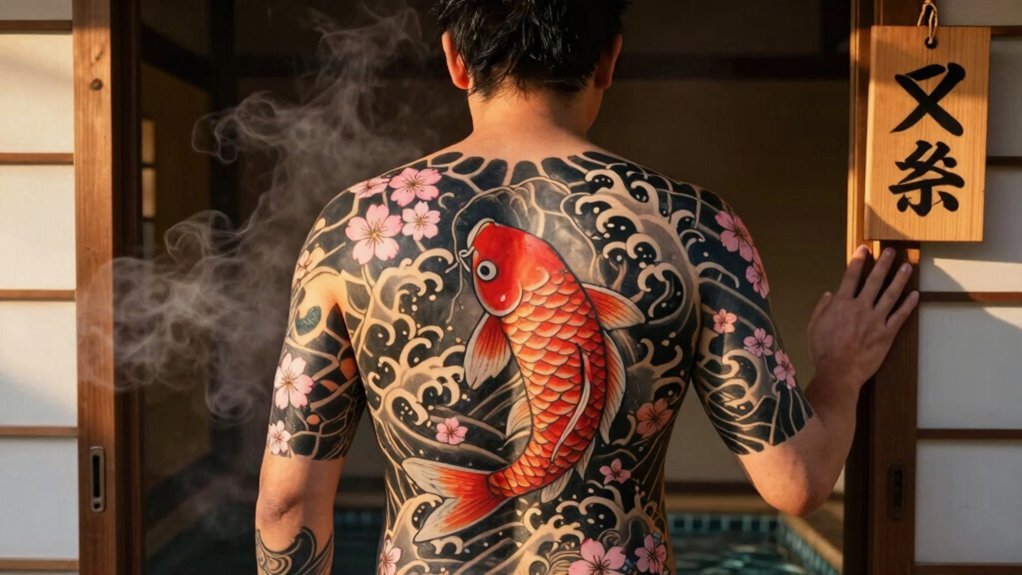
Despite everything you’ve learned about irezumi’s artistic evolution, you’ll hit a wall when you try entering most Japanese baths. You’ll spot the signs immediately: “NO TATTOOS” posted at the entrance, or staff politely turning you away. You’re facing decades of stigma that art alone won’t erase.
You’ll find that private baths and some ryokan accept you, but public sentō and onsen routinely reject tattooed visitors. You’re confronting associations between ink and organized crime that persist in Japanese consciousness. Even small, discreet pieces trigger blanket bans.
You’ll notice younger generations pushing change, yet ownership maintains rules. You’re navigating a gap between tattoo’s global acceptance and local caution. Your options shrink to reservation-only spots, private rentals, or covering up completely.
You’ll discover that appreciation for the craft doesn’t guarantee access to the culture.
Recommended Products
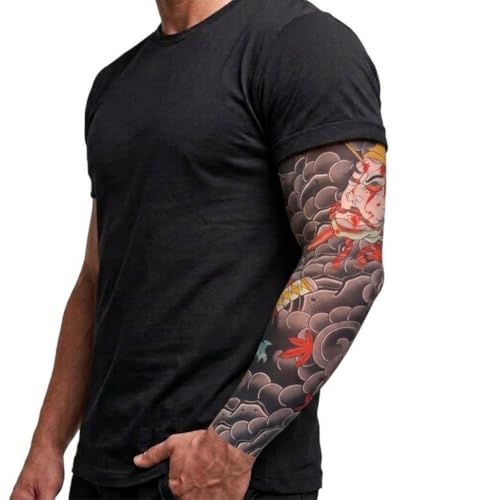
[Traditional Japanese Art with Lifelike 3D Printing] Stand out with a detailed traditional Irezumi pattern. Unlike cheap flat prints, our seamless 3D printing creates an incredibly realistic tattoo look without the pain or permanent commitment.


Irezumi Prices: From Apprentice Sketch to Master Tebori
Once you’ve accepted that you’ll skip the public onsen, you’ll face the real sticker shock. An apprentice sketch costs roughly one hundred dollars per hour, while a master tebori artist demands three hundred bucks or more for traditional hand-poking. You’ll pay for every single needle movement, whether machine buzz or precise manual insertion.
A full bodysuit requires hundreds of hours across multiple years, totaling tens of thousands of dollars. You won’t negotiate rates; the artist sets the price based on complexity, size, and reputation. Flash designs cost less than custom work, but you’ll still invest significantly.
Recommended Products

Package: 50pcs mixed tattoo cartridge needles, includes 10pcs each of 1203RL, 1205RL, 1207RL, 1209RL, 1211RL.

Tattoo Needle Set Contains:#12 Tattoo Needle 03RL,05RL,07RL,09RL,11RL,07RM,09RM,11RM,13RM,15RM 2pcs each, we launch this experience set to meet the needs of beginners on the common tattoo needles, you can only buy a box of needles can experience 10 tattoo artist commonly used models to enrich your practice, we have enough confidence to make you fall in love with this tattoo needle!
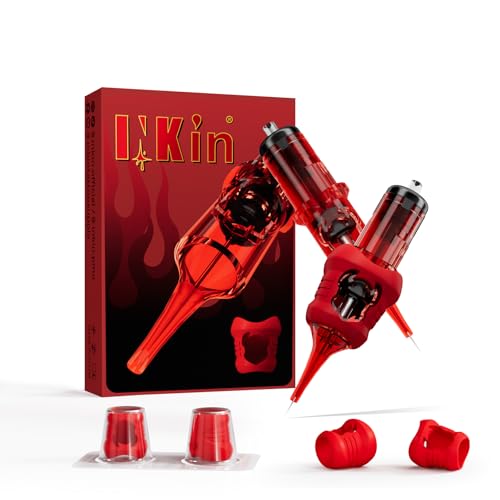
Upgraded Silicone Grip: INKin as one of the earliest brands focusing on tattoo finger ledge cartridges, upgraded design with high-grade TPE material, EL Diablo tattoo cartridges include 8 pcs optional grips, allowing tattoo artists to customize grip based on individual preferences, giving a comfortable, anti-slip grip reduces vibration and hand strain for long sessions.
Conclusion
You’re carrying centuries of ink and intention on your skin. Irezumi isn’t decoration—it’s transformation, each tap of the needle weaving folklore, virtue, and personal story into living canvas. You feel the rhythm, you bear the pain, you join a lineage that outlaws and artisans built. Whether you seek entry or simply understanding, respect the craft. The tebori needle doesn’t lie, and neither does the mirror when you finally see what you’ve become.
Recommended Products

Sumi ink is made of high-quality vegetable soot

Water-Resistant - Once dried, this artist ink exhibits water-resistant properties, making it suitable for layering with other water-based products like watercolors or markers

Outling Black Tattoo Ink - Our darkest black, this super thin viscosity ink flows into the skin with a quickness that will make you grab for it first every time. Kuro Sumi is the absolute blackest pigment in the entire industry, world known for its quality and consistency for all tattoo supplies & tattoo kits. It also has the best flow.