
You’re counting sessions but not seeing results, and that’s frustrating.
Most people don’t realize the real problem often hides in the gap between appointments, not the laser itself.
Before you book another session, you need to check seven specific factors that determine whether your ink actually leaves your body.
You’re Scheduling Tattoo Removal Sessions Too Close Together
You’re probably keen to see that tattoo fade, but rushing your appointments can backfire. Your immune system plays the starring role here, and it needs adequate time between treatments to clear the debris.
Rushing your appointments can backfire—your immune system needs time to clear the debris.
Why Timing Matters
When the laser breaks ink into tiny fragments, your lymphatic system carries them away. This fading after laser takes 6–12 weeks for real visible results. If your sessions spaced closer than 6–8 weeks, you’re re-lasing ink that hasn’t cleared yet. For larger pieces, wait 8–12 weeks.
Ink Density Changes Everything
The removal process varies widely based on your tattoo’s saturation. Dense, dark work demands longer intervals. Multiple sessions are always required, but patience prevents plateaus.
If progress stalls, extend your gap to 2–4 months. You’ll restart progress by letting your body finish the job.
Recommended Products

Wavelength: 200nm-2000nm, broad spectrum protection, block UV, Blue, Red and Infrared Laser Light

Visible Results in Just 3 Weeks: Our IPL hair removal device features the latest IPL technology to deliver visible hair reduction in just 3 weeks. With consistent use three times per week, it helps slow down hair regrowth and reveals smoother skin over time. A perfect holiday gift choice for women and men to enjoy salon-quality hair removal at home
Your Laser Can’t Handle Your Ink Colors
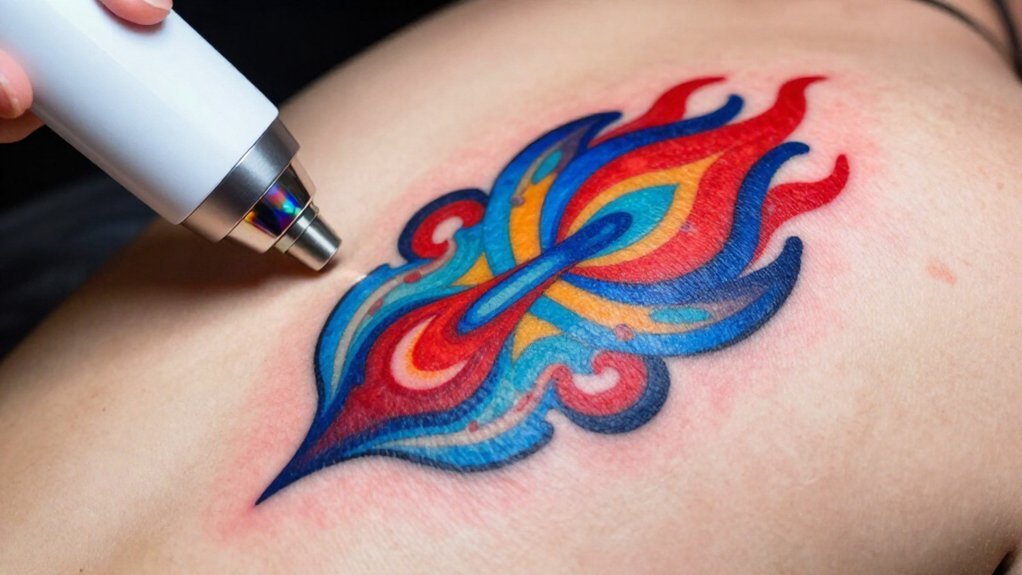
Because your tattoo contains a spectrum of pigments, the laser you are treated with might be mismatched to the actual colors embedded in your skin.
You see your black ink respond well, while stubborn greens and teals remain unchanged. You watch white ink darken or oxidize instead of breaking down cleanly. You notice some colors fade while others sit untouched, creating a mottled patchwork.
Your Laser Tattoo Removal relies on different wavelengths to shatter ink particles, but the wrong laser cannot reach certain pigments. Dense or layered ink compounds this mismatch. One wavelength treats black ink effectively, yet misses vibrant reds, yellows, and light blues entirely. You need a clinic equipped with multiple devices, or your tattoo will plateau prematurely.
Recommended Products

MADE IN THE USA SINCE 1990 — For over 30 years Dynamic Color has produced professional tattoo ink in the United States, an established American brand artists built their work on long before most imported labels existed.

MADE IN THE USA SINCE 1990 — For over 30 years Dynamic Color has produced professional tattoo ink in the United States, an established American brand artists built their work on long before most imported labels existed.

MADE IN THE USA SINCE 1990 — For over 30 years Dynamic Color has produced professional tattoo ink in the United States, an established American brand artists built their work on long before most imported labels existed.
Your Tattoo Is Too Deep, Dense, or Layered
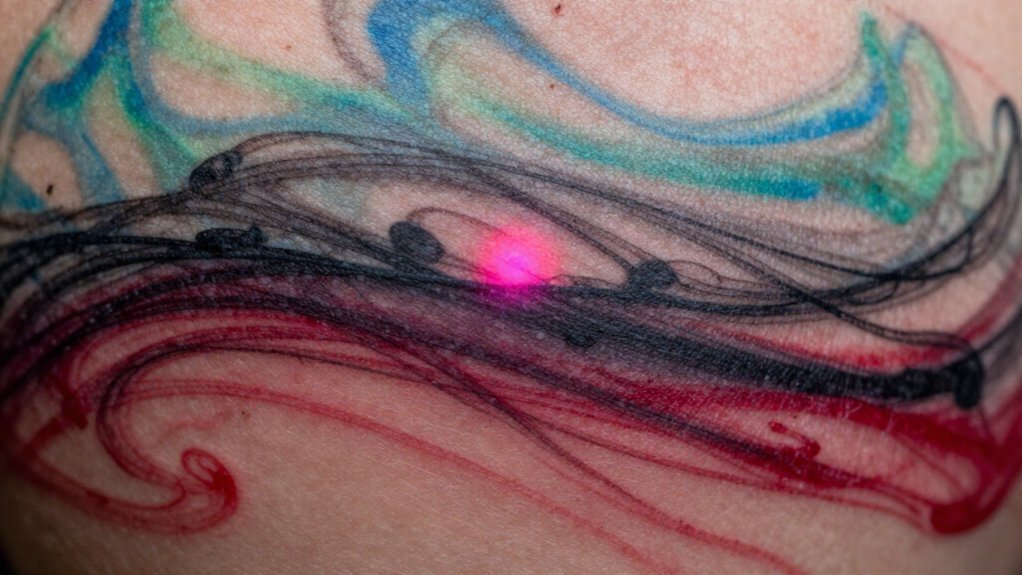
Beneath your skin, the ink sits deeper than you might expect, and that depth changes everything about how laser removal unfolds.
1. Ink Depth Matters
Ink depth affects how quickly your body clears fragments. Professionally applied tattoo ink rests deep in the dermis, so laser energy must penetrate further to break down ink effectively. Your body absorbs laser energy at varying depths, meaning superficial sessions rarely reach the deepest pigment early in treatment.
2. Density Slows Progress
Heavy saturation creates more volume to shatter. Dense packing means your immune system works overtime clearing debris, so visible fading lags behind your appointment schedule.
3. Layered Tattoos Complicate Timing
Layered tattoos contain multiple strata with mixed colors and densities. Each layer clears at different rates, extending time for uniform results. Poor application leaves uneven ink distribution, so some areas fade while stubborn spots linger. Meaningful fading often appears weeks later as your body processes fragmented particles.
Recommended Products

Bulk 50-Pack for Efficiency and Convenience: Save time while ensuring your clients have all the pico laser post care information they need. Our 50-Pack ensures you have an ample supply of pico laser aftercare cards on hand, ready to provide personalized pico laser care for every client.

Special designed for 532nm 1064nm laser OD6(0.000001)
Why Your Technician Needs to Adjust Their Approach
Depth, density, and layering explain why your tattoo resists fading, but they don’t tell the whole story. Your technician’s approach matters just as much, and static settings won’t carry you through.
Ask Your Provider to reassess if you’ve hit double-digit sessions with stalled progress. The process varies from person to person, so your protocol needs dynamic adjustment.
Wavelength matching: 1064nm shatters black ink, while 532nm targets reds and oranges. Mismatched light won’t reach stubborn tattoos.
Energy calibration: Too high causes scarring that shields ink; too low creates surface frosting without deep impact.
Timing discipline: Wait 6–8 weeks minimum. Hitting unfaded ink wastes sessions and slows affect tattoo removal.
Sun exposure remains one of the biggest variables your technician must factor in. Consider upgrading to a picosecond laser for resistant pigment.
Recommended Products

COMPLETE AFTERCARE KIT FOR NEW & EXISTING TATTOOS: This Tattoo Aftercare Kit brings together 3 essentials, Antimicrobial Soap, Tattoo Balm, and Tattoo Lotion, to help cleanse, protect, and moisturize fresh ink. Useful after tattoo sessions and throughout healing, it supports vibrant color and skin comfort for dedicated ink enthusiasts and artists

Nourishes Healing Ink for Vibrant Color: Tattoo Goo supports healing tattoos & maintains vibrancy on healed ink with a lightweight formula rich in olive oil, lavender oil, cocoa butter, and beeswax. It absorbs quickly, moisturizes deeply, and helps reduce dryness, itch and tightness so your tattoo looks and feels comfortable through everyday routines
Protect your Body Art: Getting inked takes a toll on your skin. What you lose in moisture, we give right back. Our formula mimics your skin’s natural hydration so it absorbs fast, works harder, and helps your skin recover faster
Sun and Aftercare Mistakes Slowing Your Removal
You might not realize it, but your daily habits around sun exposure and basic hygiene can quietly sabotage your laser tattoo removal results before and after each session. Pre-treatment tanning forces your technician to use lower laser settings, which weakens ink fragmentation.
Skipping post-treatment SPF 30+ reapplication every 90 minutes risks dyspigmentation that masks real fading progress. Poor healing hygiene, like picking scabs, scratching blisters, or submerging fresh skin in pools or hot tubs within 24–72 hours, triggers inflammation that prolongs recovery and blocks your immune system from clearing fragmented ink on schedule.
Recommended Products

Efficient Stencil Removal: Tattoo Lovers Care Stencil Remover is designed to efficiently remove stencil ink from the skin, leaving a clean surface ready for tattooing. The formula works to quickly eliminate stencil marks without any residue, helping tattoo artists achieve crisp, sharp designs, ensuring smoother, clearer tattooing with results that will stand out for their precision and clarity

Professional Stencil Prep: Balm Tattoo Premium tattoo stencil remover is designed for tattoo artists, studios, and apprentices who need to adjust, clean, or reposition tattoo stencils before starting a session.
Pre-Treatment Sun Exposure
Because sun exposure changes how your skin absorbs laser energy, getting a tan before your appointment forces the clinic to lower their settings. Pre-treatment sun exposure, even a brief one, triggers pigment changes that complicate fading. You’re now facing up-to-4-weeks sun avoidance, minimum, or you risk hyperpigmentation and delayed healing.
Your skin remembers every ray:
- Melanin surges, competing with ink for laser attention
- Settings drop, leaving fragments untouched beneath the surface
- Inflammation rises, forcing longer gaps between visits
Skip the Sun before your laser session. One sunny afternoon can increase the risk of irritation, derail your aftercare plan, and push your next treatment back indefinitely. Protect the area with mineral sunscreen, reapplied every 90 minutes, or reschedule entirely.
Post-Treatment Protection Protocols
Once your laser session ends, your skin enters a critical 6–12 week window where shattered ink relies on your immune system to clear it, and every choice you make during this period either accelerates or stalls that fading.
1. Shield From Sun Damage
Avoid sun exposure completely. UV rays trigger inflammation and hyperpigmentation, forcing your technician to lower laser energy later. Apply mineral sunscreen every 90 minutes, and keep the area covered for 4 weeks before and after each session.
2. Protect Healing Tissue
Don’t submerge in water for 24–72 hours, and skip vigorous workouts that prolong healing time. If blisters form, don’t pick them. Scratching damages tissue and risks scarring that traps ink permanently.
3. Support Your Body
Avoid smoking; it constricts blood vessels and starves the immune response. Follow your aftercare instructions exactly. These protection protocols determine whether your tattoo fades on schedule or stalls for months.
Healing Hygiene Mistakes
Often, the frustration of stalled fading has nothing to do with the laser itself. You sabotage your own Laser Removal when you skip basic healing hygiene, and Ink fades slower because your immune response can’t clear debris through inflamed, compromised skin.
Three critical mistakes delay your timeline:
- You pick blisters or scabs, forcing your skin type into prolonged repair instead of ink clearance.
- You skip SPF 30+ mineral sunscreen, or you miss reapplication every 90 minutes; one sunny day can undo weeks of progress.
- You submerge the area too soon, or you exercise vigorously, trapping heat and sweat that extends recovery time.
Removal takes patience. Sessions spaced under 6–8 weeks interrupt normal fading. Protect the area, keep it clean and dry, and let your body do its work.
How Your Body Affects Ink Clearance
While the laser does the heavy lifting of shattering your tattoo ink, your body completes the actual removal by clearing those fragments through your immune and lymphatic systems. This process determines how quickly you see tattoo fading, and when your tattoo not fading seems to stall, your body also affects the timeline more than you might expect.
Your removal progress depends on visible results showing up 6–12 weeks after each session, so tattoo fading needs time even when particles broken by the laser are already clearing beneath the surface. If your immune response runs slower due to age, health conditions, or lifestyle factors, you’ll see less visible change between appointments.
Smoking impairs circulation and immune function, potentially adding up to 70% more sessions. Poor hydration, chronic stress, and inactivity reduce lymphatic flow. Support your system with water, movement, sleep, and stress management to keep clearance on track.
Recommended Products


AT-HOME IPL HAIR REMOVAL: Braun IPL hair removal is an at home laser hair removal alternative for women and men, with permanent visible hair reduction and up to 2 years free from hair*
When to Switch Strategies After 10+ Sessions
If you’ve crossed the 10–12 session mark without visible fading, you’re likely hitting a true plateau, not just slow progress. You need to recognize when deeper ink, scar tissue, or wavelength mismatches are blocking results, and you shouldn’t keep repeating identical treatments.
At this stage, switching laser technologies becomes essential. Extend your session intervals to 8–12 weeks or longer. Demand a full reassessment with photos and pigment mapping.
Recommended Products

100% brand new and high quality

BaodeLi -Tattoo Ink Set:BaodeLi multi in one tattoo ink kit made with professional and harmless tattoo materials.This tattoo ink set have 14 different colors.Our tattoo ink have a high-quality smooth flow rate.Trust it will be your best choice.
🤍Professional-Grade Tattoo Ink: This tattoo ink is designed for professional tattoo artists and studio use, suitable for highlighting, mixing, and detail work in tattoo designs.
Recognizing True Plateaus
By your tenth session, you’ll usually have a clear sense of whether your tattoo is still changing. You need to distinguish a true plateau from normal delayed clearance, since results often appear 6–12 weeks after treatment, not immediately.
Here’s how to recognize when your tattoo removal progress has stalled:
- Your tattoo isn’t fading between sessions, even after waiting 8–12 weeks
- You’re chasing full removal but seeing identical skin response every session
- The clinic uses fixed settings without adjusting to your changing ink depth
If you’ve confirmed a plateau, common culprits include incorrect laser wavelength for stubborn colors like green or teal, or deep encapsulated ink shielded by scar tissue. Picosecond technology helps some, but dynamic parameter changes matter more than hardware alone when a tattoo fades unevenly.
Switching Laser Technologies
Once you’ve confirmed a true plateau after ten or more sessions, it’s time to look hard at your laser technology.
1. Check Your Wavelength Match
The wavelength is used to target specific ink colors. 1064nm Nd:YAG tackles black and dark blue well, but green, teal, light blue, purple, and some yellows often need different approaches. Your unique and complex pigment mix may explain slower results.
2. Consider Upgrading to Picosecond Devices
If you’re stuck, don’t let removal stop. Switching from nanosecond to picosecond technology can help. Picosecond lasers deliver shockwave-based energy that shatters ink differently than older photo-thermal methods, which can improve outcomes on stubborn pigment.
3. Change Protocol, Not Just Equipment
A “same settings every time” plan causes late plateaus. Ask your provider to reassess fluence, spot size, and technique. Your body needs time to process and eliminate fragments, so varying the strategy matters more than repeating identical sessions.
Extending Session Intervals
Sometimes the simplest adjustment is the one you’ve resisted making. When your tattoo is not fading after ten sessions, you’ve got to ask: how long does it take, really? You’ve followed standard intervals, but you’re seeing slow results. The truth is, some tattoos take a little longer.
Steps you can take:
- Extend your wait: Push sessions from 6-8 weeks to 2-4 months, or even 6 months after session seven. Your immune system needs time to clear fragmented ink.
- Demand reassessment: Have your provider check remaining ink depth and adjust laser settings. Same parameters won’t work as the tattoo changes.
- Document everything: Photo comparisons reveal progress you can’t see week-to-week.
Common questions about stubborn tattoos vary person to person. Resistant, dense ink simply needs a little longer to remove.